Can You Buy REI Gift Cards at CVS? Where to Actually Find Them (and What to Do If You Can't)
No, CVS doesn't sell REI gift cards, but here's exactly where to get one, why the checkout rack keeps letting you down, and what to do if you're already out the door.
As an Amazon Associate, My Gifts Inventory earns from qualifying purchases. We only recommend products we'd genuinely consider buying ourselves.
You're standing in the CVS checkout line, you need a gift for someone who lives in hiking boots, and the rack of plastic cards by the register is right there. It seems like it should work. So you look for REI, don't see it, and start wondering if you're just looking at the wrong store or the wrong section. This article settles it: CVS does not sell REI gift cards, and there's a fairly simple reason why, plus several ways to actually get one without another wasted trip.
The Short Answer: No, CVS Doesn't Sell REI Gift Cards
CVS carries a rotating mix of gift cards, mostly the big national brands you'd recognize from any drugstore rack: Visa and Mastercard prepaid cards, Amazon, iTunes and Apple, Netflix, Spotify, Xbox and PlayStation, plus restaurant and fast-casual chains, ride-share credit, and a handful of streaming services. What it does not carry is REI.
That's not a CVS-specific quirk. REI gift cards are sold almost exclusively through REI itself, which is true of most single-brand retailers with their own e-commerce and loyalty program. REI has no real incentive to hand a cut of every card sale to a drugstore chain, and it has a strong incentive to keep the purchase experience on its own site where it can link the card to a membership and push people toward its co-op structure. If you want to see exactly which brands do turn up on a CVS rack, our full breakdown of Gift Cards at CVS: The Complete List of Brands, Fees & Where to Buy (2026) walks through the whole lineup, including the activation fees on the prepaid Visa and Mastercard cards, which are the ones that quietly cost you extra.
Why the Register Rack Feels Like It Should Have Everything
Those racks are curated by third-party distributors, not by the store, and distributors stock what sells fast and has thin margins. A $50 REI card would sit there for weeks in most neighborhoods. A $25 Starbucks card sells out in a weekend. The math is that simple, and it's why you'll almost never find niche outdoor, hobby, or specialty retail cards at a drugstore.
Where to Actually Buy an REI Gift Card
1. REI Directly (Best Option)
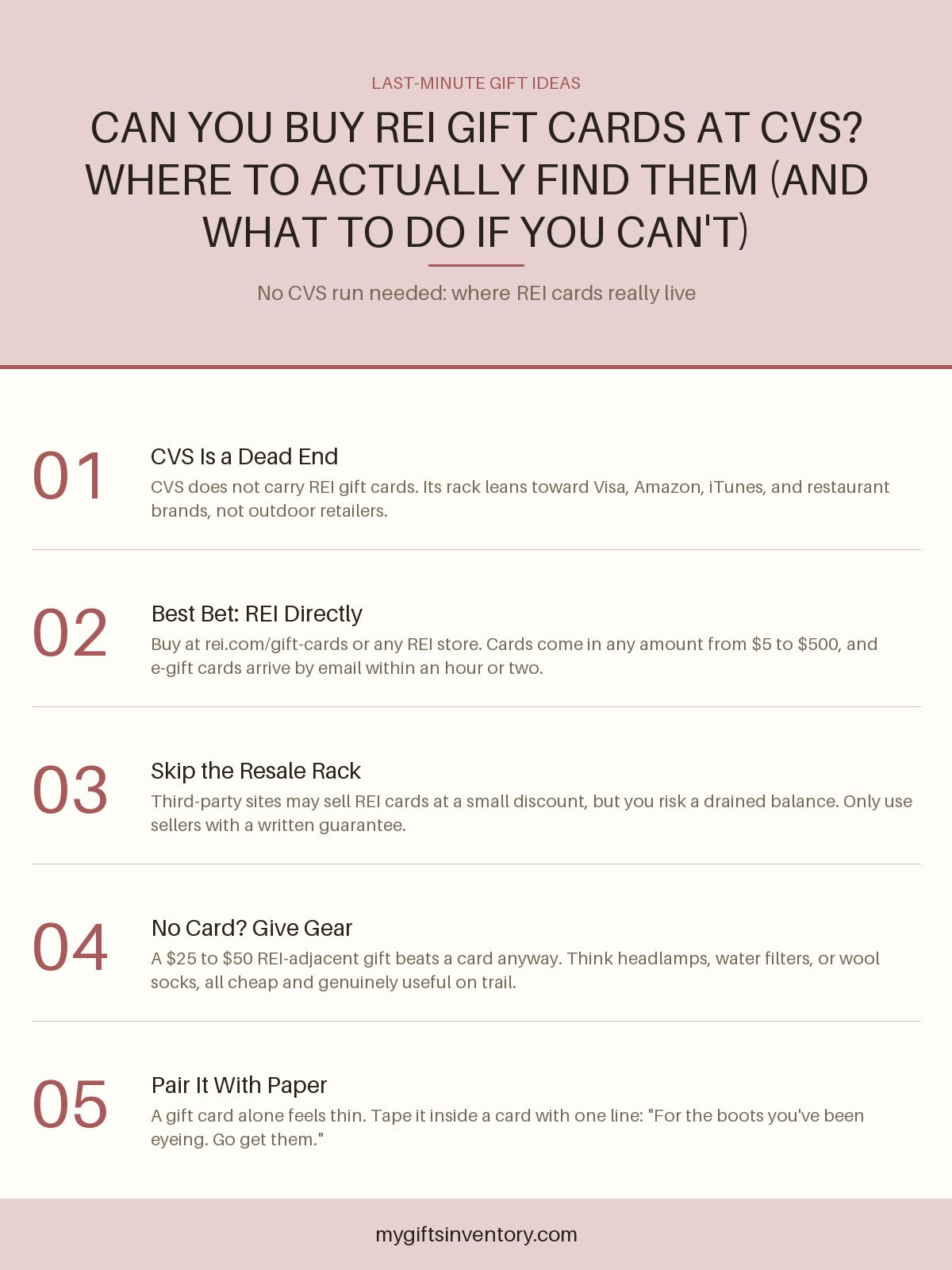
REI sells gift cards on its own website and in every store. You can choose a digital e-gift card, which usually lands in the recipient's inbox within an hour or two, or a physical card you can pick up in a store or have shipped. Amounts typically run from $5 up to $500 per card, and you can buy several if you need a bigger total. There's no activation fee, and the balance never expires.
Two small things worth knowing. First, you can usually schedule a digital card to arrive on a specific date, which is genuinely useful if you're buying in November for a December birthday. Second, if the recipient has an REI membership (the co-op membership, which runs a one-time fee around $30), the card still works the same way. It just gets applied at checkout like any other payment method.
2. In-Store at REI
If you live near an REI, walking in and grabbing a physical card takes five minutes. It's also the only way to get a plastic card the same day without paying for expedited shipping. Staff at the register can load any amount you want, and if you're buying for a kid or a teenager who'll want to pick out their own gear, a physical card taped inside a card feels more like a real present than a forwarded email.
3. Third-Party Resale Sites (Proceed With Caution)
You can find REI gift cards on gift card resale marketplaces at a discount, often 3 to 10 percent off. Sometimes that's a fine deal. Sometimes it's a card that was drained before it ever got to you. If you go this route, only use a marketplace that offers a written balance guarantee and a refund window, and check the balance the moment you receive it. Our guide to checking a Giftcards.com balance walks through the general process, which is roughly the same drill for any resale card: verify before you gift it, not after.
4. What About Grocery Stores and Big-Box Retailers?
Occasionally a large grocery chain or warehouse club will stock a broader gift card wall that includes outdoor retailers, but it varies by region and by season, and REI is not a reliable name on those racks. Calling ahead takes thirty seconds and saves a trip. Don't assume because a store has a hundred cards that REI is one of them.
What to Do If You're Already at CVS and Need Something Now
This is the real situation most people are in when they search this question. You're at the register, the gift is tomorrow, and the REI plan just fell apart. Here are your realistic moves, roughly in order of how well they land.
Give Gear Instead of a Card
For most outdoorsy people, a small useful object beats a gift card anyway, because it shows you thought about them rather than about your own schedule. A decent headlamp, a compact water filter, a pair of merino wool socks, or a good dry bag all land in the $20 to $50 range and get used constantly. We keep a running list of options in our guide to the 10 best camping and hiking gifts, and most of those picks are things you can order tonight with two-day shipping or find at a local outfitter.
If the person you're buying for is more of a casual walker than a backpacker, our roundup of the best yoga gifts covers the softer end of the same idea: mats, blocks, recovery tools, all things that feel considered and don't require knowing their exact shoe size.
Buy a Different Card They'll Actually Use
Sometimes a card really is the right call, especially for a coworker or a teenager you don't know well. A CVS rack is a perfectly good place to buy a card for a coffee shop, a streaming service, or a restaurant they like. You just have to accept it won't be REI. If you're set on a card and want to see what your local store actually stocks, that CVS brand list linked above is the honest starting point rather than guessing in the aisle.
Give Cash in a Card (Yes, Really)
For a teenager saving up for a big piece of gear, cash is genuinely welcome and nobody is offended by it. Fold a $50 bill into a card with a note that says what it's for. That's more personal than a plastic card, and it doesn't require a trip anywhere.
How Much Should You Put on an REI Gift Card?
REI is not a cheap store, and that matters for the amount. A decent pair of trail runners runs $120 to $160. A three-season sleeping pad is $100 to $200. A rain shell is $150 and up. A $25 card is a nice gesture but won't cover much beyond socks and snacks, which is fine if that's the relationship, and awkward if it's a close friend expecting to buy real gear.
Our rough guidance by relationship:
Coworker or acquaintance
$25 to $50 is plenty. Enough to buy something real, not so much that it feels like a statement.
Friend, sibling, or adult child
$50 to $100. This is the range where the card actually helps toward a purchase rather than just being a token.
Partner or parent
$100 to $250 if there's a specific piece of gear in mind. At this level, consider a physical card with a note naming the item, or pair the card with a small accessory so there's something to unwrap.
If you're splitting a bigger gift with siblings or friends, several people can each buy a $50 digital card and forward them to the same person. The balances stack at checkout with no issue.
The Etiquette of Gift Cards, Briefly
A gift card on its own can feel like a shrug, even when the amount is generous. Two small fixes go a long way.
First, always include a handwritten note that names what the card is for. "For the tent you've been researching" reads completely differently than "Hope you like it." It signals that you know what they're into, even if you didn't pick the item yourself.
Second, if the card is digital, don't just forward the email. Print the confirmation or copy the code into a physical card. A forwarded email in a crowded inbox gets buried and forgotten, and then the gift effectively doesn't happen. If you're putting a card inside a wrapped box, tape it down so it doesn't slide out and get thrown away with the paper.
And one last practical note: if you receive a gift card and aren't sure of the balance, checking it takes about a minute. Most retailers have a balance lookup page. For a brand like REI, it's on their site under gift cards, and you'll need the card number and PIN.
Bottom Line
CVS doesn't sell REI gift cards, and there's no trick or hidden section where they're kept. Buy directly from REI online or in a store, keep the receipt, and if you're already stuck at a drugstore counter, pivot to a small piece of gear, a card for a brand they actually use, or cash with a note. The person receiving it cares far more about whether it's useful than about which logo is on the plastic.
Gift Ideas to Go With This


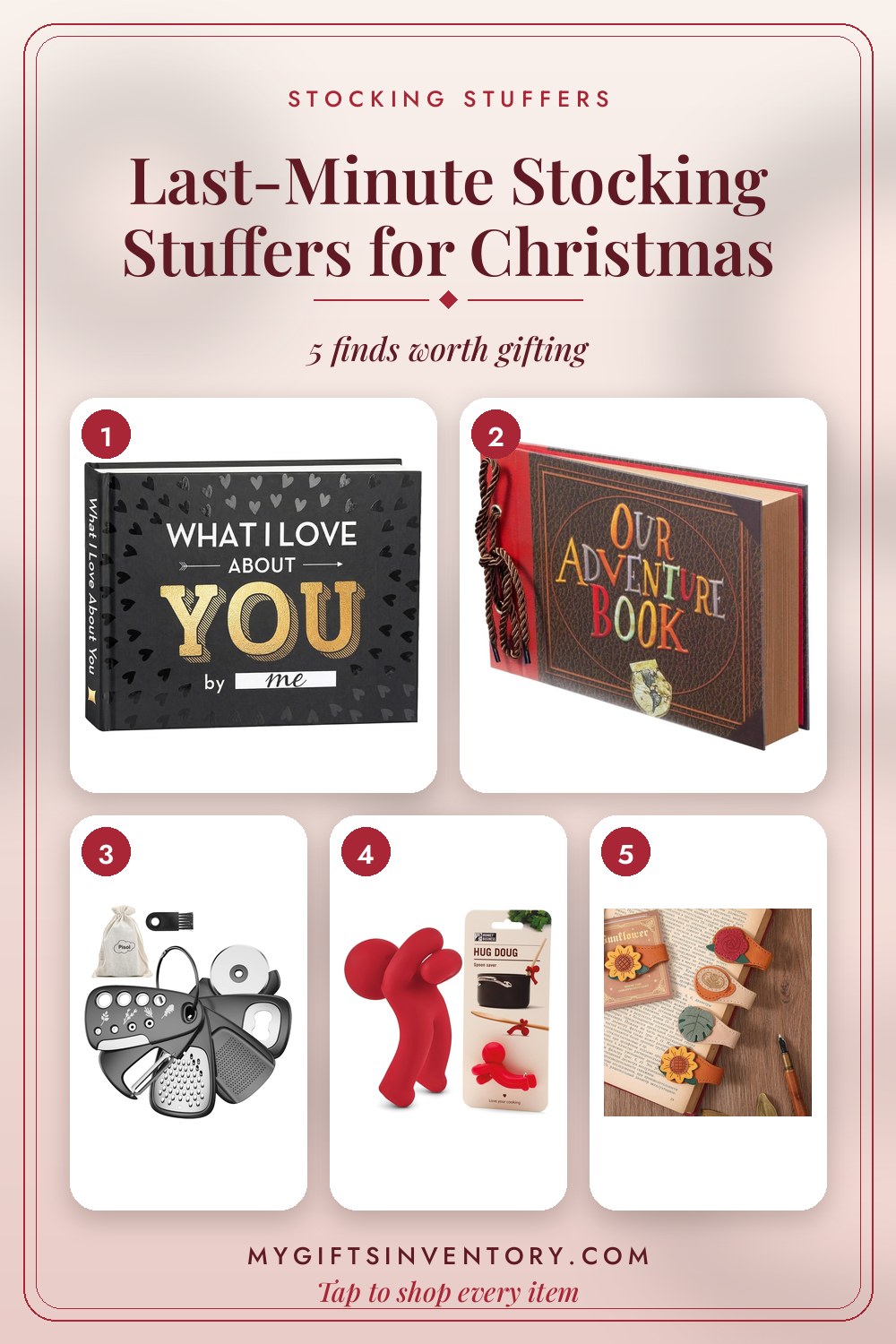
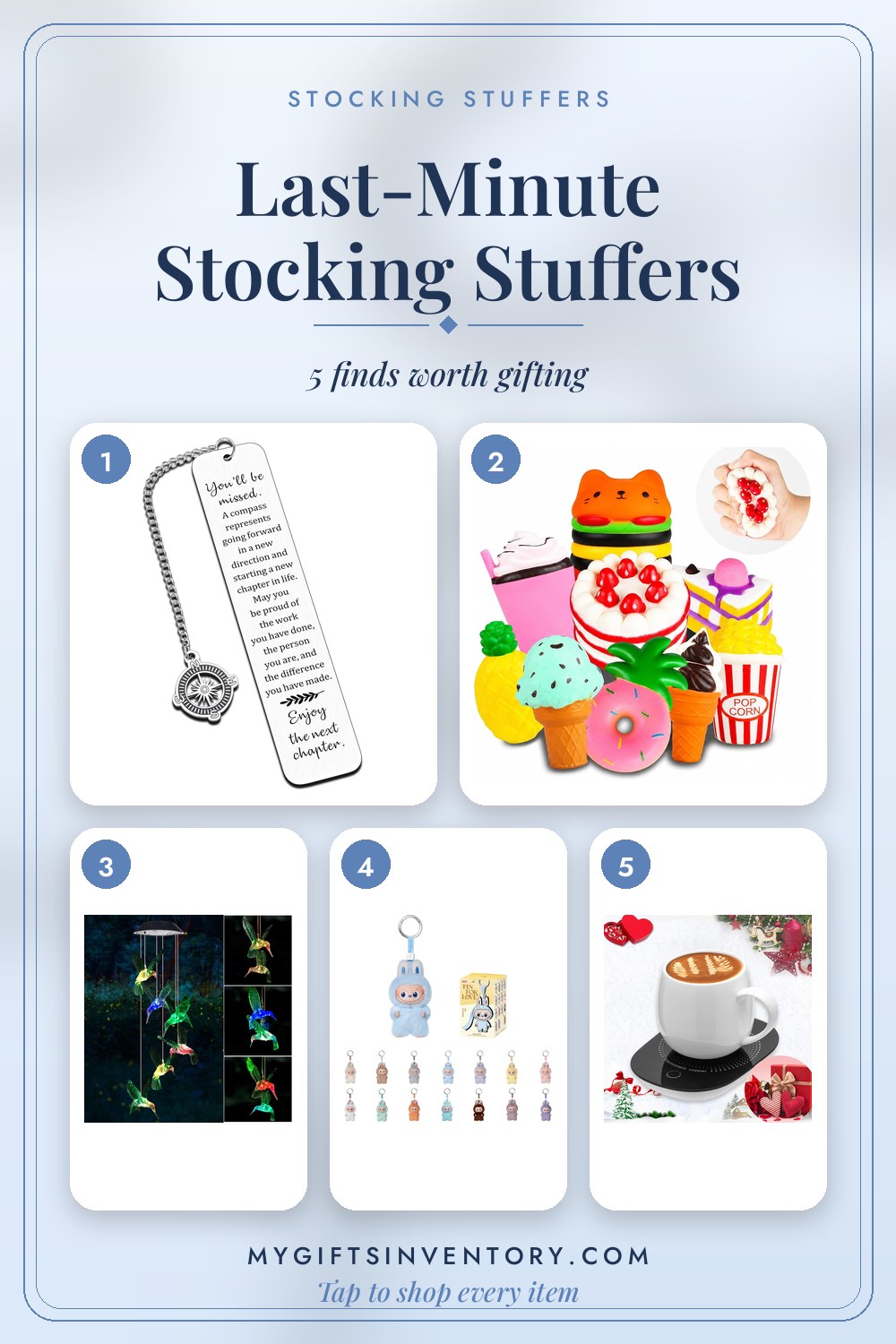
Want more ideas? Browse our full guide: 34 Stocking Stuffers & Small Holiday Gifts Under $25 (2026): Thoughtful Picks That Don't Feel Like Filler
Frequently Asked Questions
Does CVS sell REI gift cards?
No. CVS does not stock REI gift cards at any location. Its gift card racks carry national brands like Amazon, Apple, Netflix, and restaurant chains, plus prepaid Visa and Mastercard cards, but not specialty outdoor retailers.
Where can I buy an REI gift card?
The easiest place is REI itself, either at rei.com or at any REI store. Digital cards usually arrive within an hour or two, and physical cards are available in store or by shipping. Third-party resale sites also carry them at a small discount, but only buy from sellers with a balance guarantee.
Can I buy an REI gift card at Target or Walmart?
Usually not. Both chains have large gift card displays, but REI is rarely included and availability varies by region. Call the specific store before making a trip, since the assortment changes and nobody wants to drive across town on a guess.
What amounts can I put on an REI gift card?
REI gift cards typically load from $5 up to $500 per card, with no activation fee. If you need more than $500, buy multiple cards, since the balances combine at checkout without any issue.
Do REI gift cards expire?
No. REI gift cards don't expire and carry no maintenance fees, so the recipient can hold onto one for a year and still use it. That's one of the reasons a card is a safe last-minute gift for someone whose gear preferences you don't know well.
Looking for an Actual Gift Instead?
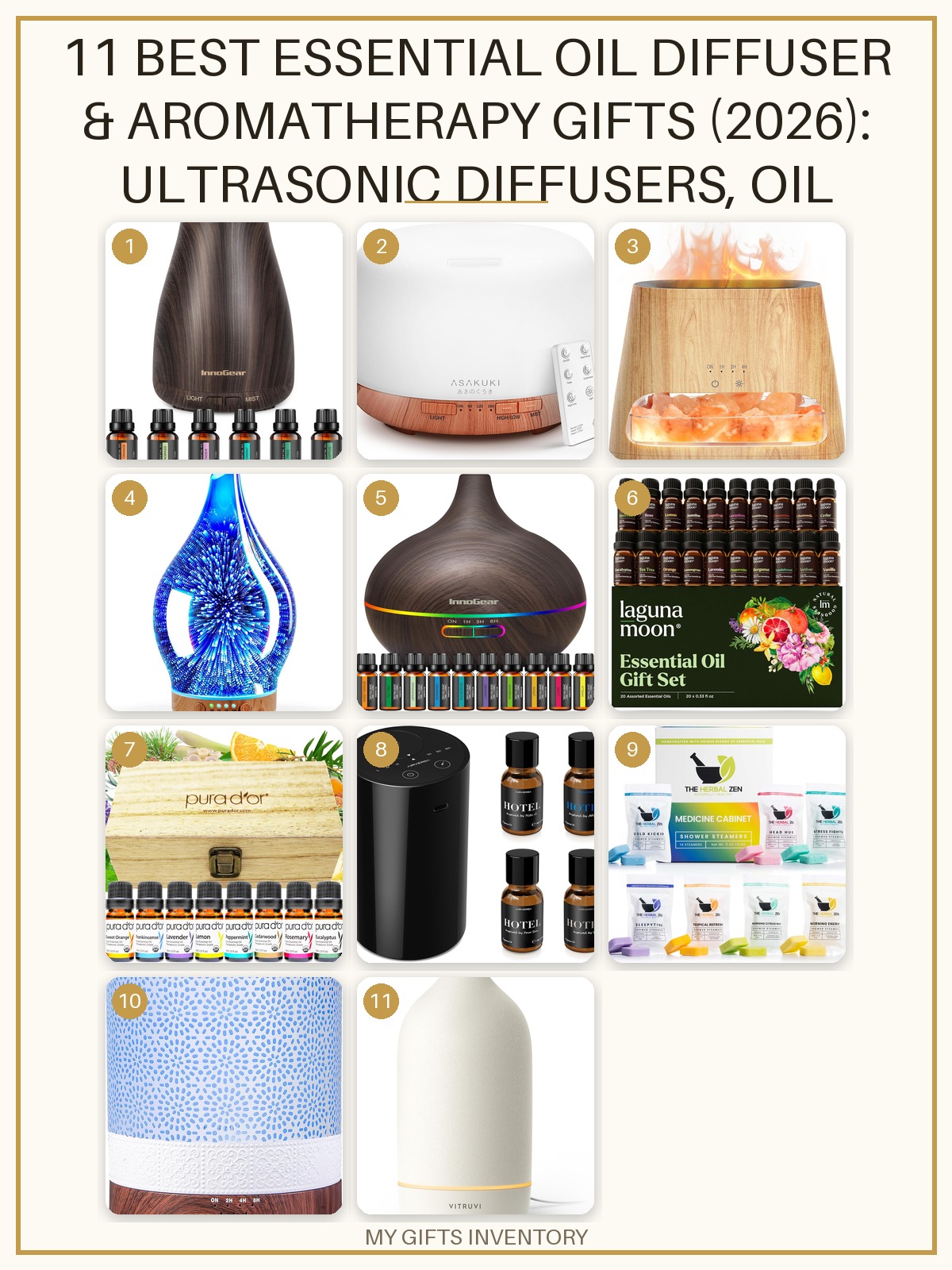
Gift Sets We Love Right Now
Every item picked, priced and linked, ready to buy.
More Gift Advice