Client Gift Tax Deduction: When Gifts Are Tax-Deductible and How to Report
Client gifts can be deductible in some cases, but tax rules are strict on amounts, intent, and documentation. We walk through what counts, what does not, and how to plan before you buy.

As an Amazon Associate, My Gifts Inventory earns from qualifying purchases. We only recommend products we'd genuinely consider buying ourselves.
When we’re buying client gifts, the anxiety usually shows up right before checkout: “Will this be deductible, and are we about to make a tax mistake?” If you search “client gift tax deduction,” you’re probably trying to balance three things at once: staying within IRS rules, keeping the gift thoughtful, and not creating extra work at tax time.
We’ll help you get grounded in the practical side. We’ll also cover the small details that matter, like what to write in the card, how to wrap, and how to document the gift so it doesn’t turn into a “Why did we buy this?” conversation with your accountant.
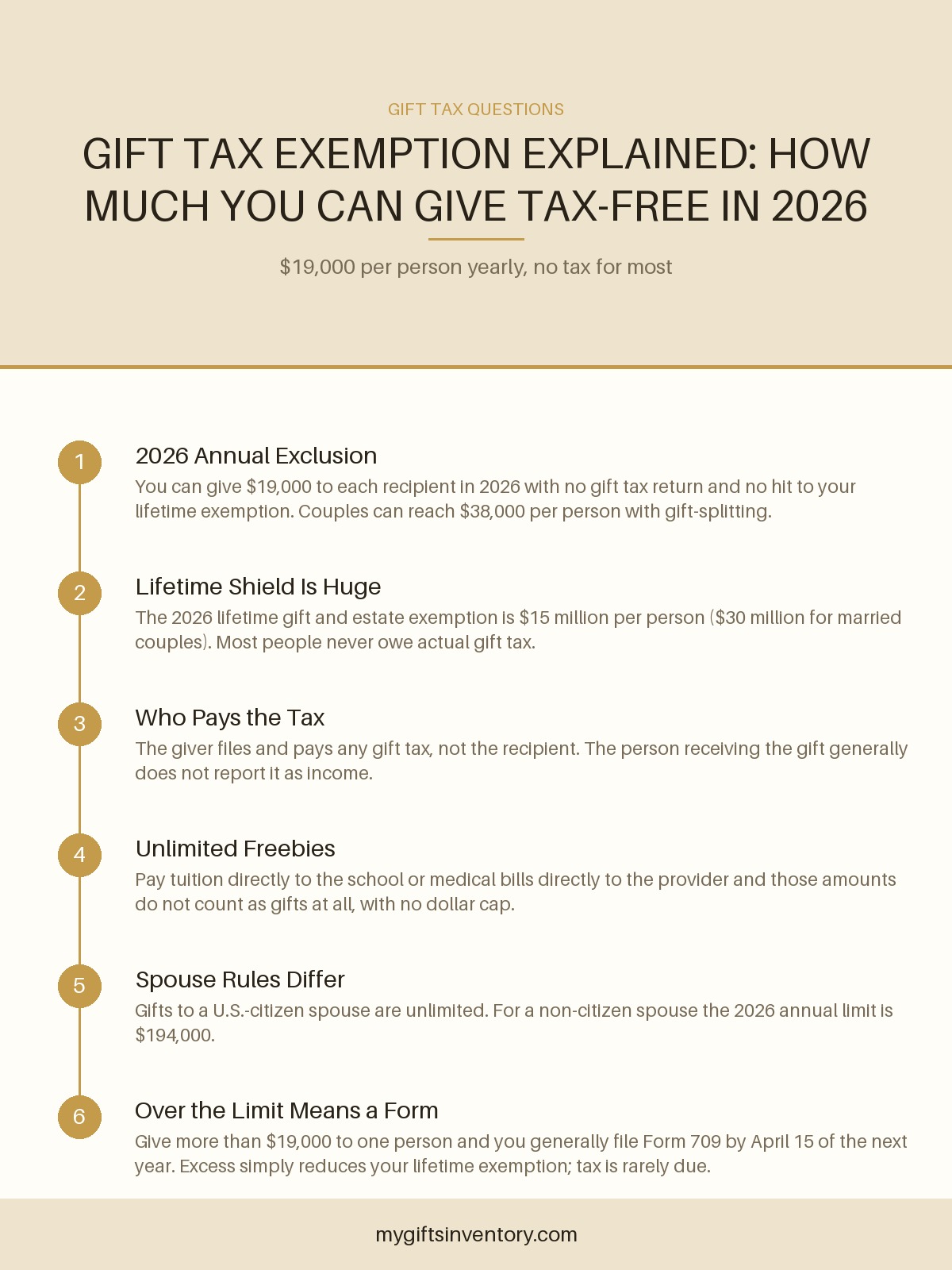
Client gift tax deduction basics (what “deductible” really means)
First, a helpful framing: when people say “client gift tax deduction,” they’re usually asking whether the cost of giving a gift can be treated as a deductible business expense. In the US, that depends on whether the expense qualifies under the applicable rules for business expenses and whether it is properly substantiated.
The gift has to be a real gift, not a disguised transaction
The IRS looks closely at intent and context. A true client gift is for goodwill, not for purchasing something back from the client. If a gift is tied to a specific payment, contract, or purchase decision in a way that looks like compensation or a marketing fee, you may not get the same treatment.
We treat this like a common-sense test we can explain to ourselves: would we be comfortable describing it as a “gift” even if the client never buys from us again? If the answer feels shaky, we pause and adjust the plan.
Deduction and limits often hinge on “small gifts” rules
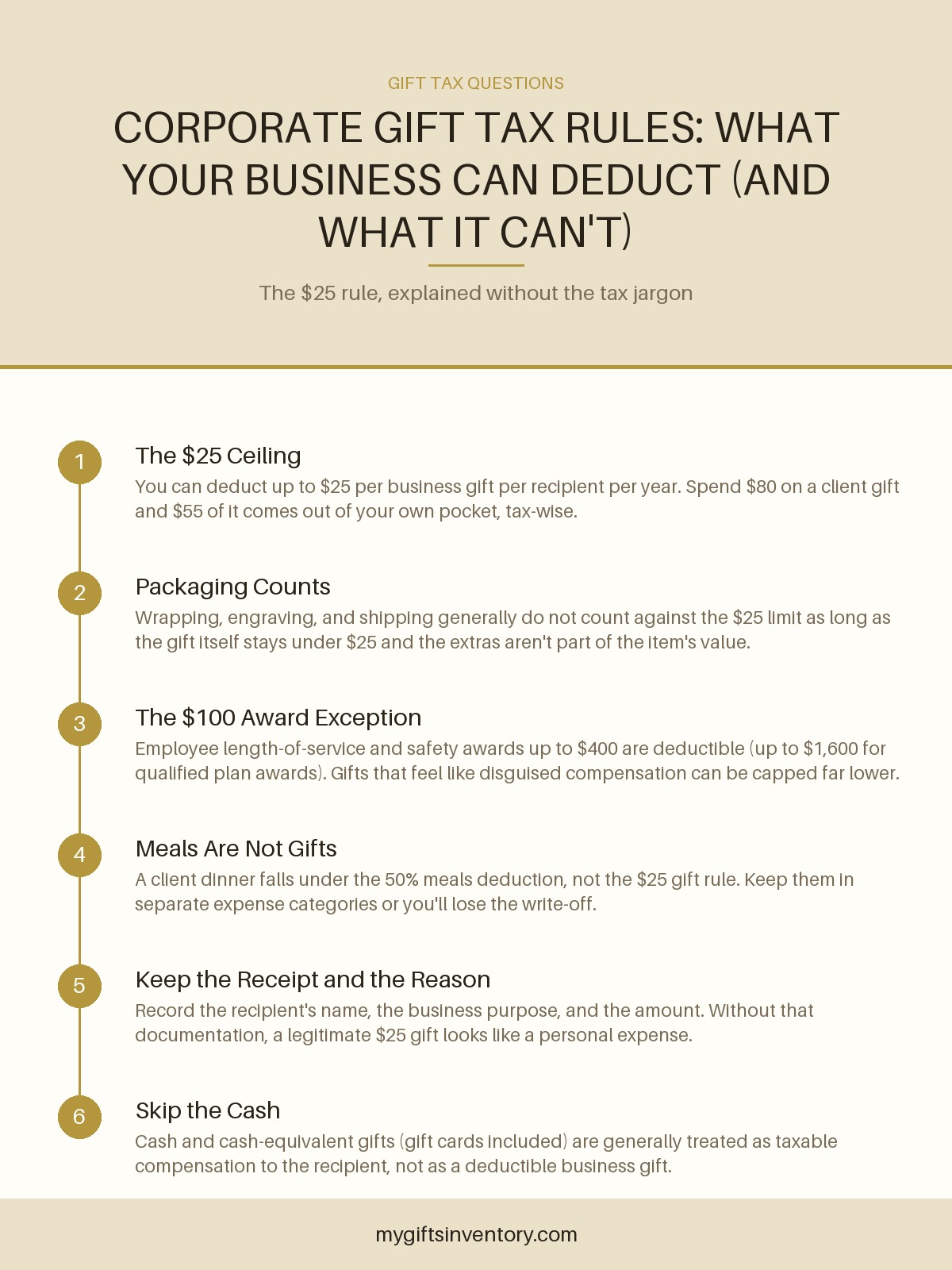
Many businesses plan their client gifting around the $25 per-person, per-year guideline that appears in the de minimis gift concept used in business expense planning. If you stay in that lane, you are generally aiming for the simplest version of the rules, and you reduce the chance of a deduction fight later.
Where this becomes tricky is not just the amount. It’s how the gift is presented and how many people are truly receiving it. For instance, a “set” that is obviously meant to be given as one gift should generally be treated as one gift for purposes of planning.
How to decide whether a client gift is deductible
Step 1: Identify the recipient clearly
“Client” can mean an actual client relationship, a business contact, or a vendor. For deduction purposes, we want the relationship to be documented. Keep a simple log that includes:
- Client or contact name
- Date of the gift
- Brief business purpose statement
This is also where card writing helps. If you include the occasion and a short relationship-specific line, it becomes easier to show the gift was for goodwill, not a sales pitch.
Step 2: Avoid gifts that are easier to challenge
We generally avoid cash-equivalent gifts and anything that looks like compensation. If you’re considering items that act like payment, you should assume the deduction could be more complicated.
Also watch the “gray area” between gifts and marketing. If your gift includes heavy branding, pricing inserts, or is clearly an advertising mechanism that looks like promotion rather than goodwill, expect more scrutiny.
Step 3: Keep the amount and frequency sensible
The simplest planning rule we use is: do not stack too many gifts to the same person in a short time window if they feel like one larger thank-you. For example, buying one item for $15 and another $12 for the same recipient on back-to-back days can look like two separate gifts only if the timing and occasion truly support that story.
If you want to stay safe, pick one moment and one gift, then write a note that matches that moment.
Step 4: Document like you’ll be asked, because you might be
At tax time, documentation is what turns an “it seemed like a good idea” purchase into something your records can support. We recommend saving:
- Receipt (showing date and cost)
- Who received it (name or internal contact ID)
- What it was (brief description)
- Occasion and a one-sentence purpose
That last bullet is underrated. If you can write a clean sentence like “client relationship goodwill for year-end,” you’re already ahead.
Budgeting for client gifts without breaking the deduction plan
Most people don’t need a spreadsheet romance story. They need a budget they can actually follow.
A practical per-recipient budget target
If your goal is to align with small-gift planning, we suggest building your budget around a “comfort zone” under the $25 planning guideline, rather than right at the edge. For example:
- Set a gift item target of $15 to $22 per person
- Include tax and receipt total in your estimate
- Keep packaging costs modest if they could be scrutinized as part of the gift cost
If you’re giving to, say, 20 clients, that becomes $300 to $440 total for gifts plus any small card or wrap costs. It’s manageable, and it keeps your records simple.
What to buy when you want “timeless” but not boring
We’ll stay away from product roundups here, but the gifting principle matters for deduction planning too: thoughtful but reasonable. If you want ideas that don’t create a weird “we had no reason to buy this” feeling, start by choosing gifts in price tiers that match your budget boundaries.
If your team prefers small, useful, everyday items, it can help to think in terms of gifts that fit common household routines. For inspiration in that style, you might like this guide: 20 Kitchen Gadgets Gift Ideas Under $50 (2026): Gifts They’ll Actually Use.
What to write in the card (and what to avoid)
This is where we see people accidentally undermine their own “gift” framing. A card can be warm, personal, and still support the documentation story.
Card message formulas that read like goodwill
Keep it short, specific, and relationship-based. Here are examples that fit client gifting without turning into an ad copy vibe:
- Year-end: “Thank you for your partnership this year. Wishing you a restful holiday season and a great start to the new year.”
- Milestone: “Congratulations on your recent milestone. It’s been a pleasure working together, and we’re grateful for your trust.”
- Generic but safe: “With appreciation for your business. Wishing you all the best.”
Avoid these common pitfalls
- Pricing or “call us for more” language in the card
- Fluffy marketing paragraphs that read like a campaign
- Pressure to schedule, sign, or renew right now
If the card reads like a sales follow-up, it can blur the line between gift and compensation or marketing expense.
If you need help choosing gifts that match the tone
Sometimes the gift itself determines how the card should sound. For example, a small indulgence works well with gratitude language, while a functional item reads better with a note about convenience or appreciation.
If you’re aiming for “nice but not extravagant,” a tiered approach can help. This guide may help your internal team stay within a sensible gifting mindset: 20 Gift Ideas for Gourmet Treats, Wine & Coffee Gift Ideas Under $50 (2026).
Wrapping, presentation, and why it can affect how the gift is perceived
Wrapping is not just for aesthetics. It helps the gift read as a gift. A clean presentation also supports your “this is goodwill” narrative in a very subtle way.
Simple wrapping rules we like
- Choose tidy wrapping materials that match the occasion
- Use a note holder so the card stays intact
- Avoid huge packaging that makes the gift look like an event rather than a thoughtful item
If your company uses uniform gift bags or boxes, keep records of the cost and consistency. Again, this is about substantiation. You are not trying to be fancy. You’re trying to be defensible.
When gift cards enter the picture
Gift cards can be convenient, but they are not always the cleanest fit for “gift” framing, depending on the plan and your accounting approach. If you do use gift cards, make sure the documentation clearly ties them to client goodwill.
If your team goes the gift-card route, you’ll want to know what kinds of options exist and how the brand programs work operationally. For example, if you’re shopping around for mainstream retailers, you can use internal checklists supported by our brand-specific gift card pages. Here is one example: Gift Cards at Walmart: The Complete List of Brands, Fees & Where to Buy (2026).
Planning timelines that prevent last-minute tax headaches
Client gifts create two kinds of problems: shipping delays and record gaps. If you plan for these up front, you buy fewer things twice and you write better notes because you can take ten minutes, not ninety seconds.
Timeline: when to buy and assemble
Here’s a practical plan we see work:
- 4 to 6 weeks before you need them: finalize the recipient list, set your per-person budget target, and choose gift categories.
- 2 to 4 weeks before: order gifts and cards, confirm arrival dates, and start assembling the gift log.
- 1 week before: wrap and write the cards. If you are personalizing, use a template plus a one-line personalization for each client.
- Delivery window: aim for consistent delivery timing so the story in your records is clean.
Use a “receipt-first” workflow
We recommend capturing receipts immediately and assigning them to a gift batch. If you wait until the end, it turns into a scavenger hunt and you lose the date or vendor information that helps support the expense.
Common scenarios we see (and how to think them through)
Scenario A: You want to give a $50 gift to each client
We would treat this as a “pause and confirm” scenario. Even if it feels reasonable, higher per-recipient amounts are more likely to be challenged, and they can complicate the cleanest deduction treatment. If you want to stay within a simple plan, consider adjusting the amount, using a smaller per-recipient item, or reducing the number of recipients you gift.
We do not recommend guessing if your accountant will be asked to justify it. Better to plan now than to negotiate later.
Scenario B: You’re giving the same type of item to many clients
This usually makes documentation easier. Just make sure the purchase receipt ties clearly to the date and vendor, and your gift log maps to the right recipients. Consistency helps your substantiation, and it helps your budgeting.
Scenario C: You’re giving gifts to a client who also works with you on marketing or referrals
Here’s where intent matters. If the “gift” feels connected to ongoing services or referrals, that can look like compensation. A gift note that emphasizes goodwill, plus a gift log with a clear business-purpose sentence, can help, but you should still align on expected tax treatment with your professional advisor.
Gift planning for “client goodwill” that doesn’t feel transactional
A good client gift does two things at once: it protects the relationship and it protects the story you tell in your records. If you want a planning mindset that makes your choices feel natural, start with the occasion and the relationship, then set your budget boundaries.
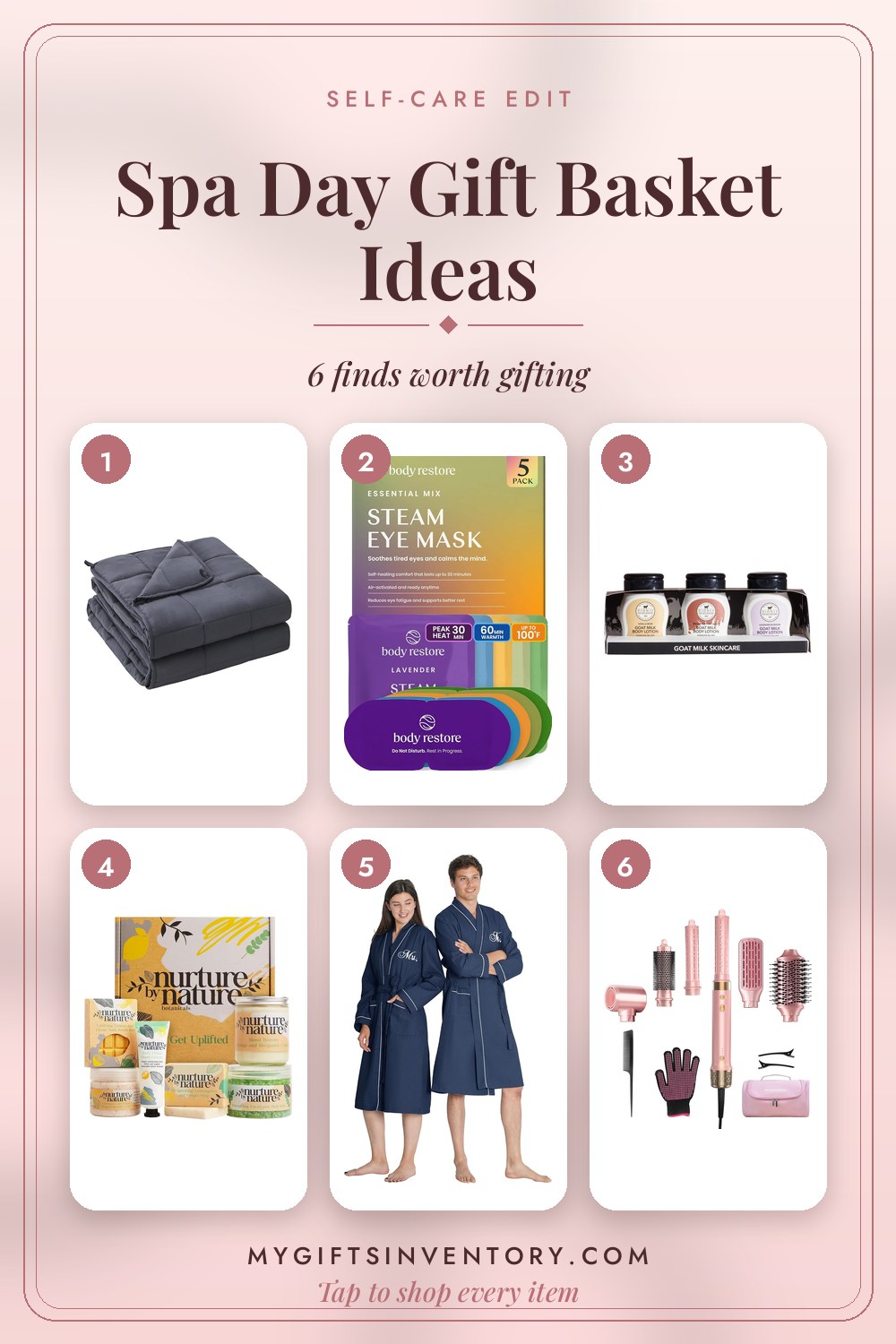
If you want a structured way to think about it, these planning pages can help your team avoid overbuying and keep gifts sensible in a way that matches typical gifting expectations. For ideas that sit comfortably within common under-$50 tiers, you can explore: 20 Gift Ideas for Self-Care & Spa Gift Sets Under $50 (2026).

Frequently Asked Questions
Are client gifts tax-deductible in the US?
Client gifts can be tax-deductible as a business expense when they qualify under the relevant IRS rules and are properly documented. We recommend planning around small-gift treatment and keeping receipts plus a simple gift log with recipient and occasion.
How much can we give before it stops being deductible?
The most common planning guideline is the $25 per-person, per-year de minimis small gift concept, but details vary based on facts and how the gift is treated in your records. If you are planning to give more than that, we suggest confirming the expected tax treatment before buying.
Do gift cards count as client gifts for deduction purposes?
Gift cards can be part of client gifting, but whether they support the same “gift expense” framing depends on how they are treated and documented. If you use gift cards, keep the documentation clean and be consistent about how you describe the purpose in your internal log.
Do we need to write something in the card?
It helps a lot to write a short, relationship-based message that matches the occasion and the goodwill purpose. A calm note also supports your substantiation if someone questions whether the item was a true gift rather than a sales tactic.
What records should we keep for a client gift?
We recommend saving the receipt and maintaining a simple gift log that lists recipient name, date, item description, cost, and a one-sentence business purpose. This turns a pile of paper into a defensible expense story.
Looking for an Actual Gift Instead?
Gift Sets We Love Right Now
Every item picked, priced and linked, ready to buy.
More Gift Advice