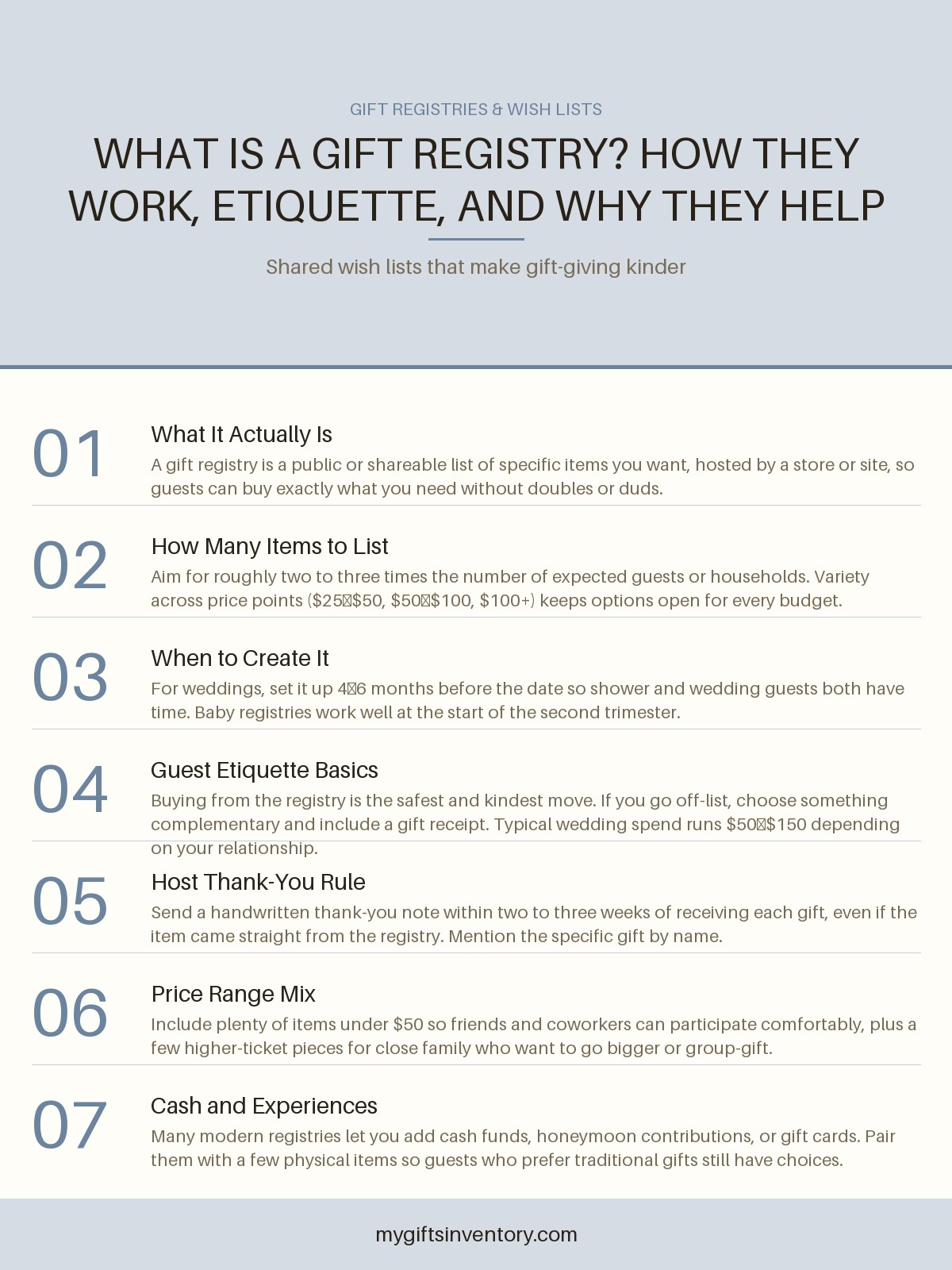
Gift Registry Etiquette: What Guests and Couples Actually Need to Know
From how much to spend to what to do when everything's out of budget or there's no registry at all, here's how to navigate gift registries without the guesswork.
As an Amazon Associate, My Gifts Inventory earns from qualifying purchases. We only recommend products we'd genuinely consider buying ourselves.
You're staring at a registry link a friend sent you, and somehow it feels more stressful than picking out a gift on your own ever did. Do you have to buy exactly what's on the list? Is it rude to spend less than $50? What happens when everything under $75 is already claimed and all that's left is a $400 stand mixer? We've all been there, scrolling through a registry at 11pm trying to figure out the unspoken rules nobody actually explains.
Registry etiquette isn't complicated once you know the actual expectations behind it, both as a guest and as the person who built the list. Here's how it really works.
What a Gift Registry Is (and Isn't) For
A registry exists to solve a real logistical problem: it prevents five people from buying the same waffle iron and nobody buying the couple actual bath towels. It's a coordination tool, not a binding contract. Think of it as a helpful menu rather than a mandatory checklist. The couple or parent-to-be is telling you what they need and what sizes, colors, or models they prefer, which honestly makes gift-giving easier for you too, since you don't have to guess.
That said, a registry is a strong hint, not a demand. Nobody is required to buy exclusively from it, and nobody should feel embarrassed asking a guest to stick close to it either. Both things can be true at once.
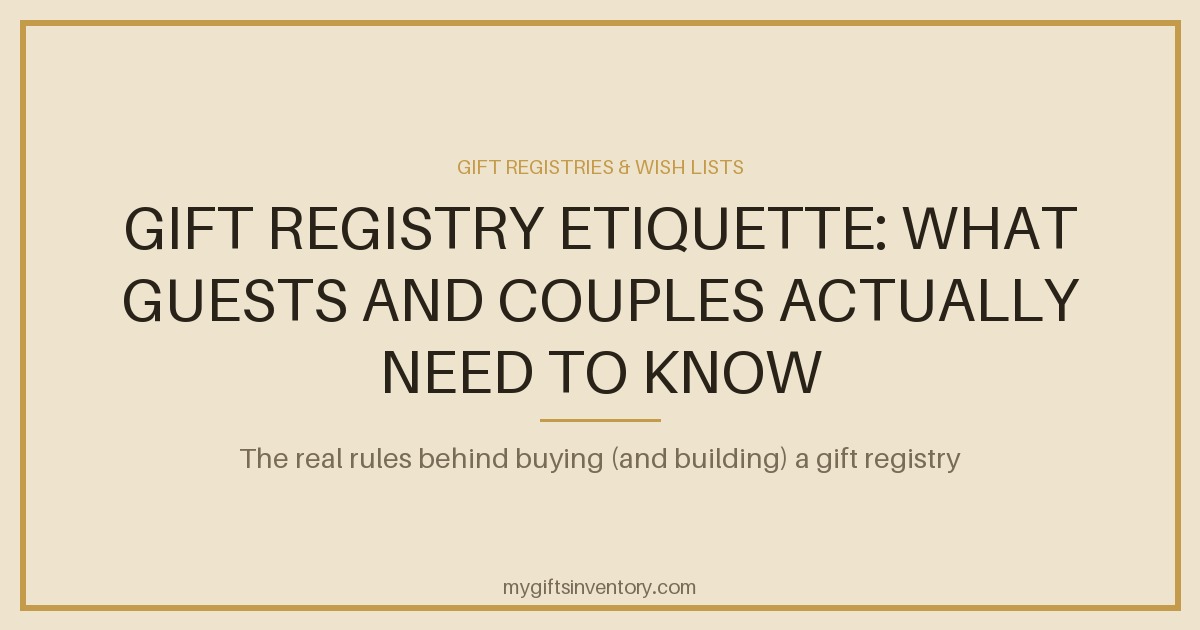
How Much to Spend When Buying Off a Registry
The dollar amount matters less than most people assume, but there are reasonable ranges depending on the occasion and your relationship to the honoree.
Wedding Registries
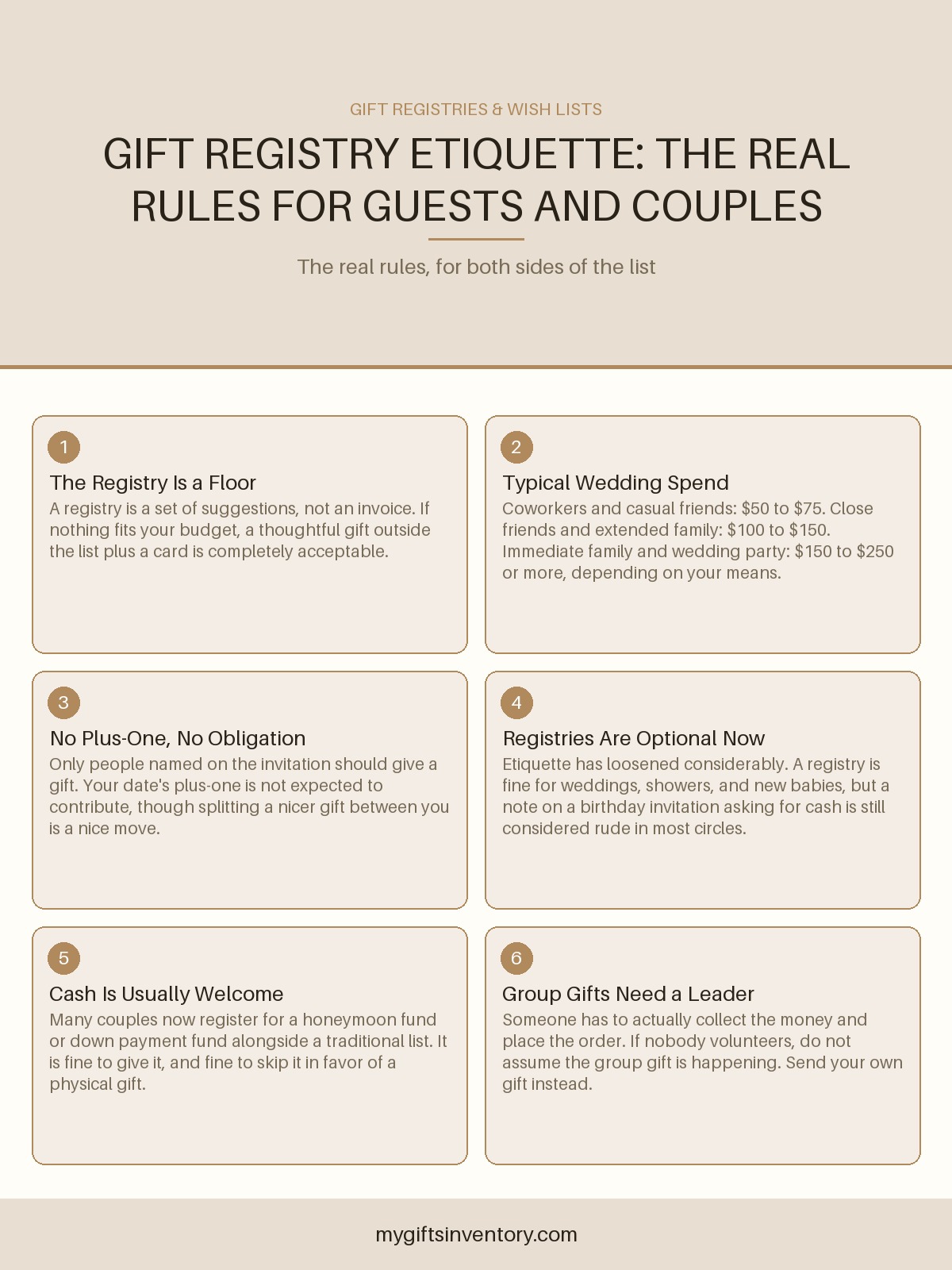
For weddings, a common range is $75 to $150 if you're a coworker, distant cousin, or plus-one attending mostly out of politeness. If you're a close friend, sibling, or the couple's parent, $150 to $250 or more is typical, especially if you're also covering the cost of attending (travel, hotel, an outfit). There's an old myth that your gift should "cover your plate" at the reception. Ignore it. Nobody is calculating your gift against the cost of your chicken dinner, and you shouldn't calculate it that way either.
Baby Showers
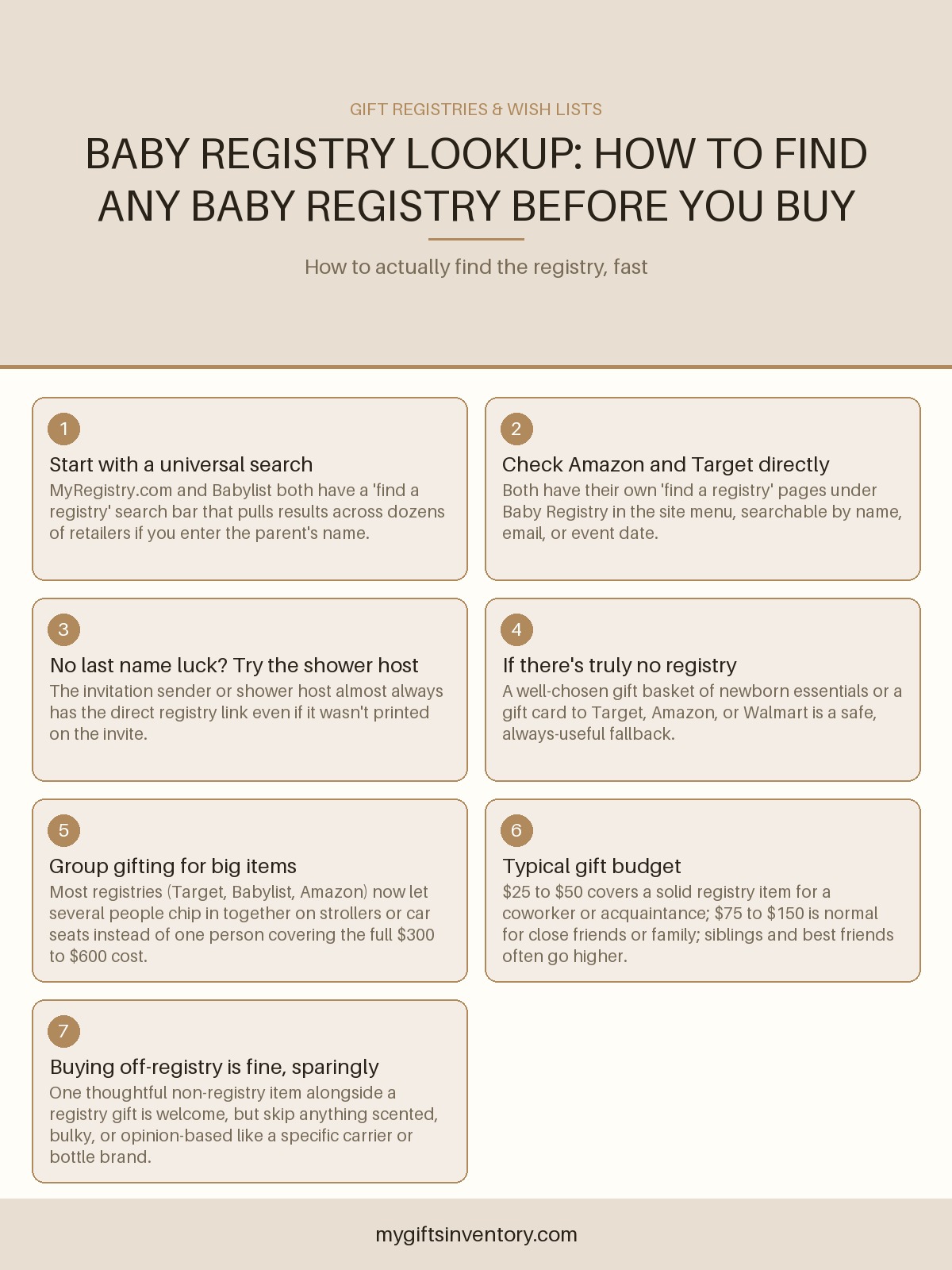
Baby shower gifts run smaller, usually $30 to $75 for most guests, and $75 to $150 for close family or the baby's godparent. Registries for babies tend to skew toward practical, mid-price items like car seats, diapers in bulk, or nursery basics, so it's easier to find something in a comfortable range.
Bridal Showers and Engagement Parties
These are usually smaller and more intimate than the wedding itself, so a gift in the $30 to $60 range is completely normal, often something lighter or more personal than what you'd give for the wedding. If you're looking for something with a bit more sentiment than a kitchen gadget, a piece from our personalized jewelry gifts for her guide works well for a bridal shower, since it feels special without needing to match the registry exactly.
Buying Off-Registry: When It's Okay and When It's Not
Off-registry gifts are fine when they're thoughtful and clearly personal, not just an easier substitute for whatever you didn't want to look for. A hand-me-down heirloom, a piece of art, a subscription to something they love, or a gift tied to an inside joke between you and the couple all land well. What doesn't land well is buying something registry-adjacent but wrong, like a random blender when they registered for a specific model, just because it was cheaper or more convenient for you.
If you know the recipient really well and want to go a different direction entirely, lean into what actually delights them rather than what's practical. For someone who already seems to have every kitchen gadget and candle imaginable, our gift ideas for someone who has everything guide is a good source of inspiration for that off-list gift that still feels considered.
If Everything's Out of Your Budget
This happens constantly, especially on popular registries where the $30-$50 items get claimed within days of the shower invitation going out. You have a few solid options:
- Split a big item with another guest. Text a mutual friend or family member and go in together on the $200 stroller or the espresso machine. Most registries let two people mark the same item as purchased once it's confirmed.
- Give cash toward a bigger item. A card that says something like "we'd love to put this toward the crib you registered for" is completely acceptable and often genuinely appreciated more than a smaller standalone gift.
- Give a gift card instead. A Target gift card or similar retailer card lets the couple fill in whatever's still missing from their list on their own timeline, which takes the pressure off you to guess correctly.
Registry Etiquette for the Couple or Parents-to-Be
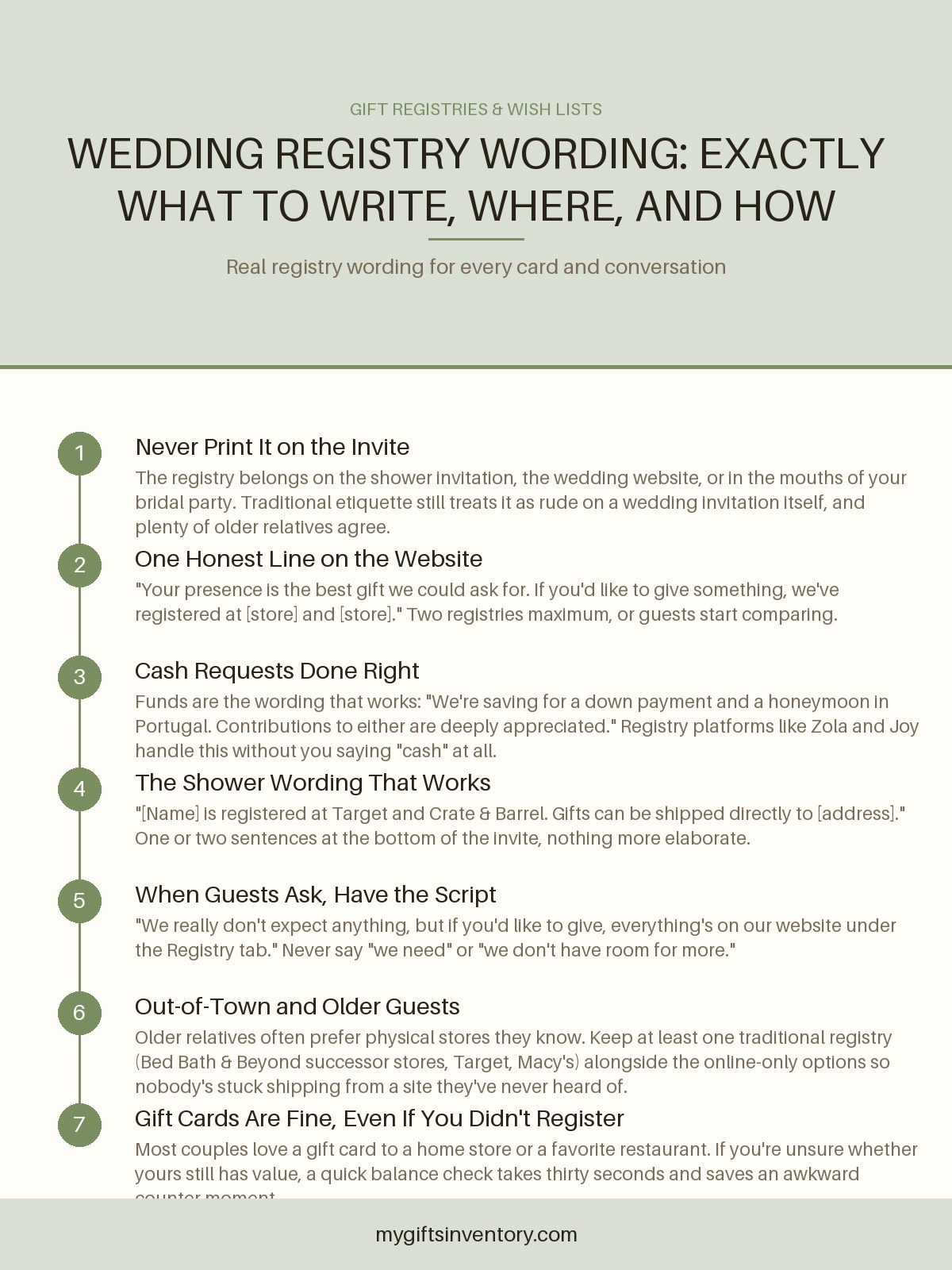
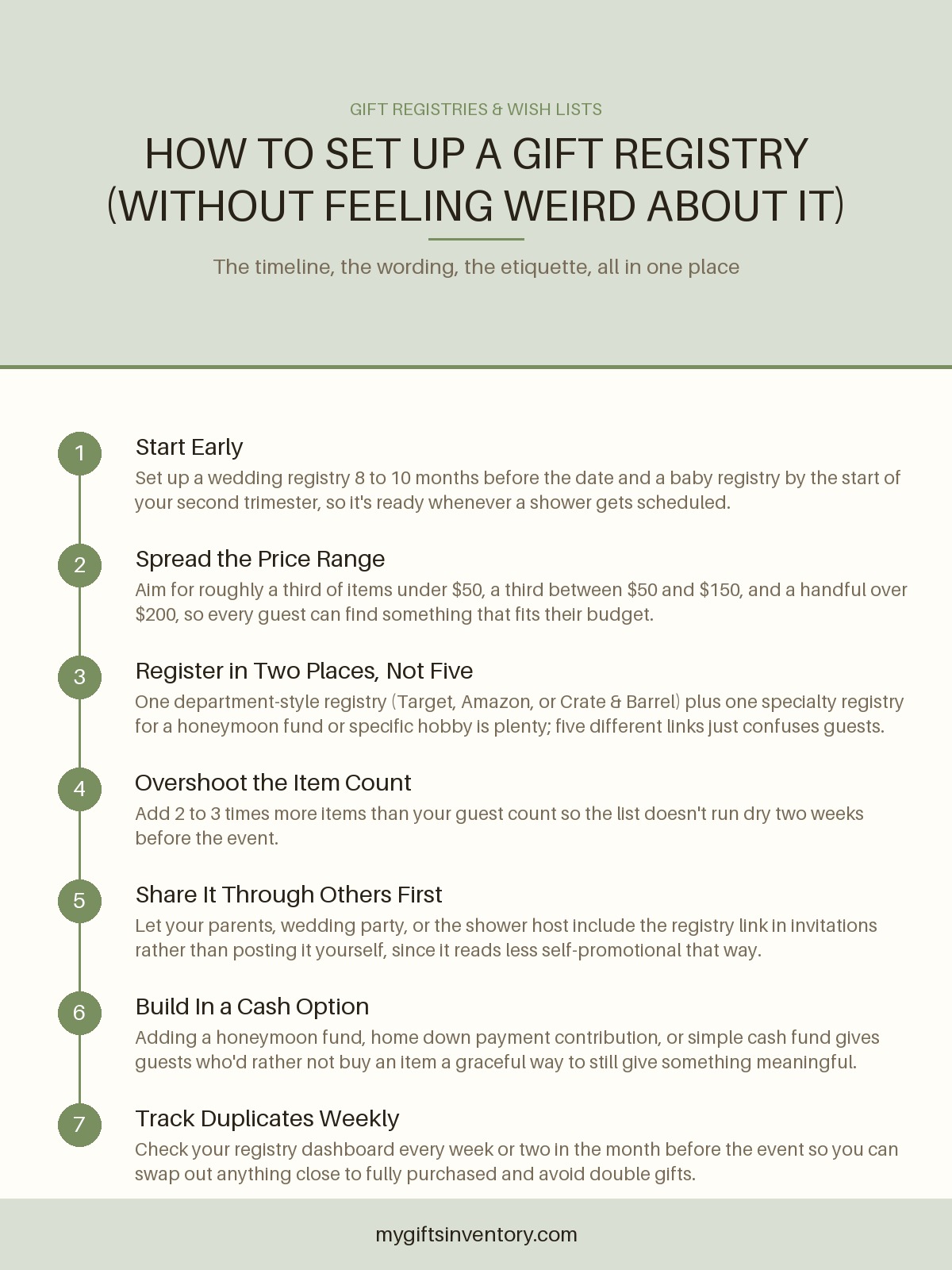
If you're the one building the registry, a little planning goes a long way toward making things easier on your guests. Include a genuine spread of price points, not just high-end items. A well-balanced registry has options under $30, a solid middle tier between $50 and $100, and a handful of bigger-ticket items in the $150-$400 range for group gifting or close family. Register at more than one store if your guest list spans different generations or comfort levels with online shopping, since some relatives still prefer walking into a physical store.
It's completely fine to include a cash fund or honeymoon fund alongside physical items, especially if you're getting married later in life and already have a fully stocked kitchen. Just try to frame it warmly rather than transactionally, something like "we're saving for our first house and would love help getting there" reads much better than a bare request for money.
Thank-you notes still matter, even for registry gifts where the giver technically knew exactly what you'd get. A short, specific note (mentioning the actual item, not just "thanks for the gift") takes five minutes and makes the whole exchange feel less transactional. Aim to send them within two to three months of the wedding or shower.
Multiple Registries and Group Gifts
It's increasingly common for couples to have three or four registries across different stores, plus a cash fund. As a guest, you don't need to give to all of them. Pick one and give generously there rather than splitting a small amount across every list, which tends to create scattered, forgettable gifts. If you're organizing an office or friend-group collection for a coworker's baby shower, pooling money for one meaningful registry item usually lands better than everyone chipping in for something unrelated. And if the gathering is more casual, like a coffee-and-cake office celebration, something from our gifts for coffee lovers guide makes a nice group gift alongside a card everyone signs.
What If There's No Registry at All
Some couples or parents-to-be genuinely don't register, either by choice or because the event came together quickly. When that happens, don't overthink it. A gift card in a round, respectable amount ($50 to $100 for most occasions) is a completely acceptable default, and it removes the guesswork entirely. A Visa gift card works almost anywhere if you're not sure what stores they actually shop at. If you'd rather give something with more personality, a quick text to a parent or close friend of the honoree asking "is there anything they actually need right now" almost always gets you a useful, specific answer.
Registry Returns and Duplicate Gifts
Duplicate gifts happen, even with a well-maintained registry, because online tracking isn't perfect and some guests buy in stores without marking the item as purchased. If you end up with two of something, that's not a reflection on the giver's thoughtfulness, it's just the nature of the system. Most retailers with registry programs make returns and exchanges simple, often with an extended return window specifically for registry gifts and no receipt required since the purchase is tied to the registry itself. As the recipient, there's no need to feel guilty about returning a duplicate or exchanging something for a different size or color. As the giver, if you find out later your gift was returned, try not to take it personally. It usually just means the couple already had one, not that they didn't appreciate the gesture.
Gift Ideas to Go With This


Want more ideas? Browse our full guide: 20 Housewarming Gift Ideas Under $50 (2026) New Homeowners Will Actually Use
Frequently Asked Questions
Is it rude to not buy from the registry?
No, it's not rude at all as long as your alternate gift is thoughtful and appropriate for the occasion. Registries are meant to be helpful suggestions, not strict requirements, so a well-chosen off-list gift is always welcome.
How much cash is appropriate to give instead of a registry item?
For weddings, $75 to $150 is typical for acquaintances and $150 to $250 or more for close family and friends. For baby showers, $30 to $75 is standard for most guests, with closer relatives often giving more.
What do you do if everything on the registry is already purchased?
Check back periodically, since items are sometimes returned or the list gets updated closer to the event. If nothing opens up, a gift card or a thoughtful off-registry gift in a similar spirit works just as well.
Should you bring a registry gift to the shower or ship it?
Either is fine, and most registries actually encourage shipping directly to the host or honoree's address to avoid a pile of boxes at the party. If you do bring it in person, a gift bag is more practical than full wrapping since it's easier to transport home afterward.
Is it okay to ask what someone wants instead of using their registry?
Yes, and it's often appreciated, especially for guests who want to give something more personal. A quick message like "I saw your registry, but is there anything else you actually need right now" shows genuine care without ignoring the list entirely.
Looking for an Actual Gift Instead?
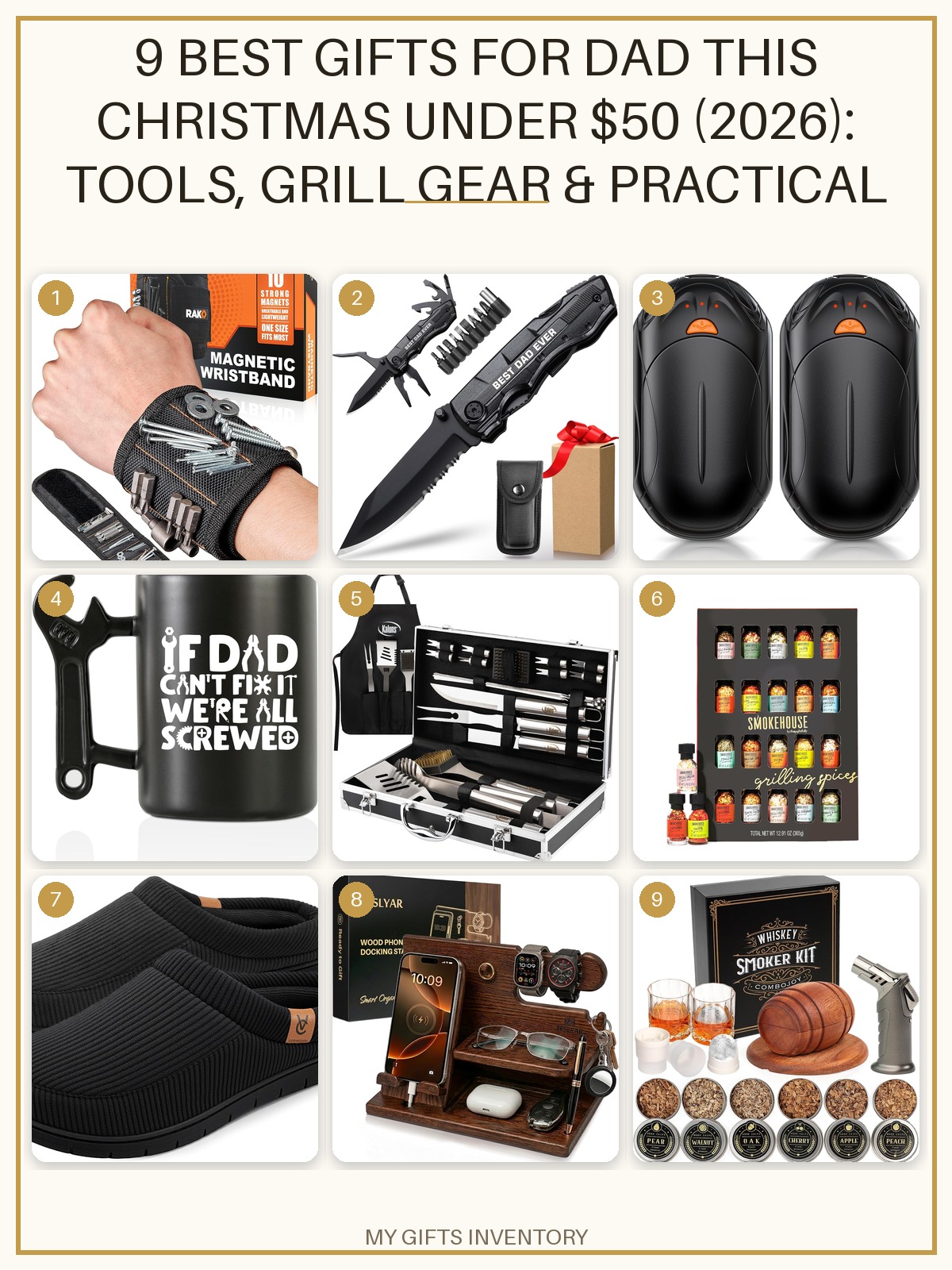

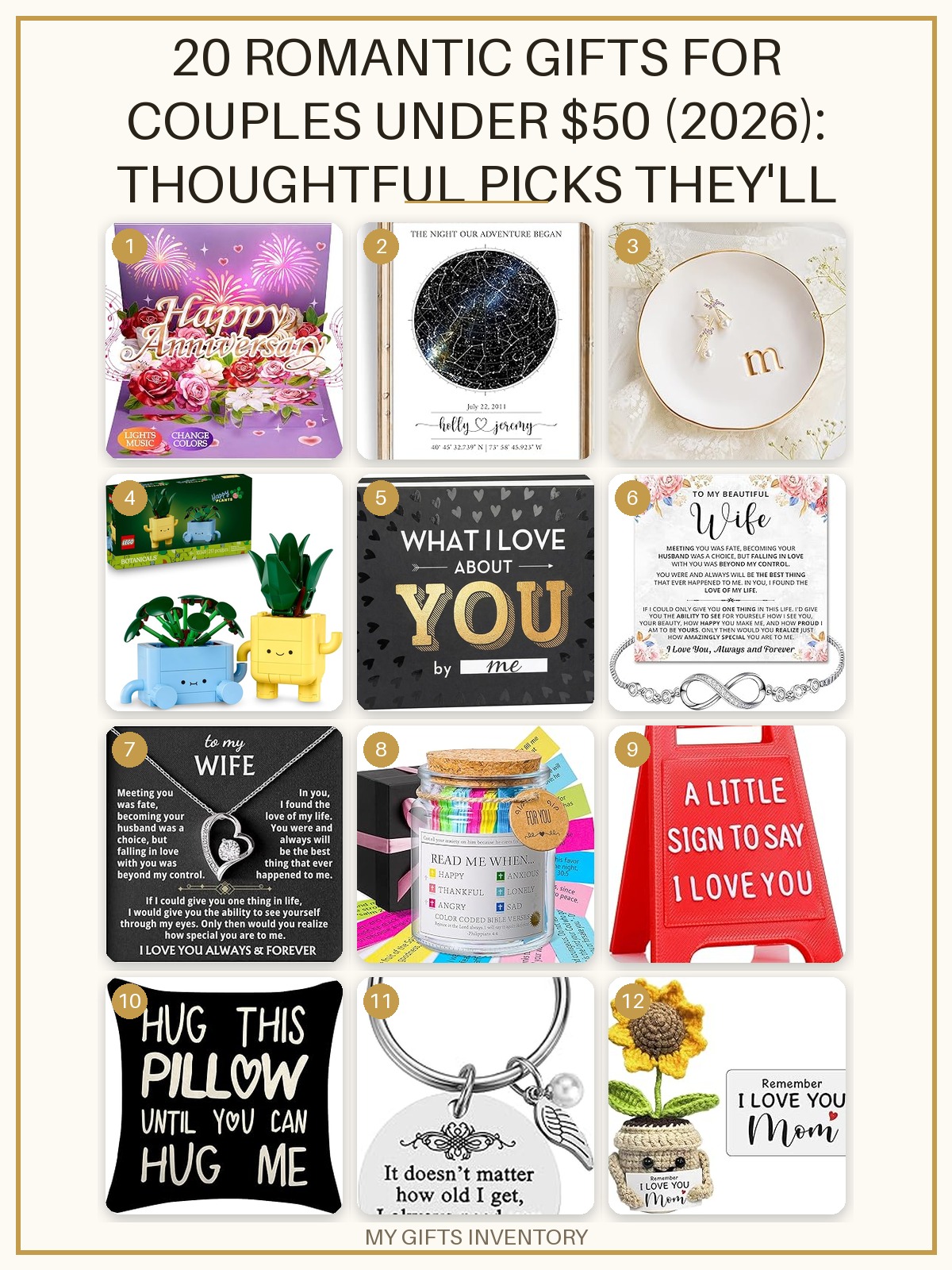

Gift Sets We Love Right Now
Every item picked, priced and linked, ready to buy.
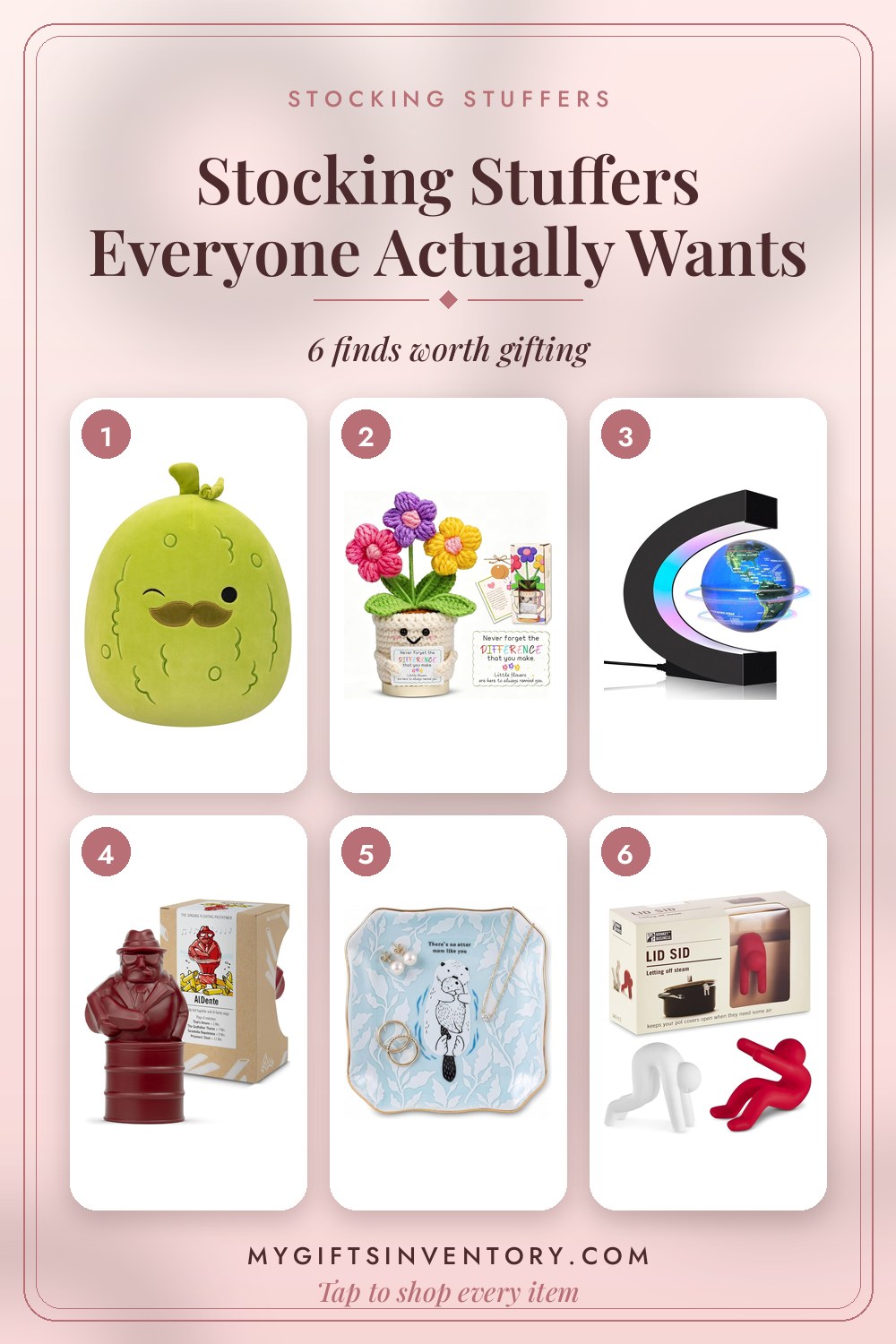
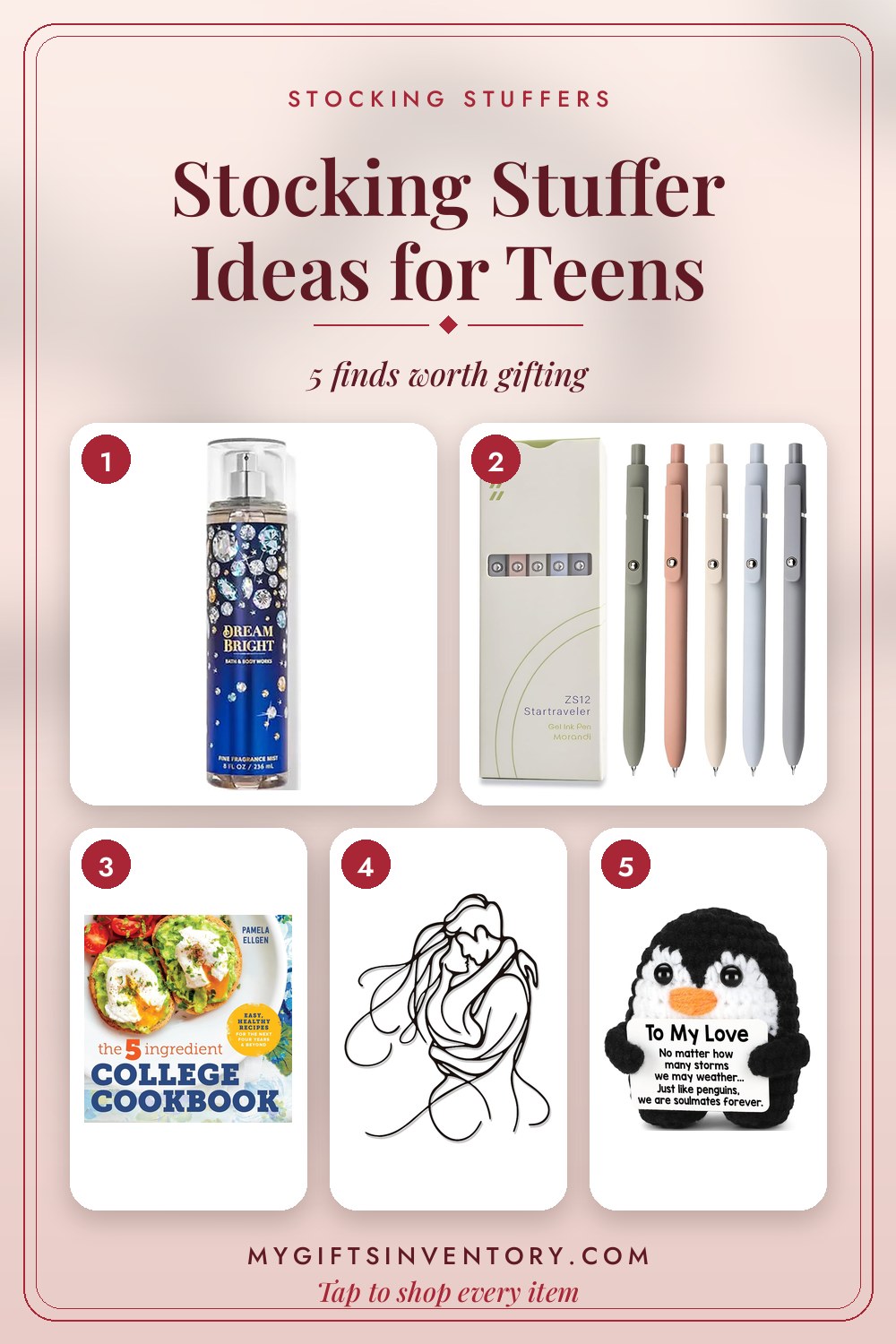
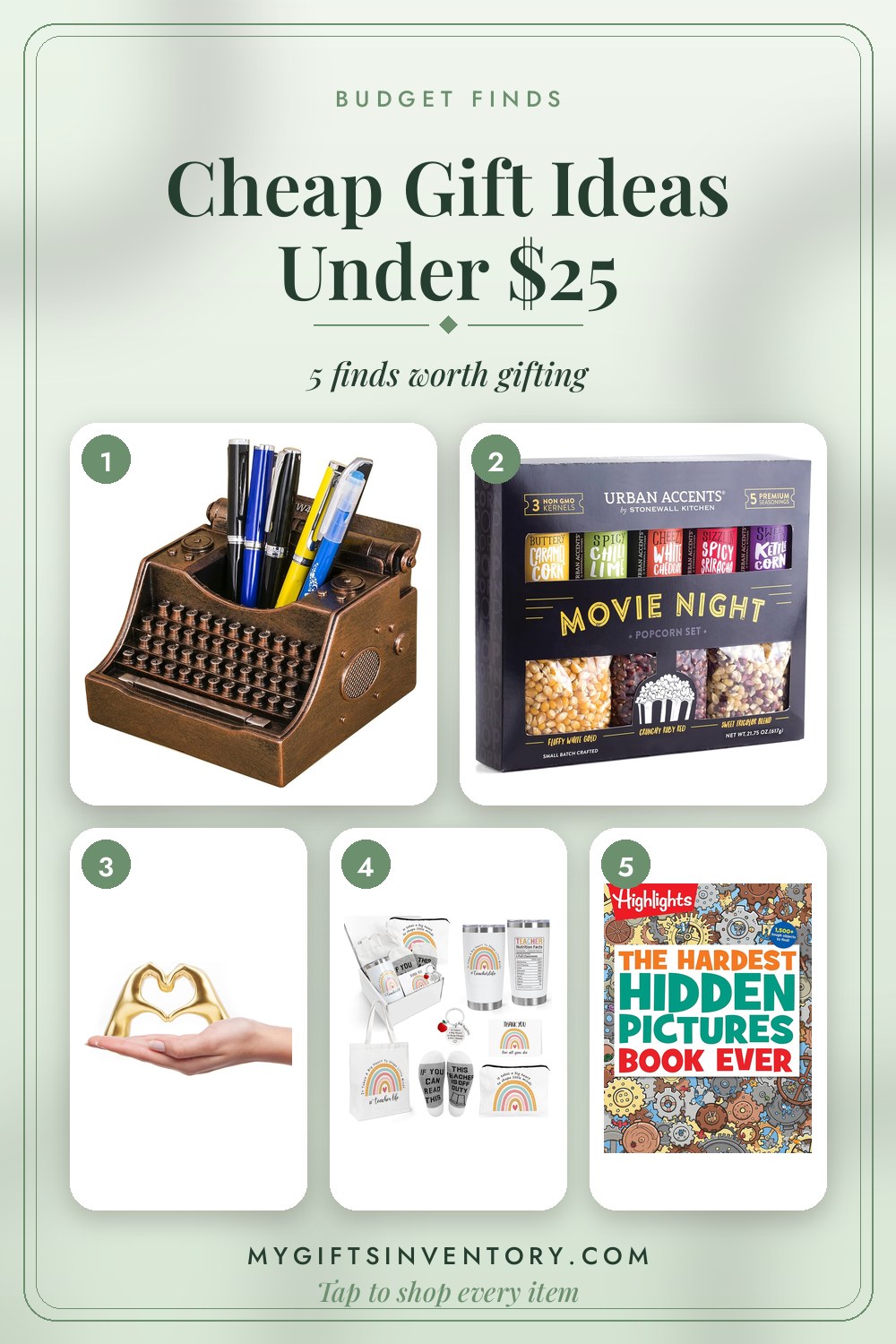
More Gift Advice