Gift Note Wording Ideas: What to Actually Write in the Card (With Real Examples)
Real, ready-to-use gift note wording for birthdays, weddings, sympathy, thank-yous, and everything in between, plus the simple formula that makes any message sound like you instead of a greeting card.
As an Amazon Associate, My Gifts Inventory earns from qualifying purchases. We only recommend products we'd genuinely consider buying ourselves.
You've picked out the gift, wrapped it or bagged it up, and now you're sitting there with a blank card and a pen, completely stuck. It's a strange kind of pressure for something so small: four or five sentences, and somehow they have to sound warm but not corny, personal but not weird, and definitely not like every other card this person will open that day. If you've ever written "Happy Birthday, hope you have a great one!" and then stared at it feeling like you phoned it in, this is for you.
Why the note matters more than the gift sometimes does
People keep cards. They don't keep receipts or gift bags, but a note that actually says something specific tends to end up taped to a fridge or tucked in a drawer for years. The gift itself can be perfectly nice and still feel a little generic if the card attached to it is just a printed greeting with a signature. The note is where the thoughtfulness actually shows up in writing, which is exactly why it feels so much harder to get right than picking out the present.
The formula that works for almost any occasion
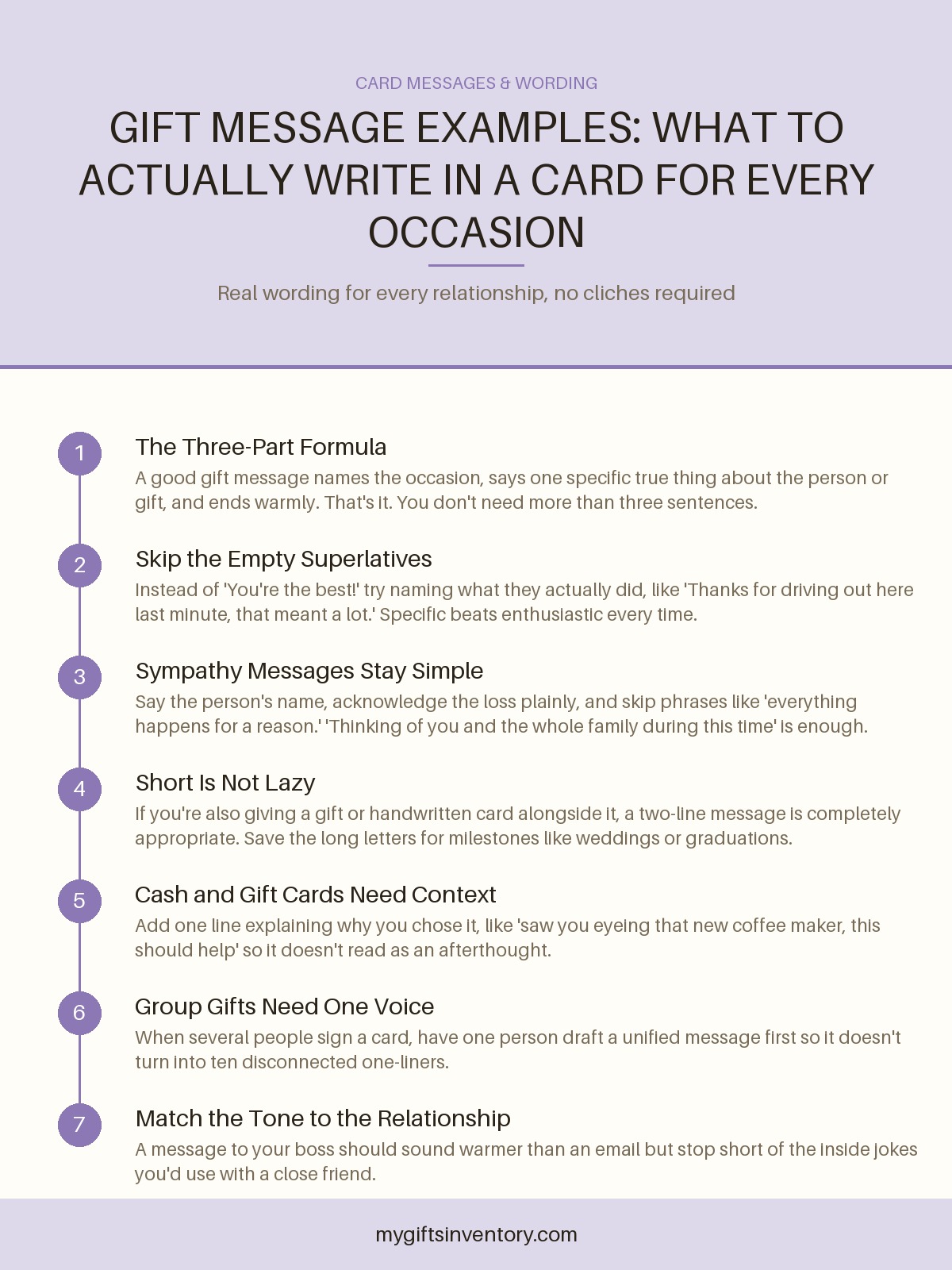
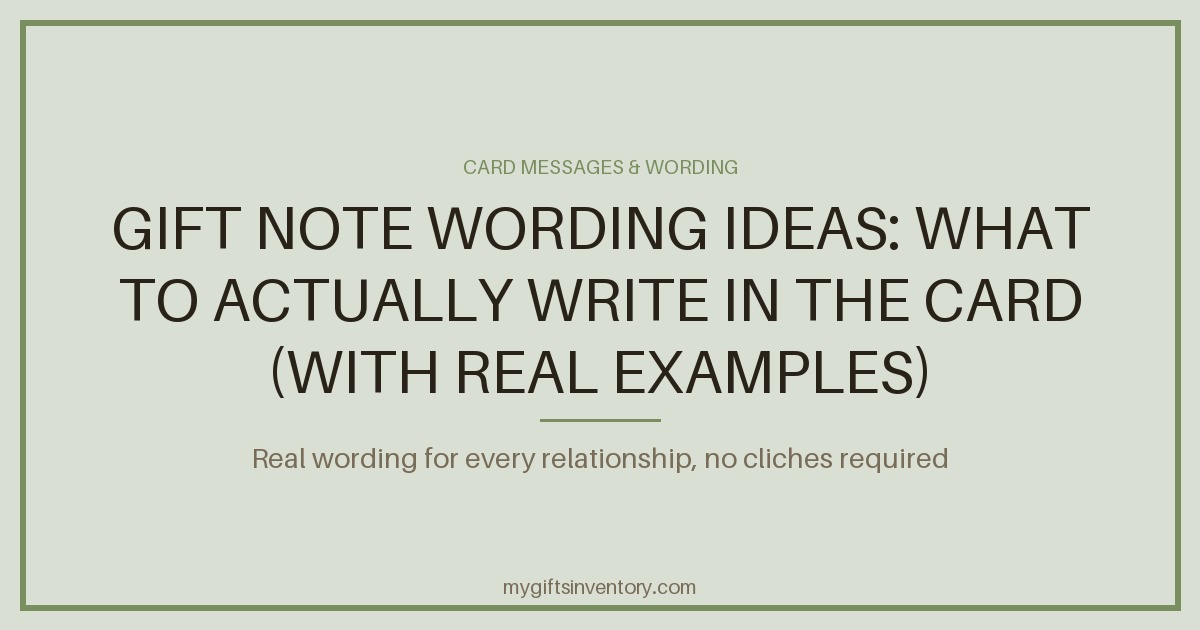
Every good gift note has three parts, and once you see them broken out it stops feeling like a blank page and starts feeling like filling in blanks.
- The opener. Their name, plus something warm. "Dear Aunt Carol," or just "Sam," works fine. You don't need "Dearest" unless that's genuinely how you talk.
- The specific line. This is the part that makes the note actually theirs. Reference why you picked the gift, an inside joke, a memory, or something you know they're excited about right now.
- The close. A short wish or hope, then your sign-off. "Love," "Love always," "Can't wait to see you," or just your name if it's a coworker.
Here's what that looks like put together: "Sam, I saw this and immediately thought of that camping trip you won't stop talking about. Hope this year is as good as your stories make it sound. Love, Priya." Nothing fancy, but it reads like a real person wrote it because it references something only you two would know.
Wording ideas by occasion
Birthdays
Birthday notes have the most room to be playful. A few real options depending on how close you are:
- "Another year of being one of my favorite people. Happy birthday, friend."
- "Hope your birthday is exactly as chaotic and fun as you deserve."
- "Wishing you a year that's kinder than the last one. Happy birthday!"
- For a milestone birthday: "Fifty looks incredible on you already. Here's to the next chapter."
Weddings
Wedding notes get to be a little more sincere without tipping into sappy. Try: "Watching the two of you build this life together has been one of the best parts of knowing you both. Wishing you a marriage full of easy Sundays and inside jokes." Or, simpler: "So happy for you two. May your home always be full of laughter and never run out of coffee." If you're marking a specific anniversary rather than the wedding itself, our anniversary gift ideas by year guide has wording angles baked into the gift suggestions themselves, since a lot of anniversary gifts lean on referencing the actual number of years.
Baby showers and new babies
Keep these warm and a little practical, since new parents are exhausted and don't need anything too flowery. "Can't wait to meet this tiny human. Sending so much love to all three of you." Or for the parents specifically: "You two are going to be such wonderful parents. Let us know if you need a meal train, we're in."
Sympathy and condolence notes
This is where people freeze up the most, and the instinct to write more usually backfires. Short and specific beats long and vague every time. Name the person who died if you can. "We were so sad to hear about your mother. She always made us feel like family the moment we walked in her door. Thinking of you." Avoid "everything happens for a reason" and "they're in a better place" unless you know that language fits the family's beliefs. "I'm so sorry for your loss, and I'm here whenever you need me" is a safe, sincere closer that doesn't overreach.
Thank-you notes
The trap with thank-yous is being vague. "Thanks for the gift!" says almost nothing. Name the actual item and what you'll do with it: "Thank you for the coffee grinder, we've already used it three mornings in a row and it's already better than our old one." If the gift was cash, it's fine to be direct without stating the exact amount: "Thank you so much for your generosity, it's going straight toward the new couch we've been saving for."
Housewarming and just-because gifts
These notes can be short and a little cheeky. "Congrats on the new place. May your walls stay quiet and your neighbors stay friendly." Or for a no-occasion gift: "Saw this and thought you needed it in your life, no reason, just because." If the gift is something cozy like a mug set or a bag of good beans, it pairs naturally with something from our gifts for coffee lovers roundup, and the note can just say something like "for the person who runs on caffeine and good taste."
Wording by relationship
For parents and grandparents
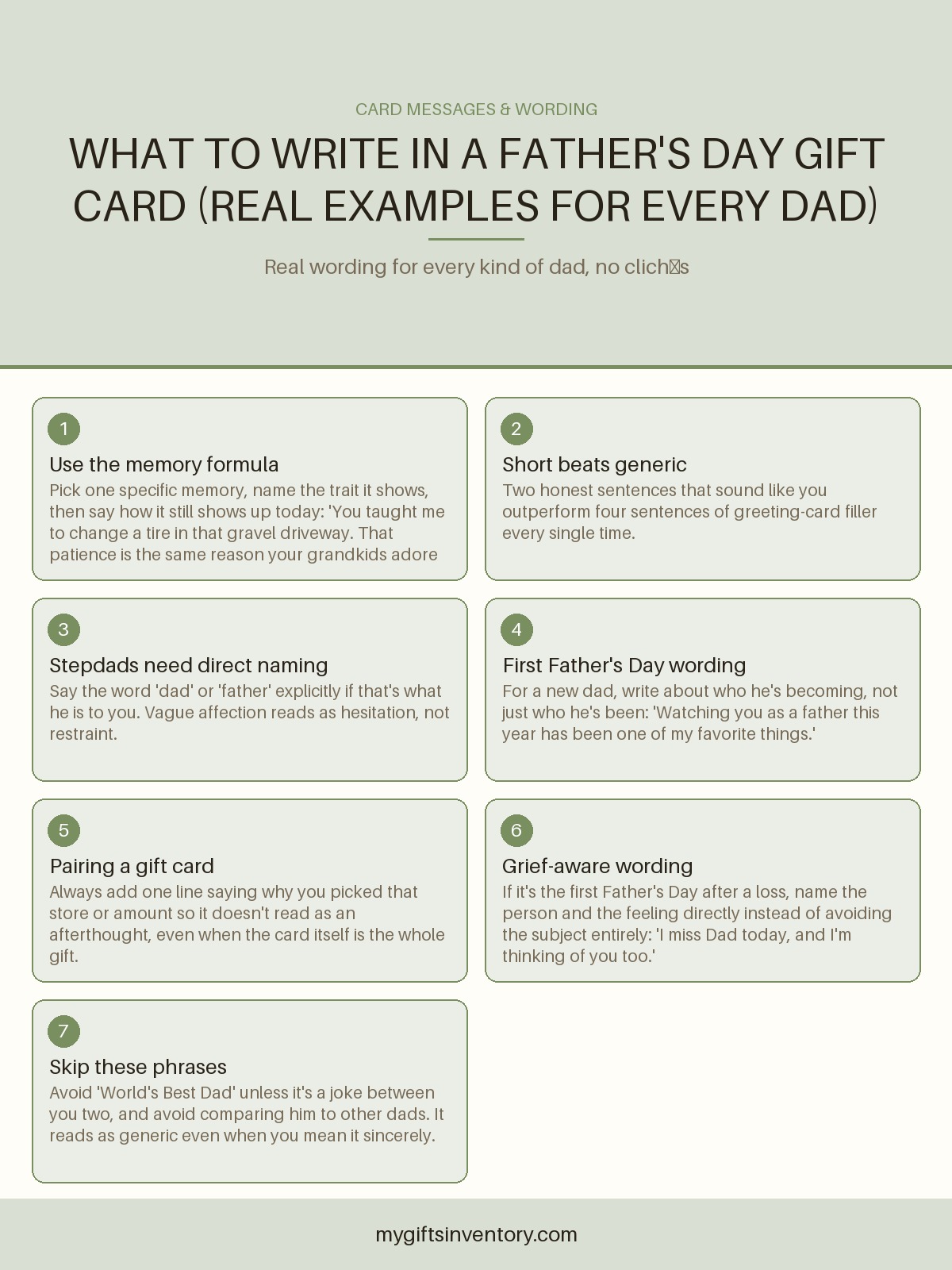
Family notes get to lean sentimental because nobody's going to accuse you of trying too hard. "Mom, I don't say it enough, but everything good about me came from watching you. Happy Mother's Day." If you're shopping for a mother who genuinely seems to have everything already, pair the note with something from our gift ideas for the mom who has everything guide, and let the note do the sentimental work instead of the gift itself: "You don't need anything, so this is just a small way of saying thank you for absolutely everything."
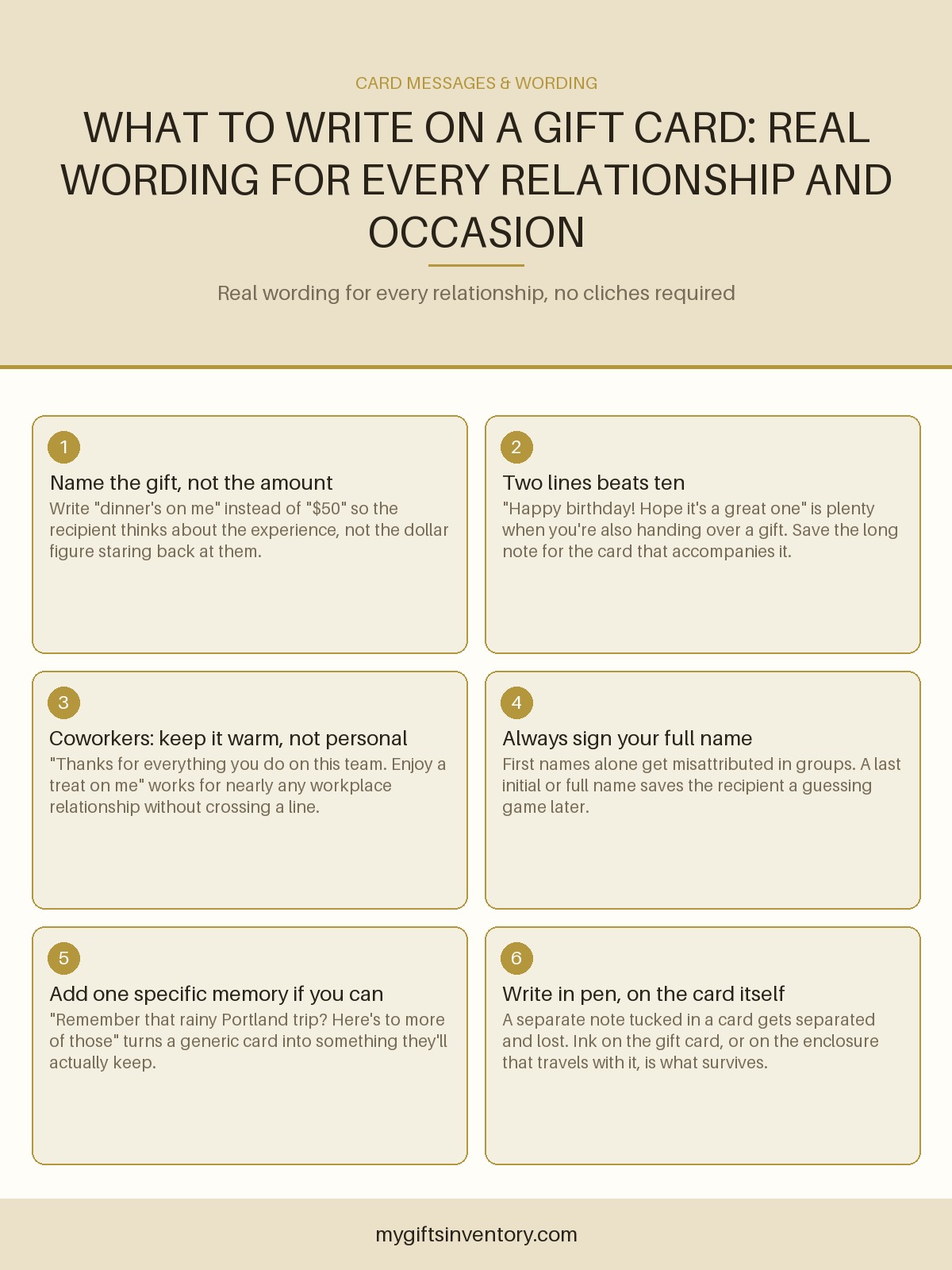
For coworkers and bosses
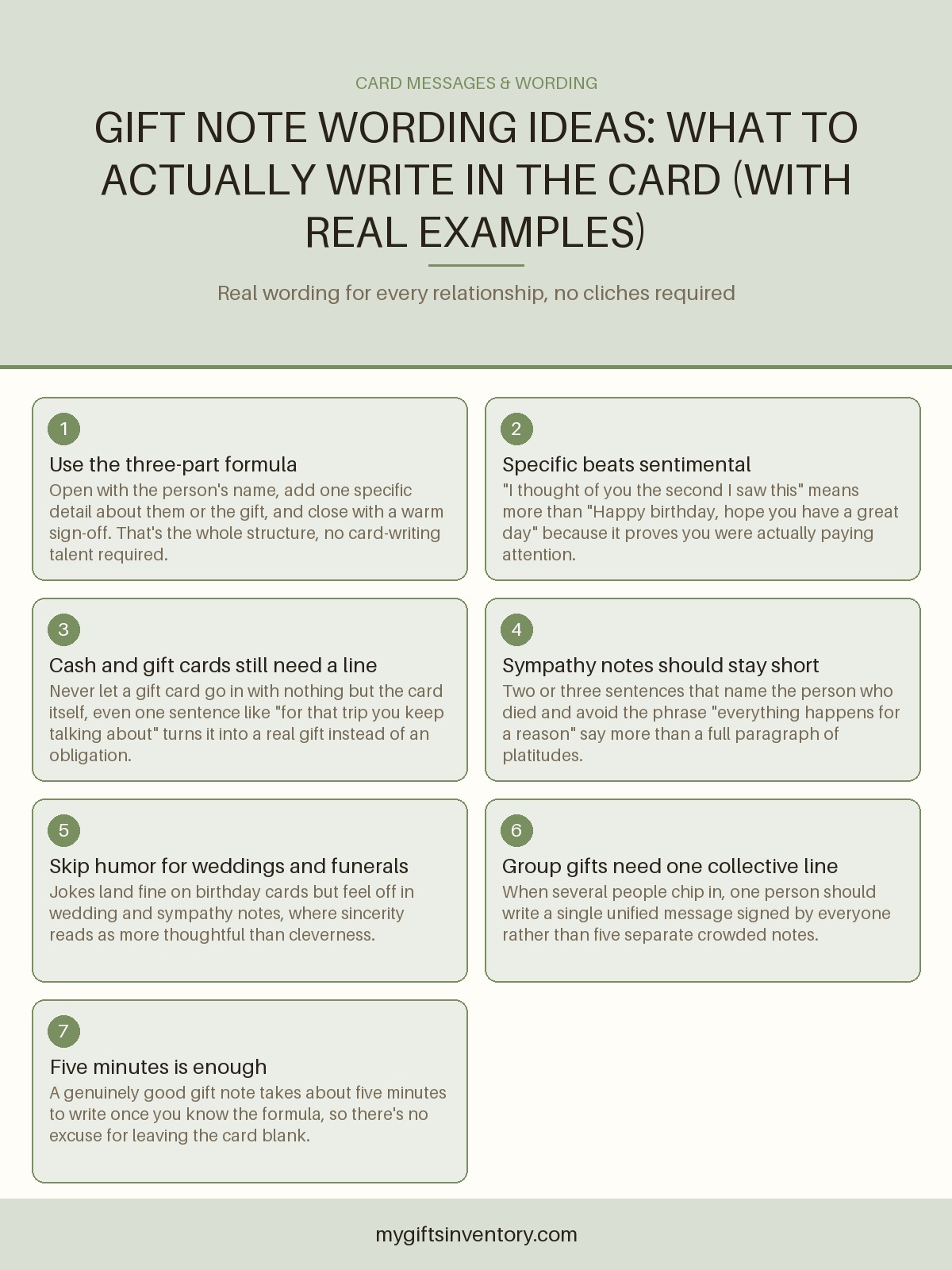
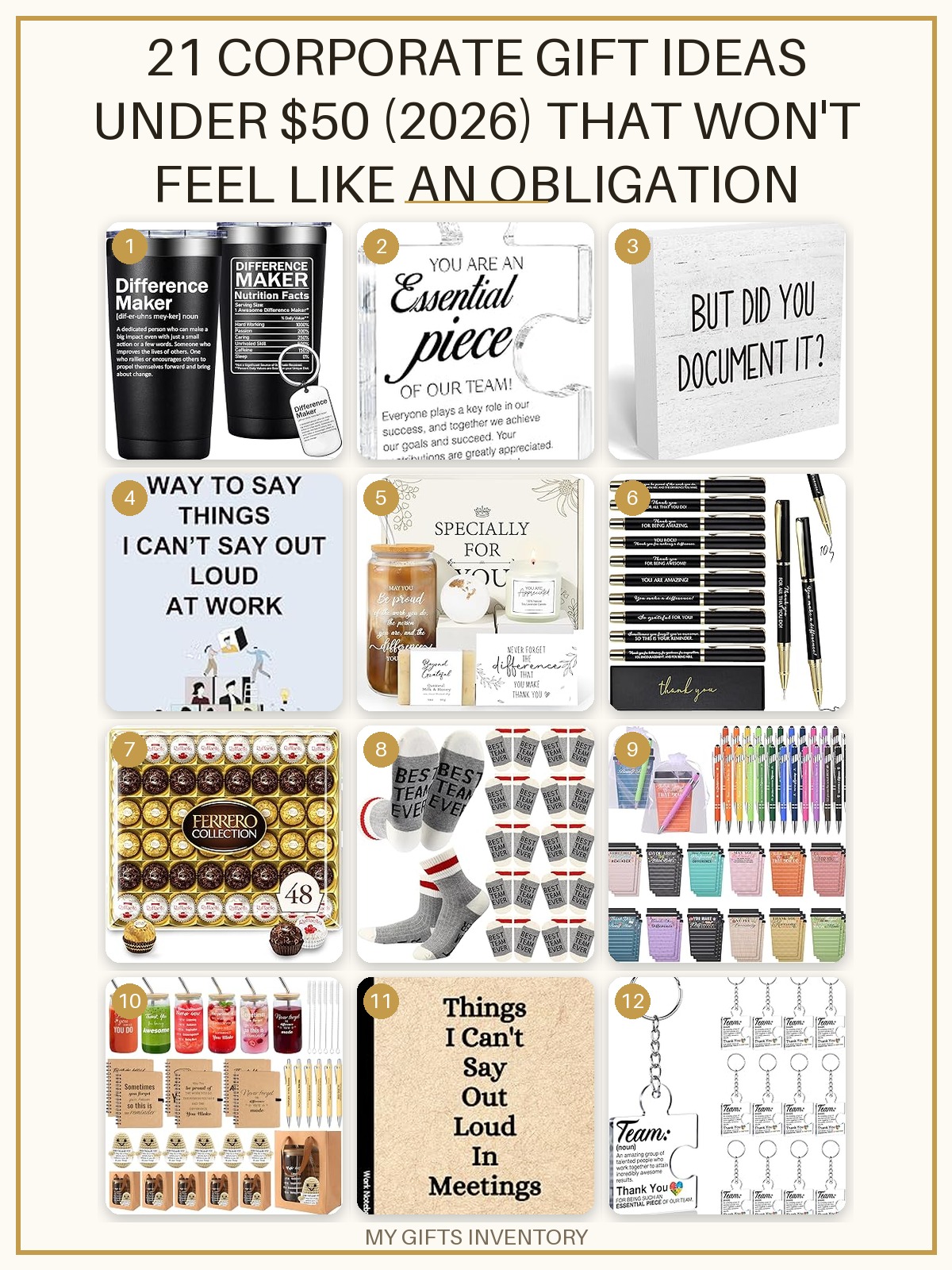
Office gift notes need to stay warm but professional, nothing too personal, nothing that reads like flattery. "Wishing you a wonderful holiday season and a well-deserved break. Thanks for everything you do for the team." If you're the one organizing a group gift for a manager or client, our corporate gift ideas under $50 guide is built around gifts that don't feel like an obligation, which is exactly the tone the note should match too, warm but not overly familiar.
For a new relationship
Early on, less is more. Overly intense language can feel like a lot before you've hit the six-month mark. "This made me think of you the second I saw it. Hope you love it as much as I think you will." Simple, genuine, no pressure.
For in-laws
These notes benefit from being a touch more formal while still warm. "Thank you for always making us feel so welcome. We're so lucky to have you in our family." It doesn't need to compete with the note you'd write your own parents, it just needs to feel sincere.
What to write when the gift is cash or a gift card
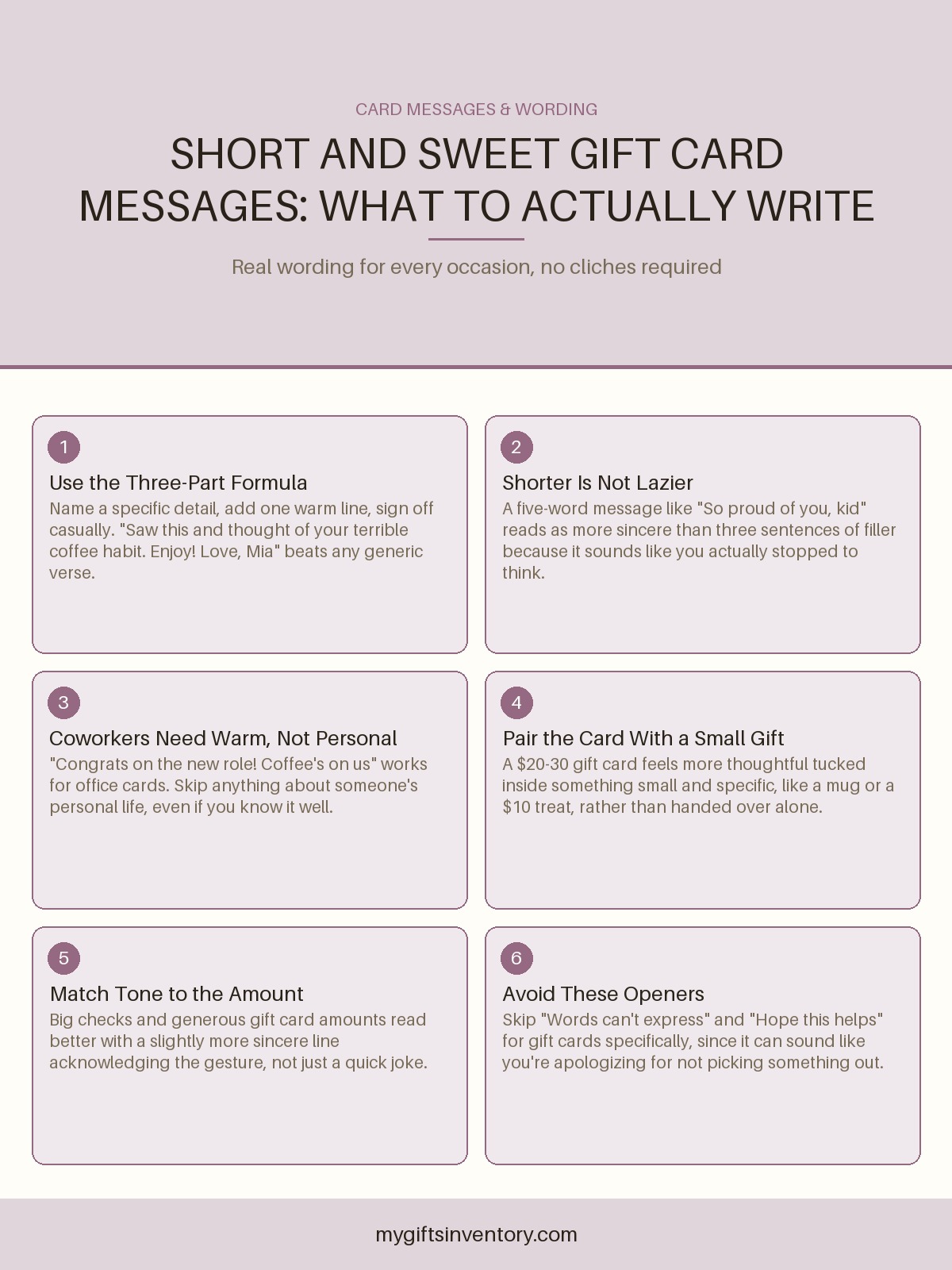
A gift card with nothing written but "Happy Birthday" can feel a little impersonal, even when the amount is generous. One extra sentence fixes that completely. If you're giving something like an Amazon gift card, try: "Figured you could use this toward whatever you've had sitting in your cart for months." You can even check the Amazon gift card balance page later if you're the one who received a card and can't remember what's left on it. For cash specifically, naming the intended use without being prescriptive works well: "Hope this helps toward the trip you've been planning" or "Treat yourself to something completely unnecessary."
Short and sweet versus long and heartfelt
There's no rule that says a note has to fill the whole card. For most everyday gifts, birthdays, thank-yous, hostess gifts, two or three sentences is plenty. Save the longer, more emotional notes for genuine milestones: weddings, major anniversaries, retirements, graduations, or a friend going through something hard. A four-paragraph note on a regular Tuesday birthday can actually feel like it's overcompensating, while a two-line note on a fortieth wedding anniversary can feel like you didn't think it through. Match the length to the weight of the occasion.
What to avoid in a gift note
- Generic phrases that could apply to literally anyone, like "Hope you like it!" with nothing else.
- Jokes in sympathy or serious health-related cards, even ones you think are gentle.
- Mentioning the price or how much of a hassle the shopping was, even jokingly.
- Comparing the gift to what someone else gave, which can come across as competitive or petty.
- Inside jokes so obscure the recipient won't remember what you mean six months later, unless you're comfortable with that.
Group gifts and pooled cards
When several people chip in on one gift, like for a retirement, a office baby shower, or a milestone birthday, the note should read as one voice rather than five separate messages crammed into the margins. Pick one person to write it, something like: "From all of us who've had the pleasure of working with you, congratulations on this next chapter. We're going to miss you around here." Then everyone signs their name below rather than adding their own paragraph, which keeps the card from feeling chaotic.
Gift Ideas to Go With This


Want more ideas? Browse our full guide: 18 Keepsake Gifts Worth Holding Onto (2026): Personalized Picks They'll Treasure Forever
Frequently Asked Questions
What do you write in a gift note when you don't know the person well?
Keep it simple and warm without trying to sound closer than you are: "Wishing you a wonderful birthday, hope this year brings you good things." A short, sincere line always reads better than an attempt at intimacy that isn't there yet.
Is it okay to sign a gift note with just your first name?
Yes, for most everyday gifts a first name is completely normal, especially with friends, coworkers, and family who'll know exactly who it's from. Save "Love always" or a full signature style for more formal occasions like weddings or notes to older relatives.
What do you write on a gift card so it doesn't feel impersonal?
Add one sentence that references why you chose that specific card, like "for that new coffee habit you keep mentioning" rather than leaving the card blank with just your name. It takes ten seconds and turns a gift card from a placeholder gift into something that shows you were paying attention.
How long should a sympathy note be?
Two to four sentences is the sweet spot, since sympathy notes are meant to comfort, not to say everything at once. Name the person who died if it feels right, share one specific memory or quality if you have one, and close with a simple offer of support rather than trying to explain the loss.
What's a good gift note for someone who says they don't want anything?
Lean on the note to do the sentimental work instead of trying to justify the gift, something like "You don't need a thing, so this is just a small way of saying thank you." It reframes the gift as a gesture rather than something they have to pretend to need.
Looking for an Actual Gift Instead?

Gift Sets We Love Right Now
Every item picked, priced and linked, ready to buy.
More Gift Advice