How to Return a Gift Without Offending the Giver
A practical guide to swapping, exchanging, or quietly returning a gift you can't use, without the awkward conversation or hurt feelings you're dreading.
As an Amazon Associate, My Gifts Inventory earns from qualifying purchases. We only recommend products we'd genuinely consider buying ourselves.
There's a specific kind of guilt that shows up a few days after a birthday or holiday, when you're standing in front of a gift you know you'll never use and wondering if returning it makes you a terrible person. It doesn't. The anxiety usually isn't about the item itself, it's about the fear that the giver will somehow find out and feel rejected. The good news is that returning a gift and preserving the relationship are not mutually exclusive, as long as you handle the logistics and the conversation with a little care.
Why Returns Feel So Loaded in the First Place
A gift is never really about the object. It's a stand-in for someone saying "I thought about you" or "I noticed what you like." When you return that object, it can feel like you're returning the sentiment too, even though that's not remotely true. Most givers, if they're honest with themselves, would rather you have something useful than something sitting in a closet out of guilt. The trick is making sure your actions communicate that you valued the gesture, even if the specific item wasn't right.
The Ground Rules Before You Do Anything
A few habits will save you almost every awkward situation before it starts.
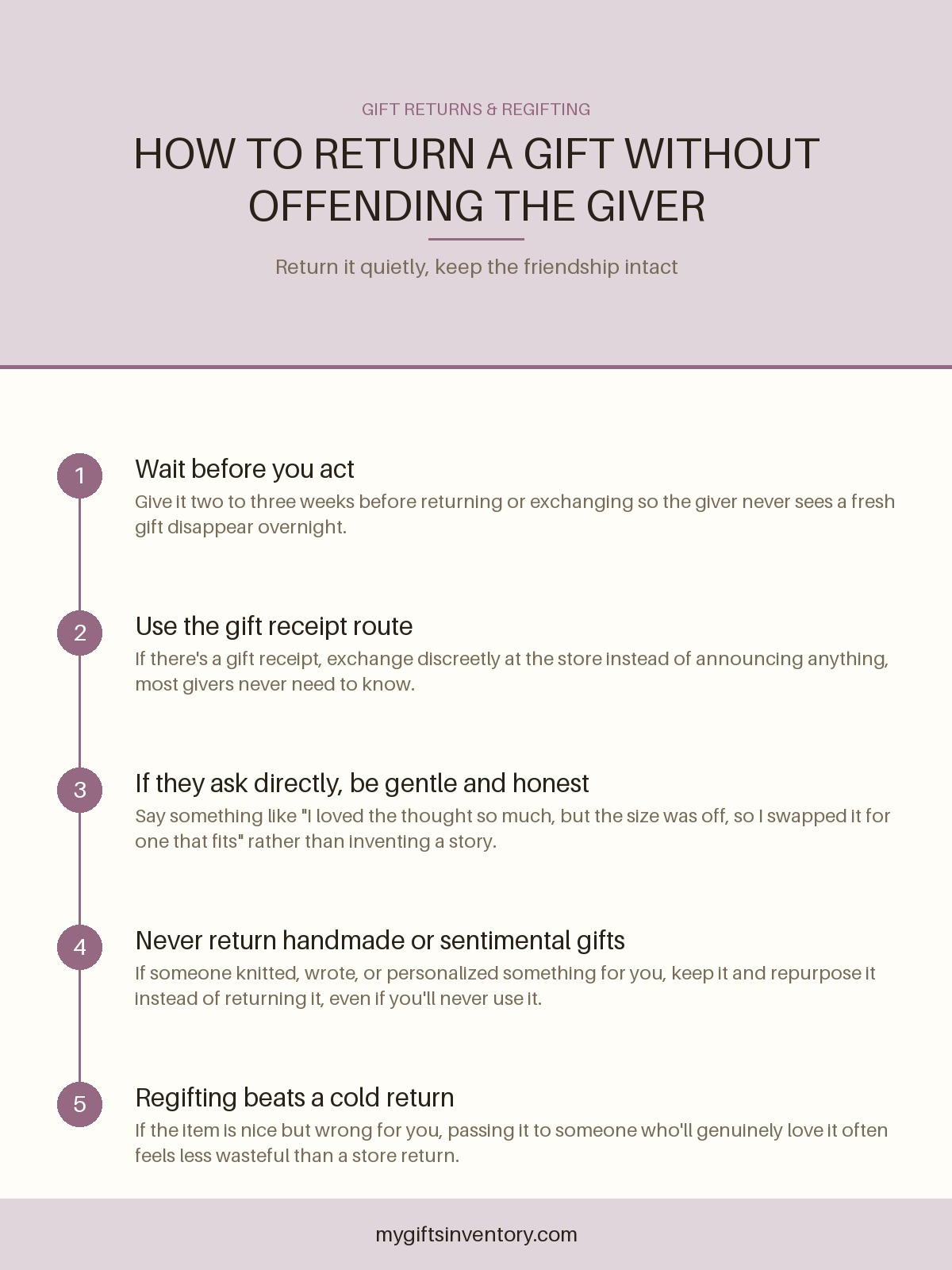
Give it some time
Don't return anything the same week you received it if there's any chance the giver will notice. A few weeks of buffer makes the timing feel unrelated to the gift itself, especially with parents, in-laws, or close friends who tend to ask "how's that thing I got you?" a little too soon.
Check for a gift receipt first
A gift receipt is the single easiest way to avoid the whole conversation. It lets you exchange or return an item without the giver ever seeing the price, and without needing to explain yourself to a cashier or customer service rep. If the giver mentions it later, you can simply say you swapped it for a different size or color, which is true and doesn't require further detail.
Know the store's actual policy
Return windows vary wildly. Some retailers extend holiday return windows into mid or late January, while others cap things at 30 or 60 days regardless of season. If you're not sure, it's worth checking the receipt or the store's website before you assume you have more time than you do.
How to Handle It, Scenario by Scenario
The gift is the wrong size
This is the easiest one to navigate honestly. Clothing, shoes, and jewelry are expected to need sizing adjustments sometimes, and most people won't blink if you say you exchanged it for a size that actually fits. There's no need to overexplain.
You already own it, or got a duplicate
Duplicates happen constantly around holidays and weddings. If two people gave you the same candle set or the same book, it's completely reasonable to keep one and quietly return or exchange the other, ideally the one from whoever is less likely to ask about it directly.
It's just not your style
This is the trickiest one because there's no factual excuse like sizing to lean on. Here, discretion matters most. Exchange it quietly for store credit or a different item rather than making a show of it, and if it comes up, keep your explanation short and kind rather than critical of their taste.
A registry gift was bought off-list or duplicated
Wedding and baby registries are supposed to prevent this, but it still happens constantly. If a well-meaning aunt buys something not on the registry, most couples quietly exchange it for something they do need, and nobody expects a paper trail explaining why.
Fragrance, beauty products, or anything scent-based
Perfume and cologne are some of the most commonly exchanged gifts, simply because scent is so personal. If you're on the giving end and want to avoid this entirely next time, something like our guide to perfume gifts for her under $75 can help you pick something with broader appeal, or at least come with a gift receipt tucked in automatically.
What to Actually Say
The words matter more than people think. Here's language that works in real situations.
If you're returning it quietly and no one asks
Say nothing. This is genuinely the best option in most cases. A quiet exchange that never comes up again is not deceptive, it's just efficient kindness. You don't owe anyone a play-by-play of what you did with their gift.
If they ask directly what happened to it
Keep it warm, brief, and truthful without dwelling on flaws. Try something like: "I loved that you thought of me, the color just wasn't quite my thing so I swapped it for one I'll actually wear all the time." Or for a size issue: "It ran a little small, so I exchanged it, thank you again for picking it out." Notice these scripts thank them first and explain second, in one sentence, without apologizing repeatedly.
If the gift was clearly expensive or meaningful to them
Slow down here. If a parent or grandparent put real thought and money into something, a fast return can genuinely sting even with perfect wording. Consider waiting longer, or asking if they'd rather you exchange it in front of them so they feel included in the decision rather than shut out of it. This is especially true for parents who are notoriously hard to shop for in the first place. If you're the one doing the giving and dread this exact scenario, our list of gift ideas for a mom who has everything leans toward things that are genuinely hard to get wrong.
If you're tempted to lie about losing it or breaking it instead
Don't. Fabricated stories tend to unravel, and a simple honest exchange explanation is far less awkward than getting caught in a fib later. Honesty delivered kindly is always the safer long-term move.
When You Shouldn't Return It At All
Some gifts are worth keeping even if you'll never use them.
- Anything handmade, like knitted items, art, or a recipe box someone assembled by hand
- Anything personalized with your name, initials, or a specific date
- Family heirlooms or items with sentimental history attached
- Gifts from someone who is going through a hard time and gave what they could afford
In these cases, a return isn't really an option worth pursuing even quietly. Repurposing the item, displaying it somewhere, or simply storing it with intention tends to feel better than converting it to store credit.
Alternatives That Skip the Return Counter Entirely
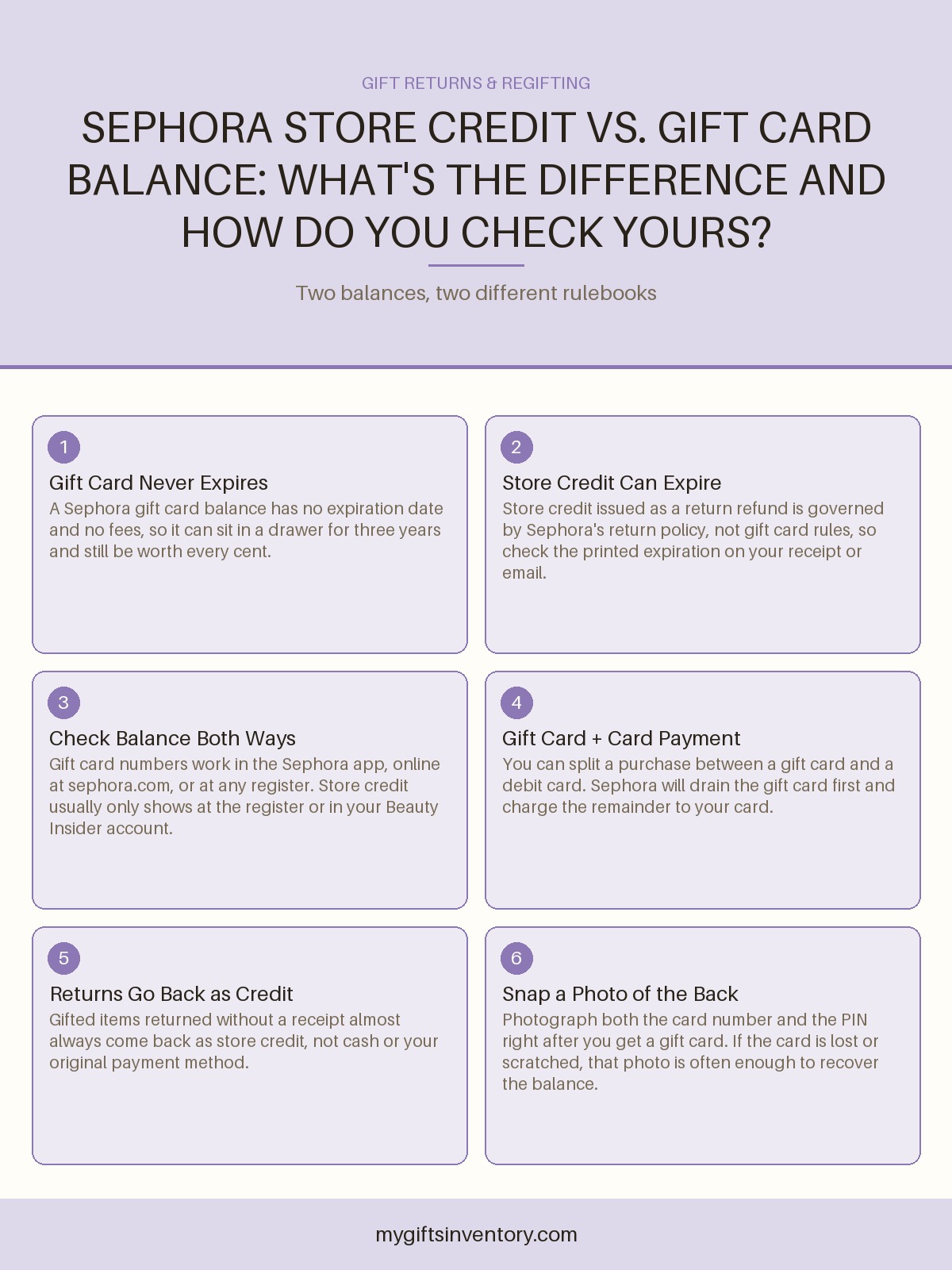
Ask for store credit or a gift card instead
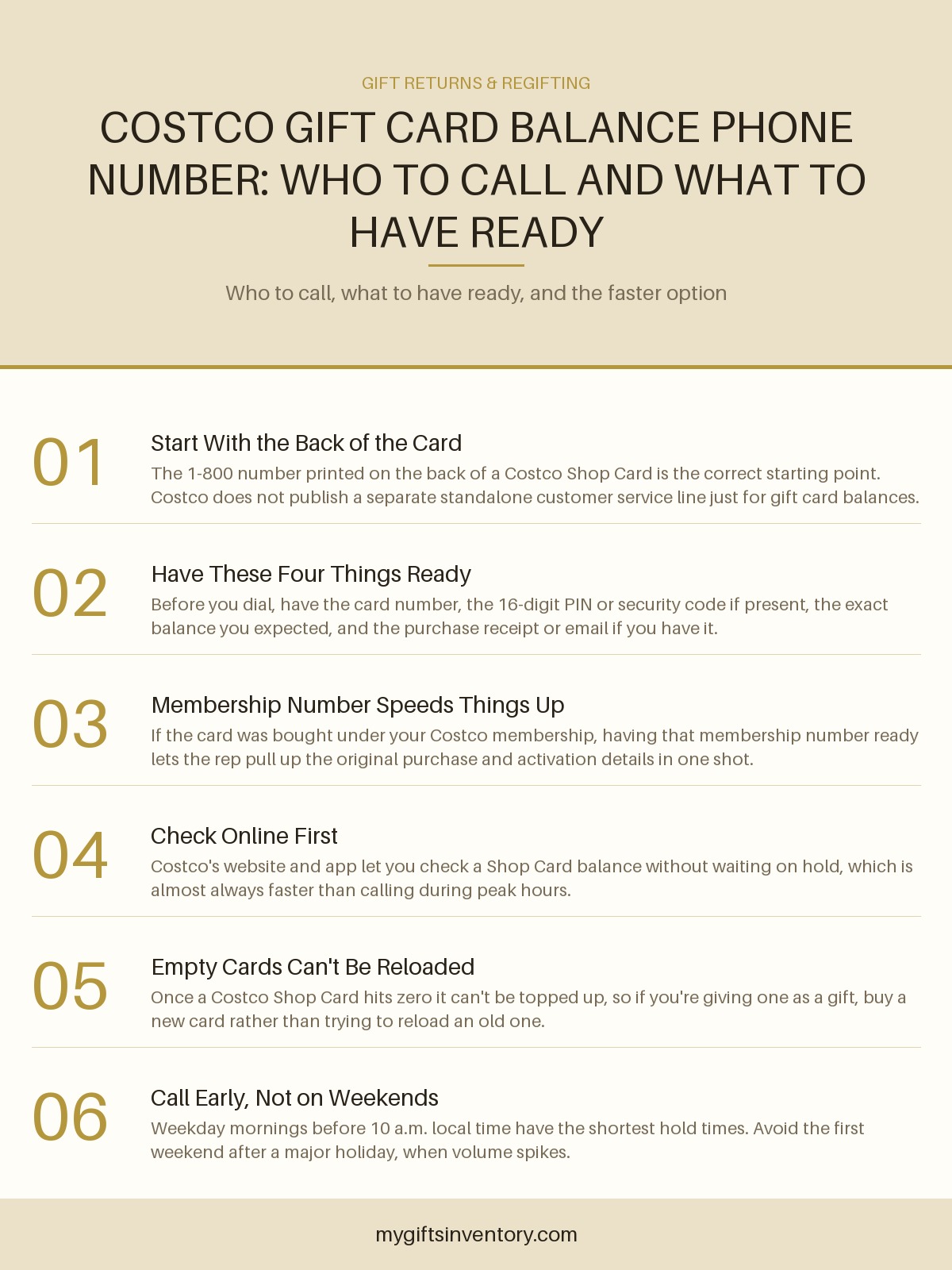
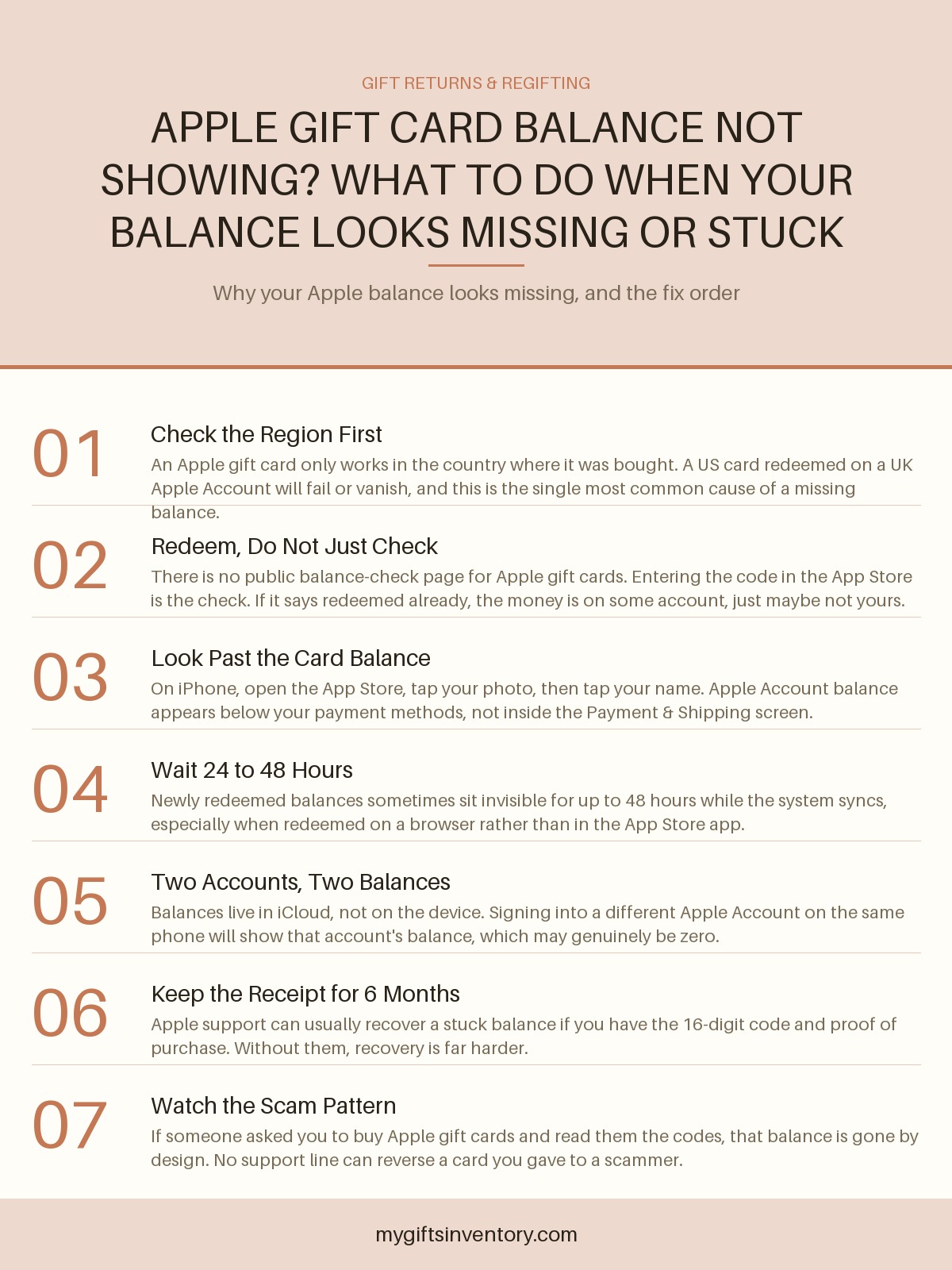
Many stores will let you convert a return into a gift card rather than cash, which is worth doing if you're not sure what you actually want yet. If the original purchase was made with a retailer gift card, it's worth checking the remaining balance before you do anything else. Pages like our Amazon gift card balance checker or Target gift card balance checker make that a thirty-second task instead of a guessing game.
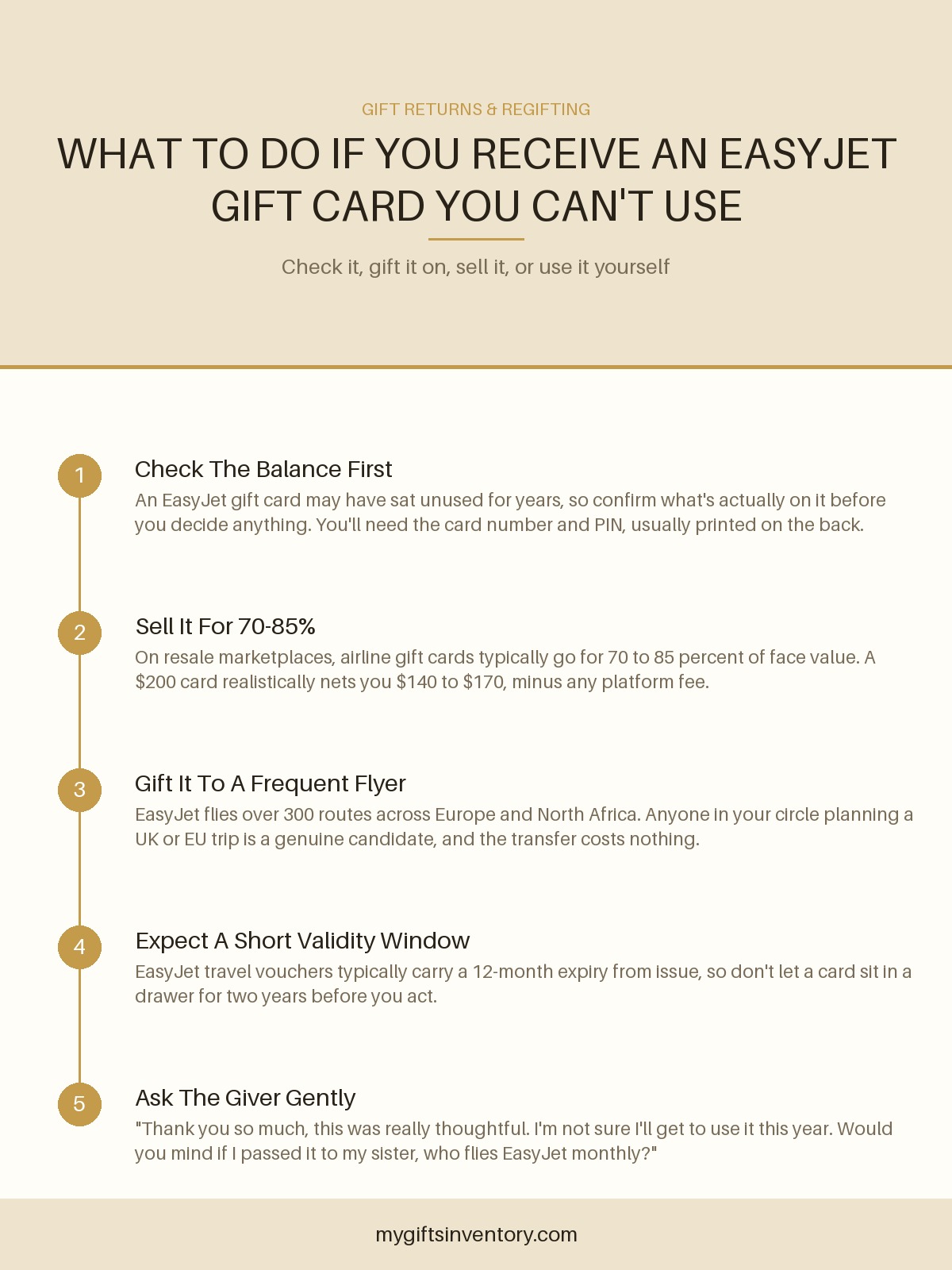
Regift thoughtfully
If an item is genuinely nice but wrong for you, passing it along to someone who would love it is often kinder than a cold return, as long as you're careful it doesn't circle back to the original giver. A candle, a food gift, or a coffee-focused gift set are all easy to pass along gracefully. Speaking of which, practical, broadly-loved categories like the ones in our gifts for coffee lovers under $50 guide tend to get used rather than returned in the first place, which is useful to remember next time you're the one shopping.
Donate it
If the item doesn't suit you and regifting feels awkward, donating it to someone who needs it closes the loop without any transaction at all. This works especially well for gently used clothing, toys, or household goods.
A Word on Prevention
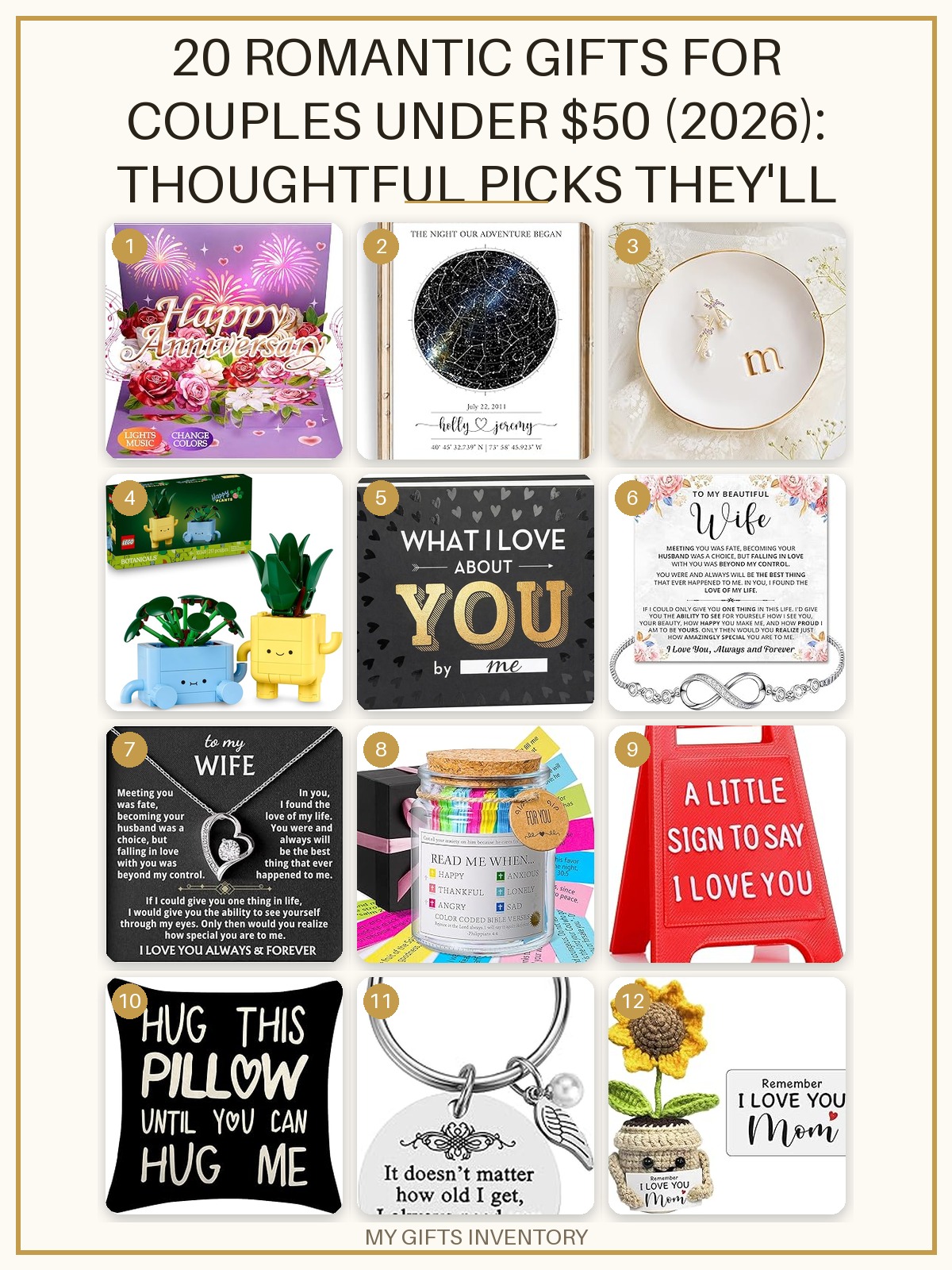
The best way to avoid this whole dance is choosing gifts less likely to need a return in the first place, whether you're the giver or coaching someone else on what to get you. Personalized items tend to get kept even when they're imperfect, simply because they can't be regifted or easily returned, which is part of why something like personalized gifts for a wife under $50 tend to land well even when the giver isn't totally sure of size or taste. When in doubt, a specific, well-chosen gift beats a safe generic one almost every time.
Gift Ideas to Go With This


Want more ideas? Browse our full guide: 20 Best Gifts Under $100 (2026): Thoughtful Picks They'll Actually Use
Frequently Asked Questions
Is it rude to return a gift?
No, returning a gift is not inherently rude as long as you handle it with some discretion and don't make the giver feel judged. Most people would rather you have something useful than keep an item out of obligation. The etiquette issue isn't the return itself, it's how loudly or bluntly you go about it.
How long should I wait before returning a gift?
A general rule is two to three weeks, long enough that the return doesn't look immediately connected to the gift-giving occasion. If the giver lives far away or rarely follows up, you have more flexibility, but if you see them weekly, a bit more patience is worth it.
What do I say if someone notices I returned their gift?
Keep it short, warm, and honest, something like "I loved that you picked it out, it just didn't fit right so I exchanged it for one I'll wear a lot." Thank them first, explain briefly second, and avoid over-apologizing, which can actually draw more attention to the situation than a simple explanation would.
Should I tell someone before I return their gift?
Generally no, unless you see them often enough that hiding it would feel deceptive or the item was clearly a significant expense. For most everyday gifts, a quiet exchange that's never mentioned again is completely acceptable and often kinder than bringing it up unprompted.
Is it okay to return a gift for cash instead of store credit?
It depends on the store's policy and whether you have the original receipt versus just a gift receipt. Many retailers only offer store credit or an exchange when a gift receipt is used instead of the original purchase receipt, so check the specific return policy before assuming cash is an option.
Looking for an Actual Gift Instead?
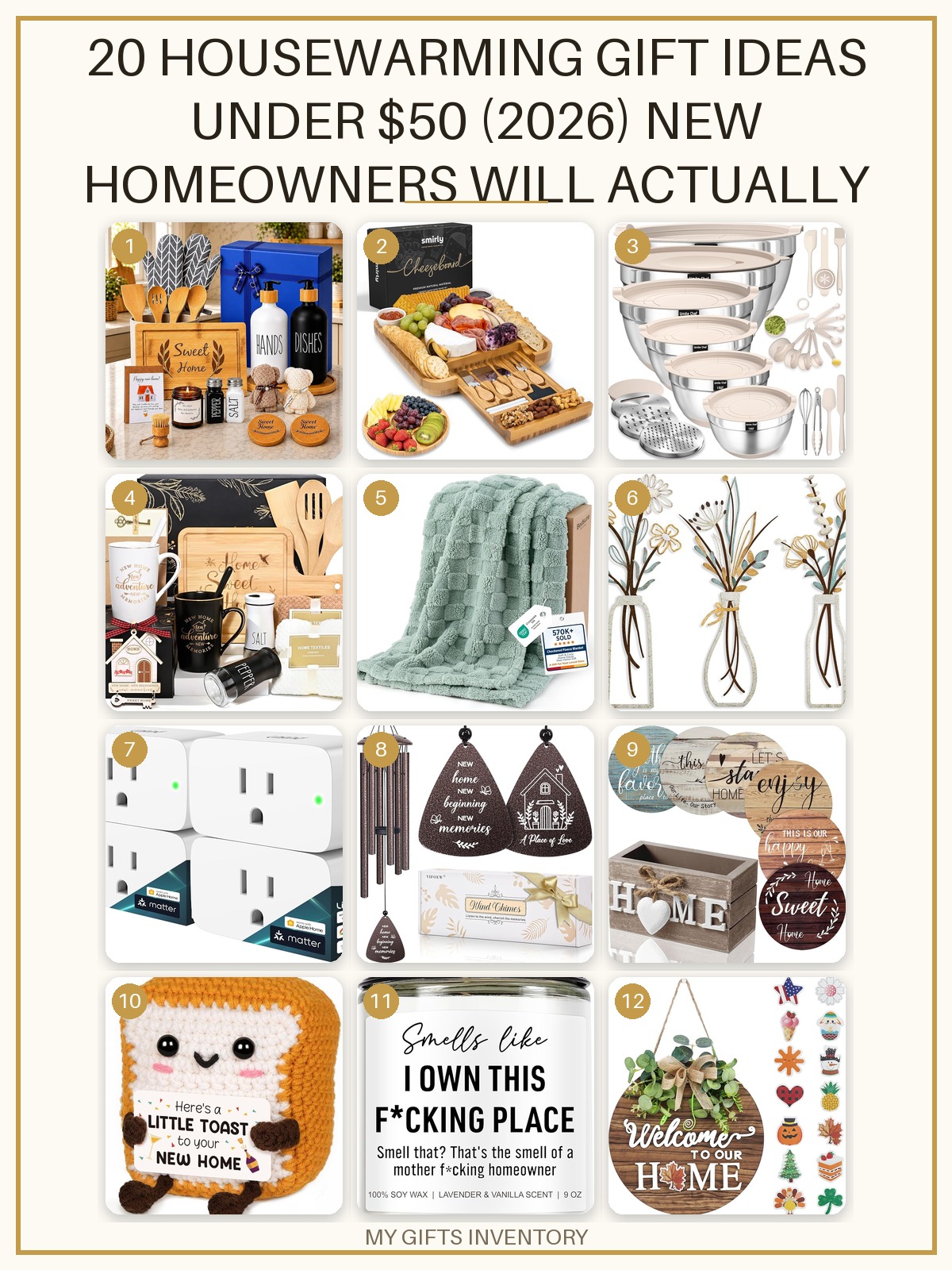
Gift Sets We Love Right Now
Every item picked, priced and linked, ready to buy.
More Gift Advice