How to Talk About Gift Budgets With Family Without It Getting Weird
A practical guide to bringing up gift spending limits with parents, siblings, in-laws, and extended family, with real scripts you can actually use.
As an Amazon Associate, My Gifts Inventory earns from qualifying purchases. We only recommend products we'd genuinely consider buying ourselves.
There's a specific kind of dread that sets in around October when you realize the holidays are close enough to plan for, but you still have no idea what your family actually expects to spend. Maybe your income changed this year. Maybe your sister-in-law always goes big and it makes everyone else feel like they're falling short. Maybe nobody has ever said a number out loud and you're tired of guessing. Whatever brought you here, you're not being cheap or dramatic for wanting clarity. You're trying to protect both your budget and your relationships, and that's worth doing carefully.
Why This Conversation Feels So Loaded
Money and gifts sit right at the intersection of love and math, which is why even a simple question like "how much are we spending this year" can feel like it's really asking "how much do you love me" or "how much can you actually afford." Families that have never set explicit limits often have an unspoken one anyway, and the trouble starts when different people are operating from different unspoken numbers. One sibling thinks $30 is generous. Another thinks anything under $75 looks like they didn't try. Neither is wrong, but neither knows the other's number until gifts get opened and someone feels a flicker of embarrassment they can't quite explain.
The goal of a budget conversation isn't to make gift-giving feel transactional. It's to remove the guesswork so everyone can actually enjoy picking something out instead of quietly stressing about whether they're spending too much or too little.
When to Bring It Up
Timing matters almost as much as wording. Bring up a budget conversation too late and it reads as a reaction to something that already happened, which puts people on the defensive. Bring it up at the right moment and it just sounds like practical planning.
Holidays and Christmas Gift Exchanges
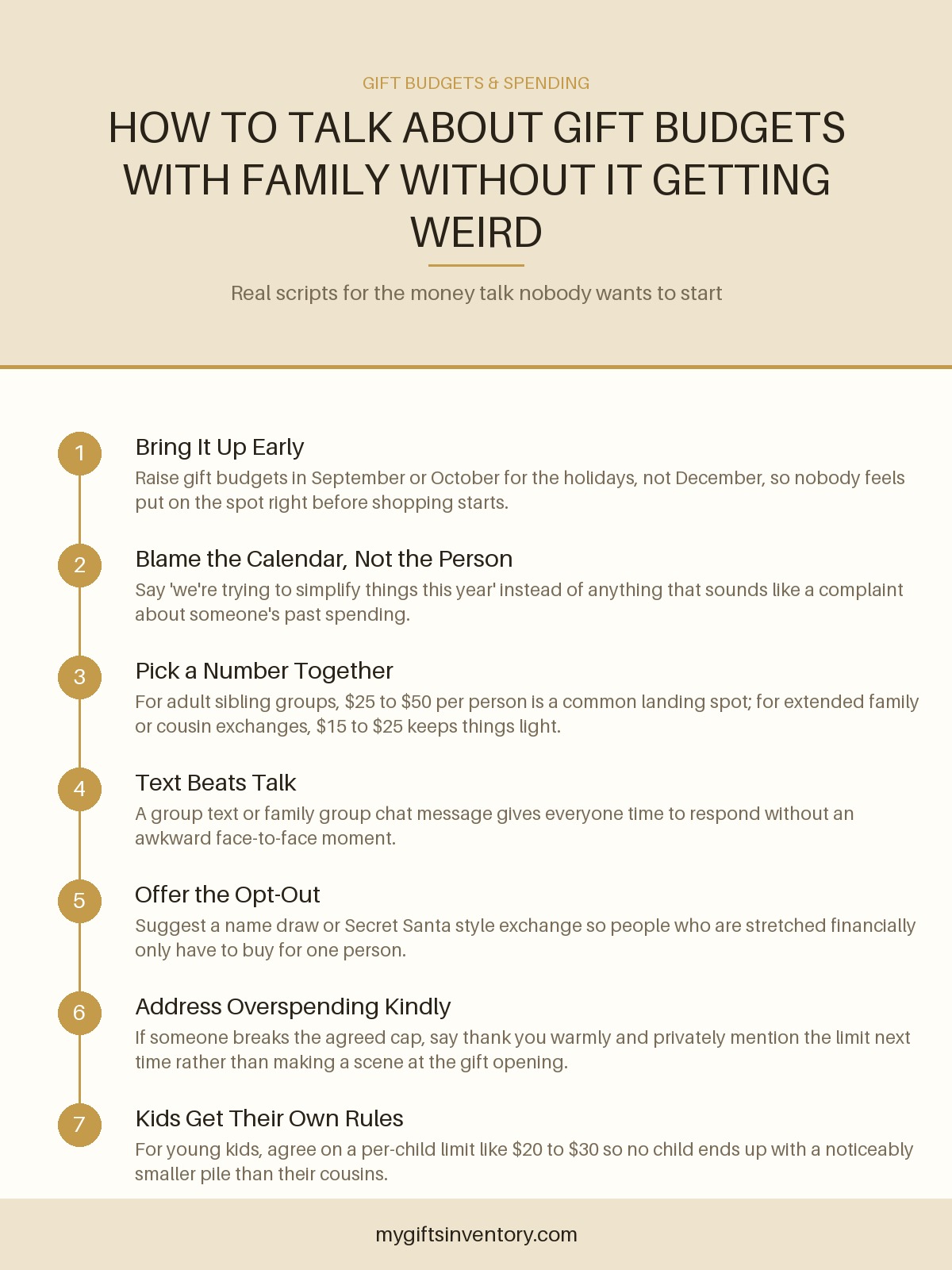
Aim for late September through mid-October. This gives everyone time to plan and shop thoughtfully instead of scrambling in December, and it's early enough that the conversation feels like organizing rather than damage control. A simple family group text works better than a phone call here, because it lets people respond on their own time instead of agreeing to something on the spot just to avoid an awkward pause.
Weddings and Engagements
If you're the couple, this conversation is really about registry expectations more than a hard dollar cap, and it's worth having with parents and close family within a few weeks of the engagement, before anyone starts buying things independently. If you're the guest wondering what's appropriate, a good rule of thumb is $75 to $150 for a friend's wedding and somewhat more for immediate family, though local custom and how close you are matters more than any fixed number.
New Babies
Baby showers tend to generate the most anxiety because people want to be generous but also don't want to set a precedent they can't repeat for future kids or nieces and nephews. If you're coordinating a shower, it helps to mention a general price range when you share registry information, something like "no pressure at all, but most people have been spending in the $30 to $60 range."
Ongoing Family Traditions
If your family does an annual gift exchange, whether that's Christmas, Hanukkah, or birthdays throughout the year, the best time to revisit the budget is right after the last round, while everyone still remembers what worked and what didn't. Waiting until you're deep into the next planning season means you're relitigating old feelings instead of just adjusting a number.
What to Actually Say
The wording matters less than the tone. You want to sound like you're solving a shared logistics problem, not correcting someone's behavior or announcing a financial hardship you'd rather not detail.
To Siblings or Adult Peers
Something like: "Can we agree on a number for gifts this year? I was thinking somewhere around $40 to $50 each so nobody feels like they have to go overboard." Framing it as a group decision rather than your personal request makes it much easier for everyone to say yes without feeling singled out.
To Parents
This one is trickier because parents often want to give more than a cap would suggest, and telling a parent to spend less can land strangely. A gentler approach: "You really don't need to get us anything big this year, we'd honestly rather just spend time together" or "The kids would love experiences more than more toys this year." If your parents are on a fixed income and you suspect they're overspending to keep up, it can help to say plainly, "We'd feel so much better if you kept it small this year, we mean that."
To In-Laws or Extended Family
With people you're less close to, keep it brief and practical rather than personal: "We're trying to simplify gifts across the whole family this year, so we're setting a $25 limit for the cousin exchange, does that work for everyone?" Naming a specific mechanism, like drawing names instead of buying for every single relative, gives people an easy way to agree without it feeling like a comment on anyone's habits.
To Kids
Kids pick up on inequities fast, so if cousins are getting noticeably different gift values, it's worth talking to the other parents ahead of time. A workable range for kids around age 10 tends to land between $20 and $30 per child, and if you're stuck on what actually fits that range, a browse through our gift ideas for 10 year olds under $30 guide can give you a sense of what's realistic at that price point before you bring a number to the group.
Setting a Group Budget That Actually Sticks
Once you've raised the idea, the details matter more than people expect. Vague budgets get ignored. Specific ones get followed.
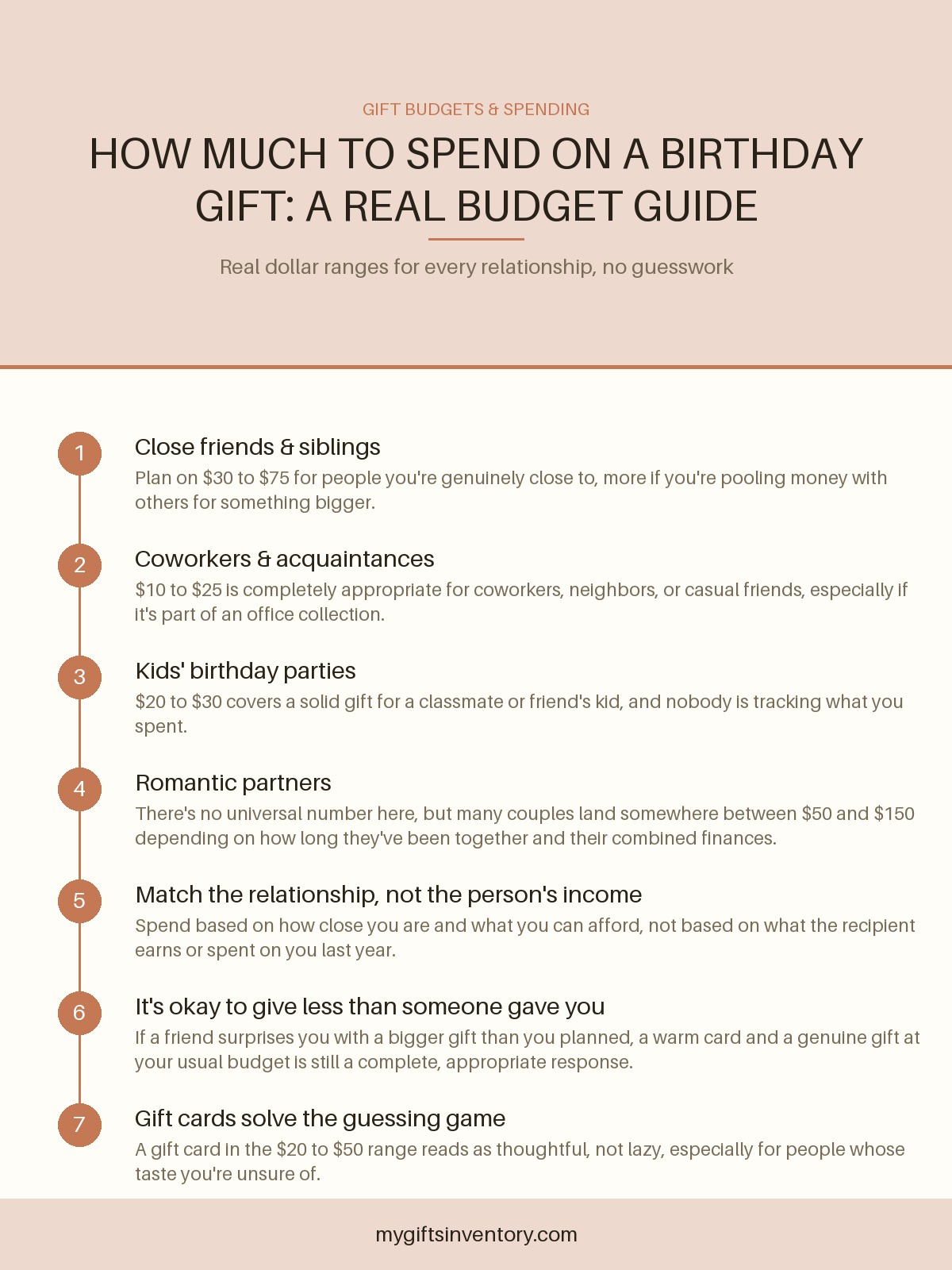
- Name an exact number, not a range. "Around $30" gets interpreted anywhere from $20 to $45. "$30" gets treated as $30.
- Decide if it includes shipping or wrapping. This sounds nitpicky until someone spends $28 on the gift and $12 on express shipping and technically blows the cap.
- Pick a method, not just a limit. A White Elephant, Secret Santa style name draw, or "everyone buys for the person to their left" system means people are only responsible for one gift instead of ten, which makes a lower per-person budget feel generous rather than stingy.
- Confirm it in writing. A pinned message in the family group chat avoids the "I thought we said $40" conversation in January.
For extended family exchanges where the goal is genuinely thoughtful but modest, a $50 cap opens up a surprising amount of room. Our unique gift ideas for women under $50 guide is a good example of how far that number actually stretches when you're shopping with intention instead of just grabbing the first thing at that price.
When Someone Breaks the Agreement
It happens. Someone agrees to $30 and shows up with a $90 gift, either because they forgot, because they wanted to be generous, or because they genuinely didn't think the limit applied to them. Resist the urge to say anything in the moment. A public comment about someone overspending, even a joking one, tends to embarrass them far more than the mismatch itself ever would.
Instead, say thank you warmly and address it privately, if at all, before the next round: "Hey, I loved what you got me last year, just wanted to check in since we're doing the $30 thing again this year, does that still work for you?" Some families find it easier to let the cap be more of a ceiling than a strict rule, meaning it's fine to go under but understood that going noticeably over puts pressure on everyone else. If that's closer to your family's culture, it's worth saying so explicitly rather than assuming everyone already knows.
Alternatives to a Hard Dollar Cap
Not every family wants to talk in dollar figures, and that's fine. A few alternatives tend to work just as well:
- Experience over object caps. Agreeing that gifts should be experiences, like a shared meal out or a class, naturally limits spending without anyone stating a number.
- One meaningful gift instead of many small ones. Some families skip individual gifts entirely in favor of one bigger shared gift, like a family trip contribution, which sidesteps the comparison problem altogether.
- Gift cards as the agreed default. If your family has landed on gift cards to keep things simple and fair, it helps to know how to check a balance before regifting or combining cards, and our guides for brands like Visa gift cards and Amazon gift cards walk through exactly how to do that.
- A no-gifts-for-adults policy. Increasingly common among siblings who'd rather spend money on kids or a shared family activity than circulate gifts nobody really needs.
The Parent-Specific Problem
Parents are often the hardest budget conversation because the dynamic isn't really about money, it's about who gets to take care of whom. A parent who insists on spending more than agreed is frequently expressing love or independence, not ignoring your request. If your parents are hard to keep on budget and you're looking for gift ideas on your end that feel substantial without costing much, our gift ideas for a mom who has everything guide leans into thoughtful, modest options that read as generous regardless of price tag, which can make it easier to hold your own line even if they don't hold theirs.
Couples, In-Laws, and Blended Budget Expectations
When two families merge through marriage, gift budget mismatches are almost guaranteed at first, because each side is carrying its own unspoken family culture into the same holiday table. This is worth addressing directly in year one rather than letting resentment build quietly. A simple "in my family we've usually done around $X for the exchange, does that work for your side too?" opens the door without implying either family is doing it wrong. If milestone anniversaries are part of what's being discussed, our anniversary gift ideas by year under $100 guide is a useful reference point for what's reasonable to spend at each stage, especially when in-laws are involved and everyone's calibrating against a slightly different baseline.
Gift Ideas to Go With This



Want more ideas? Browse our full guide: 20 Best Gifts Under $100 (2026): Thoughtful Picks They'll Actually Use
Frequently Asked Questions
How do I bring up a gift budget without sounding cheap?
Frame it as simplifying the season for everyone rather than a personal financial limitation, something like "let's agree on a number so nobody feels pressure to overspend." Most people are relieved when someone else brings it up first, because they were quietly hoping for the same thing.
What's a reasonable gift budget for extended family?
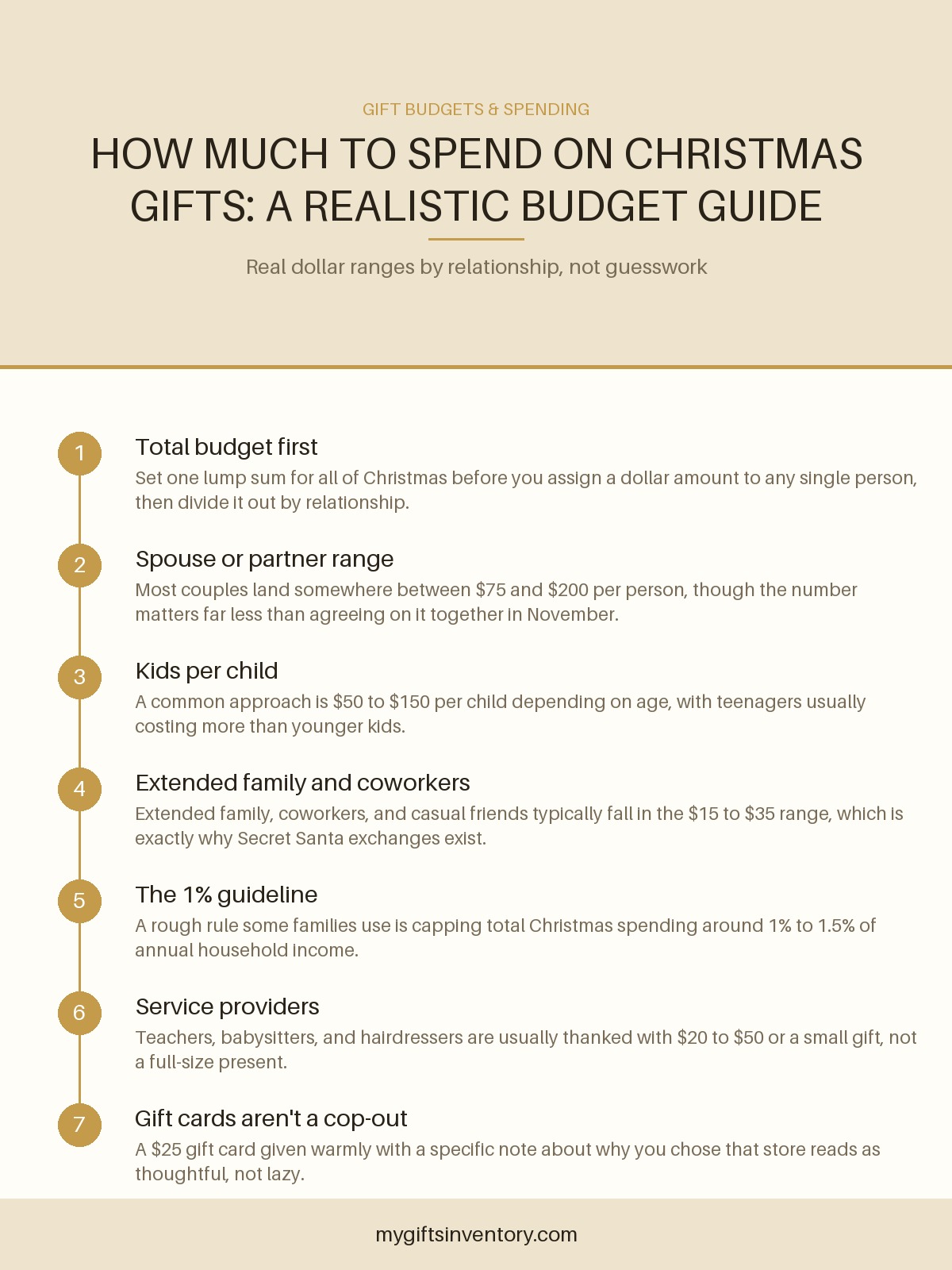
For cousins, aunts, uncles, and extended family, $15 to $25 per person is common and keeps a large gift exchange manageable. Many families pair this with a name draw so each person only buys one gift instead of ten.
What do I do if my in-laws spend way more than my side of the family?
Address it directly with your partner first, then bring a suggested number to both families rather than letting the mismatch sit unspoken for years. It's easier to normalize a shared number early in a relationship than to renegotiate it after a decade of one side consistently outspending the other.
Is it rude to set a gift budget with parents?
No, and most parents appreciate the honesty once they understand it comes from wanting quality time over expensive obligation, not from a lack of gratitude. Framing it around reducing stress for everyone, rather than limiting what they can spend on you, tends to land much better.
Should kids be included in budget conversations?
Kids don't need to know exact dollar amounts, but parents coordinating a cousin gift exchange should agree on a similar range so no child ends up with a noticeably smaller pile. A quiet conversation between the adults beforehand solves this without ever involving the kids directly.
Looking for an Actual Gift Instead?

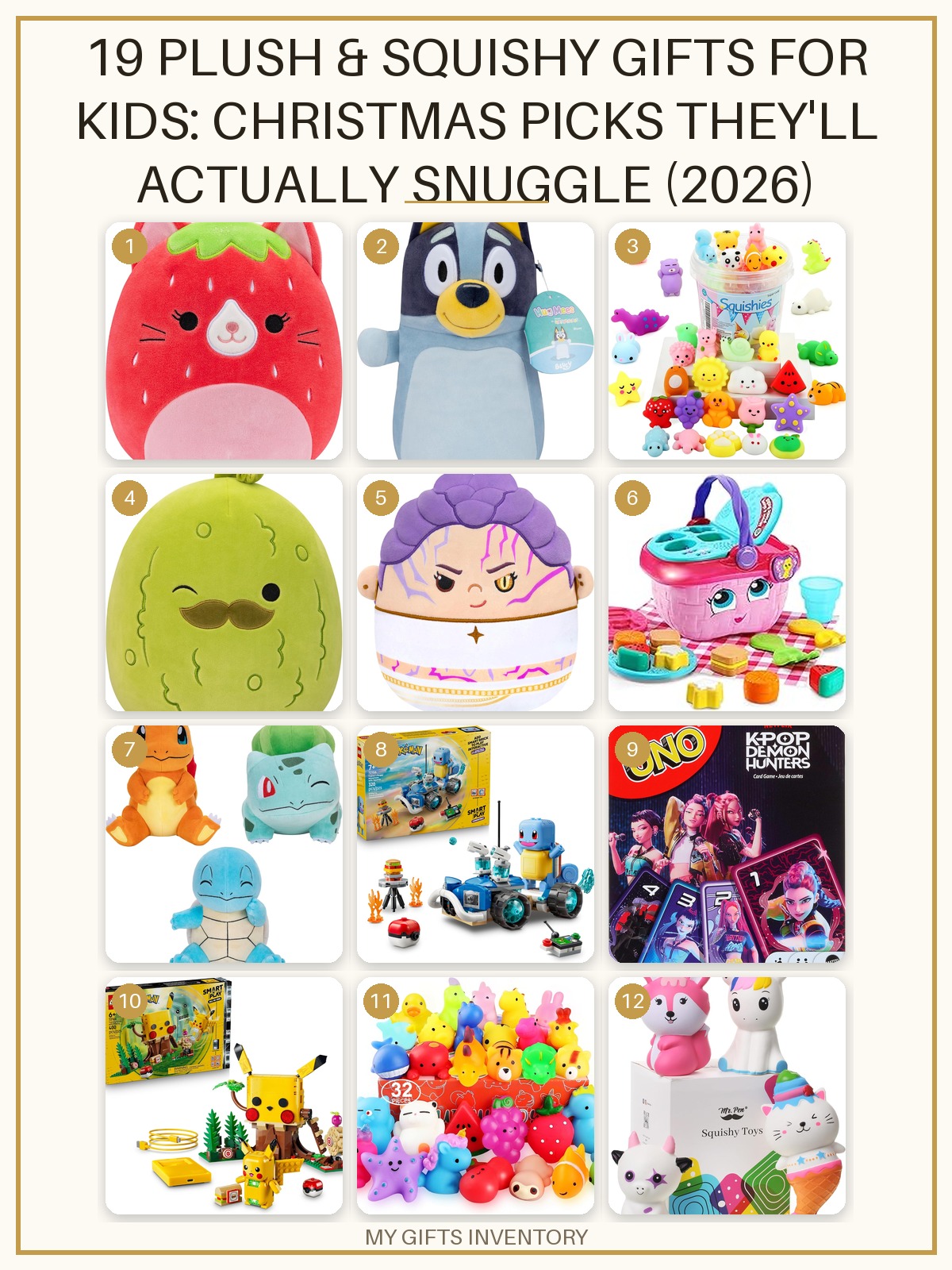


Gift Sets We Love Right Now
Every item picked, priced and linked, ready to buy.
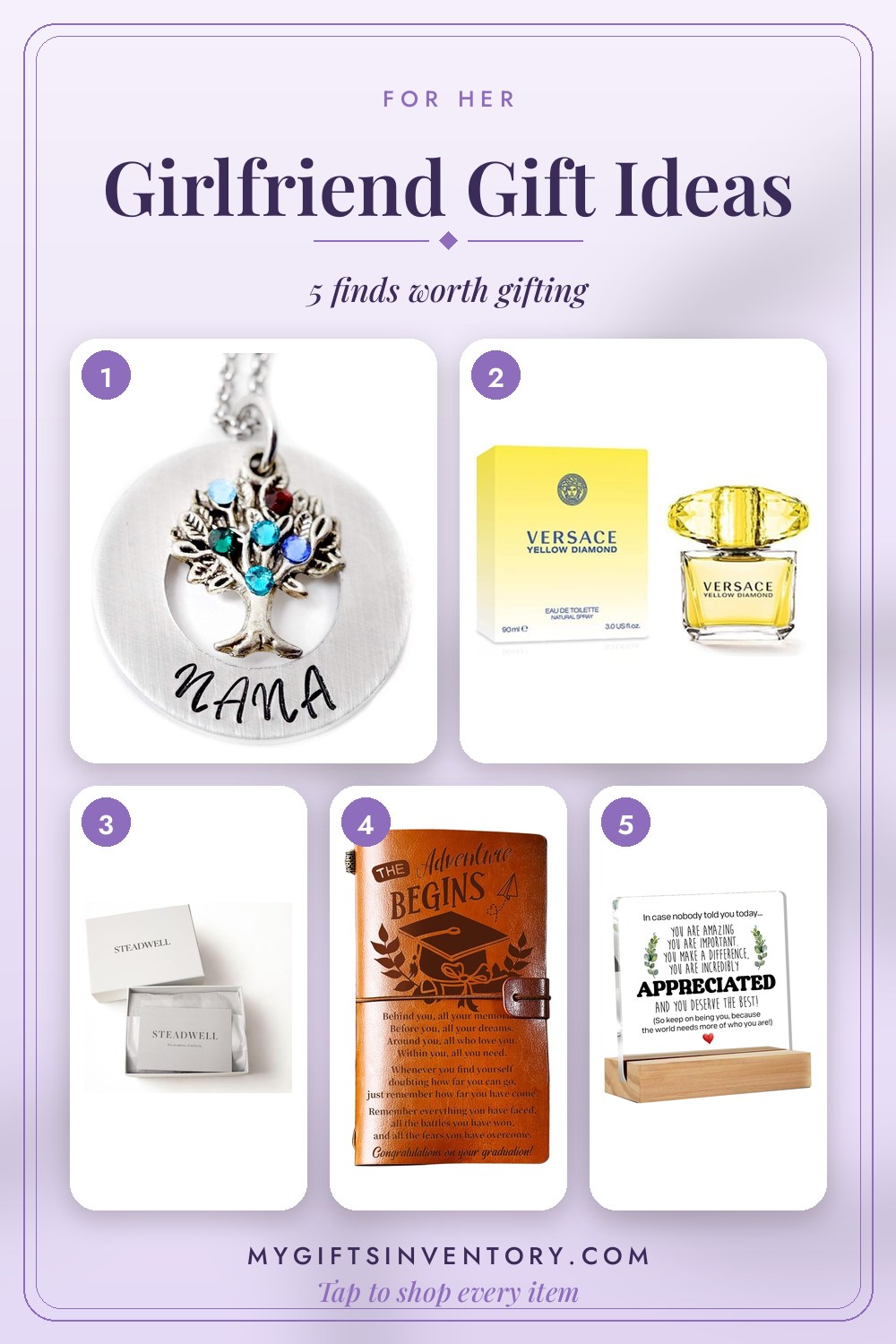
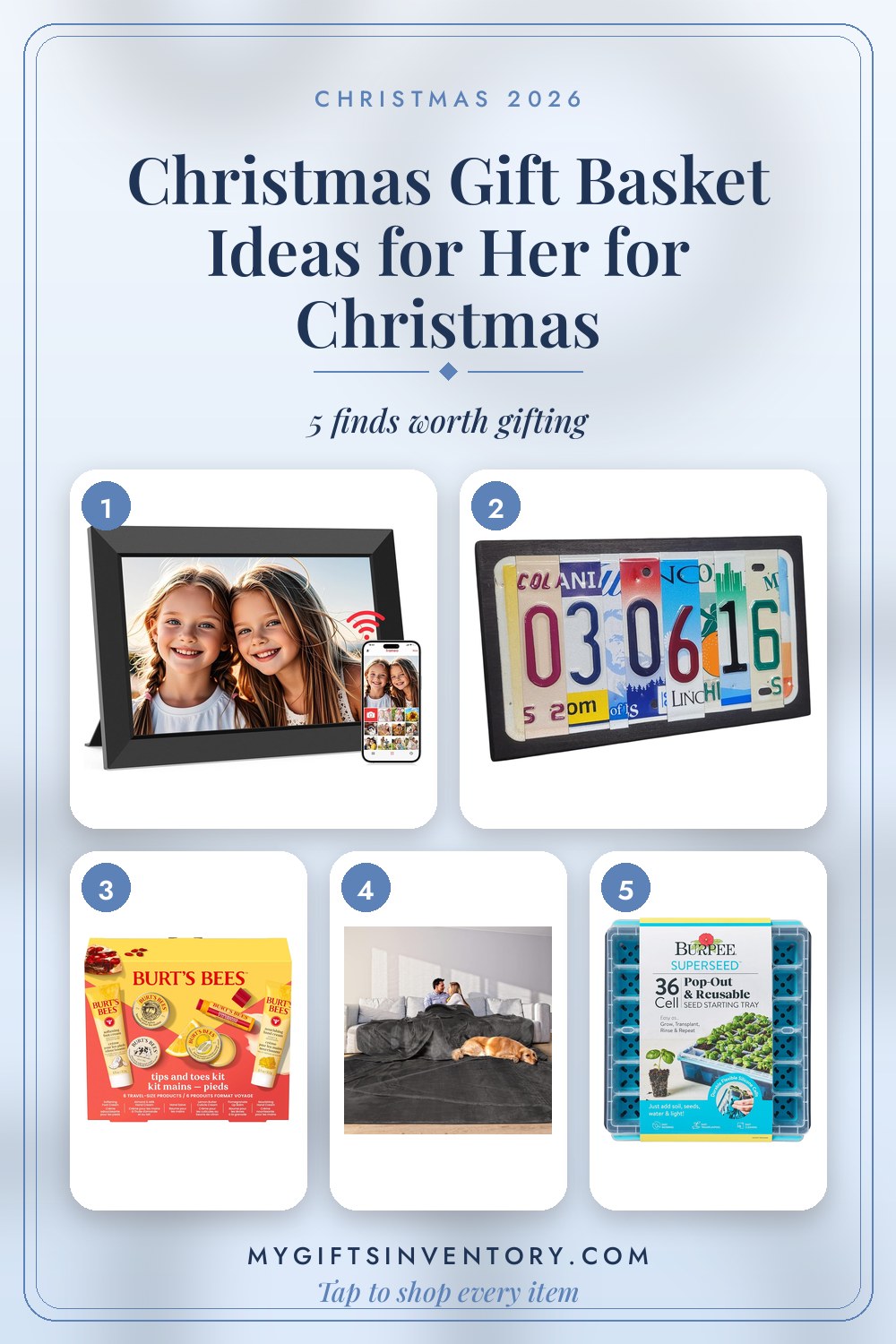
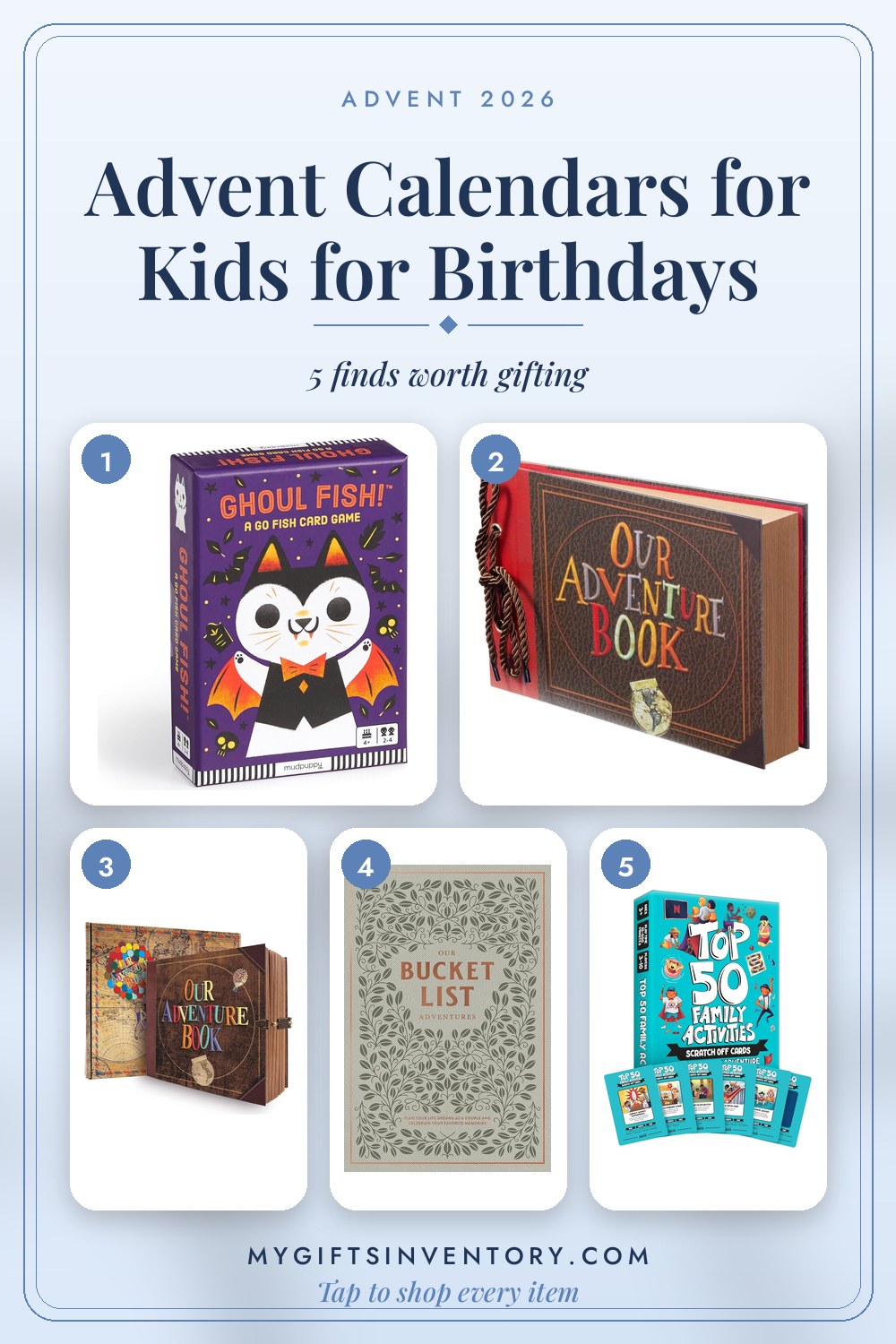
More Gift Advice