Meaningful Gift Card Messages That Actually Feel Personal
A gift card only feels lazy when the note is generic. We share real wording, simple formulas, and presentation tips so your message does the heavy lifting for birthdays, holidays, thank-yous, and every relationship.
As an Amazon Associate, My Gifts Inventory earns from qualifying purchases. We only recommend products we'd genuinely consider buying ourselves.
We’ve all stood there with a gift card in hand and a blank note card staring back at us. The card itself is practical. The message is what decides whether it feels thoughtful or like you gave up. People search for meaningful gift card messages because they want the recipient to feel seen, not handed an obligation with a dollar amount on it.
The good news is you do not need poetry. You need a little specificity, the right tone for the relationship, and the confidence to treat the gift card as a real choice rather than a fallback. Here’s how we write notes that actually land.
Why the message carries more weight than the amount
A gift card removes the guesswork of size, color, or taste. That freedom is the whole point. The trade-off is that it can feel anonymous if the only words on the card are “Happy Birthday” and your name. The note is your chance to show you know this person. One concrete detail does more work than three flowery sentences.
Think of the message as the personal layer. The card is the practical layer. When both are present, most people are genuinely happy. When the message is missing or generic, the card can feel like a transaction.
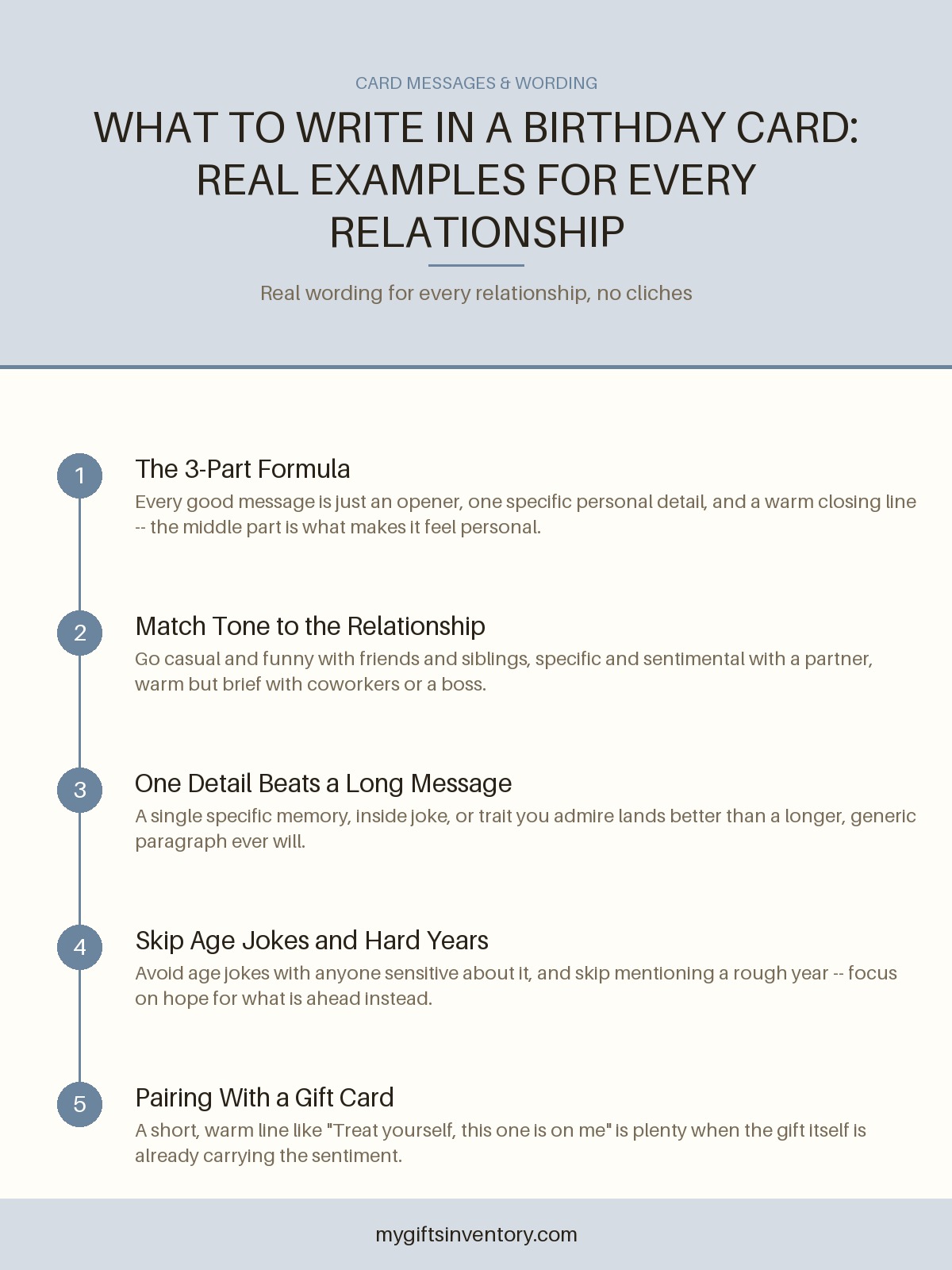
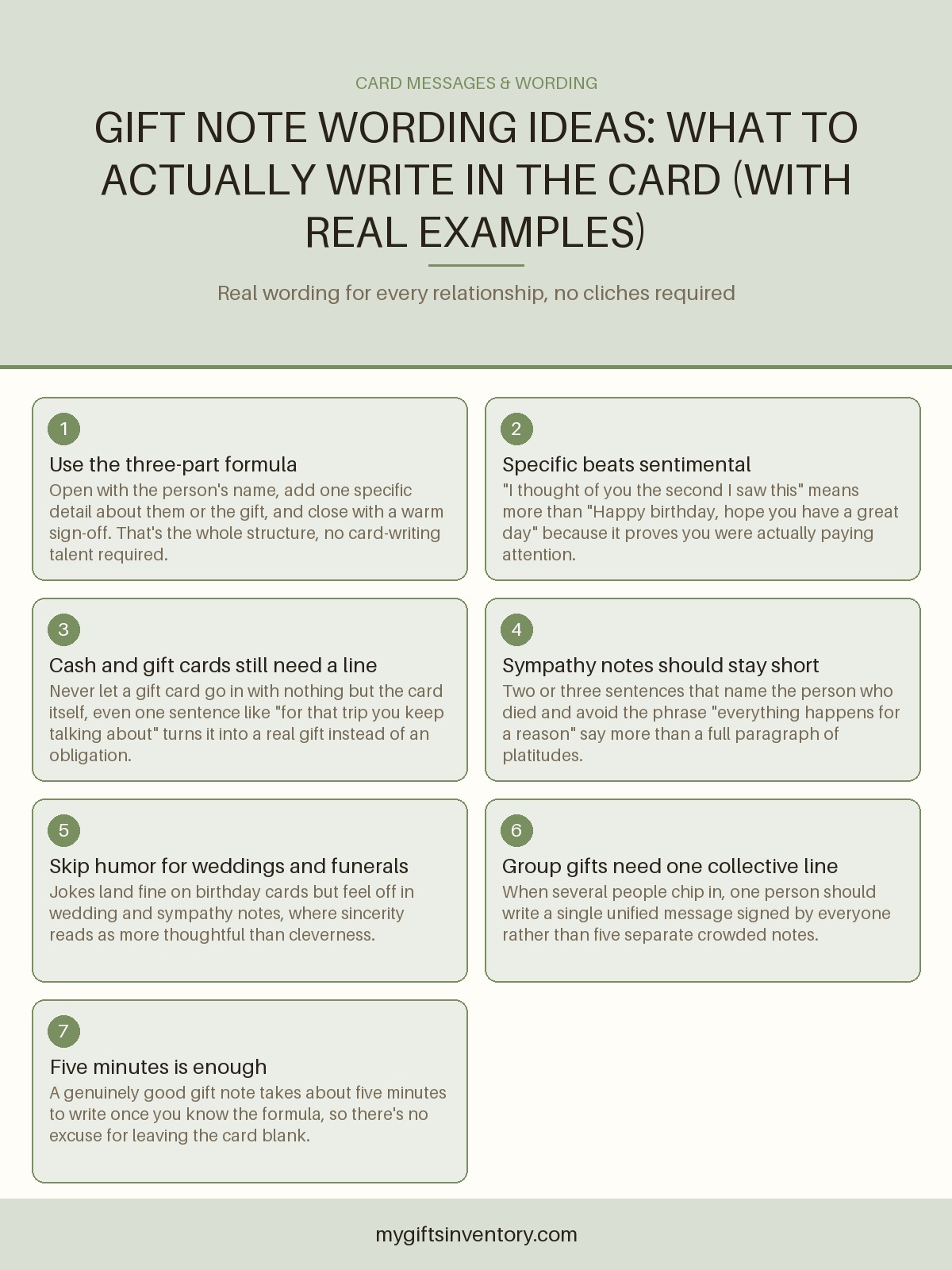
A simple formula that works almost every time
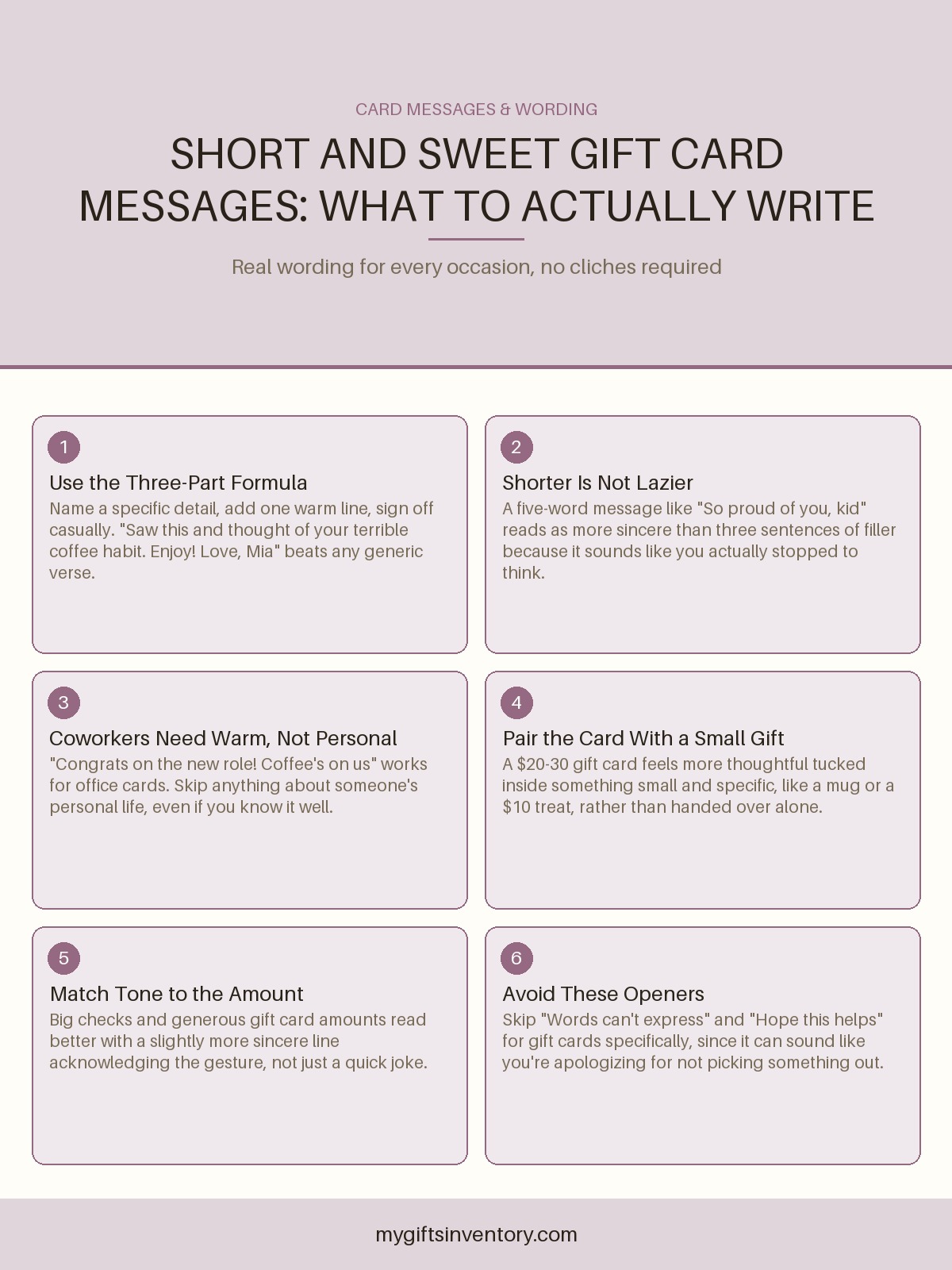
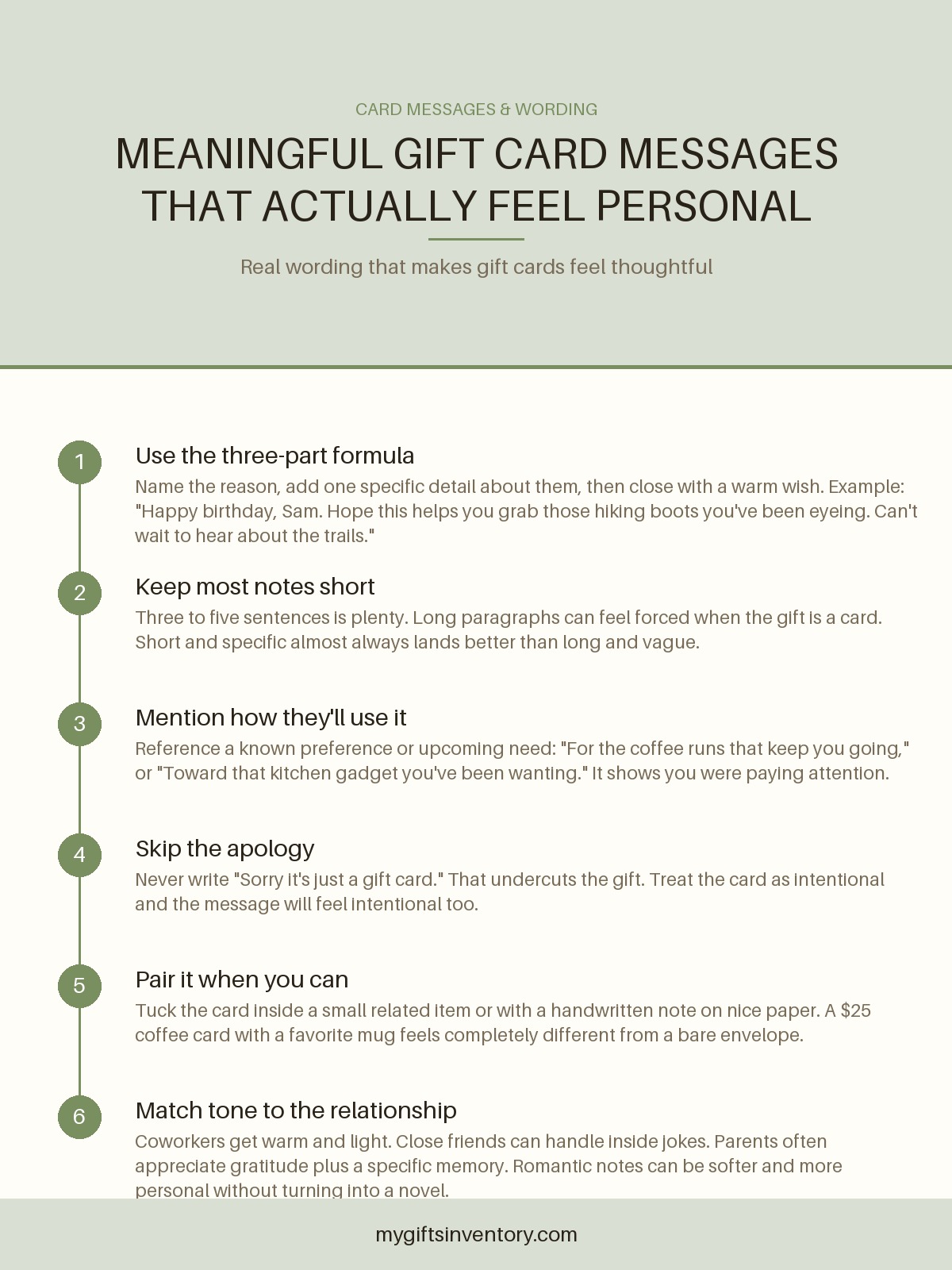
We reach for the same three-part structure again and again because it is reliable and flexible:
- Name the occasion or reason clearly.
- Add one specific observation, memory, preference, or hope tied to them.
- Close with a warm wish or light invitation to enjoy it.
That’s it. You can stretch it for a closer relationship or compress it for a coworker. The middle part is the one that makes it feel meaningful. Without it, you just have a polite label.
Examples of that middle beat: a favorite coffee order, an upcoming trip, a hobby they talk about, a recent win at work, the fact that they never treat themselves, or a shared joke. Even a small detail signals attention.
What to write by relationship
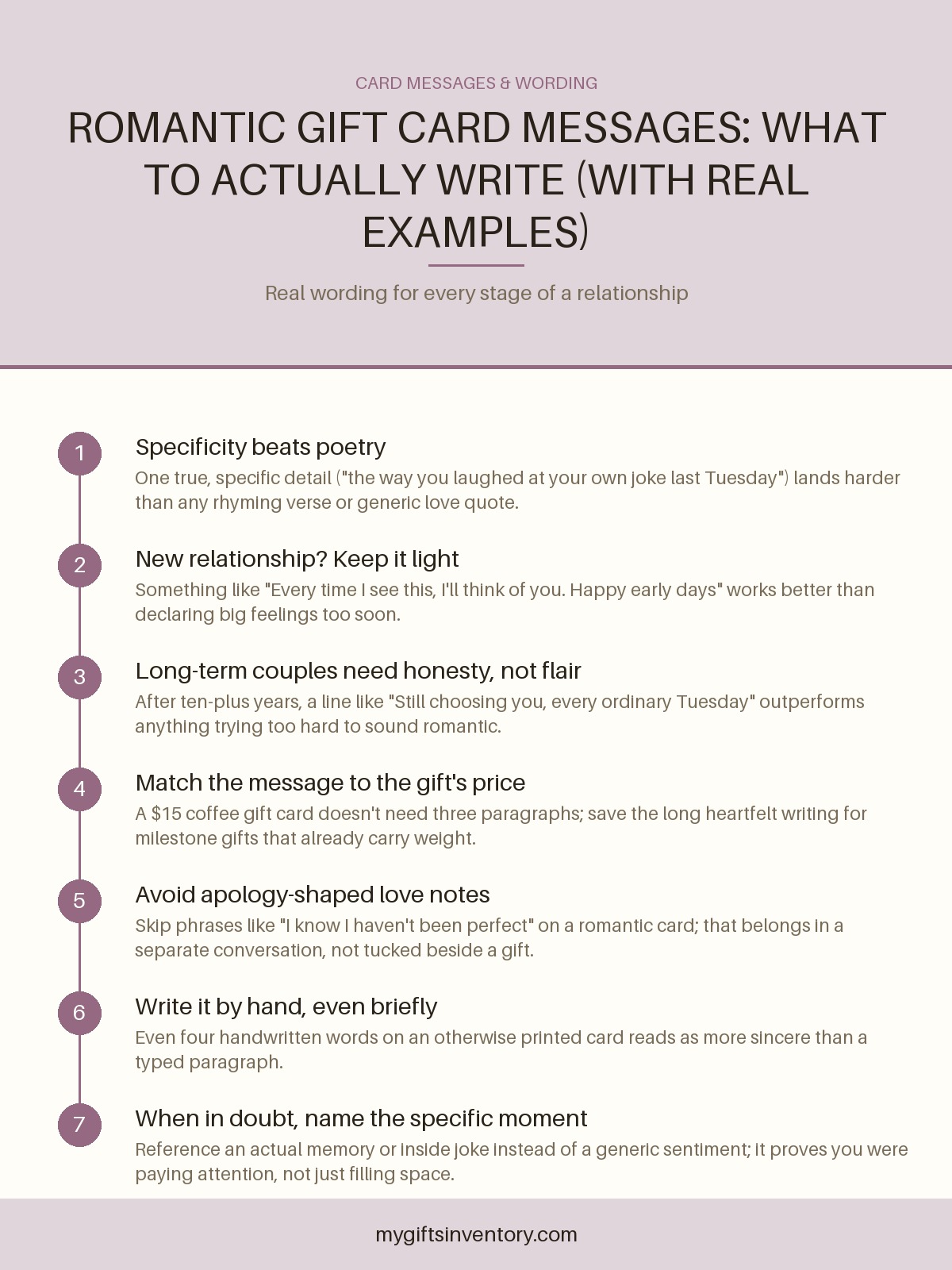
For a partner or spouse
Lean personal without turning the note into a manifesto. Reference something you know they want or a shared plan.
“Happy anniversary. This is toward that dinner spot you’ve been wanting to try (or whatever else makes you happiest). I love getting to keep choosing you.”
“For your birthday, because you never buy the nice version for yourself. Go get it. I’m in for the celebration afterward.”
If the card is for a store they love or an experience you’ll share, say so. Pairing a gift card with something cozy or keepsake-level can elevate the whole gift. We’ve seen people combine cards with ideas from guides like cozy comfort gifts for her so the presentation feels intentional rather than last-minute.
For parents or grandparents
Gratitude plus one concrete memory or observation works well. Many parents downplay their own wants, so giving them permission helps.
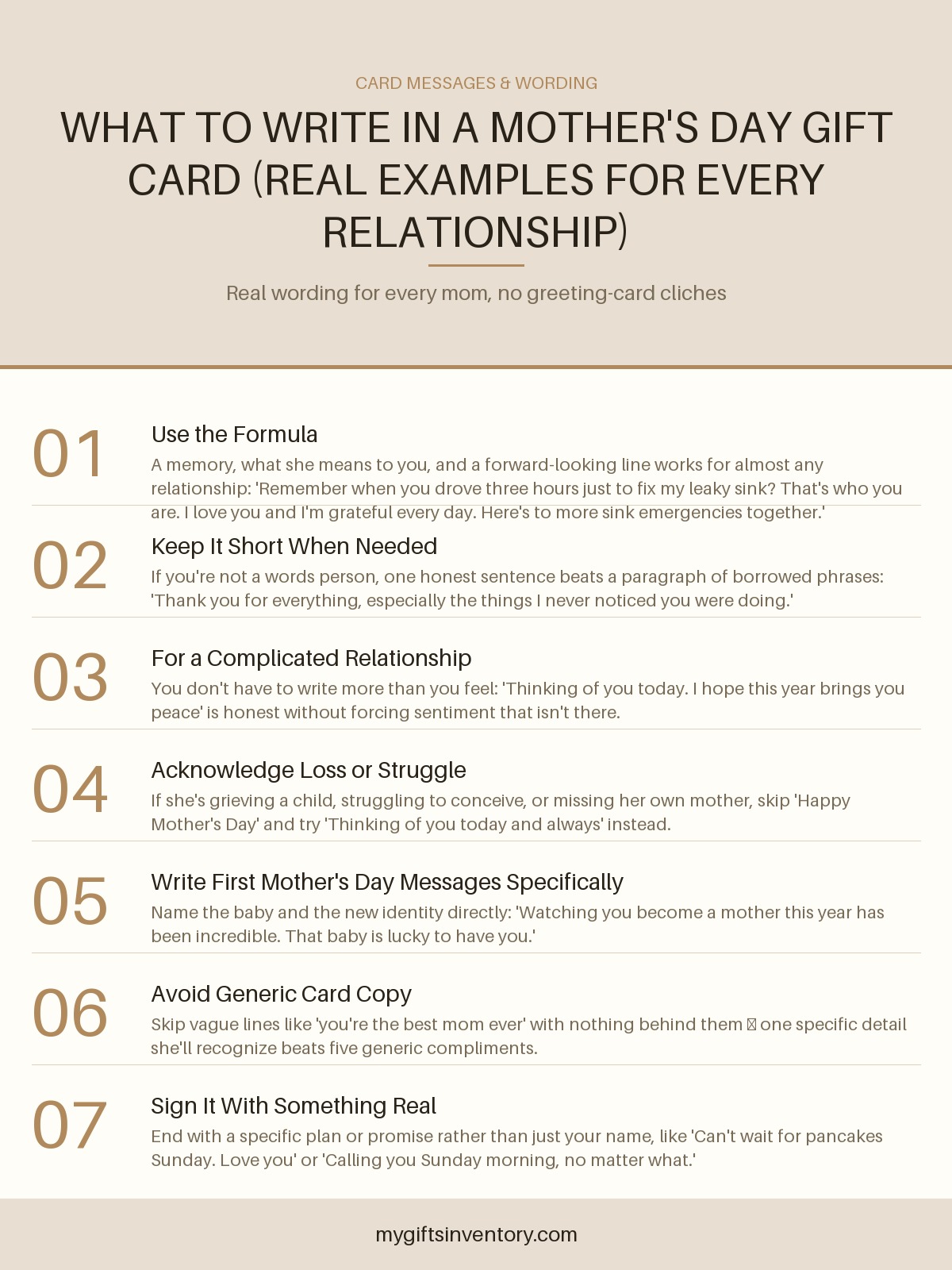
“Happy Mother’s Day. Thank you for all the quiet ways you make things easier. Use this for something just for you. No groceries allowed.”
“Dad, happy birthday. This one’s for the fishing gear you’ve been eyeing or a day on the water. You’ve earned the good stuff.”
Short and sincere beats long and formal here.
For siblings and close friends
You can be casual, funny, or lightly teasing as long as the affection is obvious.
“Happy birthday, you legend. Go buy the thing you keep adding to cart and then deleting. I support your chaos.”
“Congrats on the new place. This should cover a few takeout nights while you figure out which box has the plates.”
“Thank you for showing up the way you always do. Coffee (or books, or plants) on me.”
For coworkers, teachers, or acquaintances
Keep it warm, professional, and brief. Avoid inside jokes that might not land and skip anything that could feel overly familiar.
“Happy holidays. Grateful to work with you this year. Hope this adds a little ease to your season.”
“Thank you for everything you do for the class. Hope you can treat yourself to something small and nice.”
“Congratulations on the new role. Wishing you a great start. Enjoy something fun on us.”
For teachers especially, a modest card with a clean note is often more appreciated than another mug. If you’re shopping smaller budgets, our roundup of birthday gift ideas for teachers under $30 has easy pairings that sit nicely beside a gift card.
For teens and young adults
Direct is fine. They usually prefer knowing they can choose exactly what they want.
“Happy graduation. So proud of you. Use this for whatever makes the next chapter more fun (or easier).”
“Birthday fund for games, music, or snacks. You know your taste better than I do.”
Messages by occasion
Birthday
“Happy birthday! Hope this helps you get something you’ve actually been wanting. Have a great day.”
“Another trip around the sun. Go treat yourself. You’ve earned the good version.”
Add the specific detail if you have one: “Toward those concert tickets” or “For the hiking boots situation.”
Thank you
“Thank you for helping us move / watching the kids / the recommendation that saved us. This is a small way of saying we noticed.”
“We appreciate you more than a card can cover, but this is a start. Grab dinner or coffee on us.”
Holidays
“Merry Christmas. Hope this brings a little extra ease (or fun) to your week. Grateful for you.”
“Happy holidays. May your coffee stay hot and your to-do list stay short. This should help with one of those.”
If you’re buying cards in bulk for the season, it helps to know exactly which brands and fees you’re dealing with at grocery and warehouse stores. Guides like Gift Cards at Albertsons and Gift Cards at Kroger make it easier to grab the right ones without surprises at the register.
Graduation
“Congratulations, graduate. You did it. This is for the next step, whatever that looks like for you. So proud.”
“Caps off to you. Go celebrate or stock up on whatever the new routine needs. You’ve earned both.”
Personalized keepsakes also pair well here if you want something they keep beyond the balance. See ideas in personalized graduation gifts under $50.
Wedding or shower
“Congratulations on your wedding. Wishing you a home full of good meals and easy nights. This is toward whatever you need most right now.”
“So happy for you both. May this help with the honeymoon fund, the kitchen, or the first pizza as a married couple. All valid.”
New baby or housewarming
“Welcome to the chaos and the sweetness. This is for coffee, diapers, takeout, or a quiet moment. You’ve got this.”
“Congrats on the new place. Hope this covers a useful thing or a fun one. Either way, we’re glad you’re settling in.”
Just because or encouragement
“No big reason except that you deserve a break. Go get the nice coffee or the thing that makes the week better.”
“Thinking of you. This is a small reminder that you don’t have to earn rest.”
How to present the gift card so the message sticks
The note does most of the emotional work, but presentation helps it land.
Write by hand whenever you can. A printed message inside a fancy card still feels less personal than messy handwriting on simple paper. Use a decent pen. Keep the card itself clean and free of leftover activation stickers if you can peel them.
Consider a small companion item. A coffee gift card with a bag of good beans. A bookstore card with a bookmark. A home store card tucked into a pretty tea towel. A spa or self-care card with a single nice candle. The companion item does not need to be expensive. It just needs to show intention.
If the recipient loves experiences more than objects, say that out loud in the note and point the card toward meals, classes, tickets, or outings. We keep a running list of approachable ideas in our experience gift ideas under $50 guide for exactly these moments.
For digital gift cards, the message field is often short. Front-load the specific detail. “Happy birthday. For the records you’ve been hunting. Love, us.” beats a generic opener that gets cut off.
Common mistakes that make a good card feel flat
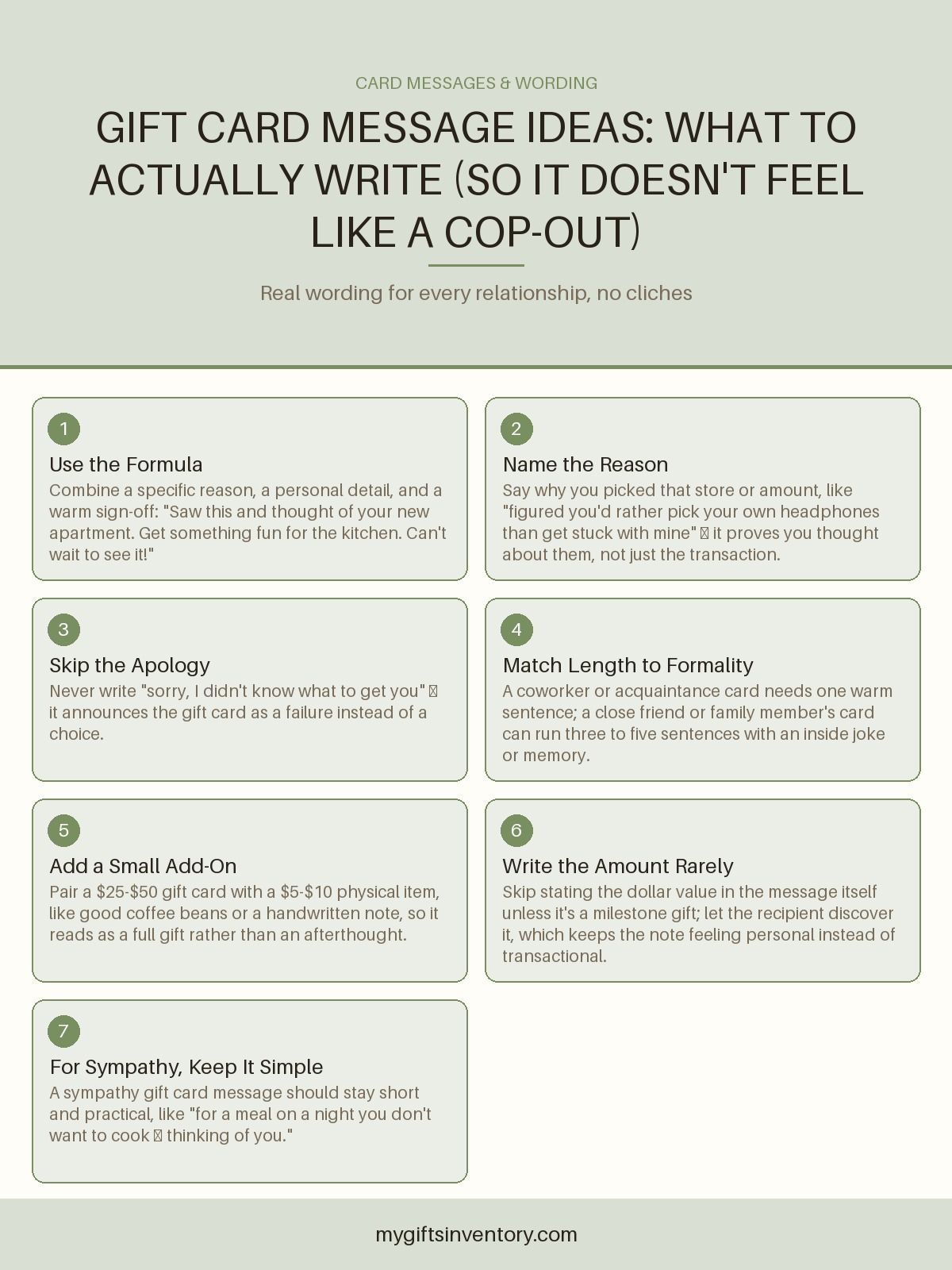
Apologizing for the gift card. “Sorry it’s not more exciting” tells the recipient how to feel. Skip it.
Being so vague that it could apply to anyone. “Have a nice day” is polite and forgettable. Add one tether to their life.
Overwriting. A paragraph of abstract praise can feel like filler. Specific and shorter almost always wins.
Forgetting the occasion or mixing up names. Double-check before you seal it. We’ve all been there.
Making the note about your own budget or stress. The message is for them. Keep the focus there.
Choosing a store they would never use just because it was convenient for you. If you’re unsure, a more flexible option or a card to a place they’ve mentioned is safer.
When the gift card needs extra care
Some situations call for a lighter touch or a stronger pairing. A first gift for a new romantic interest can stay simple and low-pressure. A sympathy-adjacent thank you should stay gentle and free of forced cheer. A high-stakes professional thank you should stay polished and modest in tone even if the amount is generous.
If you know the person feels awkward receiving money-like gifts, acknowledge the freedom instead of the dollar amount: “This is really about giving you a free pass to choose exactly what you want.”
And if you have time and knowledge of their taste, sometimes the most meaningful move is a small chosen object plus a modest card, or a card plus a plan to share an experience later. The note can set that up: “This covers the tickets. I’m in for the popcorn and the post-show debrief.”
Putting it all together
A meaningful gift card message is rarely about clever phrasing. It is about one clear reason, one specific detail, and a tone that matches how you actually talk to this person. Write it like you’re speaking to them, not like you’re composing a caption.
Keep a few go-to lines in your notes app for the seasons when you’re writing several at once, then customize the middle sentence each time. That small bit of effort is what people remember.
The card gives them choice. Your words give them the feeling that the choice came from someone who pays attention. That combination is more than enough.
Frequently Asked Questions
How long should a gift card message be?
Three to five sentences is ideal for most situations. Long enough to include one specific detail, short enough that it feels natural. A single strong sentence plus your name can work for coworkers or very casual gifts. Save longer notes for closer relationships or milestone moments.
Is it rude to give a gift card with only a short note?
No. A short, specific note is better than a long generic one. What feels rude is a completely blank card or a message that could apply to anyone. Name the occasion, add one personal touch, and sign it. That meets the bar for thoughtful.
What if I don’t know the person well enough for a personal detail?
Stick to the occasion, a warm general wish, and gratitude if it applies. “Congratulations on the new role. Wishing you a great start” is perfectly appropriate. You can also reference the context you do share: the team, the class, the neighborhood, or the event that brought you together.
Should I write the amount in the message?
Usually no. The recipient will see the amount on the card or email. Mentioning it can make the note feel transactional. Focus on the use or the sentiment instead: “toward a nice dinner” or “for something fun just for you.”
Can I give a gift card for a serious occasion like a wedding or graduation?
Yes. Plenty of people prefer them for exactly those milestones because the recipient can direct the money where it’s most useful. Make the message warm and specific to the occasion, and consider pairing the card with a small keepsake or a note that offers your time or help if that fits the relationship.