Cross-Cultural Gift Giving Etiquette: What to Know Before You Buy
A practical guide to giving gifts across cultures without causing offense, covering colors, numbers, money, wrapping, and the questions worth asking before you shop.
As an Amazon Associate, My Gifts Inventory earns from qualifying purchases. We only recommend products we'd genuinely consider buying ourselves.
You've got a wedding, a housewarming, or a work trip coming up, and the person you're buying for grew up in a culture that isn't your own. Maybe you've already heard a horror story, a coworker who gave a clock and got a strange look, a friend who brought white lilies to a dinner party and didn't understand why the room went quiet. The good news is that most cross-cultural gift mistakes are avoidable once you know the handful of things that actually trip people up.
This isn't about memorizing a hundred rules for a hundred countries. It's about understanding the few categories where cultures genuinely diverge, numbers, colors, money, timing, and reciprocity, so you can ask the right question before you buy instead of finding out after.
Why This Trips People Up More Than You'd Think
Gift giving feels universal because the impulse behind it is the same everywhere: you want to show someone you value them. But the symbolism attached to specific objects, colors, and even the act of opening a gift in front of the giver varies enough that good intentions can still land wrong. None of this is about being overly cautious or walking on eggshells. It's closer to learning that you don't wear shoes inside someone's house, a small courtesy that costs you nothing and means a lot to the person on the other end.
Numbers That Carry Meaning
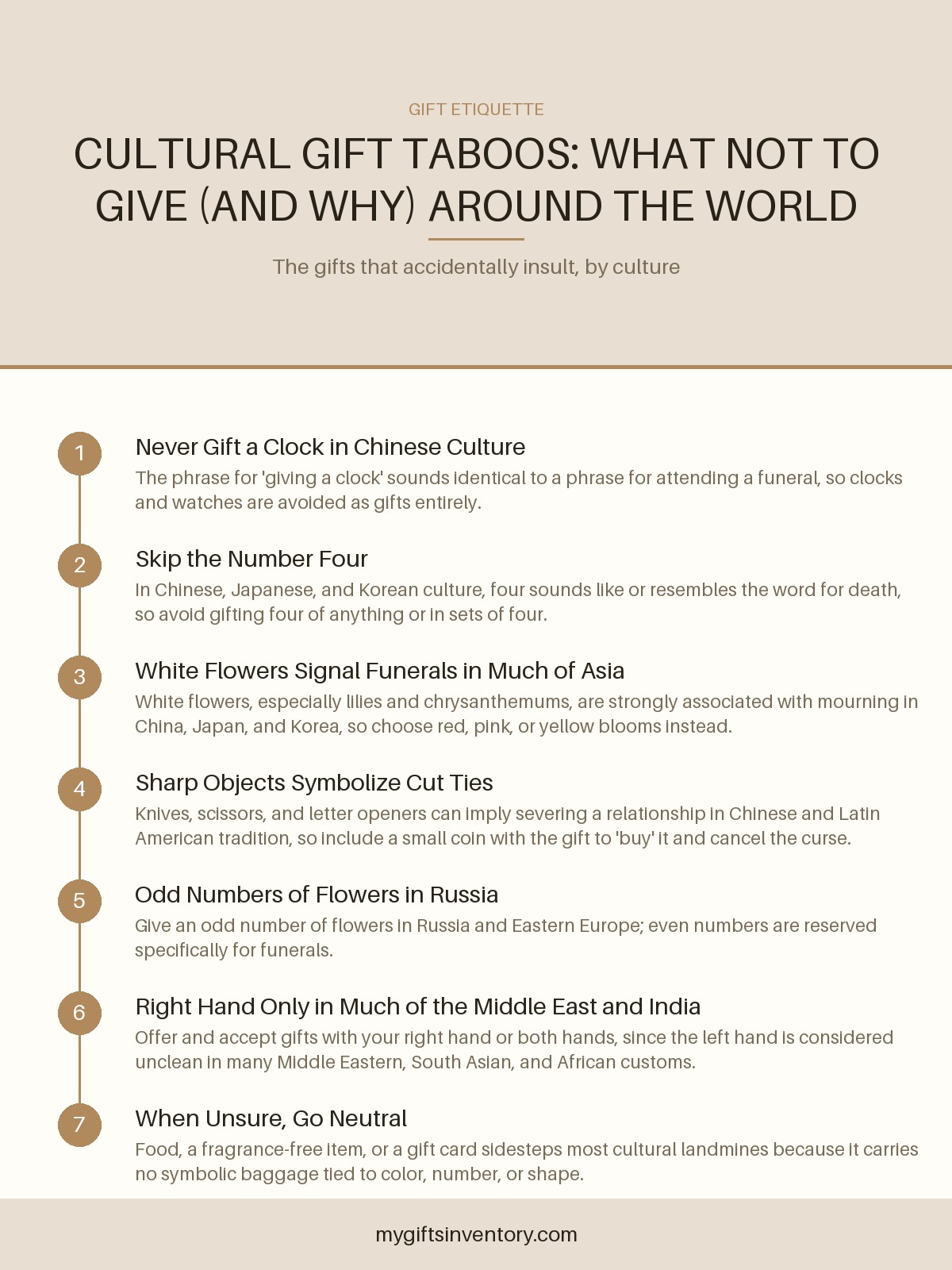
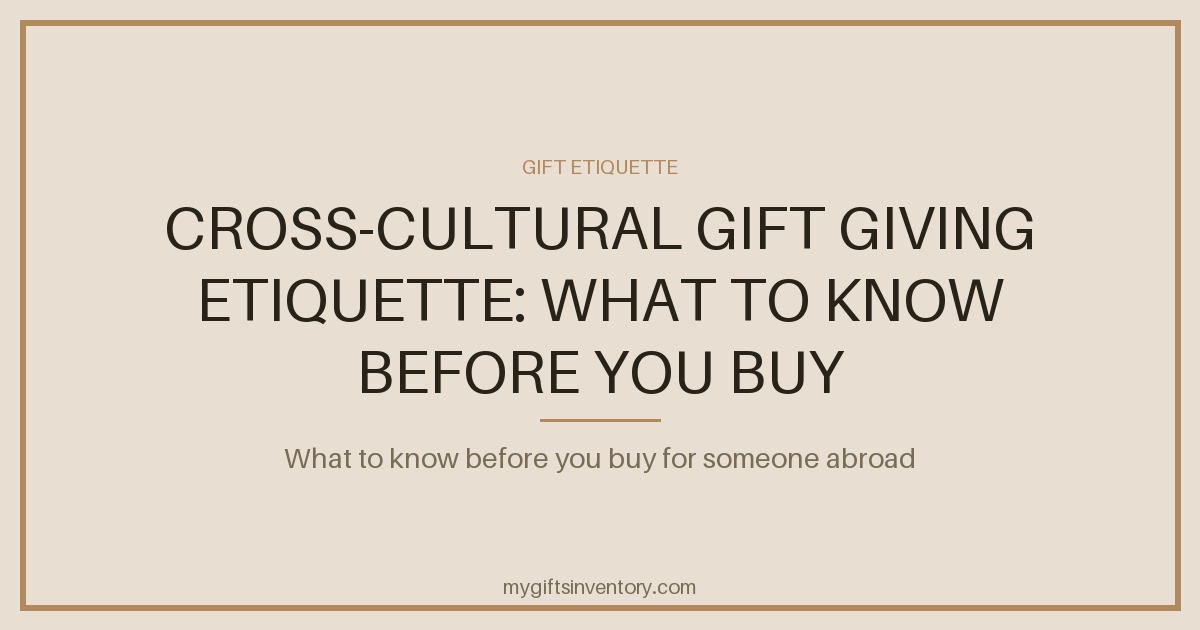
In Chinese, Japanese, and Korean culture, the number four is widely avoided because it sounds similar to the word for death in each language. This shows up in gift giving as a rule of thumb: don't give four of anything, four flowers, four pieces of fruit, four items in a set. Sets of three, five, six, or eight tend to be safer, and in Chinese culture eight is considered especially lucky because it sounds like the word for prosperity.
In Italy and some other parts of Europe, giving an even number of flowers can be associated with funerals, so odd numbers are the safer bet for a bouquet. None of these are rules you need to obsess over for a casual gift, but if you're picking a quantity for something formal, like a wedding or a milestone celebration, it's worth a quick check.
Colors and What They Signal
White is the color most likely to catch people off guard. In much of East Asia and in parts of Eastern Europe, white flowers and white wrapping paper are strongly associated with funerals and mourning, so they're not a good default choice for a celebratory gift. Red, by contrast, is considered lucky and celebratory across most of Asia and is a common color for wedding and New Year gifts.
In some African and South Asian cultures, black wrapping or black ribbon can carry similar mourning associations, so brighter colors or gold tend to be the default for happy occasions. If you're not sure, gold, red, or a mix of bright colors is close to a universal safe choice for wrapping paper.
Objects to Think Twice About
A few specific gifts show up again and again on lists of things to avoid, and they're worth knowing by heart.
Clocks and Watches in Chinese Culture
Giving a clock in Chinese culture is considered bad luck because the phrase for "giving a clock" sounds identical to a phrase used for visiting someone on their deathbed. This applies to wall clocks and sometimes wristwatches, so if you're buying for someone with Chinese heritage, it's one to skip even if the gift itself is beautiful.
Sharp Objects
In many cultures, including parts of Latin America and Asia, giving knives, scissors, or other sharp objects is thought to symbolize "cutting" the relationship. If a gift set includes a knife, a small coin or token payment is sometimes exchanged so the recipient is technically "buying" it rather than receiving it as a gift, which neutralizes the superstition.
Shoes
In some Latin American and Middle Eastern traditions, giving shoes as a gift is believed to symbolize the recipient walking away from you. It's not a universal rule, but it's common enough that shoes aren't the safest choice for a first gift to someone from these backgrounds.
Alcohol
Alcohol is a lovely gift in plenty of cultures and completely off the table in others. If you don't know whether the recipient drinks for religious or personal reasons, particularly common in many Muslim, Mormon, or observant Hindu households, it's worth confirming before you bring a bottle of wine to dinner.
Money as a Gift, and How to Present It
In Chinese, Vietnamese, and Korean culture, cash is a completely normal and expected gift for weddings, births, and Lunar New Year, but it's given in a red envelope, not handed over loose. The amount matters too: even numbers are generally preferred over odd, except that the number four is still avoided, and amounts ending in eight are considered especially auspicious.
In Japan, cash gifts for weddings are given in a special decorative envelope called a shugi-bukuro, and the bills are meant to be crisp and new, not wrinkled ones pulled from a wallet. In many Western cultures, cash can feel impersonal for a birthday but is completely standard for weddings and graduations. If you're ever unsure whether cash is appropriate, a gift card is often the safer middle ground since it still gives the recipient choice without the cultural weight that loose cash can carry in some settings. Something like an open-loop Visa gift card works almost anywhere and sidesteps the guesswork entirely.
Wrapping and Presentation
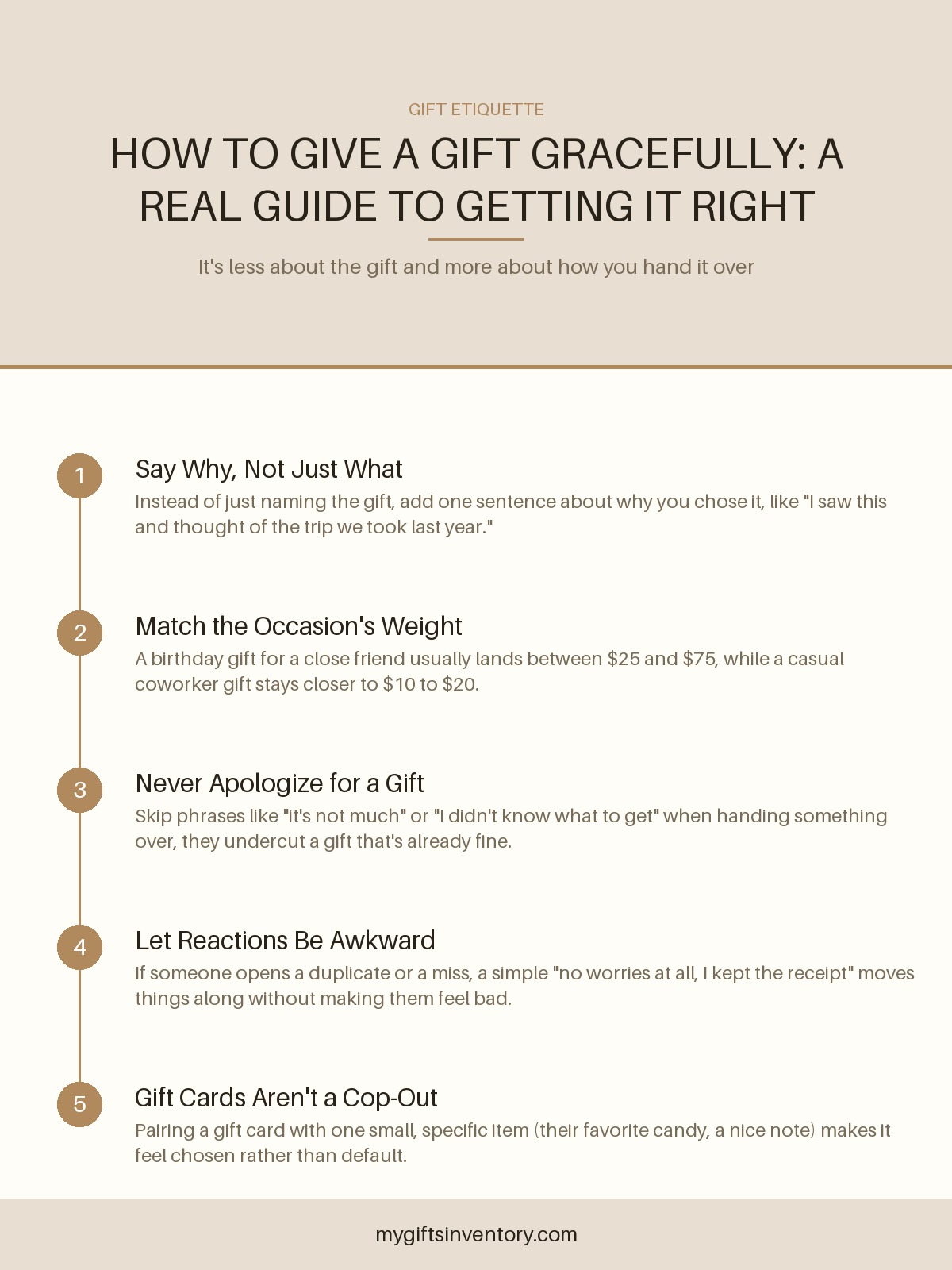
How a gift is wrapped and handed over matters as much as what's inside it in many cultures. In Japan, gifts are traditionally wrapped with real care and presented with both hands, and the recipient often doesn't open it in front of the giver, waiting instead until the giver has left so as not to seem overly eager or to risk an awkward reaction being seen. In the United States and much of Western Europe, the opposite is true, opening a gift immediately in front of the giver is expected and considered polite, since it shows appreciation in the moment.
Wrapping paper itself carries meaning too. Red and gold are safe, celebratory choices across most of Asia. In parts of the Middle East, green is a color with religious significance and works well for gifts tied to celebrations. When in doubt, simple, elegant wrapping in warm colors, avoiding stark white or black, is a reasonable default anywhere.
Hosting, House Gifts, and Reciprocity
Bringing a small gift when you're invited to someone's home is close to a universal expectation, though what counts as appropriate varies. In much of Europe, flowers, wine, or a dessert are typical. In many parts of Asia, a small gift for the household, sometimes fruit, sometimes a specialty item from your home region, is more common than flowers. In several Middle Eastern and South Asian cultures, gifts are sometimes gently declined once or twice before being accepted, a polite dance rather than genuine refusal, so don't be discouraged if your gift isn't grabbed immediately.
Reciprocity also works differently across cultures. In Japan, a gift often calls for a return gift of roughly half the value, called okaeshi, given at a later point rather than on the spot. In the United States, reciprocity is much looser and gift giving is not expected to be tracked or matched in value. If you're building a relationship with someone from a gift-reciprocal culture, it helps to know that your thoughtful gift might prompt a return gift weeks later, and that's a courtesy, not a debt being settled.
Weddings, Milestones, and Family Occasions
Cross-cultural gift giving gets more complicated around big life events because the stakes feel higher and the traditions run deeper. If you're attending a wedding for a couple blending cultural backgrounds, it's worth asking directly, or asking a close mutual friend, whether cash, a registry item, or a traditional object is preferred, since wedding customs vary enormously even within the same country. For general milestone ideas that translate well across most backgrounds, practical and thoughtfully chosen options like the ones in our anniversary gift ideas by year guide tend to travel well because they're personal without leaning on symbolism that might read differently elsewhere.
The same goes for gifts to a partner's parents or in-laws from a different background. Food, quality tea, coffee, or something for the home tends to be a safer bet than something highly personal until you know the family better. Our gift ideas for a mom who has everything guide leans toward exactly that kind of thoughtful, low-risk category that works whether you're meeting future in-laws for the first time or buying for a mother you've known for years but whose traditions differ from your own.
Food and Edible Gifts as a Safe Default
When you genuinely don't know a culture's specific rules, food is one of the most forgiving categories, as long as you steer clear of alcohol when unsure and check for religious dietary restrictions like halal, kosher, or vegetarian requirements. A well-packaged box of coffee, tea, or sweets reads as thoughtful nearly everywhere and doesn't carry the symbolic weight that objects like clocks, shoes, or knives can. If you're stuck on what to bring to a colleague's home or a host family's dinner, something from our coffee lovers gift guide is the kind of low-risk, high-warmth choice that works across most backgrounds.
Personal and Intimate Gifts
Jewelry, perfume, and other personal items are gifts that carry more weight in some cultures than others, sometimes signaling a level of intimacy that goes beyond a casual friendship or a new professional relationship. In many cultures, jewelry is reserved for close family or romantic partners, so giving it to a coworker or new acquaintance from a different background can send an unintended signal. If you're buying jewelry for someone you do know well, pieces like the ones in our personalized jewelry gifts for her guide work nicely because the personalization makes the intent clear, a thoughtful gesture rather than a romantic one. But if the relationship is newer or more formal, it's worth choosing something with less personal weight instead.
Corporate and Business Gift Giving
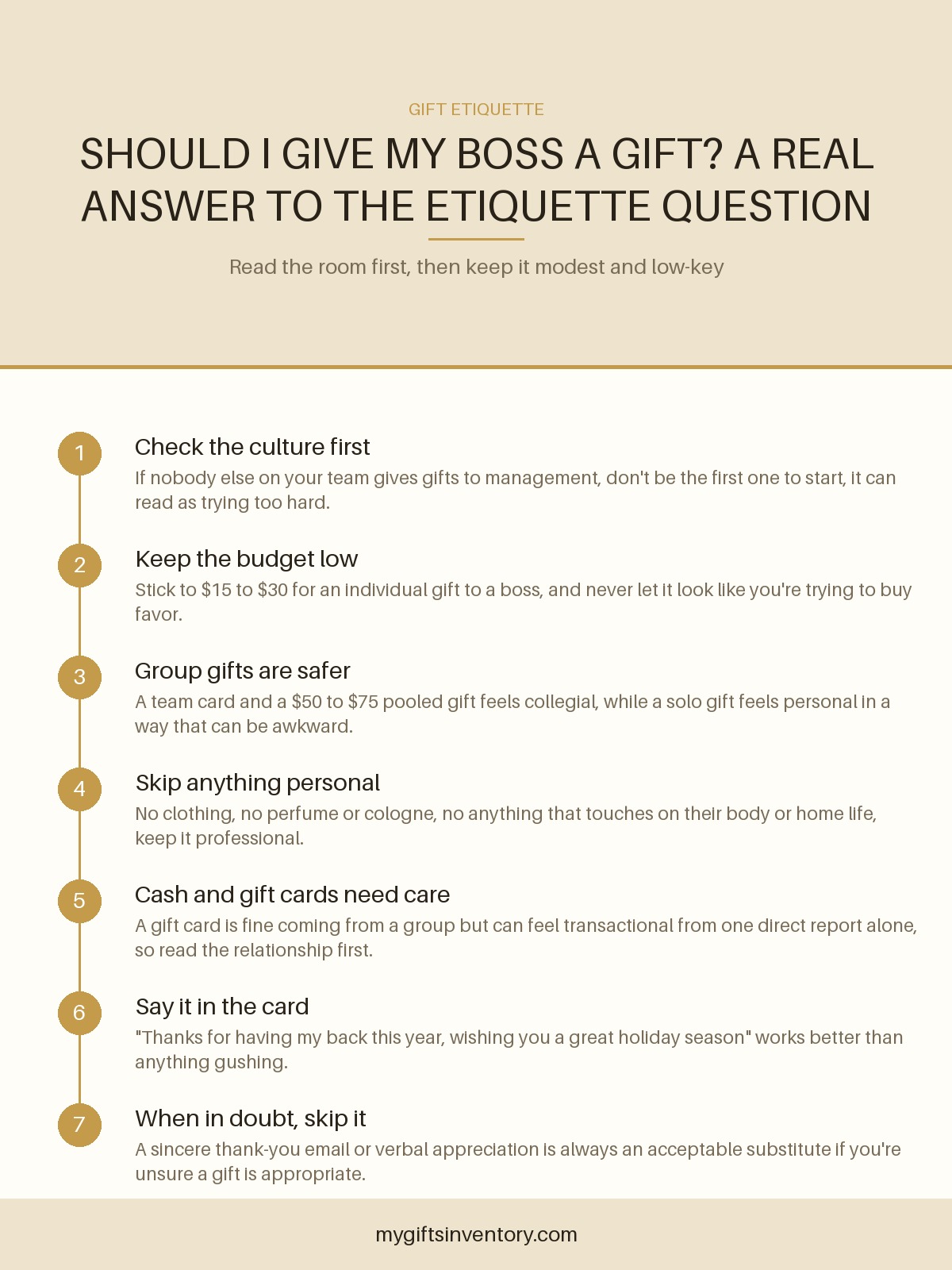
Business gifts have their own layer of cultural nuance on top of everything else. In Japan and South Korea, business gift exchanges are common and expected, and the gift is presented and received with both hands, with wrapping quality mattering quite a bit. In the United States, many companies cap the value of gifts employees can accept for compliance reasons, so a gift that's too generous can actually put the recipient in an awkward position. In the Middle East, gifts are frequently exchanged to build a relationship before business is discussed, rather than after a deal closes. If you're gifting internationally for work, it's worth checking your own company's gift policy and, when possible, asking a local colleague what's customary before you ship anything overseas.
Religious and Seasonal Considerations
Not everyone celebrates the same holidays, and a well-meaning "Merry Christmas" gift to a Jewish, Muslim, or Hindu colleague can land as a small but noticeable oversight. If you're gifting around a holiday season and don't know someone's background, a general "happy holidays" note and a gift that isn't tied to a specific religious tradition, like a food gift, a plant, or a gift card, sidesteps the issue entirely. If you do know someone celebrates Hanukkah, Diwali, Eid, or Lunar New Year, a gift timed to that occasion rather than to Christmas shows you've actually paid attention.
A Quick Gut-Check Before You Buy
When you're not sure what's appropriate, a few quick questions can save you from most mistakes. Does this gift come in a set of four, or is it white, black, a clock, shoes, or a sharp object? Is alcohol involved, and do I know whether that's welcome? Am I giving something highly personal to someone I don't know well yet? Is there a specific holiday or occasion this culture celebrates that I should be gifting toward instead of my own default? Running through these before you check out takes about thirty seconds and catches the vast majority of cross-cultural gift missteps.
Gift Ideas to Go With This


Want more ideas? Browse our full guide: 20 Best Gifts Under $100 (2026): Thoughtful Picks They'll Actually Use
Frequently Asked Questions
Is it rude to ask someone what gifts are appropriate in their culture?
No, most people appreciate the question and see it as a sign of genuine respect rather than ignorance. A simple "is there anything I should know before I bring a gift to your family's dinner" almost always lands well, and it's far better than guessing and getting it wrong.
What is a universally safe gift when I don't know someone's cultural background?
Good quality food or drink items that aren't alcohol, along with gift cards, tend to be the safest defaults across most cultures. They avoid the symbolic pitfalls tied to specific objects, colors, or numbers, and they give the recipient flexibility if your instincts about their taste turn out to be off.
Should I wrap a gift differently depending on the recipient's culture?
Yes, it's worth adjusting your wrapping colors at least. Avoid all-white or all-black wrapping paper since both are associated with mourning in a number of cultures, and lean toward red, gold, or bright colors, which read as celebratory almost everywhere.
Is it okay to give cash as a gift?
It depends on the culture and the occasion. Cash is standard and expected for weddings and holidays in Chinese, Korean, and Vietnamese traditions when presented in a red envelope, common at Western weddings and graduations, but can feel impersonal for a Western birthday gift, so it's worth matching the format to the occasion and the tradition involved.
What should I do if I've already given a gift that turned out to be culturally inappropriate?
A brief, genuine acknowledgment goes a long way, something like mentioning you've since learned more about the tradition and didn't mean any offense. Most people recognize an honest mistake made in good faith and won't hold it against you, especially if you follow up with a more thoughtful choice next time.
Looking for an Actual Gift Instead?
Gift Sets We Love Right Now
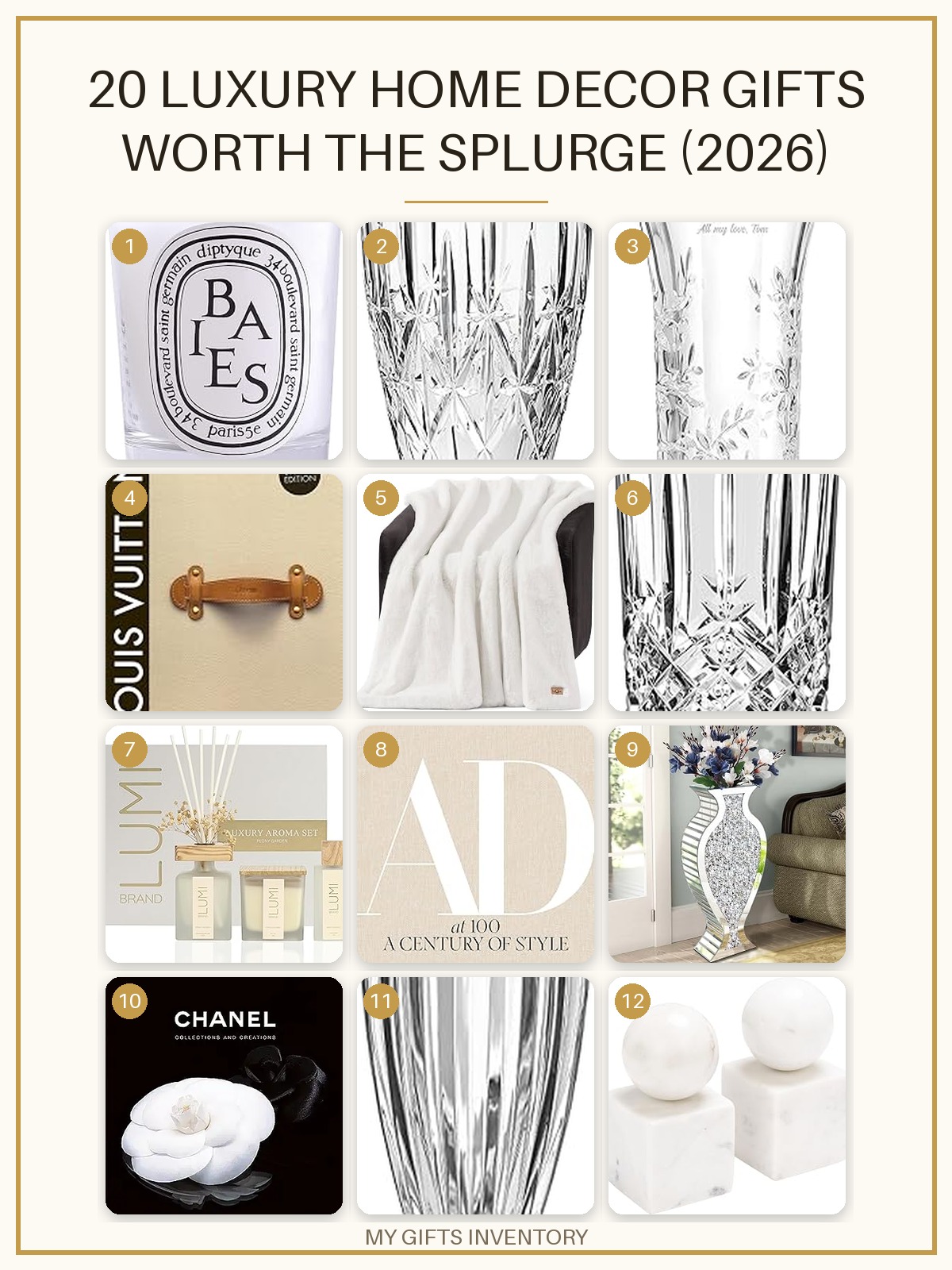
Every item picked, priced and linked, ready to buy.
More Gift Advice