Office Gift Giving Etiquette: A Complete Guide for Every Workplace Situation
From Secret Santa budgets to what to write in a boss's card, here's how to navigate office gift giving without the awkwardness, favoritism, or accidental overstepping.
As an Amazon Associate, My Gifts Inventory earns from qualifying purchases. We only recommend products we'd genuinely consider buying ourselves.
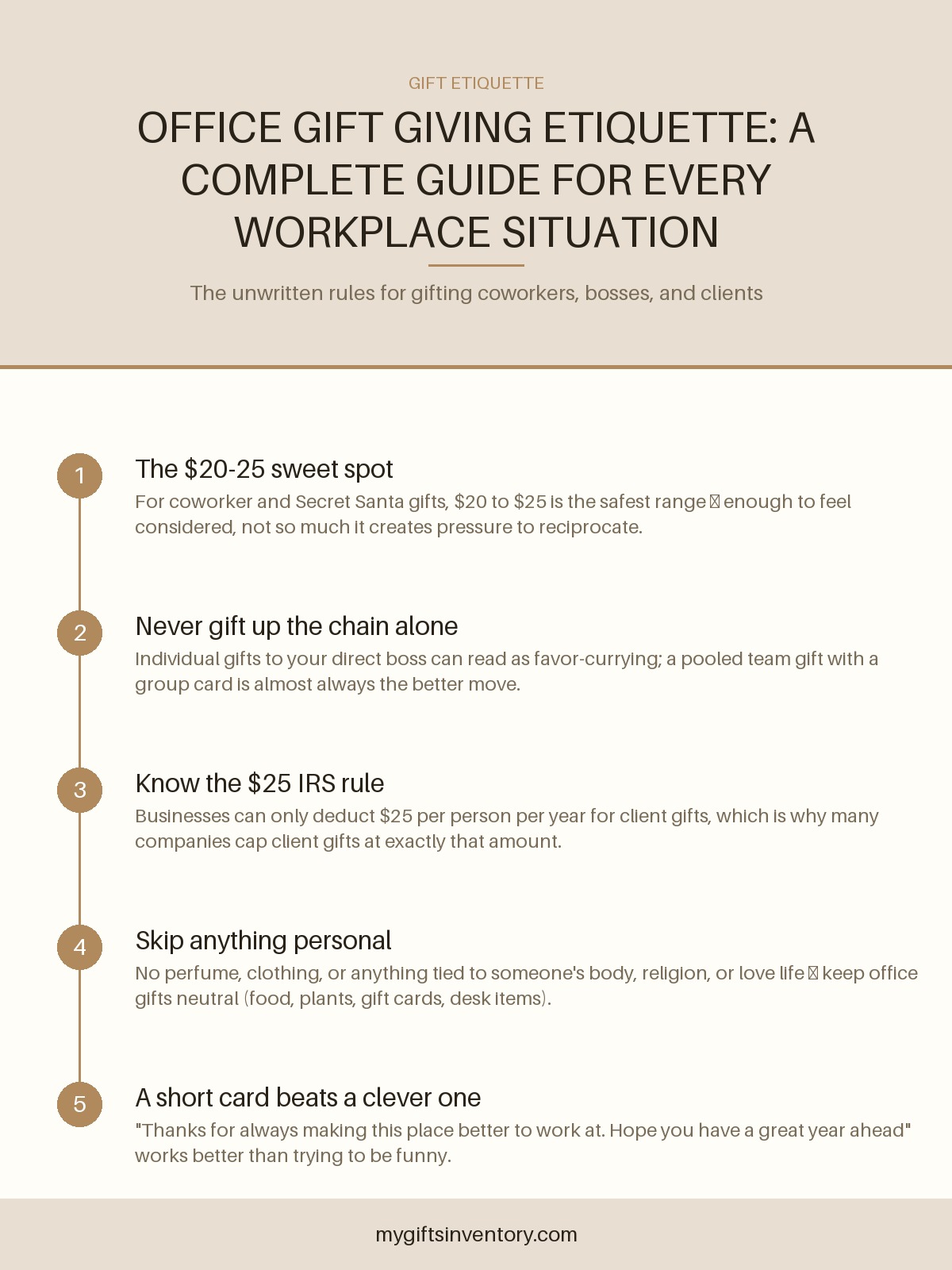
You've been invited to a Secret Santa, or someone just announced a "small collection" for the office manager's birthday, and now you're doing math in your head. How much is too much? Too little? Do you actually have to participate? Office gift giving carries a specific kind of anxiety that personal gift giving doesn't, because the wrong move doesn't just feel awkward, it can follow you around the break room for months.
The good news is that office gifting has a pretty consistent set of unwritten rules once you know them. Most of the stress comes from not knowing what's actually expected versus what's optional, and from worrying that a gift will be read as either too little effort or, worse, an attempt to curry favor. Let's walk through it by relationship, occasion, and budget so you can stop second-guessing.
The Golden Rule of Workplace Gifting: Keep It Neutral
The single biggest mistake people make with office gifts is treating a coworker like a close friend. Outside of work, you might know someone's exact perfume preference or favorite band. Inside the office, that same level of personal knowledge can feel invasive, even if you mean it warmly. A general rule: if a gift touches someone's body (clothing, fragrance, skincare), their politics, their religion, or their romantic life, it's not an office gift.
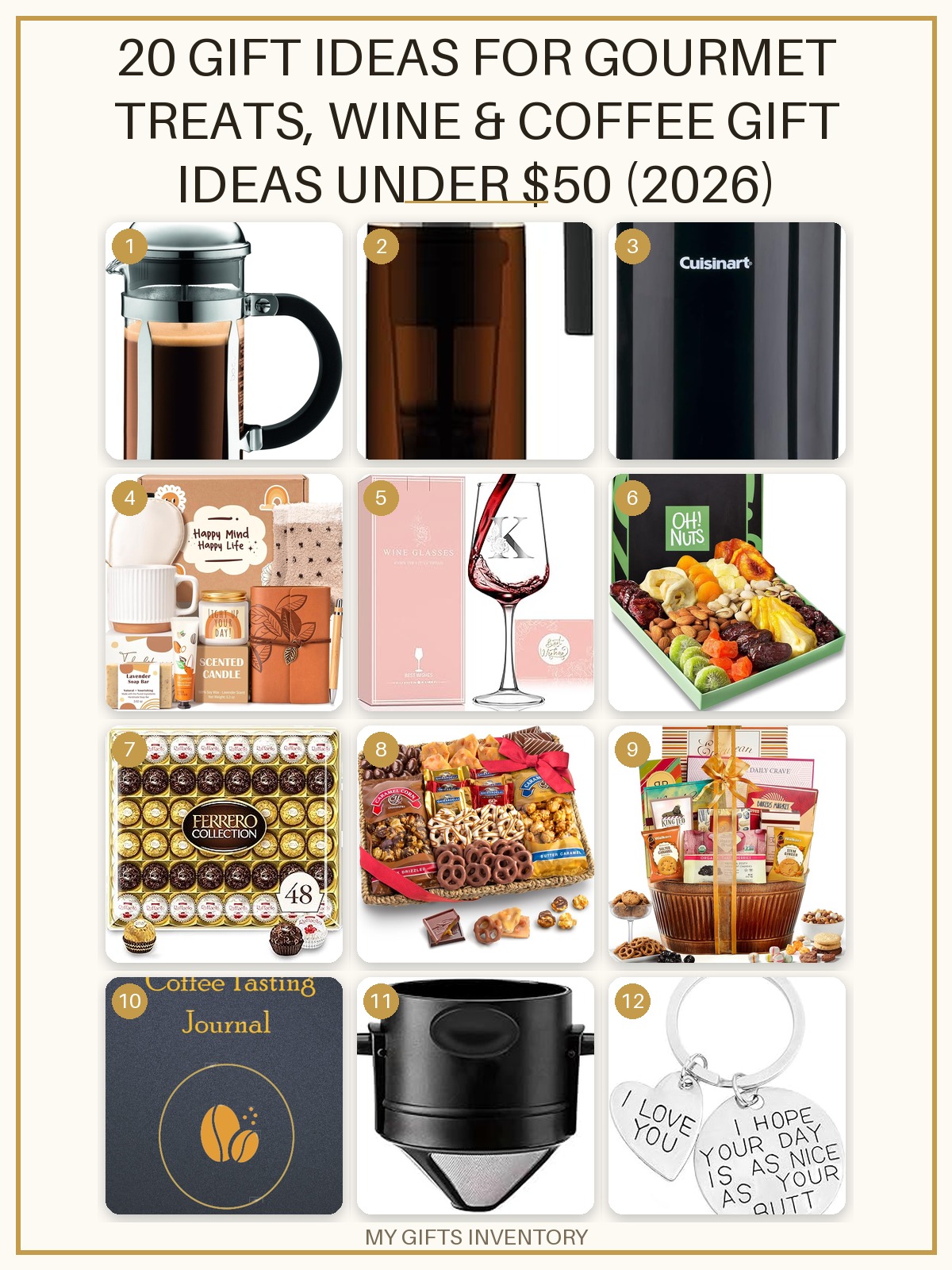
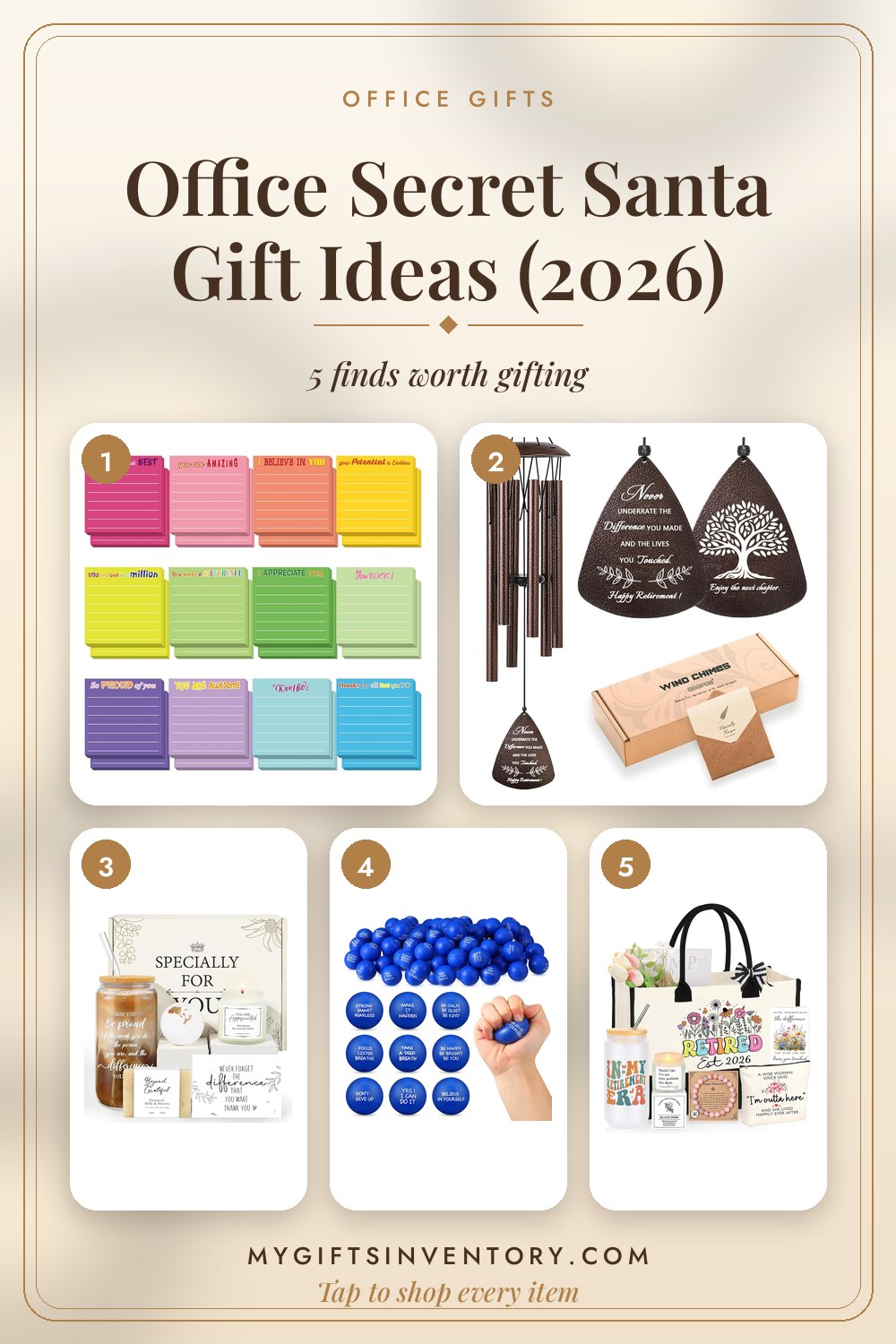
Safe categories are almost boringly reliable because they work: good coffee or tea, a nice notebook or desk item, a plant, local snacks or treats, a book that's genuinely popular rather than a personal pick, or a gift card to a coffee shop or restaurant near the office. If you're stuck between ideas, a curated list like our gift ideas for coffee lovers under $50 is a good baseline for the kind of low-risk, broadly appealing gift that works across an entire office.
Budgets by Occasion
One reason office gifting feels stressful is that the "right" amount actually does shift depending on the occasion and the relationship. Here's how we'd break it down.
Secret Santa or White Elephant
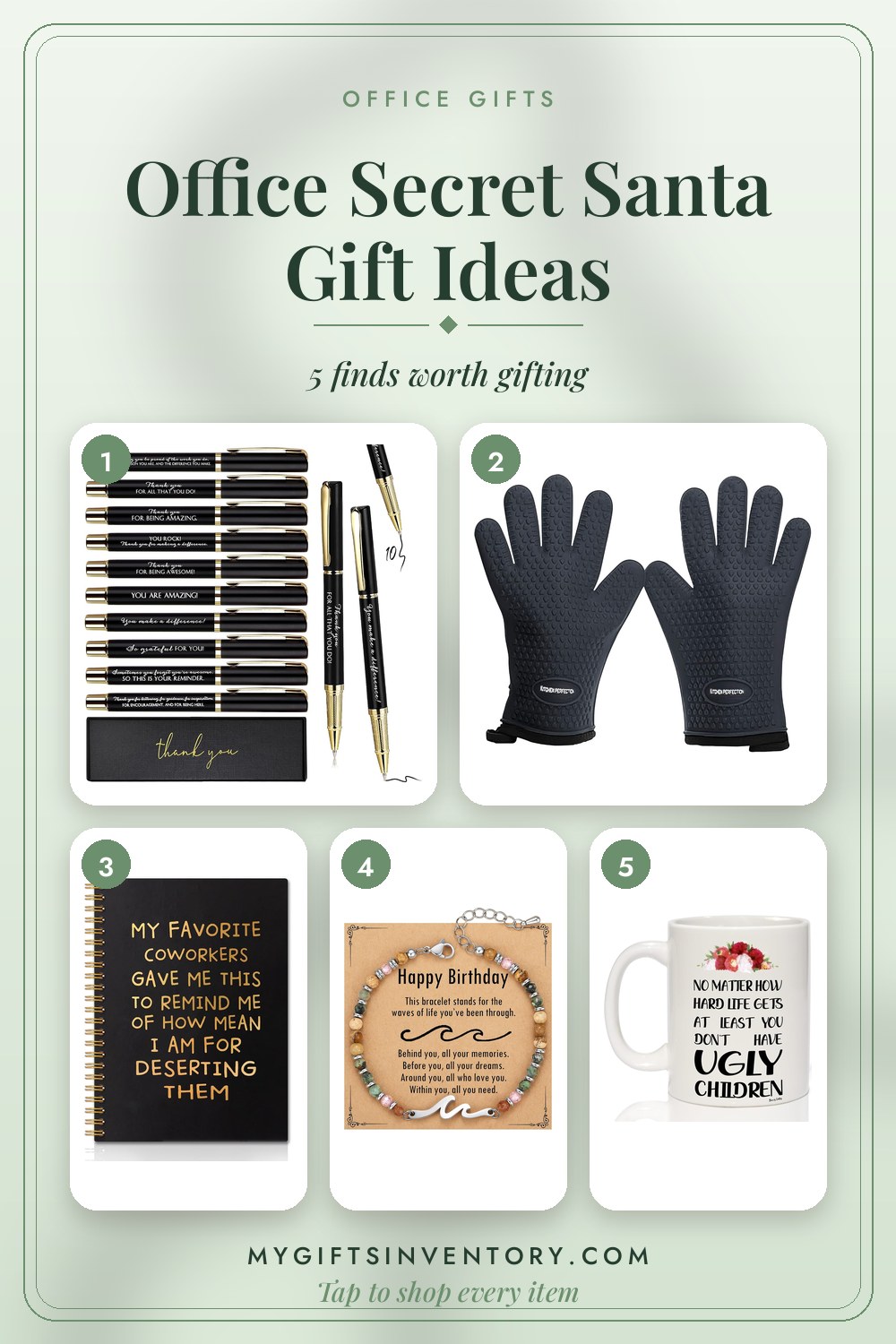
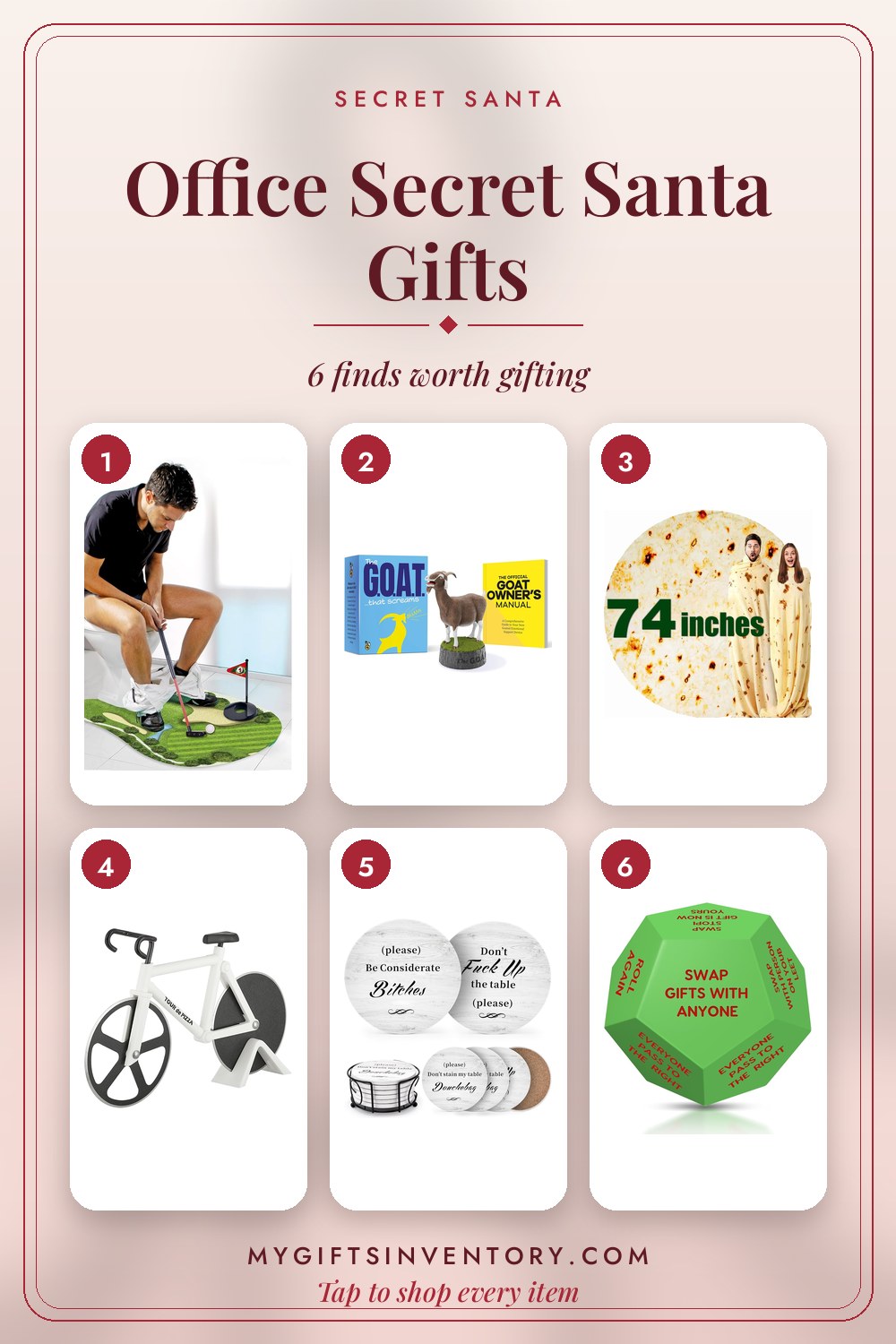
Most offices land somewhere between $15 and $25 per person, and if your team has set a limit, treat it as a ceiling, not a suggestion to hit exactly. Spending noticeably more than the agreed cap can make the person who drew your name feel bad about their own gift, which defeats the point of a fun, low-pressure exchange.
Coworker to coworker, no exchange involved
If you're just getting something for a work friend's birthday on your own initiative, $15 to $30 is the natural range. Anything higher starts to feel like it's asking for reciprocation at the same level, which puts an unspoken obligation on the other person.
Team gift for a boss or manager
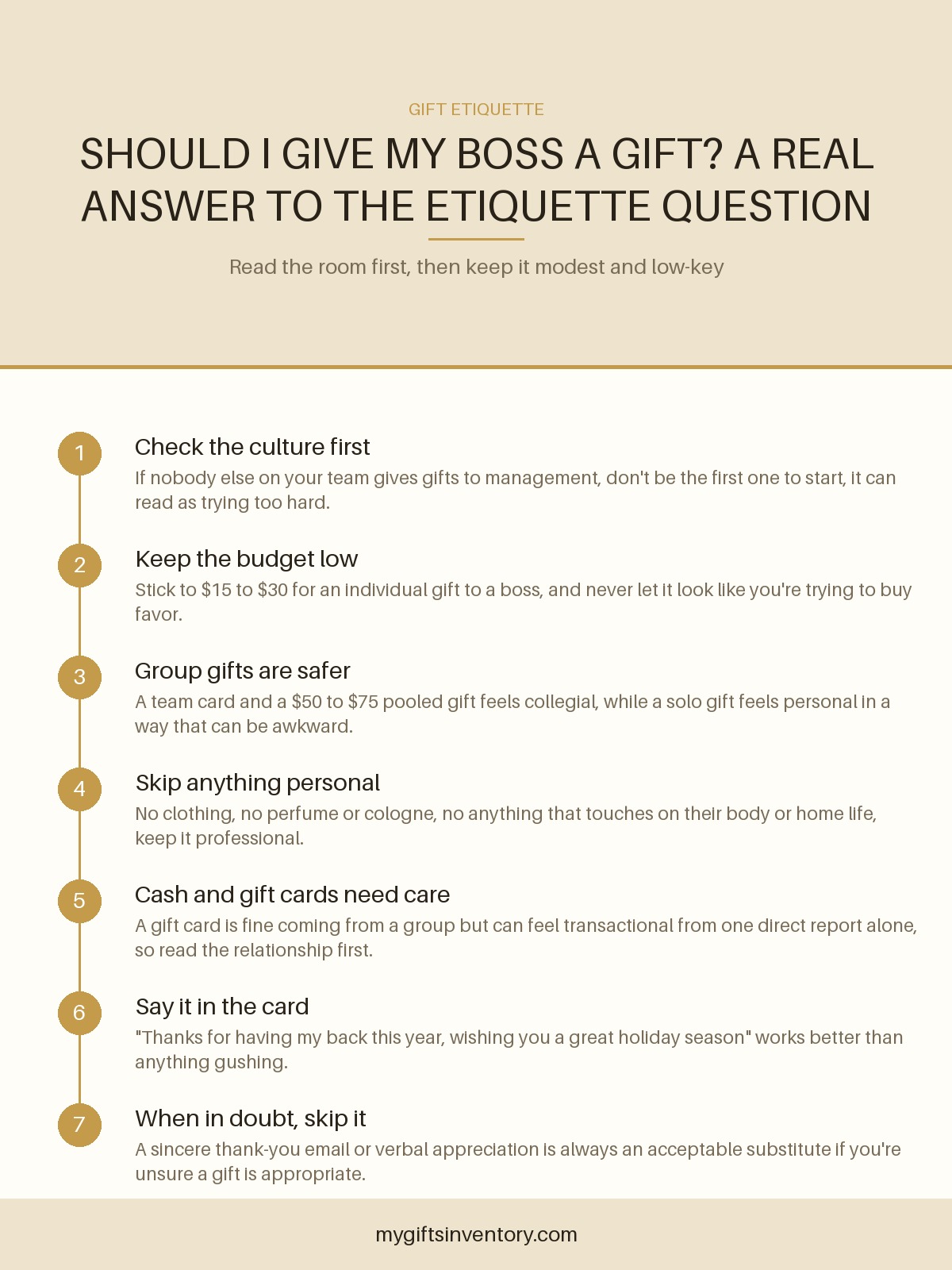
This is the category where things go wrong most often. A single employee giving an expensive individual gift to their boss can look like an attempt to stand out or curry favor, even when that's not the intention at all. The better approach, almost always, is a pooled gift organized by one person (often HR, an office manager, or whoever's willing to coordinate) with contributions capped at something modest, like $10 to $20 per person, and everyone's name on one card. It protects everyone, including the boss, from the awkwardness of unequal individual gifts.
Manager to employee
If you're the one managing people, keep individual gifts modest and, critically, equal across your whole team. A slightly nicer gift for one direct report and a token gesture for another is the fastest way to create resentment, even if the gap in effort was accidental. Company-wide small gifts (a holiday card with a small gift card, a nice mug, a local treat box) tend to work better than anything that requires reading someone's individual taste.
Client and vendor gifts
This is one area where the number isn't just etiquette, it's tax law. You deduct no more than $25 of the cost of business gifts you give directly or indirectly to each person during your tax year. That's why a lot of companies set their client gift budget right at $25, or use exceptions like gifts given to a company for use in its business, such as an industry reference book or office equipment, which are fully deductible because they serve a business purpose rather than a gift to one specific person. If you're gifting a client's whole team something they'll actually use, this is worth knowing before you set a budget.
Should You Even Participate?
You are never obligated to join an office gift exchange, and no reasonable coworker will hold it against you if you opt out gracefully. The trick is doing it without making anyone feel awkward about having asked. A simple "I'm sitting this one out this year, but I hope everyone has fun with it" said early, before the list fills up, closes the conversation cleanly. What doesn't work well is waiting until the last minute to bow out, since by then someone may have already drawn your name or budgeted a contribution around your participation.
If cost is the actual barrier, most offices are more flexible than people assume. Asking the organizer privately whether there's a lower-cost option, or whether you can contribute a smaller amount, is completely normal and nobody needs to know the specifics.
What to Write in an Office Card
Office card messages fail in one of two directions: either they're so generic they say nothing ("Happy Birthday! Have a great one!") or they overcorrect into something too personal for a professional relationship. The sweet spot is specific but safe, referencing something true about working with the person without wandering into their personal life.
For a coworker's birthday: "Hope your day is a good one. Thanks for always being the person who makes the Monday meetings less painful."
For a retiring colleague: "It won't be the same around here without you. Thank you for everything you taught me, and enjoy every minute of what's next."
For a boss, on a group card: "Thanks for having our backs this year and for making this a place we actually want to show up to. Wishing you a great year ahead."
For a new hire's welcome card: "Welcome to the team! Glad to have you here, and don't hesitate to ask any of us anything."
Notice none of these reference anything about the person's personal life, appearance, or relationships. That's intentional. Office cards should read warmly professional, the tone of someone you genuinely like working with, not the tone you'd use with your best friend.
Gift Cards Are Almost Always Fine, Sometimes Better
There's a lingering myth that gift cards are a "lazy" gift, and in a personal relationship that might occasionally be true. In an office setting, it's often the opposite. A gift card removes all the guesswork about taste, dietary restrictions, and personal preference that makes physical gifts risky between people who don't know each other that well. A coffee shop gift card, a general retailer card, or a restaurant card near the office all read as thoughtful without being presumptuous.
If you're organizing a group gift and collecting a pooled amount, a gift card is also just simpler logistically. Just be sure whoever receives it knows how to use and check it. If your office tends to give from a particular retailer, our balance-check guides for brands like Amazon, Target, and Best Buy are useful if someone ever needs to confirm what's left on a card before using it.
Gifts That Cross a Line (Even If They Seem Nice)
A few categories come up again and again as gifts people thought were safe but weren't:
- Anything related to weight, diet, or appearance. Gym memberships, diet books, or "you'll love this" beauty products can land as commentary on someone's body, even when that's the last thing you meant.
- Alcohol, unless you know the office culture well. Some workplaces do wine as a holiday gift without a second thought; others have colleagues in recovery or religious restrictions where it's genuinely unwelcome. When in doubt, skip it.
- Anything expensive from a peer. A $150 gift from a coworker at the same level can feel less like generosity and more like an implicit expectation, or worse, an attempt to be remembered favorably by someone with more influence.
- Overtly personal jewelry or fragrance. These are wonderful gifts for people you're close to outside of work; a colleague's personal taste in scent or jewelry style is usually not something you actually know well enough to guess right. If you're shopping for someone outside the office where that kind of gift is appropriate, our guides on perfume gifts for her or personalized jewelry for her are a better fit than an office desk.
Timing Matters More Than People Realize
An office gift given too early feels performative; one given too late feels like an afterthought. If your office does a holiday exchange, the standard window is the last one to two weeks before the holiday break, giving people enough runway to shop without turning it into a months-long production. For birthdays, the day-of or the workday closest to it is ideal. For a departing coworker, the timing should track their actual last day, ideally presented at whatever small gathering the office puts together rather than dropped on their desk alone.
If you're the one organizing a group gift, give people at least a week and a half of notice before collecting contributions. Nothing creates resentment faster than a same-day ask for money toward a gift, especially for people who might need to budget around a paycheck cycle.
When Someone Gives You More Than You Expected
Every so often, a coworker gives a gift that clearly exceeds the group's unspoken (or spoken) budget. This isn't a crisis, and you don't need to scramble to even things out. A simple, warm thank-you is enough: "This is so thoughtful, thank you." You're not obligated to match the value later, and trying to can actually make things more awkward by turning a kind gesture into a transaction.
Remote and Hybrid Teams Need a Different Playbook
Office gift etiquette gets trickier when half the team is remote. Physical gifts that need to be handed over in person don't work the same way, and shipping something to someone's home can feel like a boundary crossing if you don't already have that kind of relationship. For distributed teams, digital gift cards, a company-covered lunch delivery for everyone on a video call, or a small shipped care package coordinated by one person tend to work best. The goal is still the same: something that feels considered without requiring anyone to reveal personal details like a home address they'd rather not share widely.
A Quick Word on Manager-to-Team Gifts That Land Well
If you manage people and want to do something thoughtful without overstepping, the safest bets are things that benefit everyone equally and don't require guessing at individual taste: a nice communal breakfast, a small equal gift card for the whole team, or covering a team lunch. Steer away from anything that requires you to have picked something specific for each person unless you genuinely know your team well enough to do it evenly. If you're looking for broader gift inspiration outside the office for people in your life, our roundups like gift ideas for the mom who has everything or smart watches under $100 are built for that more personal kind of shopping, not the office context.
Gift Ideas to Go With This


Want more ideas? Browse our full guide: 20 Best Gifts Under $100 (2026): Thoughtful Picks They'll Actually Use
Frequently Asked Questions
Is it rude to not participate in office Secret Santa?
No, opting out of a Secret Santa or gift exchange is not rude as long as you say so early and kindly. A simple heads-up to the organizer before the list is finalized avoids putting anyone in an awkward position, and most workplaces are used to some employees choosing not to join.
How much should I spend on a gift for my boss?
Individually, keep it modest, in the $10 to $20 range if you're giving something on your own, but the better move in most offices is contributing to a pooled team gift rather than giving something solo. A single, more expensive gift from one employee can unintentionally look like an attempt to stand out.
Can I give my coworker a personal gift like perfume or jewelry?
It's generally best to avoid personal items like fragrance, clothing, or jewelry for office relationships unless you're genuinely close friends outside of work. Neutral gifts like food, plants, books, or gift cards are safer choices that won't feel presumptuous.
Are gift cards to clients tax deductible?
Businesses can deduct no more than $25 of the cost of business gifts given directly or indirectly to each person during the tax year. This is why many companies cap client gift budgets at exactly that amount, though gifts given to a company for its business use, rather than a specific individual, are treated differently and can be fully deductible.
What do I write in a card for a coworker I'm not close with?
Keep it warm but general, referencing something true about working together rather than anything personal. Something like "Thanks for always being easy to work with, hope you have a great birthday" hits the right tone without overreaching into a relationship you don't actually have outside the office.
Looking for an Actual Gift Instead?


Shop Hand-Picked Gift Sets
Every item picked, priced and linked, ready to buy.
More Gift Advice