Gift Giving Etiquette for Neighbors: What to Give, How Much, and When
A practical guide to navigating neighbor gifts without overthinking it, including budgets, timing, what to write in the card, and how to handle the awkward moments.
As an Amazon Associate, My Gifts Inventory earns from qualifying purchases. We only recommend products we'd genuinely consider buying ourselves.
You just found a small wrapped box on your doorstep from the neighbors two houses down, or maybe you're new to the block and wondering if you're supposed to knock on doors with cookies like it's 1962. Neighbor gifts sit in a strange etiquette gap: you're not close enough for a real friendship gift, but you're not strangers either. Get it wrong in either direction and it feels awkward, either like you ignored a kind gesture or like you showed up trying too hard.
The good news is that neighbor gift giving has a pretty forgiving set of unwritten rules once you know them. Here's how to figure out what to give, how much to spend, and when to actually do it.
Do You Actually Need to Give Your Neighbors a Gift?
No one is required to give neighbors anything, and there's no etiquette rule that says skipping it makes you rude. Neighbor gifts are a goodwill gesture, not an obligation like a wedding or a close family birthday. That said, a few situations tip the scale toward "yes, do something":
- You share a lot of casual contact: borrowing tools, watching each other's mail, chatting in the driveway.
- A neighbor did something notable for you this year: watered your plants during a trip, helped shovel your walk, took in a package during a storm.
- You're new to the neighborhood and want to open a friendly line of communication.
- It's simply a local or building tradition, like a shared holiday exchange in a condo building or cul-de-sac.
If none of that applies and you barely know the people next door, you're not obligated to give anything. A wave and a "happy holidays" covers it.
How Much to Spend on a Neighbor Gift
Neighbor gifts sit at the low end of the gift-giving spectrum by design. The relationship is usually more casual than family or close friends, so the price tag should reflect that. Spending too much can actually create pressure for the other person to reciprocate at the same level, which isn't a favor to anyone.
General holiday or "just because" gifts
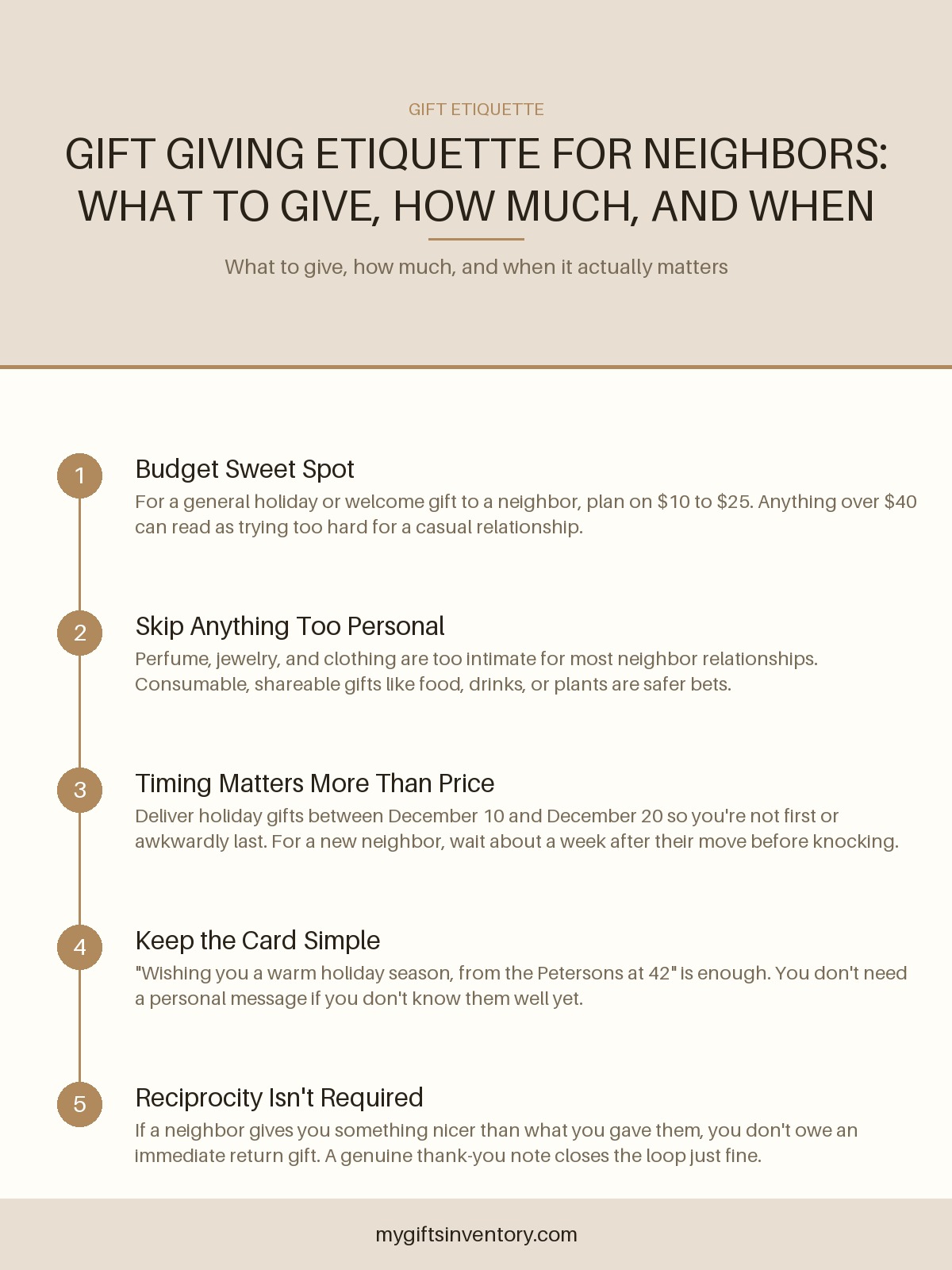
For neighbors you're friendly with but not close to, $10 to $25 is the standard range. This covers things like a small plant, a jar of good jam, or a holiday treat plate. It's enough to feel thoughtful without feeling like a transaction.
New neighbor welcome gifts
A welcome gift is usually even more modest, often $10 to $20, since the point is the gesture, not the price. Something practical for the new house, like a local coffee shop card or a small plant, works well here. If coffee is the angle you're going for, a browse through our gift ideas for coffee lovers under $50 can help you land on something specific without overspending.
Thank-you gifts for a specific favor
If a neighbor did something meaningful, like watching your house during a two-week trip or helping you move a couch, you can go slightly higher, in the $25 to $50 range, because this is really a thank-you gift more than a generic neighbor gesture.
Group or building-wide exchanges
If your building or street does a gift swap, follow whatever cap the organizer sets, typically $10 to $20 per person. Going over the agreed budget puts other participants in an awkward spot.
Moving-away gifts
If you're the one moving and want to leave something behind for neighbors you've grown close to, $15 to $30 per household is generous without feeling like you're trying to buy a lasting impression.
What to Actually Give a Neighbor
The best neighbor gifts are consumable, shareable, or low-commitment. You want something the recipient can enjoy without it feeling like it demands a display spot on their shelf forever. A few categories that consistently work:
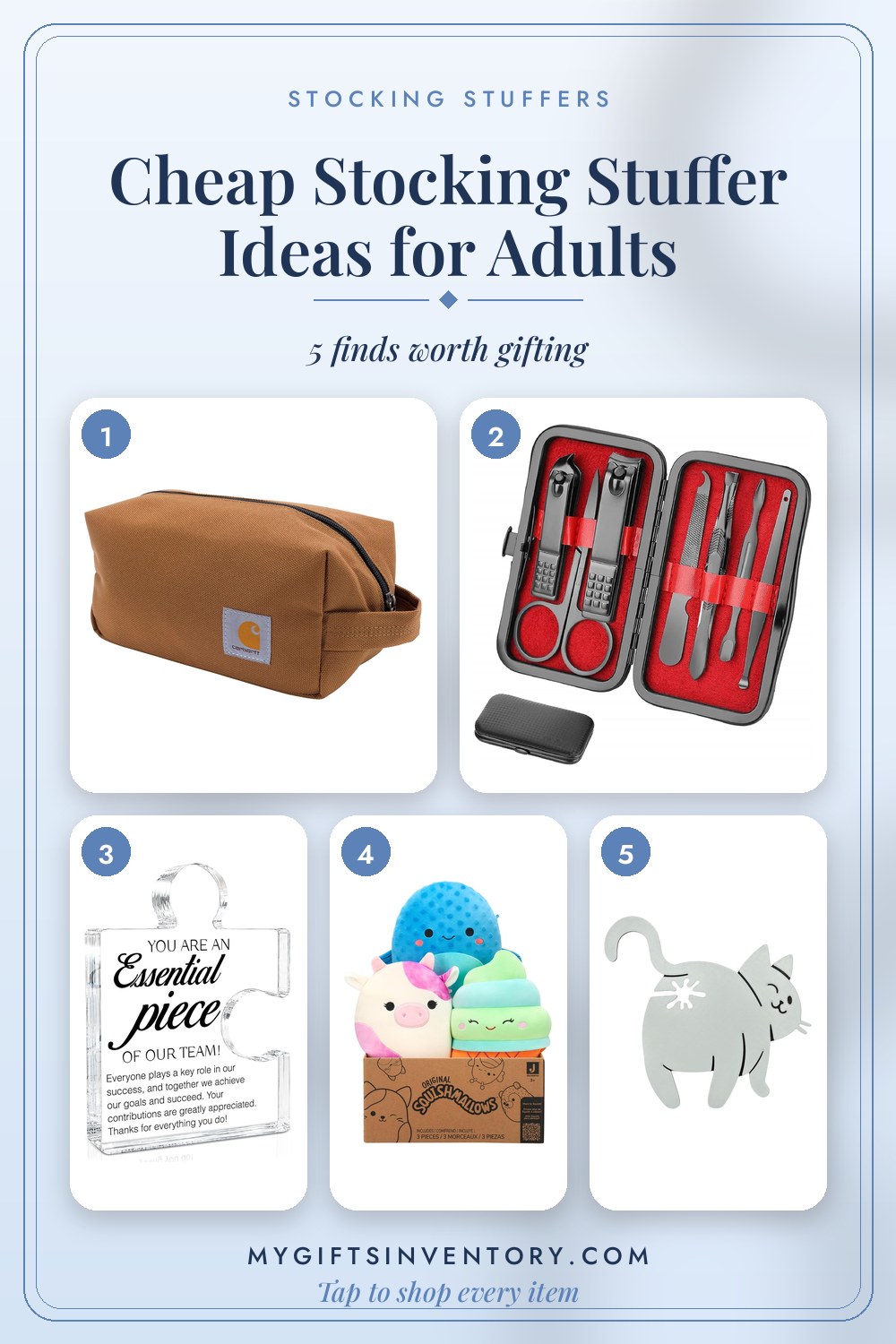
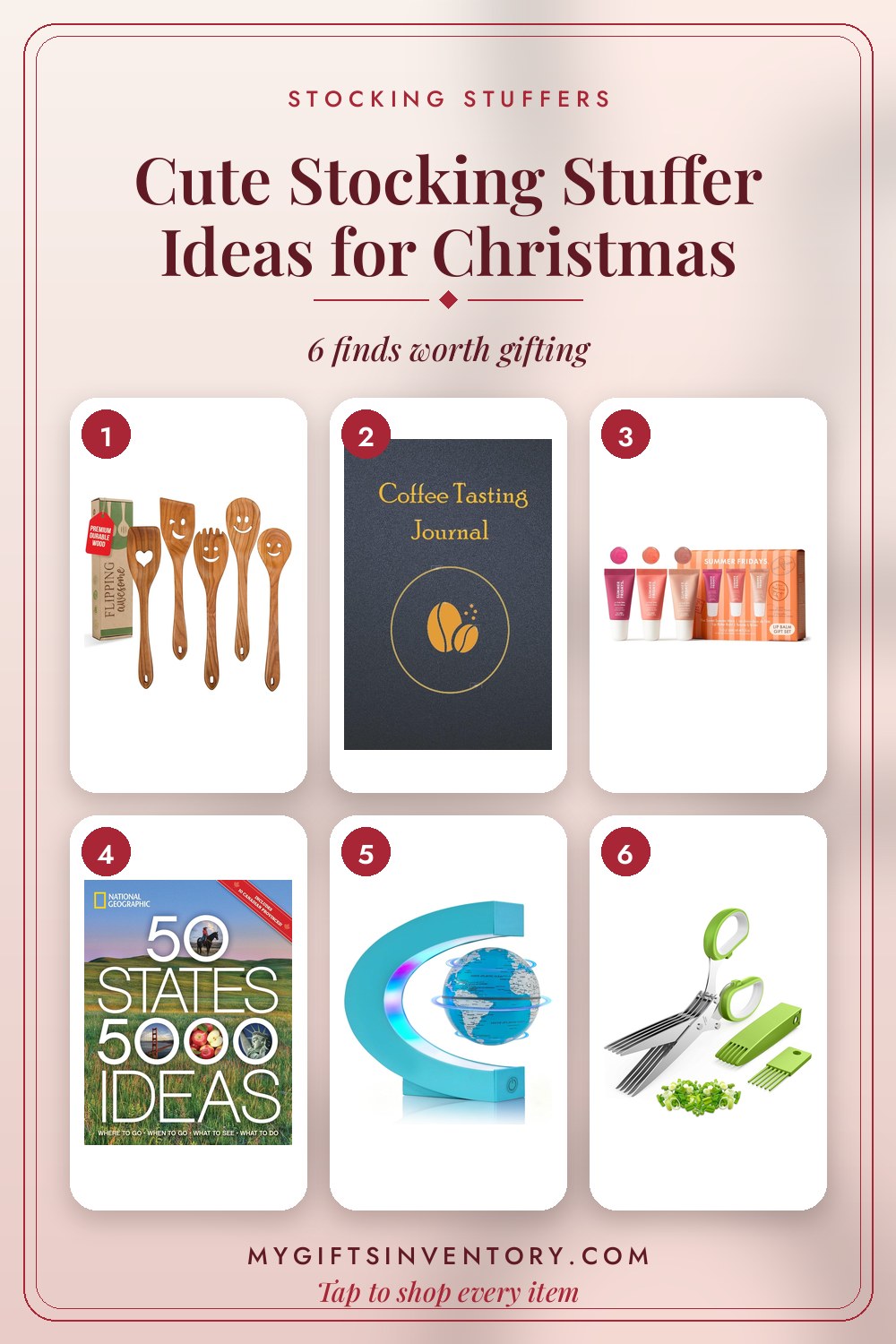
- Food and drink: baked goods, a bottle of wine, specialty coffee, a jar of local honey or jam.
- Plants: a small potted succulent or seasonal flowers, especially nice for a new-neighbor gift.
- Small home touches: a candle, a dish towel set, a little decor item that isn't overly personal.
- Practical extras: a nice notepad, a coaster set, something useful but not intimate.
What to avoid: anything that assumes a level of closeness you don't have. Perfume, jewelry, and clothing read as too personal for most neighbor relationships, so skip those categories entirely unless you're genuinely close friends who happen to live next door. If you're shopping for a female neighbor and want something a notch nicer than a candle, our home decor gifts for her under $50 roundup leans tasteful and not overly intimate, which is exactly the tone you want here. For a male neighbor, small tech accessories tend to land well too, and our tech gifts for men under $50 guide has options that read as thoughtful rather than random.
When to Give a Neighbor Gift
Timing matters more than people expect. For holiday gifts, aim to deliver between December 10 and December 20. Early enough that it doesn't feel like a last-minute afterthought, but not so early that it looks like you're trying to be first on the block. If you're doing a group exchange, follow the date the organizer sets.
For a new neighbor, give it a week or so after they've moved in before knocking. Moving day and the few days after are chaotic, and showing up with a plate of cookies while boxes are still stacked to the ceiling can feel like one more thing to manage rather than a kindness. A week to ten days in gives them time to unpack the essentials and actually appreciate the gesture.
For a thank-you gift after a favor, sooner is better. Within a few days of the favor is ideal so the gratitude feels connected to the specific thing they did, rather than a vague, delayed nod.
What to Write in the Card
Neighbor cards don't need to be long or deeply personal, especially if you don't know the person well. A short, warm line does the job:
- "Wishing you a warm holiday season, from the Petersons at 42."
- "Welcome to the neighborhood! So glad to have you here. Let us know if you ever need anything."
- "Thank you so much for keeping an eye on the house while we were away. It meant a lot."
- "Happy holidays! It's been so nice getting to know you this year."
If you know the neighbor better, you can add a specific detail: mention their dog by name, reference a conversation you had, or thank them for a particular gesture. But there's no rule requiring elaboration. A short, sincere line is more appropriate here than a long personal note, since over-personalizing a card for someone you don't know well can feel oddly intense.
Gift Cards for Neighbors
A gift card is a completely acceptable neighbor gift, especially when you don't know someone's specific tastes yet. The key is picking something broadly useful rather than niche. A coffee shop card, a grocery store card, or a general retailer card all work well because they don't require guessing at personal preferences. Options like a Target gift card or a Walmart gift card tend to be safe, practical choices since almost every household can use them for something. If you go this route, a $15 to $25 card is plenty for a neighbor gift and doesn't tip into feeling like a bigger obligation than the relationship calls for.
Common Etiquette Questions and Sticky Situations
What if a neighbor gives you something and you didn't get them anything?
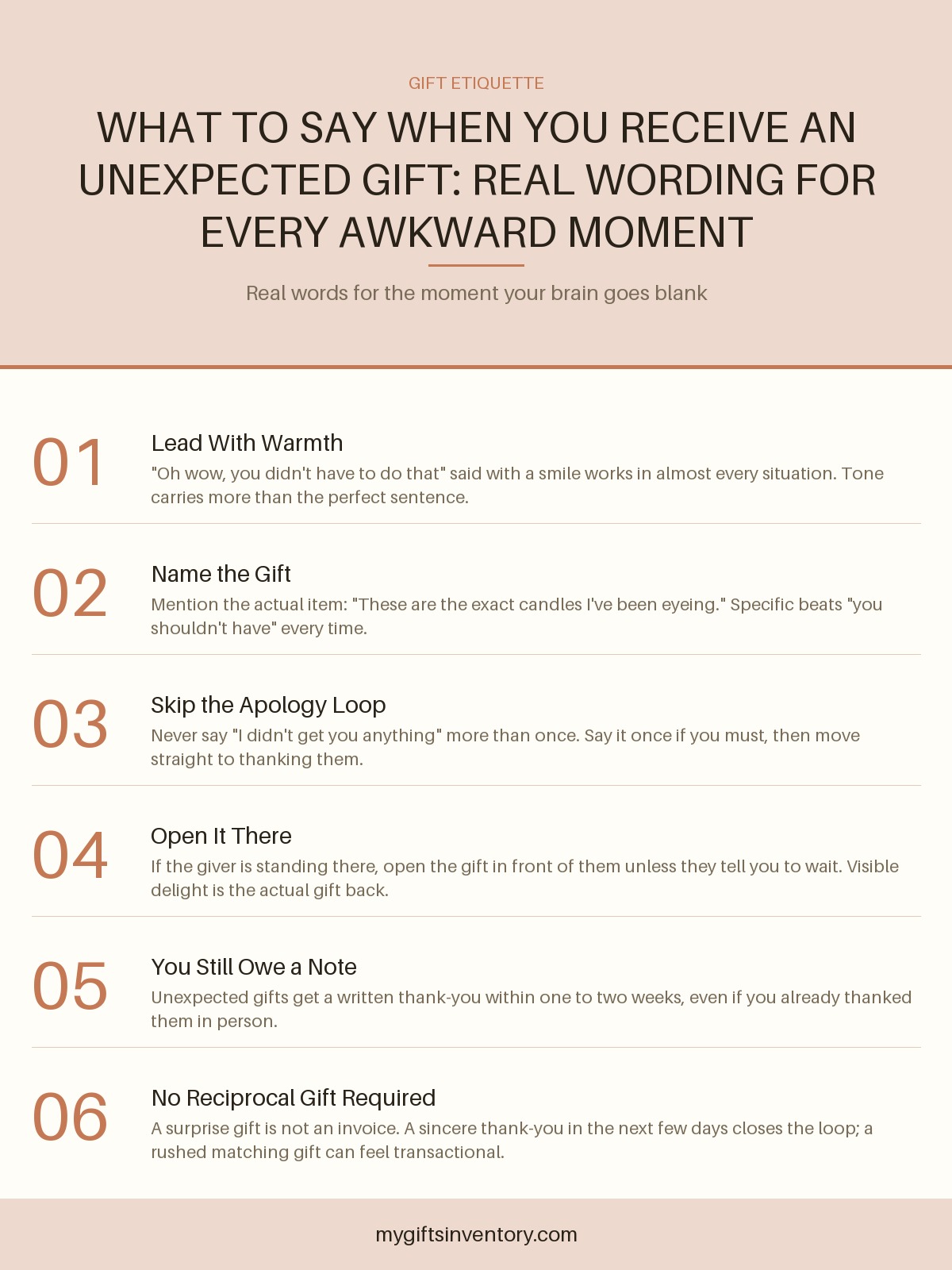
Thank them warmly and mean it. You don't need to scramble for a same-day reciprocal gift. If you want to close the gap, a small gesture later, like sharing extra garden produce or bringing over dessert sometime, is a graceful way to return the kindness without making it transactional.
What if their gift is nicer than yours?
This happens more than people admit, and it's not something to stress over. Gift giving between neighbors isn't meant to be an even exchange of dollar value. A genuine thank-you, maybe mentioned again the next time you see them, is all that's needed. You are not obligated to "catch up" the following year.
Should you include kids in neighbor gifts?
If the neighbor has kids you interact with, a small, inexpensive extra for them is a nice touch, but it's optional. Something like a coloring book or a small treat keeps it light without turning into a second gift-giving obligation.
What about landlords, property managers, or HOA staff?
This falls more under a service-provider category than a neighbor one, and a small token, often $10 to $20 or a homemade treat, is appropriate around the holidays if you interact with them regularly. Check whether your building or HOA has a policy against cash gifts before going that route.
What if you don't celebrate the same holiday?
Keep it general. A card that says "wishing you a wonderful season" or "thinking of you this time of year" works across different traditions. If you know a neighbor celebrates a specific holiday you don't, it's a kind gesture to acknowledge it directly, but it's never required.
Wrapping and Presentation
Neighbor gifts don't need elaborate wrapping. A simple gift bag, a mason jar with a ribbon, or a plate covered in cellophane for baked goods is plenty. The goal is tidy and cheerful, not elaborate. Save the more detailed wrapping presentations for closer relationships where you're giving something that feels like an event, like a milestone birthday or a holiday gift for immediate family.
Gift Ideas to Go With This


Want more ideas? Browse our full guide: 20 Best Gifts Under $100 (2026): Thoughtful Picks They'll Actually Use
Frequently Asked Questions
Is it rude not to give neighbors a holiday gift?
No, it's not rude. Neighbor gifts are a goodwill gesture rather than an obligation, and plenty of people skip them entirely without any social consequence. A friendly wave or a verbal "happy holidays" is a perfectly acceptable substitute if gift giving isn't part of your relationship with a particular neighbor.
How much should I spend on a new neighbor gift?
Somewhere between $10 and $20 is standard for a new neighbor welcome gift. The goal is a warm first impression, not an impressive one, so keep it modest and practical, like a small plant or a local treat.
Should I give my landlord a gift too?
It's optional but appreciated if you interact regularly, especially around the holidays. A modest gift in the $10 to $20 range, or a plate of homemade treats, is a common and appropriate gesture, though it's worth checking if your building has any policy discouraging gifts to staff.
What do I do if I can't remember which neighbor gave me what last year?
Don't overthink it. Neighbor gift giving isn't meant to be tracked like a ledger, and most people don't expect an exact match year over year. Focus on being thoughtful and consistent rather than trying to mirror exactly what was given the previous year.
Is a gift card too impersonal for a neighbor?
Not at all, a gift card is actually one of the safer choices for a neighbor you don't know well, since it avoids guessing at personal taste. A modest card in the $15 to $25 range from a coffee shop or general retailer reads as thoughtful without overstepping the relationship.
Looking for an Actual Gift Instead?

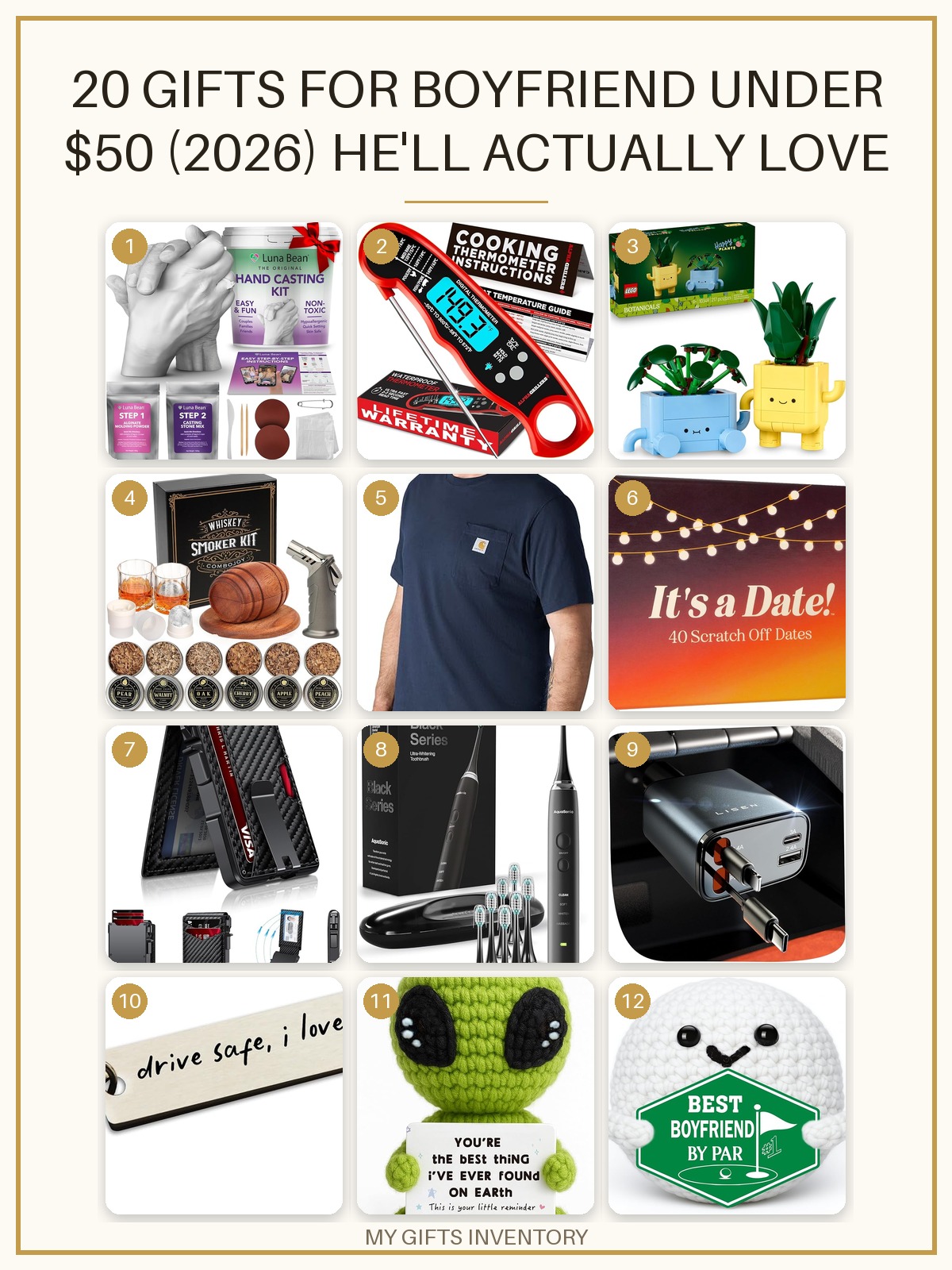
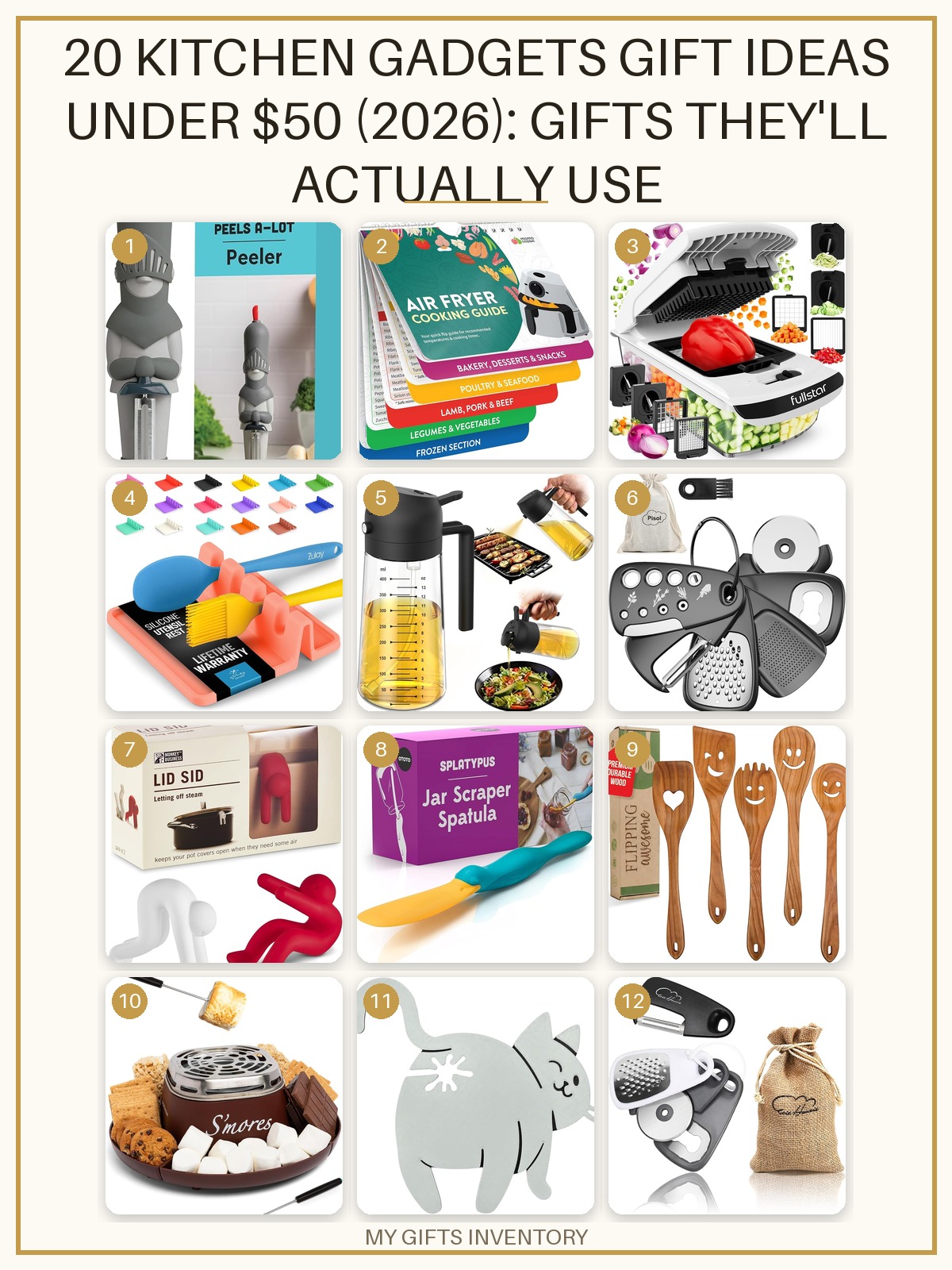

Gift Sets We Love Right Now
Every item picked, priced and linked, ready to buy.
More Gift Advice