Gift Spending Limits Etiquette: How Much Should You Actually Spend?
Clear guidelines for setting and respecting gift budgets by relationship and occasion, plus how to handle mismatches without awkwardness.
As an Amazon Associate, My Gifts Inventory earns from qualifying purchases. We only recommend products we'd genuinely consider buying ourselves.
Most of us have stood in a store or scrolled online wondering the same thing: am I spending too little and looking cheap, or too much and making someone uncomfortable? Gift spending limits etiquette is less about rigid rules and more about reading the relationship, the occasion, and the quiet signals people send. We put together the practical ranges and manners that actually keep things easy.
Why Spending Limits Matter More Than We Admit
Gifts carry social weight. Spend too little and it can feel dismissive. Spend far more than the other person and you risk creating pressure or embarrassment. The goal is balance: something that feels considered without turning the exchange into a scoreboard. When groups set clear limits, or when we quietly match the usual scale of a friendship, everyone relaxes. Thoughtfulness scales better than dollars.
General Spending Ranges by Relationship
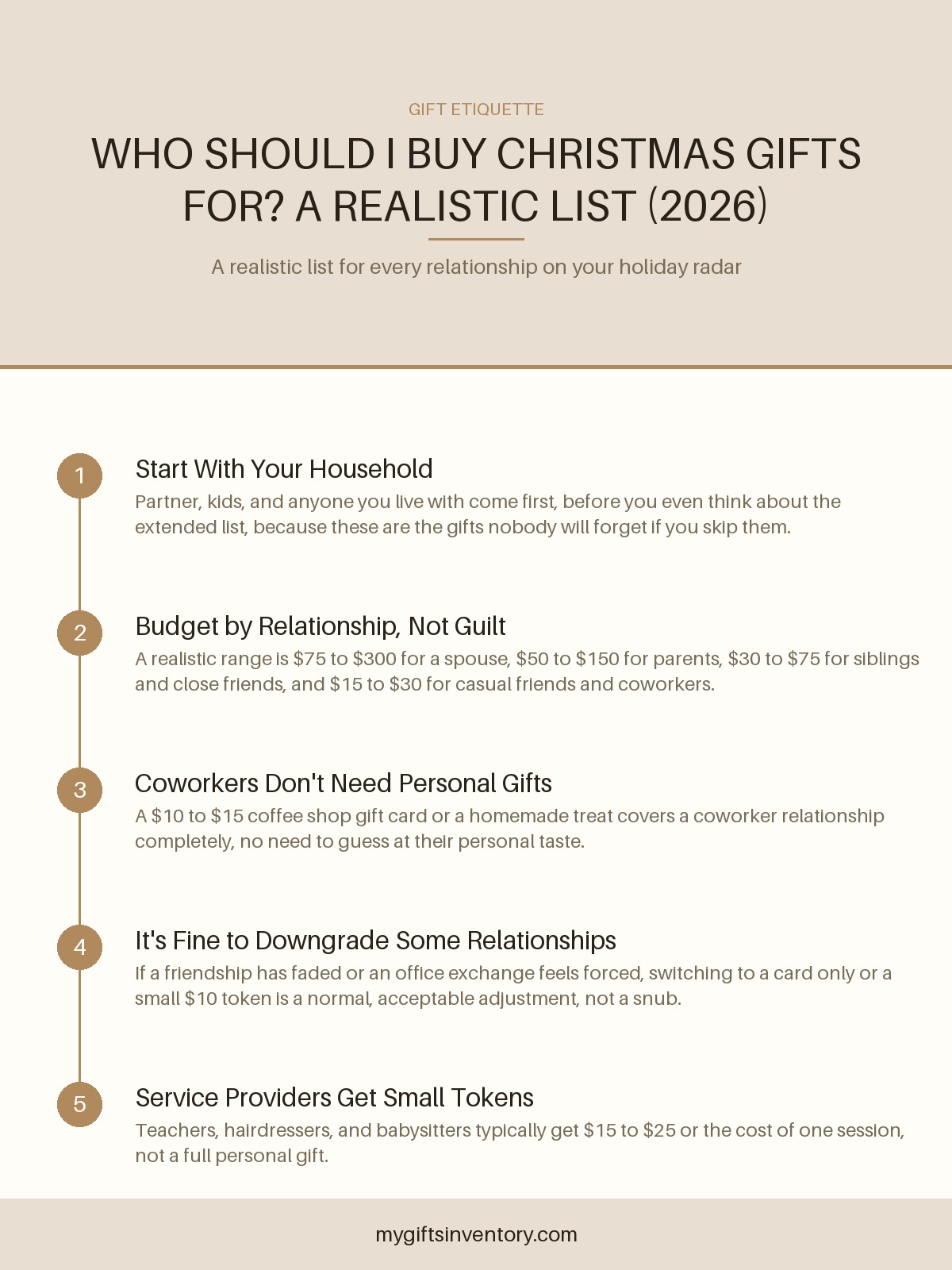
These are real-world starting points many people use. Adjust up or down for your actual finances and how close you really are. The relationship always outranks any average.
Coworkers, Neighbors, and Casual Acquaintances
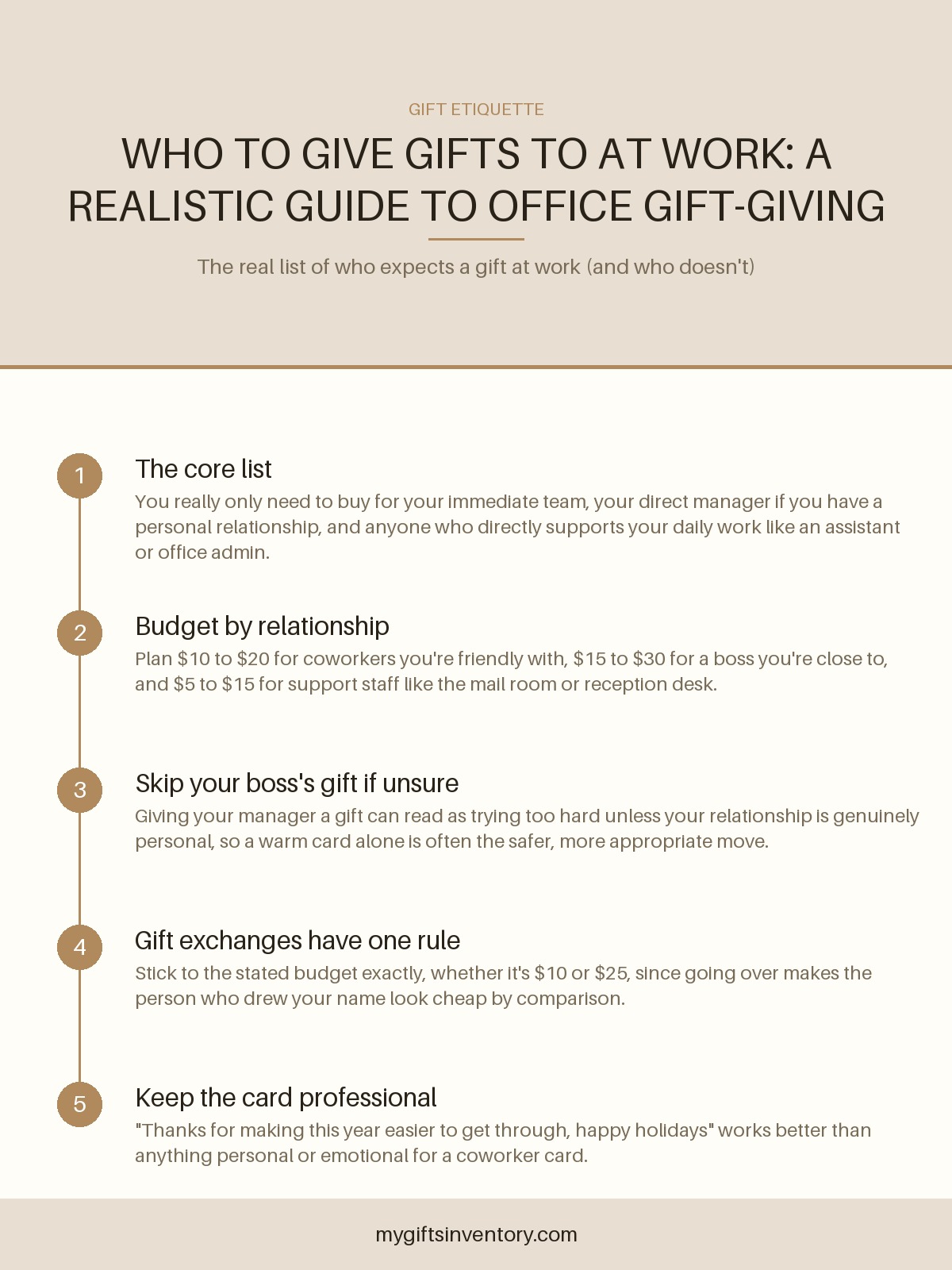
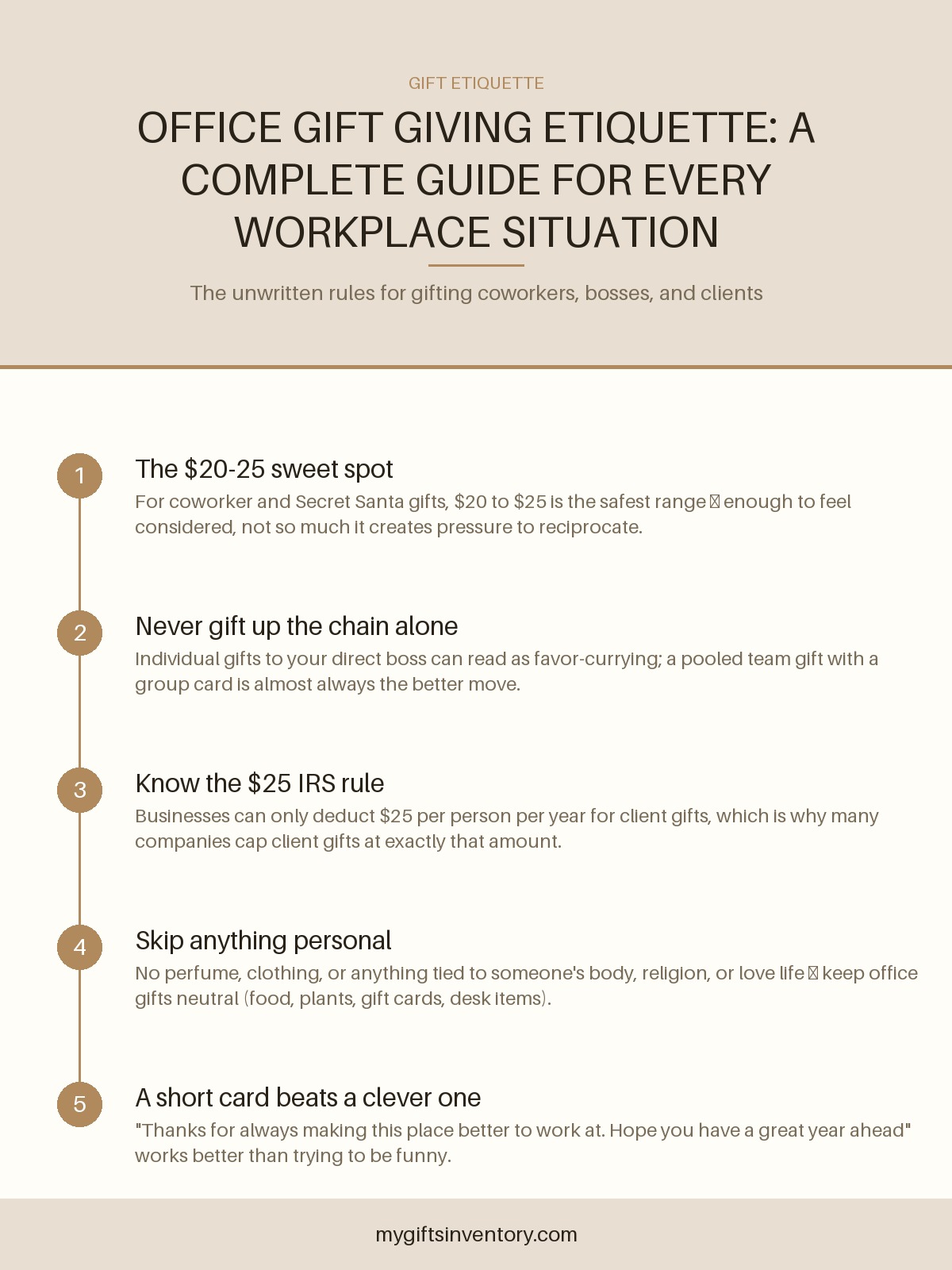
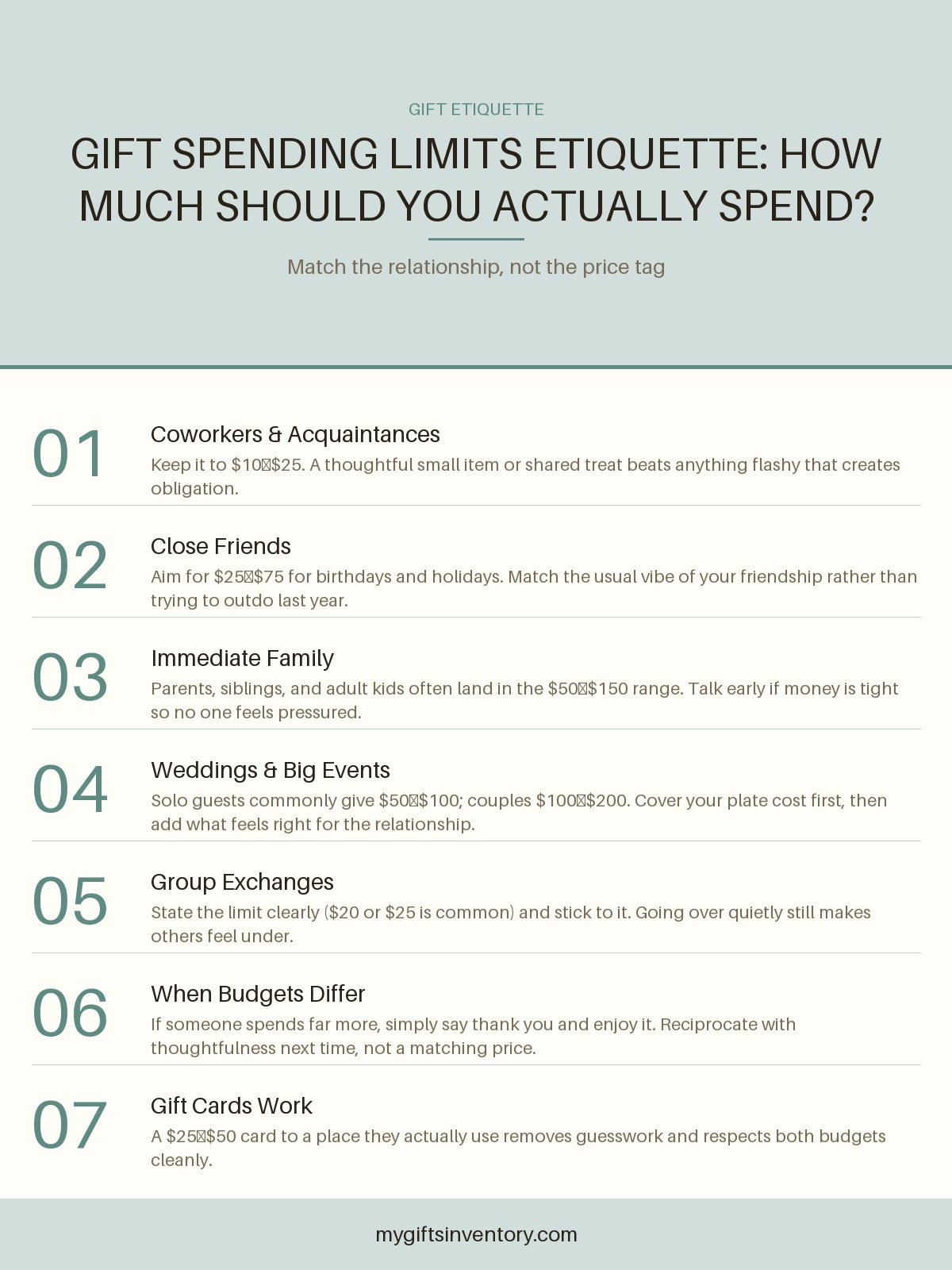
Keep it light: $10 to $25. A nice candle, good chocolate, a small plant, or a shared office treat works well. Anything pricier can feel odd in a professional or light social setting and may make the recipient feel they need to match it. For teacher gifts or similar, many land under $30 and still feel warm. If you want ideas that stay thoughtful at this level, look at gifts under $30 that actually feel considered.
Friends
Close friends usually sit in the $25 to $75 range for birthdays and holidays. Newer or more casual friends trend toward the lower end. Matching the history of your gift exchanges helps. If you usually do dinners or small tokens, a sudden $150 item can feel out of step. Experiences often land nicely here without the storage problem of more stuff. We like the flexibility of experience gifts under $50 when you want something memorable but still budget-friendly.
Immediate Family and Partners
Parents, siblings, adult children, and partners commonly fall between $50 and $150, sometimes more for major milestones. Couples often set a joint limit for each other and stick to it so one person does not feel outspent. If money is tighter this year, say so early. Most families prefer honesty over strained overspending. For partners or dads who are hard to buy for, ranges under $100 still leave plenty of room for solid options like anniversary-style picks under $100.
Extended Family and In-Laws
Aunts, uncles, cousins, and in-laws often work best at $25 to $75 depending on how often you see them and local norms. If the extended family does a big group exchange, follow that limit. Otherwise, a mid-range gift or a well-chosen card with a smaller token is perfectly acceptable.
Spending Limits by Occasion
Birthdays
Match the relationship first. A coworker birthday stays small. A best friend’s 30th or 40th can stretch higher if that is your pattern. Kids’ parties often have unspoken $20 to $40 ranges among parents. When in doubt, ask another guest what they are planning so you do not land wildly out of range.
Weddings
A common guideline is to cover the approximate cost of your plate and then add according to closeness. Solo attendees frequently give $50 to $100. Couples often give $100 to $200. Closer friends or family may go higher. Registry items in your range remove guesswork. If cash or a check is preferred in your circle, that is fine too. For guests watching their budget, solid options exist in the lower tier, including wedding gifts under $50 that still feel appropriate.
Holidays and Christmas
Family gift limits work best when discussed in October or early November. Many households set $25, $50, or $100 per person. Secret Santa or white elephant almost always needs a hard number announced in advance ($20 or $25 is popular). For the whole family on a tighter budget, spreading thoughtful smaller gifts can feel more generous than one big strained purchase. Ideas that keep the whole group under a shared ceiling help, such as family Christmas gifts under $50.
Baby Showers, Graduations, and Housewarmings
These usually sit in the $25 to $75 zone for most guests. Closer friends and family go higher. Practical items or group gifts (several people chipping in for a bigger stroller or appliance) solve the “what feels like enough” problem cleanly.
How to Set and Communicate Limits Without Awkwardness
In families or friend groups, bring it up early and casually: “Want to set a $40 limit this year so no one feels stretched?” Most people are relieved. For office Secret Santa, put the dollar amount in the first email or signup form and repeat it. If someone asks what you want, it is fine to say “keeping it simple this year” or suggest a price range.
When you are the one hosting or organizing, state the limit once clearly and then model it yourself. Going significantly over after announcing a cap quietly shames everyone else who followed the rule.
What to Do When Spending Does Not Match
If someone gives you something far more expensive, receive it graciously. A simple, warm thank-you is enough. You do not need to match the dollar amount next time. Match the care instead. If you consistently receive much pricier gifts than you can return, a private conversation helps: “I love your generosity, and I want us to stay comfortable. Can we keep things simpler?”
If you suspect you underspent relative to the group, do not apologize in the moment. Next opportunity, put a bit more thought or a slightly higher amount. Over-apologizing only highlights the gap.
For kids’ exchanges or classrooms, follow the stated limit exactly. Parents notice when one gift towers over the others, and it rarely feels good for the child who received the smaller one.
When a Gift Card or Experience Is the Better Move
Gift cards remove the risk of buying the wrong thing and let the recipient stay inside their own preferences. A $25 or $50 card to a store, coffee place, or streaming service they actually use is rarely wrong. Experiences (a class, tickets, a meal out) often feel more generous than their price tag because they create a memory instead of clutter. Both options respect spending limits while still feeling personal.
If you go the card route, pair it with a short sincere note. The combination lands better than a naked card alone.
Practical Ways to Stay Inside Your Limit
Decide the number before you start shopping. Write it down. Search within that ceiling. Consider homemade elements, thoughtful wrapping, or a favorite shared joke to raise the perceived value without raising the cost. Group gifts for expensive wishes (a nice appliance for a couple, a big experience for parents) let everyone contribute a comfortable amount.
Track what you spent last year on key people if the same occasions keep coming around. Patterns make next year’s decisions faster and less stressful.
Special Situations
New relationships: stay modest until you know the other person’s style. Overspending early can feel intense.
Financially uneven friendships: the person with more resources should not force the other into matching. Quietly scale to what the less-resourced friend can comfortably return.
Cultural or regional differences: some communities treat cash gifts as standard and generous. Others prefer wrapped items. When you are unsure, ask someone who knows the family or follow the registry and invitation cues.
Corporate or client gifts: follow company policy first. Personal spending on work relationships usually stays conservative unless you are in a role where higher gestures are expected and reimbursed.
Frequently Asked Questions
Is it rude to set a spending limit for family gifts?
No. Most people appreciate it. Framing it as a way to keep the holidays relaxed and focused on time together usually gets quick agreement. Announce it early so no one has already shopped.
What if I cannot afford the group’s usual amount this year?
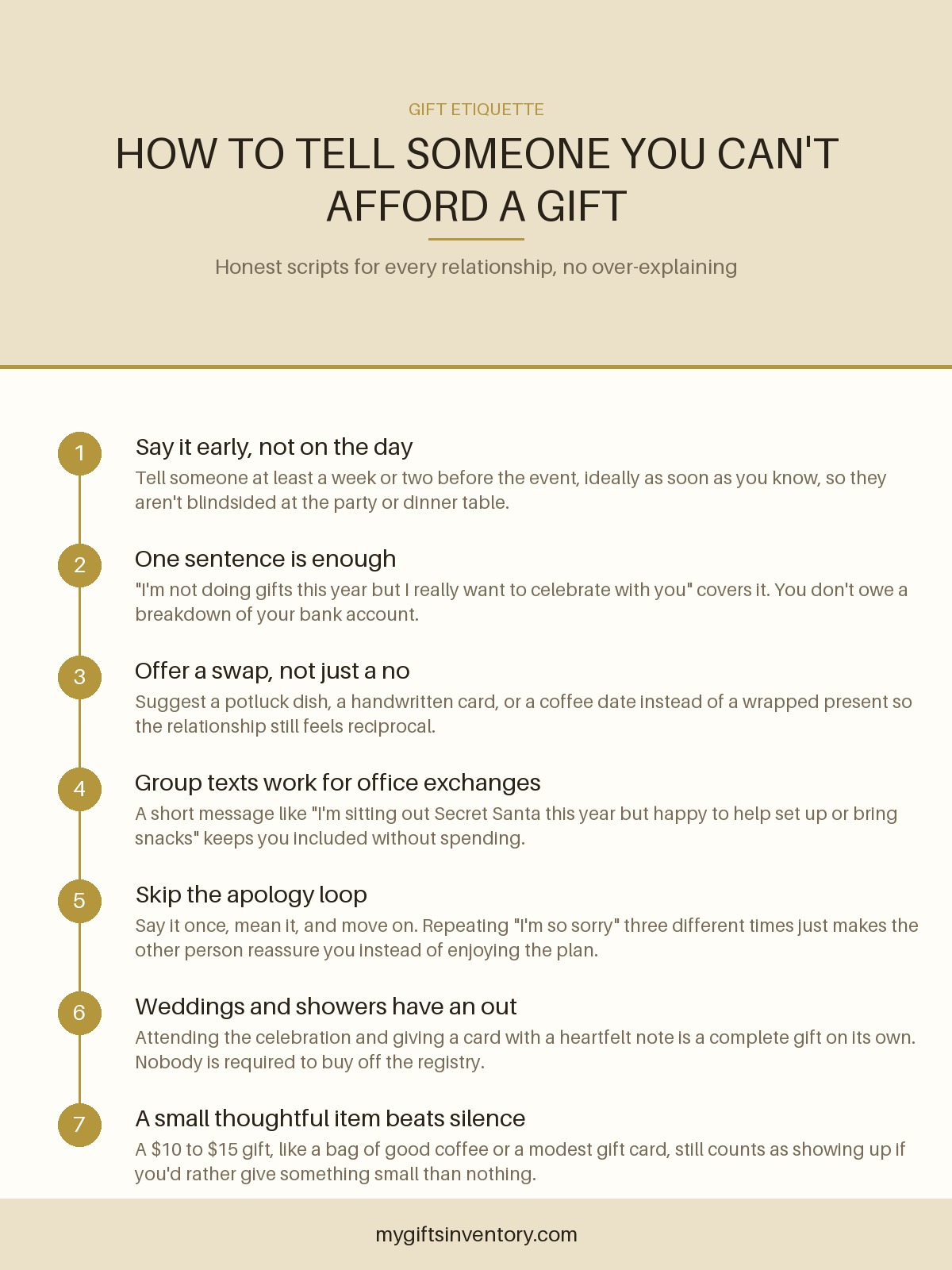
Say so privately to the organizer or the people closest to you. Offer a smaller gift, a handmade option, or suggest a lower group limit. True friends and family would rather know than watch you stress.
Should I spend more on my partner than on my parents or siblings?
Often yes, but it depends on your specific dynamics and any traditions you already have. Many couples set their own private limit that is higher than the family one. Consistency within each relationship matters more than cross-comparing every recipient.
Is it okay to give a cheaper gift if it is really thoughtful?
Yes. A well-chosen lower-cost item with a personal note regularly outranks an expensive generic one. Thought and fit beat price for most recipients.
How do I handle it when someone gives me a much more expensive gift?
Thank them sincerely and enjoy it. Do not make the price difference the topic. Next time you give them something, focus on meaning rather than trying to equal the dollar amount.