How to Handle a Surprise Gift Without Awkwardness
Surprise gifts can leave us scrambling for the right reaction. Here's practical etiquette for receiving them gracefully, what to say in the moment, and how to handle the ones that miss the mark.
As an Amazon Associate, My Gifts Inventory earns from qualifying purchases. We only recommend products we'd genuinely consider buying ourselves.
We have all been there. Someone hands us a wrapped box or bag we never saw coming, the room goes quiet for a second, and our brain freezes between genuine delight and pure panic about what to say next. Surprise gifts are lovely in theory and surprisingly tricky in practice, especially when the item is unexpected, the relationship is complicated, or the gift simply is not something we would have chosen.
This guide walks through the real moments that follow a surprise: the first reaction, the words that land well, what to do when you do not love it, how reciprocity works without turning into a scorecard, and a few notes for the people who love giving surprises. No scripts that sound robotic, just practical ways to stay warm and human.
Why Surprise Gifts Feel Different
Expected gifts give us time to prepare a response. Surprises remove that buffer. Suddenly we are managing our face, our words, the giver's visible hope, and sometimes a room full of observers all at once. Add in the quiet pressure many of us feel around gift equality or "deserving" something, and it is easy to overthink.
The good news is that most givers are not grading our performance. They mainly want to feel that the gesture landed and that we noticed the effort. A sincere, imperfect reaction almost always beats a polished but distant one.
The First 30 Seconds: How to React in the Moment
Your face and first words matter more than a perfect monologue. Here is a simple order that works across almost every relationship.
1. Acknowledge the surprise itself
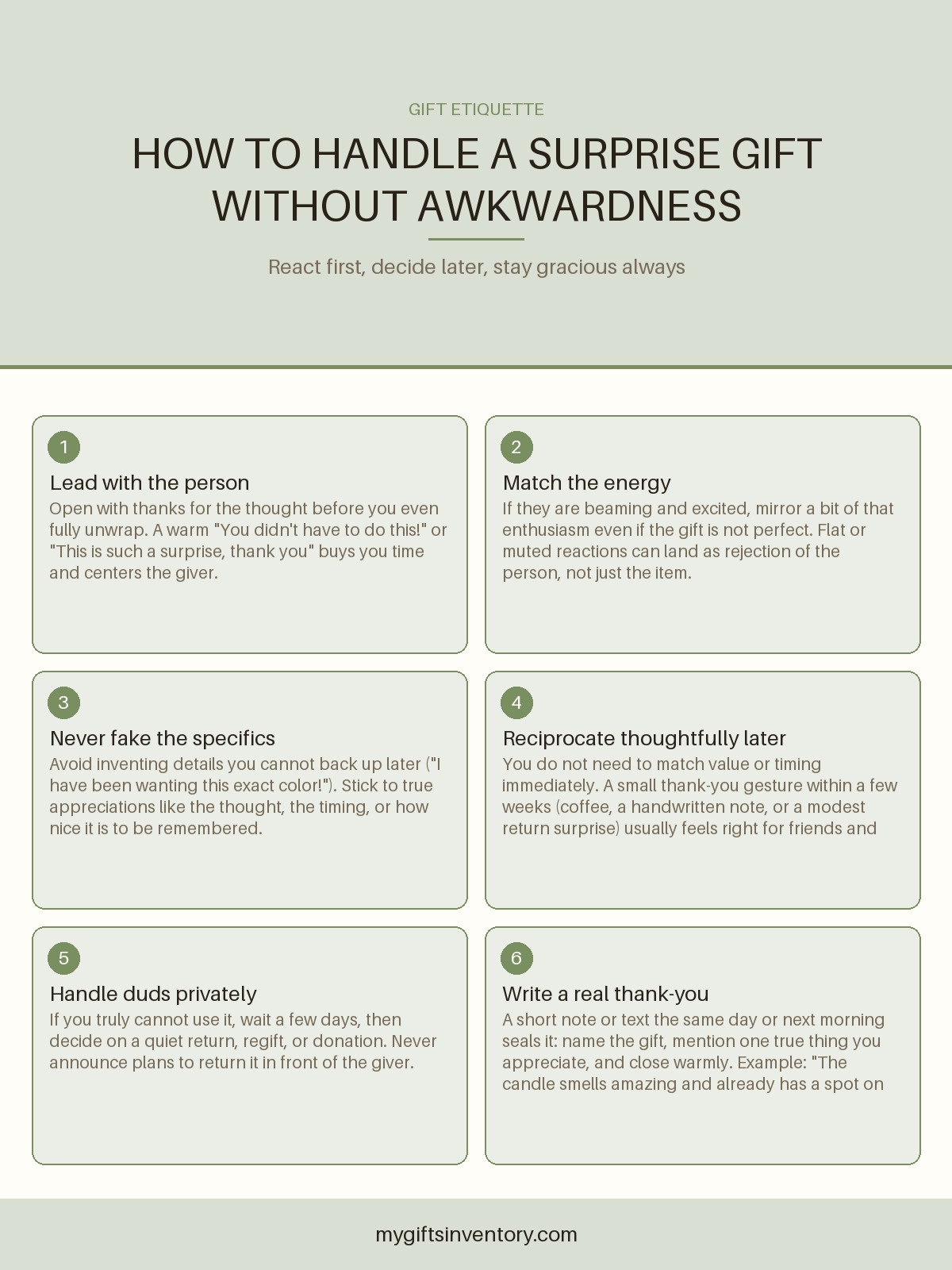
Lead with the unexpectedness. Phrases like "You completely caught me off guard!" or "I had no idea!" give you a beat to breathe and signal delight at being thought of. This step is especially useful if you need a second to process what the gift actually is.
2. Thank the person before the object
Center the giver. "This is so thoughtful of you" or "I really appreciate you doing this" keeps the focus on their kindness rather than an instant product review. We can always get more specific about the item once we have opened it and had a closer look.
3. Open it with some visible interest
Even if the wrapping is elaborate or you already suspect what is inside, take a moment. Look at it, turn it over if it makes sense, and offer one concrete observation that is true. "The color is beautiful," "This feels so soft," or "I love that you remembered I like [related thing]" all work. If you truly do not know what it is yet, it is fine to say so with a smile: "Okay, help me out, what am I looking at here?"
4. Match energy without overacting
If the giver is bouncing with excitement, a flat "thanks" can feel like a deflation. You do not need theatrical gasps, but a warmer tone and a bit of mirrored enthusiasm help. Conversely, if they are low-key, you can stay calm and sincere. The goal is connection, not performance.
What to Say (and What to Avoid)
Short and true beats long and invented. Here are reactions that usually land well, plus a few that create trouble later.
Safe, warm openers
- "You really didn't have to, but I'm so glad you did. Thank you."
- "This made my day. Seriously, thank you for thinking of me."
- "I was not expecting this at all. It means a lot."
- "You know me well / You always pick interesting things. Thank you."
When you need more time
If the gift is unusual, complex, or you are simply overwhelmed, it is okay to buy a little space: "I want to look at this properly when I can sit down with it. Thank you so much for this." Then follow up later with a more detailed note.
Phrases that create problems
- Immediate comparisons: "Oh, this is just like the one I already have" or "I saw this on sale last week." Even if factual, it can sting.
- Fake specifics you cannot sustain: Claiming you have "always wanted exactly this shade/size/model" when you have not. It often unravels.
- Price commentary out loud: "This must have been expensive!" can make the giver uncomfortable, whether it was costly or not.
- Joking deflection that lands cold: Heavy sarcasm or "You shouldn't have wasted your money" rarely reads as humble. It often reads as rejection.
If the gift comes with a card, read it in the moment when possible and reference one line. It shows you are receiving the whole gesture, not just the object.
When You Genuinely Love It
Lucky us. Still, a few habits make the appreciation feel complete rather than fleeting.
Use it or display it where the giver might notice if you will see them again soon. Send a quick photo later if it fits the relationship ("Look where the candle lives now"). Mention it the next time you talk: "I've been using the mug every morning." These small callbacks cost almost nothing and make the giver feel the gift had a real life after the unwrapping.
For bigger or more personal surprises, a handwritten thank-you note still carries weight. Keep it short: name the gift, say one true thing about how you are enjoying it or what it made you feel, and close with warmth. Text or a voice note works well for closer friends and family when a card feels too formal.
When the Gift Misses the Mark
This is the part most of us dread. The sweater that will never fit, the scent we cannot stand, the gadget we already own, the home decor that clashes with everything we own. You can still handle it with grace.
In the moment
Do not announce disappointment. Protect the giver's dignity first. Fall back on thanks for the thought, the effort, or the surprise itself. "This is so unexpected and kind of you" remains true even if the object will not stay in your life long-term.
If they ask directly whether you like it, you can stay gentle and partial: "It's really unique, thank you," or "I appreciate you picking this out." You are not obligated to perform ecstasy. Most people can sense the difference between polite and over-the-top, and polite is enough.
Afterward: returns, regifting, and donations
Wait at least a day or two before acting. Knee-jerk returns right after the event risk being discovered if the giver is still nearby or if tags and bags are obvious. Check the store's return window and whether a gift receipt was included. Many places are flexible within 30 days with or without a receipt, though policies vary.
Regifting can be fine when done carefully: only to someone who would genuinely like it, never back into the same social circle in a way that could loop around, and ideally after removing any personal notes or monograms. Donation is often the cleanest option for items that are usable but not for you.
If the gift came from someone you are very close to and the mismatch is significant (wrong size clothing you will never wear, food you cannot eat due to allergy or preference), a private, kind conversation later is sometimes better than silent avoidance. Frame it around practicality rather than taste: "I love that you thought of me. Would you mind if I exchanged the size so I can actually wear it?" Most people would rather know than watch the item gather dust.
Reciprocity Without the Scoreboard
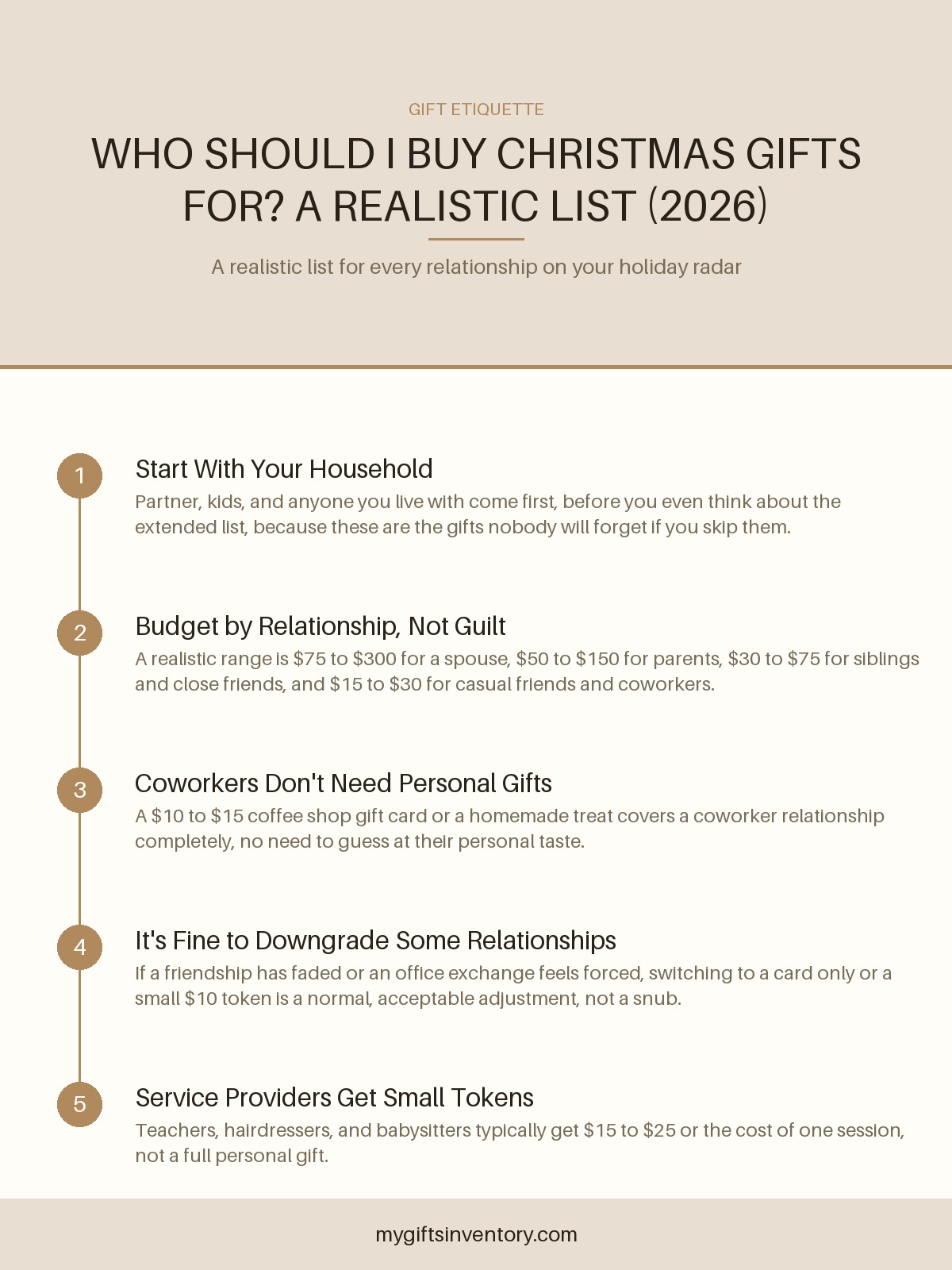
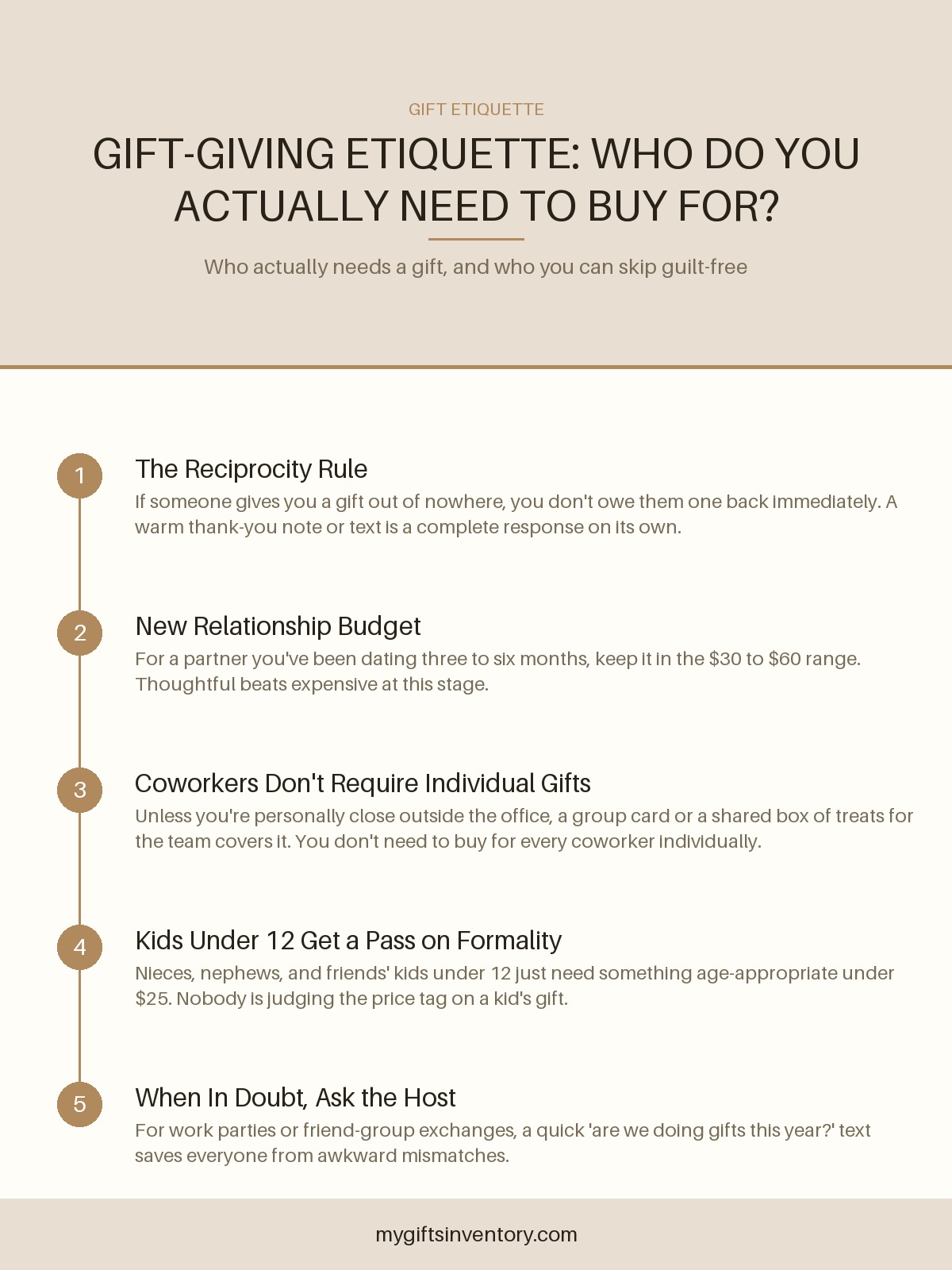
Surprise gifts can trigger a quiet sense of debt. We do not need to erase it with an equal-value counter-gift the next day. Relationships are not ledgers.
A good rule of thumb: acknowledge promptly, then reciprocate in a way that fits the relationship and your means within a reasonable window (often a few weeks for friends, around the next natural occasion for more distant connections). The return gesture can be smaller, experiential, or simply consistent thoughtfulness over time.
If you want concrete ideas that feel considered without requiring a huge budget, we like browsing focused lists such as thoughtful gifts under $20 or budget-friendly picks under $25. A small, well-chosen item or a planned coffee often says more than a rushed expensive match.
For closer relationships, something with staying power can feel especially right. Keepsake gifts or a shared experience often land better than another object that needs storage. If an outing or activity fits, experience ideas under $50 give plenty of options that create a memory instead of clutter.
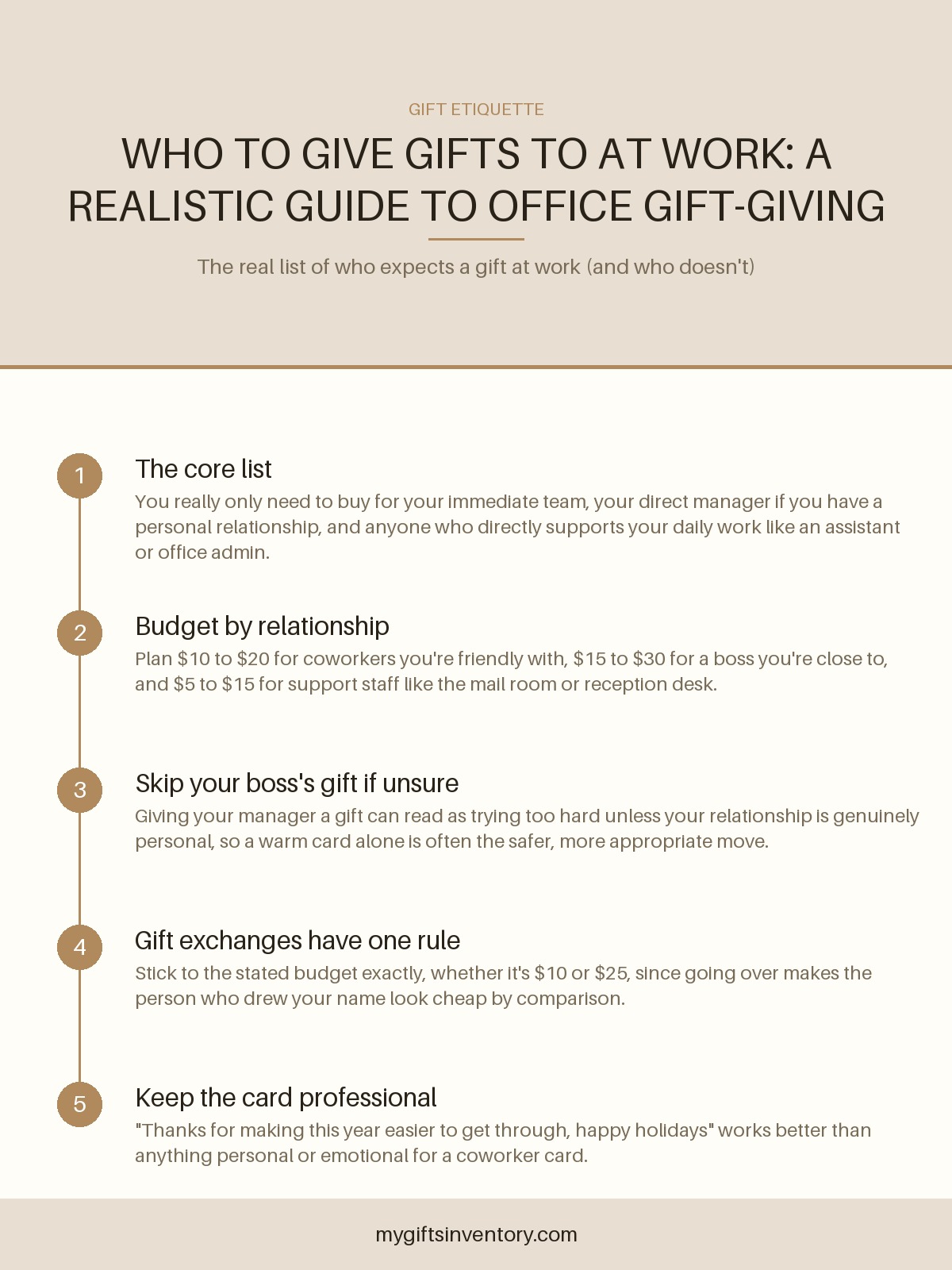
When the original surprise came from a coworker or more professional context, keep any return gesture modest and appropriate. A simple handwritten note is often perfect on its own. If you do give something, stay in the small-and-useful range rather than personal or lavish.
Special Situations
Surprise gifts in front of other people
Group settings raise the stakes because everyone is watching both of you. Keep your reaction warm but not so large that it puts pressure on others who did not bring gifts. A clear thank-you, a smile, and then gently folding the moment back into the larger gathering works well: "This is wonderful, thank you. Okay, who wants cake?"
When you are the one who hates surprises
Some of us genuinely prefer knowing what is coming. If this is you and the giver is a regular in your life, it is fair to share that preference outside of a gift moment: "I love that you think of me. Fair warning, I am terrible at surprise faces even when I am happy, so please never take a muted reaction as anything but my wiring." Most people appreciate the heads-up.
Romantic partners and high-stakes surprises
Grand gestures can be magical or stressful depending on timing, money, and whether the gift matches real shared values. If a surprise feels overwhelming in scale, you can still thank the intent while gently recalibrating future expectations in a calm conversation later. Focus on what you do appreciate and what kinds of gestures feel most connecting to you going forward.
Kids and surprise gifts
Children often react with pure honesty, which can be hilarious or mortifying. If you are the adult receiving a child-made or child-chosen surprise, lean all the way into delight. The item itself is rarely the point. If your own child receives a surprise they dislike, coach them privately afterward on kind words rather than forcing fake raves in the moment. "Thank you, that was nice of them" is a solid baseline to practice.
A Few Notes for People Who Love Giving Surprises
Since many of us end up on both sides, a short turn toward the givers. The best surprises usually come from real observation rather than assumption. Listen for passing comments, notice what someone already uses and loves, and consider whether the person actually enjoys being surprised. Some do. Some strongly prefer lists or wishlists.
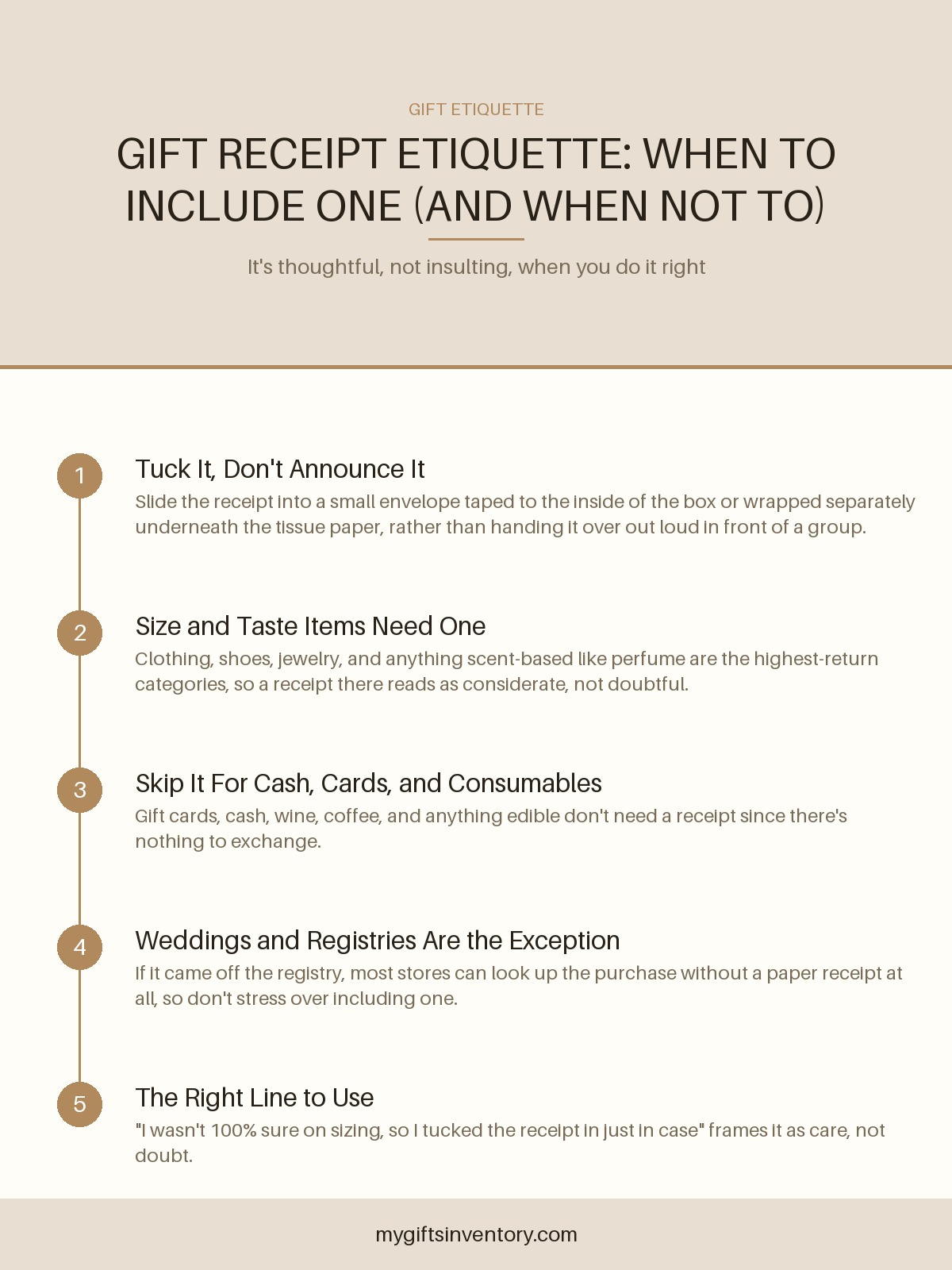
Include a gift receipt when there is any chance of size, color, duplicate, or taste mismatch. It is a quiet kindness, not an admission of doubt. Pair the gift with a note that explains the "why" in one or two sentences. That context often matters more than the object and gives the receiver something true to respond to.
If you are unsure about taste, experiences, consumables, or flexible options tend to be safer than highly specific decor or clothing. And if the relationship is new or professional, err smaller and more useful.
Follow-Up That Feels Natural
A same-day or next-day message closes the loop beautifully. It does not need to be long. Name the gift, mention one specific thing, and restate thanks. Examples:
- "Still smiling about the surprise yesterday. The [item] is already in use and I love it. Thank you again."
- "You really brightened a random Tuesday. That was so kind of you."
- "I put the [item] out this morning and it makes me happy every time I walk by. Thank you for thinking of me."
If you will see them soon, you can save the fuller thanks for in person and keep the message brief. The important part is that the gratitude does not end the second the wrapping paper hits the trash.
Handling a surprise gift well is less about perfect words and more about protecting the relationship in real time. Thank the person, stay honest without being harsh, give yourself permission to deal with practicalities later, and let reciprocity be thoughtful rather than transactional. Most givers will remember how you made them feel far longer than the exact phrase you used while holding the box.
Frequently Asked Questions
What should I say if I don't like the surprise gift?
Thank them for the thought and the surprise itself without lying about loving the specific item. "This is so kind of you, I was not expecting anything" or "You really didn't have to, thank you for thinking of me" keeps the focus on their generosity. Save any practical decisions about returning or regifting for private time later.
Do I have to give a surprise gift back right away?
No. Immediate equal reciprocity often feels forced. A sincere thank-you followed by a smaller gesture or kindness in the following weeks is usually enough. Match the closeness of the relationship rather than the dollar amount.
Is it rude to return a surprise gift?
It is not rude if you do it quietly and without involving the giver. Use a gift receipt when possible, wait until the moment has passed, and never discuss the return in front of them. The goal is to avoid waste while protecting their feelings.
How do I thank someone for a surprise gift in a text or note?
Keep it short and specific. Name the gift, mention one true detail about it or how it made you feel, and close with thanks. Example: "The candle is already on my desk and smells incredible. Thank you for the wonderful surprise."
What if the surprise gift is too expensive and I feel uncomfortable?
Acknowledge the generosity warmly in the moment, then address the discomfort privately later if the relationship allows. You can say you feel a bit overwhelmed by the extravagance and would love future gestures to stay simpler. Most thoughtful people will appreciate the honesty.
Looking for an Actual Gift Instead?
More Gift Advice