Sustainable Gift Wrapping: How to Wrap Beautifully Without the Landfill Guilt
A practical guide to wrapping gifts with less waste, using fabric, recycled paper, and things you already have, without sacrificing a single bit of the unwrapping moment.
As an Amazon Associate, My Gifts Inventory earns from qualifying purchases. We only recommend products we'd genuinely consider buying ourselves.
You've probably just spent real time picking out the right gift, and now you're standing in front of a roll of shiny paper wondering if you're about to undo all of that with something that gets torn open in four seconds and tossed straight into the trash. That instinct is a good one. Most conventional wrapping paper, especially anything glossy, glittery, or metallic, can't be recycled at all, which means the prettiest part of the gift is often the least eco-friendly part of it.
The good news is that sustainable wrapping isn't a downgrade. Some of the most memorable gifts we've received were wrapped in a scarf, an old map, or a paper bag with a hand-drawn design, and none of it felt like a compromise. This is a rundown of what actually works, what to avoid, and how to make it look intentional rather than like you forgot to buy wrapping paper.
Why Regular Wrapping Paper Is Worse Than It Looks
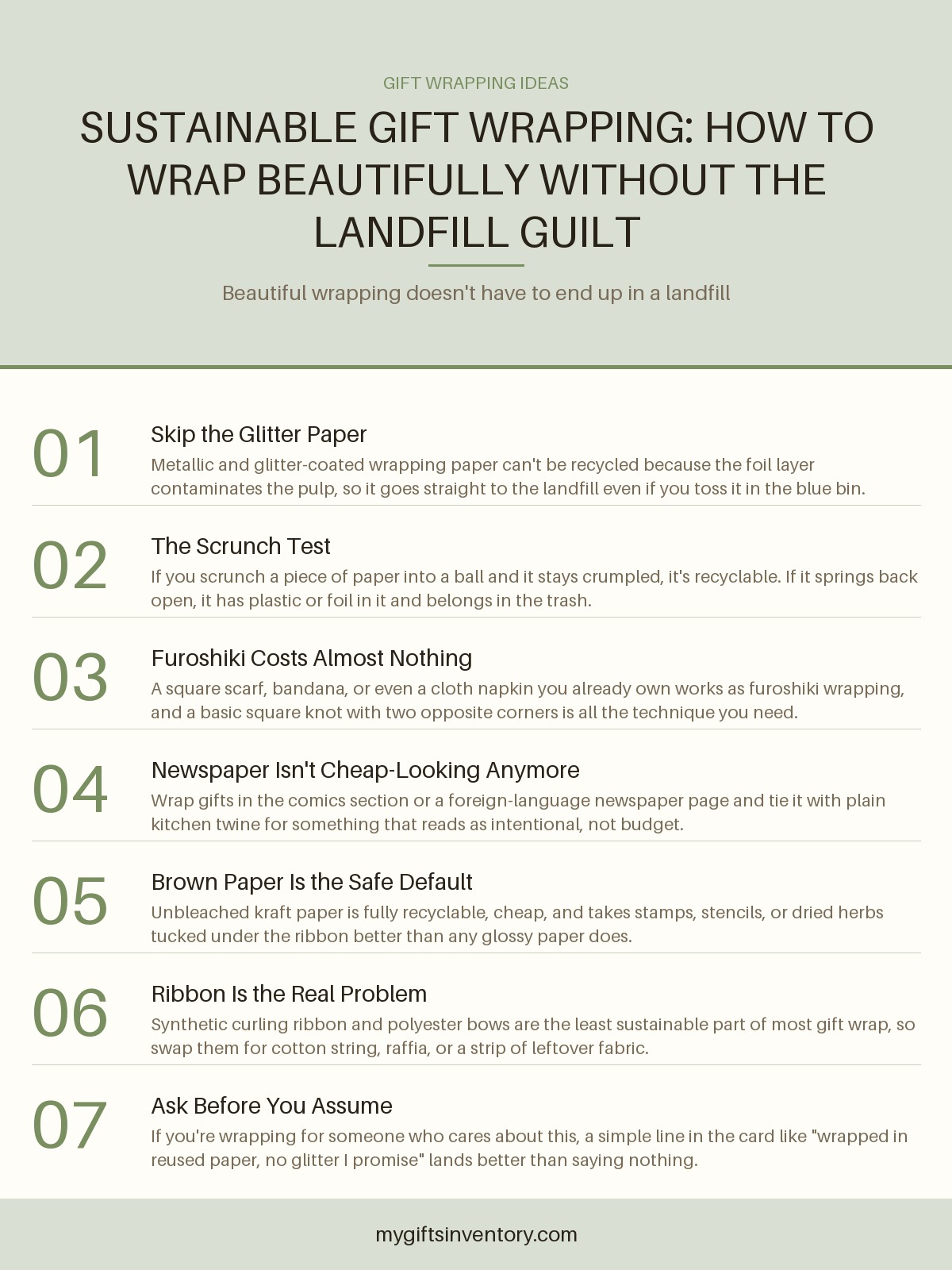
Most wrapping paper on store shelves is coated, laminated, or printed with metallic ink, all of which make it non-recyclable in most municipal systems. Paper mills can't separate the foil, plastic film, or glitter from the pulp, so even paper that looks perfectly normal often gets pulled out and landfilled during processing. Glitter is its own issue too, since it's usually made of tiny plastic particles that never break down and can't be composted or recycled in any form.
A simple rule we use: if you scrunch the paper into a ball and it stays crumpled, it's likely just paper and can go in the recycling. If it springs back open on its own, there's plastic or foil laminate in there and it belongs in the trash, not the recycling bin. Ribbon and bows are frequently worse offenders than the paper itself, since most are made from polyester or nylon that has no recycling path at all.
Furoshiki: The Cloth-Wrapping Method Worth Actually Learning
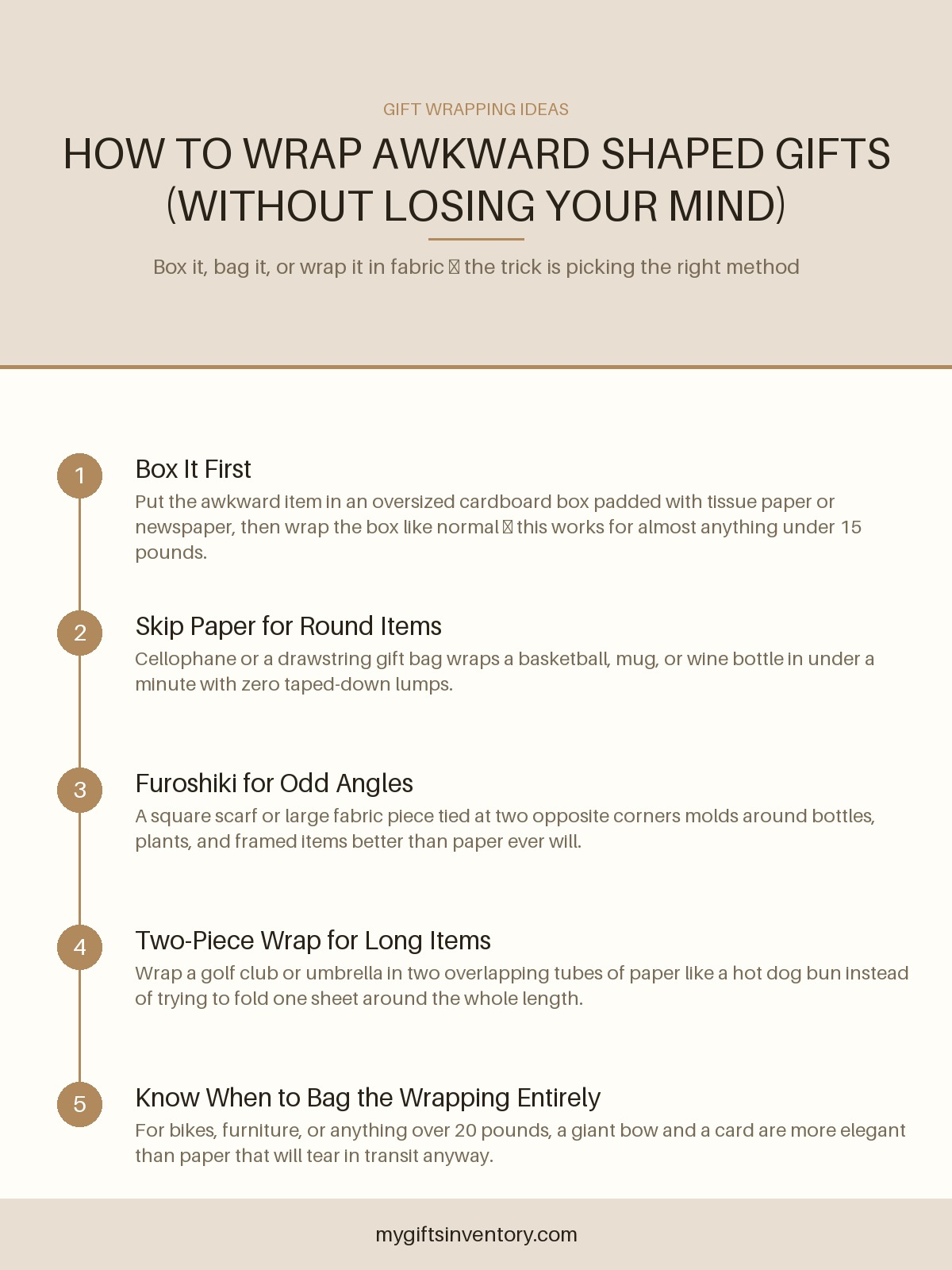
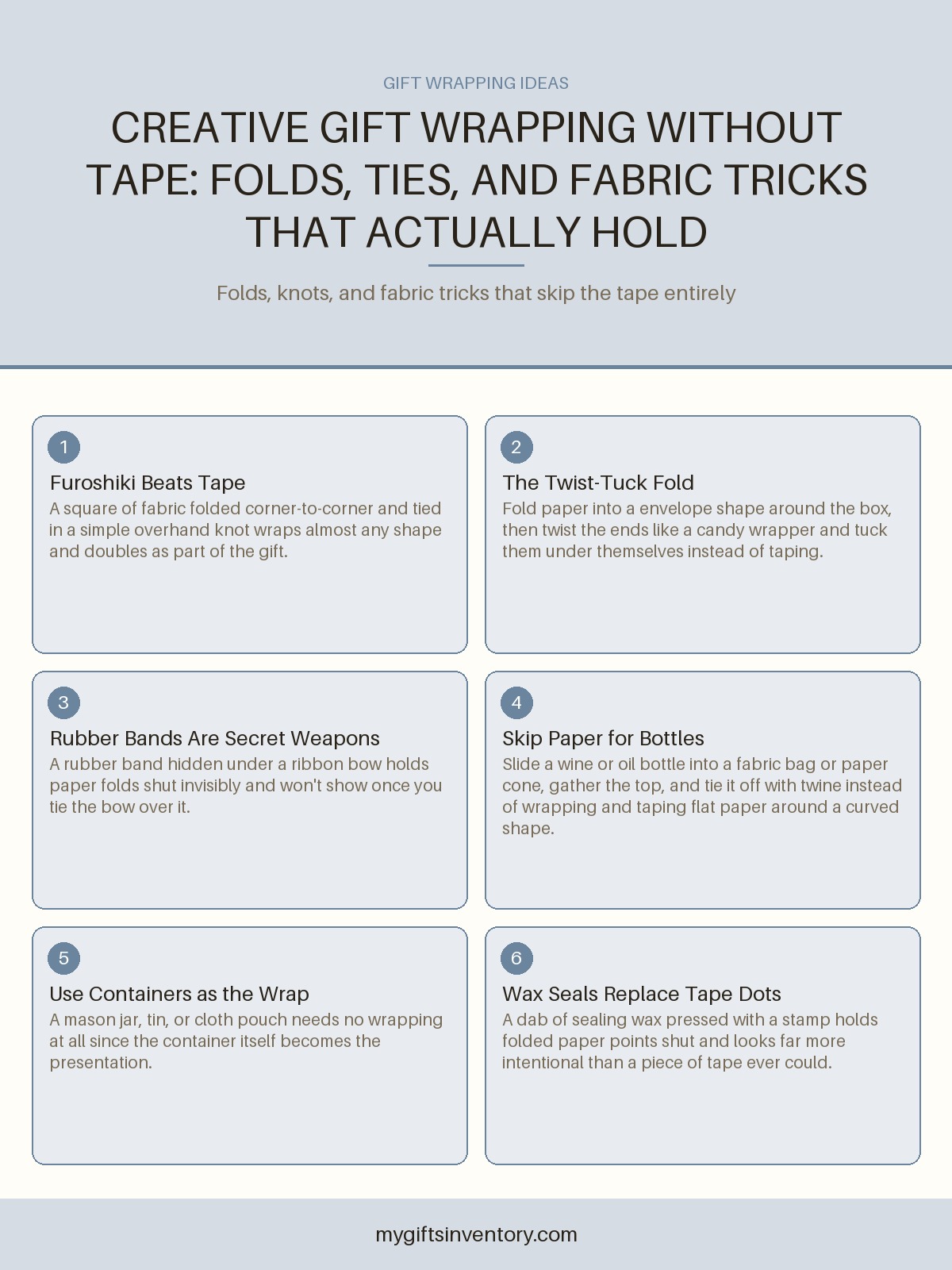
Furoshiki is the traditional Japanese technique of wrapping gifts in cloth instead of paper, and it's the single most useful skill in sustainable wrapping because the wrapping becomes part of the gift instead of trash. You don't need special fabric. A square scarf, a bandana, a cloth napkin, or a yard of fabric remnant all work.
The Basic Wrap
Lay the fabric in a diamond orientation with the gift centered. Bring the bottom corner up over the item, then the two side corners up and tie them together in a simple square knot on top. That's genuinely the whole technique for a box-shaped gift, and it takes less time than taping paper corners.
What Makes a Good Furoshiki Choice
Look for fabric with some drape, since stiff material won't tie cleanly. A silk scarf from a thrift store, a cotton bandana, or even a nice tea towel all work well, and giving someone a genuinely usable scarf or towel as the "wrapping" means they get two gifts for the price of one. This is a particularly good move for jewelry gifts, where a beautiful cloth wrap can double as presentation for something like the pieces in our personalized jewelry gifts for her guide.
Paper Options That Actually Recycle
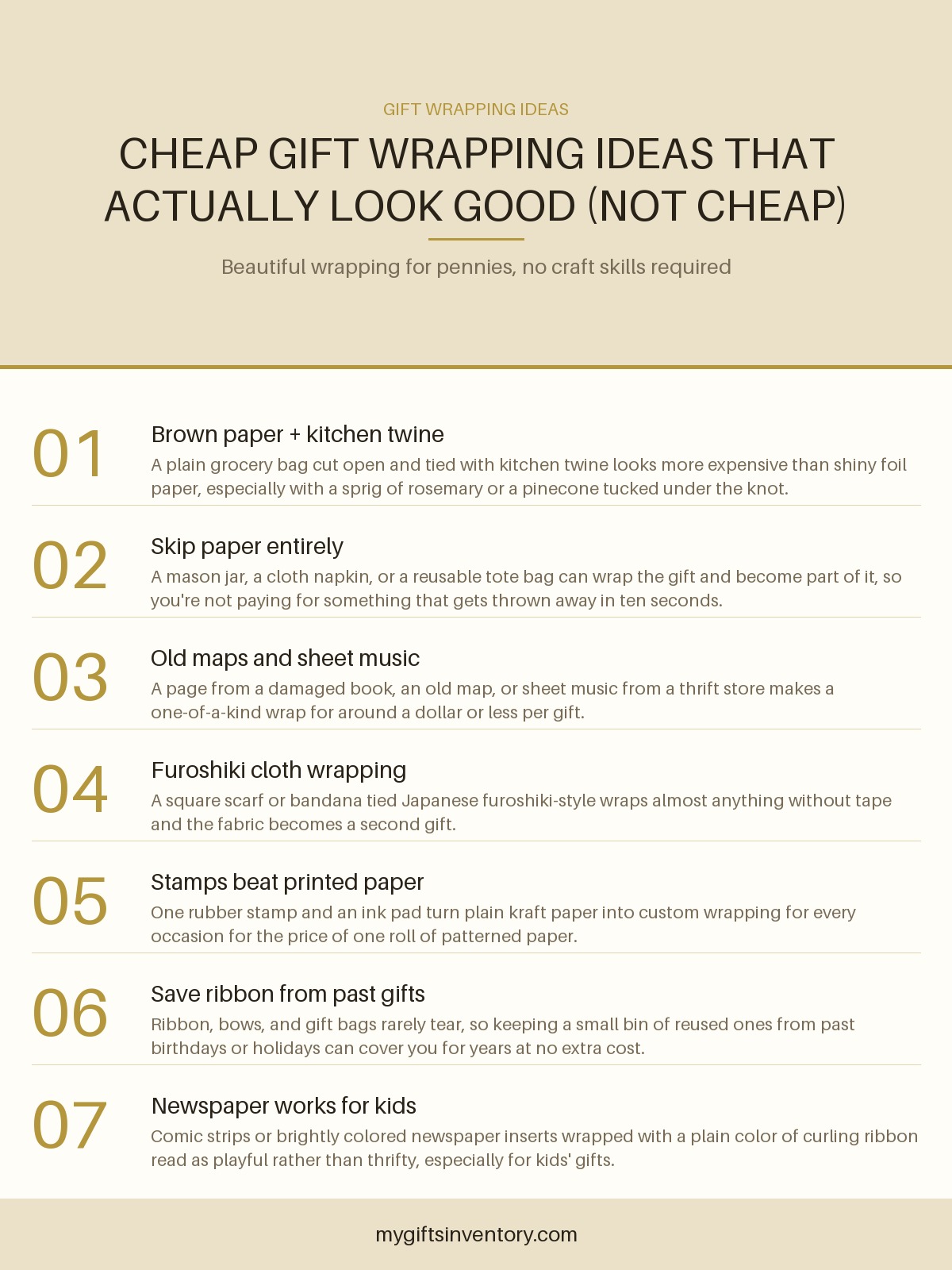
If cloth isn't your thing, plain kraft paper is the most reliably sustainable paper option because it's unbleached, uncoated, and fully recyclable in almost every municipal system. It also happens to look expensive when you dress it up with twine, a sprig of dried rosemary, or a rubber stamp, which is more than you can say for a lot of licensed-character paper.
Newspaper is another underrated option, especially the comics section or a page in a language you don't read, which reads as playful rather than cheap when tied with plain string. Brown paper grocery bags, cut flat and reused, work the same way. Old maps, sheet music, and even the glossy pages of a magazine you're done with can all be repurposed, though glossy magazine paper is worth checking against your local recycling rules since some coated stock isn't accepted.
Skip the Tape, Skip the Ribbon Problem
Tape is a small thing but it adds up, and most cellophane tape isn't recyclable or compostable. Paper tape made from kraft stock is widely available now and does the same job without the plastic backing. For closures, cotton string, raffia, or a torn strip of fabric tied in a bow all avoid the synthetic ribbon problem entirely, and they tend to look more considered than a curled plastic ribbon anyway.
If you want embellishment without buying anything new, look around your kitchen and yard before you look at a craft store. A cinnamon stick, a sprig of eucalyptus, a dried orange slice, or a small pinecone tucked under the string does more visual work than a plastic bow ever will, and all of it is compostable.
Wrapping for Different Occasions and Budgets
Everyday Birthdays and Small Gifts
A single sheet of kraft paper, one piece of twine, and something foraged from outside costs close to nothing and looks better than dollar-store paper. This is the easiest place to start if you're new to sustainable wrapping, and it works well for smaller items like the picks in our dorm gifts under $20 guide, where the wrapping shouldn't cost more than the gift.
Holidays and Larger Occasions
For gifts with more weight behind them, like something from our gifts under $1000 guide, furoshiki with a nicer scarf or a wrapping cloth you buy specifically for reuse signals more care than paper ever will, and it holds up to the higher price point of what's inside. Reusable fabric gift bags, the kind with a drawstring, are also worth the one-time investment if you do a lot of holiday gifting, since they get handed back and forth between family members year after year.
Corporate and Client Gifts
Sustainable wrapping reads as thoughtful in a professional context too, and it doesn't have to look rustic to work. Simple kraft paper with a company-branded stamp or a wax seal looks more polished than most off-the-shelf gift bags, which is worth keeping in mind for anything from our corporate gift ideas under $50 list. Clients notice when packaging feels considered rather than generic.
When Wrapping Doesn't Make Sense at All
Sometimes the most sustainable choice is skipping wrapping altogether, especially for gift cards, which don't need much beyond the card they come in. If you're giving something like a Target gift card or an Amazon gift card, a plain card with a handwritten note does the job without any wrapping waste at all, and the recipient still gets the moment of opening something.
Food gifts are another case where less is often more. A jar of good coffee or a bag of beans, like the kind featured in our coffee lovers gift guide, looks great with nothing more than a strip of fabric tied around the lid and a tag, no box or paper required.
How to Talk About It Without Sounding Preachy
If sustainability is genuinely part of why you wrapped a gift the way you did, it's fine to mention it, but a light touch works better than a lecture. Something like "wrapped this in an old scarf instead of paper, hope you don't mind" in the card comes across as considerate rather than performative. If you're not sure whether the recipient cares one way or the other, it's usually safe to just wrap it well and let the wrapping speak for itself. Not everyone wants their gift moment turned into a conversation about waste, even when the intention behind it is a good one. For more on reading a recipient's actual preferences before you commit to a gift or how you present it, our guide on choosing the perfect gift covers how to think through that kind of context.
Building a Small Wrapping Kit You Reuse Every Year
The easiest way to make sustainable wrapping a habit rather than a one-time effort is to keep a small kit on hand. A roll of kraft paper, a spool of cotton string or raffia, a few fabric scraps big enough for furoshiki, and a pair of scissors covers almost every gift that comes up during the year. Save gift bags you receive and reuse them rather than buying new ones, and flatten and keep any nice paper that survives an unwrapping intact. None of this requires a special trip to buy anything, which is really the whole point.
Frequently Asked Questions
Is wrapping paper actually recyclable?
Most glossy, metallic, or glitter-coated wrapping paper is not recyclable because the foil or plastic coating contaminates the paper pulp during processing. Plain paper without dye, foil, or glitter, like kraft paper or newspaper, generally is recyclable. A quick way to check is the scrunch test: if it stays crumpled in a ball, it's likely fine for recycling.
What can I use instead of a bow?
Cotton string, raffia, twine, or a strip of fabric all work as substitutes for plastic ribbon and bows, which are typically made from non-recyclable polyester or nylon. Tucking in a dried herb sprig, a cinnamon stick, or a small pinecone adds visual interest without any synthetic material.
Is furoshiki hard to learn?
No, the basic wrap takes about a minute once you've done it once or twice. For a box-shaped gift, you place it diagonally on a square of fabric, fold the bottom corner over the top, then tie the two side corners together in a simple knot.
Does sustainable wrapping cost more than regular wrapping paper?
It's usually cheaper, not more expensive, since kraft paper, newspaper, and reused fabric all cost less than branded gift wrap and ribbon. The one exception is if you buy dedicated furoshiki cloths new, which cost more upfront but get reused indefinitely.
What should I do with gift wrap I can't reuse or recycle?
If paper has glitter, foil, or plastic coating, it unfortunately belongs in regular trash rather than recycling, since it can contaminate an entire batch of recyclable paper at the processing facility. The better long-term fix is choosing paper that avoids those materials in the first place, so this becomes less of an issue each year.