Workplace Gift Exchange Etiquette: What to Give, What to Skip, and How Much to Spend
A practical guide to navigating Secret Santa, White Elephant, and boss gifts at the office without overspending, oversharing, or accidentally offending anyone.
As an Amazon Associate, My Gifts Inventory earns from qualifying purchases. We only recommend products we'd genuinely consider buying ourselves.
There's a specific kind of dread that shows up every December (or whenever your office decides to do this): the email announcing a gift exchange, followed immediately by the mental math of who's in it, how much everyone else is spending, and whether it's weird that you don't really know your Secret Santa recipient's last name. Workplace gifting sits in an odd zone. You're not close enough to buy someone a sweater, but you're not distant enough to ignore the whole thing either. Here's how to get through it without overthinking every purchase.
Know What Kind of Exchange You're Actually In
The rules change depending on the format, and half the anxiety around office gifting comes from not being totally sure which version you're playing.
Secret Santa means you're assigned one specific person, usually anonymously, and you buy for them alone. This is the version where knowing even a little about the person (do they drink coffee, do they have a dog, are they into their desk plants) goes a long way.
White Elephant or Yankee Swap is a free-for-all where gifts go into a pile, people pick and steal from each other, and the goal is usually something funny or a little absurd rather than deeply thoughtful. Nobody's judging your gift-giving instincts here. It's meant to be a little chaotic.
Grab bag or blind draw is a lighter version of Secret Santa where you don't know who has your name until the reveal, and gifts tend to be more generic since there's less lead time to think about the specific person.
Group gift for one person usually happens for a boss's milestone, someone's last week before maternity leave, or a retirement. Everyone chips in a set amount and one nicer item gets purchased on behalf of the group.
Budget Etiquette: How Much Is Actually Normal
This is the question nobody wants to ask out loud but everyone is quietly Googling. Here's a reasonable range depending on the situation.
Secret Santa or White Elephant
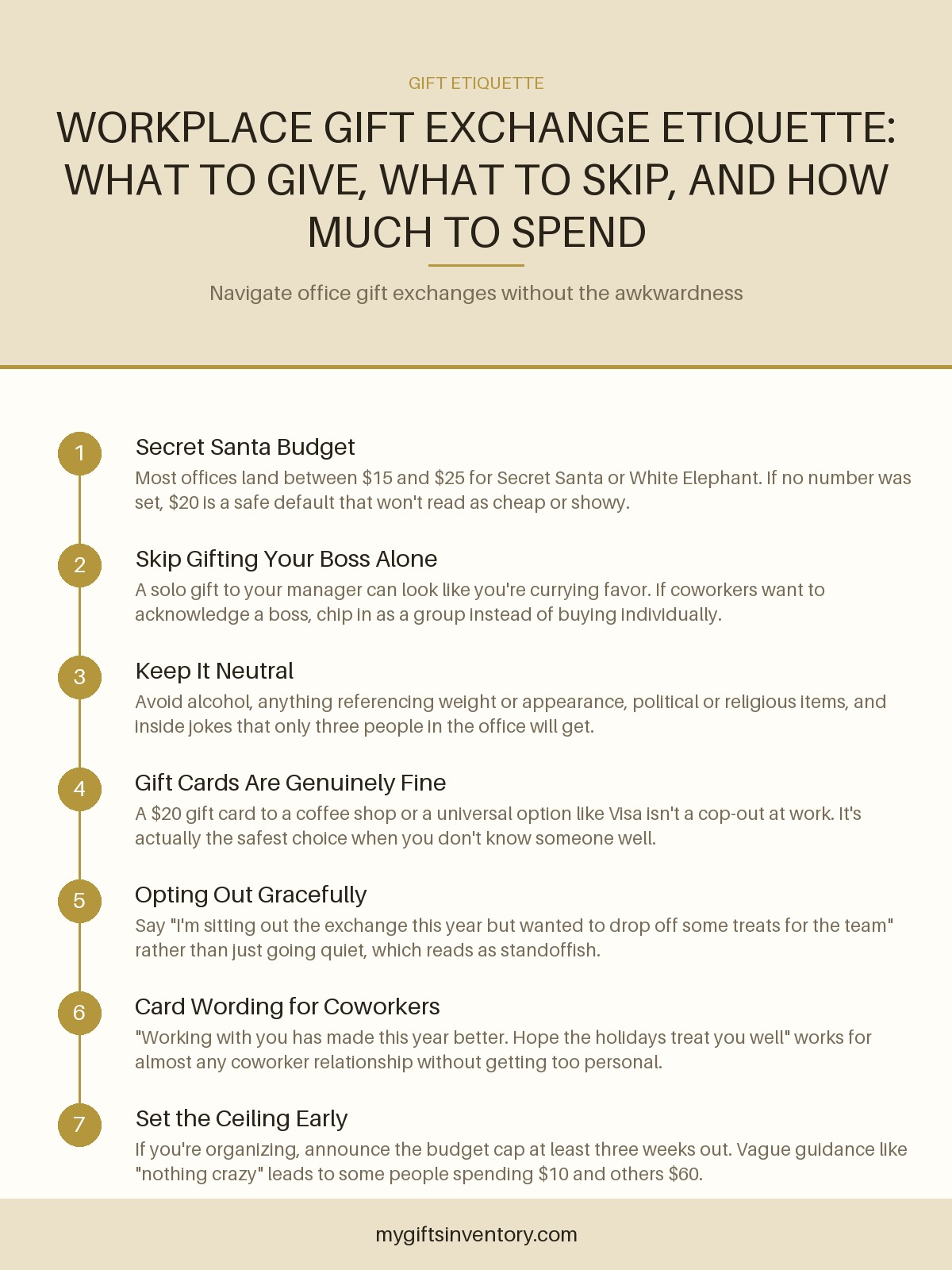
Most workplaces land somewhere between $15 and $25 per person. If your office hasn't set a number, $20 is a safe middle ground that won't look cheap or make anyone feel like they need to keep up. If a hard limit was announced, stay within a few dollars of it. Going noticeably over the cap can make others feel bad about what they bought, which defeats the point of an exchange that's supposed to be low-pressure.
Gifting Your Direct Coworkers Individually
If you're close with a few people on your team and want to do something separate from the office exchange, $15 to $40 is the general range depending on how close you actually are. A desk neighbor you chat with daily is different from someone in another department you nod at in the break room.
Gifting a Boss or Manager
This one deserves its own section below, because it's rarely as simple as "spend more since they're senior."
Farewell or Milestone Group Gifts
For a retirement, a big promotion, or someone leaving after years at the company, group gifts often run $10 to $20 per contributor, with the total landing somewhere between $75 and $200 depending on team size. Nobody should feel pressured to contribute more than that, and whoever's collecting money should always make the ask optional in wording even if participation is basically expected.
If you're shopping for a milestone gift and want something that feels a step above a gift card without going overboard, our corporate gift ideas under $50 guide has options that read as thoughtful rather than transactional.
The Boss Problem: Gifting Up the Chain
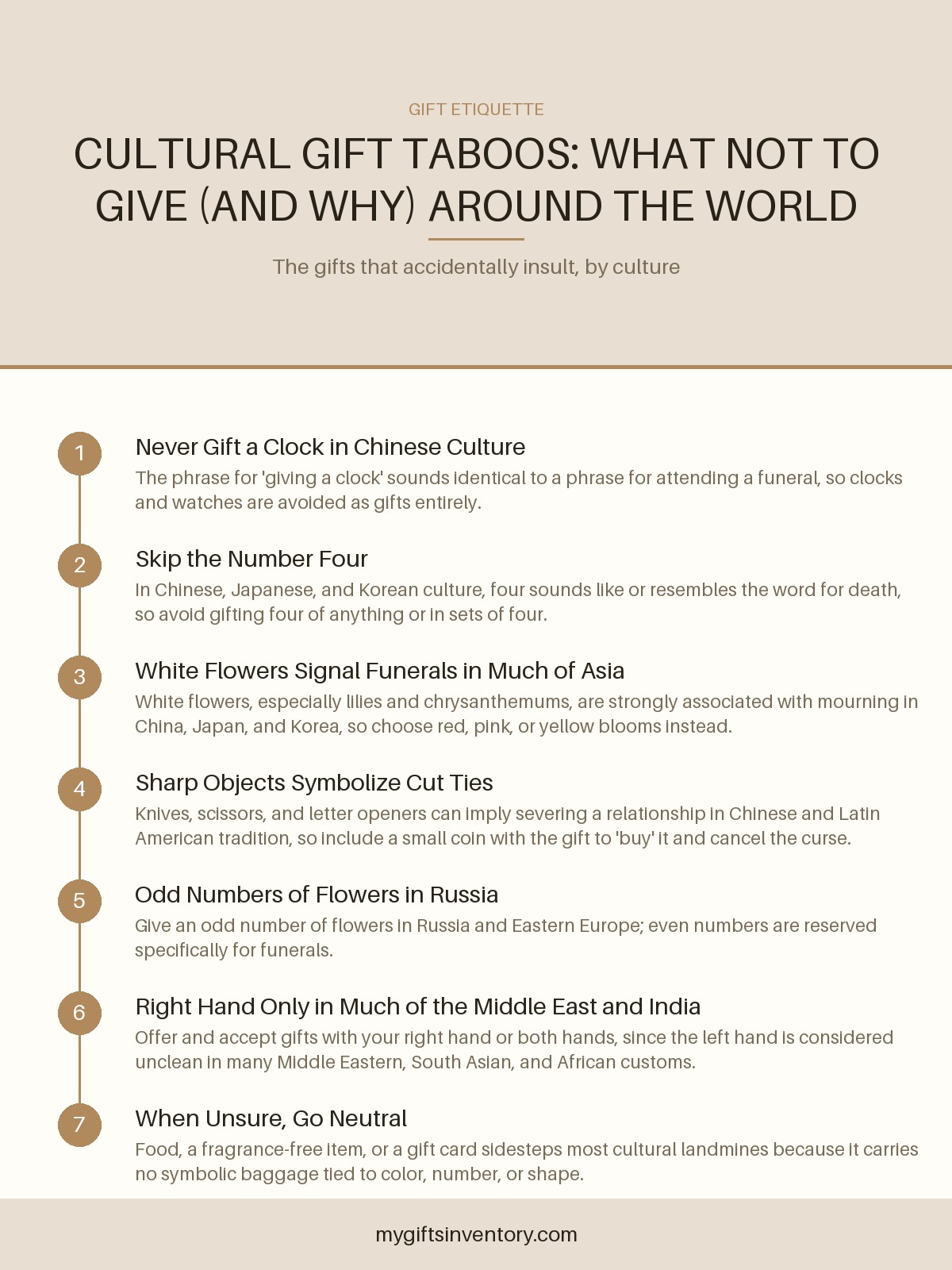
Buying a gift for your manager individually can put both of you in an awkward spot. It can look like favor-currying to coworkers, and it can put your boss in the position of needing to acknowledge it publicly or privately in a way that feels uneven if other employees didn't do the same. The safer move, if the team wants to acknowledge a manager during a holiday exchange or a milestone, is to pool money as a group rather than one person showing up with a gift alone.
If you do want to do something small and individual, like bringing your manager coffee beans or a card during the holidays, keep it modest and low-key rather than a wrapped, prominent gift on their desk. And managers: if you're gifting your direct reports, the safest approach is identical gifts or identical-value gift cards across the board, so nobody's comparing what they got against a coworker's.
What to Avoid, Even If It Seems Funny at the Time
Office culture makes some gifts feel fine in the moment that read very differently once they're unwrapped in front of the group. Skip:
- Alcohol, unless you know for certain your office culture is fine with it and the recipient drinks. Even then, it's a gamble in a professional setting.
- Anything referencing weight, diet, or appearance, even as a joke.
- Political or religious items of any kind, no matter how mild you think the message is.
- Inside jokes that only two or three people in the office will understand. A White Elephant gift that requires context nobody else has just falls flat.
- Anything that requires knowing someone's size, like clothing, unless you've specifically asked.
- Gag gifts that punch down at someone's habits, desk mess, or personality quirks. Funny for a White Elephant pile is different from funny aimed at one specific coworker who has to sit with it.
When in doubt, neutral and useful beats clever and risky. A good mug, a candle, or something for their actual desk setup will never embarrass anyone.
What to Write on the Card
Workplace card messages need to thread a needle: warm enough that it doesn't feel like a form letter, professional enough that it wouldn't be strange if your boss read it over your shoulder.
For a Peer or Desk Neighbor
"Working with you has made this year genuinely better. Hope you get some real rest over the holidays." Or, shorter: "So glad I get to sit near you all year. Happy holidays!"
For Your Secret Santa Recipient (If Signing Anonymously Isn't Required)
"Hope this made you smile. Wishing you a great rest of the year." Keep it light since you may not know them well.
For a Boss or Manager
"Thanks for being a great manager this year. Appreciate everything you've done for the team." Keep it professional and avoid anything that reads as overly personal or flattering.
For a Group Card (Farewell or Retirement)
"It won't be the same around here without you. Thanks for everything, and congratulations on the next chapter." Group cards work best when each person adds one specific memory or thank-you rather than everyone writing the same generic line.
If You're the One Organizing the Exchange
Someone has to be the person who sends the sign-up sheet, and if that's you, a few things make it go smoother. Announce the budget cap clearly, in dollars, at least three weeks before the exchange date. Vague language like "nothing too crazy" leads to some people spending $10 and others spending $60, and both extremes make people uncomfortable. Set a firm date for the exchange itself and a slightly earlier deadline for signing up so latecomers don't throw off the assignment list.
For hybrid or remote teams, decide upfront whether the exchange happens by mail, at an in-office date, or during a video call, and be explicit about it in the invite. Shipping adds cost and lead time that in-person exchanges don't require, so build in an extra week if some participants are remote.
Always make participation optional, and say so explicitly rather than assuming it's understood. "Totally fine to sit this one out, no explanation needed" removes pressure from people who don't want to participate for financial or personal reasons.
How to Opt Out Without It Being Awkward
Not everyone wants in, and that's fine. The key is saying something rather than just going silent on the sign-up email, since silence tends to read as standoffish rather than simply uninterested. A short note like "I'm going to sit out the gift exchange this year, but I'll bring in some snacks for the team" acknowledges the invite without over-explaining why. You don't owe anyone a reason, financial or otherwise.
When a Gift Card Is the Right Call
There's a lingering idea that gift cards feel lazy, but in a workplace setting they're often the smartest choice precisely because you don't know a coworker's taste, size, or home well enough to pick something personal. A $20 card to a coffee shop, or something universally usable like a Visa gift card, sidesteps the guesswork entirely. If your Secret Santa recipient is a known coffee enthusiast, pairing a card with something small from our coffee lovers gift guide gives it a bit more personality without overspending.
If you're shopping for a male coworker and drawing a blank, our tech gifts for men under $50 list tends to work well for White Elephant piles since the items are broadly appealing rather than niche.
Gift Ideas to Go With This


Want more ideas? Browse our full guide: 20 Best Gifts Under $100 (2026): Thoughtful Picks They'll Actually Use
Frequently Asked Questions
Do I have to participate in the office gift exchange?
No, participation should always be optional, and a good organizer will say so clearly. If you'd rather not join, a simple "I'm sitting this one out this year" is all the explanation you need to give.
How much should I spend on a coworker for Secret Santa?
Most offices set a budget between $15 and $25, and if no cap was given, $20 is a reasonable default. Staying close to whatever number was announced matters more than the exact amount, since going noticeably over can make others feel awkward about what they spent.
Should I get my boss a gift separately from the office exchange?
It's generally better to avoid gifting a boss individually, since it can look like favor-seeking to coworkers. If the team wants to acknowledge a manager, pooling money for one group gift is the more comfortable route.
Is a gift card too impersonal for a work gift?
Not at all, a gift card is often the safest and most appropriate choice at work since you may not know a coworker's exact taste. Pairing it with one small, inexpensive extra can add warmth without requiring deep personal knowledge.
What if I don't know my Secret Santa person very well?
Stick to broadly appealing, low-risk categories like coffee, snacks, desk items, or a modest gift card rather than guessing at hobbies or personal taste. Neutral and useful is always safer than a gamble that might miss.
Looking for an Actual Gift Instead?



Gift Sets We Love Right Now
Every item picked, priced and linked, ready to buy.


More Gift Advice