Are Cruelty-Free Gift Sets Worth It? How to Spot Real Value Under $50
Cruelty-free gift sets can be genuinely great value or a clever repackaging of cheap minis. Here's how to tell the difference before you spend $50.
As an Amazon Associate, My Gifts Inventory earns from qualifying purchases. We only recommend products we'd genuinely consider buying ourselves.
You're staring at two tabs: a $48 cruelty-free skincare set with a linen bow, and the same brand's individual products sitting in your cart for $41. The set looks better. But is it actually better? That's the real question behind "are cruelty-free gift sets worth it," and the honest answer is: sometimes yes, often no, and there's a repeatable way to tell which one you're looking at before you check out.
We've bought a lot of these sets, given a lot of them away, and watched a few of them sit untouched in bathroom cabinets. Here's what we've learned about separating genuine value from pretty packaging, specifically in the under-$50 range where most of us actually shop.
What "Cruelty-Free" Actually Means (And Why It Matters for Value)
Before we get to the math, one thing worth clearing up, because it changes what you're paying for. "Cruelty-free" is not a regulated term in the US. Any brand can print it on a box. What does carry weight is third-party certification, and there are two main programs buyers actually trust:
- Leaping Bunny, run by the Coalition for Consumer Information on Cosmetics. It requires a signed commitment, supplier monitoring, and independent audits on a set schedule.
- PETA's Beauty Without Bunnies, which verifies both "cruelty-free" and "vegan" claims separately, and does periodic re-confirmation.
If a set's box says "cruelty-free" with no logo, no brand statement, and no certification number anywhere, you're trusting marketing copy. That's not automatically a dealbreaker, but it does mean you can't factor the ethical claim into the value equation. You're just buying products in a box.
This matters for gift-giving specifically because most recipients who care about cruelty-free status know the difference between a logo and a phrase. Handing someone a "cruelty-free" set that turns out to be self-declared can land worse than giving them something that never claimed anything.
The Only Math That Matters: Price Per Ounce
Here's the calculation that ends the debate in about 90 seconds. Take the set price, add up the total volume of every product inside (in ounces or milliliters, whichever the packaging uses), and divide. Then do the same for the full-size versions of the two or three products you think the recipient will actually love.
A real example of the pattern we see constantly: a $45 "deluxe discovery set" containing five items of 0.5 oz each. That's 2.5 oz total, so $18 per ounce. The brand's full-size cleanser is 5 oz for $26, which is $5.20 per ounce. The set costs more than three times as much per ounce. You're paying for the box, the ribbon, and the experience of opening five small things instead of one big one.
Now the flip side. A $38 set with a 4 oz body lotion, a 3 oz body wash, and a 2 oz scrub, where those three full sizes would run you $52 separately. That's $4.22 per ounce against roughly $5.77. That's real value, and the set is genuinely the smarter buy.
Quick value thresholds we use
- Beats full-size pricing by 20 percent or more: buy the set, it's a real deal.
- Within 5 percent either way: you're paying the same price for smaller portions. Buy the set only if the presentation matters for the occasion.
- Costs more per ounce than full sizes: skip it unless you specifically want the variety, and say so to yourself honestly.
Where Under-$50 Sets Genuinely Win
Sets aren't a scam. They're a format, and the format has real advantages in specific situations.
When you don't know her exact preferences
If your sister-in-law loves skincare but you don't know whether she's a serum person or a moisturizer person, a set of three or four small products is a much better bet than one full-size guess. You're buying optionality. That's worth a per-ounce penalty of 10 to 15 percent, not 300 percent.
When the occasion is about presentation
Bath and body sets, in particular, earn their keep at $25 to $45. A box with a body wash, lotion, and scrub, arranged nicely with tissue paper, reads as a more substantial gift than the same three items handed over individually. That's not shallow. It's how gifting works.
When the set is a sampler for something expensive
A $40 set of four 0.3 oz fragrance or facial oil minis is worth it if the full sizes run $80 and up. The recipient gets to actually test before committing to a big purchase. That's a legitimate service, and it's the one category where small sizes make complete sense.
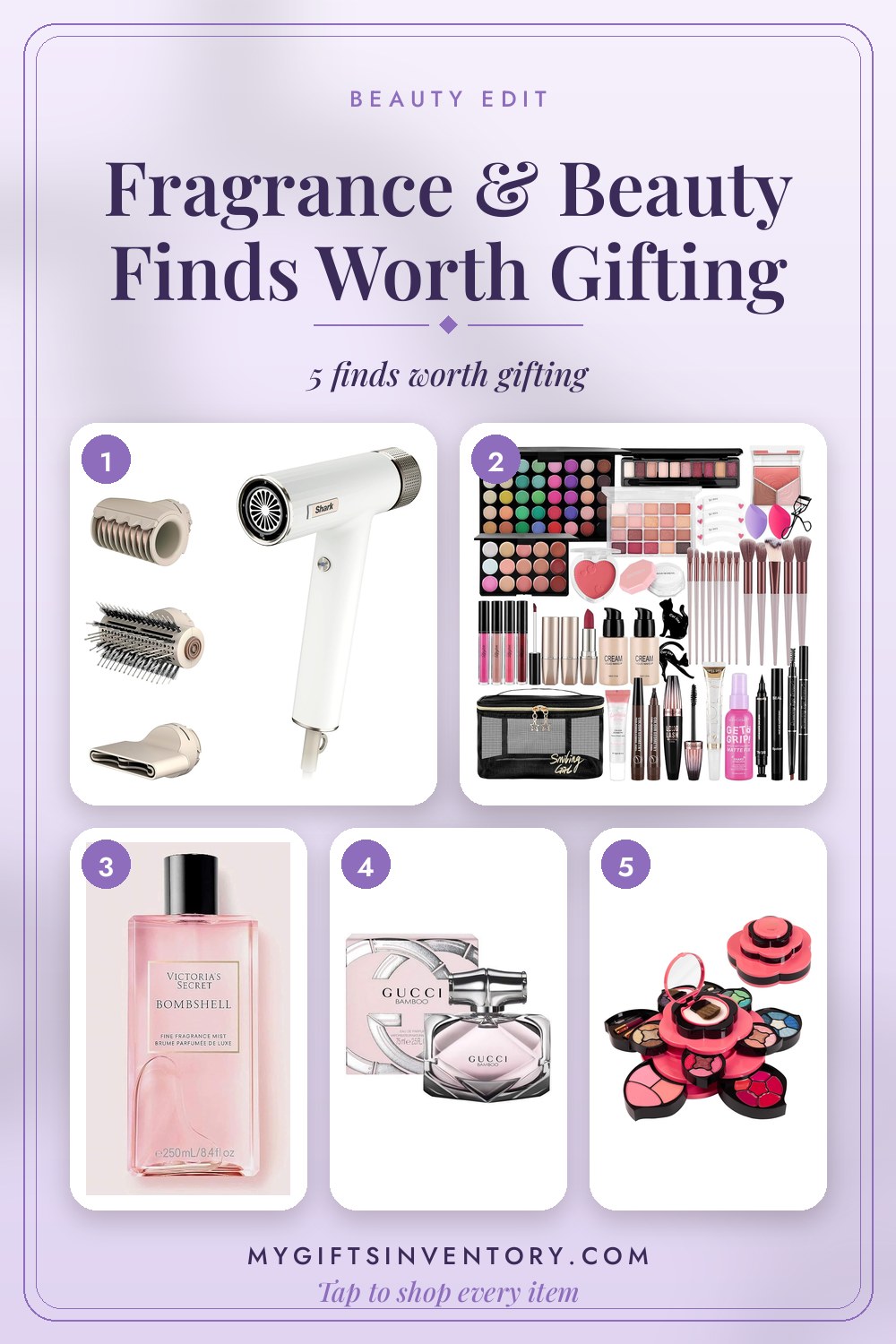
If you're shopping this space specifically, our roundup of 20 Best Cruelty-Free Beauty Gifts Under $50 (2026) breaks down which sets at that price point actually hold up to the per-ounce test, and which ones are mostly air and cardboard.
The Five Red Flags of a Low-Value Set
We've gotten picky about this over the years. These are the patterns that reliably signal a set isn't worth the money.
1. Minis under 1 ounce
A 0.5 oz mini of anything is roughly three uses. If a set has three or more items that size, the total usable product is tiny. Do the math on uses, not items: "eight-piece set" sounds generous until you realize it's about 20 total applications.
2. A filler item you can name instantly
The loofah. The mini candle. The single sheet mask. The branded pouch. These exist to make the set count bigger. When you mentally remove them, does the set still feel worth the price? If no, that's the answer.
3. Vague sizing on the listing
If the product page won't tell you the volume of each item, that's usually deliberate. Legitimate brands list ounces prominently. When you have to hunt for it or email customer service, assume the sizes are small.
4. No full-size option anywhere in the brand's lineup
Some sets are built entirely out of products that only exist in set form, which means there's no reference price and no way to repurchase what you liked. That's a mild but real downside for the recipient.
5. Seasonal packaging with a seasonal markup
Watch set prices between October and mid-December. Many gift sets debut at their lowest price early in the season and climb 10 to 20 percent as the holidays approach. If you're comparing a set today against the same set's price in November, you may be looking at the same product for $8 more.
For cross-category comparison, it helps to know what else $50 buys. Our guide to 8 Best Cruelty-Free Gift Sets (2026) covers skincare, bath, makeup, and candle formats side by side, which is a useful gut check when you're deciding between a $45 beauty set and a $45 candle bundle.
When a Set Isn't the Right Format at All
Sometimes the honest answer is that you shouldn't buy a set, and it's worth saying so rather than forcing it.
If you know exactly what they want
Buy the one thing. If your best friend has been eyeing a specific cruelty-free moisturizer for months, a set of things she didn't ask for is a downgrade dressed up as generosity.
If the budget is under $20
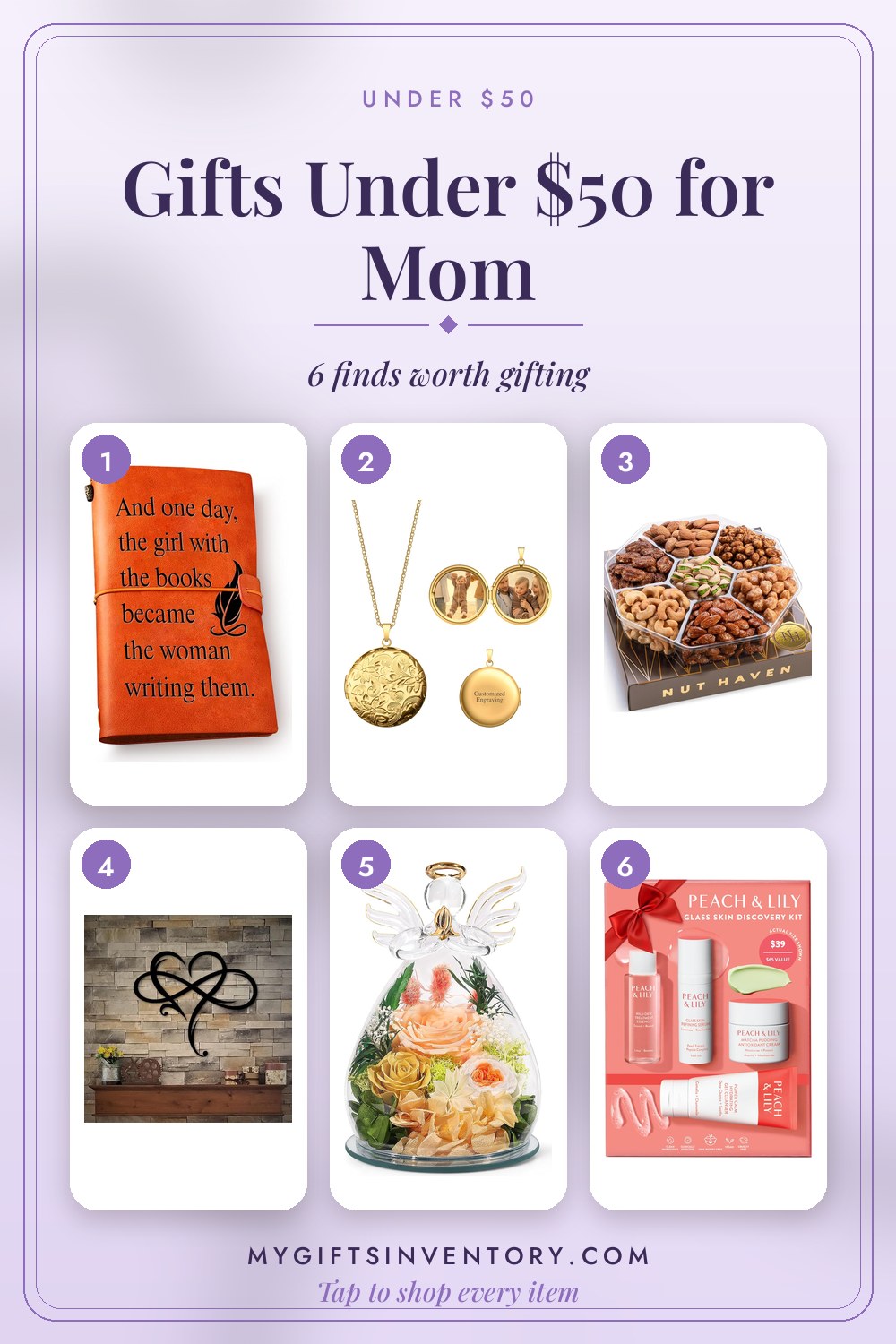
At that price, sets get thin fast. You're mostly buying packaging. Two full-size drugstore-tier products, or one genuinely nice full-size item, will land better than a five-piece set at the same price. If you're set on the set format anyway, our 19 Preserved & Everlasting Flower Gifts Under $50 (2026) covers a non-beauty alternative that holds up at lower price points.
If the recipient is minimal about their routine
Someone with a three-product routine does not need eleven new things. Consider a gift card to the brand they already use instead. One caution: if you go that route, make sure you know how they'll redeem it. Balance-check processes vary a lot by retailer, and it's worth confirming before you hand it over, whether that's a beauty retailer or something like Erborian or even a grocery-adjacent brand like Trader Joe's.
How to Wrap and Present a Set So It Reads as More
Half the perceived value of a set is presentation. A few things that actually work:
- Unbox it and re-tissue it yourself. Sets ship in plastic trays with visible gaps. Layering in tissue, or nestling items in a small basket, immediately makes it look intentional.
- Add one non-beauty item that ties to the theme. A soft washcloth, a small bar of soap, a candle. Even $6 to $8 here elevates the whole thing.
- Keep the card short. For a gift set, two lines works: "Saw this and thought of your Sunday bath ritual. Hope it's exactly your thing. Happy birthday!" Anything longer competes with the gift.
- Include the receipt in an envelope, discreetly. Beauty is personal, and recipients who can't use something shouldn't feel stuck.
Our Bottom Line
Cruelty-free gift sets under $50 are worth it when three things line up: the set beats full-size pricing by at least 20 percent per ounce, at least four of five items are things the recipient will use, and the cruelty-free claim is third-party verified rather than self-declared. When those three hold, a set is genuinely the better gift. When even one falls short, you're usually better off buying two full-size products and wrapping them yourself.
The good news is that checking all three takes about five minutes, and it's the difference between a gift that gets used up and a gift that gets moved from cabinet to cabinet for two years. Do the per-ounce math, count the fillers, look for the logo. That's the whole method.
Gift Ideas to Go With This


Want more ideas? Browse our full guide: 20 Best Gifts Under $100 (2026): Thoughtful Picks They'll Actually Use
Frequently Asked Questions
Are cruelty-free gift sets actually cheaper than buying the products separately?
Sometimes, but not usually. Many sets run 1.5 to 3 times the per-ounce price of the brand's full sizes, because you're paying for packaging and variety. The exceptions are sampler sets built around expensive products (fragrance, facial oils) and bath sets in the $25 to $45 range, where the set often beats buying the three components individually.
How do I know if a "cruelty-free" claim is real?
Look for a Leaping Bunny or PETA Beauty Without Bunnies logo, both of which require third-party verification and signed commitments. A brand simply printing "cruelty-free" on a box is making a self-declared claim with no independent check. If there's no logo and no certification statement, assume the claim hasn't been verified.
What's a reasonable price for a cruelty-free gift set?
For a genuinely good set, we'd expect to pay somewhere between $30 and $50 for a mix of two or three full-size or near-full-size items, or $20 to $35 for a well-chosen mini sampler of products whose full sizes run over $60. Below $20, sets tend to be mostly packaging. Above $50, you're usually paying for brand name more than product volume.
Is it better to give a gift set or a gift card?
Give the set when you have a reasonable idea of what they like and the occasion calls for something to open. Give a gift card when their routine is specific, they have sensitive skin, or you know they'd rather choose. For the gift card route, confirm how the balance gets redeemed before you buy, since processes differ by retailer.
Do cruelty-free gift sets go on sale?
Yes, and the timing is predictable. Many sets launch in early fall at their lowest price and rise 10 to 20 percent as the holidays approach, then drop sharply in January as brands clear seasonal packaging. If you're buying for a December occasion, buying in October or November is usually cheaper than waiting.
Looking for an Actual Gift Instead?
Shop Hand-Picked Gift Sets
Every item picked, priced and linked, ready to buy.
More Gift Advice