How Much to Spend on Christmas Gifts: A Realistic Budget Guide
A practical breakdown of what people actually spend on Christmas gifts by relationship, income, and family size, plus how to set a budget you won't regret in January.
As an Amazon Associate, My Gifts Inventory earns from qualifying purchases. We only recommend products we'd genuinely consider buying ourselves.
Every year around late October or early November, the same question starts nagging: how much am I actually supposed to spend on Christmas gifts? Maybe your family has never talked about it out loud, maybe you just got a new job and don't know what's normal for coworker gifts, or maybe last January's credit card bill made you swear this year would be different. There's no single right number, but there is a saner way to think about it than panicking your way through mall parking lots on December 23rd.
Start With a Total Number, Not a Person-by-Person Guess
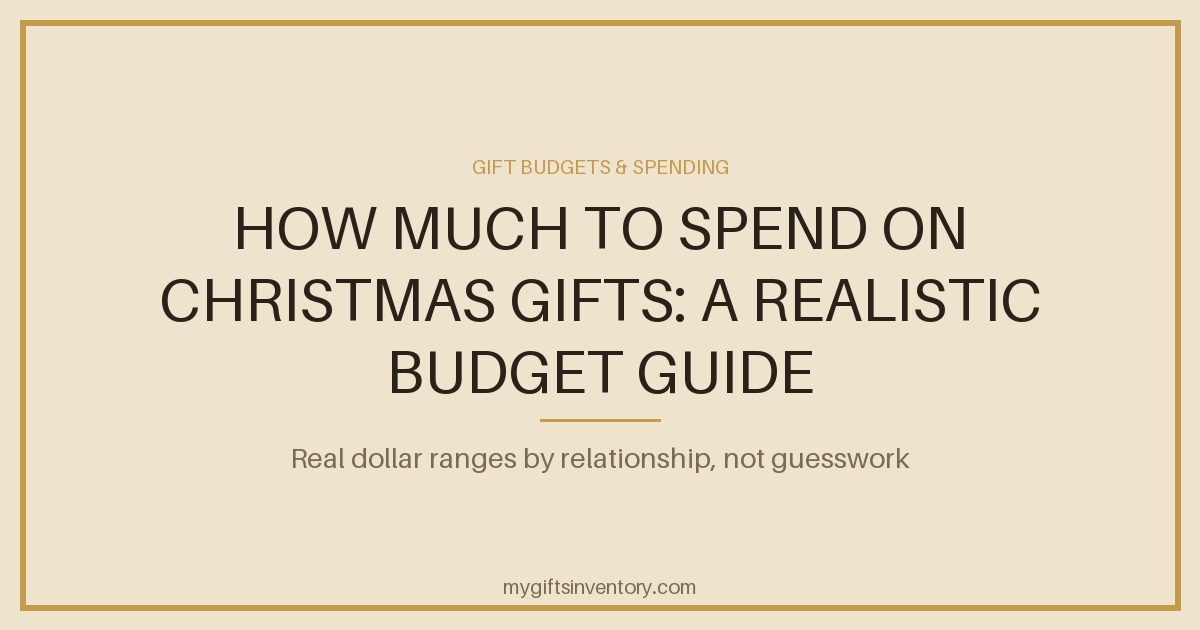
The mistake most people make is picking gifts first and adding up the damage later. Flip that order. Before you buy anything, decide on one total dollar figure for all of Christmas, gifts, cards, shipping, wrapping paper, the works, and treat that number as fixed. Then divide it across everyone on your list.
This matters because it forces tradeoffs into the open early, when you can still adjust, instead of discovering in week two of December that you've already spent your whole budget on three people and still have twelve to go. If you're the type who genuinely enjoys the hunt for the right present, this step also protects you, because a total budget gives you permission to spend more on the one person you really want to spoil and less everywhere else, guilt-free.
Typical Dollar Ranges by Relationship
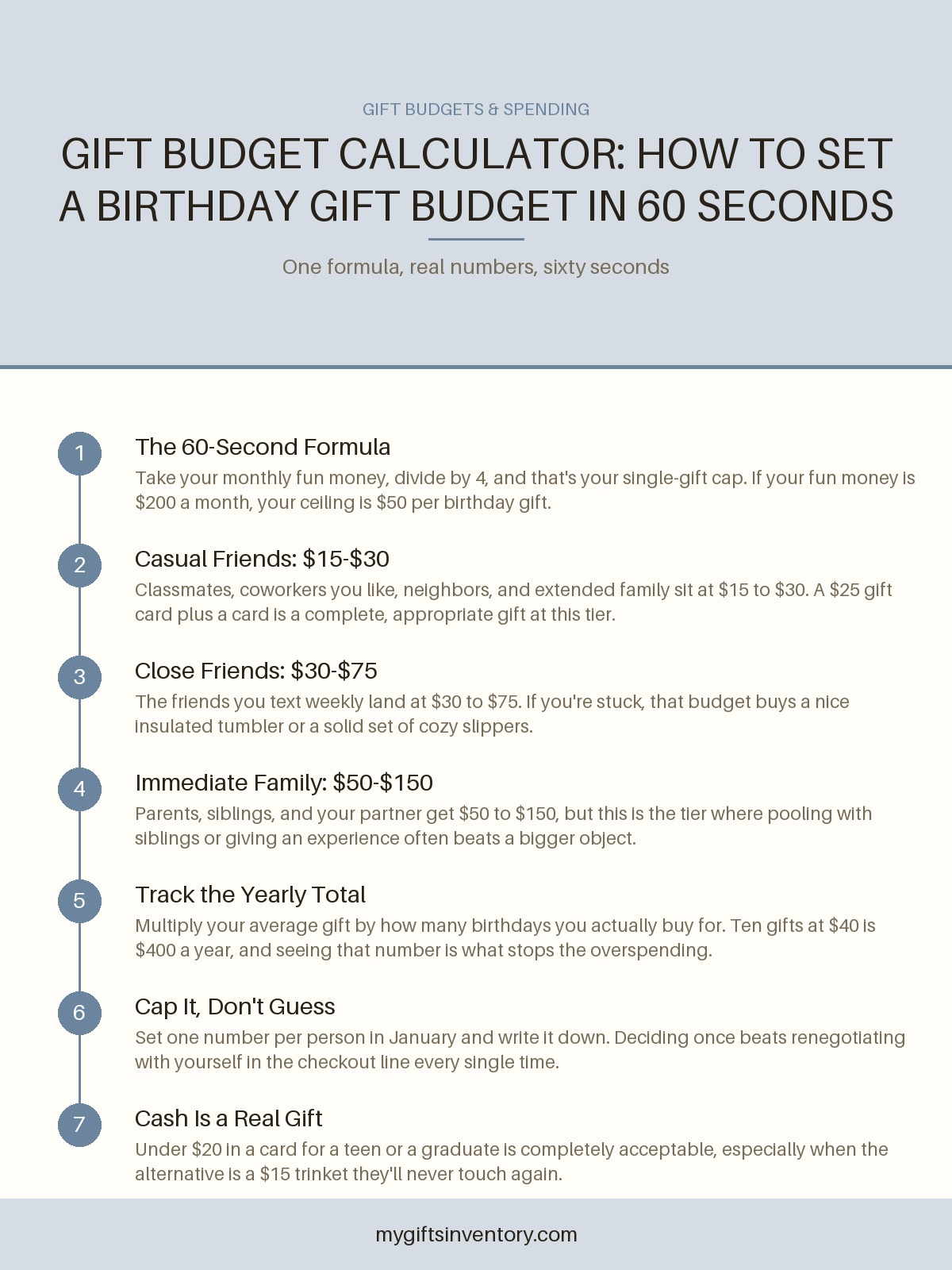
These numbers come from how most households actually budget, not from any official rulebook. Use them as a starting point and adjust for your own income and family culture.
Spouse or Partner
This is the category with the widest range because it depends entirely on what a couple has agreed to, spoken or not. A common range is $75 to $200 per person, though plenty of couples spend more if it's their main splurge of the year and plenty spend less if they're saving for something bigger together. The number matters less than the conversation. If you haven't explicitly discussed a ceiling with your partner, have that talk before you shop, not after one of you opens something clearly more expensive than the other.
Kids
For children, $50 to $150 per child is a workable range, with the number climbing for teenagers who tend to want pricier individual items like tech or clothing. If you're shopping for a specific age group and want ideas that feel age-appropriate rather than random, a list built for 10 year olds under $30 is a good sanity check for what actually lands at that age without overspending.
Parents and In-Laws
Adult children giving to parents often land in the $50 to $150 range per parent, sometimes pooled with siblings into one larger, nicer gift instead of several small ones. In-laws frequently get treated the same as your own parents to keep things even, though plenty of families quietly spend a bit less here and nobody seems to notice or mind.
Siblings and Extended Family
Adult siblings commonly spend $30 to $75 on each other, while extended family like aunts, uncles, and cousins usually drops to $15 to $35, especially in larger families where the math would otherwise get out of hand. This is exactly the situation Secret Santa and White Elephant exchanges were invented for. A family of twenty doesn't need twenty individual gift lists; it needs one draw and one agreed spending cap, often $20 to $30, so everyone buys one thoughtful thing instead of nineteen rushed ones.
Friends
Close friends typically fall in the $20 to $50 range, casual friends lower, often $10 to $25 or a card and a small treat. If you're stuck on what actually counts as a good gift for someone outside your immediate family, the general framework in Choosing the Perfect Gift: Tips and Ideas for Every Person and Occasion is worth a look before you default to another candle.
Coworkers and Bosses
Coworker gifts, when given at all, tend to stay in the $10 to $25 range, often as part of an office grab bag rather than individual presents. Gifting a boss is trickier territory. A small, modest gift in the $15 to $30 range is fine in offices where that's already the norm, but plenty of workplaces are better served by a group card or a pooled gift than by one employee showing up with something personal. If you're building out a broader plan for the office this year, Corporate Gift Ideas Under $50 That Won't Feel Like an Obligation covers the tone to aim for so nothing reads as trying too hard or too little.
Teachers, Babysitters, and Service Providers
Teachers, regular babysitters, hairdressers, dog walkers, and similar people who show up for your family all year are usually thanked with $20 to $50 in cash or a gift card, or a small gift plus a card, not a full-scale present. Many people find a gift card is actually the cleanest option here because it removes any guesswork about taste, and checking something like an Amazon gift card balance takes thirty seconds if you're ever unsure how much is left on one you received or are regifting.
What If Money Is Genuinely Tight This Year
If this year is different, a layoff, a move, unexpected bills, it's completely reasonable to spend less than you have in past years, and the people who love you should understand that. A few ways to handle it without it feeling like a downgrade in affection:
- Send a group text or email early, in November if possible, suggesting a lower cap or a Secret Santa format instead of everyone buying for everyone. Most families are relieved when someone says this out loud first.
- Lean into homemade or experience-based gifts, a cooked meal, a coupon for babysitting, a framed photo, rather than store-bought items that need to compete on price.
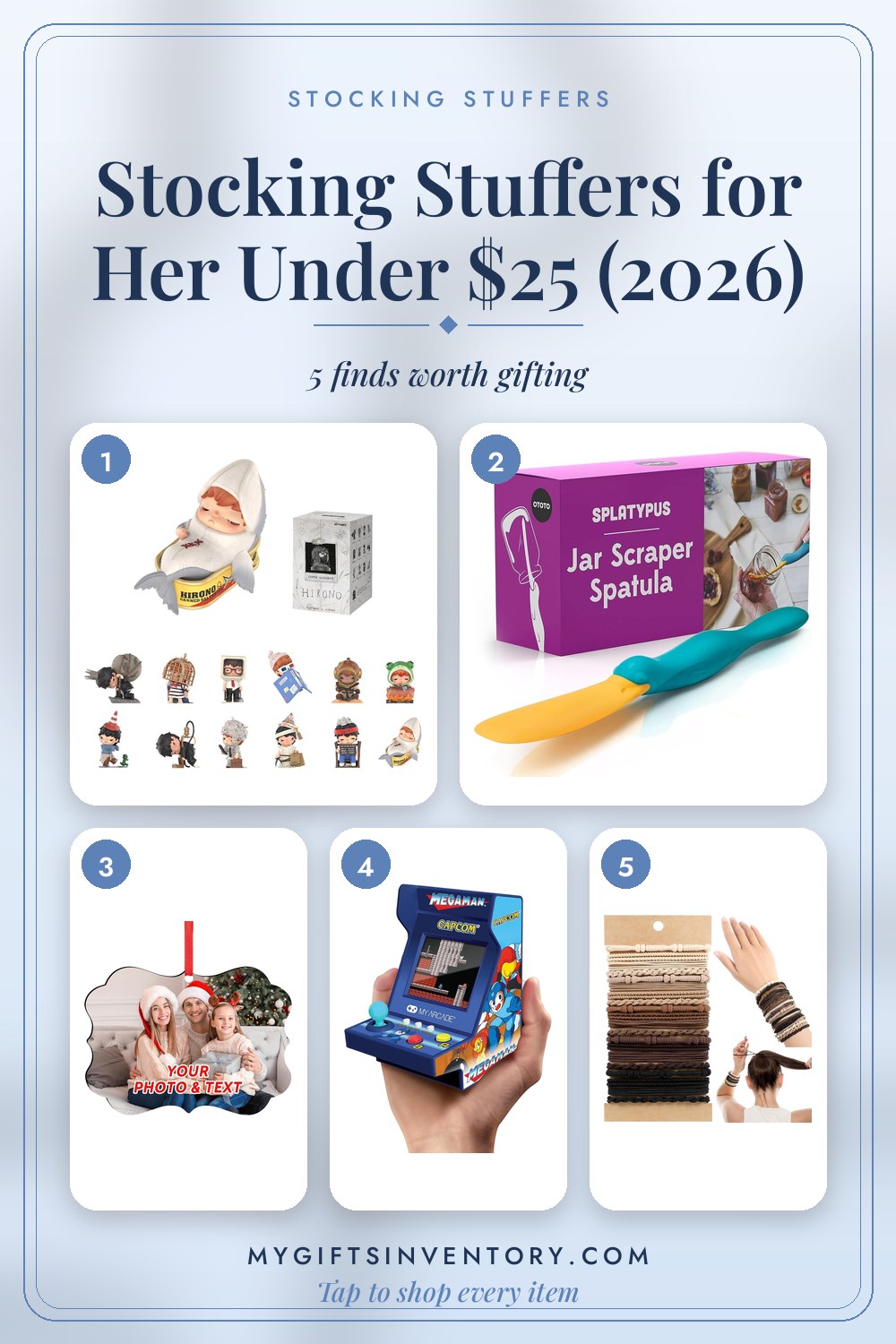
- Pick one or two people to spend a little on and give everyone else something small and warm, like a coffee gift paired with a handwritten note. A list like Coffee Lovers gifts under $50 is a good example of how a modest budget category can still feel personal rather than generic.
- Say no to an exchange entirely if you need to. "I'm skipping gifts this year but would love to see you" is a complete sentence, not an apology.
The Percentage-of-Income Approach
If ranges by relationship still feel too abstract, some people prefer anchoring their whole Christmas budget to a percentage of income instead. A common guideline is keeping total holiday spending, gifts, cards, and hosting combined, around 1% to 1.5% of annual household income. On a $60,000 household income, that puts total Christmas spending somewhere around $600 to $900 for everyone on the list combined, not per person. It's a rough guideline rather than a rule, but it's a useful gut check if your list has crept up over the years without you noticing.
When Couples or Families Disagree on Budget
One of the most common sources of holiday tension isn't the total amount, it's that two people in the same household have wildly different unspoken expectations. One partner grew up in a family that went big on Christmas, the other grew up with three small gifts under the tree and it was plenty. Neither approach is wrong, but they collide badly if nobody says anything until the gifts are already unwrapped.
The fix is a short, unglamorous conversation before shopping starts: a total number for the household, a rough number per child, and an agreement on whether extended family gets individual gifts or a group one this year. It takes fifteen minutes and saves a genuinely uncomfortable Christmas morning.
Gift Cards as a Budget-Friendly, Not Lazy, Option
There's a persistent idea that gift cards are a cop-out, but a gift card chosen with even a little thought, a coffee shop near someone's new apartment, a bookstore for the person who's always reading, reads as considerate, not thoughtless. They're also genuinely useful for staying inside a budget, since there's no risk of a purchase creeping over your limit once you're standing in a store. If you're on the receiving end of gift cards this season and want to make sure nothing goes unused, checking a Target gift card balance or similar before regifting or combining cards is worth the two minutes it takes.
Planning Ahead So December Isn't a Scramble
Most of the stress around Christmas spending isn't really about the dollar amount, it's about running out of time and panic-buying whatever's left on the shelf at full price. A rough timeline that actually works for most people:
- Early November: Set your total budget and rough per-person amounts. Make the list of everyone you're buying for so nobody gets forgotten and squeezed in later at double the price.
- Mid-November: Start buying for the easy, obvious gifts, the ones you already know exactly what to get. This is also when sales like early Black Friday deals can stretch your budget further.
- Early December: Tackle the harder-to-shop-for people while there's still stock and reasonable shipping windows.
- Mid-December: Wrapping, cards, and any remaining stragglers. Keep a small buffer, $30 to $50, set aside for the one person you inevitably forget.
Buying earlier isn't just about avoiding stress, it also tends to keep you inside your budget, since rushed last-minute purchases are almost always more expensive than ones made with a little lead time.
Gift Ideas to Go With This


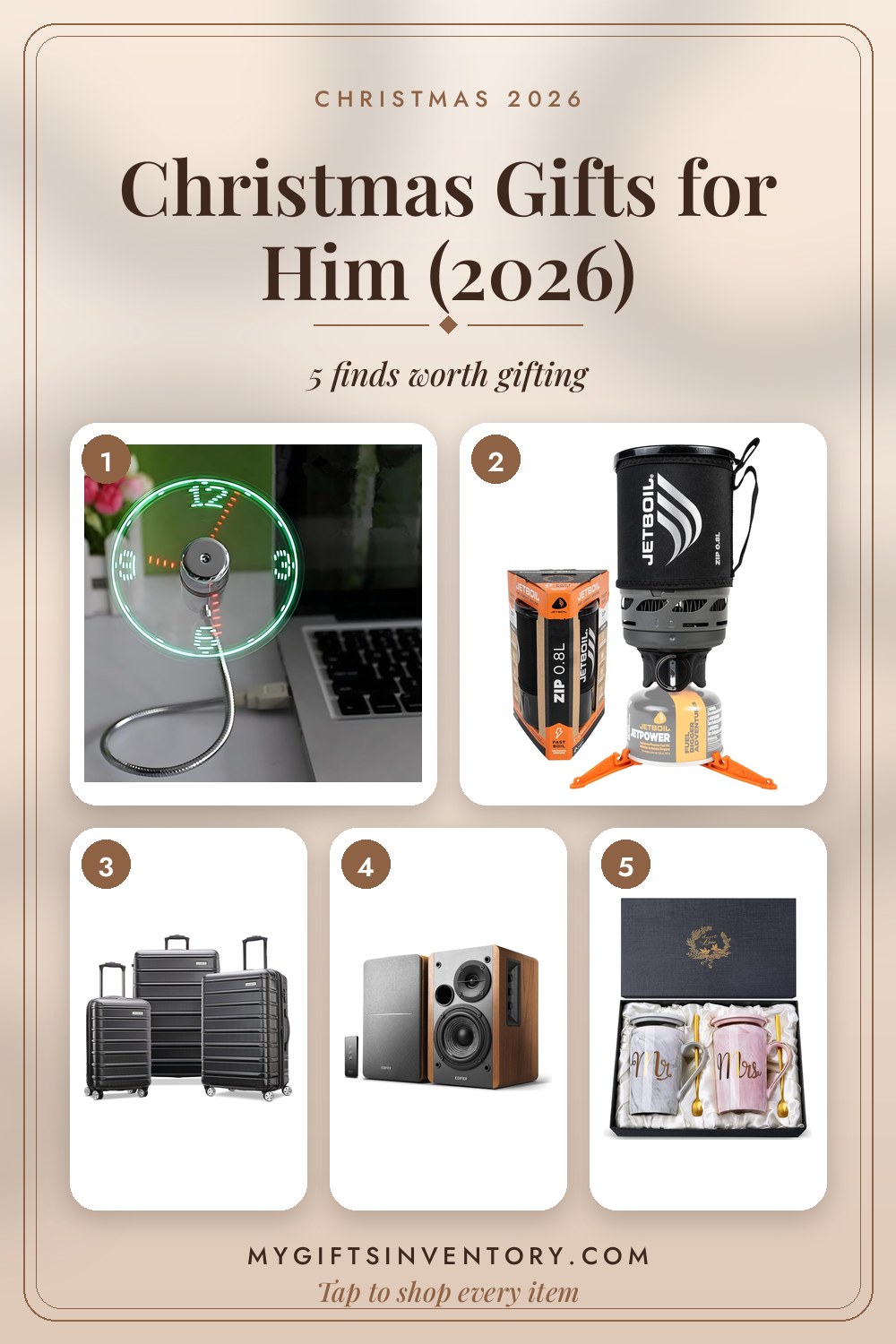
Want more ideas? Browse our full guide: 20 Best Gifts Under $100 (2026): Thoughtful Picks They'll Actually Use
Frequently Asked Questions
Is there an average amount people spend on Christmas gifts?
There's no single official average since spending varies enormously by household income and family size, but many households land somewhere in the $600 to $900 total range for all gifts combined when using a rough guideline of 1% to 1.5% of annual income. Your own number should reflect your actual budget, not a national average you saw somewhere.
How much should I spend on a Secret Santa gift?
Most Secret Santa exchanges set a cap between $15 and $30, and the group organizing the exchange should agree on the number ahead of time so nobody feels pressure to go higher. Sticking exactly to the agreed cap, rather than going a little over "just because," actually makes the exchange feel more fair to everyone involved.
Should I spend the same amount on every family member?
Not necessarily, and trying to keep every single gift exactly equal often causes more stress than it solves. It's more common to spend similar amounts within a relationship tier, all nieces and nephews get roughly the same, all siblings get roughly the same, while allowing natural variation between tiers like parents versus cousins.
Is it rude to give a gift card instead of a wrapped present?
No, a gift card is not considered rude, especially for coworkers, teachers, or anyone whose exact taste you're unsure of. A gift card chosen with a specific store in mind, paired with a short handwritten note explaining why you picked it, feels just as personal as a wrapped item.
What should I do if someone spends way more on me than I spent on them?
Say thank you graciously and don't rush to even the score with an awkward second gift. If it happens repeatedly with the same person, a quiet conversation before the next holiday season about agreeing on a similar budget range is more useful than trying to silently match their spending every year.
Looking for an Actual Gift Instead?


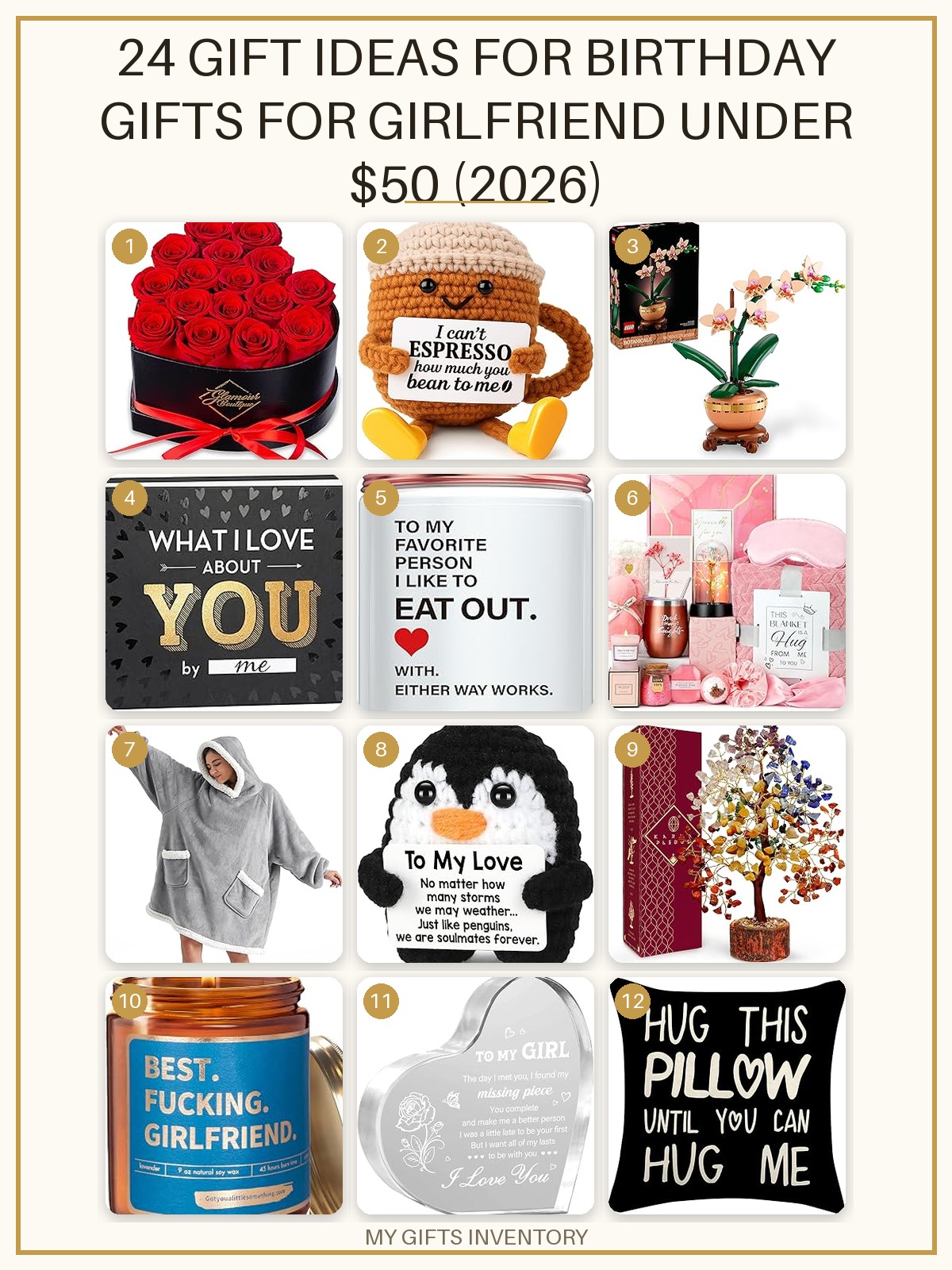

Shop Hand-Picked Gift Sets
Every item picked, priced and linked, ready to buy.


More Gift Advice