How Much to Spend on a Birthday Gift: A Real Budget Guide
A practical, relationship-by-relationship breakdown of how much to actually spend on a birthday gift, plus what to do when your budget doesn't match everyone else's.
As an Amazon Associate, My Gifts Inventory earns from qualifying purchases. We only recommend products we'd genuinely consider buying ourselves.
You're standing in a store, or scrolling a cart, trying to figure out if $25 makes you look cheap or $150 makes you look like you're trying too hard. This is one of those questions everyone quietly worries about but almost nobody talks through out loud, because it feels a little gauche to say "how much should I spend on you" directly to another human being. So we end up guessing, second-guessing, and sometimes overspending just to avoid the discomfort of getting it wrong.
Here's the good news: there are real, workable ranges for this, and they're based on relationship closeness and context, not some rigid universal rule. Let's break it down properly.
The Short Answer, Then the Nuance
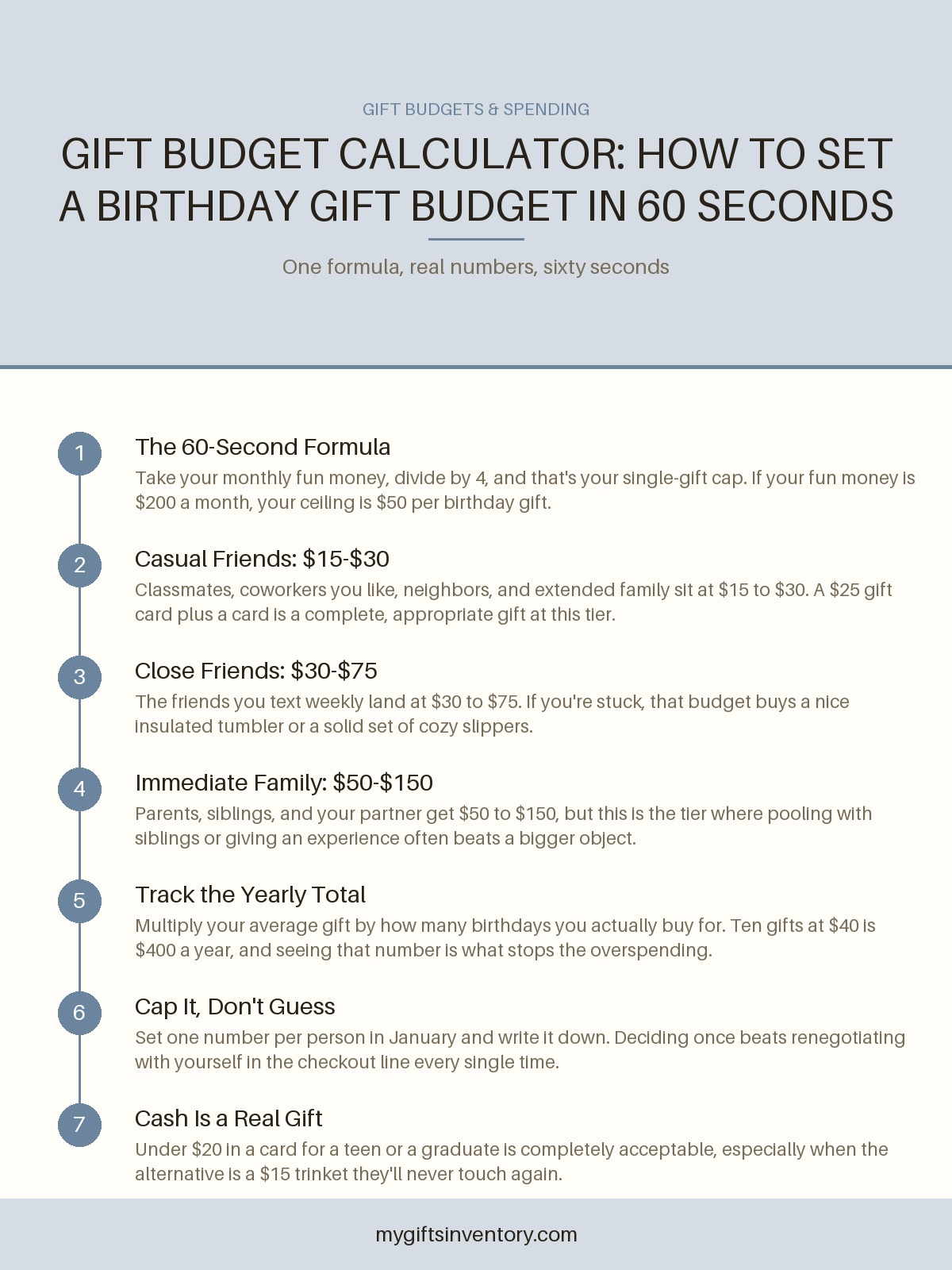
Most people spend somewhere between $20 and $75 on a birthday gift for someone they know well, and between $10 and $30 for coworkers, casual friends, and acquaintances. Immediate family and long-term partners often land higher, sometimes $75 to $200, depending on income and tradition. None of these numbers are laws. They're patterns that reflect what feels proportionate to most relationships, and proportion is really what this whole question is about.
Budget by Relationship
Close Friends and Siblings
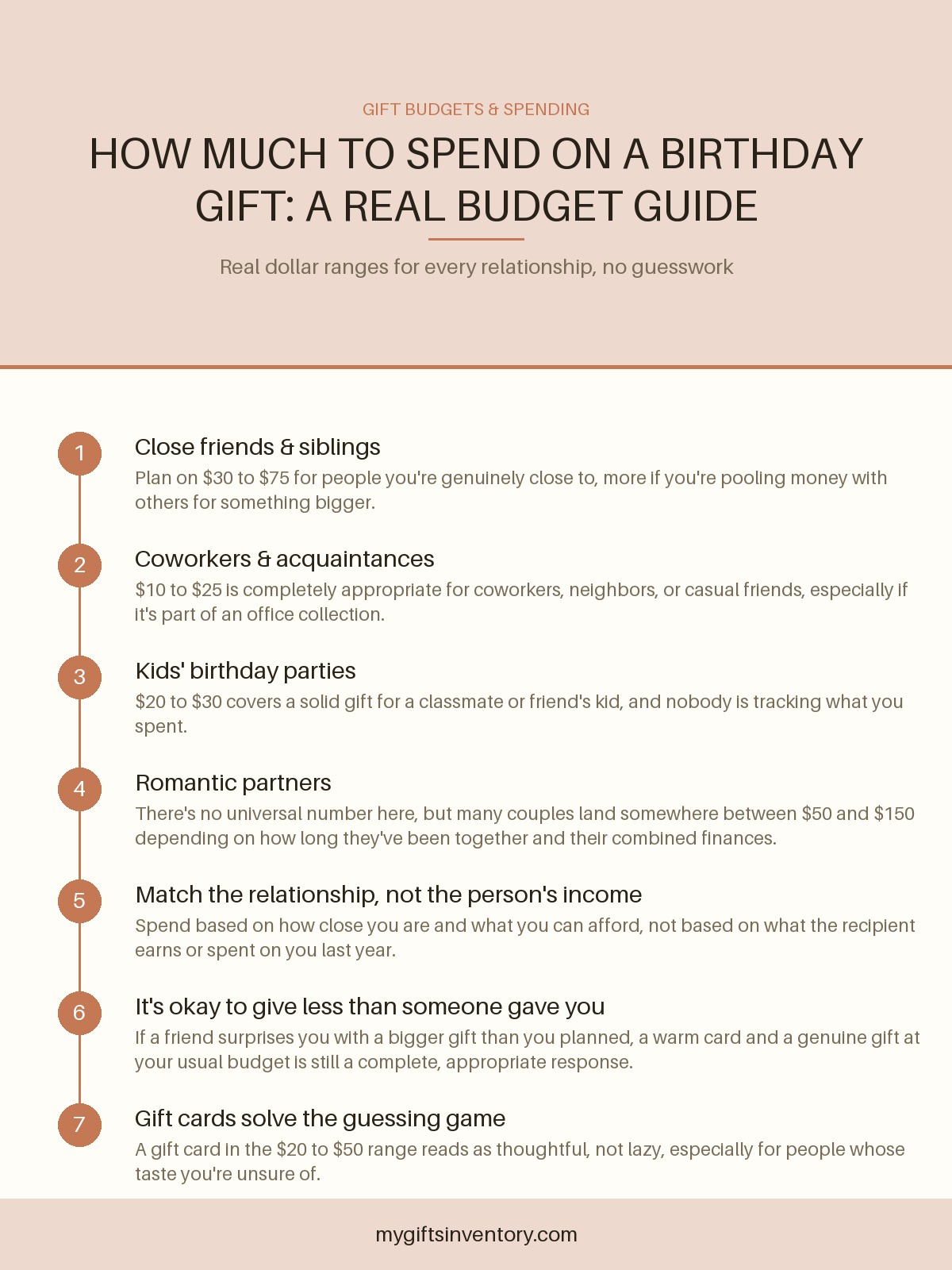
For people you talk to regularly, who know your life and you know theirs, $30 to $75 is a comfortable range. This is enough to get something with a bit of thought behind it rather than a last-minute grab. If you're part of a friend group chipping in together, the combined gift can go higher, sometimes $100 or more, because you're splitting the cost several ways. Group gifting is honestly one of the best moves for milestone birthdays like a 30th or 40th, since it lets everyone contribute a smaller amount toward something the person actually wanted rather than five separate smaller gifts.
Coworkers and Casual Friends
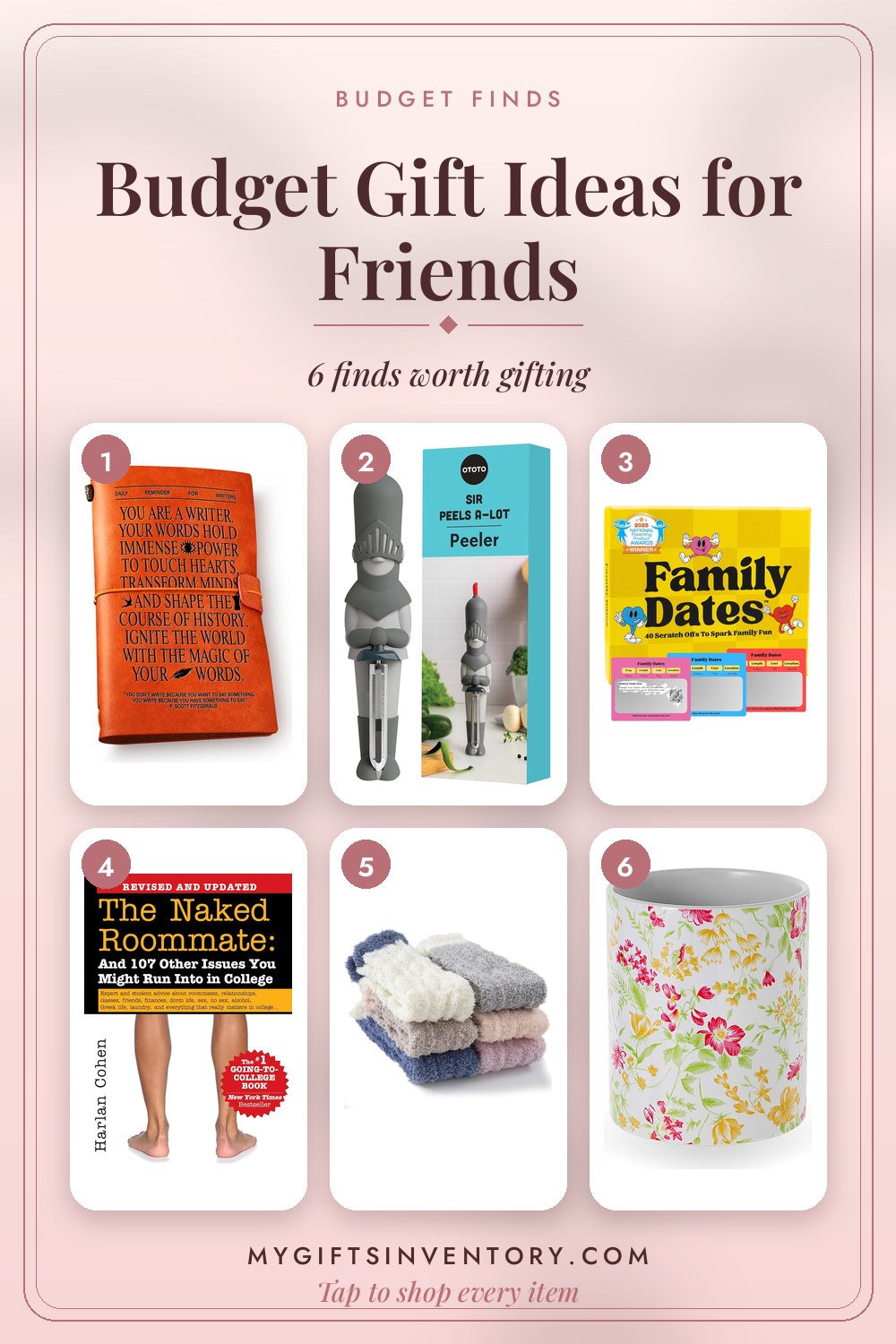
This is where a lot of the anxiety lives, because office culture varies wildly. A safe range is $10 to $25, especially if it's part of a group card or a shared office gift. If your workplace does a rotating "everyone chips in $5" system, that's plenty, and nobody expects more. For a work friend you're genuinely close with outside the office, you can lean toward the higher end or even treat them more like a close friend. If you're the one organizing an office gift, a browse through corporate gift ideas under $50 that won't feel like an obligation can help you land on something that reads as thoughtful without anyone feeling pressured to overspend.
Kids' Birthdays
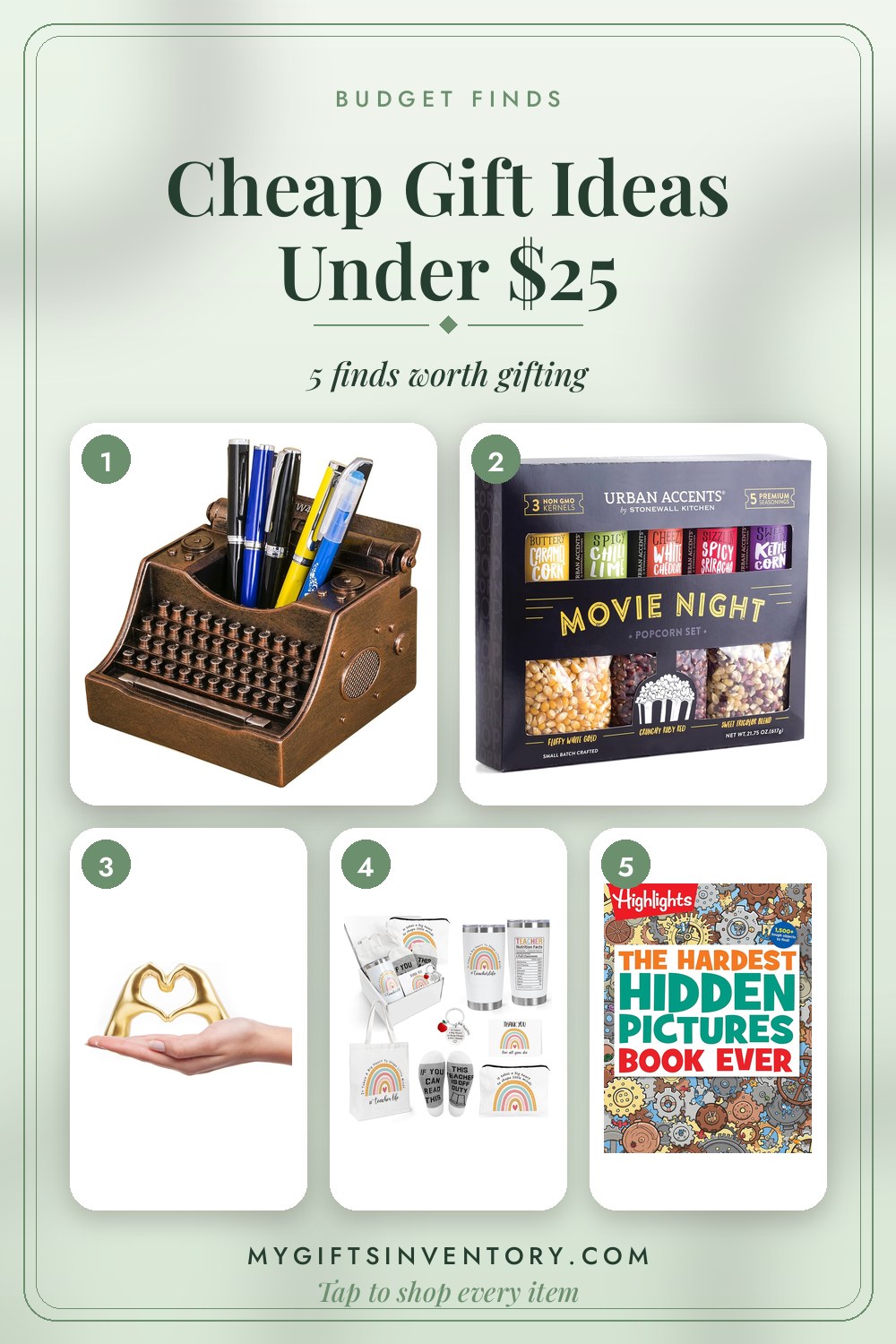
For a classmate's birthday party or a friend's kid, $20 to $30 is the norm, and it's rarely tracked or compared the way adult gifts sometimes are. Parents are generally just grateful you showed up and brought something the kid will enjoy. If you're shopping for a specific age group, something like gift ideas for 10 year olds under $30 can take the guesswork out of matching the budget to something age-appropriate. For nieces, nephews, or godchildren, you can go a bit higher, often $30 to $60, since the relationship carries more weight.
Romantic Partners
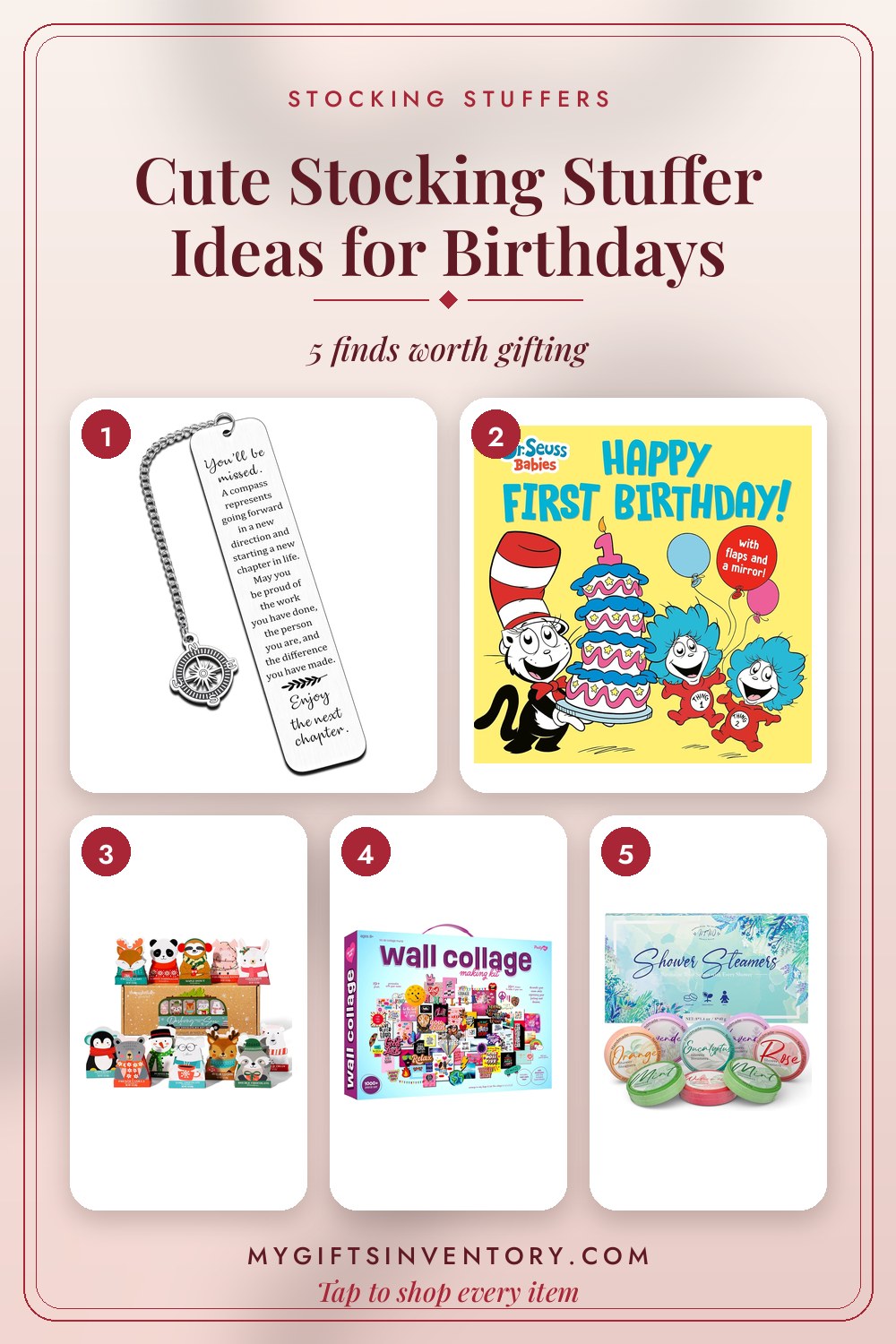
This is the category with the widest range because it depends entirely on how long you've been together, whether finances are combined, and what your relationship's gifting history looks like. Early in a relationship, $30 to $75 keeps things from feeling like a grand gesture too soon. Longer-term couples often spend $75 to $200, sometimes more for milestone birthdays. If you're stuck on what to get, birthday gifts for girlfriend under $50 and unique birthday gifts for him under $50 both prove you can hit a meaningful, personal gift without needing a three-figure budget to show you care.
Parents, Grandparents, and Extended Family
Family gifts tend to follow family tradition more than any outside rule. Some families do modest $25 to $50 gifts and keep the real celebration in the meal or the get-together. Others go bigger, especially for milestone birthdays like a 50th, 60th, or 70th, where $100 to $250 isn't unusual, sometimes pooled among siblings. If your parent or in-law seems to have everything already, it's worth looking at something experience-based or personal rather than one more object, and a guide like gift ideas for mom who has everything is built exactly for that situation.
What Actually Determines the Right Number
Forget trying to reverse-engineer what the recipient makes or what they'd spend on you. The two things that actually matter are how close you are and what you can genuinely afford without resentment. A $20 gift given warmly, on time, with a thoughtful card beats a $100 gift bought resentfully or last minute every single time. People remember how a gift felt, not its price tag, and most recipients have no idea and no real interest in what you spent unless the gift is wildly out of step with the relationship in either direction.
When Your Budget Doesn't Match Theirs
This is the scenario that causes the most quiet stress: your friend gives you a beautifully wrapped $80 gift and you'd budgeted $30. It happens constantly, and it is not a crisis. Gift-giving isn't a transaction that has to balance to zero. If someone spends more on you than you spent on them, the right response is gratitude, not panic or a scramble to even the score with a belated second gift. If it happens repeatedly with the same person, a gentle, honest conversation ("hey, let's agree on a smaller budget this year, I want us both to feel comfortable") is a completely normal thing adults say to each other, and most people are relieved when someone brings it up first.
Gift Cards Are a Legitimate Answer, Not a Cop-Out
If you're unsure of someone's taste or you're shopping under time pressure, a gift card in the $20 to $50 range is a perfectly respectable choice, not a lazy one. The trick is picking a brand that actually fits the person, a coffee habit, a favorite retailer, a streaming or gaming account. If you're on the receiving end and want to make sure a card still has funds before you use it, checking something like an Amazon gift card balance or a Target gift card balance takes thirty seconds and saves an awkward moment at checkout.
A Few Anchors to Keep in Mind
- Acquaintance or distant coworker: $10 to $20
- Coworker you're friendly with or office group gift: $15 to $30
- Friend or casual family member: $25 to $50
- Close friend or sibling: $30 to $75
- Parent, partner, or milestone birthday: $75 to $200+, often pooled with others
- Child's birthday party (classmate or friend's kid): $20 to $30
These are starting points, not ceilings or floors. Adjust for your own financial situation first. Nobody benefits from you going into debt over a birthday gift, and a genuinely thoughtful $20 gift will always land better than a stressed-out $150 one bought because you felt cornered by an unspoken expectation.
Gift Ideas to Go With This


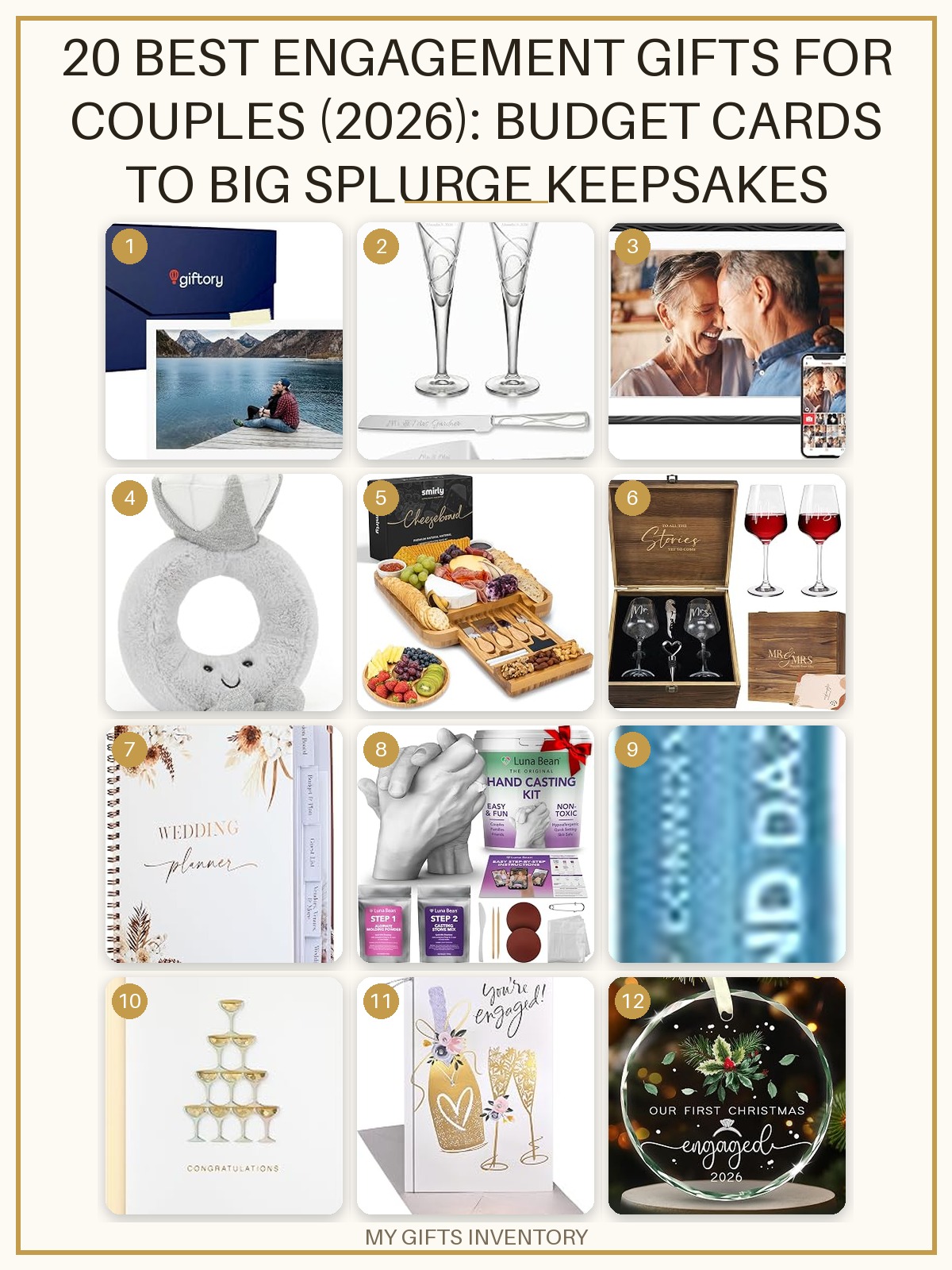
Want more ideas? Browse our full guide: 20 Best Gifts Under $100 (2026): Thoughtful Picks They'll Actually Use
Frequently Asked Questions
Is $20 too little for a birthday gift?
No, $20 is a completely normal amount for a coworker, casual friend, or a kid's birthday party gift. It only starts to feel light if you're very close to the person and typically spend more, in which case the thought behind the gift matters more than adjusting the number.
How much should I spend on my boyfriend or girlfriend's birthday?
Most couples spend somewhere between $30 and $150 depending on how long they've been together and whether finances are shared. Early in a relationship, staying under $75 avoids the gift feeling like a bigger statement than the relationship warrants, while longer-term couples often go higher for milestone birthdays.
What if I can't afford to match what a friend spent on me?
Give what you can genuinely afford and let the gesture speak for itself. Most people aren't tracking a running tally, and a sincere, well-chosen gift at a smaller budget is never a problem worth apologizing for.
Is it rude to give just a gift card for a birthday?
Not at all, a gift card in the $20 to $50 range is a practical and appropriate gift, especially when you're unsure of someone's exact taste. Choosing a card tied to something the person actually uses, like a favorite coffee shop or store, makes it feel more personal than a generic amount.
Should I spend more for a milestone birthday like a 30th or 50th?
Yes, milestone birthdays are the one occasion where going above your usual budget is widely expected and appreciated. Many people handle this by joining a group gift with friends or family so the cost per person stays reasonable while the combined gift feels significant.
Looking for an Actual Gift Instead?
Shop Hand-Picked Gift Sets
Every item picked, priced and linked, ready to buy.

More Gift Advice