Easy Gift Wrapping Ideas: No-Fuss Ways to Make Any Gift Look Great
Simple, low-stress wrapping techniques and alternatives for people who don't own a paper cutter or a talent for corners.

As an Amazon Associate, My Gifts Inventory earns from qualifying purchases. We only recommend products we'd genuinely consider buying ourselves.
You've got the gift. Maybe you even got it early for once. And now you're standing in front of a roll of paper that's either too small, too wrinkled, or currently being used as packing material, wondering why something so simple always turns into a fifteen-minute wrestling match with tape. The good news is that wrapping doesn't require origami skills or a perfectly cut rectangle of paper. Most of the wrapping that actually looks good is built on a handful of shortcuts, not precision.
Start With What You Already Own
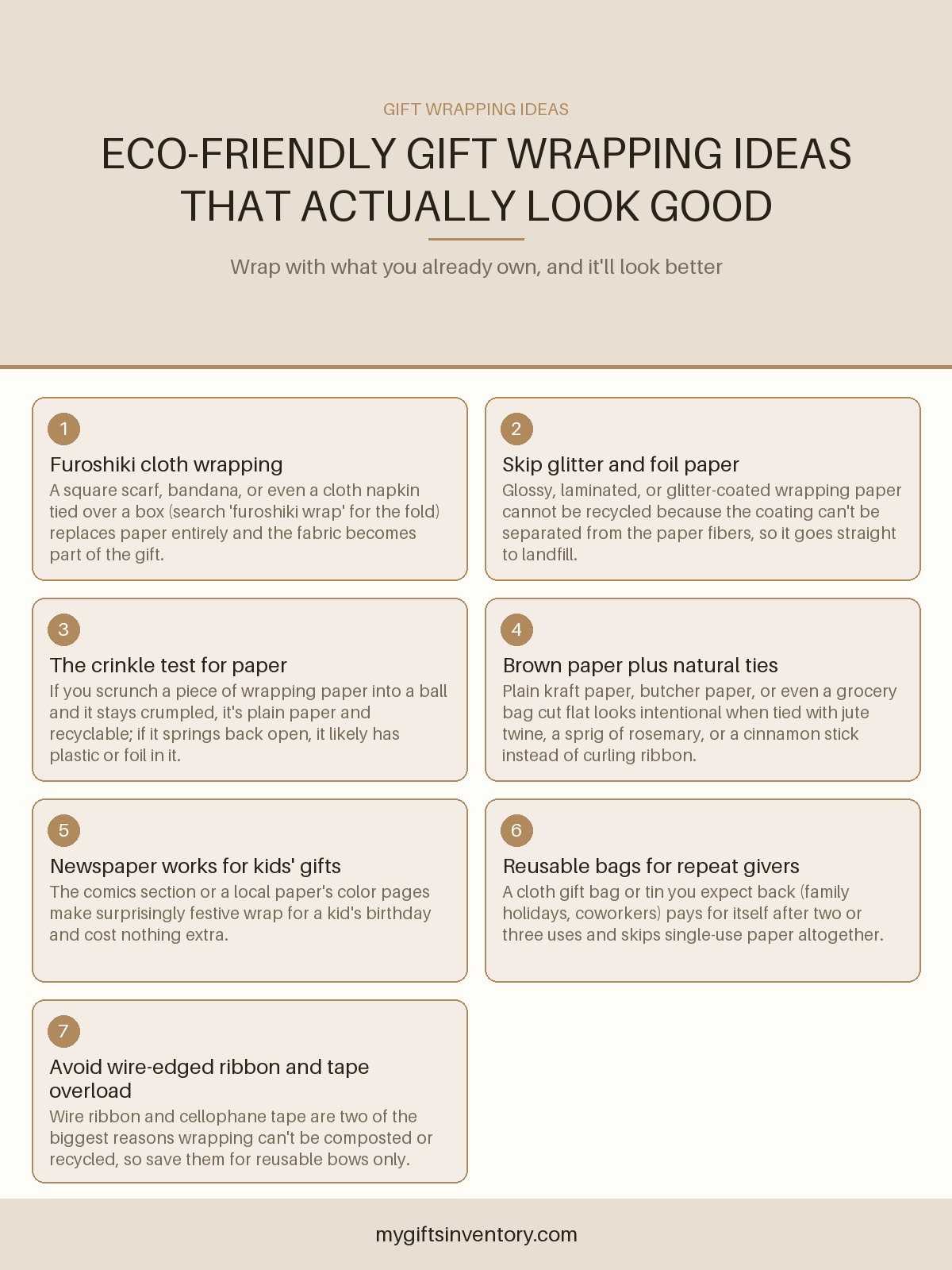
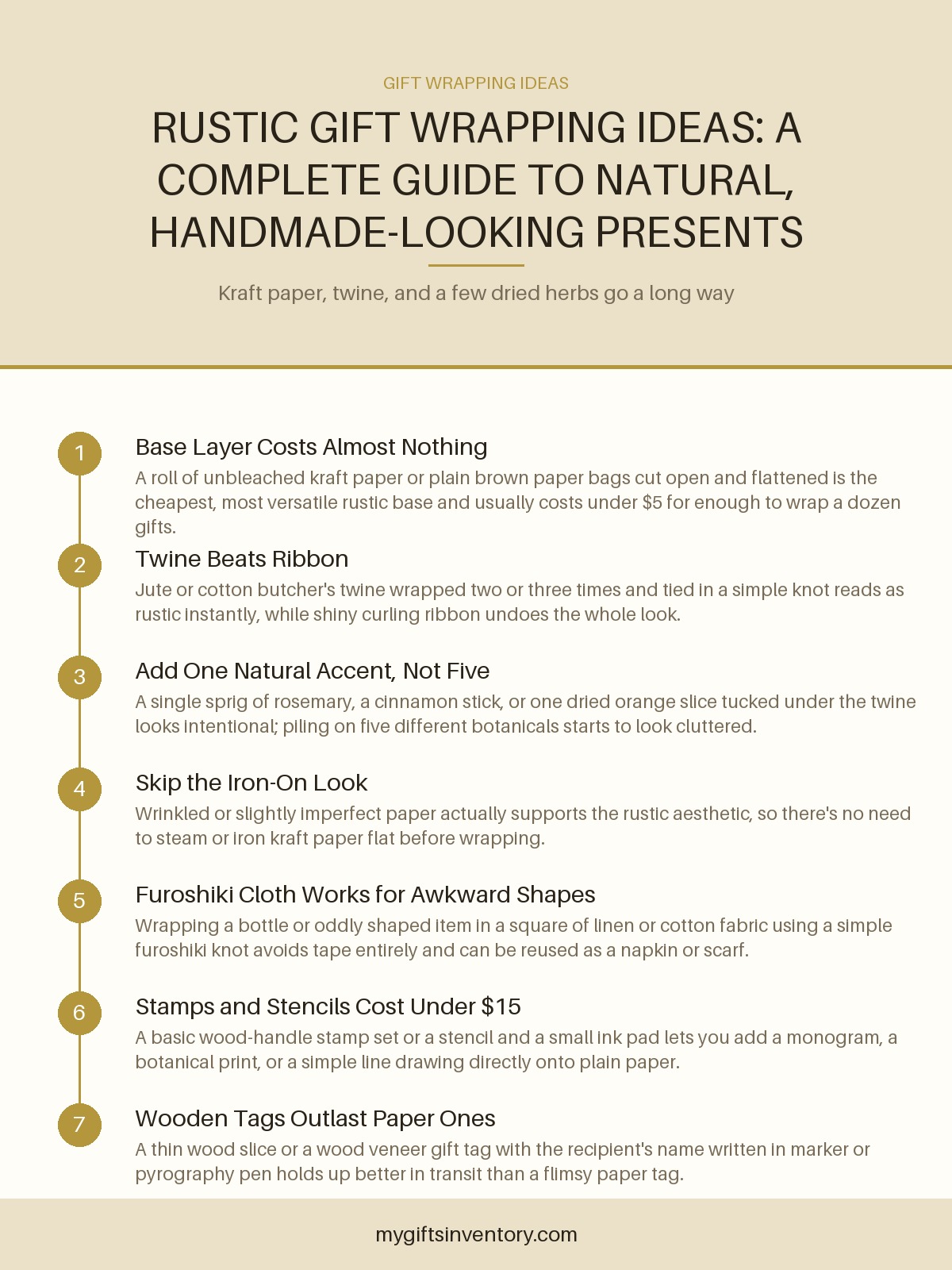
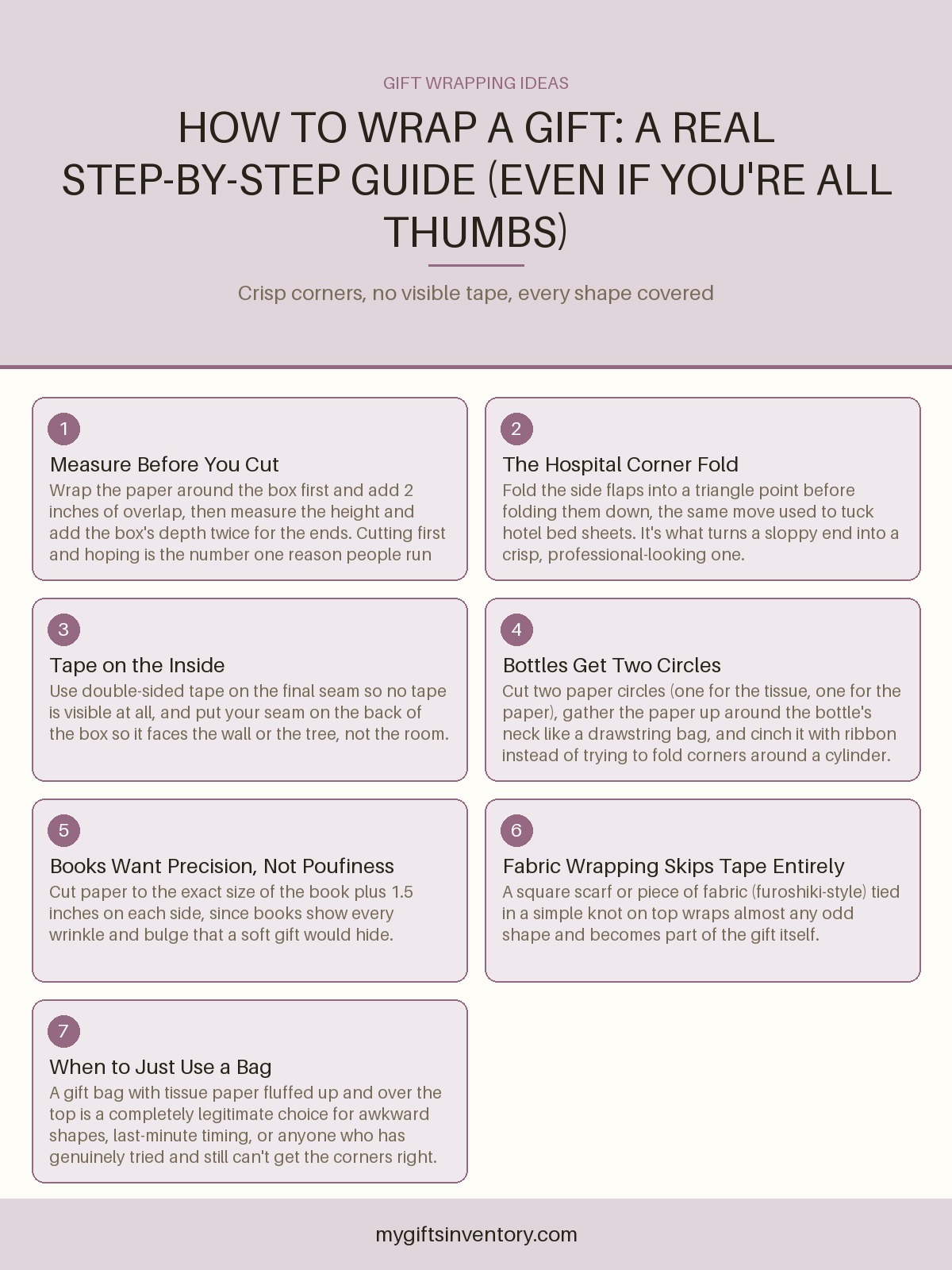
Before buying anything, look around the house. A kitchen towel, a scarf, an old map, a paper grocery bag, even a page from a magazine can all become wrapping paper with the right fold. This isn't just a money-saving trick, it genuinely tends to look more personal than a roll of paper printed with the same snowflakes everyone else is using. Brown kraft paper from a shipping box, flattened out and reused, wraps just as well as anything from a store and looks intentional with a bit of ribbon or twine on top.
If you're already assembling a gift basket, this matters even more, because baskets have irregular shapes that fight standard paper. Cellophane gathered at the top and cinched with a ribbon is far easier than trying to box a basket, and it lets the contents show through, which is part of the appeal of a basket gift in the first place. If you're building one from scratch, our guide to gift baskets under $50 has ideas for what actually looks good grouped together before you even get to the wrapping stage.
The Bag-and-Tissue Method (Still the Easiest Option That Exists)
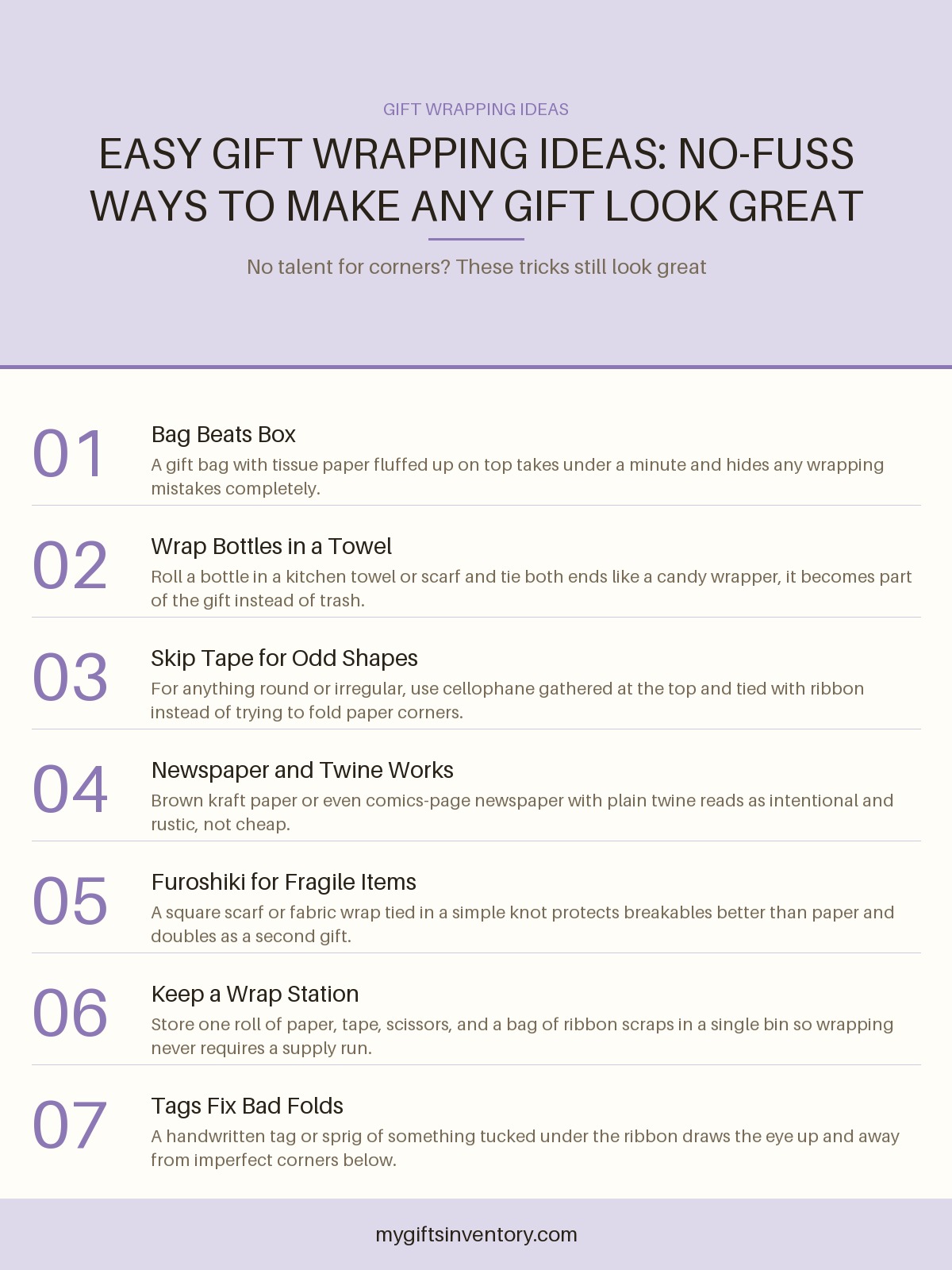
If you're wrapping-averse, a gift bag with tissue paper is not cheating, it's just efficient. Fold two or three sheets of tissue paper into loose points, fan them slightly, and tuck them into the bag so the tips stick up above the edge. That's it. It takes under a minute per gift and it hides any awkwardly shaped item completely, which matters a lot if you're wrapping something like a mug, a small appliance, or a stack of books that don't have clean edges. Reusable fabric gift bags with a drawstring are an even better version of this if you're wrapping for the same people every year, since they can hand the bag back to you or reuse it themselves.
Wrapping Things That Aren't Boxes
Bottles
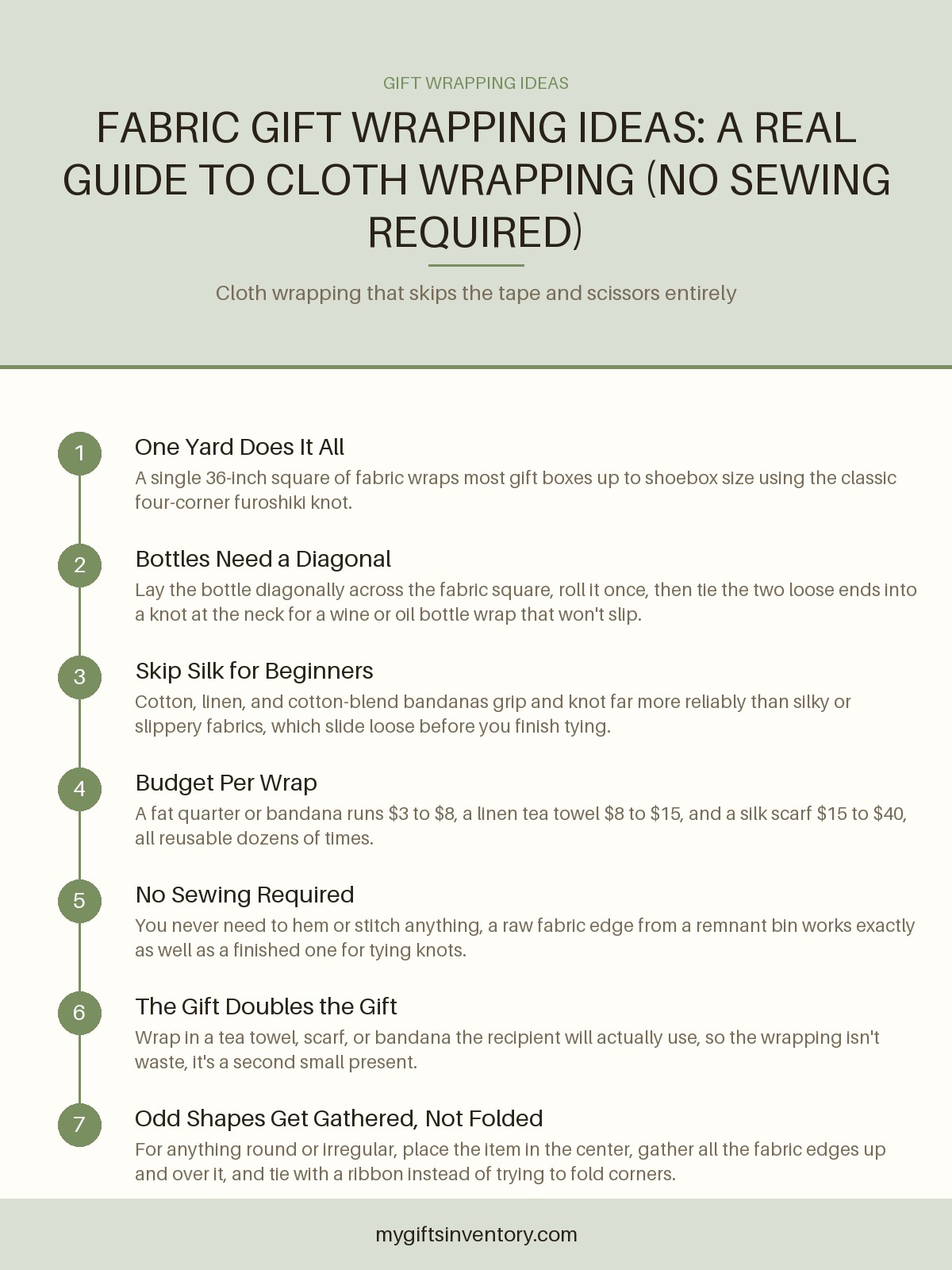
Wine, olive oil, hot sauce, whatever the bottle-shaped gift happens to be, the easiest approach is to skip paper folding entirely. Lay the bottle diagonally across a square of paper or fabric, roll it up like a burrito, and twist the ends closed like a piece of candy, tying each end with ribbon or string. It takes about 30 seconds once you've done it twice and it looks far more finished than trying to box a cylinder.
Books and Flat Items
These are actually the easiest shape to wrap well, since the challenge is really just folding two ends neatly. If corners intimidate you, skip the fold entirely and use a paper band instead: wrap a strip of paper around the middle of the book like a belt, tape it in back, and slide a bookmark or a sprig of dried lavender under the band. It reads as deliberate and takes a fraction of the time of full coverage.
Awkward or Bulky Items
Things like a lamp, a stack of dorm supplies, or an oddly shaped decor piece rarely wrap cleanly no matter how much paper you use. In these cases, a large box (even a repurposed shipping box) with the item nestled inside and covered loosely in tissue paper, then the whole box wrapped, solves more problems than trying to shape paper around the object itself. If you're sending off a batch of dorm gifts that vary wildly in size, a single wrapped box or a decorated tote bag holding everything is usually easier than wrapping five separate small items.
Fabric Wrapping (Furoshiki), Simplified
The Japanese technique of wrapping gifts in fabric, known as furoshiki, sounds fancier than it actually is. At its simplest, it's just a square of fabric (a scarf, a bandana, a yard of leftover cloth) folded around an item and tied in a single knot on top. It's especially good for anything fragile or awkwardly shaped, since fabric molds around the object instead of fighting it. It also solves the "what if I run out of paper" problem permanently, because the wrap itself becomes a second small gift. This works particularly well for delicate items like ceramics or glassware, so it's worth keeping in mind if you're wrapping something from a home decor gift list, where breakage during wrapping (or unwrapping) is a real risk with stiff paper and tape.
Building a Simple Wrap Station So You're Never Scrambling
Most wrapping stress isn't about skill, it's about not having supplies on hand when you need them. A small bin or drawer with one roll of neutral paper (brown kraft or plain white holds up for every occasion), a roll of tape, scissors, and a bag of ribbon and twine scraps solves 90% of last-minute wrapping panics. Save gift bags you receive rather than tossing them, they're one of the most reused items in a household once you start keeping them. If you tend to give a lot of gift cards, keep a few blank cards or small envelopes in the same bin, since a gift card handed over bare always reads as an afterthought even when the amount is generous.
When Ribbon and Tags Do the Heavy Lifting
If your folds aren't perfect, the fix usually isn't more tape, it's distraction. A wide ribbon tied in a simple bow, a sprig of greenery, or a handwritten tag draws the eye toward the top of the gift and away from any wrinkles or uneven edges below. Curling ribbon with scissors takes one pass and instantly looks more finished. For corporate or office gifts where the presentation needs to feel a little more polished without being fussy, a solid-color paper with a single ribbon color and a printed or handwritten tag reads as put-together without requiring elaborate folding. Our corporate gift ideas guide covers gifts that photograph and unwrap well for exactly this kind of situation.
Wrapping for Kids' Gifts
Kids tear into wrapping paper without much regard for how it was folded, so this is the lowest-stakes wrapping you'll ever do. Bright tissue paper stuffed into a bag, comic-strip newspaper, or even a paper grocery bag decorated with stickers or crayon all work fine. If you're wrapping something for a kid who loves a specific theme, like a young gamer or an anime fan, letting the wrapping nod to that (character-print tissue paper, a themed sticker as a seal) adds a small moment of delight before they even get to what's inside a gift like the ones in our anime gifts for teen boys list.
Last-Minute and No-Paper Options
If it's the night before and you have zero wrapping paper, a few things work in a pinch: a clean pillowcase tied at the top with ribbon, a mason jar or reusable tote for smaller items, or simply a decorative box you already have lying around with a bow taped on. None of these require a trip to the store, and all of them look more thoughtful than an unwrapped gift handed over in its original shipping box.
Frequently Asked Questions
What's the easiest way to wrap a gift without wrapping paper?
A gift bag with tissue paper is the fastest option, taking under a minute and hiding any awkward shapes underneath. Fabric wrapping (a scarf or towel tied in a simple knot) is a close second and works especially well for fragile or oddly shaped items.
How do you wrap a gift that isn't a square or rectangle?
For round or irregular items, skip paper folding and use cellophane or fabric gathered at the top and tied with ribbon. This method works for baskets, bottles, and bulky items that fight standard wrapping paper.
How can I make wrapping look nicer without more effort?
Add a ribbon, a handwritten tag, or a sprig of greenery to draw attention to the top of the gift, since this distracts from any uneven folds below. A single ribbon color paired with plain paper also reads as more polished than patterned paper with mismatched trim.
What's a good reusable alternative to wrapping paper?
Fabric wraps, known as furoshiki, and cloth gift bags with drawstrings can be reused indefinitely and reduce the amount of paper waste from gift giving. They work particularly well for gifts given to the same people year after year, like family holiday gifts.
What should I keep on hand so I'm never scrambling to wrap something?
Keep one roll of neutral paper, tape, scissors, and a small bag of ribbon or twine scraps together in a single bin or drawer. Saving gift bags you receive rather than throwing them away also solves most last-minute wrapping needs without a store run.
Looking for an Actual Gift Instead?
Gift Sets We Love Right Now
Every item picked, priced and linked, ready to buy.
More Gift Advice