Gift Wrapping for Beginners: A Stress-Free Guide to Paper, Bows & Neat Corners
Everything you need to wrap a gift that looks like you knew what you were doing, from choosing paper and hiding raw edges to tying a bow that stays put.
As an Amazon Associate, My Gifts Inventory earns from qualifying purchases. We only recommend products we'd genuinely consider buying ourselves.
You bought the gift, you have the paper, and now you are staring at a roll of wrapping paper wondering why your corners always look like a burst pillow. Most wrapping advice assumes you already know the basics, which is exactly the problem. Here is the version we wish someone had handed us the first time, including the parts everyone else skips.
What you actually need to buy (and what you can skip)
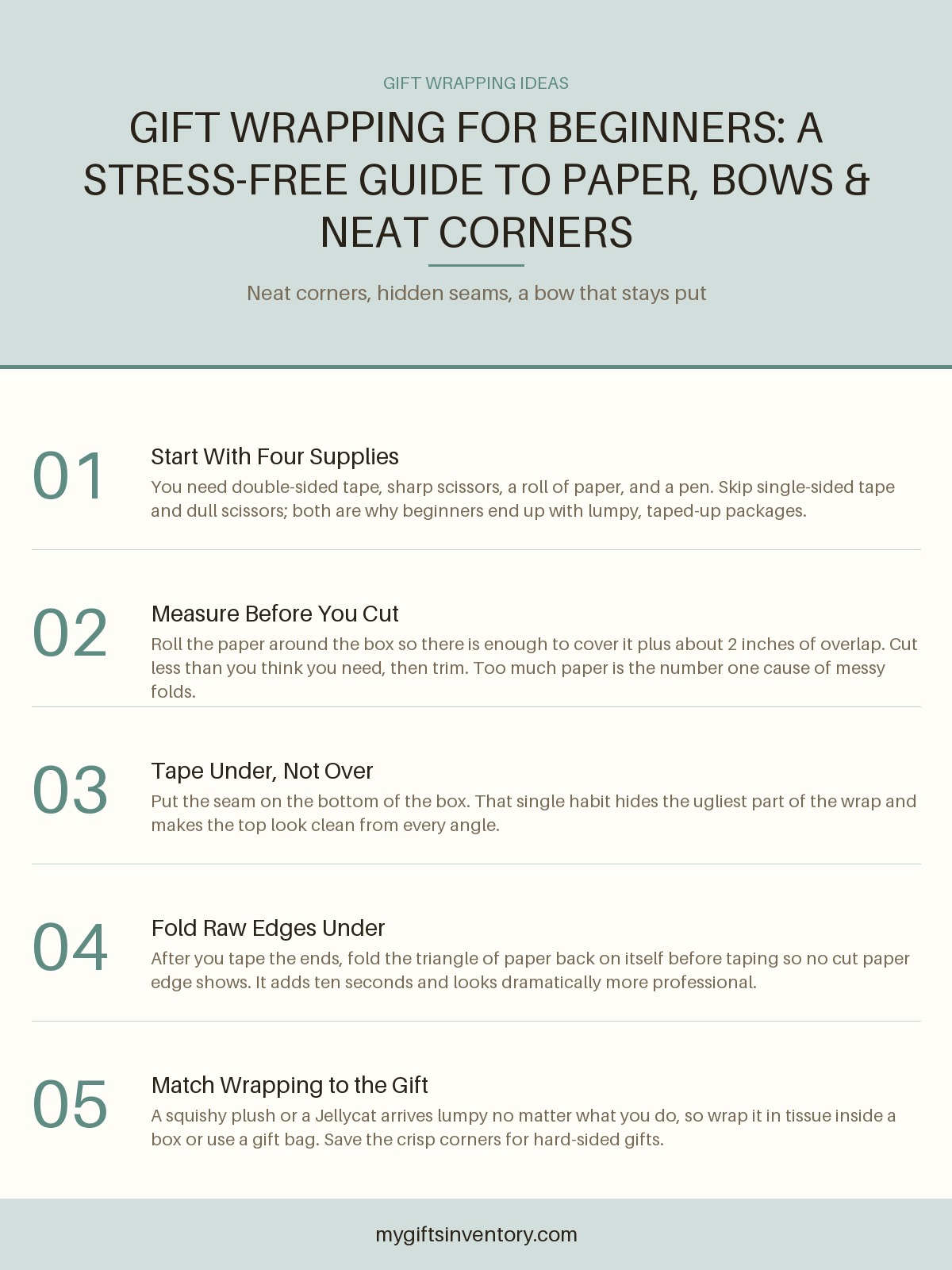
Beginners tend to overbuy. You really only need four things, and if you get these right the rest is technique:
- Double-sided tape. Not the standard single-sided kind. Double-sided tape disappears into the fold, so you do not end up with a visible grid of glossy tape strips holding the paper together. This one supply choice matters more than anything else you buy.
- Sharp scissors. Dull scissors chew the paper edge and make a straight cut look ragged. If you can only afford one upgrade, replace the scissors.
- Paper with a slight thickness. Cheap thin paper wrinkles the instant you fold it and tears at the corners. Matte paper is far more forgiving than the glossy kind for a beginner because you cannot see every fingerprint and crease.
- A pen for tags, and ribbon if you want it. Ribbon is optional. A clean wrap with no bow looks better than a sloppy wrap with an elaborate one.
Nice-to-haves once you get comfortable: a tape dispenser with a cutter, a gift wrap storage bag to keep rolls from unfurling, and a roll of neutral kraft paper you can use year round for birthdays and housewarmings.
The basic box wrap, step by step
1. Measure before you cut
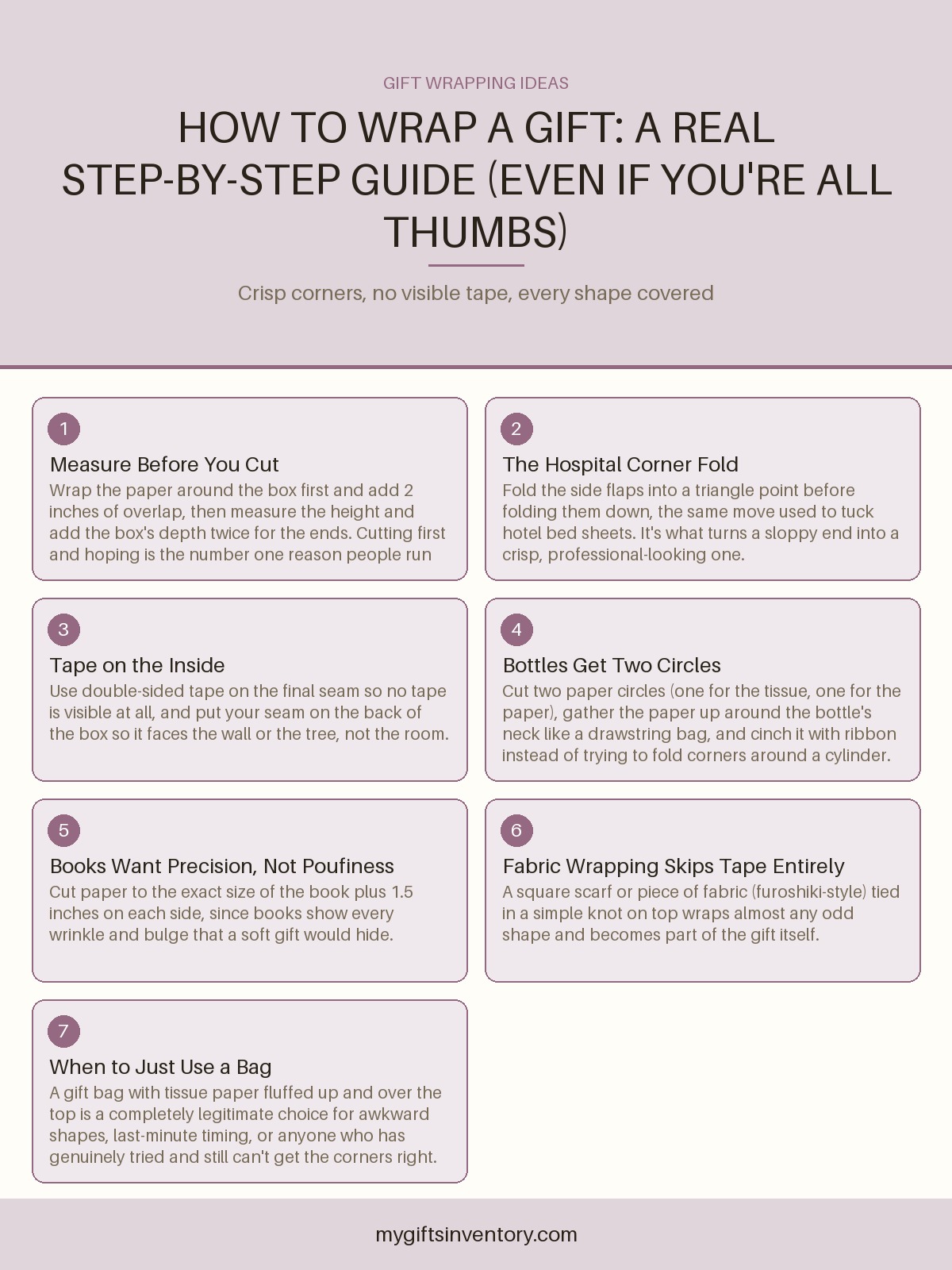
Roll the paper around the box and check that it covers the whole thing with about 2 inches of overlap where the edges meet. Then add roughly an inch and a half on the top and bottom for the end folds. Cut less than you think you need. Too much paper is the single biggest cause of messy wrapping, because extra bulk has nowhere to go except into wrinkles.
2. Center the box and tape the long seam
Place the box face down on the paper, centered. Bring one side of the paper up and over, then the other side, overlapping the first by those 2 inches. Tape along the seam with double-sided tape, then flip the whole thing over. If you tape the seam on the bottom of the box, that ugly overlap never shows. This is the trick that separates a wrap that looks intentional from one that looks improvised.
3. Fold the ends like a present, not a burrito
At each open end, push the paper flat against the sides of the box so you get two triangular flaps at the top and bottom. Fold the top flap down and the bottom flap up, crease them, then fold the whole thing flat against the box and tape it. If the triangles look too big, trim them so they reach about to the middle of the box rather than the full width.
4. Tuck the raw edge under
Here is the step most tutorials skip. After taping that end flap, take the cut edge of the paper and fold it back on itself by about half an inch before pressing it down. That fold hides the raw cut edge, and it is what makes a wrap read as "professional" instead of "done in the car."
How to handle the gifts that refuse to behave
Not everything comes in a nice rectangle, and forcing a soft or awkward item into a box wrap is why so many people give up on wrapping.
Soft and squishy gifts
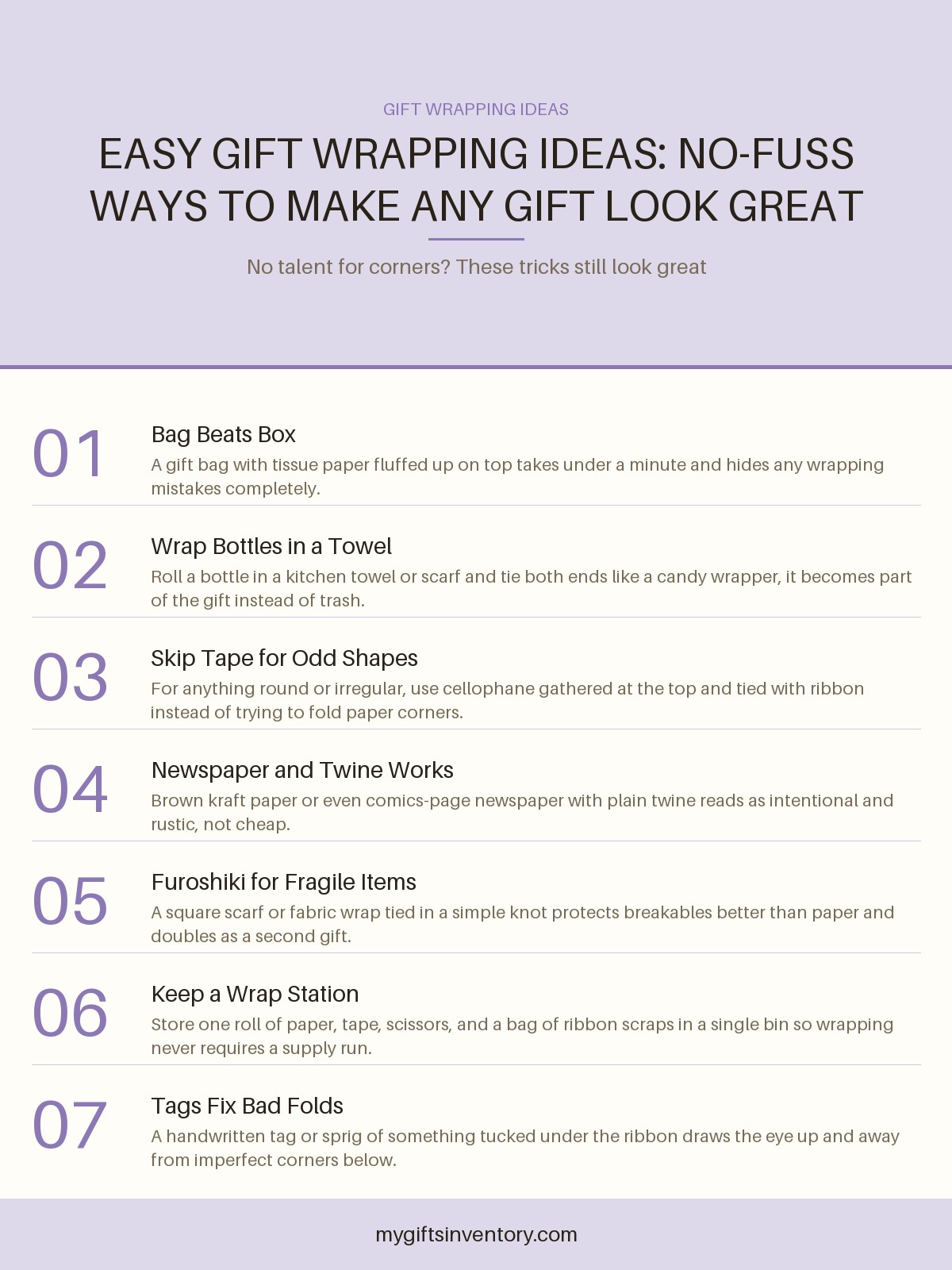
Plush toys, blankets, slippers, and anything plush shaped will never give you crisp corners because there is no rigid edge to fold against. Do not fight it. Put the item in a tissue-lined box first, or use a gift bag with tissue paper on top. If you are wrapping something like a Jellycat bunny or a Squishmallow, a bag honestly looks better than any paper wrap you could manage. If soft gifts are most of what you are buying this year, our roundup of plush and squishy gifts for kids is worth a look before you commit to paper.
Cylinders, bottles, and tubes
Lay the item on its side and roll it in paper, taping the long seam, then twist or fold the ends and tie them with ribbon rather than taping. Tying the ends with a ribbon holds the shape and looks deliberate, where tape just looks pinched.
Gift cards and tiny items
A gift card wrapped alone is a sad little envelope. Either put it in a small rigid box with tissue so it has weight and presence, or tuck it in a mug, a pair of socks, or a candle so the reveal is part of the fun. If you are giving a gift card because you genuinely do not know what to buy, that is a fine decision, and you can read our full list of Giant Eagle gift card brands and fees to see what is actually available near you and what the activation fees look like.
Making it look good without spending more
Wrapping does not need to be expensive, and some of the best-looking gifts use almost nothing:
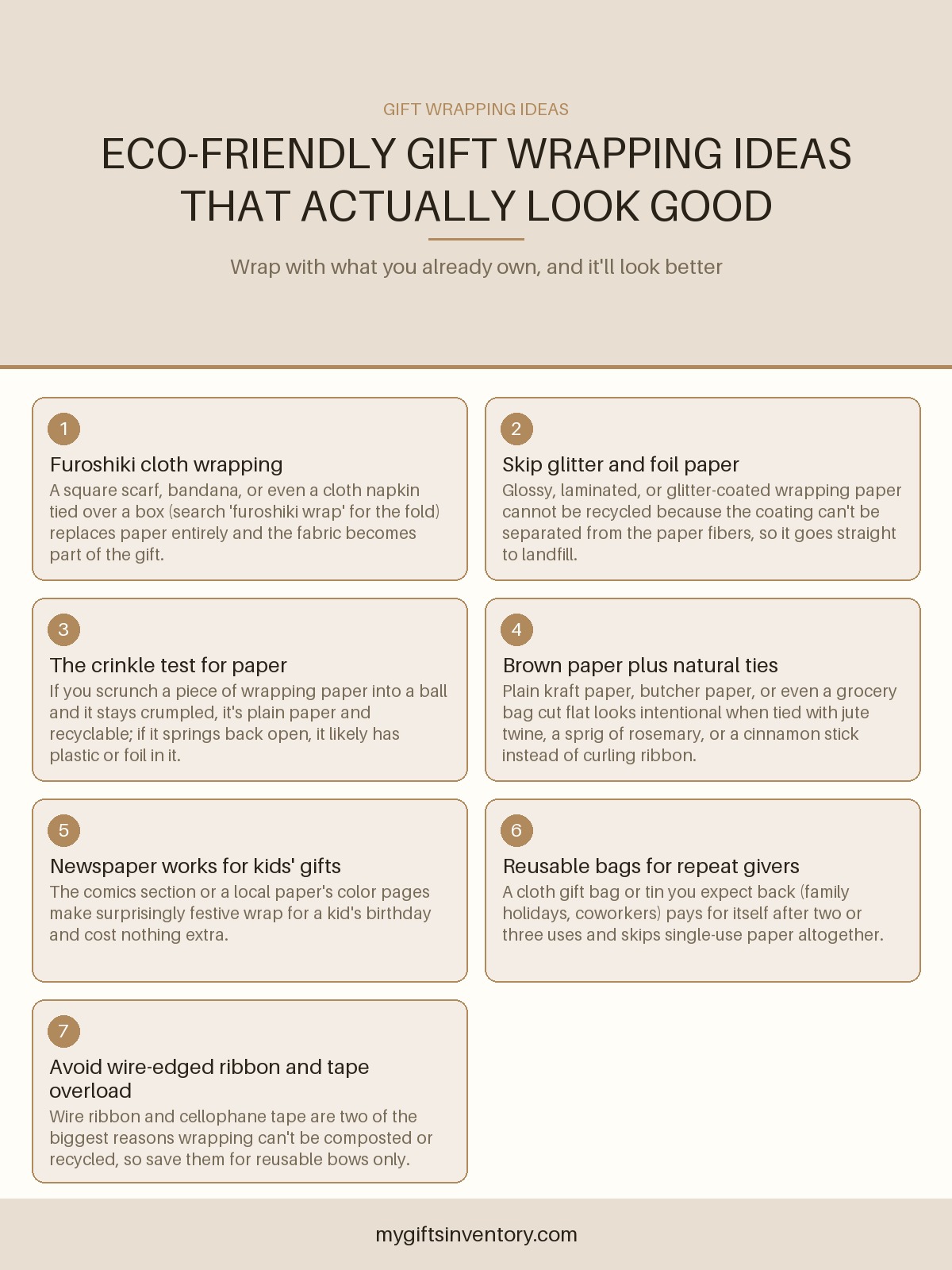
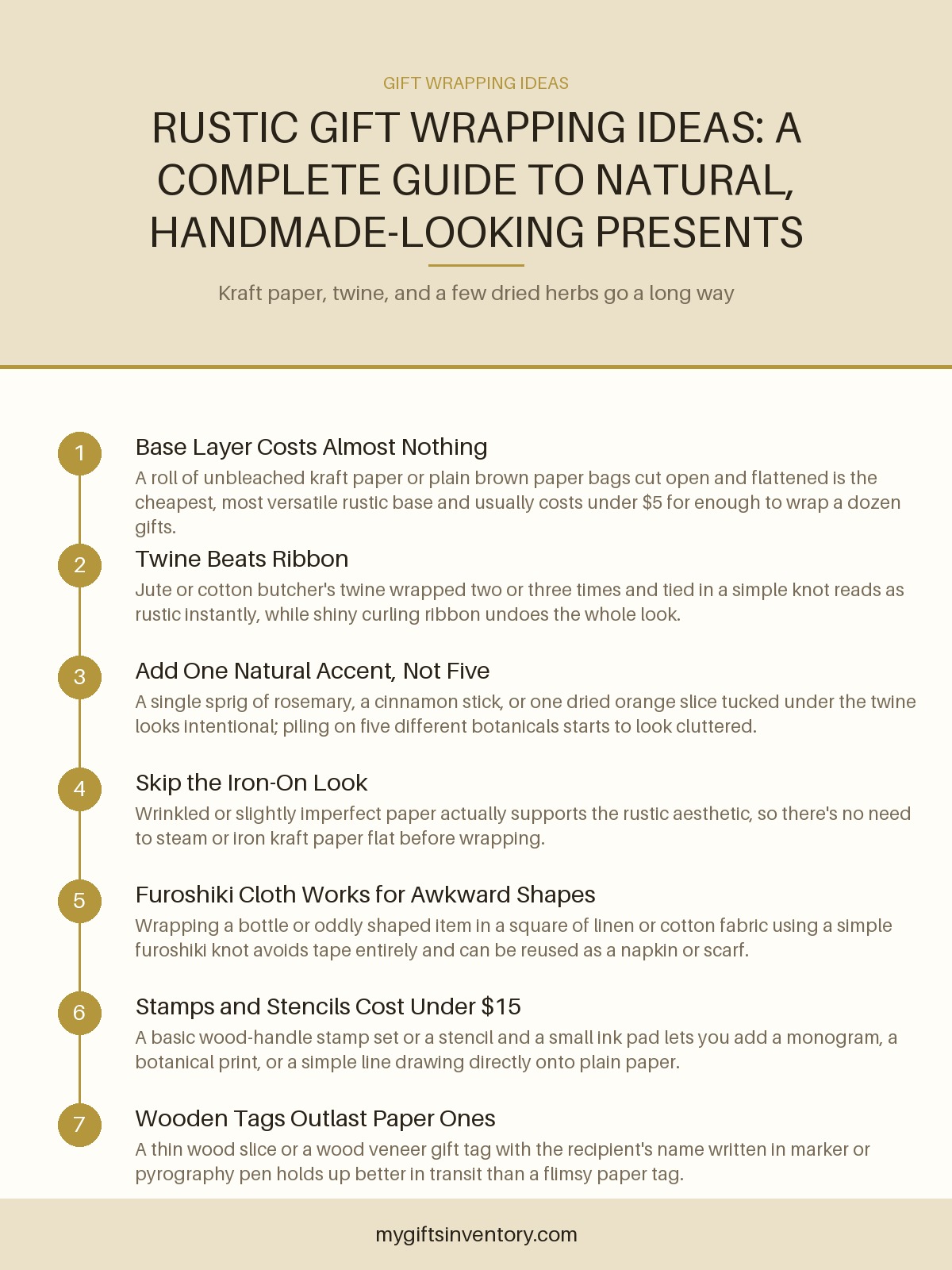
- Skip the patterned paper in favor of one neutral roll. Kraft, black, or white paper with a bright ribbon looks better than three competing patterns under the tree, and it works for every recipient because nothing about it says "birthday" or "Christmas."
- Use a single ribbon, tied simply. A plain square knot with the tails trimmed at an angle beats a complicated bow you cannot reproduce twice. If you want a proper bow, the loop-and-pull method (loop one side, wrap the other around it, push through) is easier than the bunny-ear approach most of us learned as kids.
- Add one small thing on top. A sprig of rosemary, a candy cane, a name written on the paper in marker, or a photo clipped to the ribbon. One detail, not five.
- Wrap in batches. Set up once with paper, tape, scissors, ribbon, and tags all on one table, wrap six gifts, clean up once. Wrapping one gift, putting everything away, and starting over is why people dread it.
Common beginner mistakes and how to fix them
The paper keeps sliding off the box
You are probably pulling the paper too tight before taping, which makes it bow and pop. Crease each fold with your fingers before you tape, and tape the first seam while the box is still flat on the table.
The corners look bulky
Trim the triangular end flaps so they reach only to the middle of the box instead of all the way across. Then crease hard. A crease is what makes a corner look crisp, not tape.
The tape shows on the paper
Switch to double-sided tape, or hide the tape under a fold. If you are using single-sided tape on glossy paper and it will not stick, the paper is too slick for it, and double-sided is the fix.
You ran out of paper halfway through
Wrap the gift in a plain box or bag and use the leftover paper on the card or as a band around the middle instead. Nobody notices the paper once they see what is inside. If you are wrapping something hard to disguise in the first place, starting from a list of the hottest gifts of 2026 can help you plan sizes and paper amounts before you buy anything.
A note on matching the wrap to the recipient
Wrapping is not just paper, it is a signal. A plain kraft wrap with twine reads as understated and grown-up, which suits a coworker or a host. Bright patterned paper with a big bow suits a kid. For a partner or close family member, a small handwritten note under the ribbon means more than any pattern choice. If you are wrapping something personal and want the outside to feel as considered as the inside, our guide to keepsake gifts for her has good examples of presents that pair nicely with a simple, quiet wrap.
Gift Ideas to Go With This


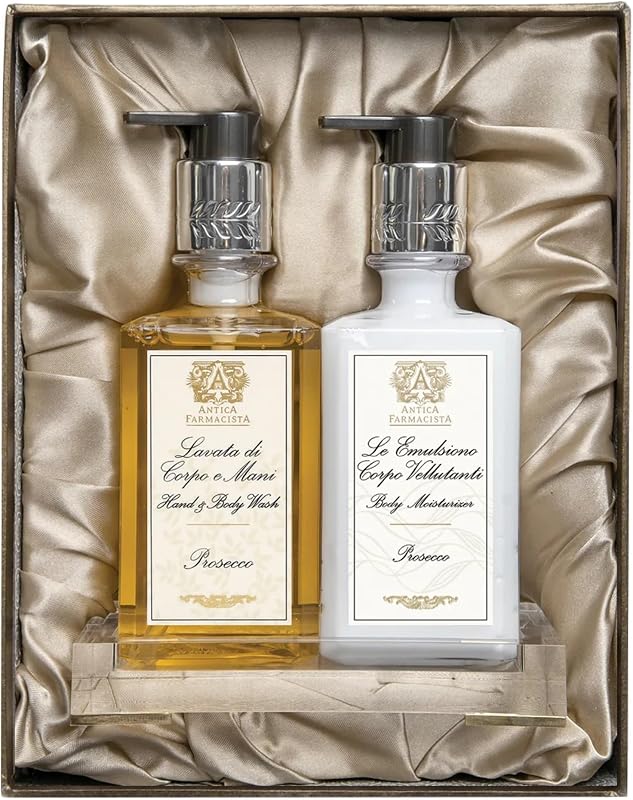
Want more ideas? Browse our full guide: 34 Stocking Stuffers & Small Holiday Gifts Under $25 (2026): Thoughtful Picks That Don't Feel Like Filler
Frequently Asked Questions
What supplies do I need to wrap gifts as a beginner?
Four things: double-sided tape, sharp scissors, a roll of slightly thick matte wrapping paper, and something to write tags with. Ribbon is optional. Double-sided tape matters most because it hides the seam, and thick paper matters second because it does not wrinkle or tear at the corners the way cheap thin paper does.
How much wrapping paper do I need per gift?
Enough to wrap around the box with about 2 inches of overlap where the edges meet, plus roughly an inch and a half on each end for the folds. A standard 30-inch-wide roll covers most shoebox-sized gifts with room to spare. For a rough budget, one roll typically wraps six to ten medium gifts.
Is it better to use a gift bag than wrapping paper?
Use a bag for anything soft, oddly shaped, or oversized, because those are the gifts that make paper wrapping look lumpy no matter how careful you are. Use paper for rigid boxes, books, and anything with clean edges, since those are what make crisp corners possible. There is no rule that one is more proper than the other.
How do I wrap a gift without it looking homemade?
Three habits do most of the work: tape the seam on the bottom of the box, fold the raw cut edges under before taping so no unfinished paper shows, and crease every fold firmly with your fingers. Add one simple ribbon and skip the elaborate bow. That combination looks far better than a complicated wrap done carelessly.
What if I run out of wrapping paper before I finish?
Put the remaining gifts in bags or plain boxes, and use the leftover paper to make a band around the middle of the bag or to wrap the card. Nobody remembers the paper once the gift is open. Buying one extra neutral roll before the holidays is cheaper than a second trip out mid-wrap.
Looking for an Actual Gift Instead?
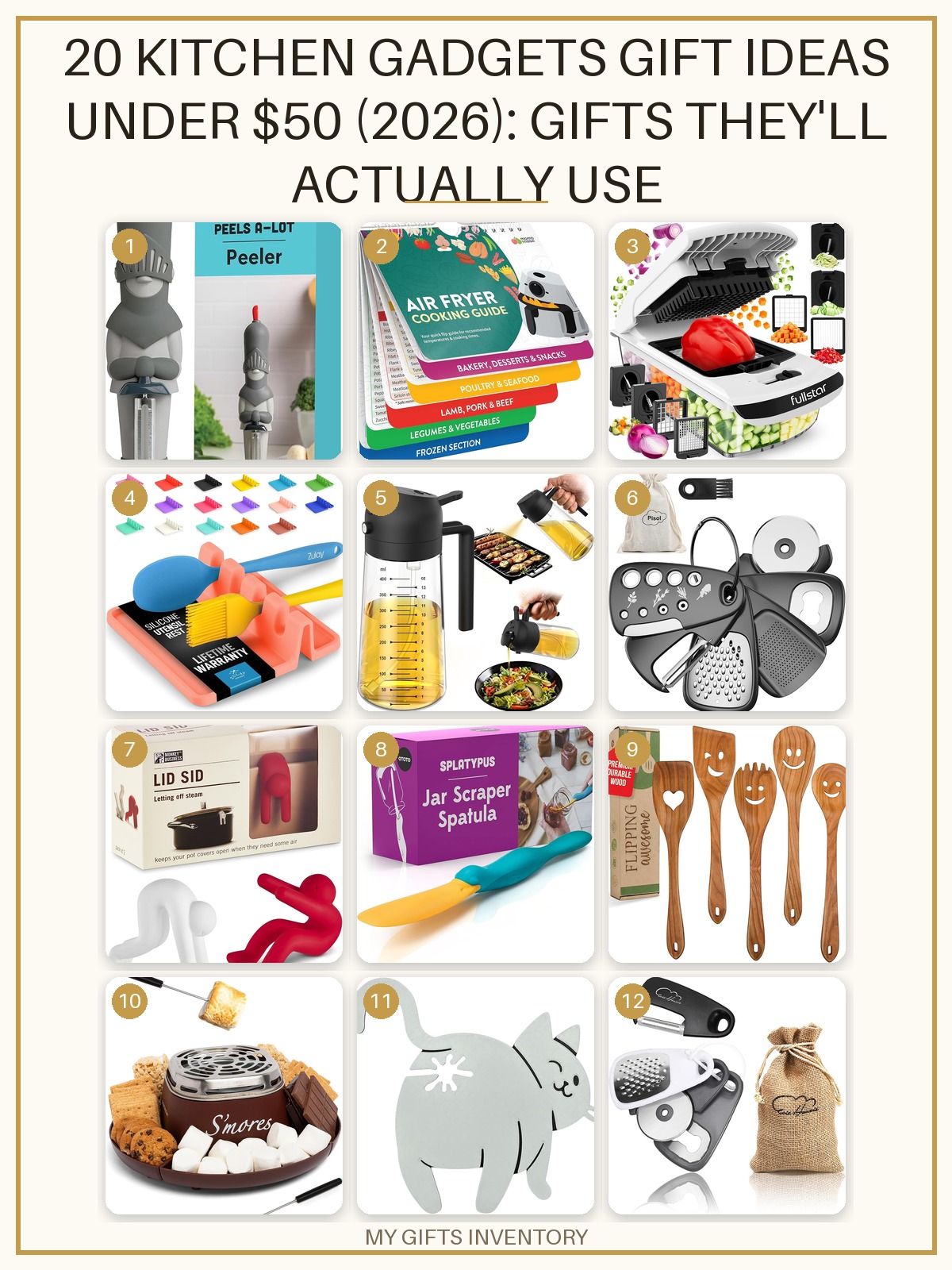
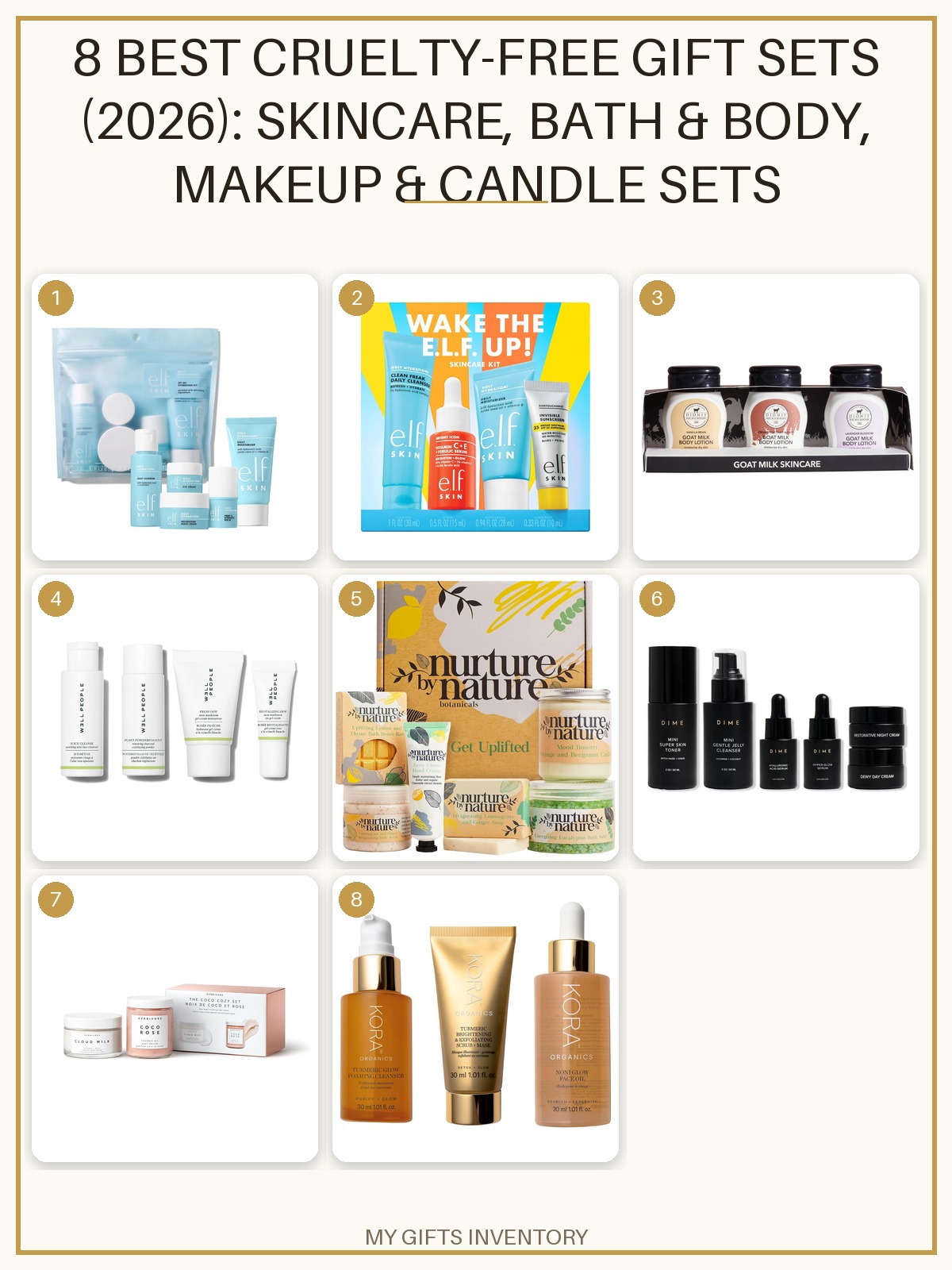
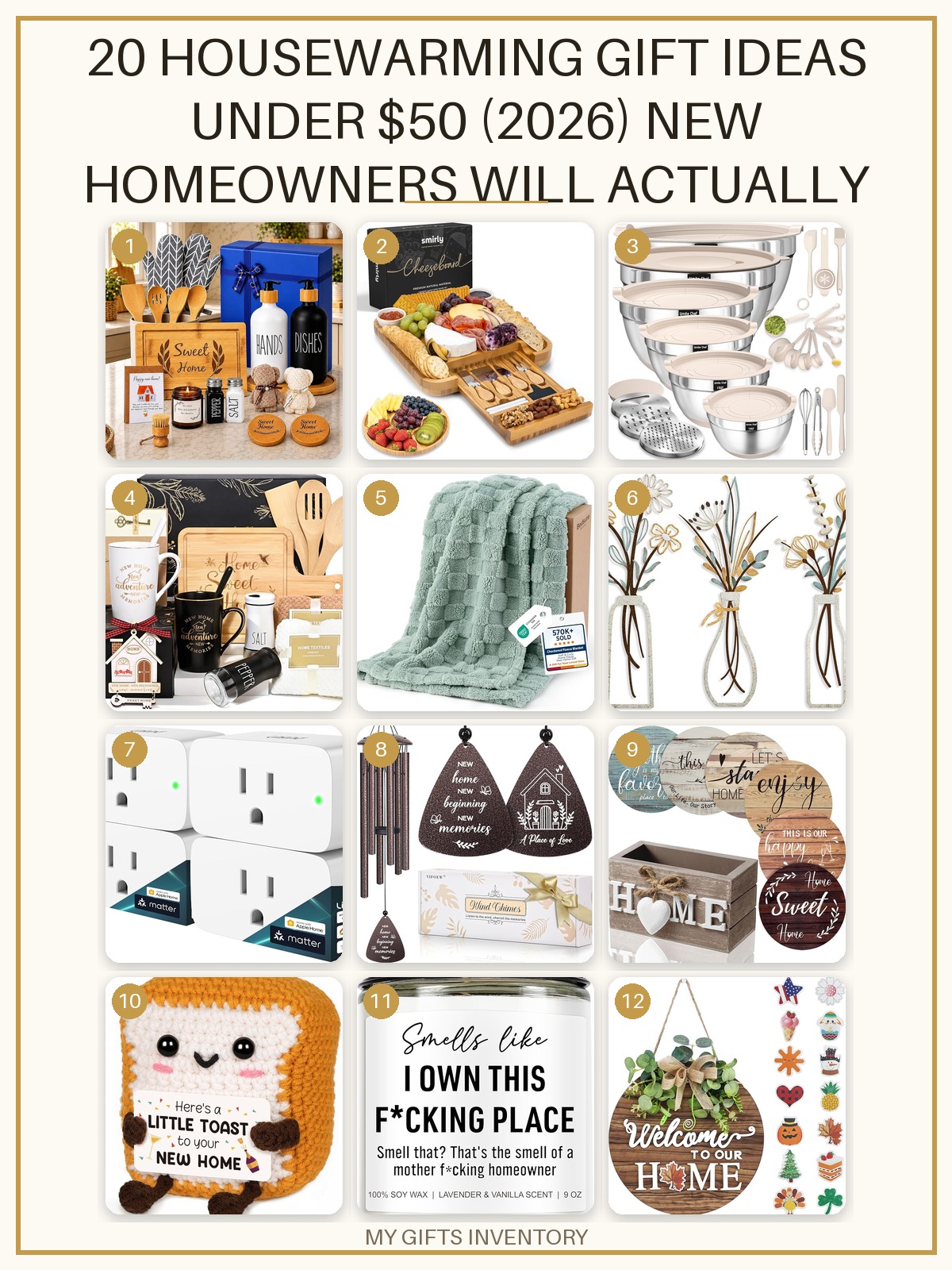
Gift Sets We Love Right Now
Every item picked, priced and linked, ready to buy.
More Gift Advice