Experience Gift Ideas: How to Give Memories That Actually Stick
Practical advice on choosing, budgeting, presenting, and following through on experience gifts so they feel thoughtful instead of last-minute or awkward.
As an Amazon Associate, My Gifts Inventory earns from qualifying purchases. We only recommend products we'd genuinely consider buying ourselves.
We reach for experience gifts when the person already has enough stuff, when we want the gift to create a story instead of another item on a shelf, or when we’re simply stuck and tired of guessing sizes and colors. The anxiety usually isn’t “what experience.” It’s whether they’ll actually use it, whether the date will work, how to present something that isn’t wrap-able, and how not to accidentally create pressure or logistics stress.
This guide walks through the real decisions: matching the experience to the person, setting a sensible budget, writing the card, handling booking and expiration details, and avoiding the common pitfalls that turn a generous idea into an unused voucher in a drawer.
Why Experience Gifts Feel Different (When They Work)
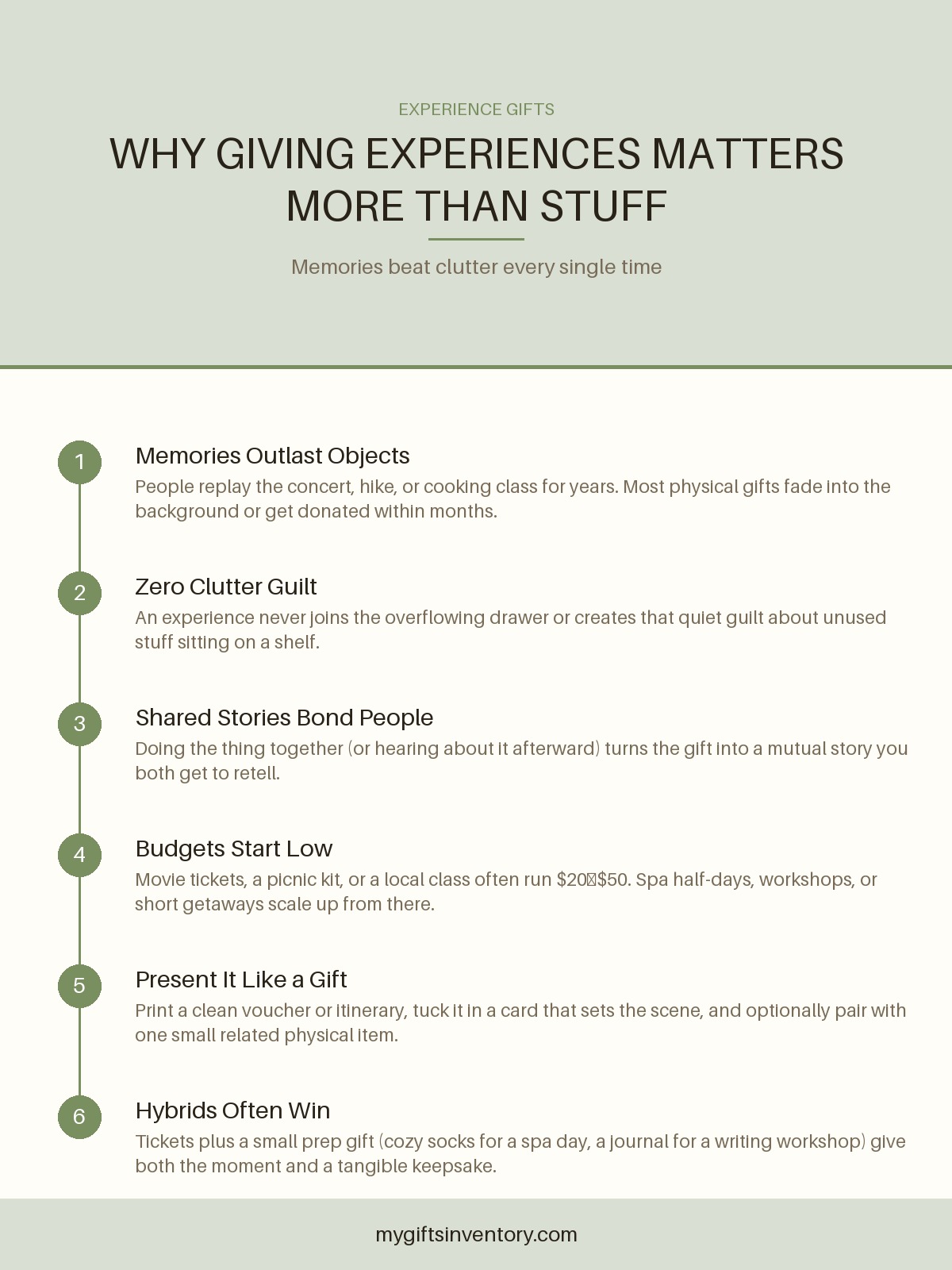
Physical gifts can be perfect. Experiences shine when the recipient values time, novelty, or shared moments more than objects. They also solve the “they already own everything” problem for people who declutter regularly or live in small spaces. The catch is that an experience requires coordination. If we treat it like a finished gift the moment we hit purchase, it often fails. The gift is only complete when the thing actually happens.
Good experience gifts create anticipation before the day and a memory after it. That only happens if the logistics feel light for the recipient. Our job is to remove friction: flexible timing, clear instructions, and a backup plan if life gets in the way.
Matching the Experience to the Actual Person
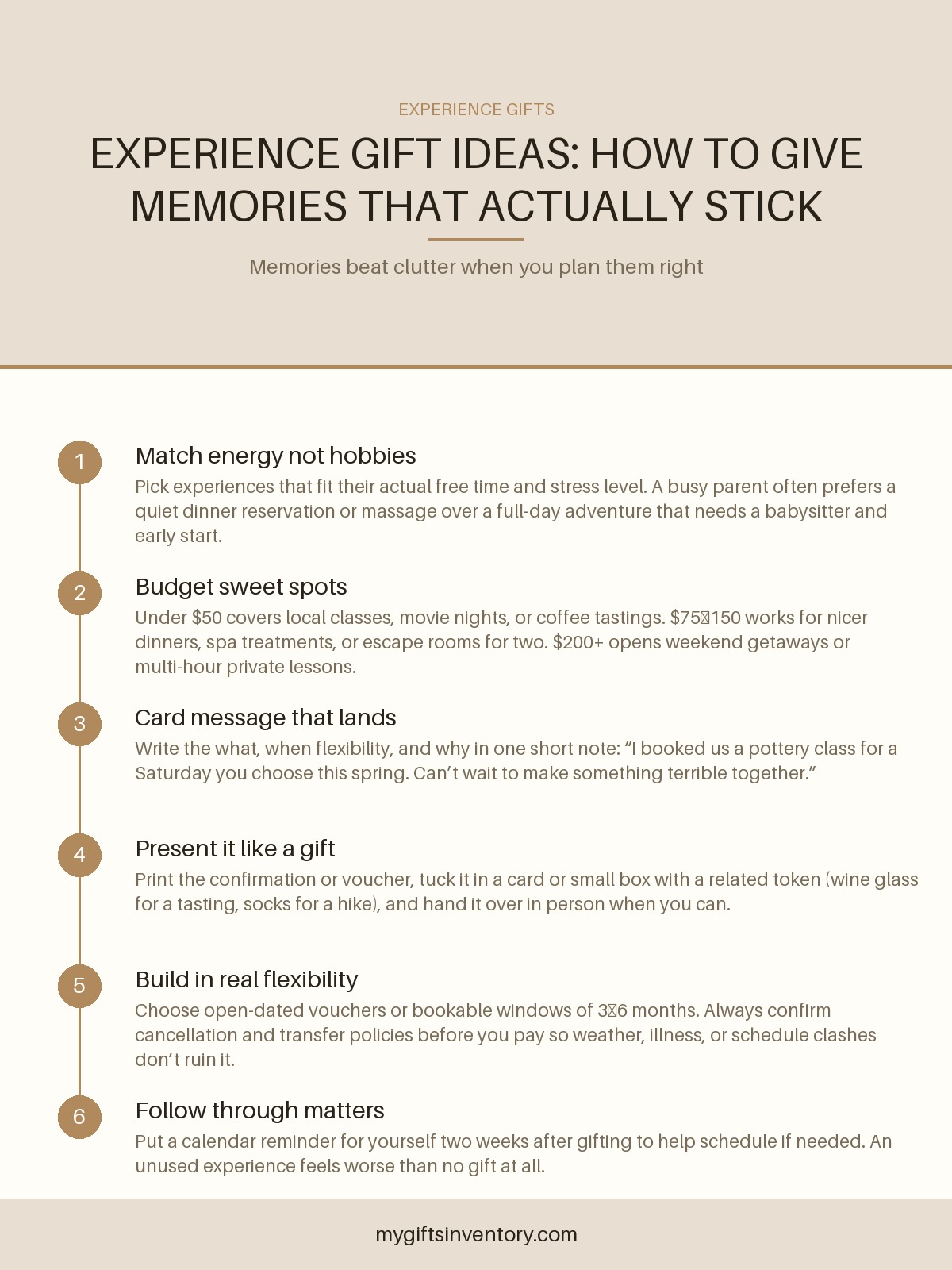
Start with their energy and calendar, not a generic “adventurous” label. Someone who posts hiking photos may still be exhausted after work and prefer a short evening tasting over a sunrise trek. Ask yourself three quick questions:
- Do they have open weekends or mostly weeknights?
- Do they like doing things solo, as a pair, or in a small group?
- Are they more “try something new” or “deepen something they already love”?
For a partner or close friend, shared experiences often land best: a cooking class, a concert, a weekend overnight, or a reserved tasting. For parents of young kids, anything that includes childcare or happens during school hours is gold. For someone recovering from burnout, low-stimulus options (massage, private museum tour, quiet lunch reservation) beat high-adrenaline ones.
If you’re shopping on a tighter budget, our roundup of 20 experience gift ideas under $50 has plenty of local and at-home-adjacent options that still feel intentional. For couples, browsing thoughtful romantic gifts for couples can spark date-night ideas that don’t require a huge spend.
Solo vs. shared vs. group
Solo experiences (spa day, photography walk, pottery wheel time, language lesson) work well when the person guards their alone time or when you live far apart. Shared experiences create the memory together and often feel more special for anniversaries or “just because.” Group experiences (escape room, boat charter, group hike with a guide) suit social people and can stretch a budget when several friends chip in. Always check whether the booking is for a set number of people and whether extras can join later.
Budget Ranges That Actually Make Sense
Experience prices vary wildly by city, but these ranges give a realistic planning frame for most U.S. areas in 2026:
Under $50
Local workshops (one-hour cocktail class, flower arranging, beginner ceramics), museum or botanical garden memberships for a month or day pass, premium movie tickets with snacks, a reserved picnic setup, or a gift card toward a favorite coffee shop tasting flight. These work for coworkers, teachers, newer friends, and stocking-stuffer level gestures that still feel considered.
$50 to $125
Nice dinner for two at a mid-range restaurant (you book and prepay a portion or the whole thing), couples massage add-on or single spa treatment, escape room for two or four, tickets to a touring show or local theater, or a half-day class like bread baking or knife skills. This is the sweet spot for birthdays, most friend gifts, and many partner “date night” presents.
$125 to $250
Full spa packages, hot-air balloon shared flights in some markets, private lessons (tennis, guitar, sailing intro), chef’s table or tasting-menu deposits, or a night at a nice hotel with late checkout. Strong for milestone birthdays, anniversaries, and parents’ gifts when several siblings split the cost.
$250 and up
Weekend getaways, multi-day festival passes, destination experiences, or high-end lessons with gear included. At this level we treat it more like planning a small trip than buying a gift. Confirm passport needs, physical requirements, and weather seasons early.
If the budget is modest but you still want a pampering angle, look at at-home spa and pampering ideas that pair a small physical item with a promised future treatment or quiet evening. For broader relaxation themes, self-care and relaxation gift ideas under $75 can sit alongside or stand in for a booked outing.
How to Present an Experience Gift So It Feels Real
A PDF confirmation email feels cold. We make it tangible.
Print the voucher or reservation details (or a simple card you design that states what it is). Put it inside a regular greeting card or a small box. Add one related physical token if it fits: a nice candle for a spa night, a small notebook for a writing workshop, a pair of socks for a hiking day, a wine stopper for a tasting. The token is optional. The clear written explanation is not.
Hand it over in person when possible. If you’re mailing it, use a rigid mailer so the printout doesn’t arrive crumpled, and include a short note that you’ll help with any scheduling.
What to write in the card
Keep it specific and pressure-free. Good examples:
- “Happy birthday. I reserved a pottery class for two. We can pick any Saturday morning in the next three months. I already checked they have evening slots too if mornings are better.”
- “For our anniversary: a night at the inn we liked in photos, dinner included. Dates are flexible through October. I’ll handle the final booking once we pick a weekend.”
- “You mentioned wanting to try rock climbing. This is a beginner session with gear included. No experience needed. Expires in six months so we can wait for good weather.”
- “This is a massage gift certificate at the place near your office. Use it whenever. No need to bring me. It’s just for you.”
Avoid vague lines like “Let’s do something fun soon!” that put the planning burden back on them. State what you already did and what flexibility remains.
Booking, Timing, Expiration, and Flexibility
Read the fine print before you pay. Key details to check every time:
- Is it a specific date or an open voucher?
- How long is it valid? (Three months is tight for busy people. Six to twelve months is kinder.)
- Can it be rescheduled, transferred, or refunded for illness or weather?
- Are there blackout dates, age limits, weight limits, or skill prerequisites?
- Does the price include fees, taxes, gratuity, and equipment?
When the experience is for two, decide whether you are including yourself. If yes, say so clearly. If the gift is meant for them and someone else of their choosing, say that too. Ambiguity creates awkwardness.
For travel-related experiences, open-dated hotel or activity credits can be easier than locking a weekend months out. If you give a stay or activity credit through a major platform, make sure the recipient knows how to check the balance later. Pages like our Airbnb gift card balance check walk through the simple steps so nothing gets lost.
Build a personal reminder. Two weeks after you give the gift, check in lightly: “Any weekends looking good for that class?” One more reminder a month before expiration if it still hasn’t been used. You’re not nagging. You’re protecting the gift from dying in a drawer.
Etiquette and Common Mistakes to Avoid
Do not surprise someone with a non-refundable, non-transferable experience on a fixed date unless you are 100% sure of their calendar, health, and preferences. Fixed-date surprises work for people you live with and talk to daily. They fail for almost everyone else.
Respect physical and sensory limits. Not everyone wants a hot yoga class, a loud concert, or a food experience with heavy spices or alcohol. When in doubt, choose something with easy opt-outs or ask a close friend of theirs for a quiet check.
Group gifts need a clear organizer. If four people chip in for a hot-air balloon ride, one person should handle the booking, collect money, and communicate the details. Split communications create missed emails and double bookings.
Corporate or coworker experiences should stay professional and optional. A team cooking class can be great. A forced weekend retreat is not a gift.
Finally, never use an experience gift to push your own hobby onto someone who has politely declined it before. The gift is for their enjoyment, not your wish list.
When a Gift Card or Credit Is the Better Move
Sometimes the kindest experience gift is a flexible credit rather than a locked-in booking. This is true when:
- They travel often and will use hotel or airline credits.
- Their schedule is unpredictable (healthcare workers, new parents, people who travel for work).
- You’re not close enough to know their exact taste in restaurants, spa styles, or activity levels.
- You want them to choose the date and the companion.
Pair the card with a note that suggests a direction (“toward a weekend away” or “for that concert series you like”) so it doesn’t feel like a cop-out. Keep the receipt and the balance-check method handy in case they need help later.
Planning Timeline So You’re Not Scrambling
For birthdays and anniversaries, start looking 3–6 weeks ahead if you need a specific popular date or restaurant. For holidays, popular spa and dining experiences book out earlier. Last-minute still works for many local classes and matinee tickets, but options shrink.
If the experience requires good weather (outdoor adventure, garden tour, boat day), aim for a seasonal window and an open voucher rather than one fixed Saturday.
For milestone events (50th birthday, retirement, big anniversary), consider blocking the date on your own calendar first and treating the gift as a save-the-date you fully fund and organize.
Putting It All Together
The best experience gifts feel easy to receive. We choose something that fits their real life, budget for the full cost including tips and fees, present it with clear written details and zero pressure, and stay gently involved until it happens. Do those things and the memory usually outlasts whatever object we might have bought instead.
Start with one solid idea that matches their pace of life, add flexibility, write a short specific note, and follow through. That’s the whole formula.
Frequently Asked Questions
How far in advance should I book an experience gift?
For popular restaurants, spas, and weekend activities, 3–6 weeks is safe in most cities. For major concerts, festivals, or peak holiday periods, look 2–3 months ahead. Open-dated vouchers with 6–12 month validity remove most of the timing stress and are usually the better default.
What if they can’t use the experience before it expires?
Contact the company as soon as you know. Many will extend once for a reasonable reason (illness, move, scheduling conflict) even if the fine print looks strict. If extension isn’t possible, ask about transferring the value to another person or a different offering at the same place. Going forward, prefer vendors with clear extension or transfer policies.
Is it rude to give an experience that doesn’t include me?
Not at all. Solo experiences are often the most appreciated gifts for people who rarely get uninterrupted time to themselves. Just make it clear in the card that it’s entirely for them and that you’re happy to help with any booking details if needed.
How do I make a low-budget experience feel special?
Focus on thoughtfulness and presentation. A $40 pottery class or reserved picnic with a handwritten plan, a small related token, and a specific “I’m excited to do this with you” note feels far more generous than a generic higher-priced voucher with no context. Clarity and personalization matter more than the dollar amount.
Should I tell them the price?
Usually no. Share what the experience includes and any practical limits (number of people, expiration, what’s covered). If they ask directly, you can give a range or simply say you wanted to treat them. The exception is group gifts where transparency about the split helps everyone feel comfortable.