Giving Experiences Instead of Presents: Etiquette, Budget, and What to Write in the Card
We share practical etiquette for experience gifts, how to set a realistic budget, and card wording that makes your plan feel personal, not vague.

As an Amazon Associate, My Gifts Inventory earns from qualifying purchases. We only recommend products we'd genuinely consider buying ourselves.
We know why you’re searching this now: you want to give something thoughtful, but you’re tired of guessing whether the recipient will actually use another object. “Experience gifts” sound perfect in theory, yet people worry about the same things every year: Is this rude? How much do we spend? What do we write in the card? And what if they can’t or won’t do it?
So we build experience gifts the way we’d want to receive them: with clear logistics, a budget that fits real schedules, and card wording that makes the plan feel generous instead of ambiguous.
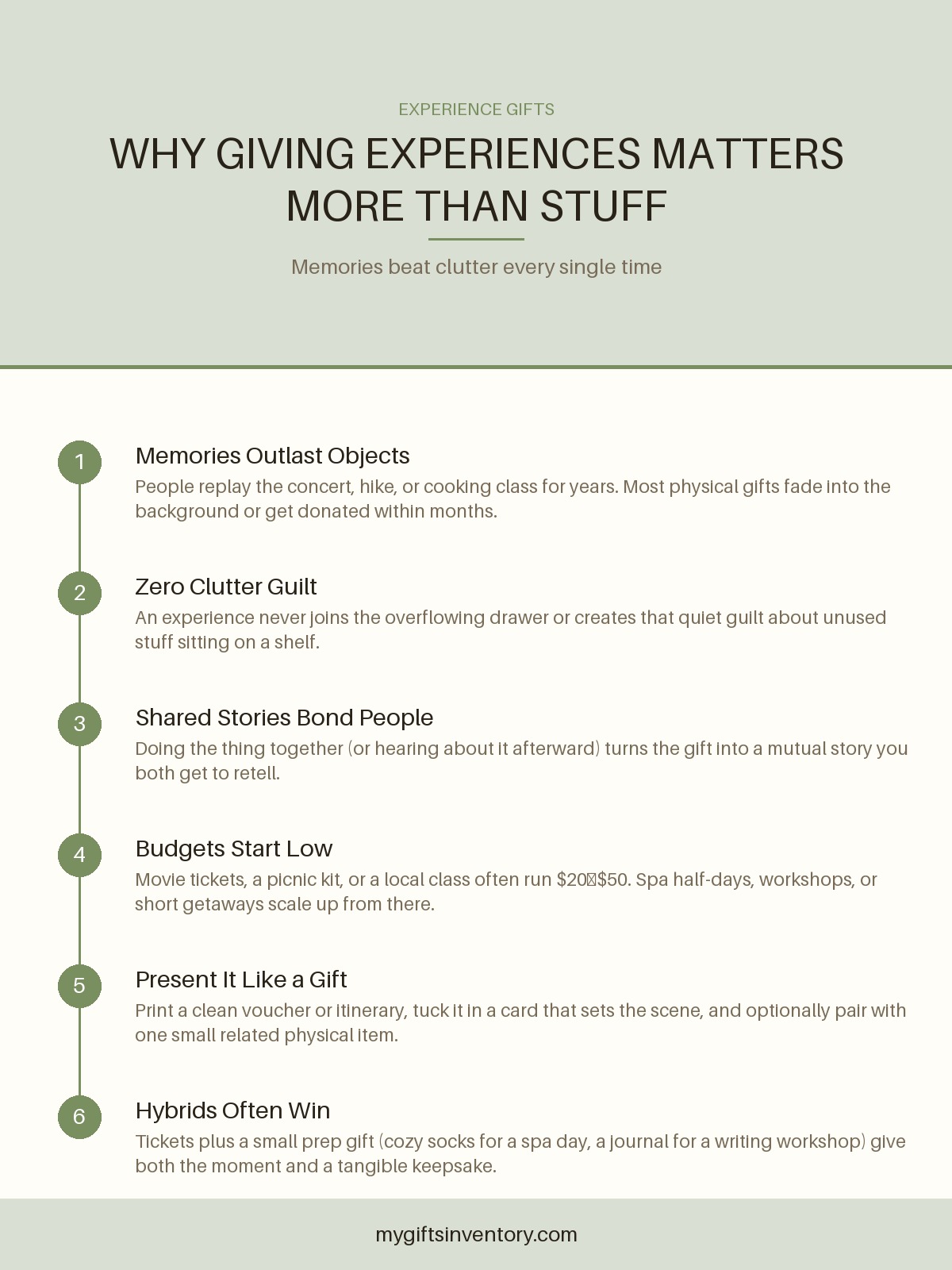
Why “experiences” feel better than stuff
When we give experiences instead of presents, we’re usually trying to give two things at once: a moment they can look forward to and a memory they can’t misplace in a drawer. That can be deeply meaningful, especially when the recipient is hard to shop for or “has everything.”
But the etiquette matters. An experience gift lands best when it respects the recipient’s autonomy. That means you make the next step easy, you don’t assume their calendar, and you don’t surprise them with something they would never choose.
The difference between “experience” and “random outing”
An experience gift is a planned, specific opportunity they can opt into. A random outing is a vague idea that leaves them responsible for figuring out dates, transportation, and cost splits.
Our rule of thumb: if you can’t describe what will happen in one confident sentence, it’s not ready yet.
Experience gift etiquette: what’s polite, what’s risky
Do: anchor the gift to their preferences
We pick experiences that match the way the recipient already spends their free time. If they like food, we lean toward a tasting, a chef’s table, or a cooking class. If they like learning, we choose a workshop or talk. If they like being active, we look for a guided session they wouldn’t organize themselves.
If you’re unsure, we “listen” for clues in casual conversation. Even small details matter, like whether they mention a favorite cuisine, a band they’ve seen, or a hobby they’ve recently gotten into.
Do: assume they may need a choice
The most considerate version of an experience gift includes flexibility. That can mean you gift tickets to an event with a date window and a simple plan to reschedule, or it can mean you give a booked reservation for a date you’ve pre-confirmed with them.
When we have a limited amount of certainty, we keep the gift generous without forcing them into it.
Don’t: choose something that requires physical or emotional readiness they never volunteered for
We avoid experiences that are risky for the recipient’s comfort or health, like extreme adventure activities or “surprise” social situations if they’ve shown reluctance. A good experience gift should feel like you’re removing friction, not creating it.
Don’t: make them responsible for the entire logistics chain
Experience gifting fails when the recipient has to answer too many questions. You want to be the person who already knows the basics, like the address, start time, parking tips, or how tickets are delivered.
Even if you’re not paying for everything, you should still provide a clear breakdown of what’s included.
Budgets that make sense for real life
One reason experience gifts feel stressful is that people guess wrong. We try to budget using “time and effort,” not just vibes.
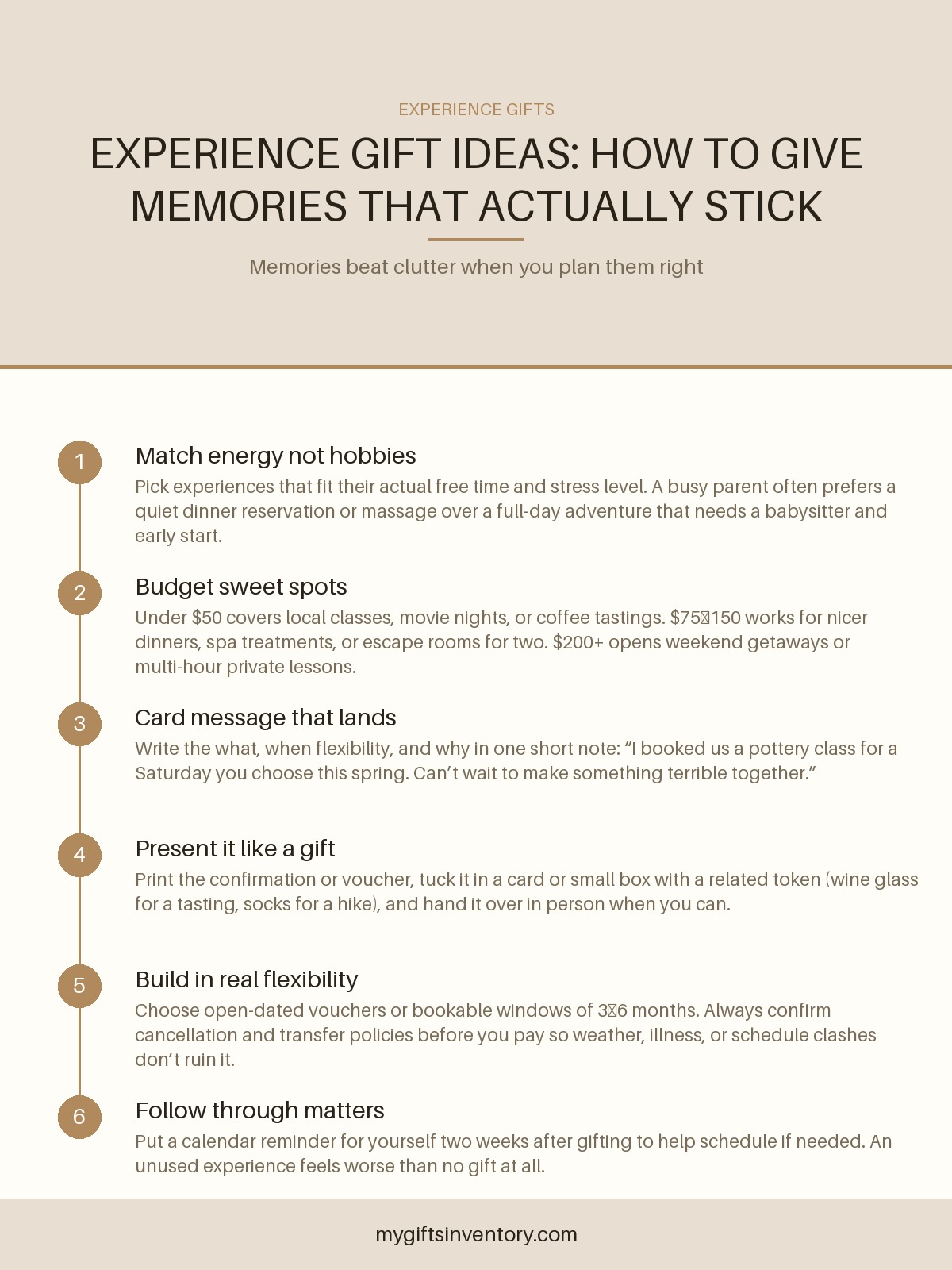
Simple budget ranges (practical and realistic)
- $50 to $150: good for a couple’s activity up to a few hours, or a solo activity plus a meal. Think museum entry and lunch, a comedy show plus snacks, or a cooking class session.
- $150 to $400: works well for half-day outings, event tickets plus dinner, or guided experiences where reservations matter.
- $400+: ideal for full-day experiences, travel within driving distance, or anything where you also want to include extras like transportation or a small “upgrade.”
We also factor in hidden costs that can ruin a budget: tips, parking, dietary add-ons, and “just one more thing” expenses like a gift shop stop or a second ticket if someone tags along unexpectedly.
If you’re worried your budget is too small
Here’s the truth we’ve learned: a well-planned experience gift feels more generous than a bigger one that’s messy. A $75 experience with clear details and genuine enthusiasm can beat a $250 purchase where you’re hoping it works out.
When you’re at the lower end, we lean into experiences that are simple to execute and don’t require major scheduling surprises.
Also, if the recipient is someone who loves food or drinks, you can keep the experience feel real without overspending. For example, we treat “gourmet-treat time” as the experience, not a random pile of items, and we build a night around it. If that sounds like your circle, browse our guide for ideas under $50: 20 Gift Ideas for Gourmet Treats, Wine & Coffee Gift Ideas Under $50 (2026).
How to choose the right kind of experience
Three experience formats that work for most people
- Tickets plus a plan: a show, a game, a film event, a museum day pass, or a guided tour. You include the “when” and the “how.”
- Class or workshop: cooking, ceramics, photography, wine tasting, language conversation groups. These often include a built-in structure that reduces decision fatigue.
- A shared day: brunch plus an activity, a scenic drive with stops, a local festival outing. You provide a simple itinerary, not an essay.
We use these “compatibility checks”
- Energy level: Do they recharge quietly or want lively crowds?
- Scheduling style: Do they love spontaneity or prefer planning in advance?
- Budget comfort: Are they the person who will feel guilty if you cover too much, or are they happy to receive?
- Mobility and access: Can they manage stairs, long walks, or late nights?
What to write in the card: wording that feels personal
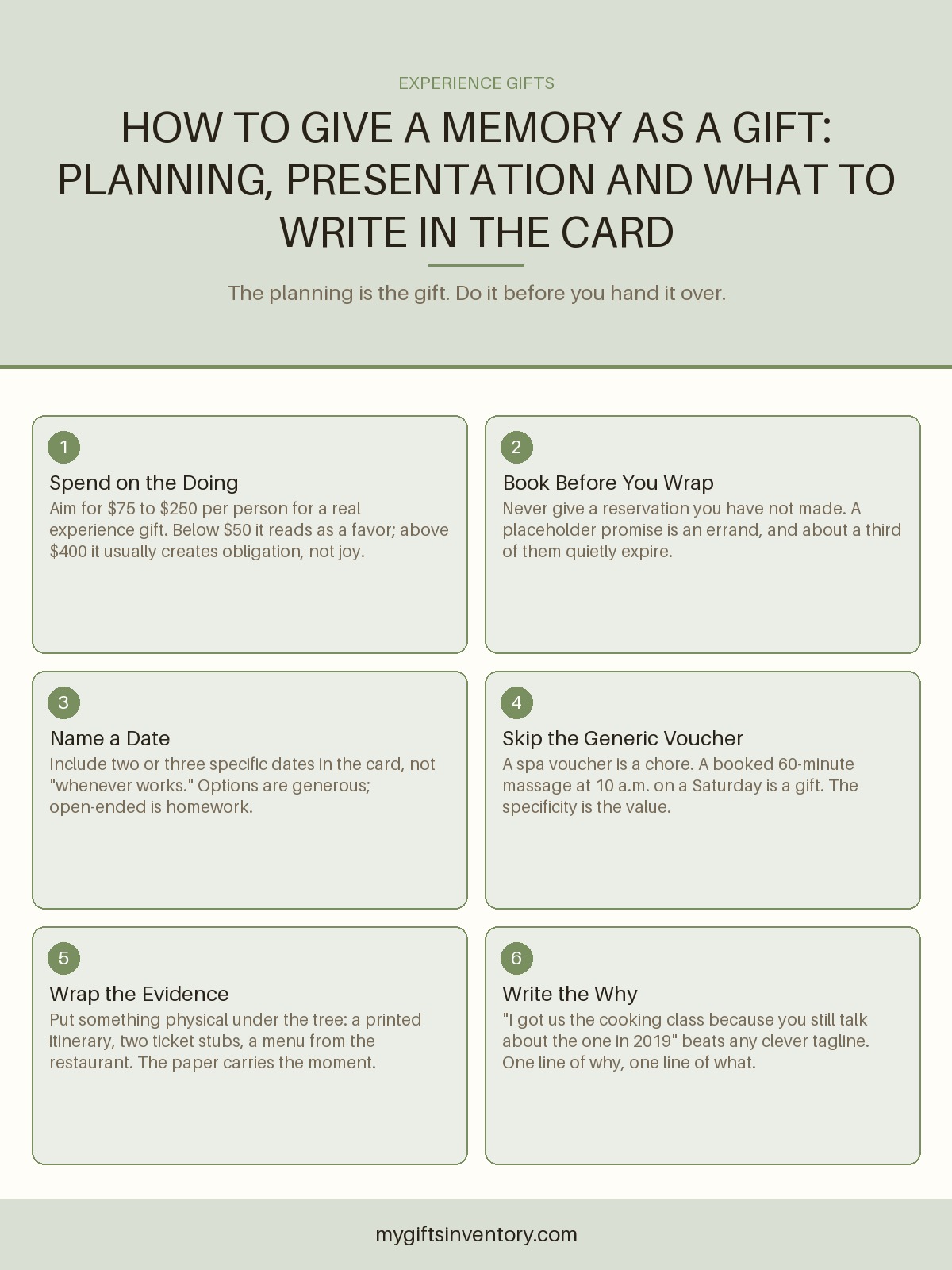
This is where most people second-guess themselves. An experience gift card has to do two jobs at once: express warmth and provide enough detail that the recipient can picture what they’re getting.
The best card formula (use this template)
- One line of meaning: Why you chose this for them.
- One line of specifics: the activity, and what you’re covering.
- One line of next step: confirm a date or give them two options.
Card message examples we like
Case 1: You already picked a date you confirmed.
“[Name], I wanted your gift to be time that feels special, so I booked us for [activity] at [time]. I’ll cover tickets and dinner after. Can’t wait to celebrate with you.”
Case 2: You’re giving a choice between two dates.
“[Name], I planned an experience just for us. Option A is [date/time], and option B is [date/time]. Tell me which one feels better and I’ll handle the rest.”
Case 3: You’re not booking yet, but you’re gifting the experience budget.
“[Name], you’ve got a gift waiting for you: [experience type] up to $[amount]. Let’s pick a day that works for you, and I’ll take care of the booking.”
Case 4: They might need flexibility (work schedules, caregiving, etc.).
“[Name], I wanted you to have something to look forward to without pressure. We’ll choose a date together that fits your schedule, and I’ll cover [tickets/meal/class].”
What we avoid in experience cards
- Vague lines like “A fun day is coming soon” without any details.
- Pressure phrasing like “You have to go” or “You will love this.”
- Budget guilt like “I couldn’t afford anything else.”
Wrapping: how to make it feel like a gift without clutter
Wrapping an experience gift is surprisingly important because it sets the emotional tone. We aim for “enough ceremony,” not a complicated production.
Good wrapping options
- Ticket-style envelope: print the event details, include confirmation number if you have it, and add a small itinerary card.
- Itinerary card: a half sheet with date, time, address, parking info, and what to wear.
- Mini “theme” box: include a small item that matches the experience (like a tasting note card for a food night), then the main ticket or plan information.
We also keep a card, even if you’re wrapping something digital. If you’re doing digital tickets, include a printed receipt-style note so they don’t feel like they “didn’t really get anything.”
Registries: do experience gifts belong there?
Registries are not only for objects. They’re also how people manage uncertainty, especially for weddings and milestones. If your event has a formal registry, we treat experience contributions as either a shared fund or clearly described options.
Wedding and big celebration etiquette
- List experiences as specific, bounded items (example: “Couples dinner date at restaurant X” rather than “a nice night out”).
- If there’s a schedule dependency, include date windows or how rescheduling works.
- Be clear about what is covered by the contribution.
If you’re not using an experience-focused registry, another polite approach is to include a small “experience budget card” and let the recipient or couple coordinate timing.
Planning timeline: when to book so you do not create stress
Most experience gift problems happen because the gift was chosen too late. We’ve learned to plan backwards from the event date and from the recipient’s schedule.
When to plan (quick timeline guide)
- 4 to 6 weeks ahead: book popular restaurants, guided tours, and classes that have limited seating.
- 2 to 4 weeks ahead: secure tickets for many local events and performances, especially if you’re targeting a weekend.
- 1 week ahead: best for lower-demand experiences and activities that don’t require heavy planning or fixed reservation windows.
How to prevent the “we’ll do it later” trap
We schedule it immediately if possible. If we’re gifting a time together but not booking, we still choose a next step with a deadline.
Example: “We’ll pick your date by next Friday, and I’ll book as soon as you choose.” That phrasing turns the plan into a project with momentum instead of a suggestion.
Gifts that include payment support: when a gift card helps
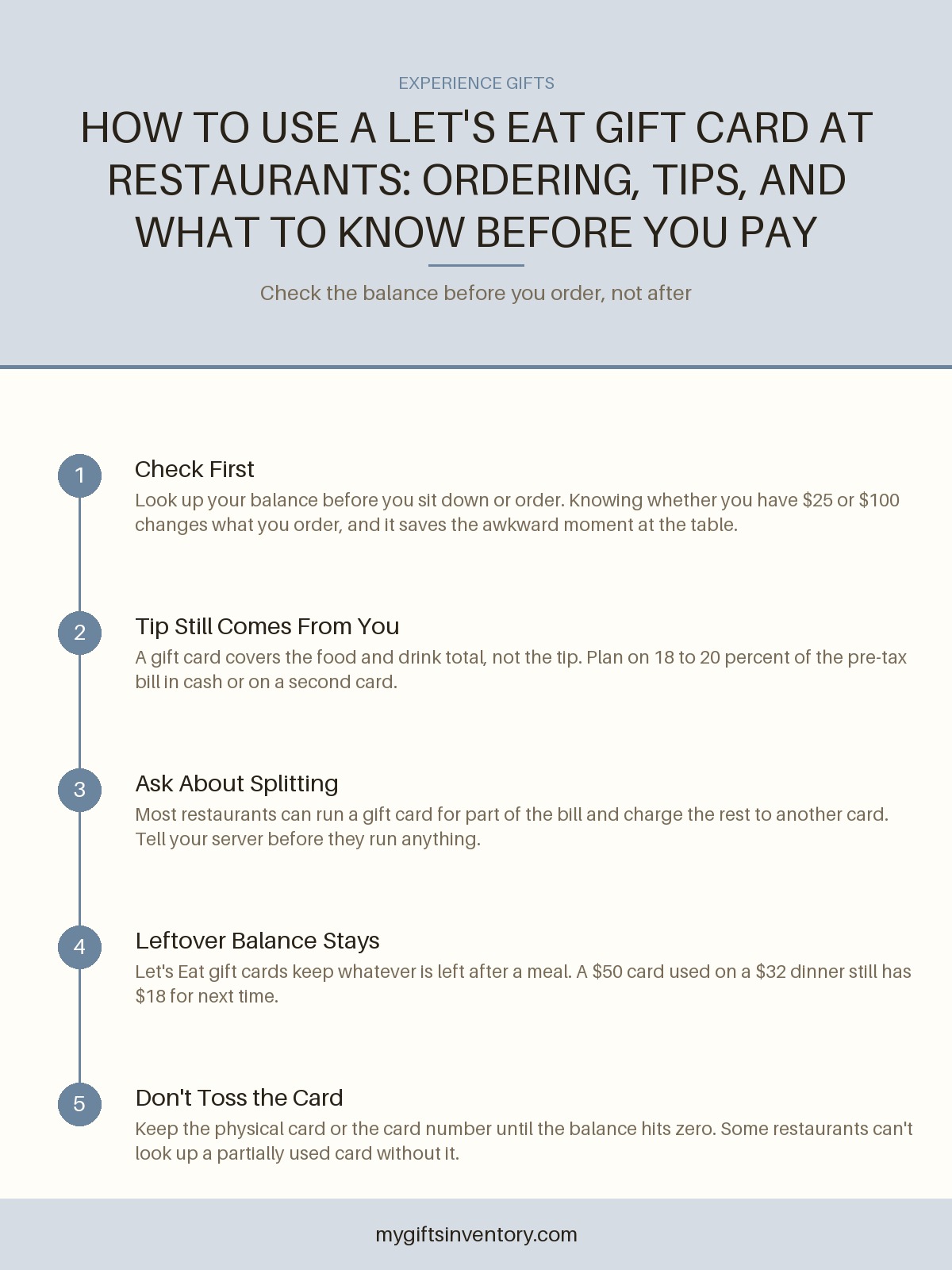
Sometimes the recipient wants freedom, or you’re covering part of the experience but not every add-on. In those cases, a gift card can be a clean solution, but it works best when you pair it with a plan.
For example, you might cover tickets for an attraction and include a gift card for parking, snacks, or a meal upgrade. That keeps the experience feeling complete without you needing to guess their preferences.
If you go this route, it’s helpful to know where the recipient can use the funds. We keep our brand-focused lists for quick decision-making, like Gift Cards at Walmart: The Complete List of Brands, Fees & Where to Buy (2026) or Gift Cards at Target: The Complete List of Brands, Fees & Where to Buy (2026). The etiquette here is simple: you’re not using a gift card as a shortcut for your planning. You’re using it to remove one specific friction point.
Returns and refunds: what to know before you buy tickets
Experience gifts are not always “returnable,” and that’s why we’re careful about the purchase details. Before you commit, look for policies tied to ticket transfers, date changes, and whether refunds are offered for cancellations.
How we handle it when plans are uncertain
- If rescheduling is possible, we say so in the card message.
- If refunds are unlikely, we build flexibility into the gift by giving a booking window or offering two dates.
- We avoid “non-changeable” tickets when we haven’t confirmed the recipient’s availability.
For gift planning that involves coordinating multiple people, we also think ahead about how you’ll manage the schedule if someone gets sick, has work coverage problems, or simply can’t make the date you chose.
Experience gift ideas by occasion (so you’re not starting from scratch)
Birthdays
- A timed entry museum ticket plus a planned coffee stop.
- A cooking class where the “gift” is the meal you create.
- Tickets to a comedy show and a pre-chosen dinner reservation.
Anniversaries
- A guided tasting paired with a short “love letter” card.
- A day plan that includes one “sit down” moment and one “move around” moment.
- A photo walk with a small printed guide and a follow-up meal.
If you’re shopping for an anniversary and you like structured ideas by year, we include planning-friendly options here: 21 Anniversary Gift Ideas by Year Under $100 (2026).
Holidays and family gifts
- Local event bundles, like a seasonal performance plus hot chocolate afterward.
- A family “activity fund” where each member gets to choose a day within a set window.
- A scheduled outing that happens within a month, so it doesn’t become a vague promise.
“They have everything” moments
- A meal out plus a dessert choice you set aside for them to pick.
- A class on something they’ve been curious about.
- A small day-trip plan with one planned stop and room for discovery.
Corporate and group etiquette: when experience gifts are tricky
Group experience gifts can work, but they require extra clarity. If you’re giving experiences to coworkers or clients, you want them to feel inclusive and low-stress, not like an obligation or a test of taste.
For corporate gifting that still feels considerate, we like to use smaller, straightforward experiences or experience funds that do not rely on everyone having the same schedule. If you want more inspiration, start with this: 21 Corporate Gift Ideas Under $50 (2026) That Won't Feel Like an Obligation.

Frequently Asked Questions
Is giving an experience gift better than giving something you can wrap?
It can be, because experience gifts remove the “will they use this?” worry and create a memory. The difference is that we have to provide enough details for the recipient to feel secure, like the date, location, and what’s included.
What do we put in the card if the date is not confirmed yet?
We include a short timeline and a clear next step. Example: “Let’s pick a day together by Friday, and I’ll book your reservation for the experience up to $X. Can’t wait to do this with you.”
How much should we spend on an experience gift?
A good starting point for most people is $50 to $150 for a couple of hours to a half-day, and $150 to $400 for a fuller experience. We also factor in tips, parking, and any admission or reservation fees so the budget doesn’t collapse at the last minute.
What if the recipient can’t make the date we chose?
We plan for this before it happens by offering a reschedule option or giving two potential dates. If it’s already booked, we tell them what flexibility exists and make it easy to pick a new day without them having to chase details.
Are experience gifts refundable?
Not always, because ticket and reservation policies vary. Before we buy, we check the change and refund rules, and when we are unsure about scheduling, we avoid non-changeable purchases or we structure the gift with flexibility.
Looking for an Actual Gift Instead?
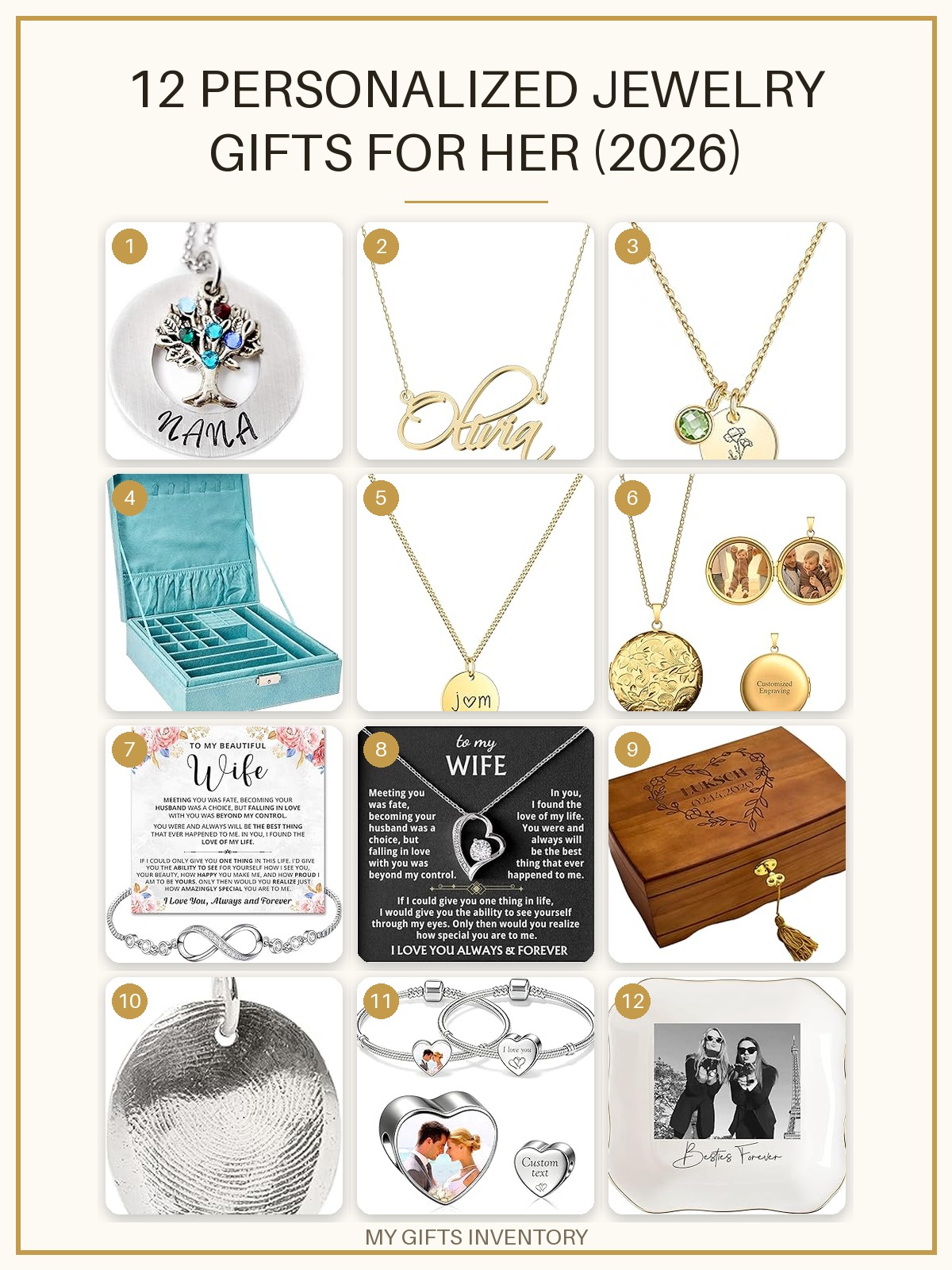
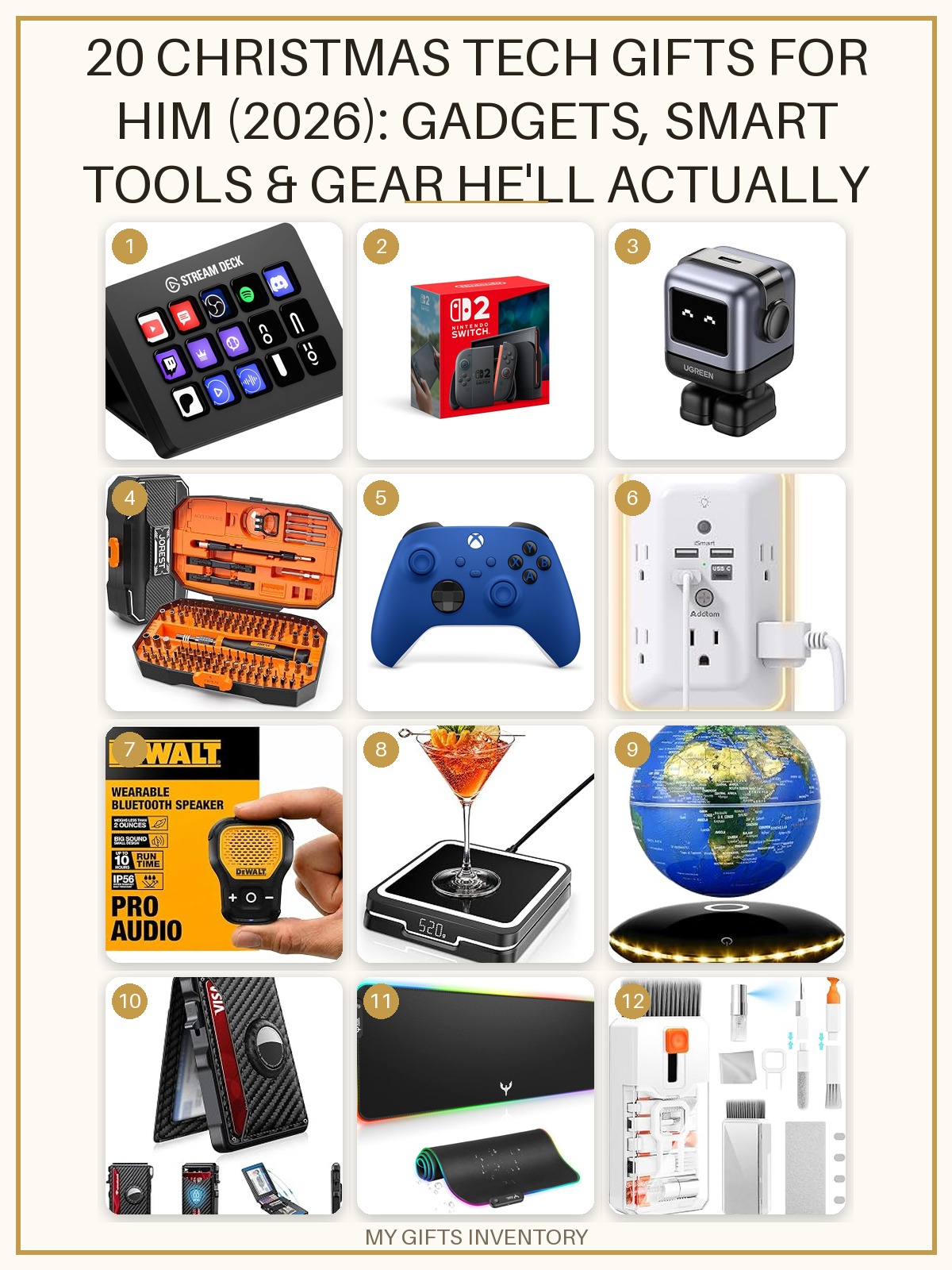
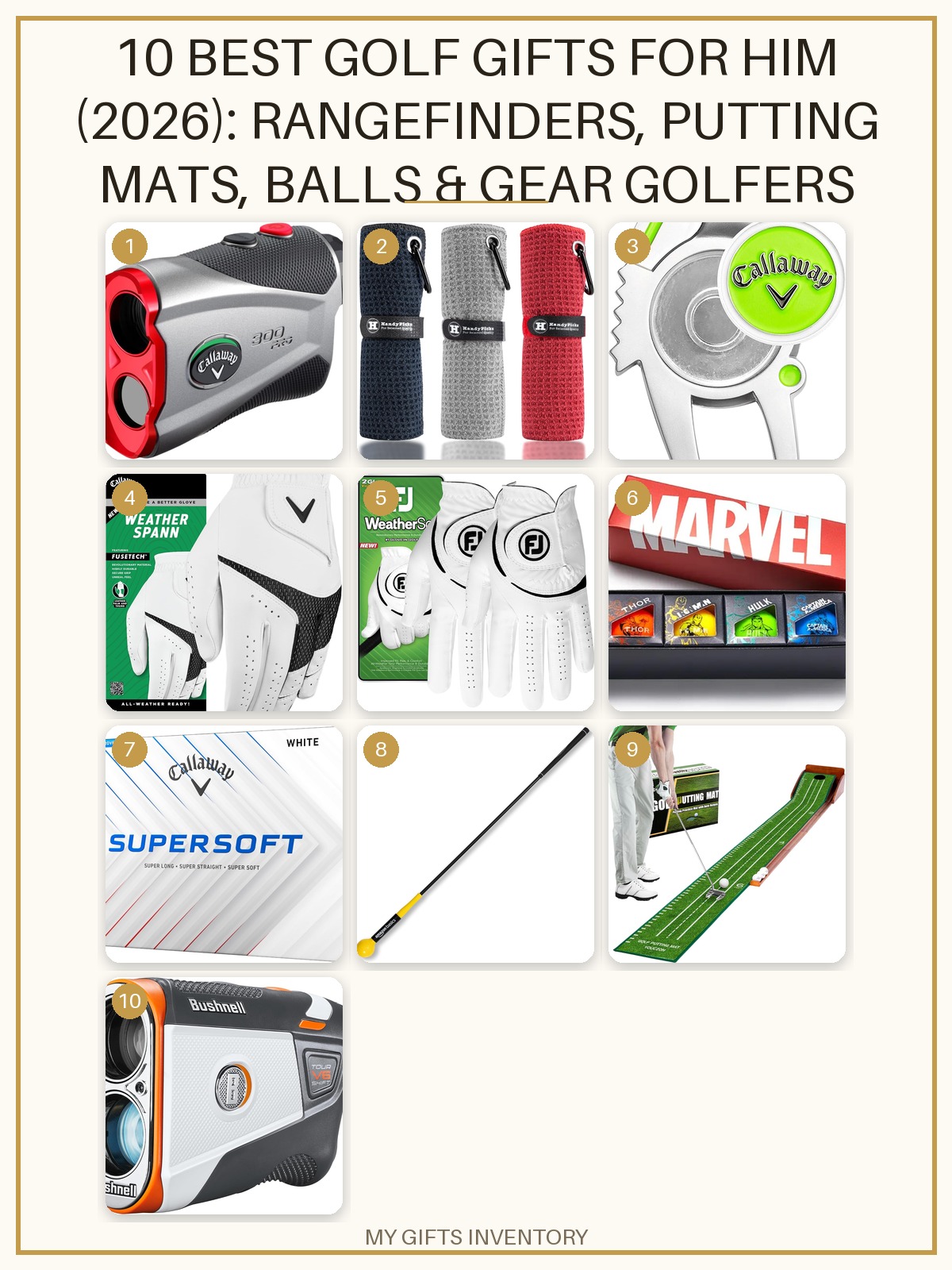
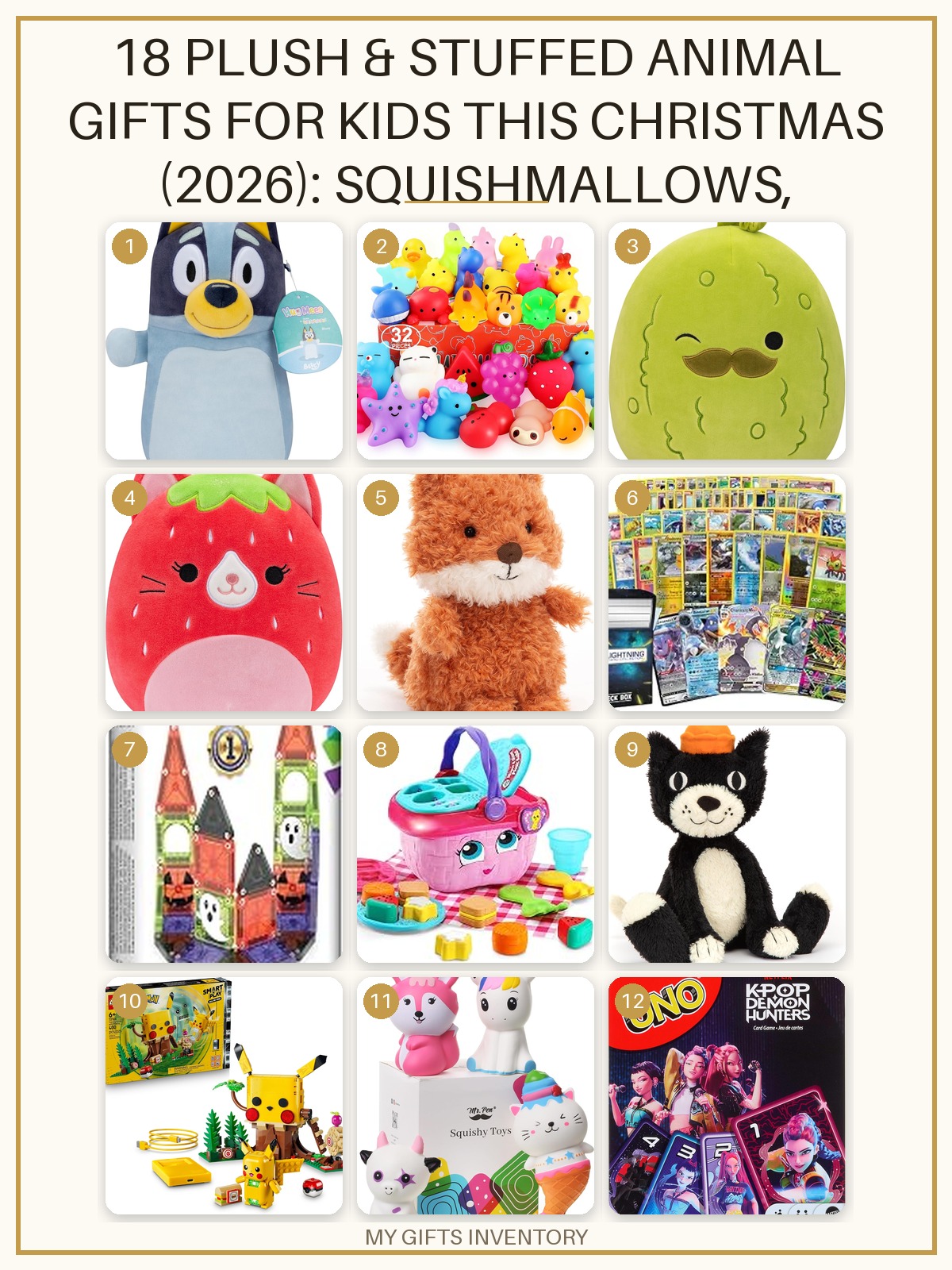
Shop Hand-Picked Gift Sets
Every item picked, priced and linked, ready to buy.
More Gift Advice