Why Giving Experiences Matters More Than Stuff
Objects gather dust. Shared moments become the stories we retell for years. Here’s why experience gifts often land harder and last longer, plus how to choose and present them well.
As an Amazon Associate, My Gifts Inventory earns from qualifying purchases. We only recommend products we'd genuinely consider buying ourselves.
We've all stood in the middle of a store or scrolled endlessly, wondering if one more sweater, gadget, or scented candle will actually matter six months from now. The quiet worry behind "what should I get them" is often that the gift will join a pile of unused things and the moment will feel forgettable. Shifting toward experiences answers that worry directly: the gift becomes a memory instead of more stuff.
We keep choosing experiences because they tend to create stronger emotional residue, sidestep clutter, and give both giver and receiver something to talk about later. Below we break down why that happens, how to pick the right ones, what they really cost, and how to make an intangible gift feel as thoughtful and complete as a wrapped box.
Why Experiences Stick Longer Than Objects
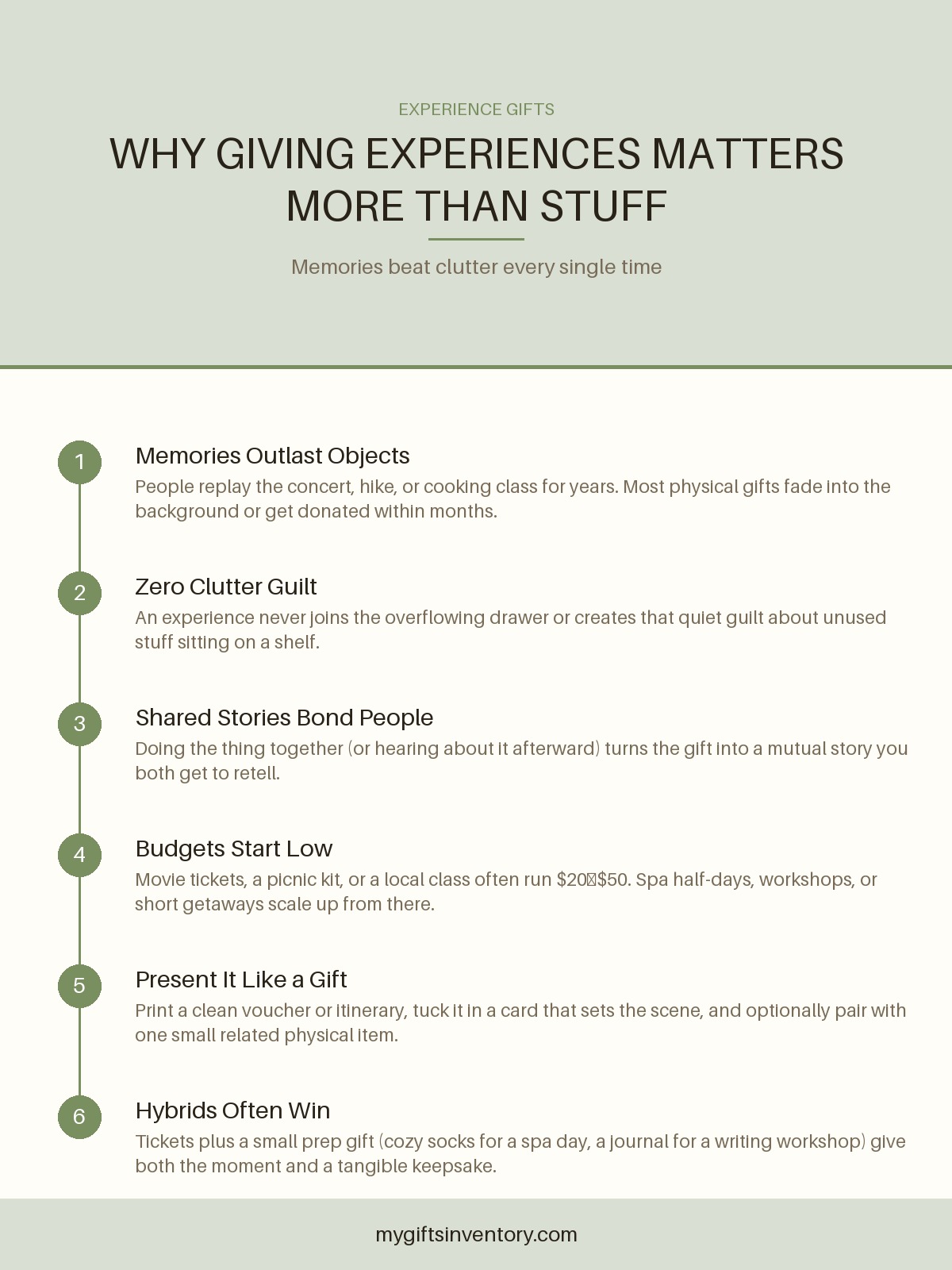
Physical gifts can be wonderful. A well-chosen item solves a problem or brings daily pleasure. But once the initial unwrapping excitement fades, many objects settle into the background of ordinary life. Experiences work differently. The anticipation before the event, the sensory details during it, and the stories afterward keep replaying. That mental replay is what makes the gift feel bigger than its price tag.
Think about the last gift you still talk about. Odds are good it involved doing something: a concert where the setlist surprised you, a weekend trip that went slightly sideways in the best way, a class where you both burned the first attempt at the recipe. Those details become shared language. A new mug rarely does.
Experiences also adapt to the person more gracefully. Someone who already has everything still has room for a morning of rock climbing, a private pottery session, or tickets to something they would not buy themselves. The gift says "I paid attention to what lights you up" rather than "I found something in your color."
The Clutter Problem Experiences Quietly Solve
Most homes already contain more objects than anyone needs. Giving another item can create a low-level burden: where does it live, will it get used, does the receiver now feel obligated to keep it. Experience gifts never ask those questions. They arrive, they happen, and they leave only the memory (and maybe a photo or a ticket stub).
This matters especially for people in small spaces, frequent movers, minimalists, or anyone who has asked you not to give them more stuff. It also matters for kids and teens whose rooms fill up fast, and for older relatives who are actively trying to lighten their load. When in doubt about space or lifestyle, an experience is often the kinder choice.
That does not mean physical gifts are wrong. It means we can stop defaulting to them when we are stuck. For many occasions, the cleaner, more generous move is time spent well rather than another object to store.
Shared Experiences Strengthen Relationships
Some of the best experience gifts are ones you do together. A cooking class, a hike with a packed lunch, a museum membership you both use, or tickets to a show create a joint memory bank. Later, when life gets ordinary again, you both have the same reference point. That shared history is relationship glue.
Even solo experiences can strengthen the bond when you ask good questions afterward. "What surprised you most?" or "Would you do it again?" turns the gift into ongoing conversation instead of a one-time transaction. The receiver feels seen because you chose something that fits their curiosity or joy, and you get to hear the story.
Family experiences work the same way at scale. A day trip, a picnic with a simple activity, or tickets everyone can use together often create more lasting warmth than individual wrapped items under the tree. If you are planning for a group, our roundup of Christmas gift ideas for the whole family under $50 includes approachable options that lean experiential without blowing the budget.
How to Choose an Experience That Actually Fits
The same rules that make any gift good apply here, only more so. Start with the person, not the activity brochure.
Match energy and interests, not your own wishlist
An adrenaline seeker and a restoration seeker need different things. A new parent may want two hours of quiet more than a high-energy outing. Someone recovering from burnout might prefer a gentle spa afternoon or a short nature walk with a thermos over a packed itinerary. Listen to what they already spend time and money on, then amplify it or give them permission to try the thing they keep mentioning but never book.
Consider logistics early
Timing, location, physical ability, childcare, work schedules, and travel all matter. A perfect-sounding experience that requires a three-hour drive on a Tuesday fails. Build in flexibility where you can: open-dated tickets, a choice of two dates, or a gift certificate with a long expiration. Confirm any restrictions (age, fitness level, weather contingency) before you commit.
Decide solo vs together
Ask yourself whether the gift is primarily for their pleasure or for shared time. Both are valid. Just be clear in the presentation so they know whether to invite you or protect the time for themselves.
When you need broader inspiration for reading the person well, the practical frameworks in Choosing the Perfect Gift: Tips and Ideas for Every Person and Occasion help translate personality and lifestyle into concrete ideas, experiential or otherwise.
Real Budget Ranges for Experience Gifts
Experiences are available at almost every price point. Here is what things typically cost so you can plan without guesswork.
- $20–$50: Movie or local theater tickets for two, a botanical garden or museum day pass, a beginner virtual or in-person class (cocktail, flower arranging, basic photography), a picnic kit you assemble plus a nice spot, or a board-game café session.
- $50–$150: Spa treatment or massage, cooking or pottery workshop for one or two, escape room or immersive experience, concert or comedy tickets in solid seats, a guided local tour, or a nice dinner out with a specific reservation.
- $150–$400: Half-day or full-day adventure (kayaking, sailing, hot-air balloon in some markets), multi-session class series, weekend workshop, or a short overnight nearby with an activity built in.
- $400+: Longer getaways, bucket-list events, or highly personalized private experiences. These work best when you already know the person wants that specific thing.
You can also stay low-cost by pairing a free or cheap activity with a small supporting physical gift. A homemade coupon for a sunrise hike plus good coffee and pastries you provide still feels complete. For relaxation-focused budgets, many people love pairing a treatment certificate with cozy supporting pieces. See our relaxation and comfort gifts under $75 for items that make downtime feel intentional.
Making an Intangible Gift Feel Special
The biggest risk with experience gifts is that they can feel abstract at the moment of giving. A printed confirmation email is not as exciting as a wrapped box. Fix that with presentation.
Print a clean voucher or simple itinerary on nice paper. Put it in a card or small envelope. Add one sentence that paints the picture: "Saturday morning, just us, no phones, the good bakery first." If the experience is solo, write what you hope they feel while doing it.
Optional but powerful: include one small related physical item. Tickets to a spa day plus a soft pair of socks or a travel candle. A cooking class plus a favorite spice or a simple apron. A writing workshop plus a good notebook. The object becomes a bridge to the experience rather than the main event. For spa and pampering angles, the at-home ideas in our spa gift ideas for her work beautifully as companions or as the experience itself when leaving the house is hard.
Self-care seasons or recovery periods call for the same approach. A gentle experience (or the promise of one) plus supportive pieces from the self-care and relaxation gift ideas under $75 list often lands with real relief.
When a Physical Gift Still Makes More Sense
Experiences are not automatically superior. Some people deeply prefer objects they can use daily. Some occasions call for permanence (heirloom jewelry, a tool that will last decades). Some logistics make booking impossible right now. And some receivers simply do not want the pressure of "using" a gift by a certain date.
In those cases, give the physical thing without guilt, or create a hybrid: the object plus a low-key experience coupon you write yourself ("good for one afternoon of whatever you want, my treat on coffee and company"). The goal is always the same: something that feels considered and welcome, not obligatory.
Practical Details That Prevent Frustration
Book refundable or flexible options when possible. Read cancellation policies. Note expiration dates on gift certificates and put a calendar reminder a month before. If the experience requires the receiver to schedule it, give clear instructions and offer to help with booking so it does not become another task on their list.
For travel-related gifts, confirm passport status, weather windows, and whether companion tickets are needed. For food or alcohol experiences, check preferences and restrictions ahead of time. For anything physical (climbing, dancing, long walking tours), a quick quiet check on fitness or injury history avoids awkwardness.
Finally, manage your own expectations. The gift is the opportunity, not a guarantee of a perfect day. Weather changes, moods shift, and sometimes the magic is quieter than the brochure promised. That is still a real gift.
Starting Small If You Are New to This
You do not need to jump to a weekend getaway. Begin with one clear, low-stakes experience that matches something they already enjoy. Notice how it feels to give and how they talk about it afterward. Most people who try it once start looking for the next opportunity because the feedback loop is so much warmer than watching another object get politely thanked and set aside.
The shift is less about abandoning physical gifts and more about expanding what counts as a good one. Time, attention, and a well-chosen moment often outweigh another item that has to find a place to live. That is why giving experiences matters: they turn generosity into memory, and memory is what we actually keep.
Frequently Asked Questions
Are experience gifts better than physical gifts?
Not always, but they often create longer-lasting positive feelings and never add clutter. Physical gifts win when the person needs or truly wants a specific object, or when permanence matters. Many of the best gifts combine a small tangible item with an experience.
What if the person already has everything?
That is exactly when experiences shine. Someone who owns plenty still has limited time and attention. Giving them a memorable way to spend a few hours or a day feels luxurious precisely because it is not more stuff.
How do I make a gift certificate feel personal?
Pair it with a handwritten note that describes why you chose it and what you hope they enjoy. Print the details nicely, put them in a real card, and add one small related physical item if it fits. The presentation carries a lot of the thoughtfulness.
What is a good budget for an experience gift?
Meaningful experiences start around $20–$50 (tickets, a short class, a planned picnic). $50–$150 covers most spa treatments, workshops, and solid event tickets. Scale up only when you know the person wants the bigger version.
What if plans fall through or they never redeem it?
Choose flexible or long-expiration options whenever you can, and gently follow up once if it feels right. Some people need permission or help scheduling. If it still does not happen, the intention still registered; next time you can choose something with a fixed date you control.

