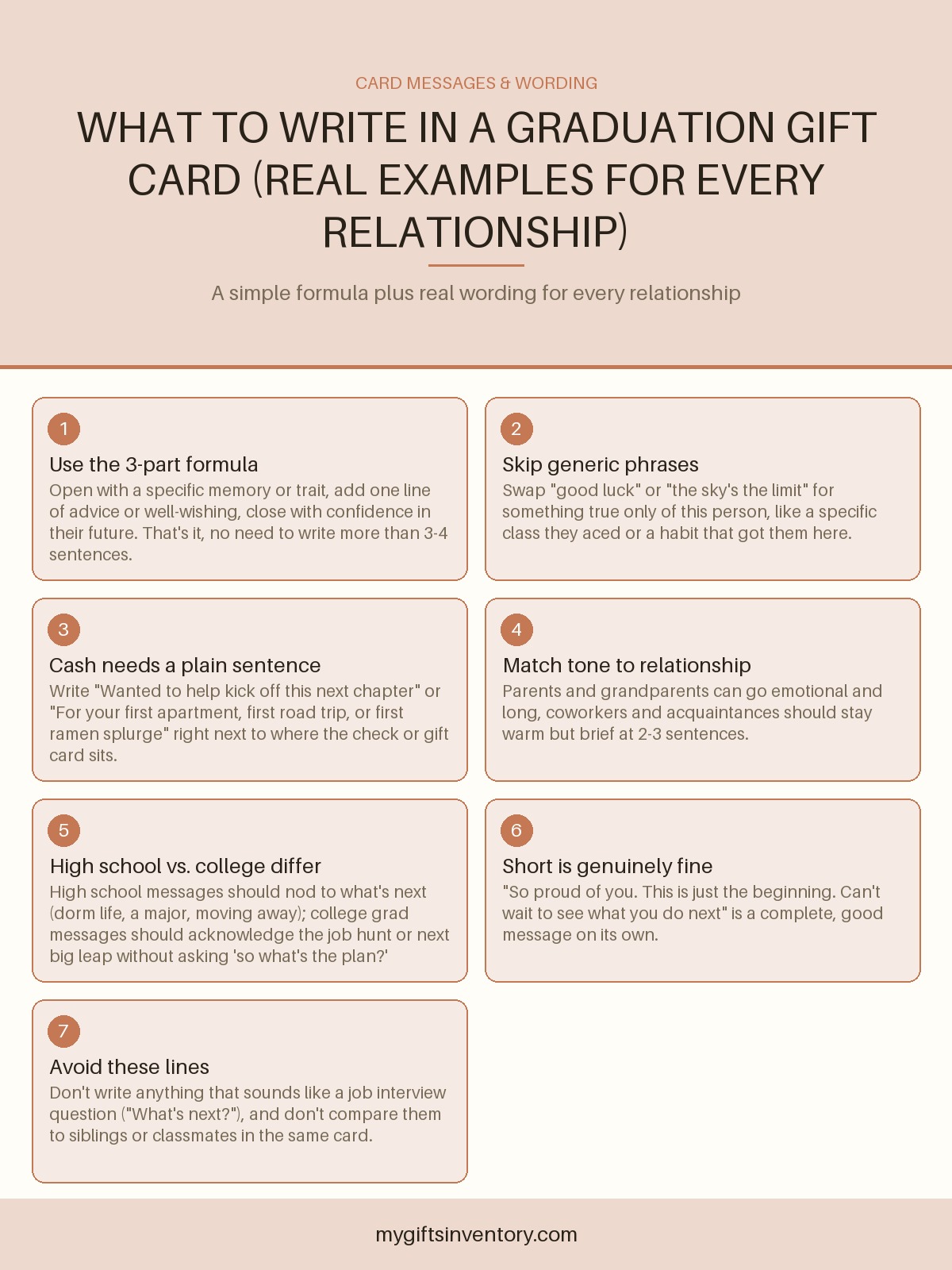
Gift Message Examples: What to Actually Write in a Card for Every Occasion
Real, specific wording for birthdays, weddings, sympathy, thank-yous, and awkward office gift exchanges, plus what to write when you genuinely don't know what to say.
As an Amazon Associate, My Gifts Inventory earns from qualifying purchases. We only recommend products we'd genuinely consider buying ourselves.
You've got the gift wrapped, the card picked out, and now you're sitting there with a pen in hand and absolutely nothing coming to mind. This happens to almost everyone, even people who write for a living. The pressure of a blank card feels bigger than it should, because somehow four or five sentences are supposed to carry a whole relationship's worth of meaning. They don't have to. Most great gift messages are short, specific, and a little imperfect, which is exactly what makes them feel real.
Why the Right Words Matter Less Than You Think
People remember gift messages for their sincerity, not their vocabulary. Nobody has ever re-read a birthday card and thought "the phrasing was a little pedestrian." What they remember is whether the message felt like it was written for them specifically, or whether it could have been copied and pasted onto anyone's card. That's really the only bar you need to clear. If you're still narrowing down what to actually put in the box, our guide on choosing the perfect gift for every person and occasion can help you land on something the message will feel natural writing about.
A Simple Formula You Can Use for Almost Any Occasion
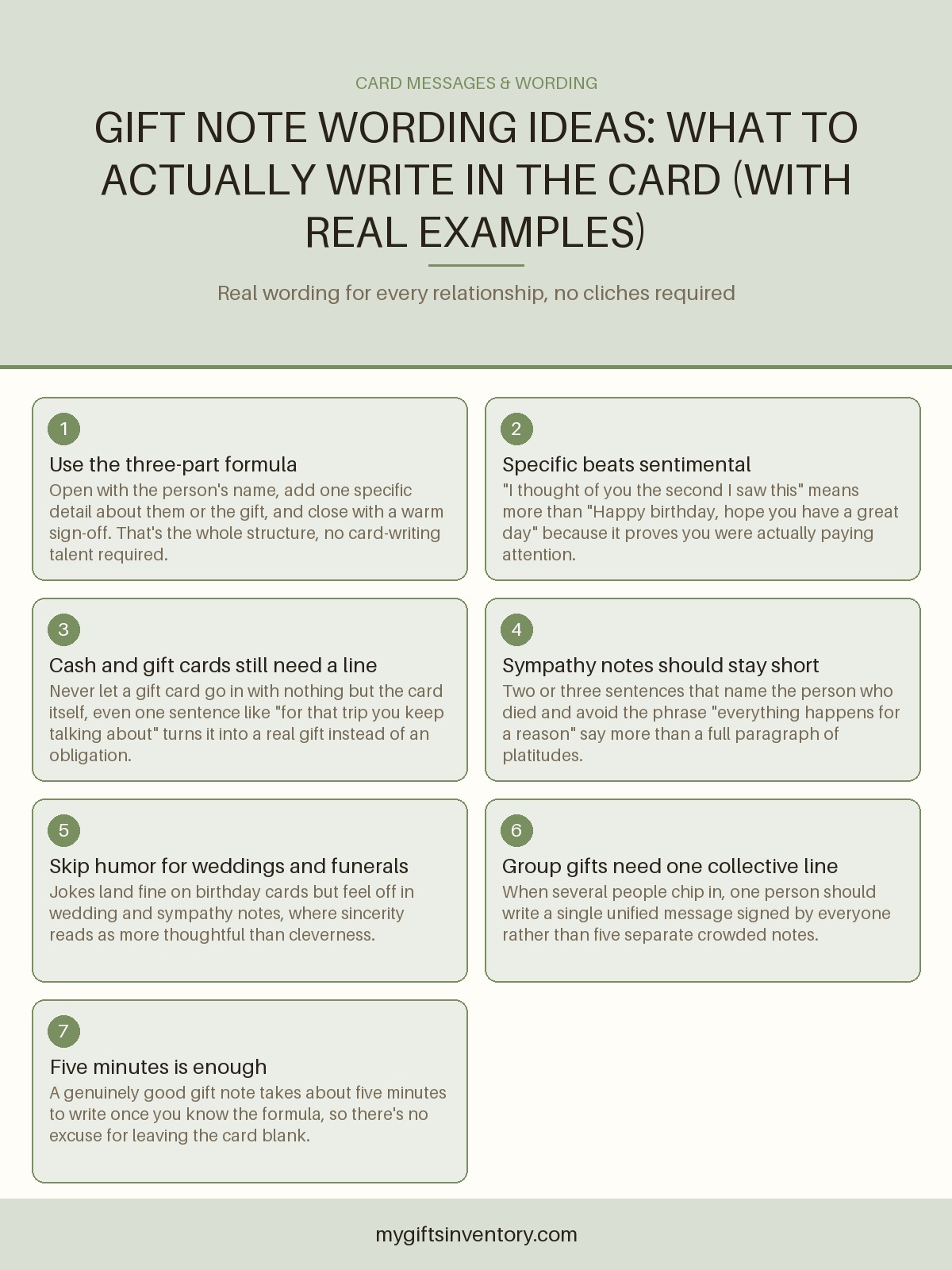
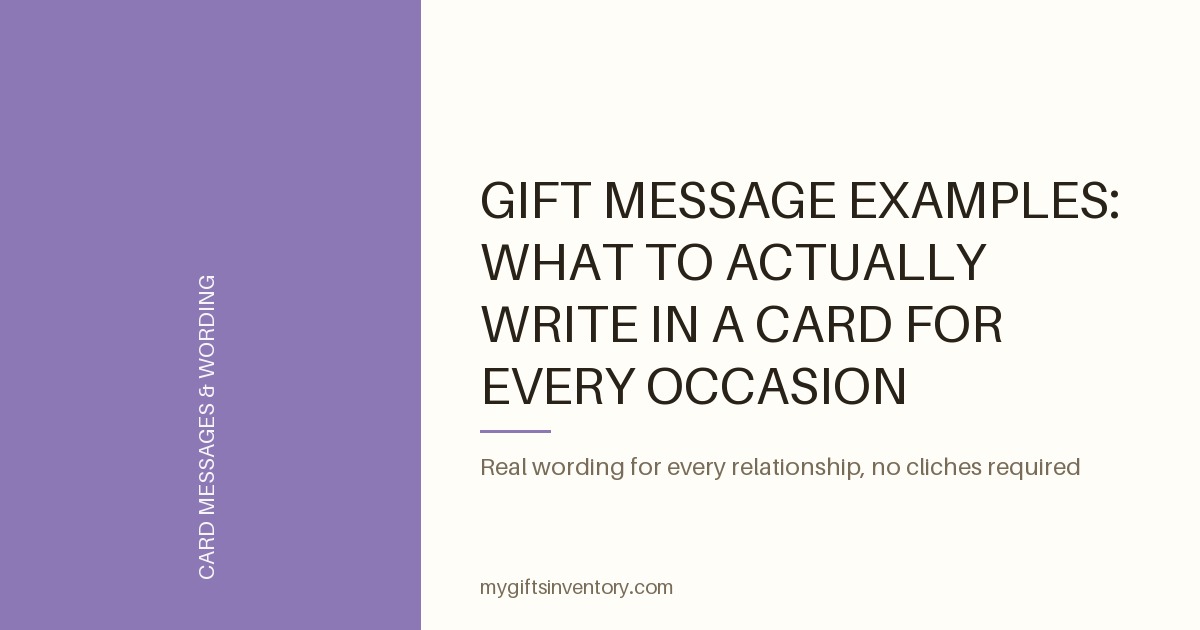
When you're stuck, fall back on a three-part structure: name the occasion, say one true and specific thing, close warmly. It sounds almost too basic to work, but it holds up across birthdays, holidays, weddings, and thank-you notes alike.
- Occasion: "Happy birthday" or "Congratulations on the new job" or "Thinking of you."
- Specific detail: A memory, an inside joke, something they mentioned wanting, or a genuine compliment tied to something real.
- Warm close: "Love you," "So proud of you," "Can't wait to celebrate with you," or simply "Sending love."
Put together, that might read: "Happy birthday, Sam! I still think about that road trip playlist you made for us last summer. Hope this year brings you just as many good drives. Love you." Nothing fancy, but it lands because it's about them, not a stock phrase.
Gift Message Examples by Occasion
Birthdays
Birthday messages have the most room to play. Short and sweet works fine if the gift itself is doing a lot of the talking: "Happy birthday! Hope this is your favorite one yet." If you want something with more weight, try: "Another year of you being exactly the kind of person people are lucky to know. Happy birthday, friend." For kids' birthdays, keep it simple and fun: "Happy 10th birthday! You're basically a whole decade old now, that's wild. Hope your day is full of cake and no homework." If you're shopping for that age group, our list of gift ideas for 10 year olds under $30 pairs well with a message like that.
Weddings and Anniversaries
Wedding cards tend to run a little longer since they're often kept for years. A solid template: "Congratulations on your marriage! Watching the two of you build this life together has been one of the best things to witness. Wishing you decades of inside jokes, easy mornings, and the kind of love that only gets more comfortable with time." For anniversaries, especially milestone years, it helps to acknowledge the specific number: "Happy 10th anniversary! A decade of choosing each other, every single day, deserves its own kind of celebration." If you're still figuring out what to pair with the card, our roundup of anniversary gift ideas by year breaks down what traditionally fits which milestone.
Baby Showers and New Babies
New parents are usually running on very little sleep, so keep it warm and low-pressure: "Congratulations on your sweet new arrival! Sending so much love to your growing family. Rest when you can, and know we're all cheering you on." For a shower gift before the baby arrives: "Can't wait to meet this little one. Wishing you an easy delivery and a nursery full of good naps."
Graduations
Graduation messages do well when they look forward instead of just backward: "Congratulations, graduate! You worked incredibly hard for this, and it shows. Here's to whatever comes next, we know it's going to be good." If it's a close family member, add something more personal: "Watching you get here has been one of my favorite things. So proud of you, kid."
Sympathy Cards
This is the category where people freeze up the most, and the good news is that simplicity is actually the kindest choice here. Avoid clichés like "everything happens for a reason" or "they're in a better place" unless you know that language fits the person's beliefs. Instead: "I'm so sorry for your loss. [Name] was a wonderful person, and I'm thinking of you and your family during this difficult time." Or, more simply: "There aren't really words for this. Just know we're here for you, whatever you need." Sympathy messages don't need to be long. They need to be steady.
Thank-You Notes
The best thank-you messages name the actual gift and how you'll use it, not just gratitude in the abstract. "Thank you so much for the espresso machine, our mornings are already better because of it" beats a generic "thanks for the gift!" every time. If the gift was money or a gift card, it still helps to reference the intention: "Thank you for the generous gift, we're putting it toward our first apartment furniture and thinking of you every time we sit on that couch."
Corporate and Work Gifts
Professional messages should be warm without tipping into overly personal territory. For a retiring coworker: "Congratulations on your retirement! Your years here made a real difference, and we're going to miss having you around. Enjoy every bit of this next chapter." For a client gift during the holidays: "Wishing you a wonderful holiday season and a successful new year. Thank you for being such a great partner to work with." If you're sourcing something appropriate for the office, our guide to corporate gift ideas under $50 that won't feel like an obligation covers exactly this territory, gifts that read as thoughtful rather than performative.
Gift Message Examples by Relationship
The occasion sets the template, but the relationship sets the tone. The same birthday can call for very different messages depending on who's writing it.
For a Romantic Partner
"Happy birthday to the person who makes every ordinary day feel a little less ordinary. I love you more than this card has room to say." Messages for partners can afford to be a little more vulnerable and specific than messages for coworkers or acquaintances. If you're shopping for her specifically, pairing a message like that with something from our list of personalized gifts for wife under $50 or a perfume gift she'll actually wear gives the words something concrete to point back to.
For a Parent
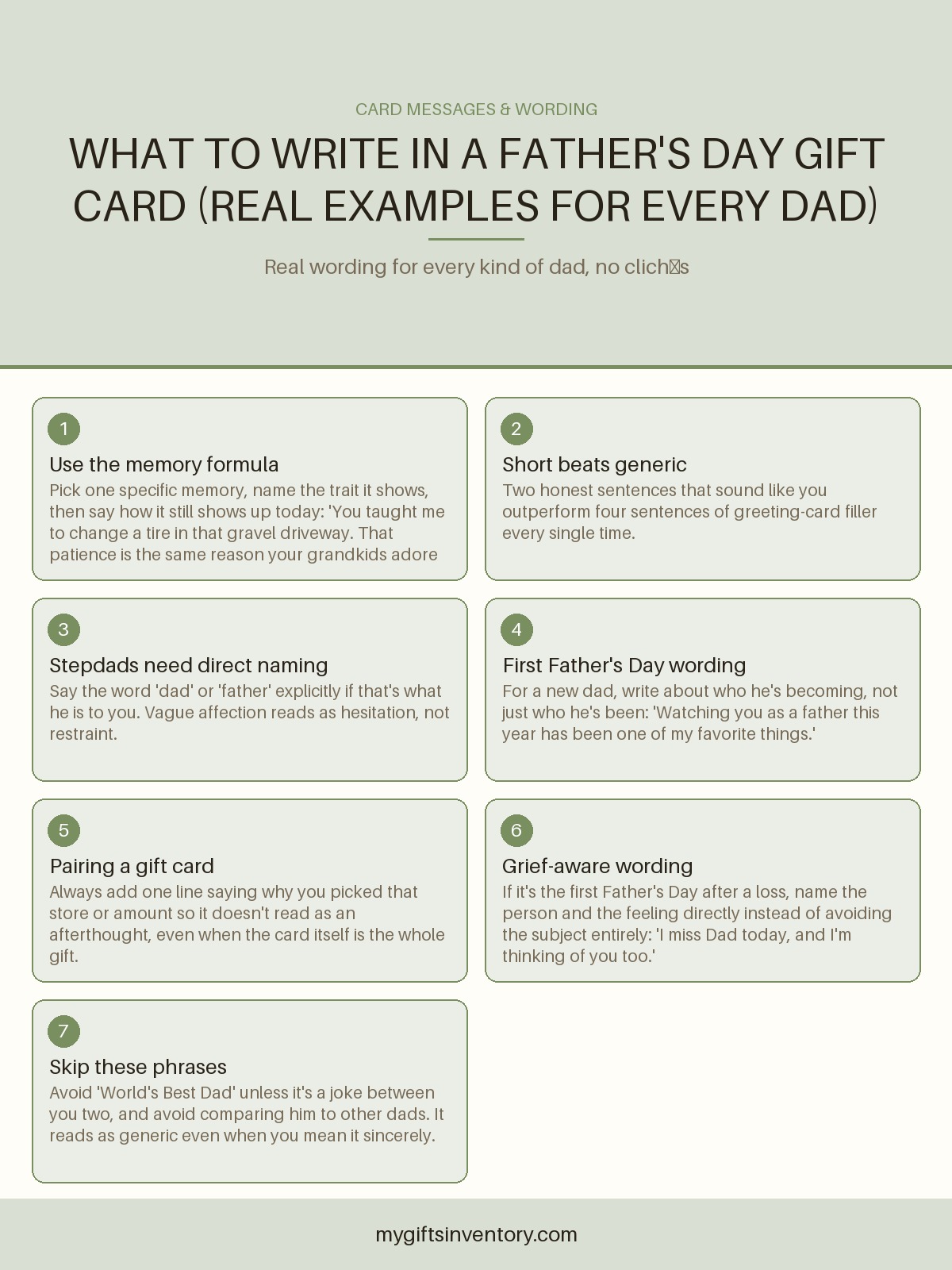
Parents, especially ones who feel like they "have everything," respond well to gratitude-forward messages more than gift-forward ones. "Happy birthday, Mom. I don't say it enough, but everything good about how I move through the world, I learned from watching you. Love you always." If you're stuck on what to actually give someone in that category, our piece on gift ideas for a mom who has everything is built for exactly this situation.
For a Friend
Friendship messages can lean into humor and shared history without much risk: "Happy birthday to my favorite person to complain about life with. Here's to another year of terrible decisions and great memories." The specificity is what makes it land, not the polish.
For a Boss or Manager
Keep it professional but not stiff: "Happy birthday! Hope you get a chance to actually step away from your inbox today and enjoy it." Skip inside jokes unless you're genuinely close outside of work.
When Cash or a Gift Card Is the Gift
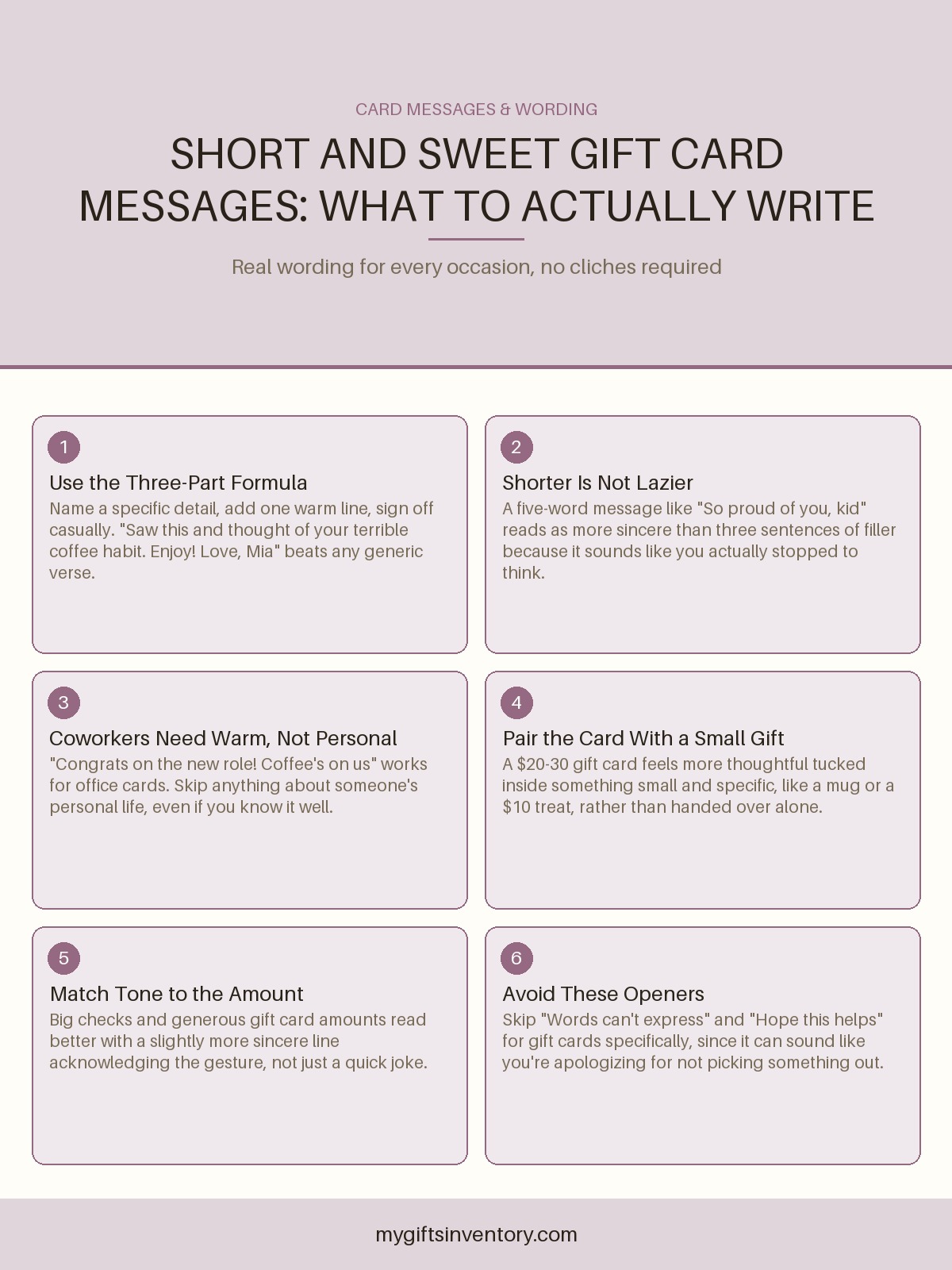
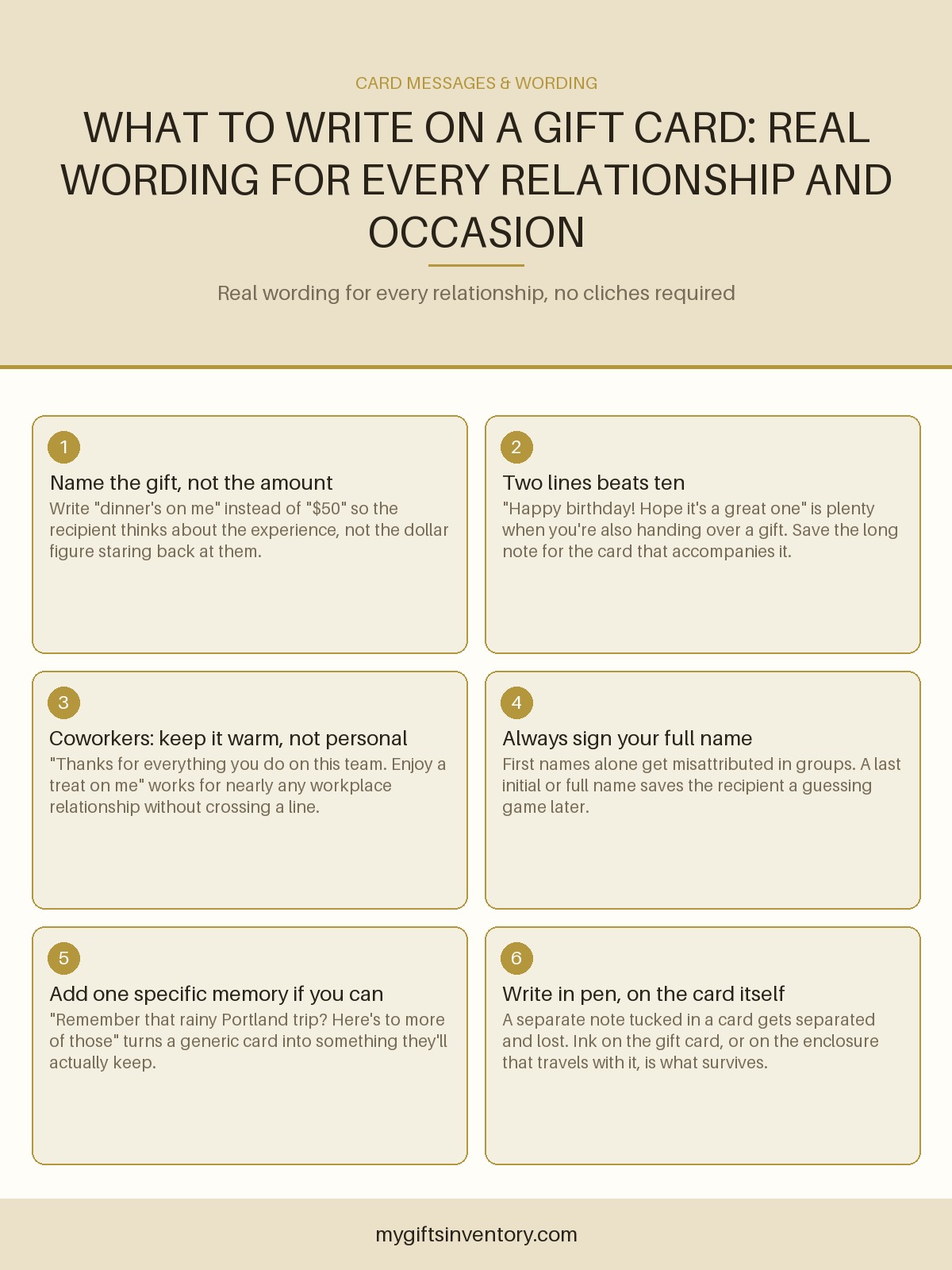
Money and gift cards can feel impersonal if the card doesn't do any of the work. A short explanatory line fixes that instantly: "I know you've been eyeing new hiking gear, so hopefully this helps you get there," or "Put this toward something fun, you deserve it." If the gift card is for a specific store, naming it shows you were paying attention: "Happy holidays! I know how much you love your morning order, so this one's for you," paired with a card for their go-to coffee shop. It's also worth mentioning to gift card recipients, gently, that they can check the remaining balance any time. If you've given an Amazon gift card, a quick note like "no rush spending it, and you can check the balance online whenever" saves them a step later.
What Not to Write
A few phrases tend to fall flat no matter how well-intentioned they are. "Sorry this isn't much" undercuts the gift before the recipient even opens it. "Hope you like it, I wasn't sure what to get" does the same thing. Overly generic lines like "You're the best!!!" with no context can feel like they were written in thirty seconds, even if they weren't. And for sympathy cards specifically, steer clear of silver-lining language that can feel dismissive of real grief. When in doubt, simple and sincere beats clever every time.
Short and Sweet vs. Long and Heartfelt
Length should match the occasion and the relationship, not some invisible rule about effort. A birthday card for a coworker doesn't need three paragraphs, two honest sentences are plenty. Milestone events like weddings, retirements, or graduations tend to warrant more, since the card itself might get kept in a box for years. A helpful gut check: if you'd feel embarrassed reading the message out loud to the person's face, it's probably too much. If it feels like something you'd actually say to them, it's just right.
Handling Awkward Situations
Group cards are their own challenge, especially in office settings. If ten people are signing one card, it helps enormously if one person drafts a short unified message first, then leaves room for individual signatures or a single added line. Otherwise you end up with ten separate "Happy birthday!"s stacked on top of each other, which reads more like a sign-in sheet than a card. For gifts that feel mismatched in price, like when you received something generous but gave something modest, don't apologize for the difference in your message. Focus the note on the relationship, not the price tag: "This is such a small token compared to how much your friendship means to me" works better than drawing attention to cost directly.
Gift Ideas to Go With This


Want more ideas? Browse our full guide: 18 Keepsake Gifts Worth Holding Onto (2026): Personalized Picks They'll Treasure Forever
Frequently Asked Questions
What do you write in a gift card when you don't know the person well?
Keep it polite, occasion-focused, and brief, something like "Wishing you a wonderful [occasion]! Enjoy." You don't need personal details you don't have, and forcing familiarity you don't share tends to feel more awkward than a short, warm, generic line.
How long should a gift message be?
Two to three sentences is plenty for most everyday occasions like birthdays or holidays, while milestone events like weddings, graduations, or retirements can reasonably run to a short paragraph. Length should reflect the significance of the occasion and how well you know the person, not a sense of obligation.
What do you write when giving money as a gift?
Add one line of context so the gift doesn't feel like an afterthought, such as "Put this toward that trip you've been planning" or "Hope this helps with the new apartment." Naming the intention behind the money makes it feel considered rather than like the easy way out.
What's a good message for a sympathy gift?
Keep it simple and direct, such as "I'm so sorry for your loss, thinking of you and your family during this time." Avoid clichés about things happening for a reason, and don't feel pressure to write more than a few sincere sentences.
Is it okay to write the same message in multiple cards?
It's fine for very casual situations, like signing a stack of holiday cards for distant relatives, but for close friends and family it's worth personalizing at least one detail. Even swapping in a specific memory or inside reference takes a generic message and makes it feel like it was written for that one person.
Looking for an Actual Gift Instead?
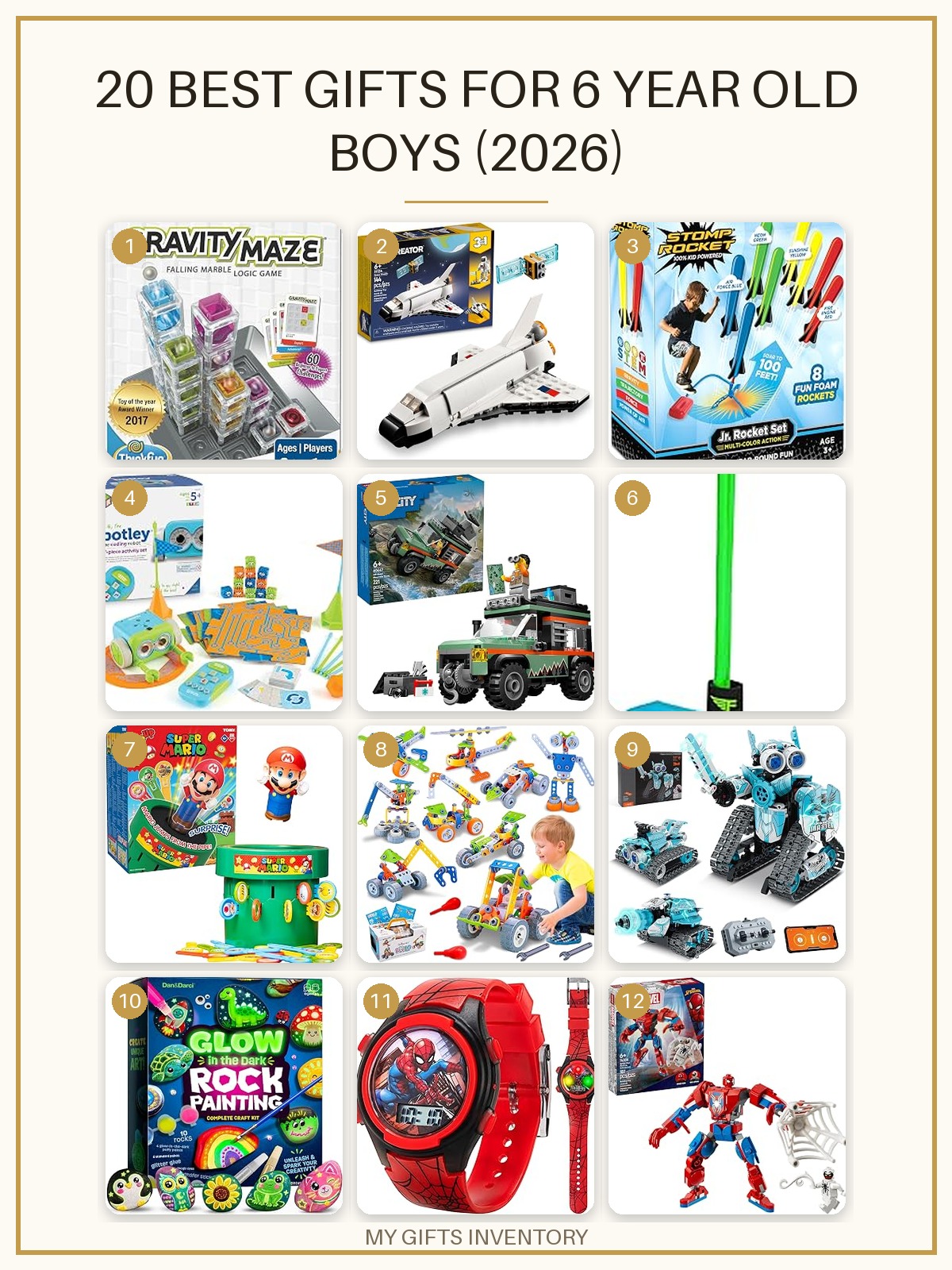
Gift Sets We Love Right Now
Every item picked, priced and linked, ready to buy.
More Gift Advice