Holiday Gift Etiquette: Who to Buy For, How Much to Spend, and What to Do When You Get It Wrong
A real-world guide to holiday gift etiquette, including budgets by relationship, gift exchange rules, regifting, returns, and what to do when someone gives you more than you gave them.
As an Amazon Associate, My Gifts Inventory earns from qualifying purchases. We only recommend products we'd genuinely consider buying ourselves.
Every December, the same questions come up on repeat: how much is too much to spend on a coworker, what do you do when your sister-in-law hands you a wrapped gift and you have nothing for her, and is it actually rude to regift that candle set you'll never use. None of it is written down anywhere official, which is exactly why it feels so stressful. There's no rulebook, just a tangle of unspoken expectations across family, friends, and work that shift depending on who you ask.
We're not going to pretend there's one universal answer, because there isn't. But there are patterns that hold up across most families and most offices, and knowing them takes a lot of the guesswork out of the season. Here's what actually matters.
Who Actually Belongs on Your List
Start by sorting people into rough tiers rather than trying to treat everyone the same. Most people's holiday lists naturally break down into: immediate family, extended family, close friends, casual friends, coworkers, and service providers you interact with regularly (teachers, hairdressers, mail carriers, babysitters). You don't need a gift for every person in every category, but knowing which tier someone falls into makes the budget question much easier to answer, because the tiers roughly map to how much you'd spend.
A good rule when a list feels unwieldy: if you wouldn't have thought to buy this person a gift before checking whether they got you one, they're probably in the "card or small gesture" tier, not the "wrapped gift under the tree" tier. That's not cold, it's just realistic about where your time and money should go.
How Much to Spend, By Relationship
Budgets are the number one source of holiday gift anxiety, mostly because nobody says the actual numbers out loud. Here's a realistic breakdown by relationship, understanding that family culture and income vary a lot from house to house.
Immediate Family
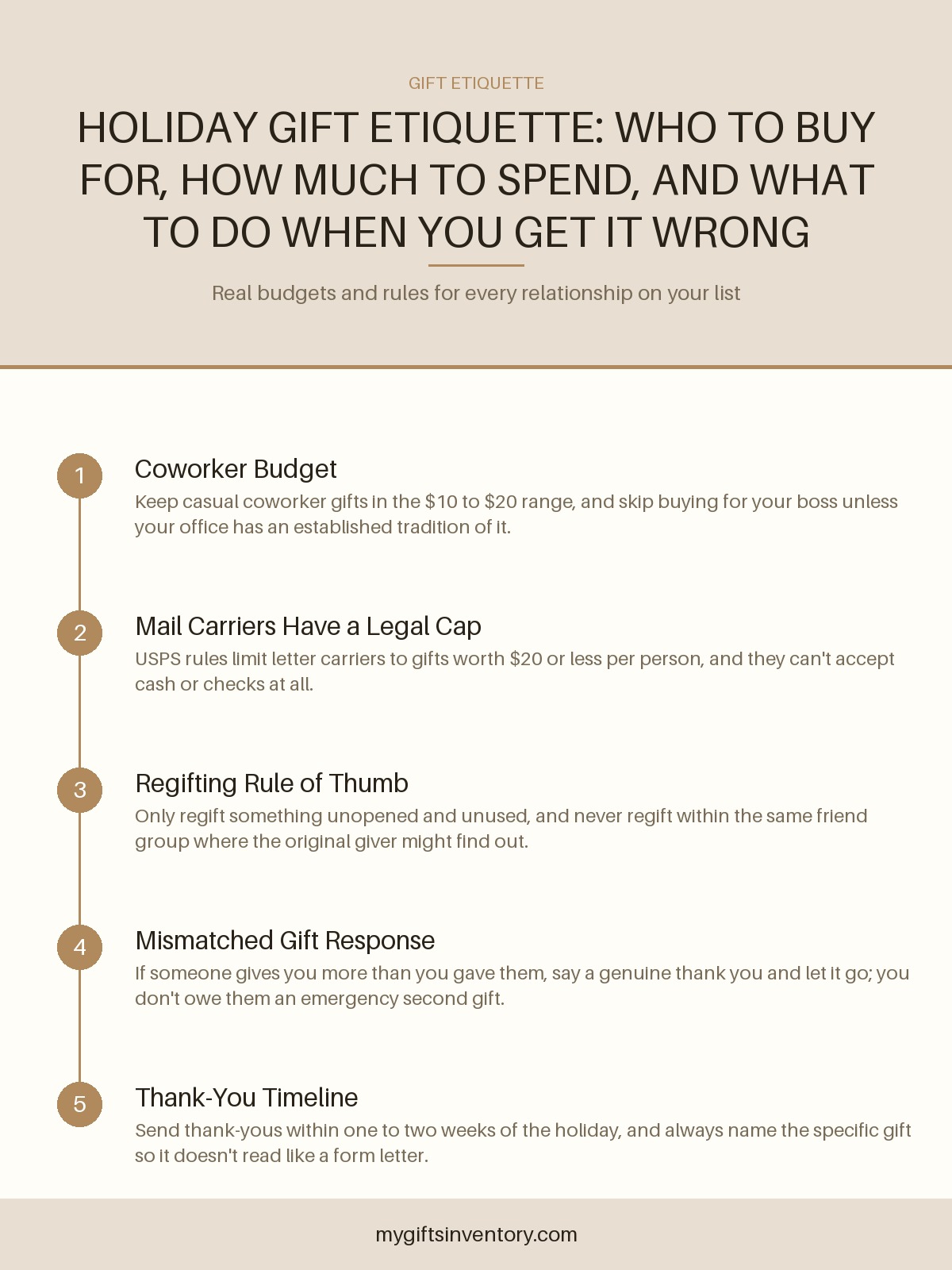
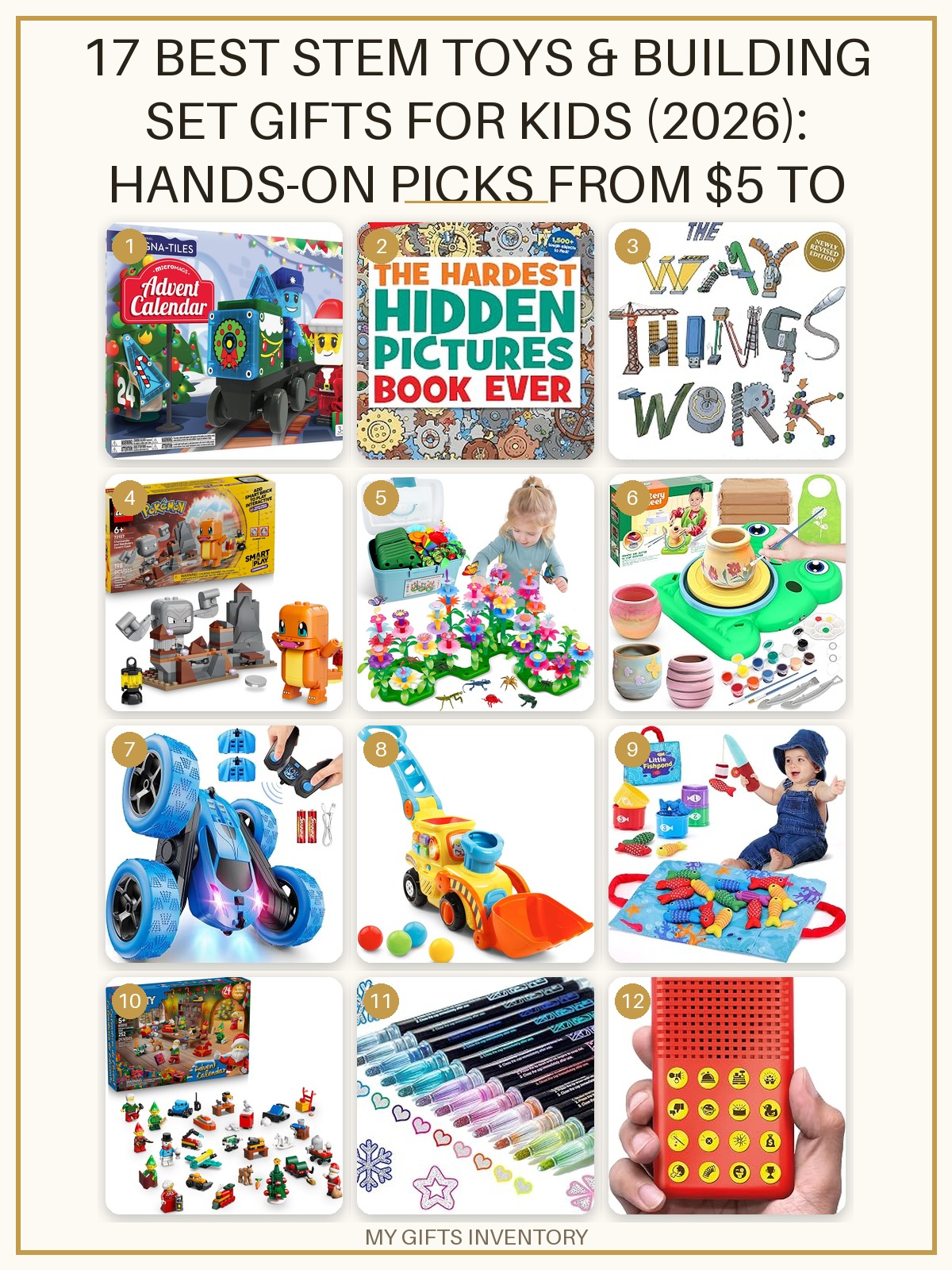
Spouses and partners typically land anywhere from $75 to $300 or more, and this is really a conversation to have as a couple rather than a guess, since mismatched expectations here cause more holiday tension than almost anything else. Parents and adult siblings usually fall in the $50 to $150 range. Kids in the immediate family are often where budgets stretch furthest, and something like our gift ideas for 10 year olds under $30 guide is useful if you're buying for nieces, nephews, or grandkids and want a sense of what a reasonable spend actually looks like at that age.
Extended Family and Friends
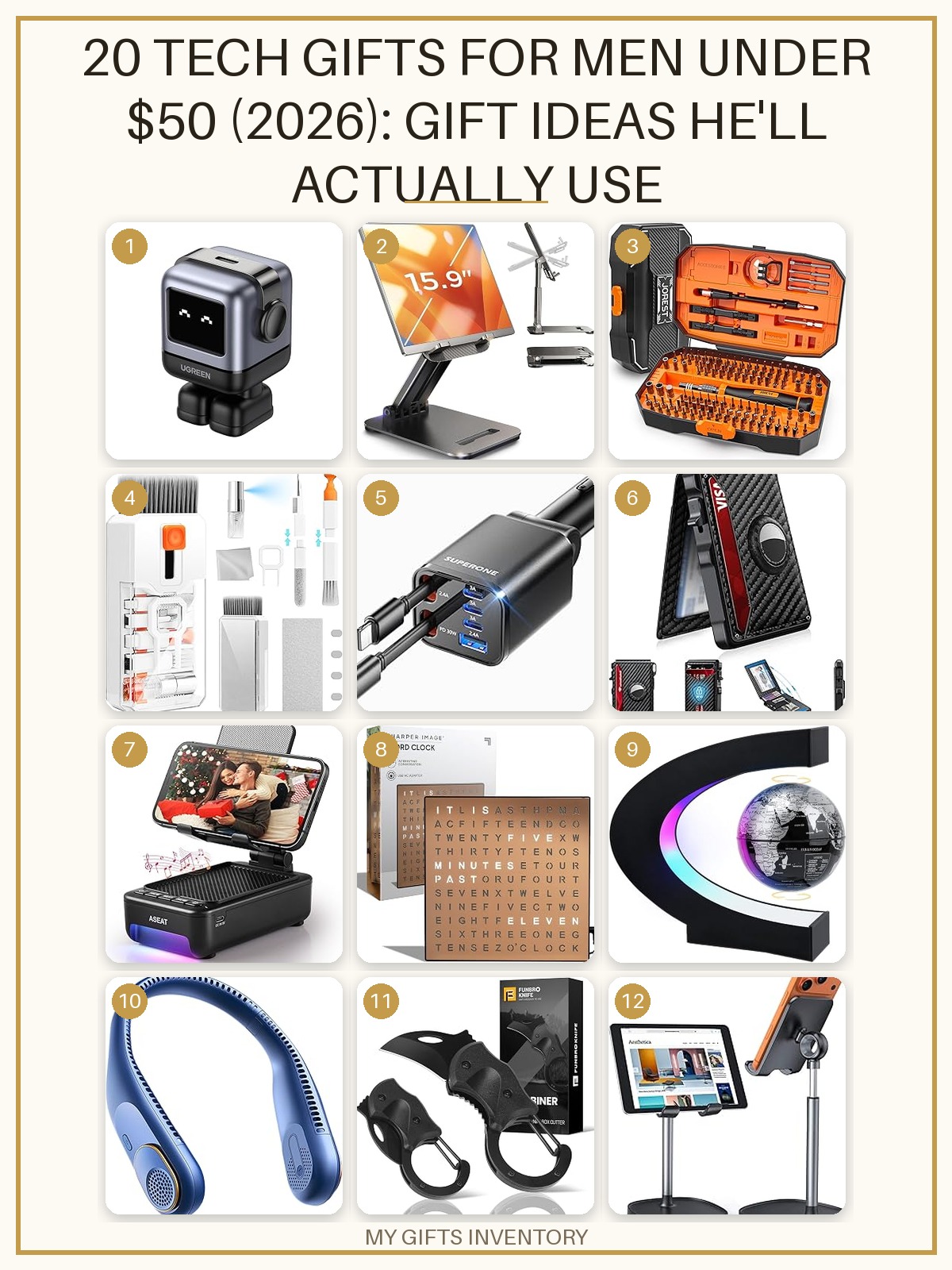
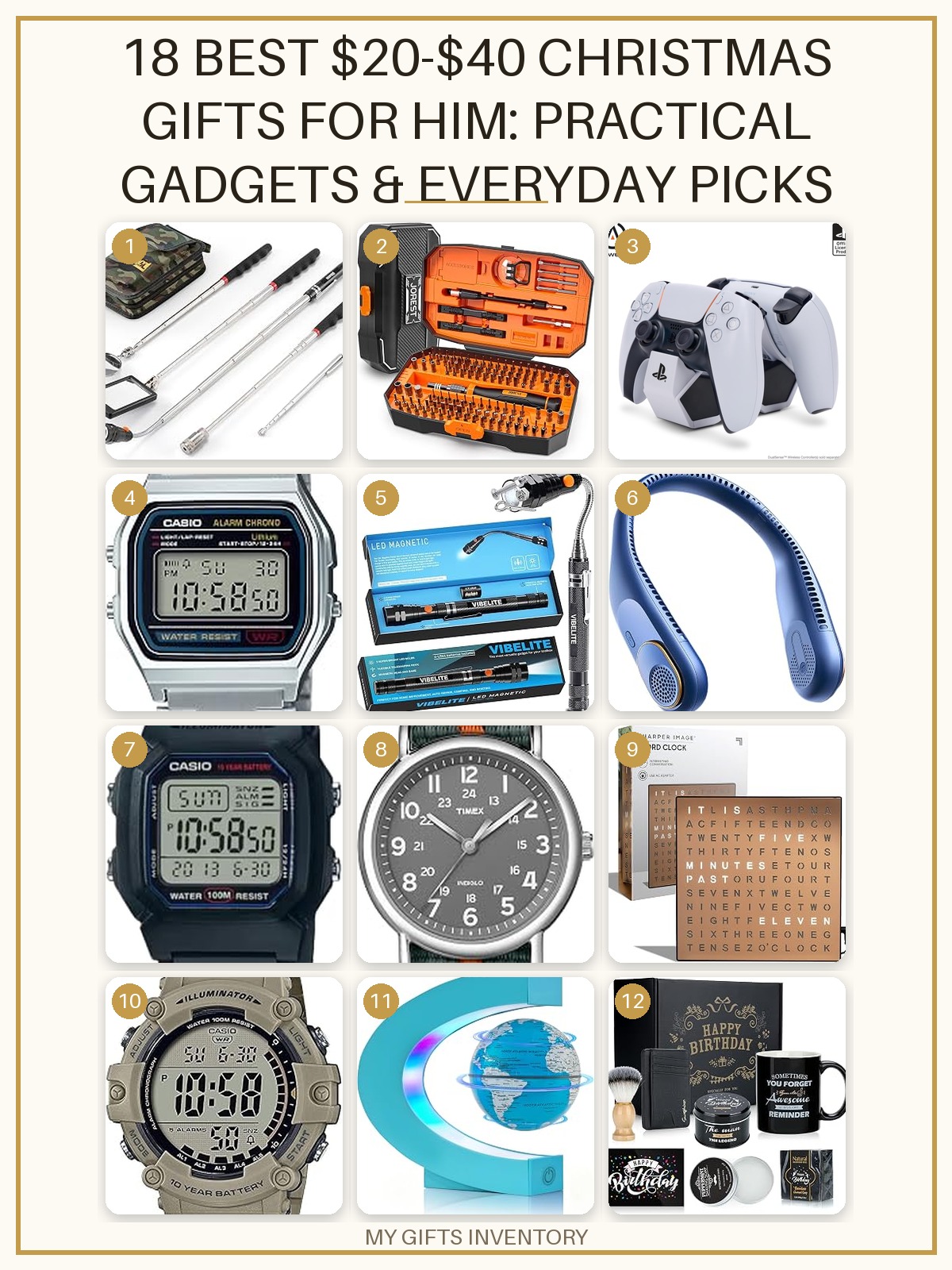
Aunts, uncles, cousins, and in-laws you don't see often generally get $20 to $40, and plenty of families cap this with a Secret Santa or Yankee swap specifically so nobody feels obligated to buy for fifteen relatives individually. Close friends usually land between $30 and $75 depending on how long you've known each other and whether gift-giving has always been part of the friendship. If you're shopping for a close friend or a partner and want ideas that don't feel like filler, our tech gifts for men under $50 guide and similar budget-specific lists are built exactly for that price bracket rather than padding a cart to hit a number.
Coworkers and Bosses
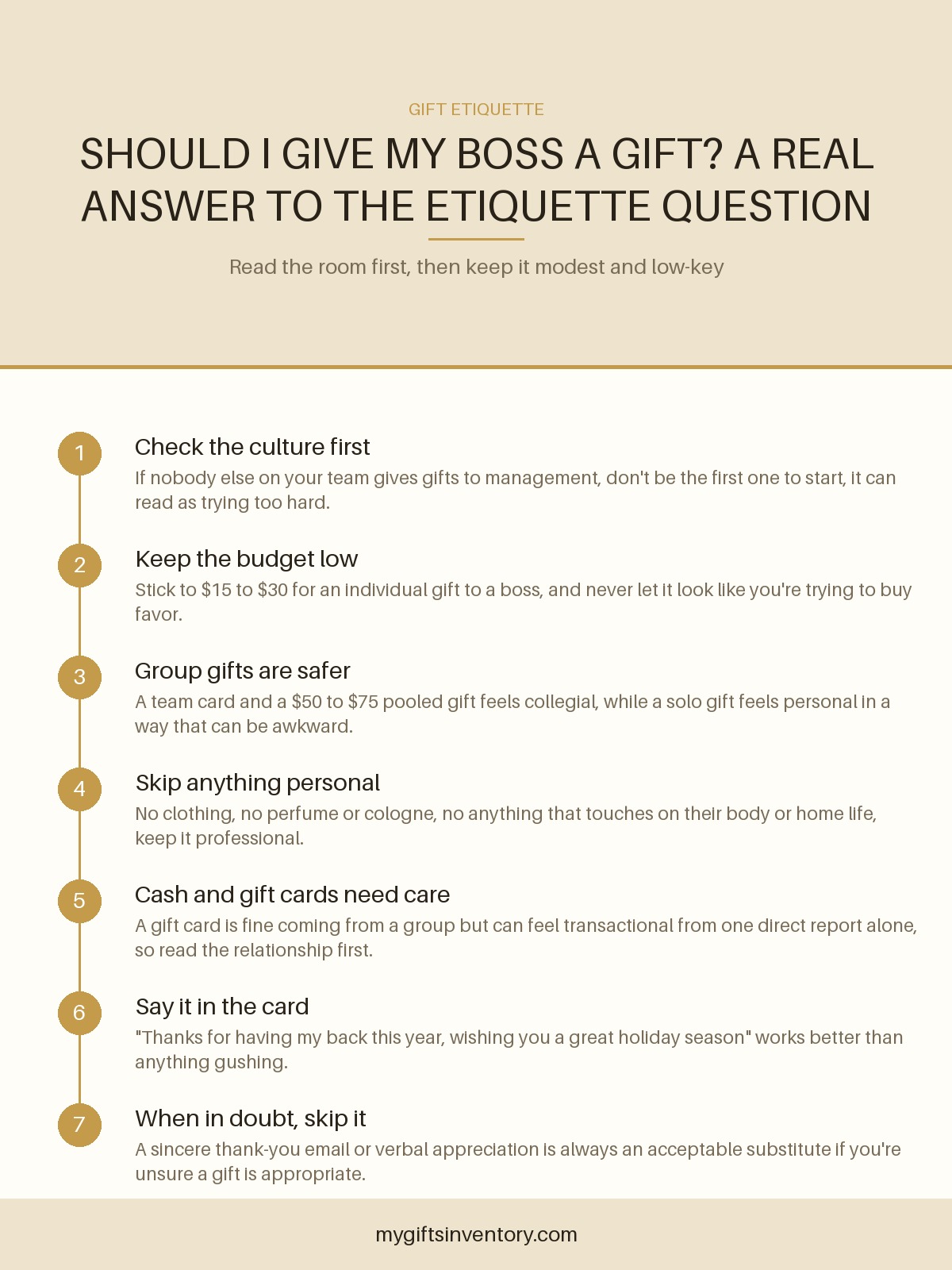
This is where etiquette gets genuinely tricky. The safe range for a casual work friend is $10 to $20, something small and consumable is almost always the right call, a coffee gift set from a guide like our coffee lovers gift ideas under $50 works well because it doesn't require guessing at personal taste. As for bosses: unless your office has an established tradition of it, you generally don't need to buy your boss anything, and in many workplaces it's actively discouraged to avoid the appearance of currying favor. If your team does a group gift for a manager, a modest pooled contribution is fine; an individual expensive gift can read as awkward rather than thoughtful.
Teachers and Service Providers
Many schools have policies capping gift value or banning cash gifts entirely, so it's worth checking before you assume a $50 gift card is welcome. A gift card in the $20 to $30 range or a handwritten note is almost always appropriate and appreciated. For people who provide regular service, tipping guidance generally runs like this: a hairdresser or barber, the cost of one session; a house cleaner, one visit's pay; a regular babysitter, one night's pay or $25 to $70 as a bonus; a dog walker, one week's fee. One rule that surprises people: US postal carriers are limited by federal regulation to gifts worth $20 or less per person, and they're not permitted to accept cash or checks at all, so a small item or modest gift card is the appropriate route there, not an envelope of cash.
Gift Exchanges: White Elephant, Secret Santa, and Grab Bags
Group gift exchanges exist specifically to solve the "too many people to buy for" problem, but they only work smoothly when the rules are set clearly in advance. Before the exchange, someone needs to nail down: the price limit (and whether people should stick close to it or under it), whether gifts are wrapped or in bags, how many times an item can be "stolen" in a white elephant format, and whether homemade or gag gifts are allowed. Price limit creep is real and it's usually what causes hurt feelings, someone spends $15 on a $20 exchange and someone else spends $60, and suddenly the exchange feels unbalanced. Setting the number explicitly in the group chat, not just assuming everyone knows, heads this off.
The Regifting Question
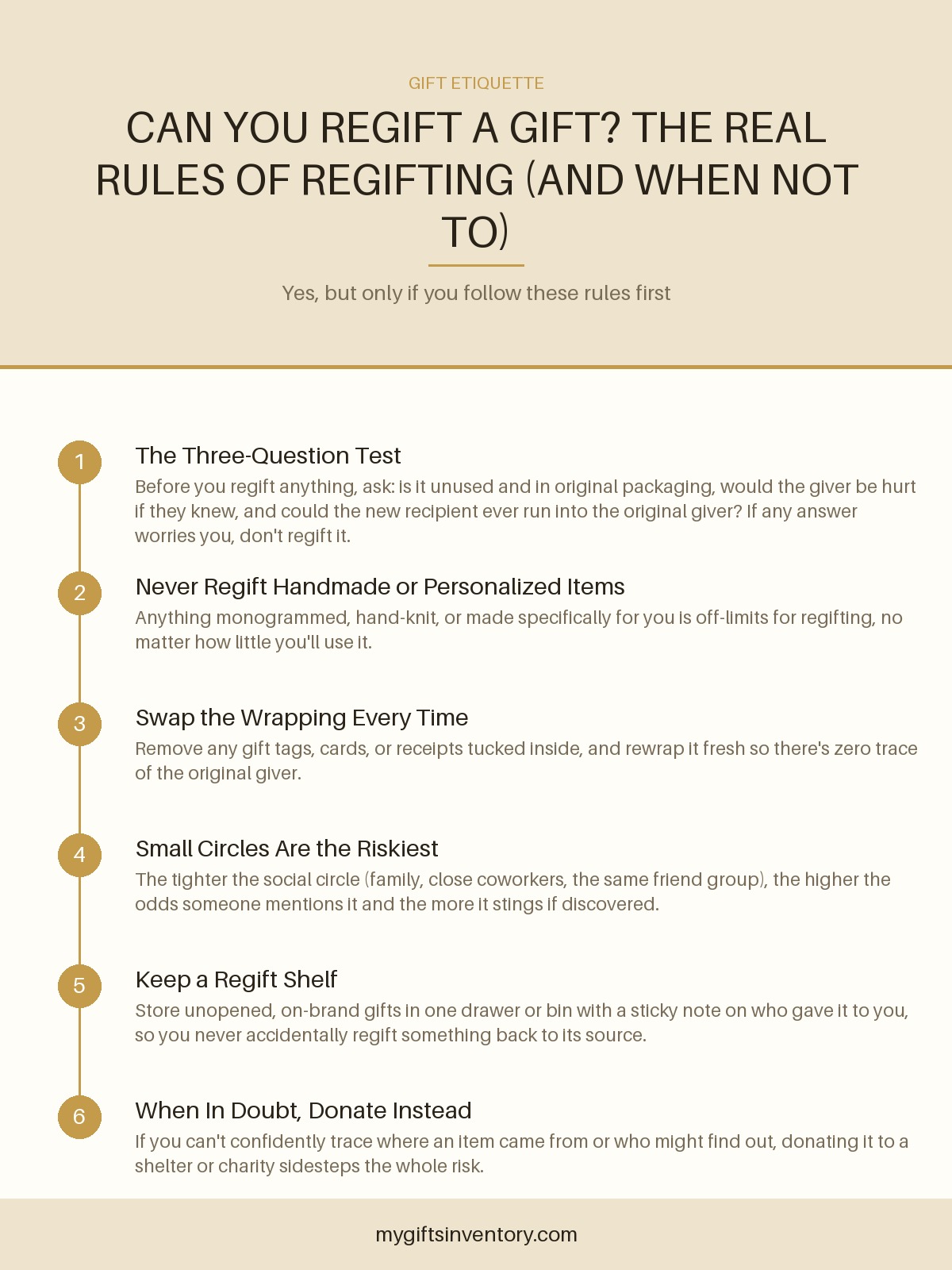
Regifting is not inherently rude, despite the reputation. It's a perfectly reasonable way to make sure something unused finds an owner who actually wants it, as long as a few conditions are met. The item should be unopened or in new, unused condition. Remove any cards, tags, or personalization from the original giver. Don't regift within the same friend group or family circle where the original giver is likely to find out, and don't regift something that was clearly picked out with you specifically in mind, like a monogrammed item or something handmade. When in doubt, ask yourself if you'd be embarrassed if the original giver found out; if the answer is yes, it's not a good regifting candidate.
When You Get More Than You Gave
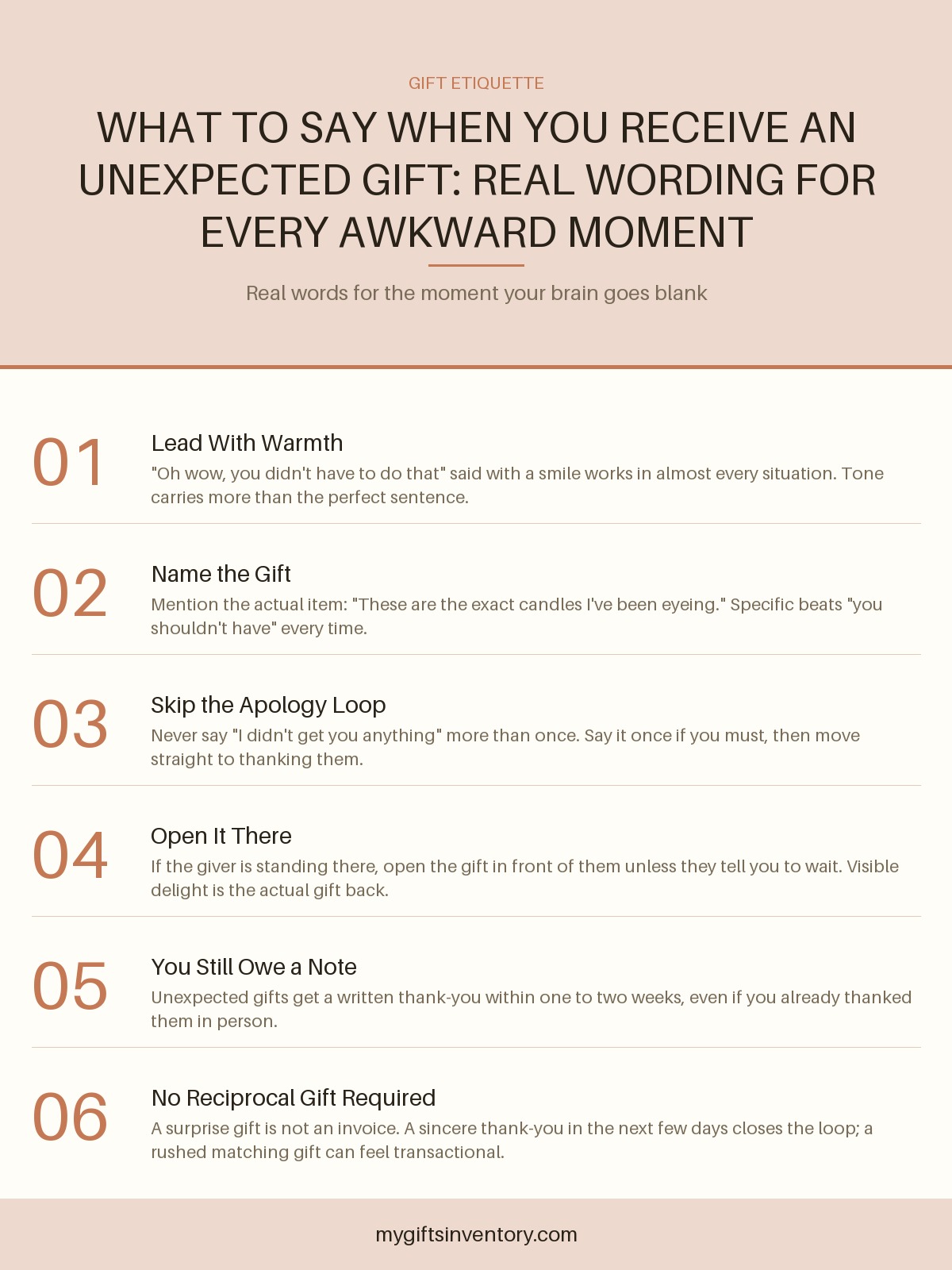
This happens to almost everyone at some point: someone hands you a genuinely nice, clearly considered gift, and what you brought them feels suddenly small in comparison. The right response is a warm, specific thank you, not a scramble to even the score. Gift-giving isn't meant to be a transaction with a running balance, and trying to immediately "catch up" with a rushed follow-up gift usually reads as more awkward than gracious. If it happens repeatedly with the same person, it's worth a quiet, kind conversation the following year about setting a shared budget, rather than trying to solve it in the moment.
Gift Cards Without the Awkwardness
Gift cards get an unfair reputation as a lazy gift, but for a lot of relationships, especially coworkers, teachers, or someone whose taste you genuinely don't know well, they're the most respectful option because they let the person choose exactly what they want. If you're unsure where someone shops, a widely usable option like an Amazon gift card covers almost any interest. For someone local, a card to a store they clearly use often, checking a Target gift card balance is simple enough if you're topping up a card they already have, works better than guessing at a specific product. The etiquette point worth remembering: always pair a gift card with a short handwritten note, even a few sentences, so it doesn't feel like an afterthought.
Returns and Exchanges: What's Actually Reasonable
Most major retailers extend their standard return windows for holiday purchases made in November and December, often through mid or late January, but policies vary enough by store that it's worth checking rather than assuming. If you're giving a gift you're not fully confident about, buy it somewhere that includes a gift receipt automatically or ask for one, since a gift receipt lets the recipient return or exchange without seeing the price, which matters more to some people than others. On the receiving end, it's completely acceptable to exchange a gift for a different size or color without saying anything to the giver at all; it only becomes an etiquette issue if you return something for cash and the giver finds out and feels slighted by it.
Thank-You Notes: Do You Still Need Them
Yes, in most cases, though the format can flex. For gifts from close friends and immediate family, a text or a call within a few days is generally fine, especially if you already thanked them in person when you opened it. For gifts from extended family, older relatives, or anyone who put real thought or expense into something, a handwritten note within one to two weeks still matters and is noticed. The note doesn't need to be long. Naming the actual gift and something specific about it (how you'll use it, why it made you laugh, that you already wore it) is what separates a genuine thank-you from a form letter, and it takes maybe thirty extra seconds to write.
Building a Realistic Timeline
Etiquette problems often start as timeline problems. A workable holiday timeline looks something like this: early to mid November, make your list and rough budget by tier; late November through early December, do the bulk of your shopping while selection is still good; by the second week of December, wrapping should be underway and anything being shipped to someone out of state should already be in transit, since carriers get slower and pricier the closer you get to the holiday. Anything you're mailing internationally needs even more buffer, often two to three weeks minimum. Leaving shopping until the final week almost guarantees either overpaying for rush shipping or ending up in the gift card aisle by default, which is fine occasionally but isn't a plan.
Gift Ideas to Go With This


Want more ideas? Browse our full guide: 20 Best Gifts Under $100 (2026): Thoughtful Picks They'll Actually Use
Frequently Asked Questions
Do I have to get a gift for someone if I know they're getting me one?
No, but it's kind to say something ahead of time if you know you won't be exchanging gifts this year, so nobody feels caught off guard in the moment. A simple heads-up like "I'm keeping things really small this year" spares both people the awkwardness.
Is it rude to ask what someone wants instead of guessing?
It's not rude at all, and in many families it's the norm rather than the exception. Asking directly, or using a shared wish list, generally leads to better gifts and fewer returns than guessing, and it removes a lot of the pressure from both sides.
How much should I spend on a Secret Santa gift?
Whatever the group agrees on in advance, typically somewhere between $15 and $30 for most adult workplace or friend group exchanges. The number matters less than everyone actually sticking to it, so it's worth confirming the limit explicitly rather than assuming.
What do I do if I can't afford to buy for everyone on my list?
Trim the list by tier rather than trying to buy something small for everyone, since a genuine card or a shared homemade treat for the outer tiers is more meaningful than a rushed five-dollar item. Most people would rather receive a thoughtful note than a gift that clearly wasn't a priority.
Is it okay to give cash as a holiday gift?
Yes, especially for teenagers, college students, or relatives you don't see often enough to know their taste well. It's generally seen as more personal when paired with a card that says something specific, rather than handed over in a blank envelope.
Looking for an Actual Gift Instead?

Shop Hand-Picked Gift Sets
Every item picked, priced and linked, ready to buy.
More Gift Advice