Proper Gift Giving Manners: A Real Etiquette Guide
The unwritten rules of giving and receiving gifts gracefully, from what to spend to what to say when you open something you don't love.
As an Amazon Associate, My Gifts Inventory earns from qualifying purchases. We only recommend products we'd genuinely consider buying ourselves.
You're standing in front of a shelf, or scrolling a cart at midnight, and the actual question isn't "what do I buy" anymore. It's "am I doing this right." Should you spend more on your sister than your coworker? Is it rude to give a gift card? What do you even say when you open something you secretly don't like, standing right in front of the person who gave it to you? These are the questions that don't have obvious answers, and most etiquette advice skips right past them.
Gift giving manners aren't really about rules for their own sake. They're about making sure the other person feels good, whether that's the person opening the gift or the person who gave it. Here's what actually matters, in the order it tends to come up.
The Rules That Almost Never Change
A few things hold true no matter the occasion, the relationship, or the budget.
- Take the price tag off. Always. This includes the sticker on the bottom of a candle, the tag tucked inside a sleeve, and the receipt folded into the box. Nobody needs to see what you paid, and finding a price tag can make a gift feel transactional instead of personal.
- Presentation counts, even if you're not crafty. A gift wrapped badly in the right paper still reads as effort. A gift handed over in the store bag it came in reads as an afterthought, even if that's not what you meant.
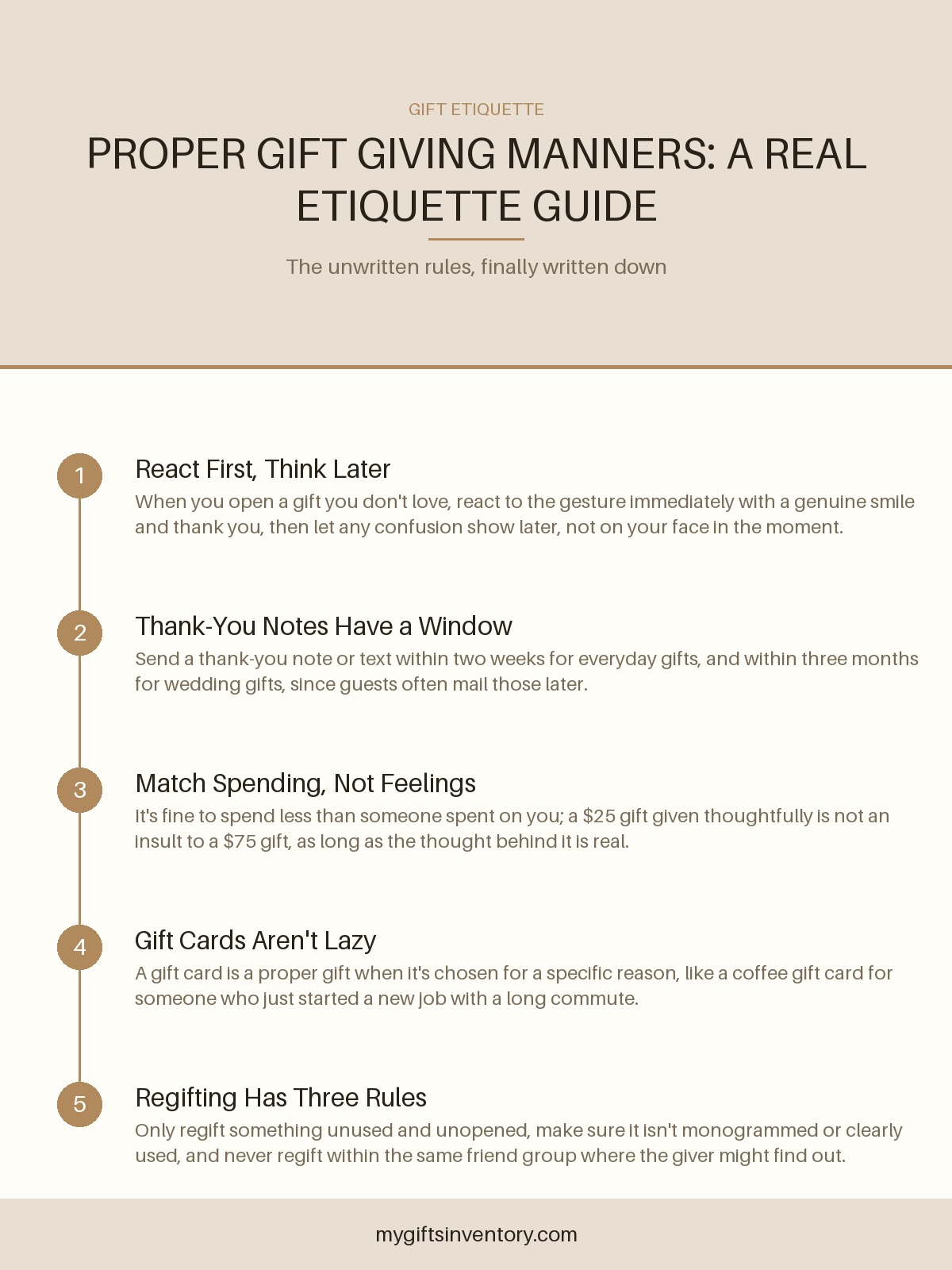
- Say thank you within two weeks, no exceptions. For weddings, the window stretches to about three months, since gifts often arrive over time and the couple is usually buried in logistics. Outside of that, two weeks is the outer edge of polite.
- Never ask what something cost. Not as a joke, not as a compliment. If someone volunteers the price, that's their call to make.
- Match the moment, not the scoreboard. Gift giving isn't a ledger. If a friend gives you something bigger than what you gave them, that's not a debt you owe back next time. It's just how it landed this year.
How Much Should You Actually Spend
Budget anxiety is probably the single biggest source of gift-giving stress, and most of it comes from not having a real number to anchor to. Here's a grounded way to think about it by relationship, not by what you saw someone else spend on social media.
Close Family and Partners
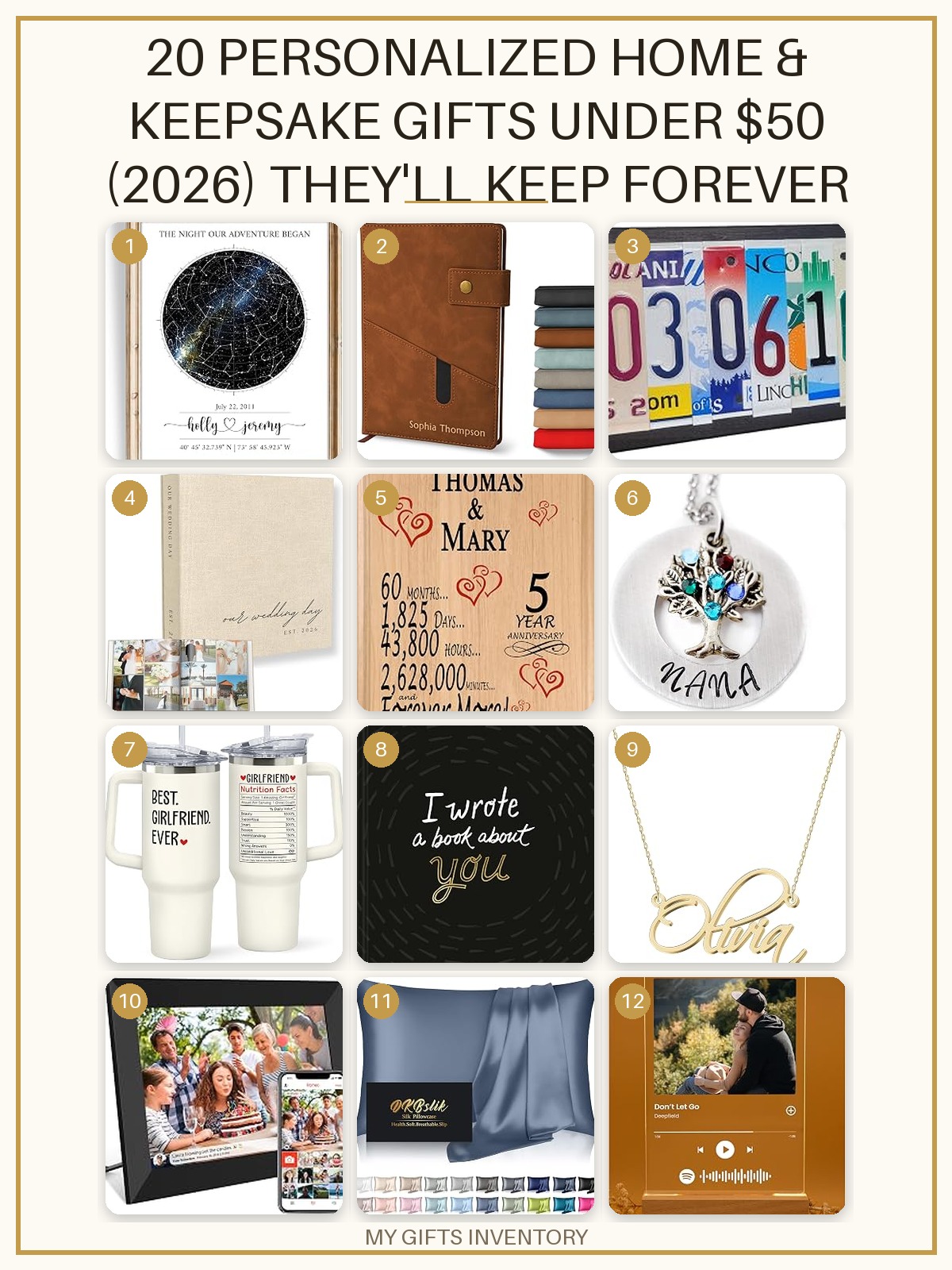
For a spouse, partner, or parent, most people land somewhere between $50 and $150 for a birthday or anniversary, and that range stretches for milestone years or holidays when a household is combining gifts under one roof. If you're shopping for a girlfriend's birthday and want something that feels considered without overspending, a guide like 24 Gift Ideas for Birthday Gifts for Girlfriend Under $50 is a useful way to see what fits that range without defaulting to flowers again.
Extended Family and Friends
For siblings, close friends, and adult children, $30 to $75 is the common range for a birthday or holiday gift. For a mom who genuinely seems to own everything already, the trick isn't spending more, it's spending smarter on something she wouldn't buy for herself; 23 Gift Ideas for Mom Who Has Everything is built around exactly that problem.
Coworkers, Acquaintances, and Office Exchanges
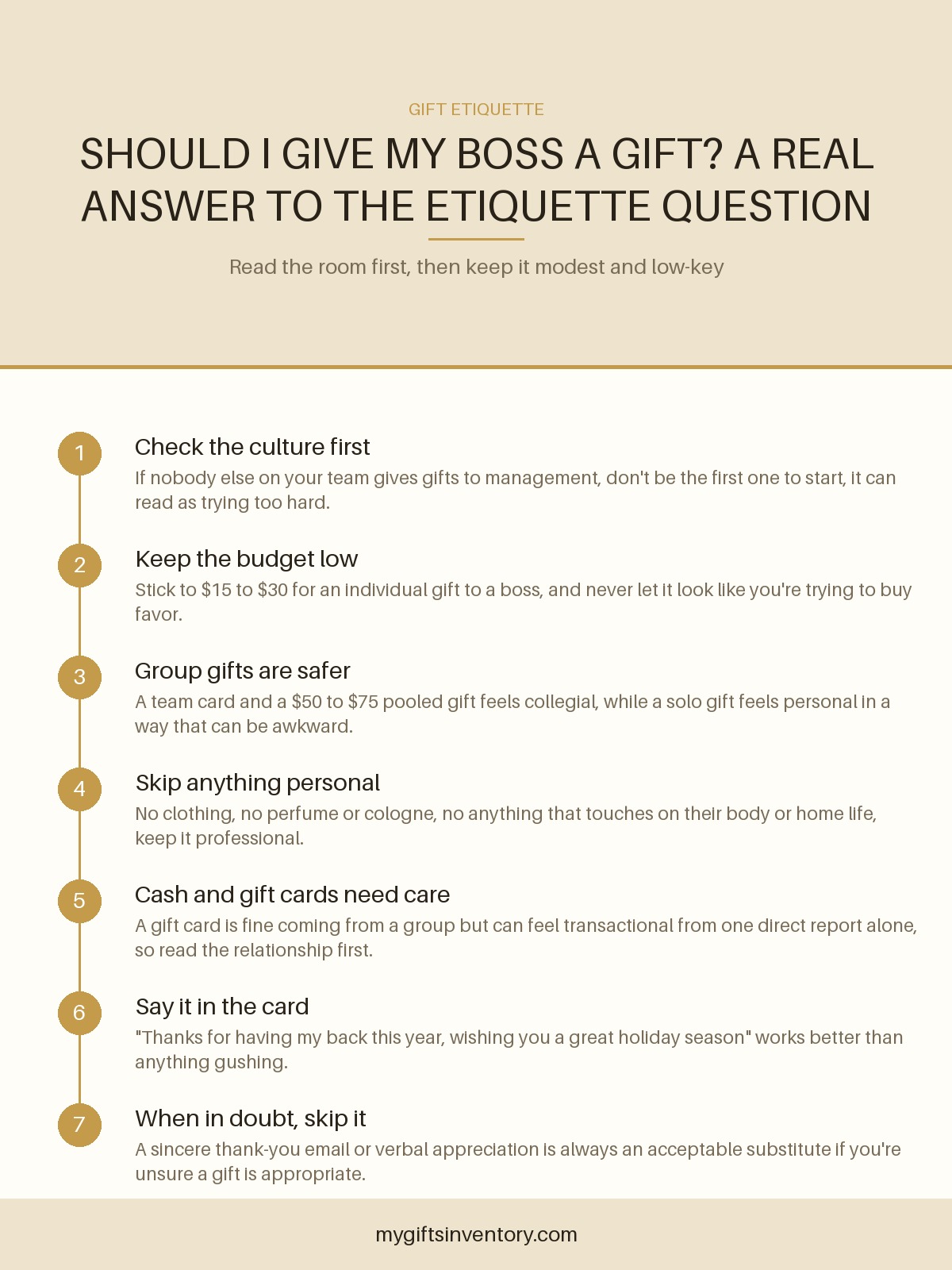
Keep this at $15 to $30 unless your office has an explicit budget for a gift exchange, in which case follow that number exactly. Going over it can make a lower-spending coworker feel awkward, even if that was never your intention. If you manage a team and are doing holiday gifts for staff or clients, that's really its own category with its own rules around taxes and fairness, worth researching separately before you commit to a number.
Kids' Birthday Parties and Baby Showers
For a kid's birthday party where you're one of many guests, $20 to $40 is standard. For a baby shower, $30 to $75 depending on how close you are to the parents, and registry gifts tend to run toward the higher end of that since they're specific, requested items rather than guesses.
If you want a safe, broadly appealing gift for someone whose taste you don't know well, whether that's a new coworker, a distant cousin, or a host gift for a dinner party, something in the 20 Unique Gift Ideas for Women Under $50 range tends to work because it skews thoughtful rather than generic without requiring you to know someone's exact preferences.
Gift Cards Are Not a Cop-Out
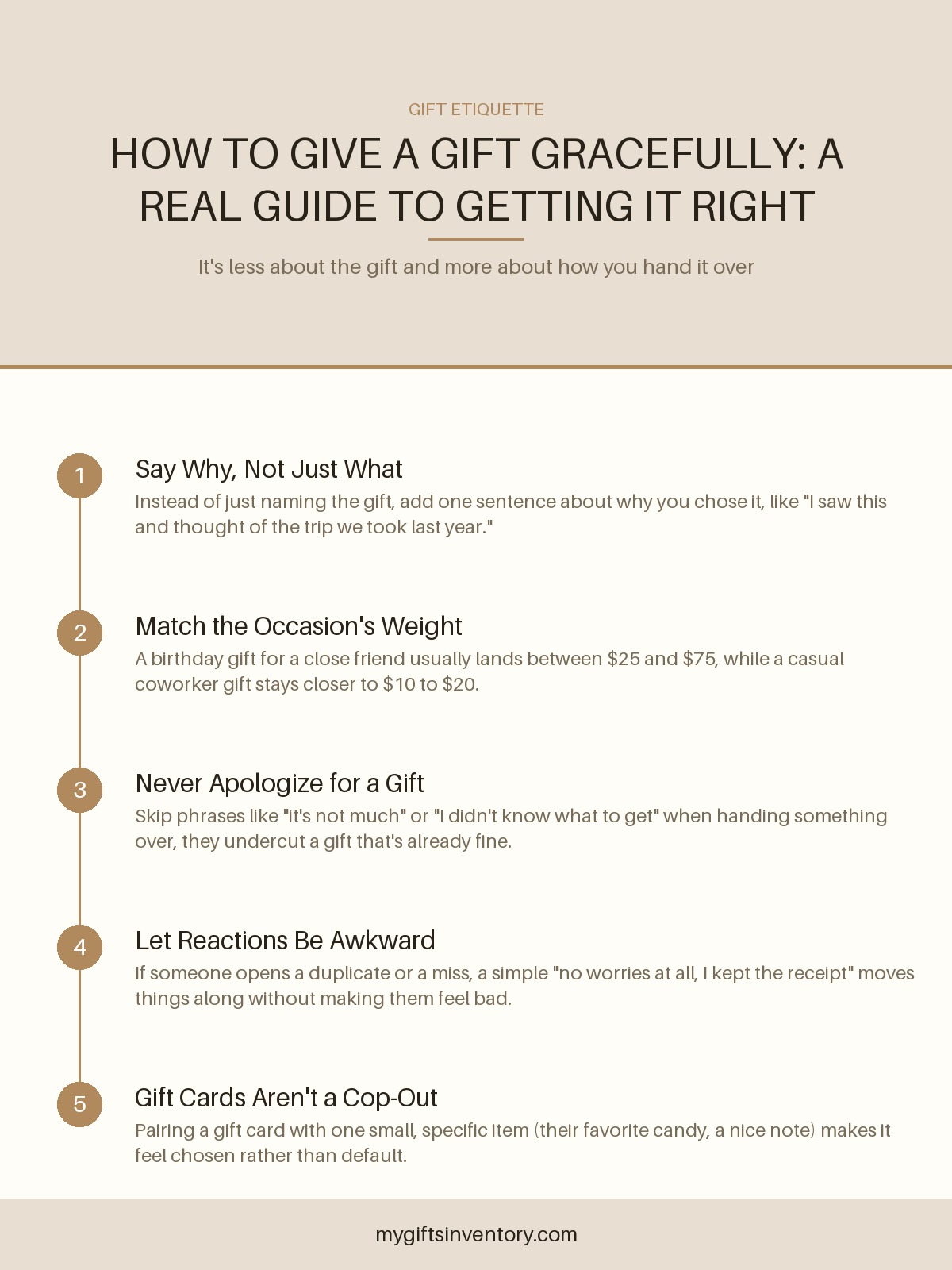
There's a lingering idea that gift cards are the lazy option, the thing you buy when you ran out of time. That's not really true anymore, and treating them that way misses what makes them work. A gift card is a proper gift when there's a reason behind the choice, not just a default. A coffee shop card for the friend who just started commuting again. A specific retailer card for the person who's furnishing a new apartment and would rather pick their own things. A restaurant card for the couple who never gets a night out.
The etiquette that matters with gift cards is mostly about the follow-through. Write the amount somewhere on the card or in the accompanying note if it's not obvious, keep the receipt until you're sure it was received, and if you're giving a card from a brand the recipient might not check often, it's worth mentioning that balances are easy to look up. If you've ever received a card and genuinely couldn't remember what was left on it, pages like the Amazon gift card balance checker or the Visa gift card balance lookup solve that exact problem in under a minute.
How to Receive a Gift Gracefully, Even the Ones You Don't Love
This is the part nobody teaches, and it's where most gift-giving anxiety on the receiving end actually lives. You open something, it's not what you wanted, and you have about two seconds to react before your face gives you away.
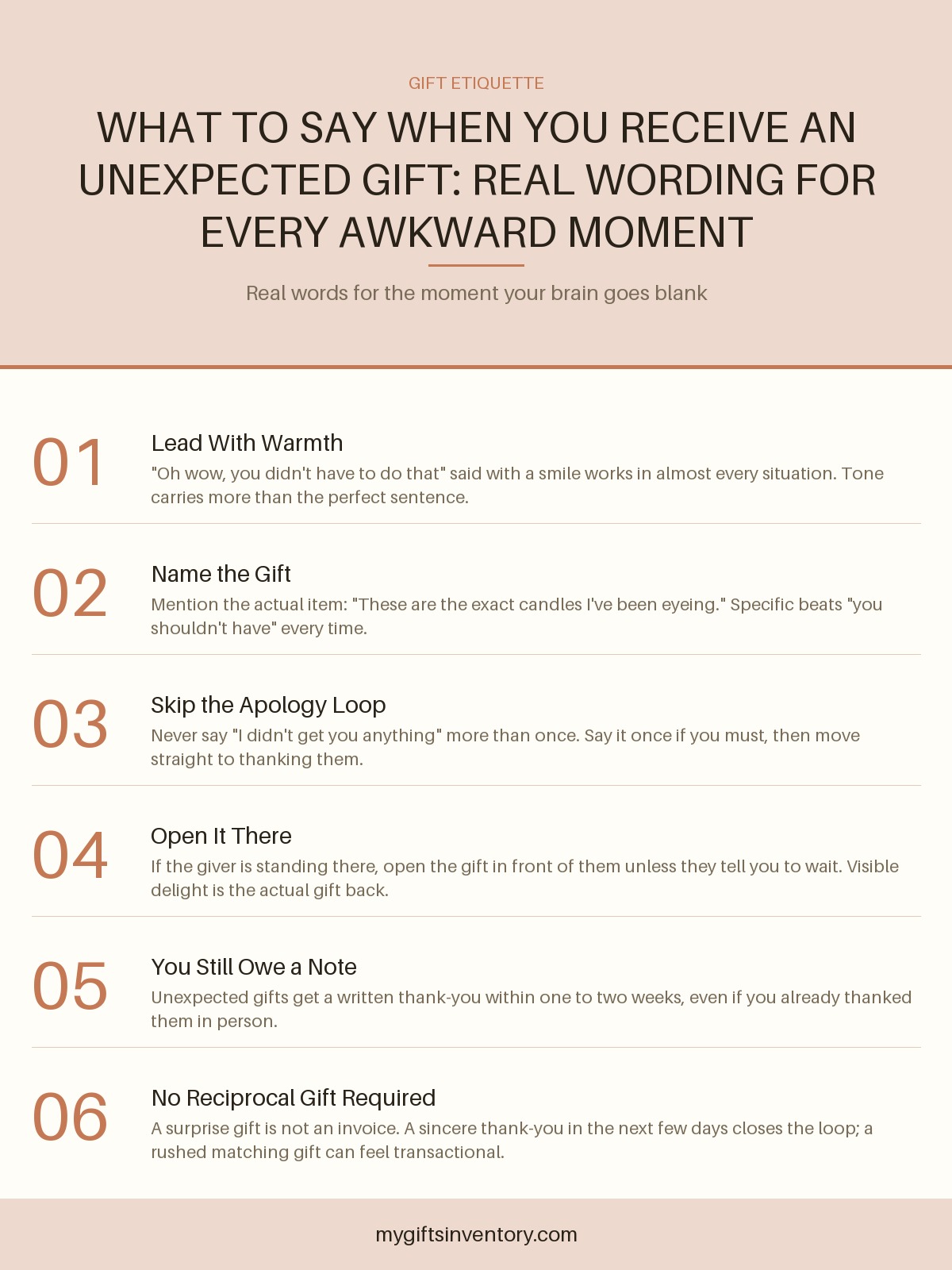
The move is simple: react to the gesture, not the object. "Oh, this is so thoughtful, thank you" is true regardless of whether you love the specific item, because someone did take time to think of you. Save the real assessment for later, privately, when you decide whether to keep it, exchange it, or quietly pass it along. Never say "I already have one" or "this isn't really my style" in the moment, even lightly, even as a joke. It reads as a correction, and it puts the giver on the defensive for something they can't undo.
If you're opening gifts in a group setting, like a holiday gathering or a shower, keep your reactions roughly consistent across all the gifts. If you go wild over one and give a flat "thanks" for the next, everyone in the room notices, including the person who gave the second one.
Regifting, Returning, and Exchanging Without Drama
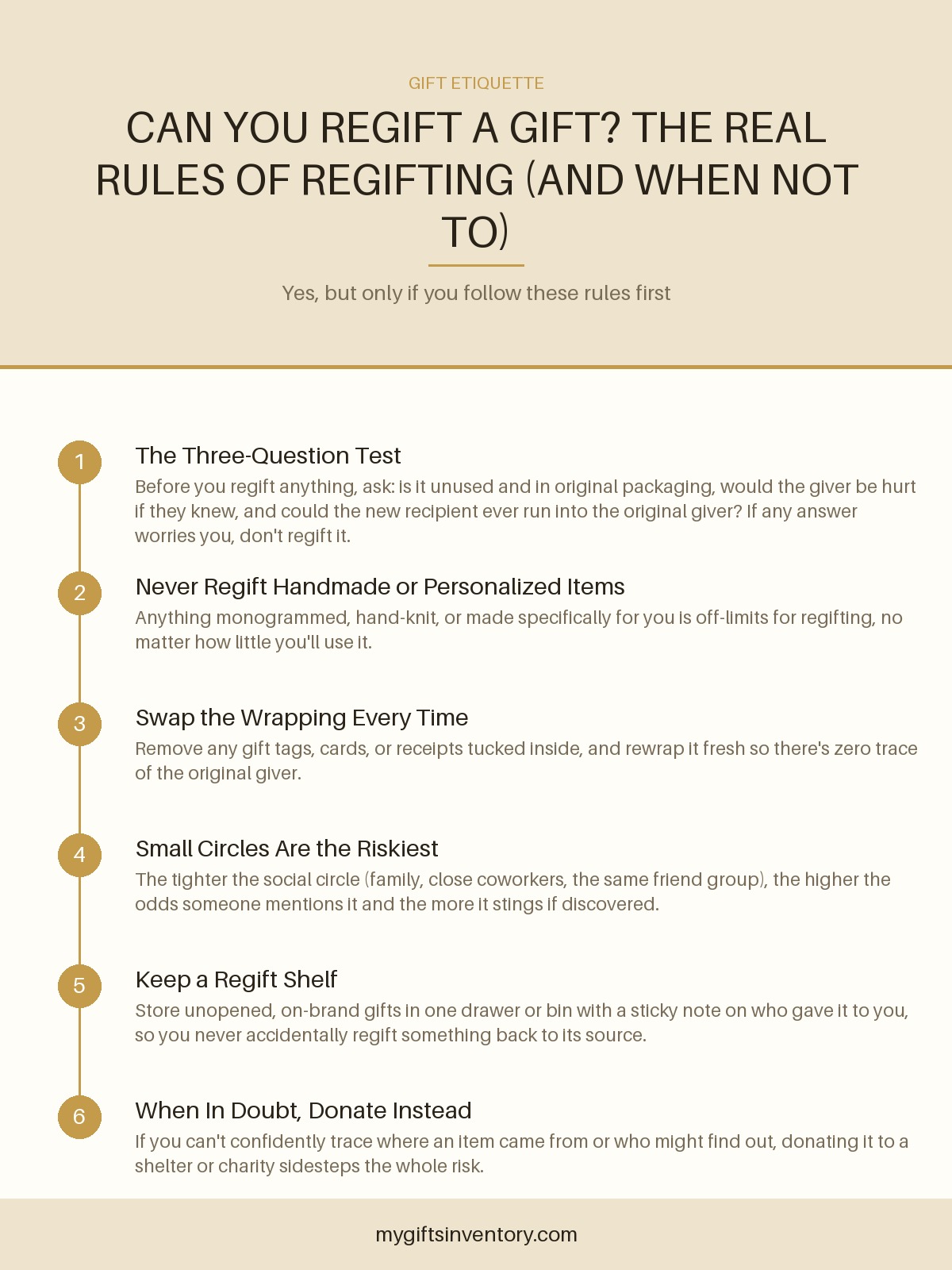
Regifting has a bad reputation it doesn't entirely deserve, but it does have real rules. Only regift something new, unopened, and free of any personalization, a monogram or an inscription obviously disqualifies it. Never regift within the same social circle where the original giver might see it show up somewhere else. And be honest with yourself about whether the item actually suits the new recipient, rather than just being convenient to offload.
Returning or exchanging a gift is completely normal and doesn't require a confession to the giver in most cases. The exception is close family or a partner, where it's usually kinder to mention it rather than have them ask about it later and realize you swapped it without saying anything. "I loved the color but the size was off, so I exchanged it for a medium" is enough. Nobody needs a paragraph of justification.
Timing Matters More Than People Think
Handing over a gift too early can feel like you're rushing the moment, and handing it over too late can feel like an afterthought, even when neither is true. For birthdays, the safe window is the day itself or the weekend closest to it if plans don't align. For weddings, gifts can arrive up to a year after the date and still be considered on time, though most guests send them within a few weeks before or after. For holidays with a fixed date, the gift should be there by the day, not trailing in a few days after because shipping ran late; if you're cutting it close, a digital gift card or a same-day option is a better call than a late package.
What to Say in the Card
The card doesn't need to be a performance. For most relationships, one honest sentence about the person, plus a simple closing, does the job better than something generic pulled from a template. "You've been such a steady friend this year, I hope this makes your birthday feel a little more like a celebration" says more than "Happy Birthday! Hope it's great!" without being over the top. Save longer, more emotional notes for milestone moments, weddings, new babies, retirements, where people tend to keep the card itself as part of the memory.
Gift Ideas to Go With This


Want more ideas? Browse our full guide: 20 Best Gifts Under $100 (2026): Thoughtful Picks They'll Actually Use
Frequently Asked Questions
Is it rude to give a gift card instead of a physical gift?
No, not when it's chosen with the person in mind rather than picked at random in a checkout line. A gift card tied to something specific, like a favorite coffee shop or a store they've mentioned wanting to shop at, reads as thoughtful rather than lazy.
Do I have to spend the same amount someone spent on me?
No, gift giving isn't meant to be a matched transaction. What matters is that the gift reflects genuine thought for the relationship and the occasion, not that the dollar amounts line up exactly.
How long do I have to send a thank-you note?
Two weeks is the general standard for birthdays, holidays, and everyday gifts. For wedding gifts, three months is the accepted window since gifts often arrive at different times around the event itself.
What do I say when I don't like a gift?
Thank the person for their thoughtfulness in the moment rather than commenting on the item itself, something like "thank you so much, this is so kind of you" always works. Decide privately afterward whether to keep, exchange, or pass it along, and keep that decision separate from your reaction in front of them.
Is it okay to ask for a receipt with a gift?
It's fine to include a gift receipt without being asked, since it lets the recipient exchange the item without awkwardness. Asking the giver directly for a receipt after the fact can feel pointed, so it's better to simply mention you might exchange it for size or color if needed.
Looking for an Actual Gift Instead?

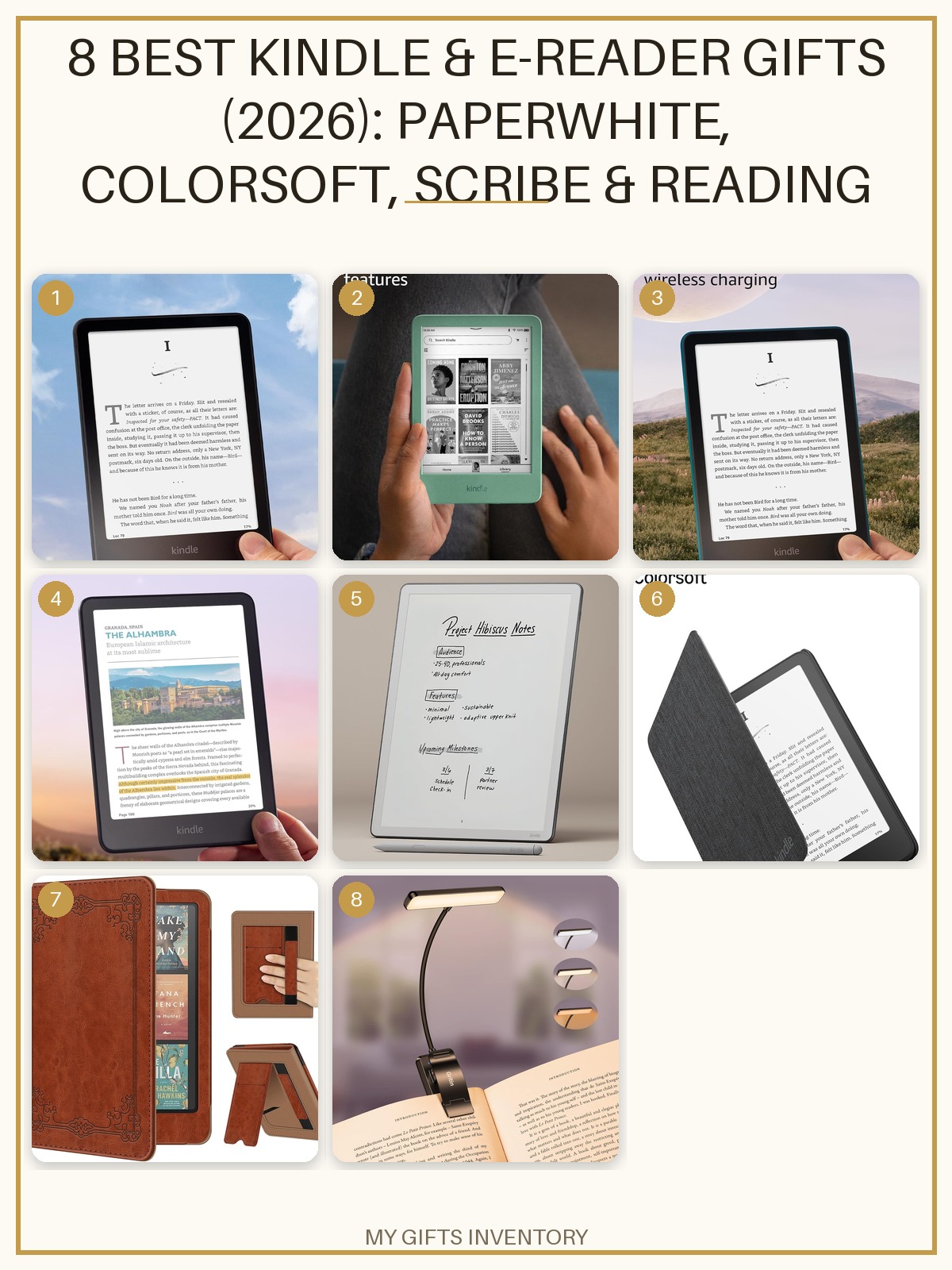
Gift Sets We Love Right Now
Every item picked, priced and linked, ready to buy.
More Gift Advice