What to Write in a Get Well Gift Card: Real Examples for Every Situation
Stuck staring at a blank card? Here's exactly what to write in a get well gift card, with real wording for surgery, illness, hospital stays, and more.
As an Amazon Associate, My Gifts Inventory earns from qualifying purchases. We only recommend products we'd genuinely consider buying ourselves.
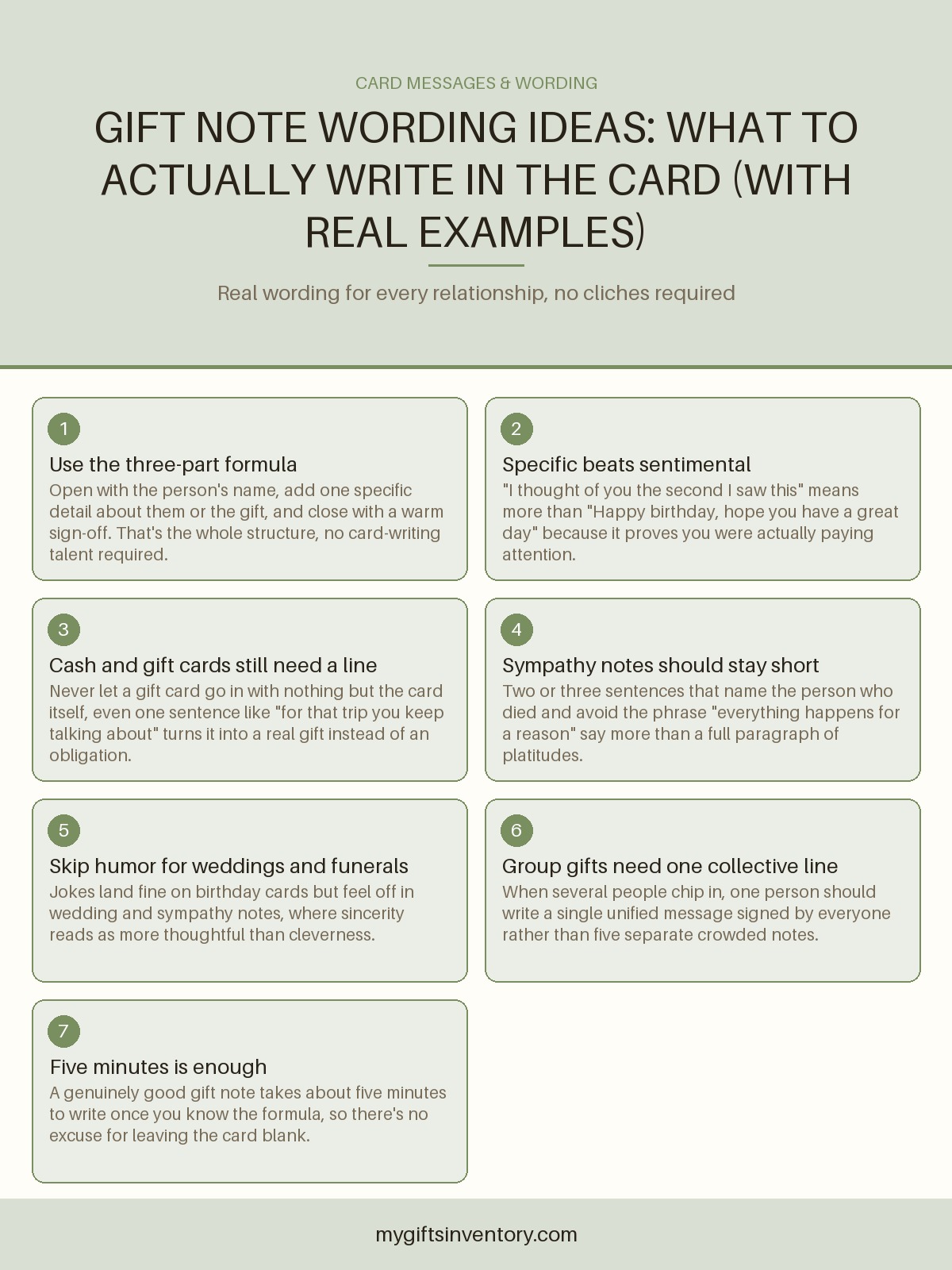
You bought the gift, you found the card, and now you're staring at four blank inches of paper with no idea what to say. Get well cards are oddly hard because the stakes feel high and the rules feel unclear. Say too little and it reads cold. Say too much and you risk being the person who made someone's hospital stay about you. The good news is that the formula is simpler than most people think, and a genuinely good get well message almost always has the same three parts: acknowledge what they're going through, say something warm without offering medical advice, and give them an easy way to feel cared for.
Below you'll find real wording you can borrow, broken out by relationship and situation, plus the phrases that quietly backfire and the gift pairings that make a card land even harder.
The Three-Part Formula That Works Every Time
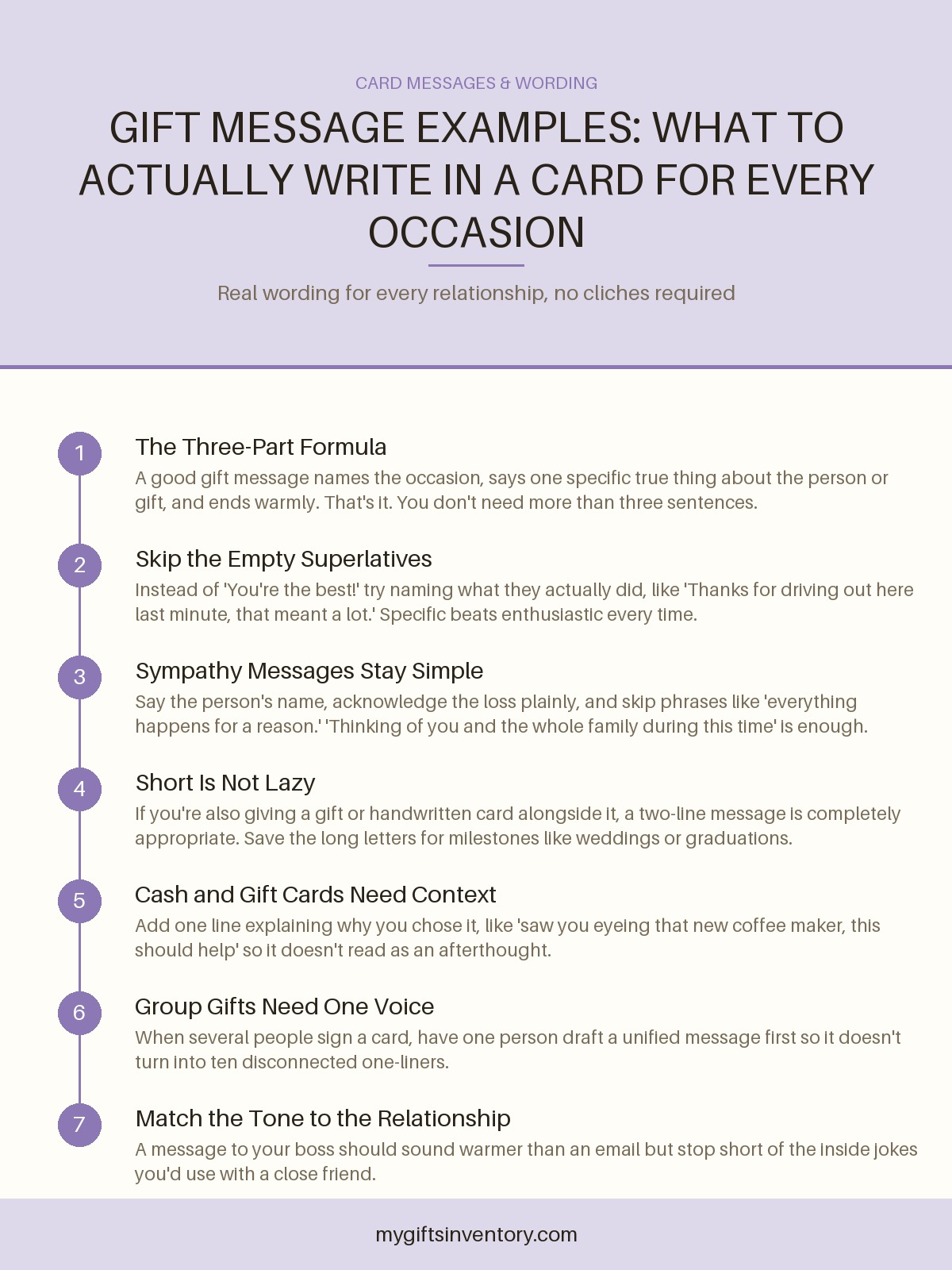
Nearly every good get well message does three things, in roughly this order:
- Name the situation lightly. "I heard about your surgery." "Thinking of you while you're recovering." You don't need details. You need to show you know something is happening.
- Say something warm, not instructive. "I'm so sorry you're going through this" or "You've been on my mind" works. "Make sure you're drinking enough water" does not.
- Give them an out or an offer. "No need to reply" or "I'll text you next week to see how you're doing." This removes the pressure to respond while they're exhausted.
Three sentences. That's usually the whole card. The people who write the best get well messages aren't more eloquent. They're just more specific and less self-conscious about saying something simple.
What to Write by Relationship
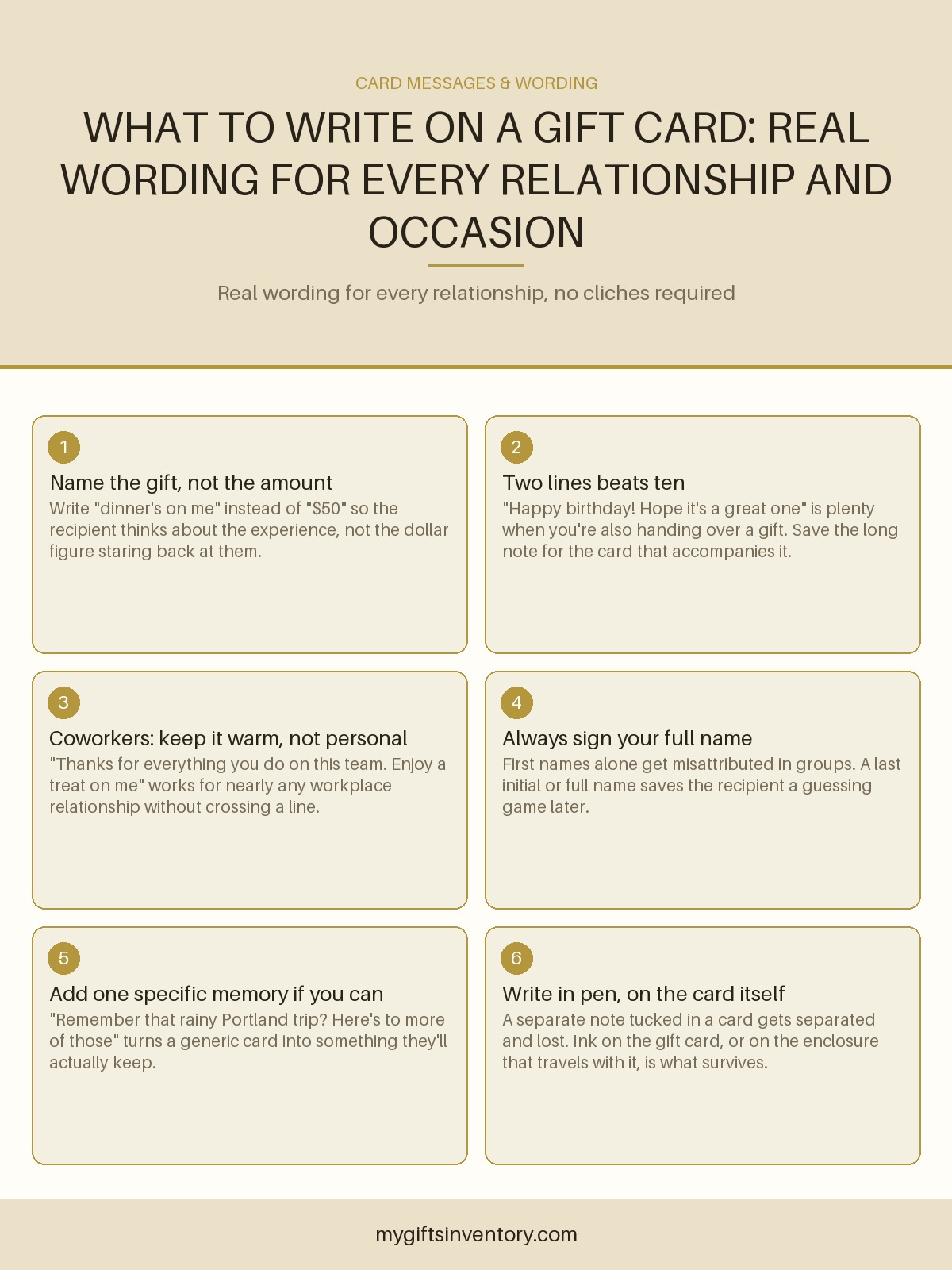
The tone shifts depending on who you're writing to. A note to a close friend should sound nothing like a note to your manager's manager.
Close friends and family
This is where you can be real. Reference inside jokes, memories, or the specific thing you're going to do together when they're back on their feet.
- "I'm not going to pretend I know what to say, so I'll just say this: I love you, I'm thinking about you constantly, and I'm here for whatever you need, even if it's just sitting in silence with bad TV."
- "Remember when you broke your wrist in 2019 and made me carry your coffee for six weeks? Consider this your official notice that I'm returning the favor."
- "Rest up. The world can wait. I'll be the annoying one checking in every couple of days whether you like it or not."
- "I made you a batch of the soup you like. It's in your freezer. Do not text me a thank-you, just eat it."
Parents, siblings, and older relatives
Family cards often carry a little more formality, especially with parents or grandparents. Lean into steadiness and reassurance rather than jokes.
- "You've taken care of all of us for years. Let us take care of you for a change. I'm only a phone call away."
- "Wishing you a smooth recovery and a lot of very boring, very restful days ahead. We're all pulling for you."
- "I'll be there Saturday. I'm bringing the good coffee."
Coworkers and professional contacts
Keep it warm but not intimate. Skip medical details, skip jokes about their workload, and don't promise things on behalf of the team that you haven't cleared.
- "Wishing you a speedy recovery. Your work is covered, so please focus on getting better."
- "Thinking of you and hoping you're back to feeling like yourself soon. Take all the time you need."
- "We miss you around here. No pressure to reply, just wanted you to know we're thinking of you."
If you're putting together a group card or pairing it with something small from the team, our guide to thoughtful coworker gifts under $25 has options that feel appropriate without crossing into personal territory.
Neighbors and acquaintances
Short and friendly. You're not trying to become their best friend, just to acknowledge that you see them.
- "Heard you've been under the weather. Wishing you a quick recovery from all of us on Maple Street."
- "Thinking of you. If you ever need a hand with the dog or a grocery run, we're right across the street."
Kids and teens
Kids respond to concrete, cheerful, low-pressure messages. Don't over-explain their illness back to them.
- "I heard you're feeling crummy. Here's a little something to make the couch days go faster. You've got this."
- "Get well soon, champ. Can't wait to hear how you're doing when you're back."
If the child is going to be laid up for a while, small comfort gifts go a long way. Our roundup of best toys for kids has plenty of picks that work as a couch-friendly distraction, not just holiday gifts.
What to Write for Specific Situations
Surgery and hospital stays
Two rules here. Don't describe the procedure (they know their own bodies better than you do), and don't promise a timeline they can't control.
- "Wishing you a smooth surgery and an even smoother recovery. I'll check in when you're up for it."
- "Thinking of you today especially. Sending strength and a lot of patience for hospital food."
- "No need to reply, I just wanted you to know you're on my mind."
Long-term illness or chronic conditions
Skip "get well soon" entirely if there's no clear end point. Focus on presence and consistency instead.
- "I'm not going anywhere. Whenever you have the energy for a visit or a call, I'm here."
- "I know this is a long road. You don't have to walk it alone."
- "Sending you a no-pressure invite to do absolutely nothing together whenever you're up for it."
Mental health and burnout
Be especially careful not to frame recovery as a matter of willpower. No "snap out of it" energy, no cheerful lectures about gratitude.
- "Rest is not laziness. Take the time you need. I'm here whenever you want to talk or not talk."
- "I'm thinking of you. Whatever you're carrying right now, you don't have to carry it alone."
After an accident or injury
- "So glad you're okay. Sending plenty of healing thoughts and a willingness to help however I can."
- "That was scary. I'm glad you're on the mend. Let me know when you're ready for visitors or a meal drop-off."
Phrases to Avoid (And What to Say Instead)
Some well-meaning phrases land badly, often because they put the reader in the position of comforting you.
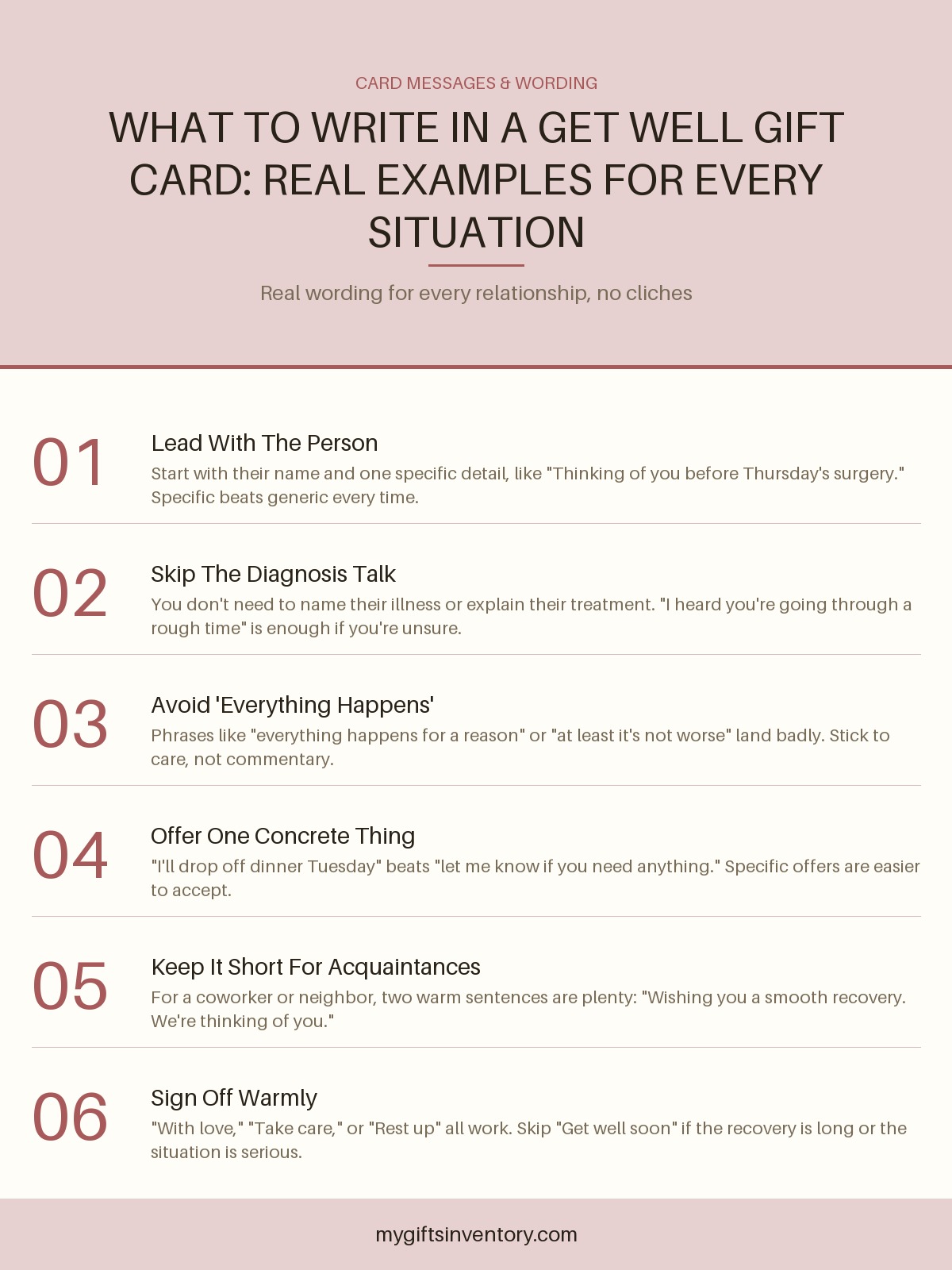
- "Everything happens for a reason." No it doesn't, and this implies their suffering has a purpose they should be okay with. Try: "I'm so sorry. That's really unfair."
- "At least it could be worse." Comparison doesn't help. Try: "I'm thinking of you."
- "Let me know if you need anything." This puts the burden on them. Try: "I'm dropping dinner off Tuesday at 6. Doorbell-free if you're resting."
- "You're so strong, you'll get through this." Sometimes people don't want to be strong. Try: "You don't have to be strong with me."
- "My aunt had that exact thing and she was fine." Their recovery isn't your aunt's. Try: "How are you actually feeling today?"
How Long Should a Get Well Card Be?
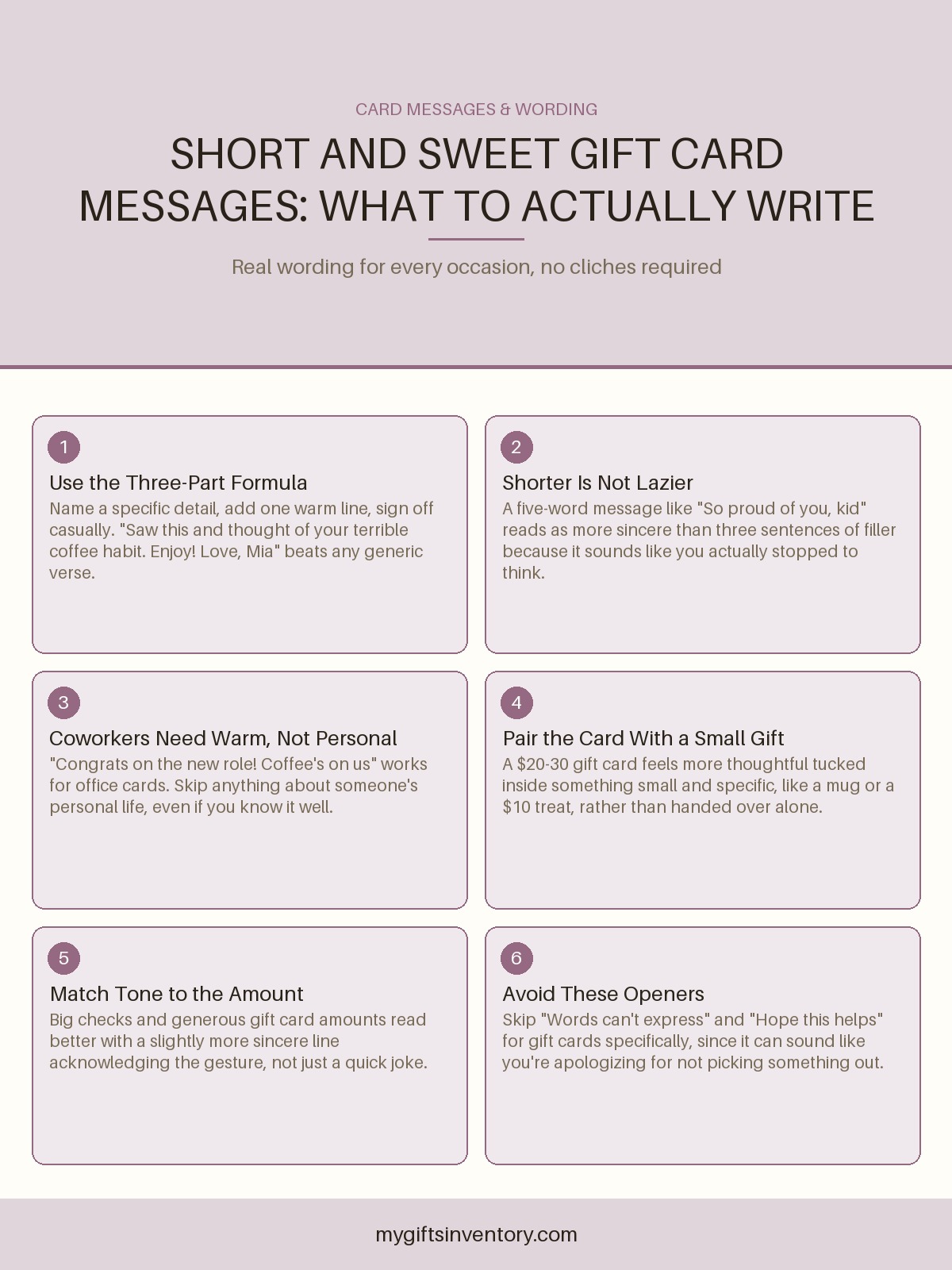
Shorter than you think. Two to four sentences is the sweet spot for most recipients. Someone recovering from surgery or an illness does not want to read four paragraphs, no matter how heartfelt. If you have more to say, save it for a visit or a phone call after they're up for it.
For close family and very best friends, five or six sentences is fine if it's warm rather than heavy. For anyone more distant, two sentences is genuinely enough: "Thinking of you and wishing you a smooth recovery. No need to reply, just wanted you to know."
Matching Your Gift to Your Card
The card and the gift should feel like they belong together. A funny mug with a serious card reads oddly, and a super-sentimental bouquet with a one-line note falls flat.
Some pairings that work:
- Cozy gifts (blankets, socks, tea): Pair with a gentle, warm card. "Rest up. Here's something to make the couch a little comfier." Our guide to cozy comfort gifts under $75 has strong options for hospital-home recovery.
- Books, puzzles, or games: Good for a longer recovery. Write something like "For the long afternoons. Hope this keeps you company."
- Food or meal delivery: Keep the card short and practical. "Dinner's handled. Focus on resting." If you're sending a gift card so they can order what they actually want, our page on how to check a Grubhub gift card balance is worth a glance first, since delivery cards are easy to misplace or forget about.
- Hobby-related gifts: Perfect for someone knocked out of their routine. "Hoping this keeps you busy until you're back at [thing they love]." If your recipient is a gamer stuck on the sofa, our guide to gifts for gamers has plenty of ideas that double as recovery companions.
If the gift is arriving later than the card, say so. "Something's coming your way in a few days, consider this a preview." That way they don't spend the week wondering if there was supposed to be a package.
Signing Off: How to Close the Card
Sign-offs set the tone. A mismatched sign-off, like a casual "Cheers!" on a serious card, can undo the rest of the message.
- Warm and close: "With love," "Love," "Yours," "Always."
- Friendly but not intimate: "Take care," "Wishing you the best," "Warmly," "Best."
- Light and casual: "Rest up," "Get some good naps in," "Rooting for you."
Skip "Get well soon" as a sign-off for serious or long-term situations. Save it for colds, minor injuries, and short recoveries. For everything else, "Thinking of you" or "Take care" is a safer close.
A Quick Checklist Before You Seal the Envelope
- Did you use their name once?
- Did you acknowledge what they're going through without getting into medical detail?
- Did you avoid every phrase from the "avoid" list above?
- Did you include something concrete, or remove the burden of "let me know if you need anything"?
- Is the sign-off the right temperature for the relationship?
If you can answer yes to all five, the card is done. Seal it, drop it in the mail, and stop second-guessing yourself. The fact that you wrote anything at all puts you ahead of most people in their life right now.
Gift Ideas to Go With This


Want more ideas? Browse our full guide: 18 Keepsake Gifts Worth Holding Onto (2026): Personalized Picks They'll Treasure Forever
Frequently Asked Questions
What should I write in a get well card if I don't know what's wrong?
Keep it general and warm: "I heard you've been going through a tough time. Thinking of you and wishing you well." You don't need to name the illness or ask for details. The recipient will tell you what they want you to know.
Is it okay to say "get well soon" in a card?
Yes, for short-term situations like a cold, a minor procedure, or a brief hospital stay. Skip it for long-term illnesses, chronic conditions, or serious diagnoses, since it can imply a timeline the person can't promise. "Thinking of you" or "Wishing you strength" works in those cases.
What's a good get well message for a coworker?
Keep it professional but genuinely warm. Something like: "Wishing you a smooth recovery. Everything's covered here, so please take the time you need." Avoid jokes about their workload, don't ask for medical details, and skip anything that would feel too personal if it were read by HR.
Should I send a get well card if I don't know the person well?
Yes, a short one. Two sentences is plenty: "Thinking of you and wishing you a quick recovery. No need to reply." Acknowledging someone's difficulty matters more than matching it with deep personal feeling, especially for neighbors, extended coworkers, and casual acquaintances.
How long should a get well card be?
Two to four sentences for most people, five or six for close family and best friends. Someone recovering doesn't have the energy for a long letter, no matter how heartfelt. If you have more to say, save it for a phone call once they're up for it.
Looking for an Actual Gift Instead?



Gift Sets We Love Right Now
Every item picked, priced and linked, ready to buy.

More Gift Advice