Where Can You Actually Buy Gift Cards in Dollar General (and Which Ones Do They Carry)?
Dollar General does sell gift cards, but the rack is smaller and more specific than you'd expect. Here's where to find them in-store, which brands show up most often, and what to do when your brand isn't there.
As an Amazon Associate, My Gifts Inventory earns from qualifying purchases. We only recommend products we'd genuinely consider buying ourselves.
You're standing in a Dollar General with a birthday coming up, or you're mapping out a quick errand run before a party and wondering whether the gift card stop can happen here. The short answer is yes: Dollar General sells third-party gift cards at the register. The longer answer is that the rack is smaller and more selective than what you'd find at a big-box store, and knowing what's actually on it before you drive over saves a lot of squinting at plastic.
Where the gift cards actually are in the store
Dollar General doesn't have a dedicated gift card aisle. The cards hang on a branded display rack, and in most stores it's positioned at the front endcap or right beside the checkout lanes, often near the impulse items and candy. Some layouts put a second smaller rack near a secondary register bank, so if the first one looks picked over, glance at the other lanes before you leave.
A few practical notes on the physical setup:
- The cards are generally not locked up. You grab the one you want, take it to the register, and the cashier scans it to activate it.
- Cards are usually organized by category (restaurants, streaming, gaming, prepaid) rather than alphabetically, so read the headers on the rack before you start flipping.
- Denominations are printed on the card or the carrier it's attached to. You can't typically ask the cashier to load an arbitrary amount like $17.
- Stock varies wildly by location. A busy suburban store may have a full rack; a small rural store may have two dozen cards total.
Which gift cards Dollar General carries
Here's the part that frustrates people: Dollar General does not publish a master list of gift card brands, and the mix genuinely changes. Cards are supplied through third-party distributors, and what's on the rack depends on what that distributor shipped to that store. Anyone who tells you they have a definitive, permanent list is guessing.
That said, the categories are pretty consistent. You can generally count on seeing:
Food and restaurant cards
Fast food and casual dining chains are the most common cards on the rack. Think burger chains, pizza chains, coffee shops, and chicken spots. This is the category where you'll have the most luck if you're buying for a coworker or a teenager.
Streaming and digital entertainment
Streaming service cards, music subscription cards, and app store credit show up regularly. These are a genuinely good fit for a gift card because the recipient can top up an existing subscription instead of committing to a new one.
Gaming and prepaid cards
Console store credit, game currency cards, and general prepaid cards are staples. If you're buying for a kid, this is the aisle-adjacent rack to check first.
Retail and specialty cards
This is the shakiest category. Some stores carry a handful of retail cards for nearby chains, but it's inconsistent. Don't count on finding a specific department store or specialty retailer card here.
One brand people specifically ask about is Chick-fil-A, and the answer is more nuanced than a yes or no. If you're set on a Does Dollar General Sell Chick-fil-A Gift Cards? What You Can (and Can't) Buy There gift, our full guide walks through exactly what the rack does and doesn't stock so you don't waste a trip.
How to confirm your brand before you drive over
The single most useful thing you can do is call the specific store. Not the corporate line, the actual store phone number. Ask a simple question: "Do you have [brand] gift cards on the rack right now?" Employees can look at the rack while you're on the phone, and a two-minute call beats a 20-minute round trip.
If you'd rather not call, here's the order of operations that works:
- Check the store locator for the location nearest your recipient, not just nearest you. Availability is per-store.
- Go early in the week if you can. Racks get picked over on weekends and around holidays, and restocking isn't always same-day.
- Bring a backup brand in mind. If your first choice is gone, having a second option means you leave with a gift instead of leaving empty-handed.
This is also where people tend to discover that a gift card wasn't the right call in the first place. If you're buying for someone whose taste you actually know, a small physical gift often lands better than plastic, and it's usually not much more expensive. Our roundup of Christmas gifts for kids between $20 and $40 is full of picks in the exact price range of a typical gift card, and those tend to get a bigger reaction than a $25 card to a store the kid doesn't shop at.
Buying amounts, fees, and the fine print
A few things worth knowing before you hand over cash:
Fixed denominations only
Most cards come in $10, $15, $25, $50, or $100 increments. You generally cannot split a load or request a custom amount. If you want to give $30, you're buying a $25 card and adding a small physical gift, or buying a $50 and accepting the overage.
Watch for purchase fees on prepaid cards
Open-loop prepaid cards (the kind usable anywhere, not tied to one brand) often carry an activation fee of roughly $3 to $6 on top of the load amount. Closed-loop cards, which only work at one retailer or restaurant, usually have no fee. Read the carrier before you commit.
Activation happens at checkout
A gift card that hasn't been scanned is worthless plastic. Make sure the cashier scans it, and keep the receipt until the recipient confirms the balance works. The receipt is your only proof if the card fails to activate.
No Dollar General gift card online
If you specifically want a Dollar General store gift card, you buy it in person. The chain doesn't run a general online gift card storefront the way some retailers do. Third-party cards bought in-store may have separate online redemption rules, so check the back of the card.
What to do if Dollar General doesn't have your brand
This happens a lot, and it's not a disaster. Your options, roughly in order of convenience:
- Try a nearby competitor. Grocery stores, drugstores, and big-box retailers typically carry a much wider rack. If you're already out running errands, it's usually a five-minute detour.
- Buy direct from the brand. Most restaurant and retail chains sell gift cards on their own website, often with digital delivery in minutes. This is the fastest route when you're down to the wire.
- Pivot to a physical gift. If the card hunt is eating your afternoon, a small thoughtful gift is often the better use of the time. Our guide to hot chocolate and cocoa gifts is a good example: a $20 to $30 box of cocoa bombs reads as more personal than a $25 card, and you can often grab one on the same errand run.
For a broader look at how different retailers handle their racks, fees, and brand lists, our breakdown of gift cards at Five Below makes a useful comparison point, since Five Below runs a similar register-rack model with a similarly unpredictable brand mix.
Making a Dollar General gift card feel like a real gift
A gift card bought at a discount store can still land well if you put ten seconds of thought into the presentation. A few things that actually help:
- Pair it with something small. A $10 coffee card plus a $5 mug reads as a gift. The same card alone in an envelope reads as an obligation.
- Write a specific note. "For your Friday coffee runs" beats "Hope you enjoy." Naming the use makes the card feel chosen rather than grabbed.
- Skip the plastic sleeve. Tuck the card into a folded piece of paper or a small box. It costs nothing and changes the whole feel.
If you're buying for someone whose interests you know well, the gift card is often the fallback rather than the plan. Our roundup of gifts for book lovers is a good example of a category where a $25 physical gift (a book light, a reading pillow) tends to outperform a $25 card, because it shows you noticed something about them.
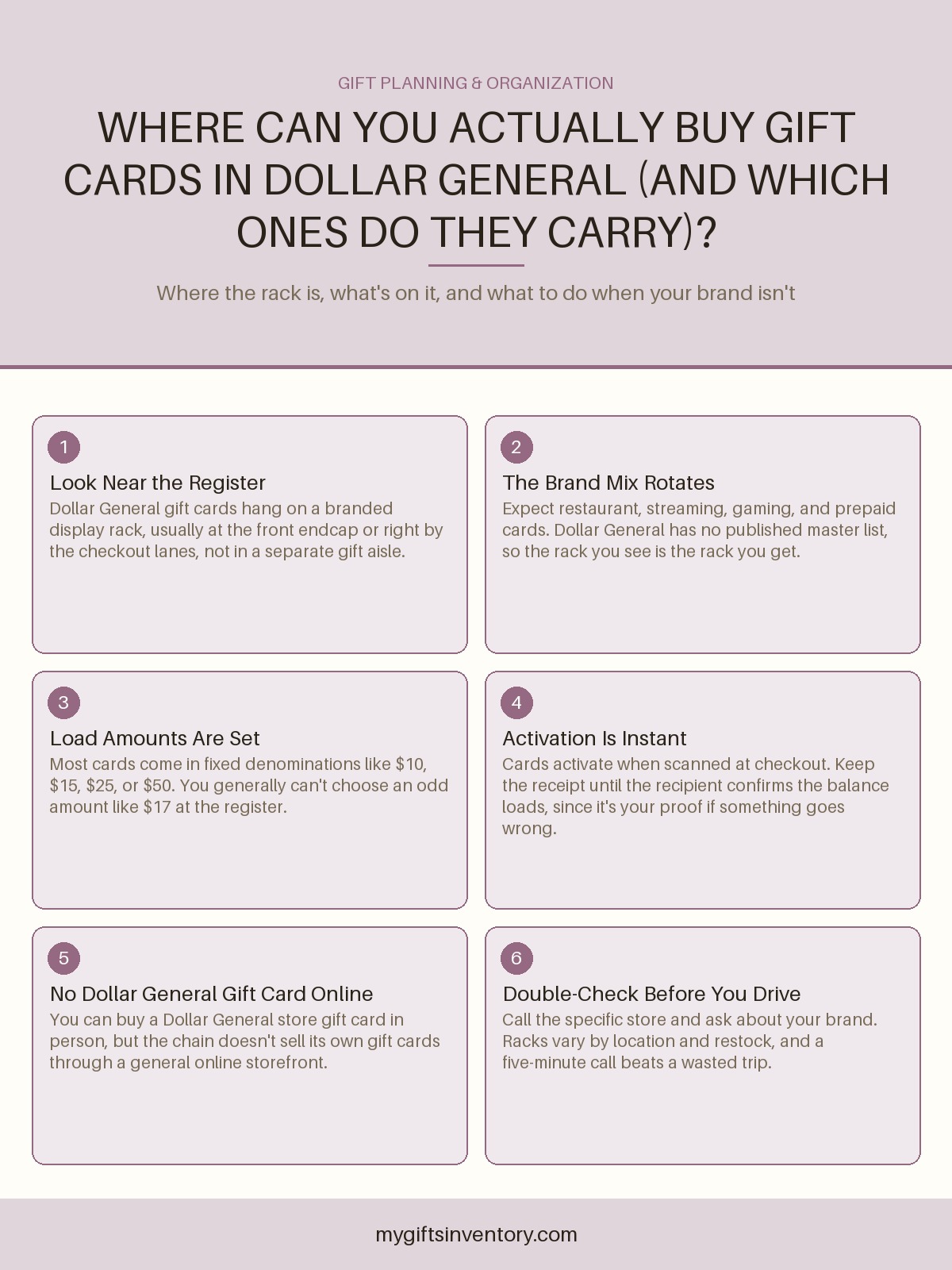
Gift Ideas to Go With This


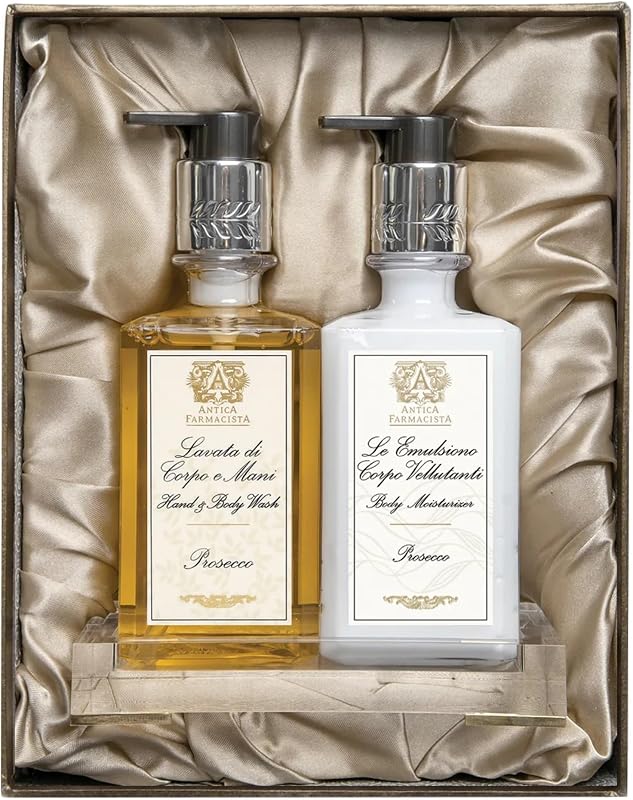

Want more ideas? Browse our full guide: 18 Holiday Gifts & Christmas Present Ideas Under $50 (2026): Thoughtful Picks for Everyone on Your List
Frequently Asked Questions
Does Dollar General sell gift cards?
Yes. Dollar General sells third-party gift cards from a display rack, usually located at the front endcap or near the checkout lanes. The cards are activated at the register when you buy them.
Can you buy a Dollar General gift card online?
No, not through a general online storefront. Dollar General store gift cards are purchased in person at a register. Third-party cards bought in-store may have their own online redemption rules printed on the back.
Does Dollar General sell Amazon or Visa gift cards?
Availability varies by store and isn't published. Some locations carry general prepaid cards and major retail cards, but you shouldn't count on a specific brand being there. Call the individual store and ask before making the trip.
What denominations do Dollar General gift cards come in?
Most cards come in fixed amounts such as $10, $15, $25, $50, or $100. You generally can't ask the cashier to load a custom amount like $17 or $30.
Are there fees on gift cards bought at Dollar General?
Closed-loop cards tied to one brand usually have no purchase fee. Open-loop prepaid cards that work anywhere often carry an activation fee of roughly $3 to $6 on top of the load amount, so read the card carrier before you buy.
Looking for an Actual Gift Instead?
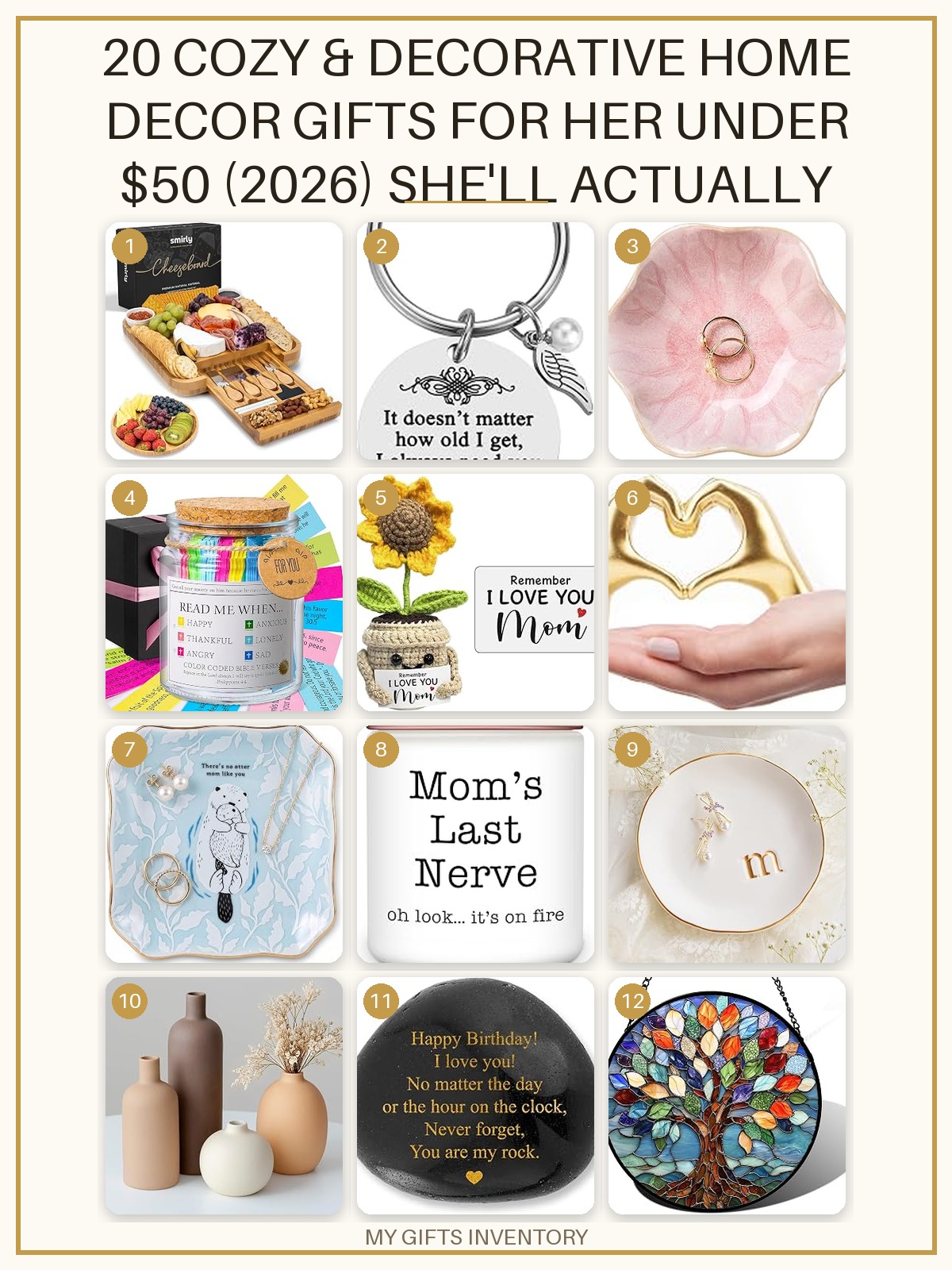
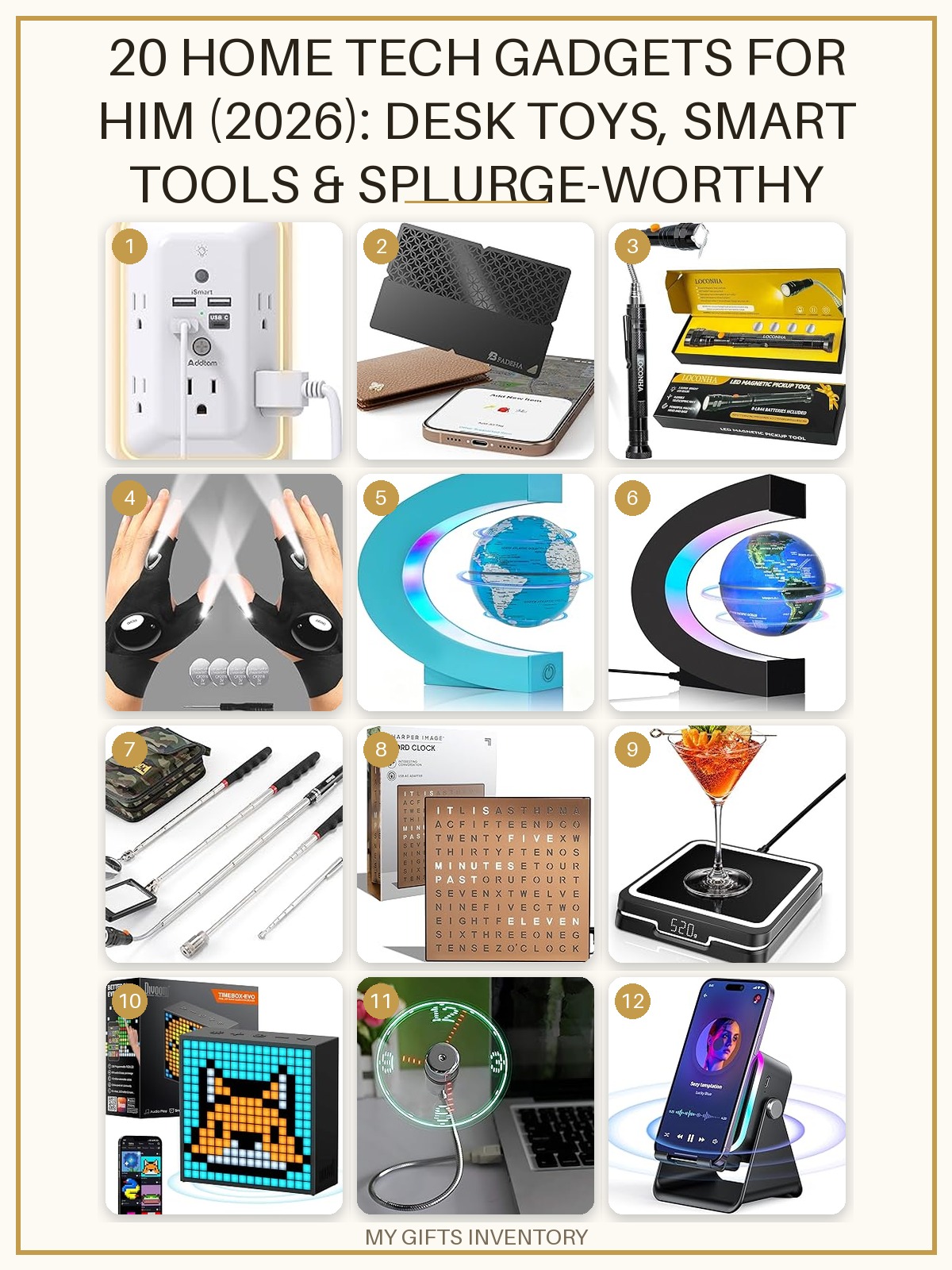

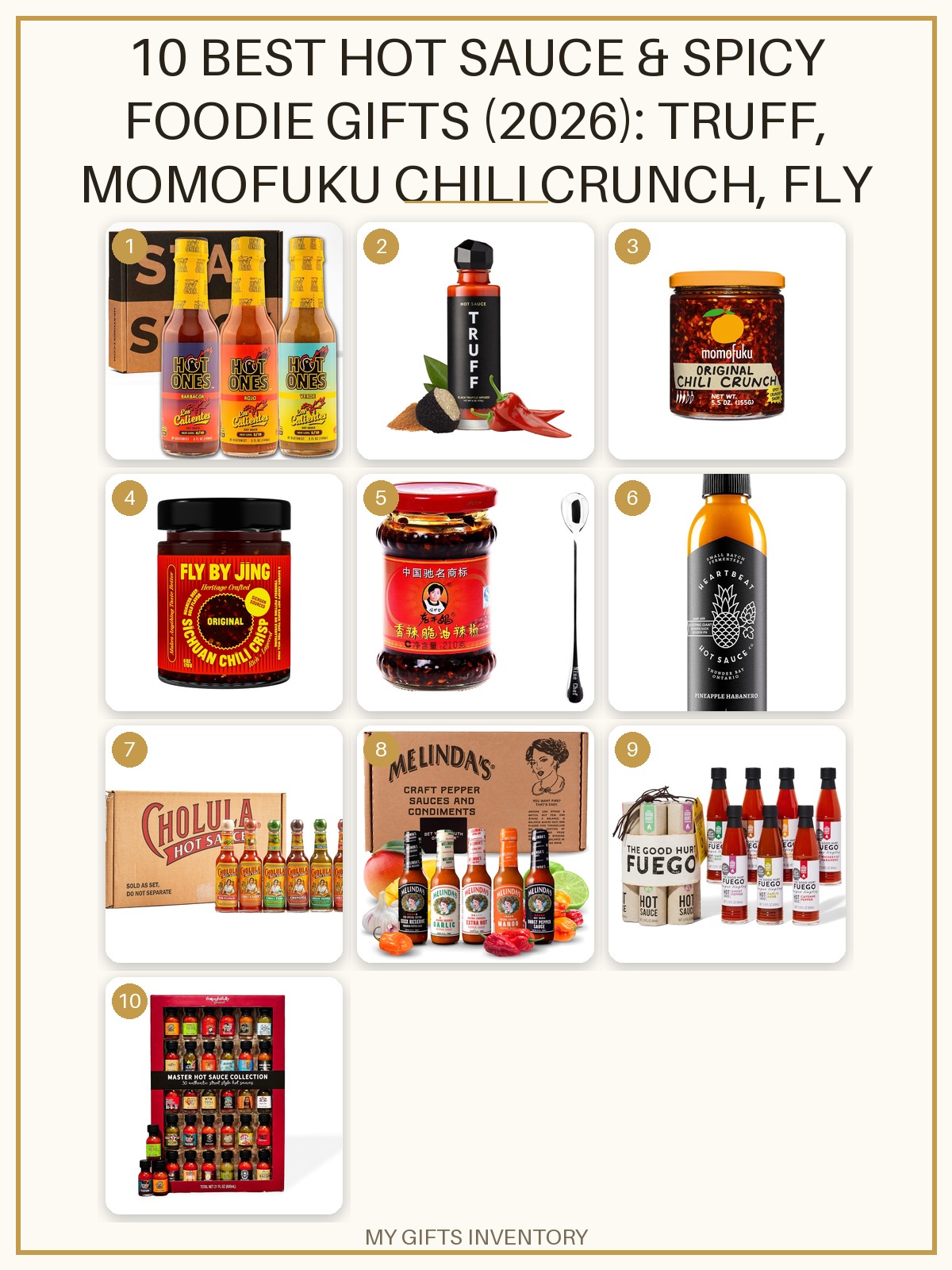
Gift Sets We Love Right Now
Every item picked, priced and linked, ready to buy.
More Gift Advice