Creative Gift Wrapping Ideas That Actually Look Good (and Take Under 30 Minutes)
Practical, affordable ways to wrap a gift that feels personal instead of store-bought, from kraft paper and fabric to fake calligraphy and reuse-what-you-have tricks.
As an Amazon Associate, My Gifts Inventory earns from qualifying purchases. We only recommend products we'd genuinely consider buying ourselves.
You have the gift. You have an hour. You have a roll of slightly wrinkled snowman paper from three years ago, and you're standing in the kitchen wondering whether anyone would notice if you just handed it over in the shopping bag. We've all been there. Good wrapping isn't about crafting skill or a $40 set of matching ribbons. It's about a few small choices that make a package look like you thought about the person receiving it, and most of them take under five minutes once you know them.
Here's what we actually do at our own kitchen tables, with real costs and real time estimates, including the ideas that look great on Pinterest and the ones that genuinely work at 11 p.m. on December 23.
Start With the Paper, Not the Bow
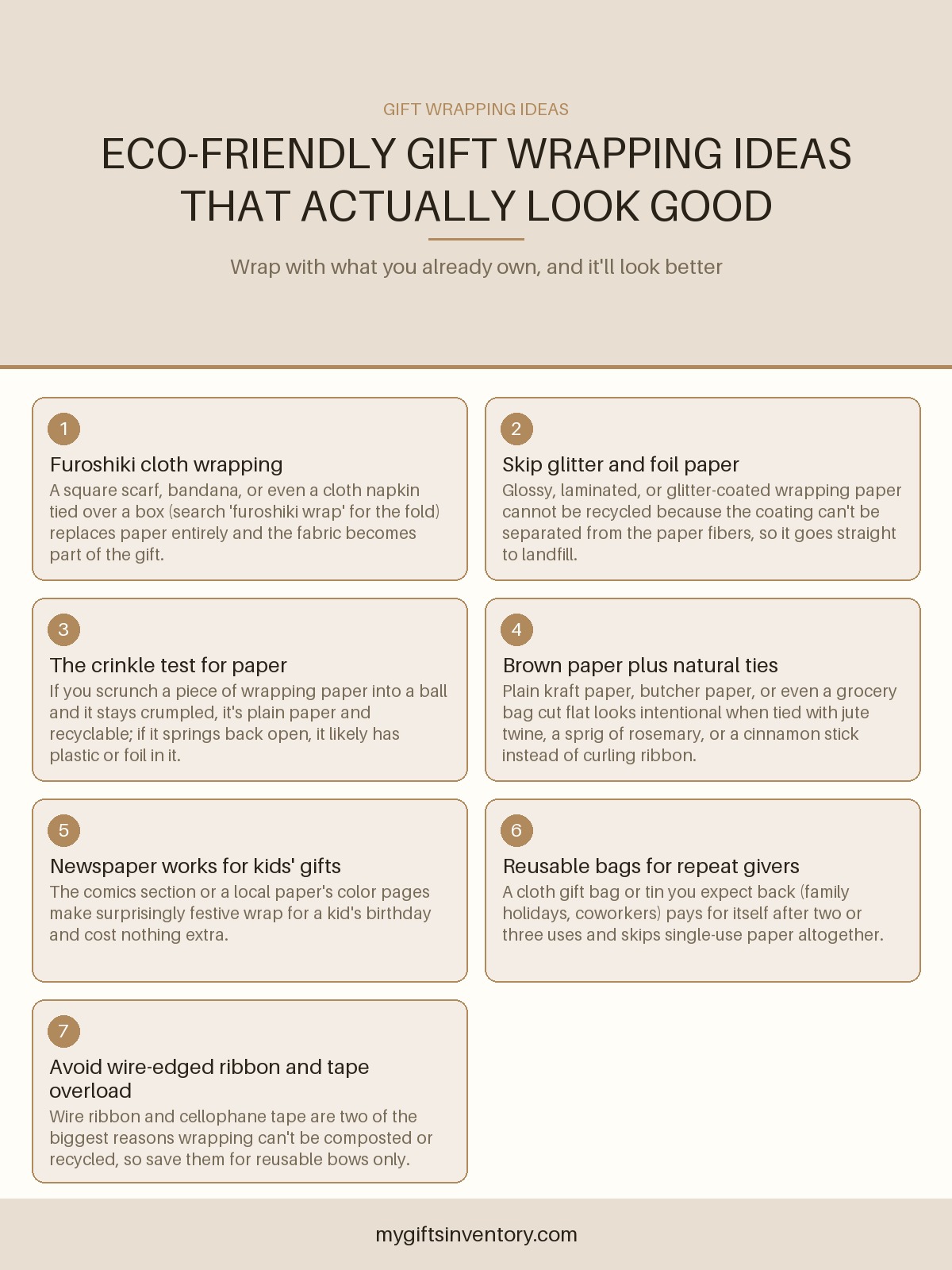
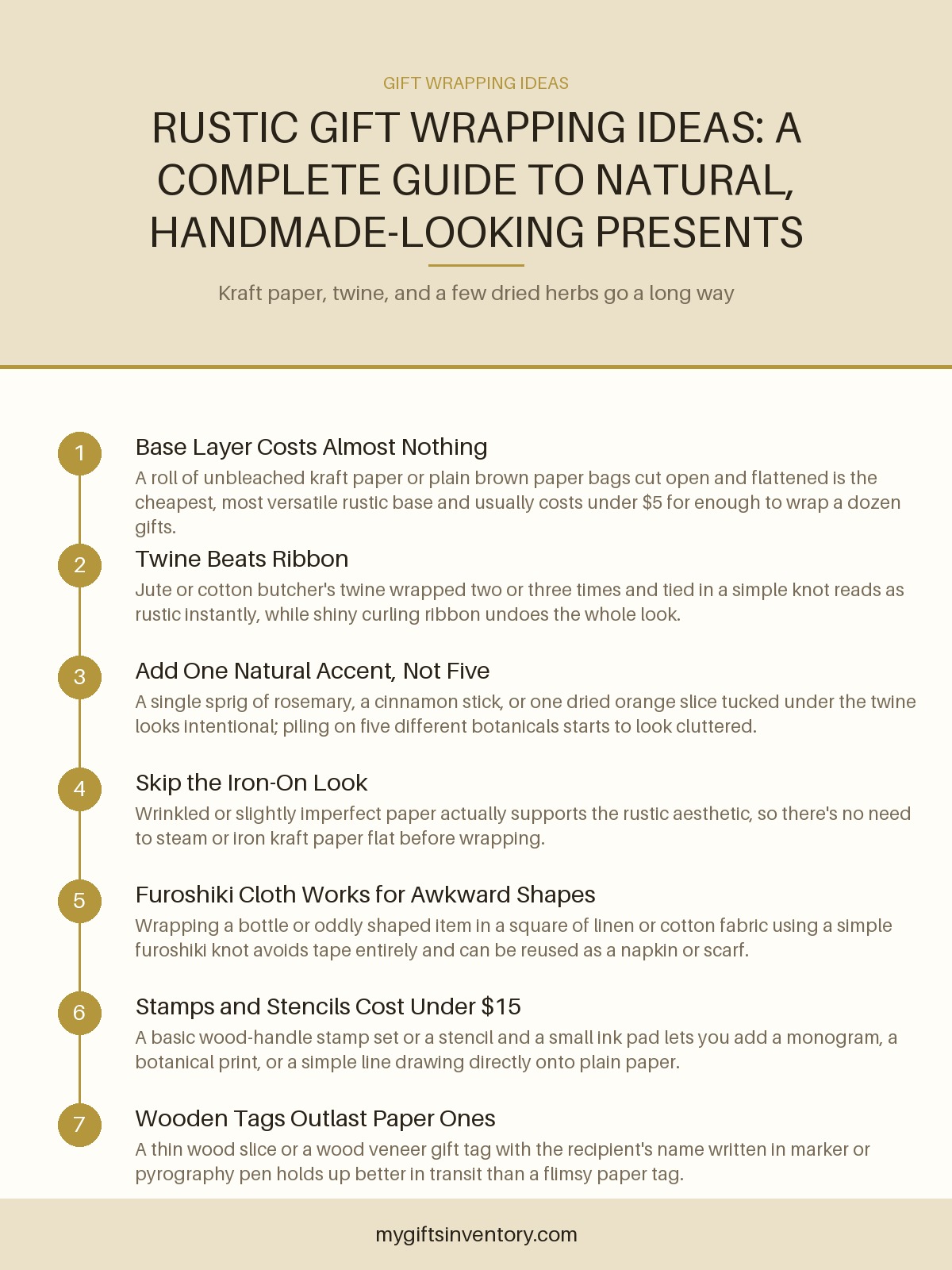
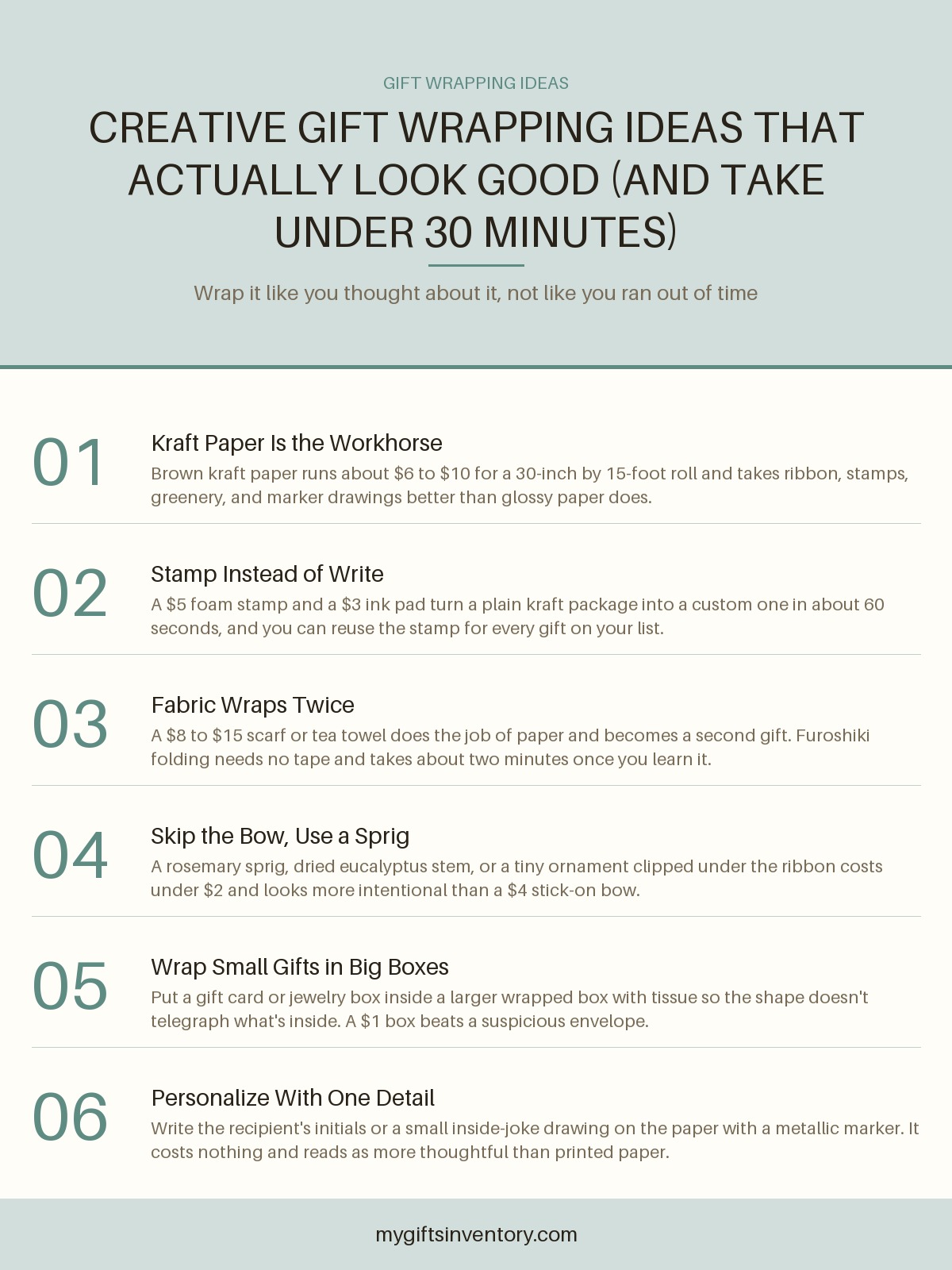
The single biggest upgrade you can make has nothing to do with ribbon. It's using plain paper as a blank canvas instead of fighting a busy pattern. Brown kraft paper is the workhorse here: a 30-inch by 15-foot roll runs roughly $6 to $10, wraps a surprising number of gifts, and takes ribbon, stamps, marker drawings, and greenery better than glossy holiday paper does.
White butcher paper, newsprint, and even the plain side of a paper grocery bag all work the same way. The trick is contrast: if the paper is plain, the decorations can get bold. If the paper is loud, keep everything else quiet.
Tie the wrap to the gift itself
This is the move that makes people comment. Wrap a kitchen gift in a tea towel and tie it with twine. Wrap a cozy blanket gift in brown paper and tuck a sprig of dried eucalyptus under the ribbon. For a reader, tie a used paperback (or a bookmark) to the outside as a tag. If you're stuck on what's actually inside, our guide to cozy gifts for her under $50 has a long list of wrap-friendly soft goods that tie themselves, so to speak.
Five Wrapping Styles That Take Under 30 Minutes
1. The kraft + one-color ribbon look
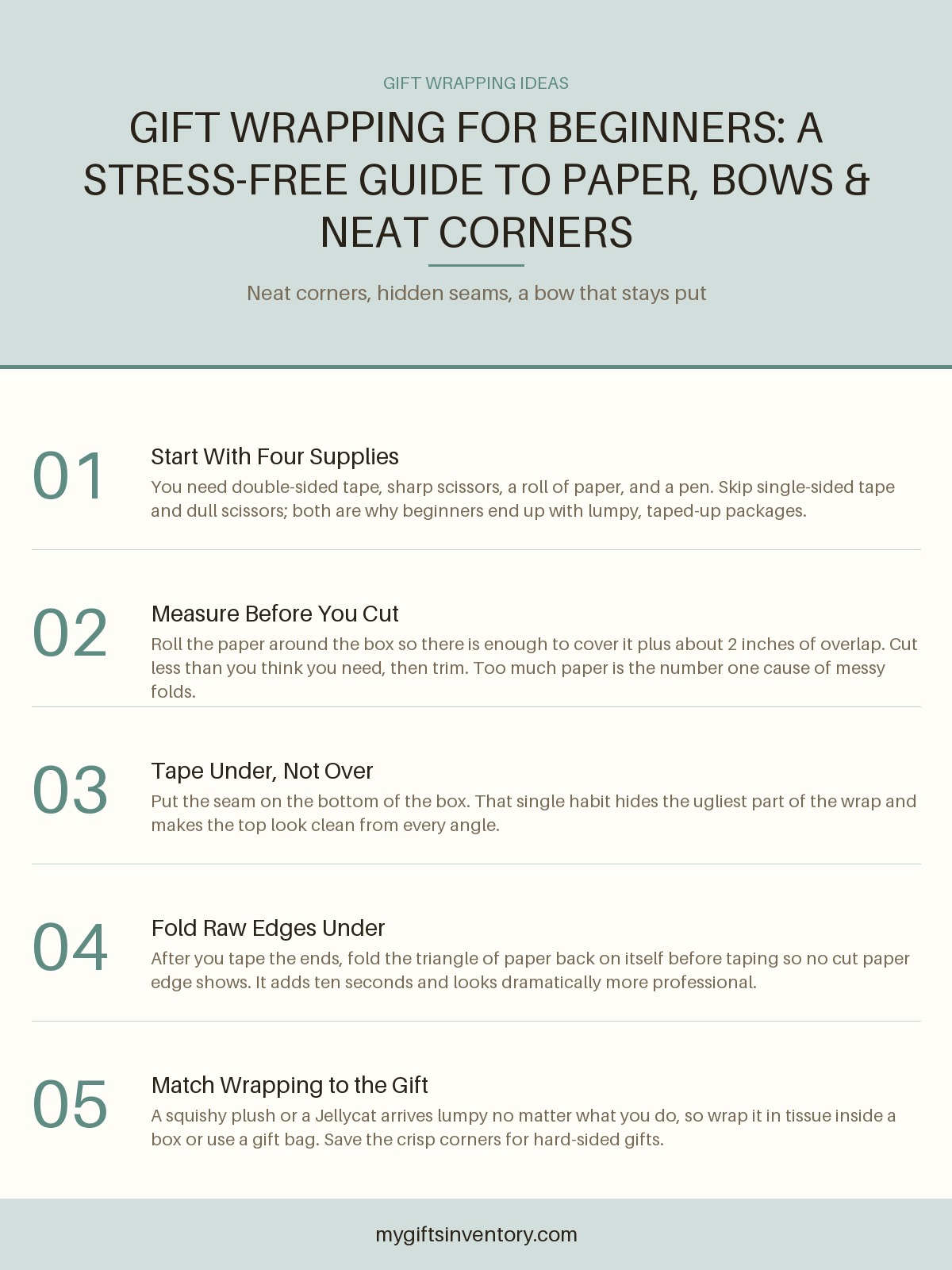
Brown paper, one width of ribbon in a single color (black, red, or a deep green), and nothing else. A 10-yard spool of satin ribbon is about $5 to $8 and does maybe 12 gifts. Wrap time per package: two to three minutes. This is the highest return-on-effort option on the whole list.
2. The stamped package
Buy one foam stamp (a star, a leaf, a simple monogram, or a holiday shape) for about $5 and a small ink pad for $3, then stamp a random scatter across the paper before you wrap. Sixty seconds per gift, and the stamp lives in a drawer for years. A plain white or kraft base makes the stamp read clearly.
3. The fabric wrap (furoshiki style)
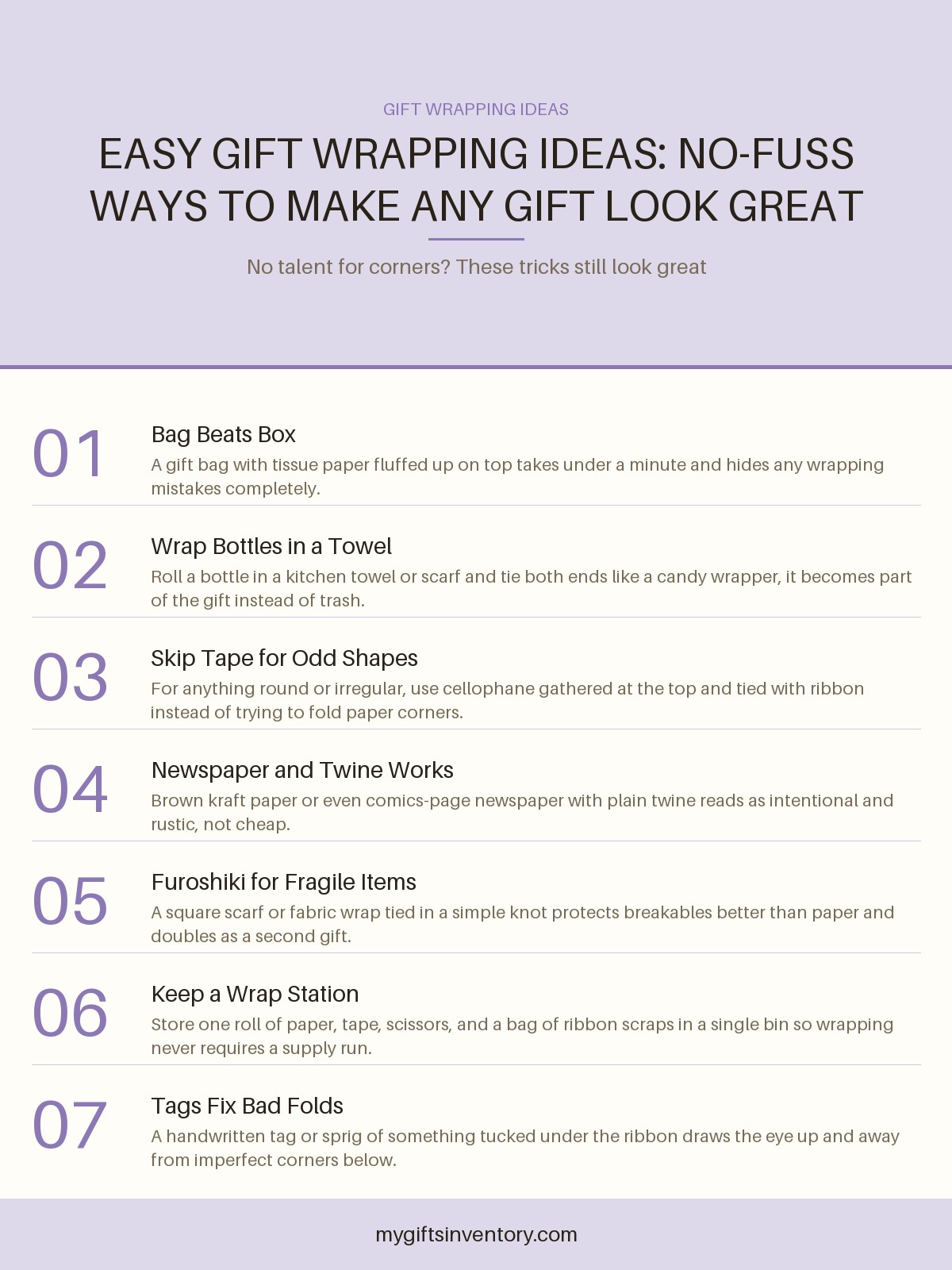
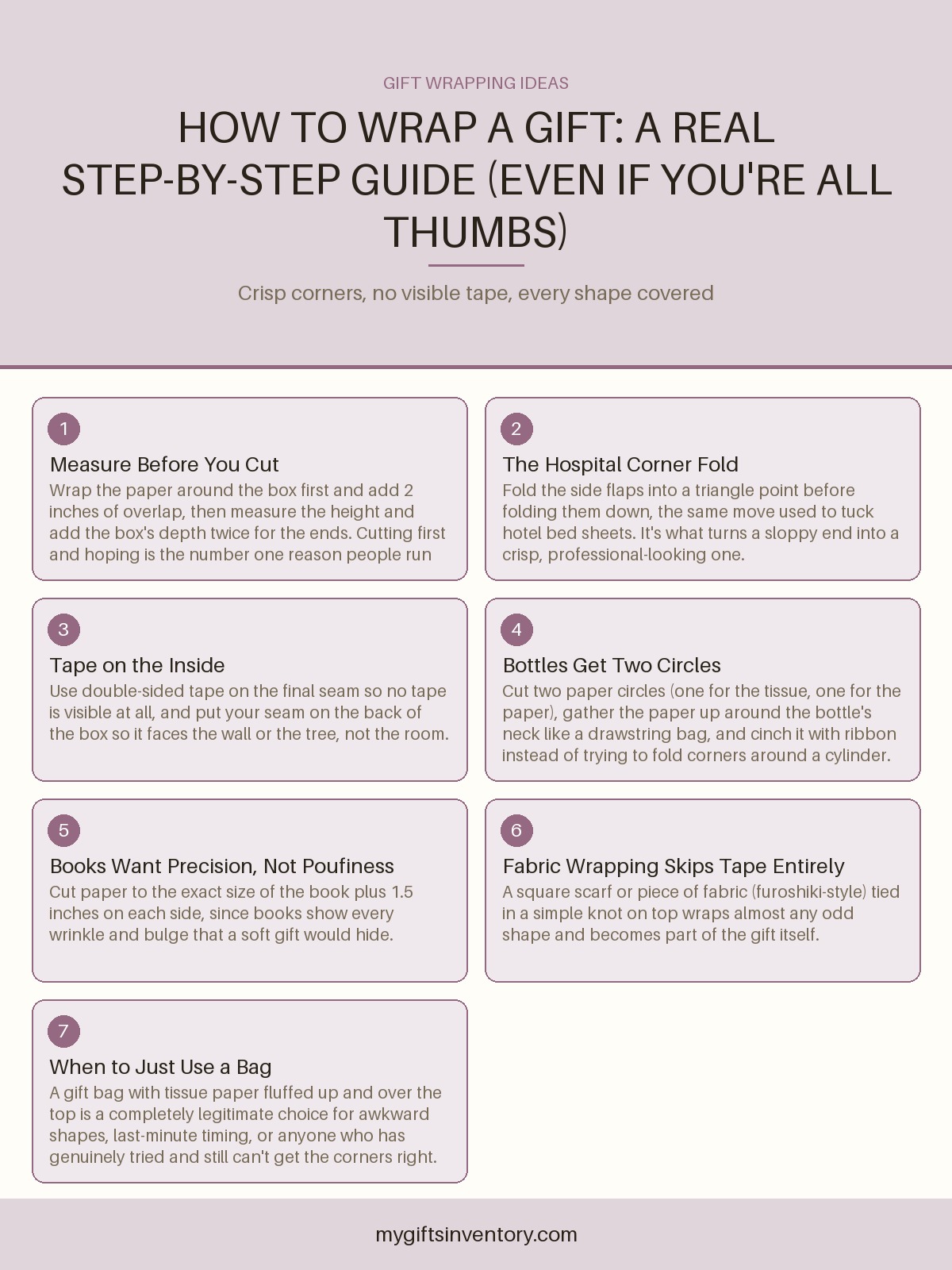
This is our favorite for awkward-shaped gifts, and it's reusable. A square scarf or a cotton tea towel in the $8 to $15 range wraps a bottle, a box, or a book with no tape at all. The basic furoshiki fold (two opposite corners tied, then the other two tied over the top) takes about two minutes to learn and about 90 seconds to do once you've practiced once. The wrap becomes a second gift, which quietly solves the "I didn't know what to get" problem.
4. The newspaper and twine look
Comic strips for a kid, the business section for an uncle, the food section for a home cook. A roll of jute twine is $4 and lasts years. Add a small sprig of greenery or a cinnamon stick under the knot and it reads as deliberate vintage rather than "I ran out of paper."
5. The brown-bag gift bag
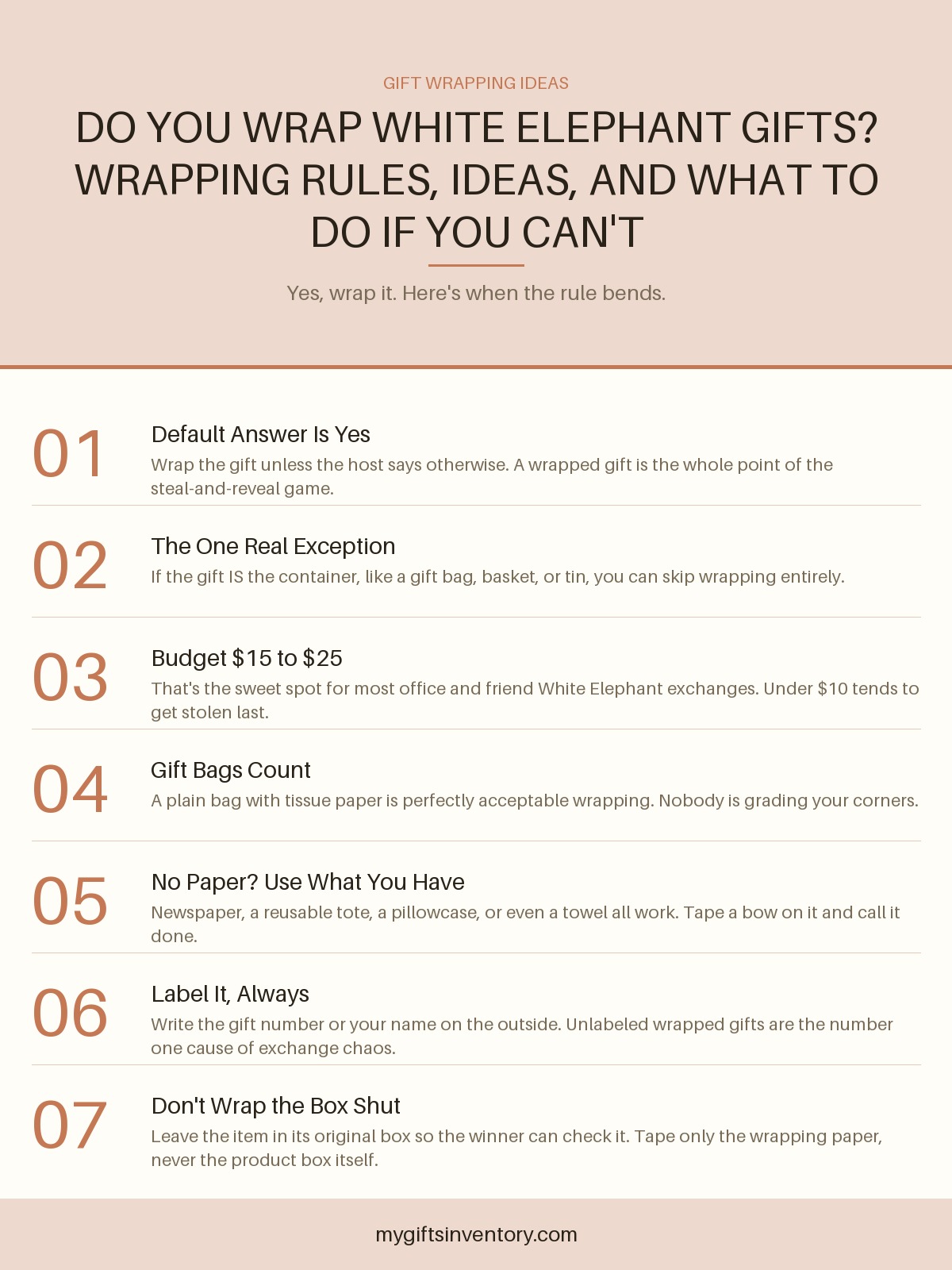
For anything oddly shaped, a plain kraft gift bag (about $1 each in multi-packs) plus tissue paper plus a ribbon handle cover is faster and tidier than wrestling with paper. Save your paper energy for the boxed gifts that show off well.
Skip the Stick-On Bow
A $4 bag of stick-on bows looks like a $4 bag of stick-on bows. Three things that cost less and look better:
- A sprig of rosemary, dried eucalyptus, or a small pine cutting, tucked under the ribbon. Under $2, or free if you have a bush.
- A tiny ornament clipped to the ribbon. It doubles as a small extra gift and can be reused next year.
- A paper tag you wrote on by hand, tied on with the same twine or ribbon. Handwriting beats any printed tag.
If you want a bow, the classic trick is to tie a real ribbon bow (not stick it on) and trim the tails at an angle. A $6 spool of ribbon and 60 seconds of practice beats a bag of stickers every time.
Personalize It in One Minute
The detail that reads as "this was for me" is almost always the smallest one. A few that cost nothing:
- Write the recipient's initials in the corner of the paper with a metallic marker.
- Draw a crude little doodle of something they love (a dog, a coffee cup, a bicycle) on the tag.
- Write the gift's "reveal" on the outside of the paper so they have to open it to find out what's inside.
- Tuck a photo, a ticket stub, or a handwritten note under the ribbon instead of a tag.
Wrap Smart for the Gift Inside
Small gifts are the hardest to wrap well because the shape gives them away. A gift card in a flat envelope is a dead giveaway. Put the card or a jewelry box inside a larger box with tissue, wrap that box, and the shape no longer telegraphs what's inside. A $1 kraft box solves a $50 gift-card problem.
If the gift is a gift card, wrapping is only half the battle: the card can get lost, and the balance can get forgotten. If you're handing over a restaurant or retail card, it's worth knowing how people check the balance, and our Olive Garden gift card balance page walks through the exact steps for that brand's card. The same logic applies across brands, so if you're buying a card from a specific store, check whether there's a dedicated balance page before you buy.
Some gifts are basically impossible to wrap well, and it's worth being honest about that. A bicycle, a drone, or a big piece of fitness equipment is better presented with a photo, a card, and a "we'll pick it up together" note. Our guides to cycling gifts and drone gifts both have plenty of small, wrap-friendly accessories that pair with a big-ticket item, which gives you something to actually put under the tree while the real gift is on order.
Reuse What You Already Have
Before you buy anything, look around. A few things already in your house wrap beautifully:
- Brown paper grocery bags, cut flat and turned inside out. Free.
- Old maps, sheet music, or pages from a damaged book. Cheap and genuinely pretty.
- Fabric scraps or a scarf you never wear.
- Newspaper in a language the recipient speaks, if you can find a copy.
- The plain side of last year's wrapping paper, if it's not too creased.
Reusing also quietly solves the budget problem. Wrapping a mountain of gifts can run $20 to $40 on paper and ribbon alone if you buy everything new, and most households already own enough to wrap a dozen gifts nicely.
Matching Wrap Without Matching Everything
If you want the under-the-tree look from photos, you don't need identical paper. Pick two or three paper styles that share one color and mix them across gifts. So: kraft paper, white paper, and one patterned paper, all tied with the same black ribbon. The shared ribbon is what makes it look coordinated. This also lets you buy one large roll of kraft, one large roll of white, and a smaller amount of the pattern, which is cheaper than buying gift wrap by the sheet for every gift.
If you're wrapping for a themed recipient, lean into it. Our Harry Potter gifts guide has a great selection of small, wand-and-trinket-shaped items that beg for a themed tag or a hand-drawn crest, and teacher gifts tend to be boxes and tumblers that wrap cleanly in kraft with a simple ribbon.
What to Do When You've Run Out of Time
Wrap the flat gifts first (books, gift cards, clothes folded flat), because a flat package in a stack looks intentional. For everything else, the fastest good-looking fallback is this: plain kraft paper, one ribbon, one handwritten tag. Three minutes per gift. If you're out of paper entirely, a plain gift bag with tissue and a ribbon handle cover saves the day and no one will complain.
Gift Ideas to Go With This


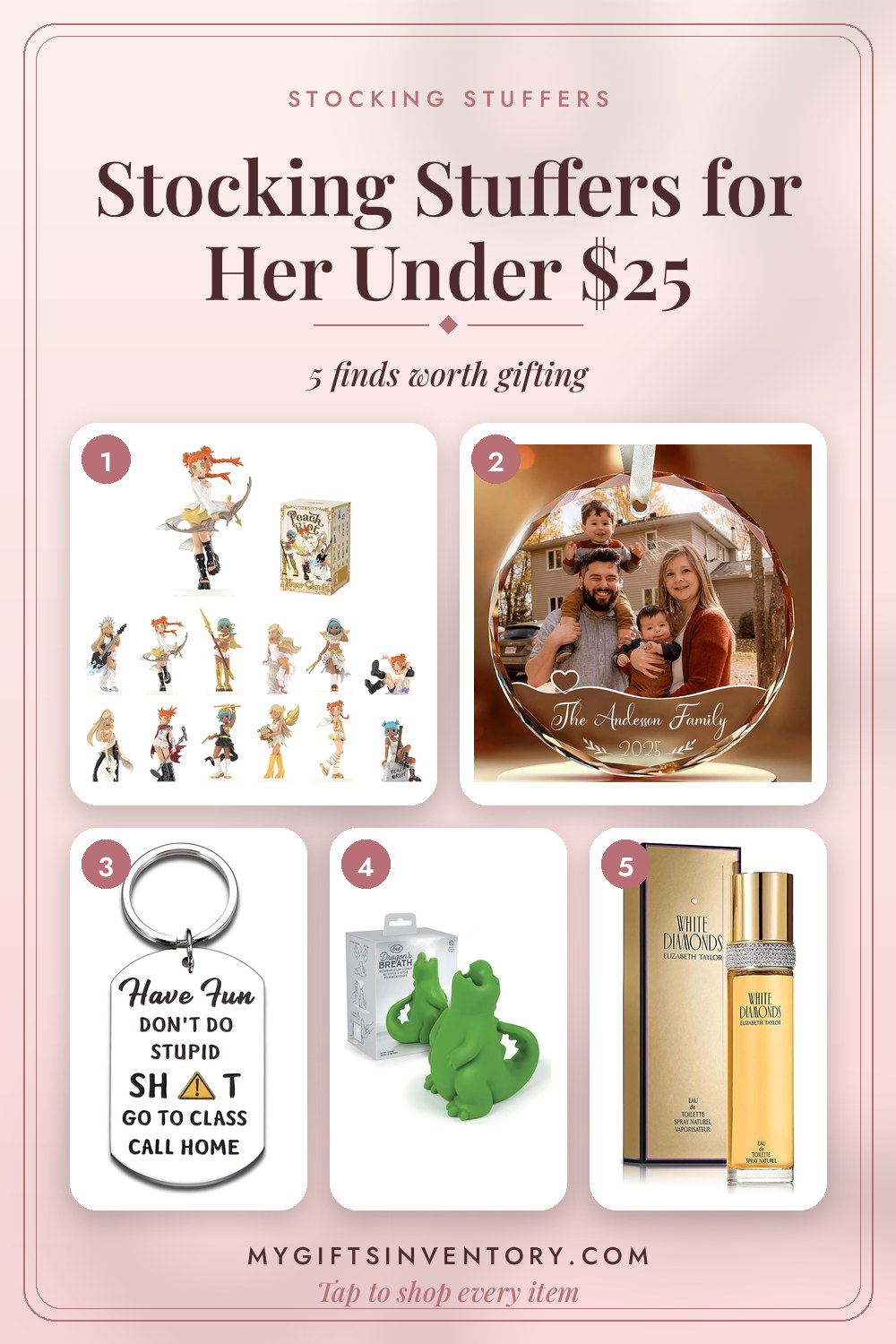
Want more ideas? Browse our full guide: 34 Stocking Stuffers & Small Holiday Gifts Under $25 (2026): Thoughtful Picks That Don't Feel Like Filler
Frequently Asked Questions
How much should I spend on wrapping paper per gift?
Aim for about $1 to $2 per gift if you're buying new, and under $1 if you're using kraft paper from a bulk roll or reusing paper you already own. A $6 to $10 roll of kraft paper and a $5 to $8 spool of ribbon will cover roughly 12 gifts, which works out to about $1 to $1.50 each.
What's the best way to wrap an oddly shaped gift?
Use a fabric wrap, a plain gift bag with tissue, or a kraft box that's bigger than the gift. Fabric and bags are more forgiving than paper for shape, and a box hides the gift's silhouette entirely. For bottles, wrap in a tea towel and tie with twine.
Can I wrap a gift card so it doesn't look like a gift card?
Yes. Put the card in a small kraft box or a larger box with tissue, then wrap the box. The shape no longer gives it away, and the extra box costs about $1. Write a short handwritten note to go with it, and check the card's balance before you give it so the recipient doesn't have to hunt for it later.
Are stick-on bows worth it?
Usually not. Real ribbon tied in a bow, a sprig of greenery, or a small ornament clipped to the ribbon all look more intentional and cost about the same or less. A $6 spool of ribbon lasts far longer than a $4 bag of stick-on bows.
How do I wrap a lot of gifts without spending hours on it?
Standardize the look: one paper type, one ribbon color, and one tag style for everything. Then wrap in batches by size: flat gifts first, boxed gifts second, odd shapes last with bags or fabric. Most people can wrap a dozen average gifts in under an hour once the system is set.
Looking for an Actual Gift Instead?
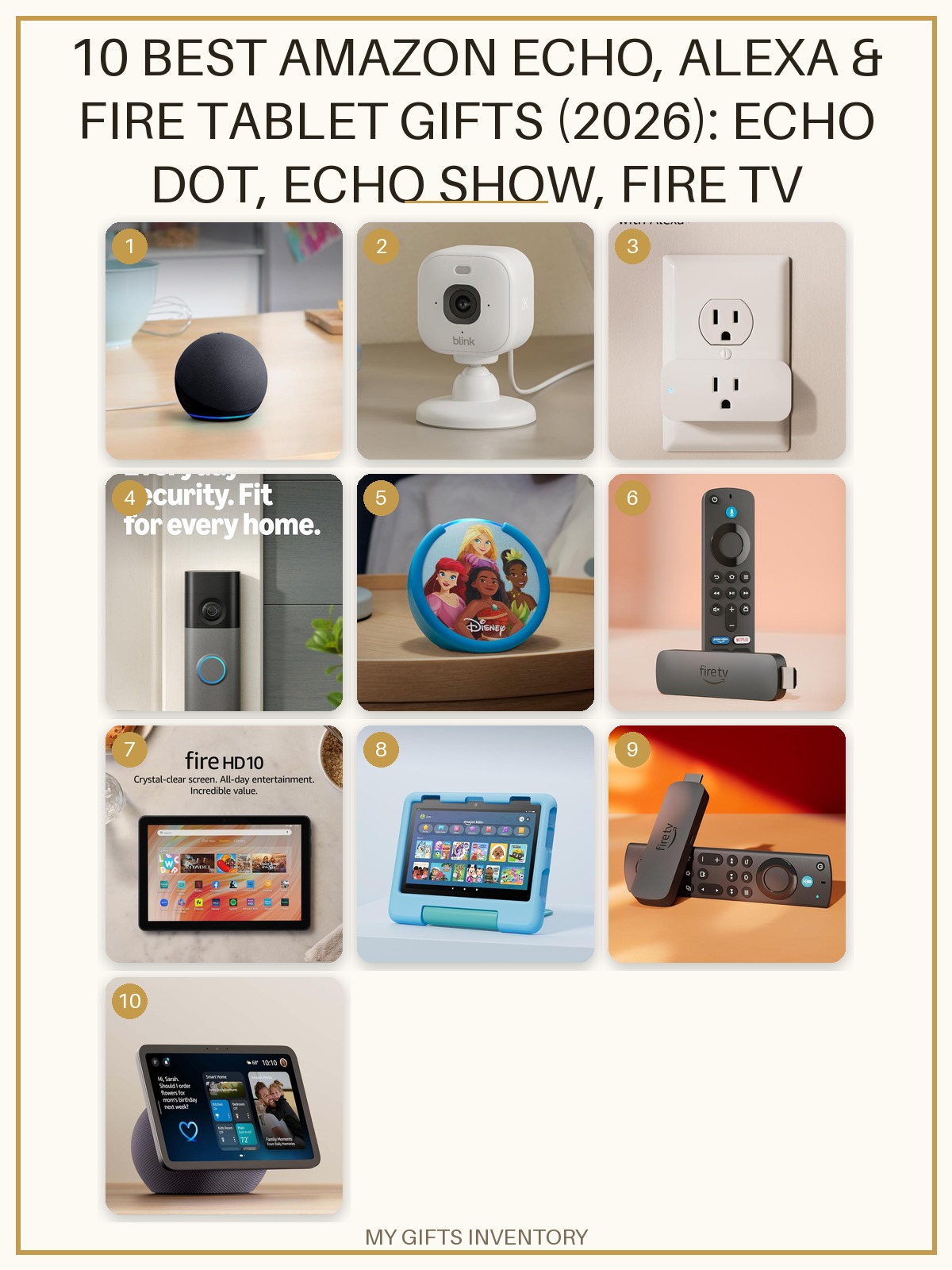
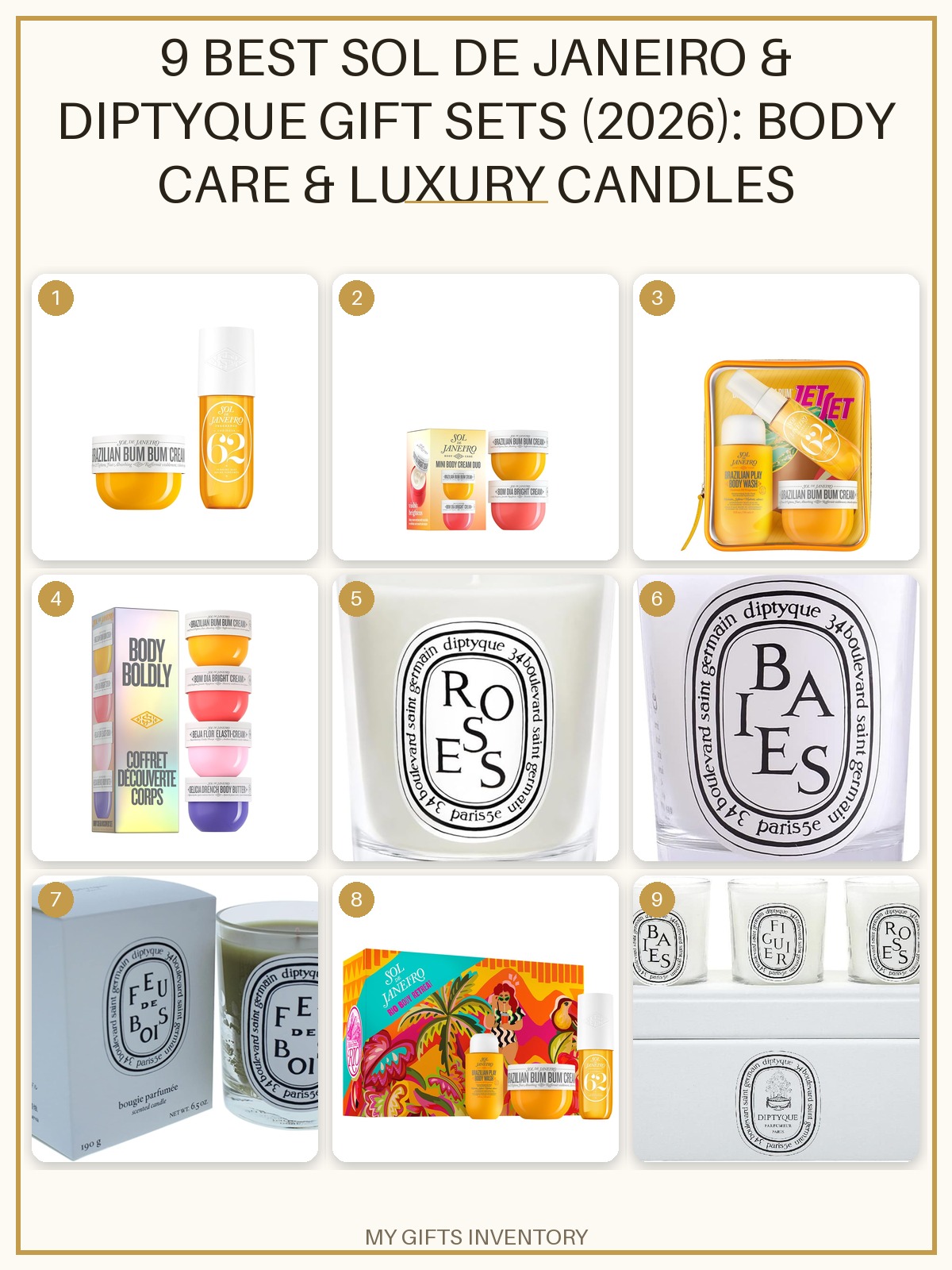
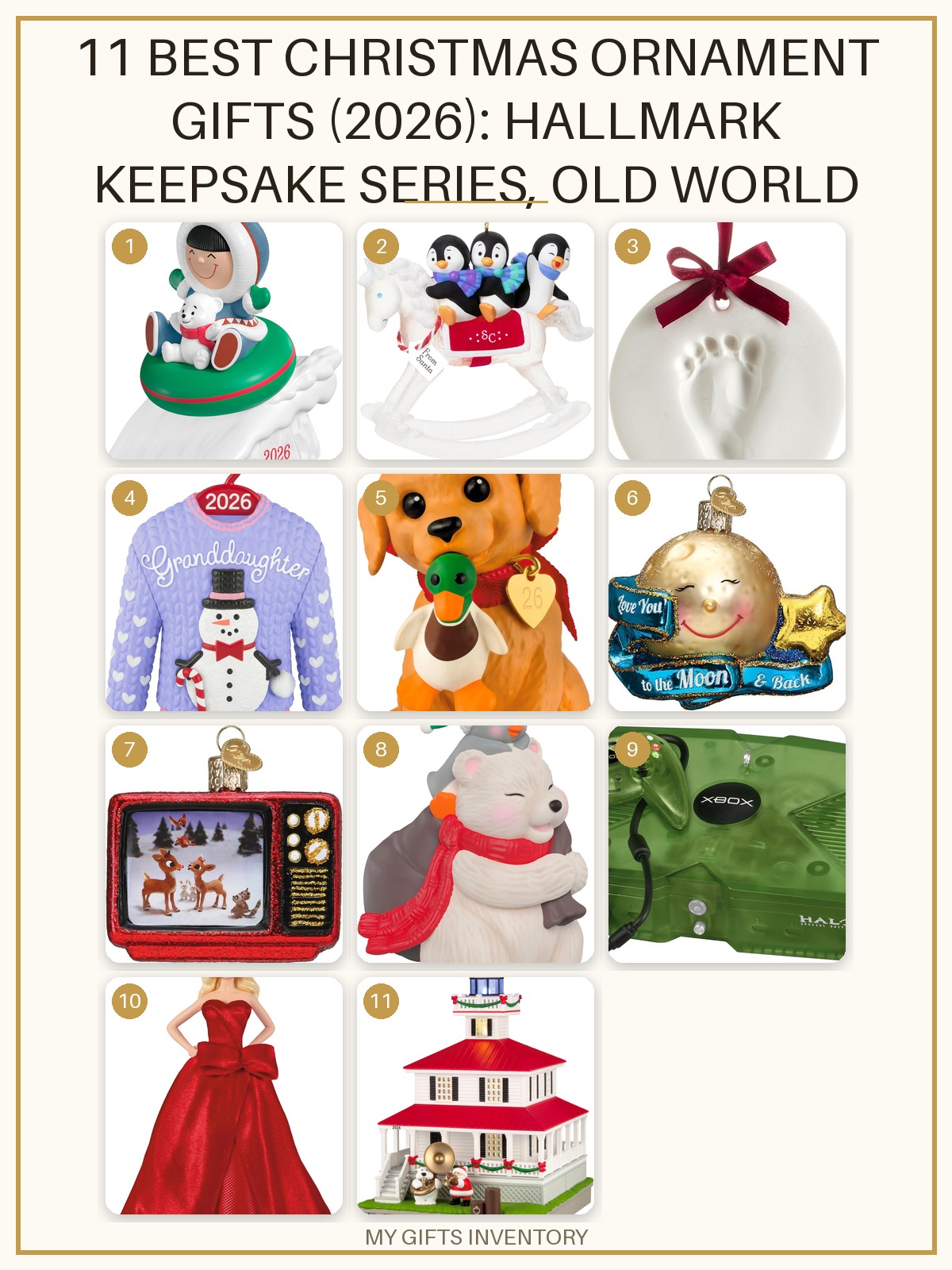
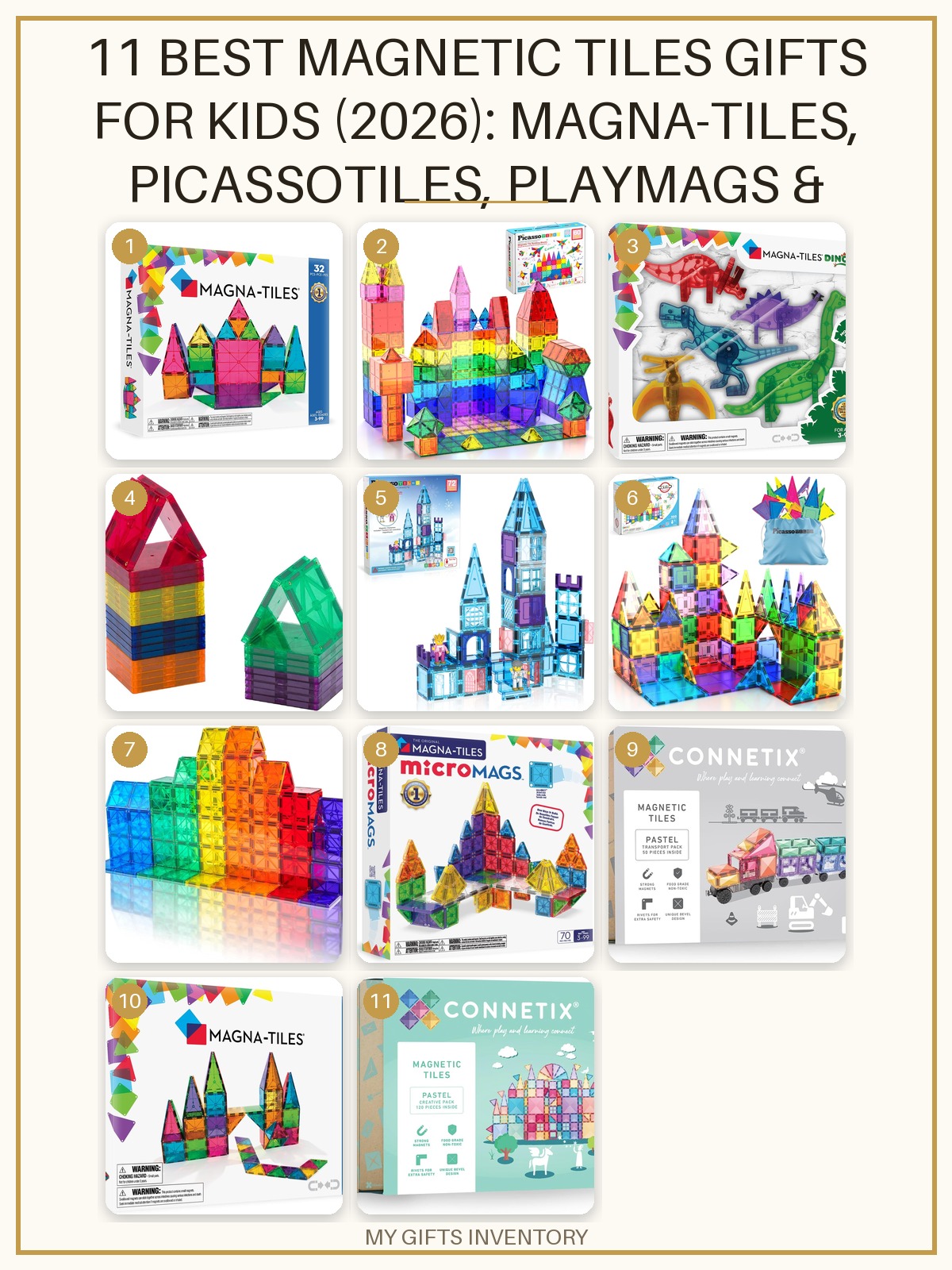
Shop Hand-Picked Gift Sets
Every item picked, priced and linked, ready to buy.
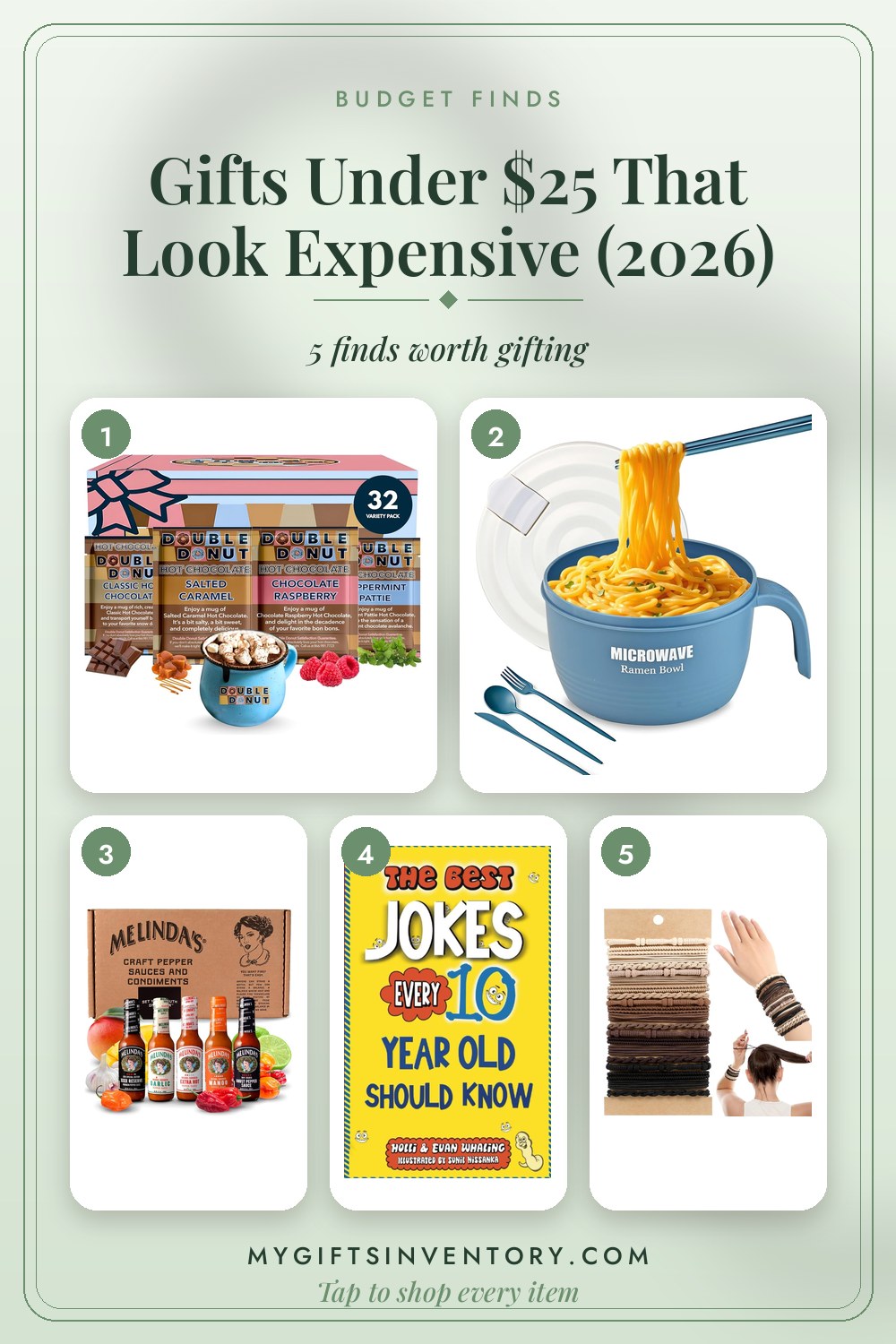
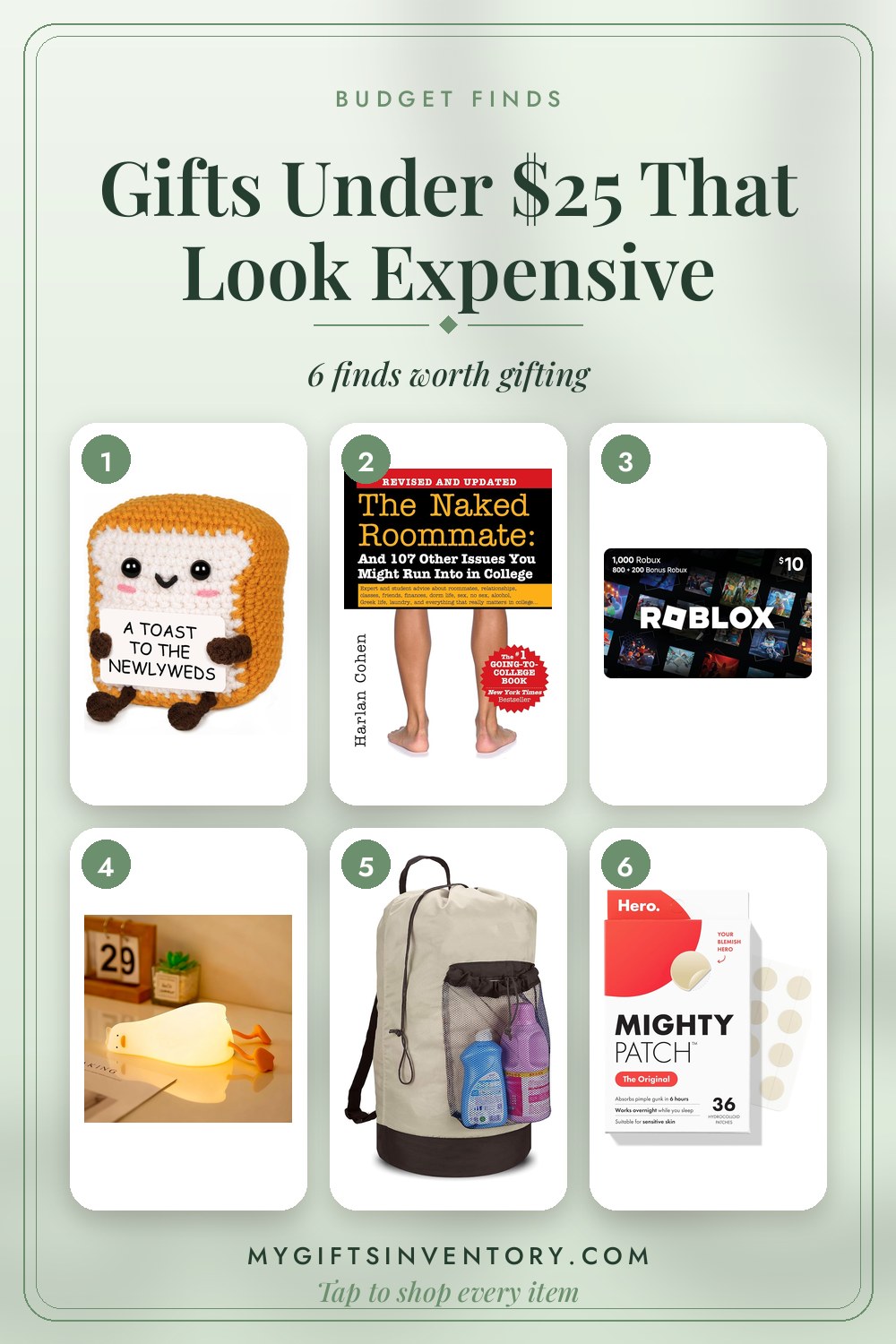
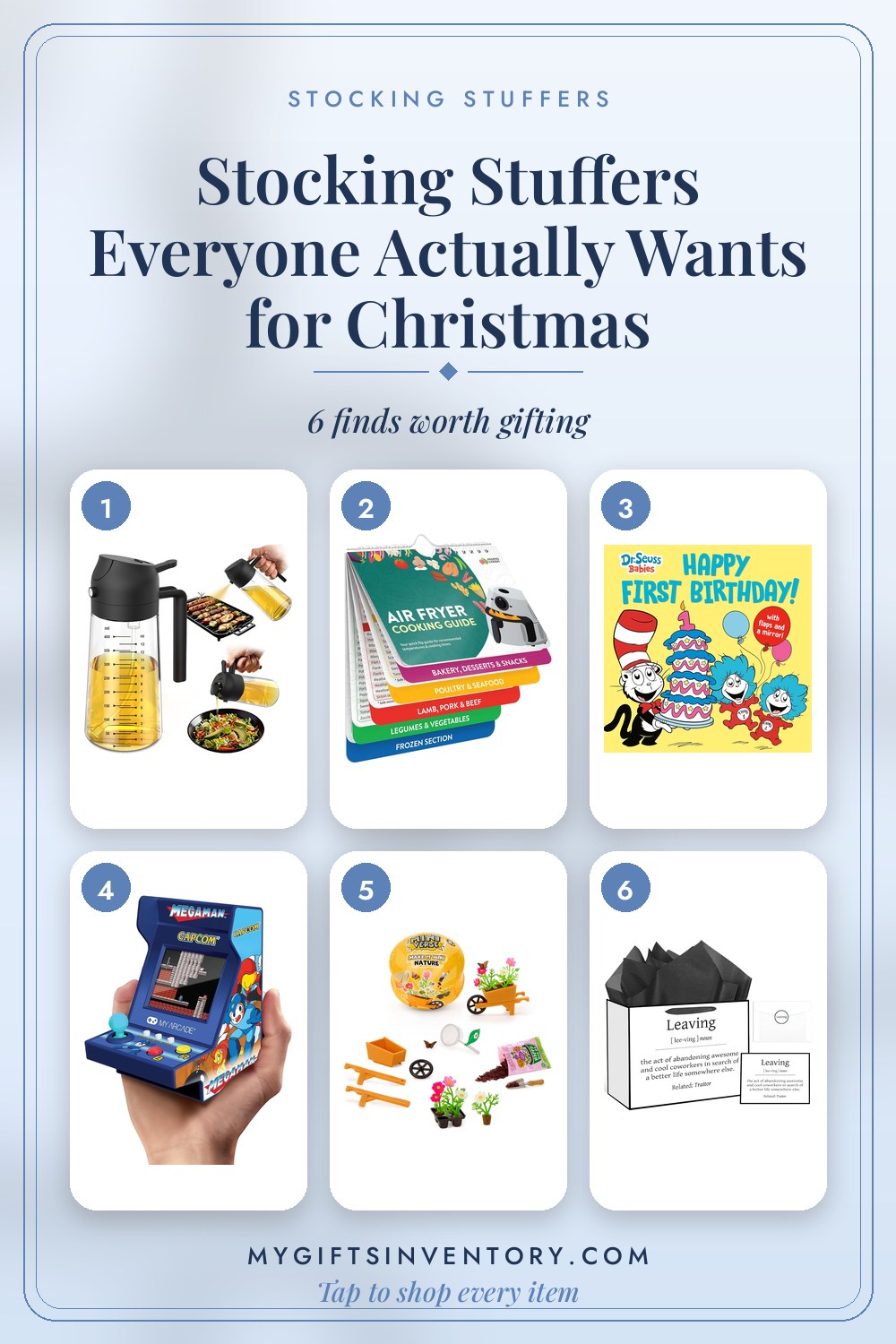
More Gift Advice