DIY Gift Wrapping Ideas That Look Expensive (On Almost No Budget)
Turn plain paper, fabric scraps, and household finds into wrapping that feels personal and polished. These practical DIY ideas work for birthdays, holidays, and everything in between.
As an Amazon Associate, My Gifts Inventory earns from qualifying purchases. We only recommend products we'd genuinely consider buying ourselves.
We’ve all stared at a pile of gifts the night before an event and felt that small panic: the presents are good, but the wrapping looks rushed or cheap. Store-bought paper runs out, fancy bows feel wasteful, and last-minute options rarely match the care you put into choosing the gift. DIY wrapping solves that. With a few basic supplies and techniques you can reuse all year, you can make every package look intentional, personal, and far more expensive than it actually is.
These ideas focus on materials most of us already have or can grab for a few dollars, plus simple methods that hold up under real handling. No craft-store overwhelm required.
The Core Supplies That Actually Matter
You do not need a full scrapbooking arsenal. A short list covers almost every gift we wrap:
- Kraft or butcher paper (the big rolls are cheapest per use)
- Scissors that cut cleanly and a ruler or straight edge
- Double-sided tape or washi tape
- Baker’s twine, cotton string, or thin ribbon
- A few permanent markers or stamps for personalization
- Optional: leftover fabric, tissue paper, dried greenery, or old maps
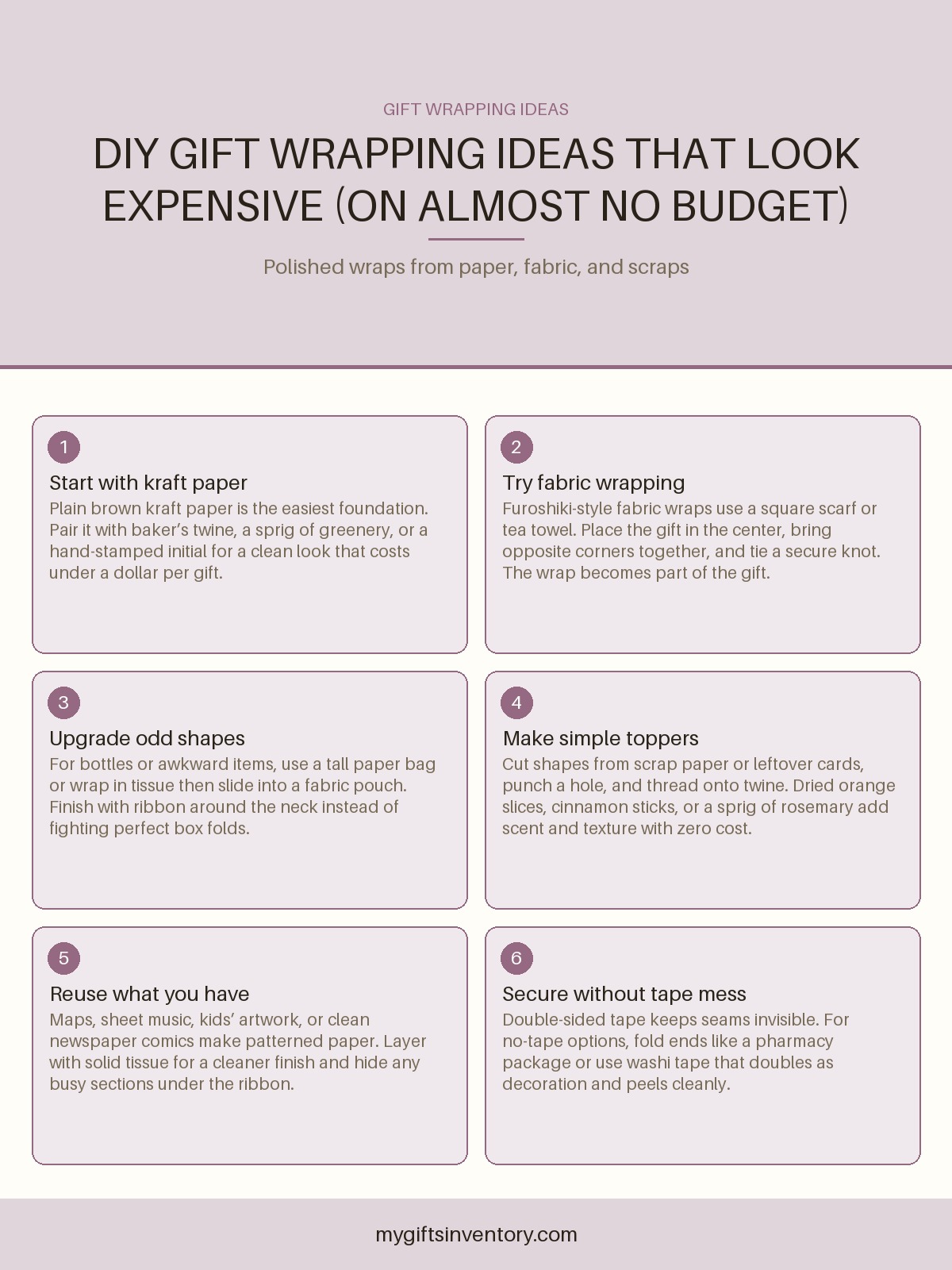
Kraft paper alone can carry an entire holiday. It photographs well, takes stamps and ink beautifully, and pairs with almost any color of twine. Keep a roll in the closet and you skip the seasonal paper scramble. When we wrap small everyday gifts or stocking stuffers for adults, the same paper works at tiny scale without looking sparse.
Classic Paper Wrapping, Upgraded
Most of us learned the basic fold-and-tape method as kids. A few refinements turn it from “covered” into “finished.”
Clean seams and sharp corners
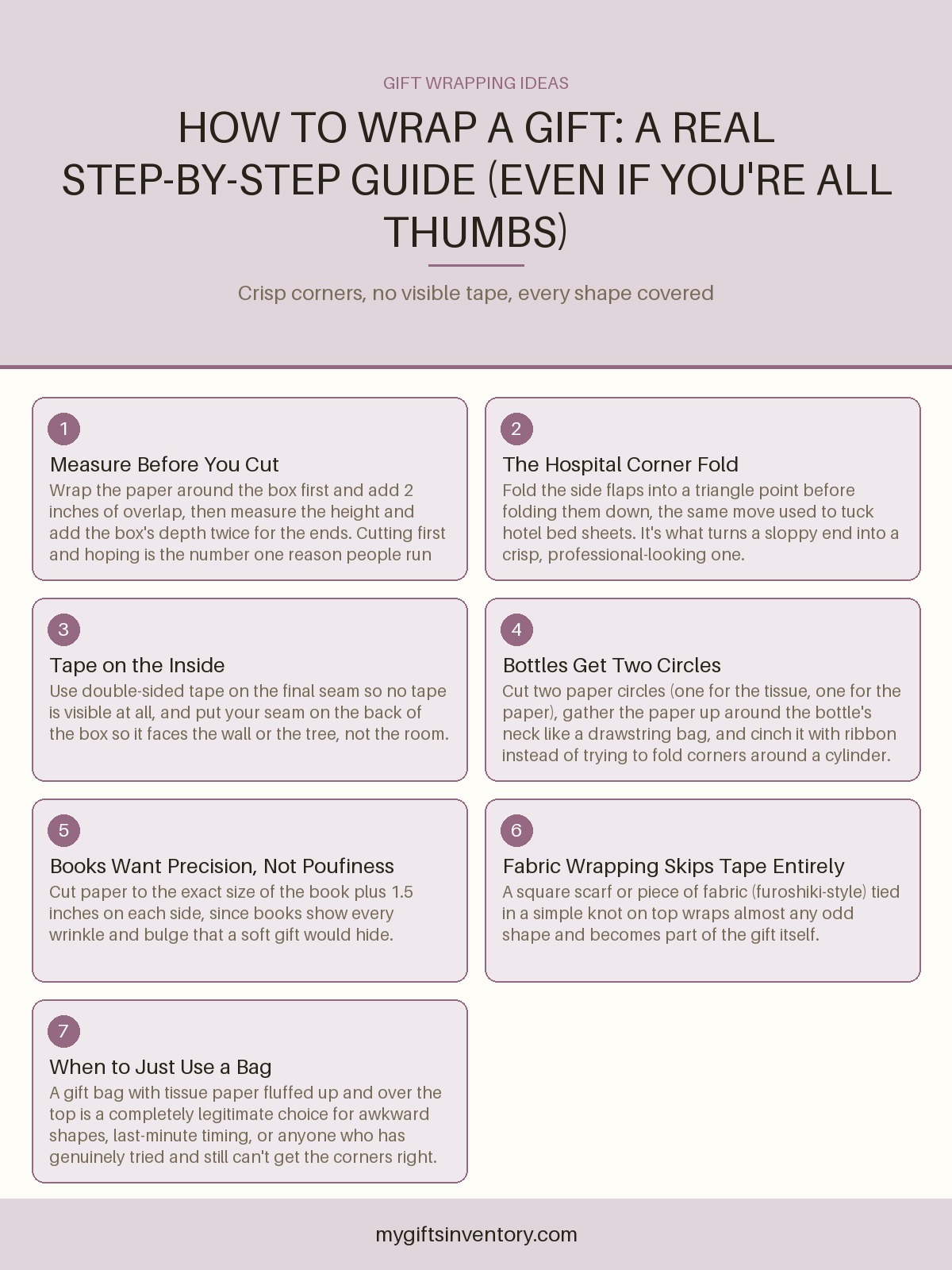
Cut the paper so it wraps the box with only about an inch of overlap. Too much excess creates bulky folds. Center the box, bring the long sides up, and secure with a thin strip of double-sided tape so nothing shows on the outside. For the ends, push the sides in to form neat triangular flaps, fold the top flap down, then the bottom, and tape. Crease every edge firmly with your fingernail or a bone folder if you have one. Sharp creases read as expensive even on plain paper.
The pharmacy fold for flat or soft items
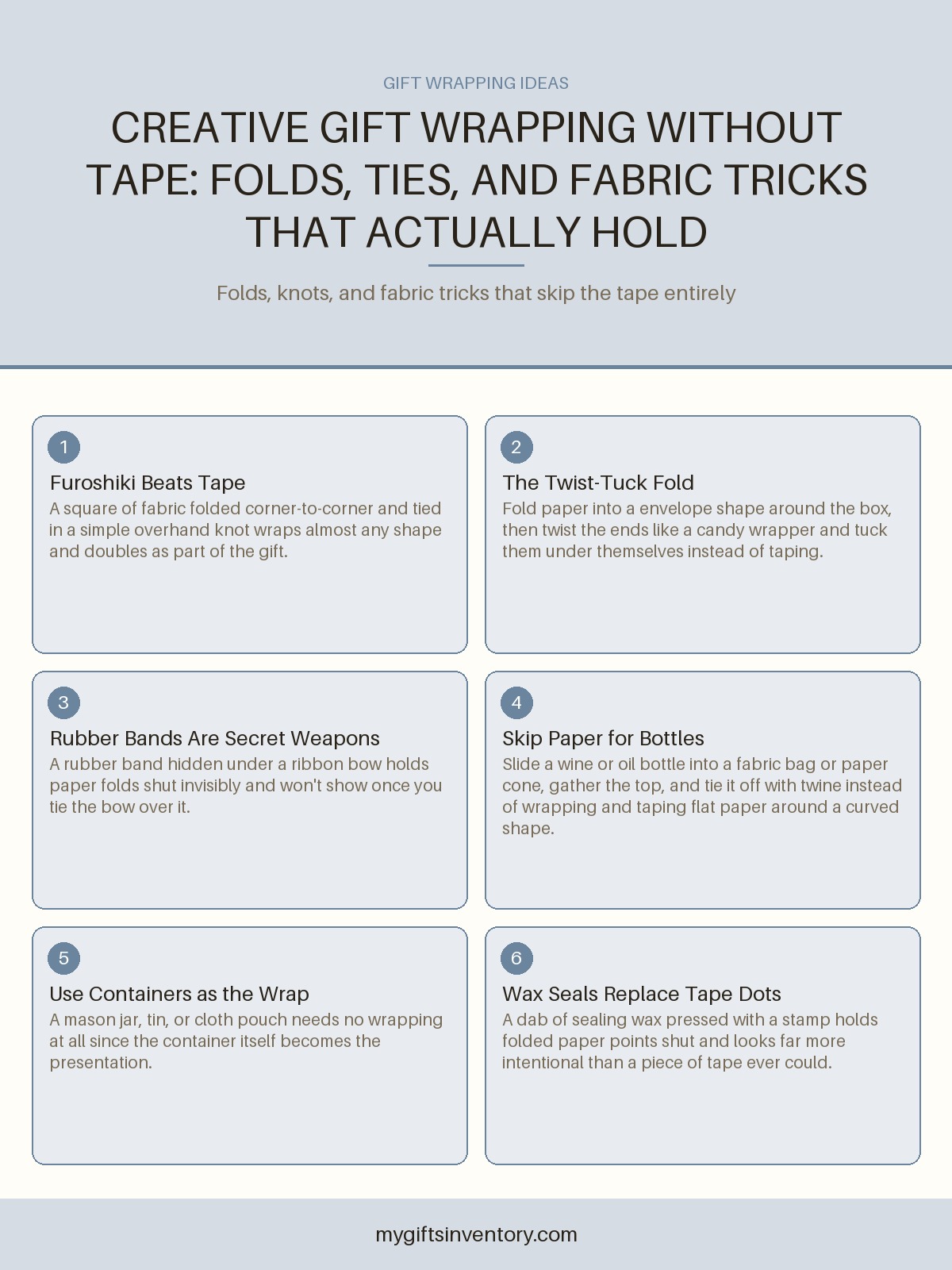
Books, scarves, and soft packages look better with the classic pharmacy wrap: place the item on the diagonal of a square of paper, fold two opposite corners over the center, then roll or fold the remaining sides tightly and tuck. Secure with a single piece of washi or a wax seal sticker. It feels old-fashioned in the best way and uses less tape.
Layering for depth
Wrap first in tissue or a solid color, then add a narrower band of patterned paper or a strip of leftover wrapping around the middle. The layered look adds visual interest without needing perfect pattern matching. This works especially well when the main gift is something cozy or decorative that already has its own texture, like the kinds of pieces in our roundup of cozy home decor gifts under $50.
Fabric Wrapping (Furoshiki and Everyday Versions)
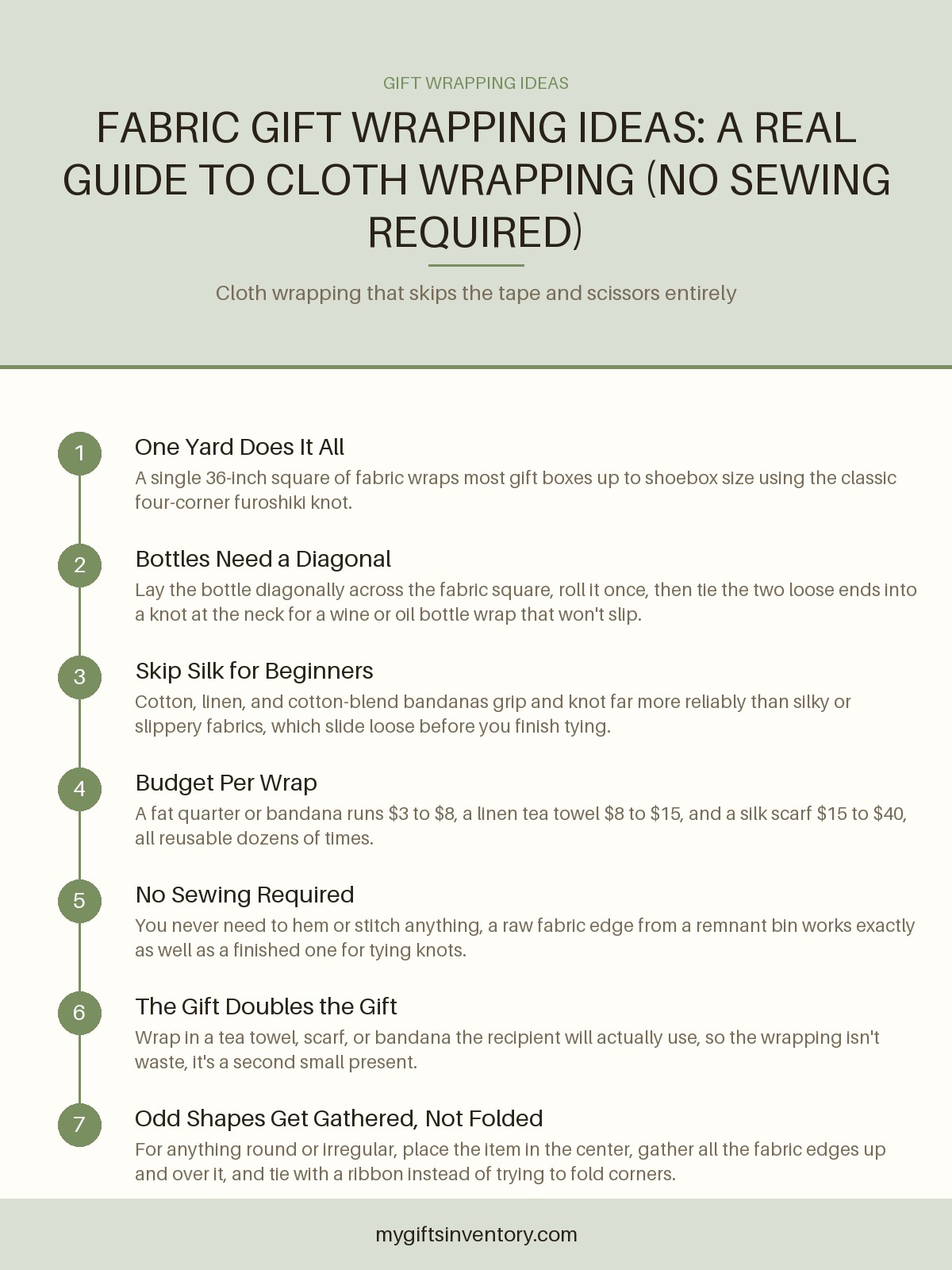
Fabric wrapping removes the waste problem and often becomes a second gift. Japanese furoshiki uses a square cloth. You can buy purpose-made ones, but tea towels, bandanas, large napkins, or thrifted scarves work just as well.
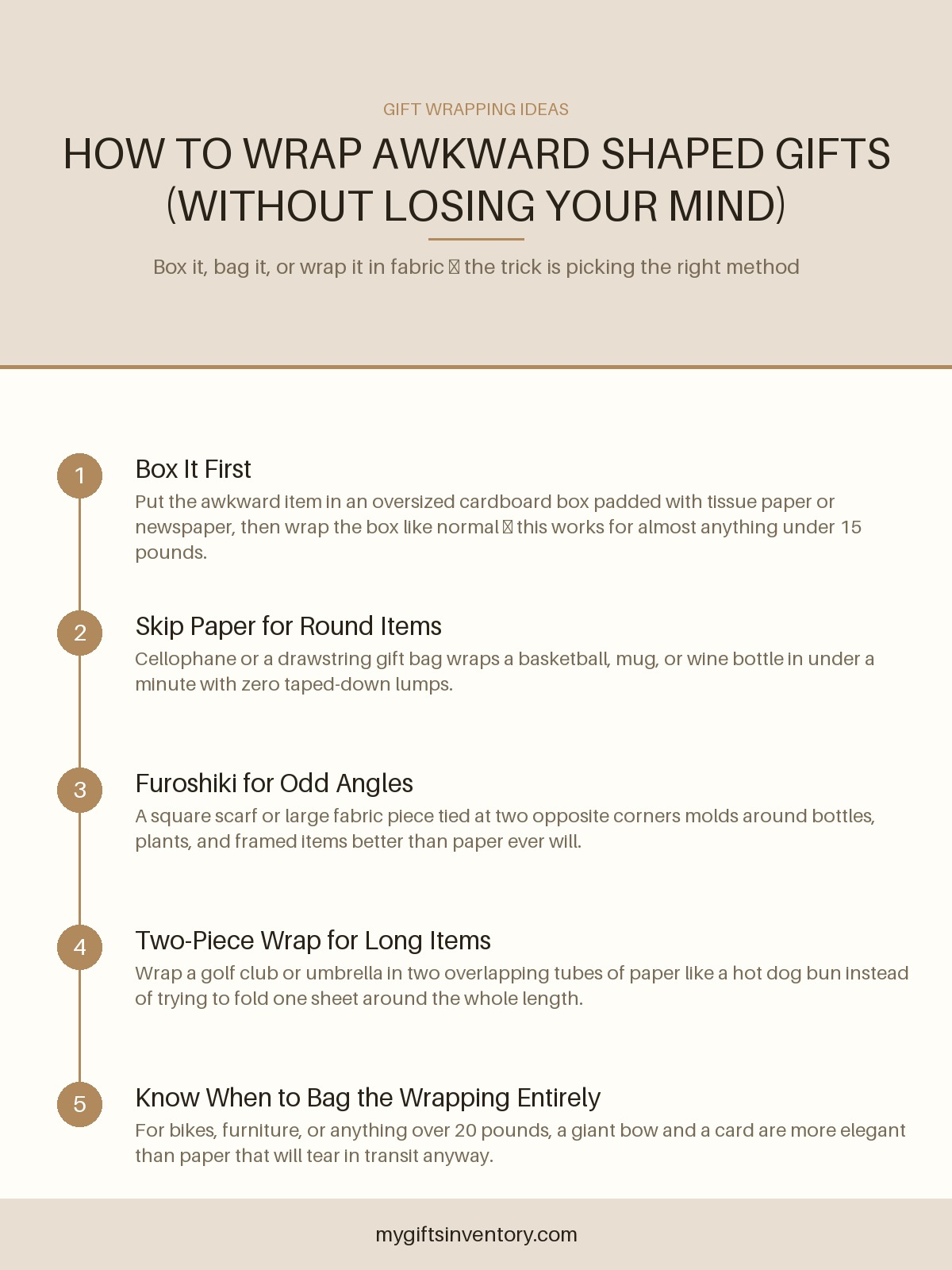
Basic method: lay the cloth flat in a diamond orientation, place the gift in the center, bring two opposite corners together over the top and tie once, then bring the remaining two corners up and tie a second knot or bow over the first. For bottles, use a longer rectangle and twist the fabric around the neck before knotting. For soft or irregular shapes, gather all four corners and tie in a bundle.
Choose fabric that suits the recipient. A sturdy tea towel for a cook, a soft scarf for someone who loves layers, a fun patterned bandana for a casual friend. The wrap itself gets used, which feels better than paper headed for the trash. We reach for fabric most often when the gift is a keepsake or something meant to last, the same spirit behind many personalized home and keepsake gifts.
Household and Recycled Materials That Look Deliberate
Some of the best wrapping starts in the recycling bin or junk drawer.
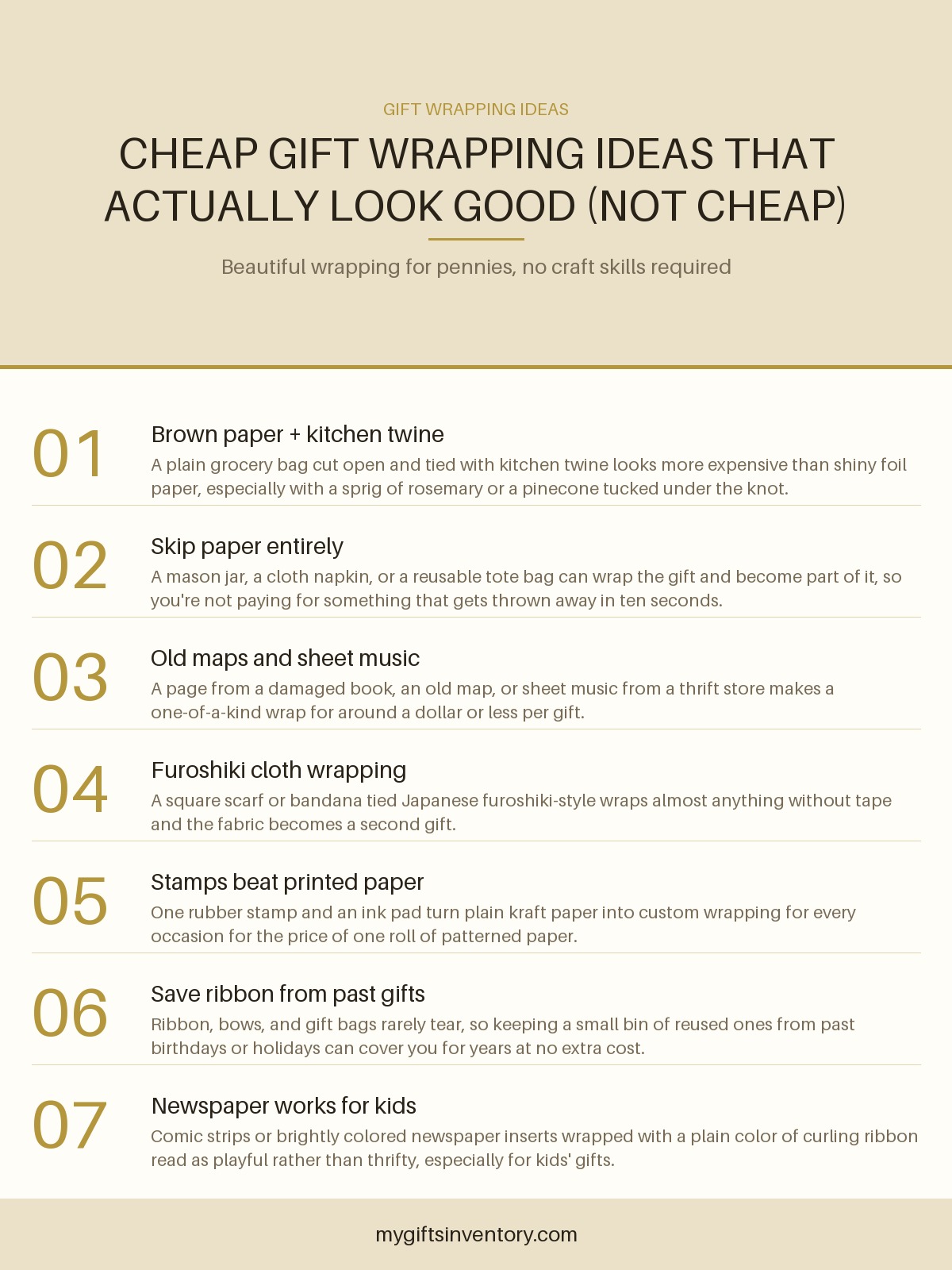
- Brown paper grocery bags: Cut open, iron flat on low heat if wrinkled, and use the blank side. The slight texture feels crafty rather than cheap.
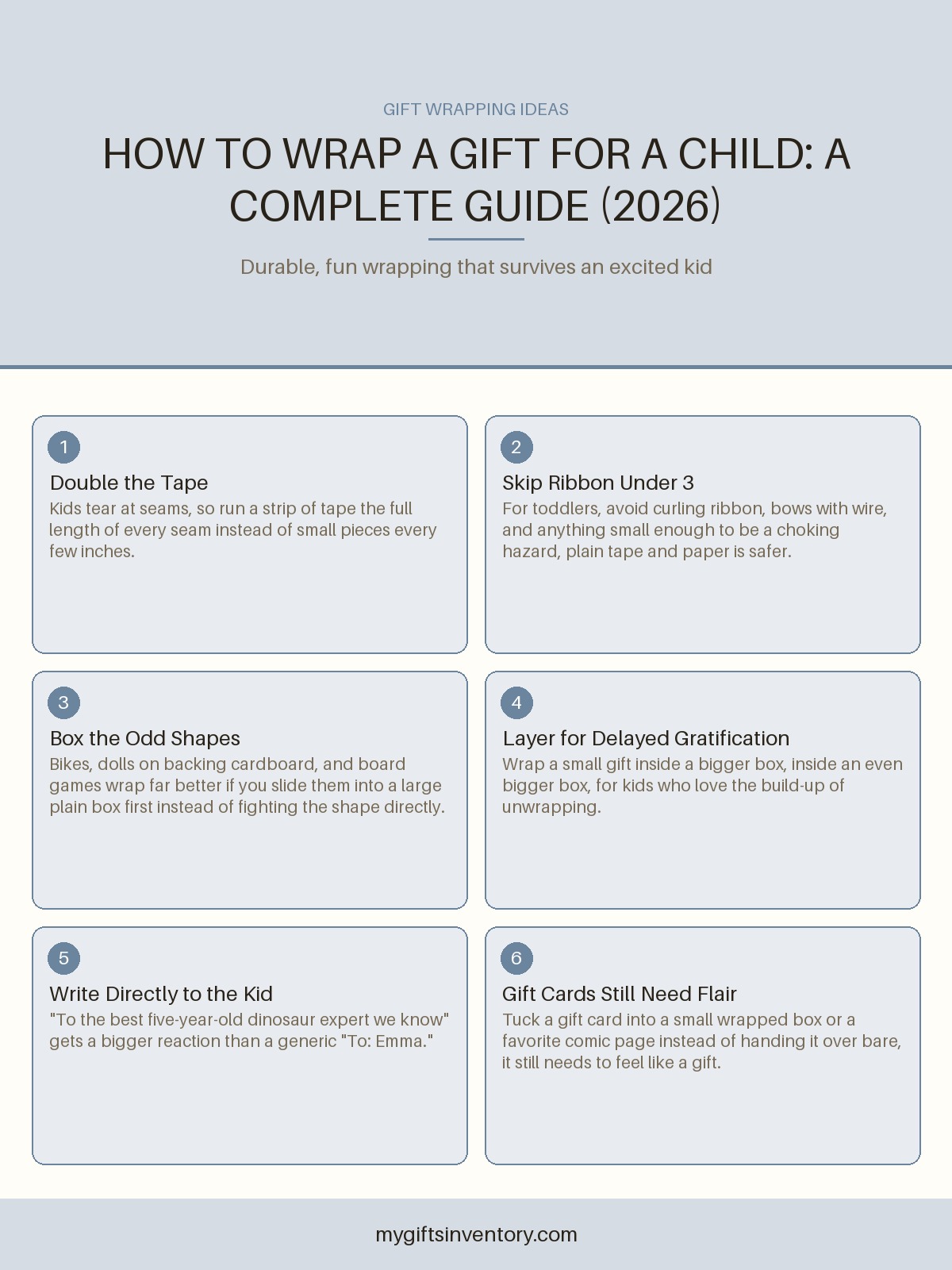
- Newspaper or comics: Black-and-white pages look graphic and modern with black twine. Color comics suit kids’ gifts or playful adults. Add a solid tissue under-layer if the print feels too busy.
- Old maps, sheet music, or book pages: These instantly personalize. A map of a meaningful city or a page from a favorite novel turns the wrapping into conversation.
- Kids’ artwork: For family gifts, wrap in drawings the children made. Grandparents especially light up.
- Paper bags with handles: Decorate the outside and drop the tissue-wrapped gift inside. Instant gift bag with structure.
The key is commitment. If you choose newspaper, lean into it with clean folds and good twine rather than trying to hide it. Half-hearted recycled wrapping looks like you ran out of paper. Fully embraced recycled wrapping looks creative.
Toppers, Tags, and Finishing Touches
The right topper does more work than expensive paper. Keep a small kit of options:
- Natural elements: cinnamon sticks, dried orange slices, pine sprigs, rosemary, eucalyptus, or a single dried flower
- Simple paper shapes: cut stars, hearts, or circles from scrap cardstock, punch a hole, and thread onto the twine
- Yarn or fabric scraps: a small tassel or pom-pom tied on
- Buttons, vintage keys, or charms you already own
- Handwritten tags on kraft cardstock or cut-up cereal boxes painted white
Write names in clear handwriting or simple block letters. A short message on the tag (“For slow mornings” or “Open when you need a break”) adds warmth without needing a separate card every time. Twine wrapped several times around the package and finished with a sprig looks finished in under a minute.
For multiple gifts under the tree, vary the toppers while keeping the base paper the same. The collection feels cohesive instead of chaotic. This approach scales nicely for Christmas gifts for the whole family when you want everything to feel related but not identical.
Handling Awkward Shapes and Soft Gifts
Not everything comes in a neat box. Soft clothes, bottles, balls, and stuffed animals fight traditional wrapping.
For bottles: wrap the body in paper or tissue like a candy, twist the ends, and secure with ribbon or twine close to the neck. Or slide the bottle into a tall narrow bag and fluff tissue at the top.
For soft or lumpy items: place them in a box first if possible. Empty shoeboxes, oatmeal canisters, or sturdy gift boxes from previous years solve most problems. If boxing feels wrong, use the fabric bundle method or wrap loosely in tissue and place inside a decorated paper bag or fabric pouch.
For gift baskets or open arrangements, treat the container as the package. Add a large cellophane or fabric wrap gathered at the top with a big bow, or simply tuck tissue around the contents and tie a wide ribbon around the whole thing. Many of the ideas in our gift baskets under $50 guide already sit in containers that look finished with minimal extra wrapping.
Spherical or odd toys can go inside a fabric bag cinched with a drawstring or ribbon. The bag hides the shape and still feels like a present.
Eco-Friendly and Low-Waste Approaches
If reducing waste matters to you or the recipient, several habits help without looking grim.
Choose reusable fabric whenever it fits. Save and reuse bows, ribbon, and gift bags that arrive at your house. Brown paper and twine recycle easily or can be composted if free of plastic tape. Washi tape is often more recyclable-friendly than acrylic tape, and it peels off cleanly for paper reuse.
Seed paper tags or plantable elements are a nice touch when you can find them, but they are not required. A simple note that says “the wrap is yours to keep or reuse” sets a good tone. Avoid glitter and metallic plastic films if sustainability is the goal. They look festive for one day and create mess forever.
Occasion Notes and Small Personal Touches
Birthday wraps can lean colorful or match the recipient’s favorite shade. Holiday wraps often benefit from a limited palette (kraft + red twine + greenery, or kraft + white + silver) so the tree or table does not become visual noise. Wedding or shower gifts look elegant in white, cream, or soft blush fabric with simple ribbon.
For kids, let them stamp, draw, or sticker the kraft paper. The imperfections become the charm, and they feel involved. For colleagues or lighter acquaintances, keep it neat and neutral: good paper, clean folds, simple tag. The wrapping should match the relationship.
Add one personal detail when you can. A stamp of their initial, a scrap of fabric that matches something they love, or a tag written in a shared joke language. These tiny signals tell the person you paid attention.
Common Mistakes and Easy Fixes
Too much paper creates lumpy ends. Measure roughly first. Visible tape looks messy: switch to double-sided or decorative washi. Loose twine slips: wrap it tightly several times before knotting. Busy patterns on busy gifts fight each other: let one element dominate. Rushing the creases leaves everything looking soft and unfinished. Take the extra ten seconds to sharpen the folds.
If a wrap goes wrong, it is usually faster to start over with fresh paper than to keep adding tape. Kraft paper is cheap enough that a redo still costs almost nothing.
Practice on a couple of boxes before a big wrapping session. Muscle memory for clean corners arrives quickly once you do a few in a row.
Putting It All Together on a Real Timeline
Two weeks out: gather paper, twine, tags, and any fabric. Check that scissors and tape are usable. One week out: wrap anything that is already purchased and can sit safely. Day before or morning of: finish the last items and add toppers so greenery stays fresh. Keep a small “wrapping emergency” pouch with spare twine, tape, scissors, and a couple of tags in your bag or car during gift season. It prevents last-minute drugstore paper runs.
DIY wrapping is not about perfection. It is about showing that the presentation received a little thought. Recipients notice clean folds, a thoughtful tag, and a sprig of something real far more than they notice whether the paper came from a designer roll. Start simple with kraft and twine, then add one new technique each season. Within a couple of holidays you will have a reliable system that feels like yours.
Frequently Asked Questions
What is the cheapest way to wrap gifts nicely?
Plain kraft paper plus baker’s twine is the lowest-cost combination that still looks polished. A large roll of kraft paper often costs less than two or three fancy printed sheets and covers many gifts. Add free natural toppers like pine or rosemary from the yard and handwritten tags cut from scrap cardboard.
How do you wrap a gift without tape?
Use the fabric furoshiki method and tie knots, or fold paper using the pharmacy-style tucks and secure with a sticker or by weaving the ends under tightly. Washi tape can also serve as both adhesive and decoration if you want something removable. For boxes, carefully folded ends can sometimes hold with friction alone if the paper is snug.
What can I use instead of traditional wrapping paper?
Kraft paper, fabric squares, newspaper, old maps, sheet music, kids’ drawings, paper grocery bags, and scarves or tea towels all work. Tissue paper layered inside a reusable gift bag is another clean option. The goal is a finished look rather than a specific material.
How do you make plain wrapping look special?
Focus on sharp creases, layered elements (a band of contrasting paper or fabric), and a strong topper. Twine wrapped multiple times, a sprig of greenery, a simple paper tag with nice handwriting, or a single dried flower elevates plain paper immediately. Consistency across multiple gifts also creates a pulled-together effect.
Is fabric wrapping practical for shipping or stacking?
Fabric works best for hand-delivered gifts. For shipping, use a sturdy box with internal tissue or paper wrap so the fabric does not shift, or stick to paper methods that can be reinforced with packing tape on the outer shipping box. Fabric bundles can loosen in transit if not tied very securely.