Gift Wrapping Techniques That Actually Look Professional (No Special Tools Required)
From nailing sharp box corners to wrapping bottles, books, and impossible shapes without a mess of tape, here's how to wrap a gift so it looks like you paid someone to do it.
As an Amazon Associate, My Gifts Inventory earns from qualifying purchases. We only recommend products we'd genuinely consider buying ourselves.
It's 9pm, you've got the gift, and now you're standing over a roll of paper that's somehow both too small and impossible to cut straight. Or maybe the real problem is the gift itself: a bottle of wine, an oddly shaped ceramic mug, a gift card that feels naked in an envelope. Gift wrapping techniques matter less for the paper itself and more for the handful of small moves that make something look considered instead of rushed, and almost all of them take under a minute once you know them.
Get the Sizing Right Before You Start
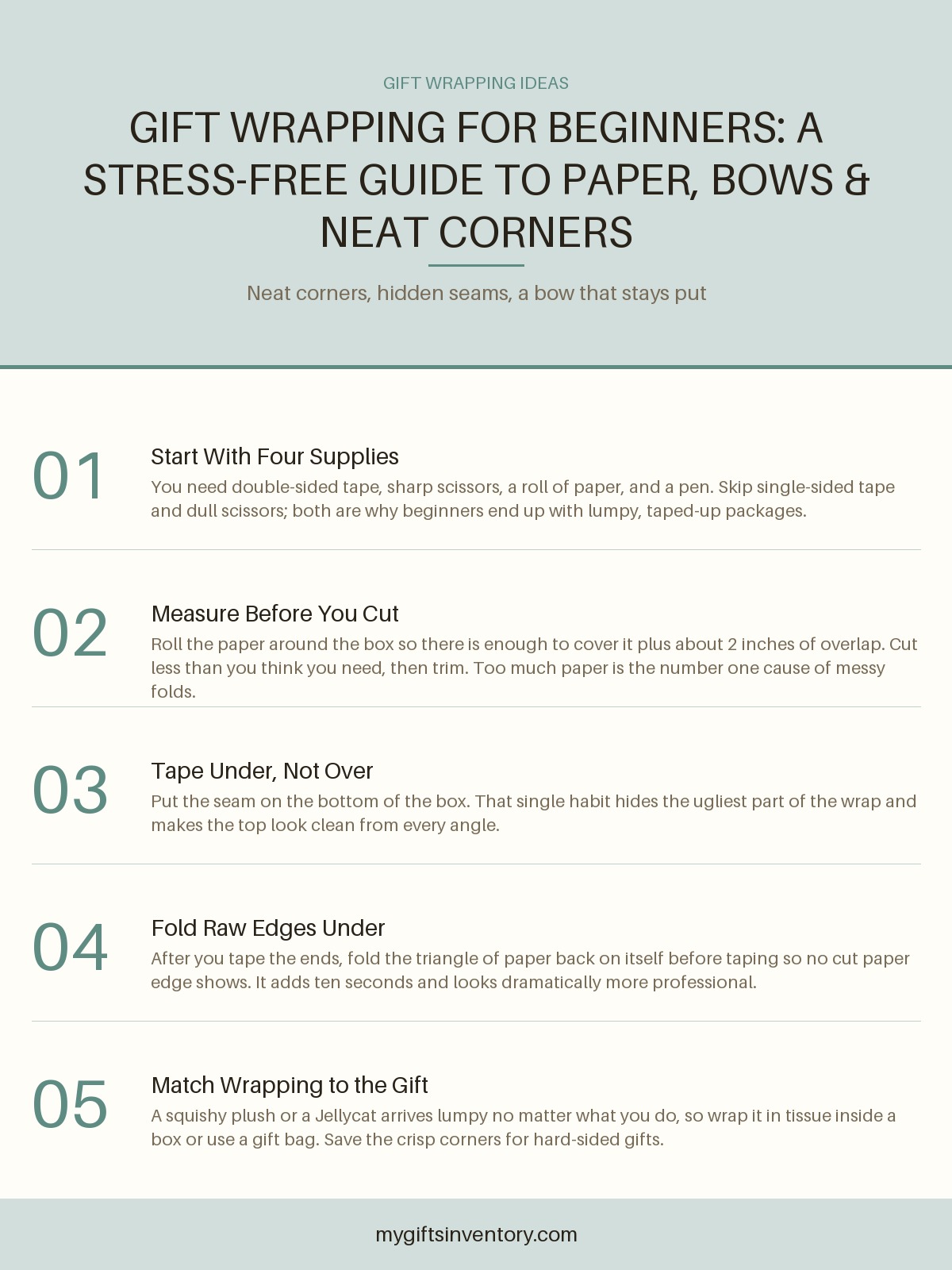
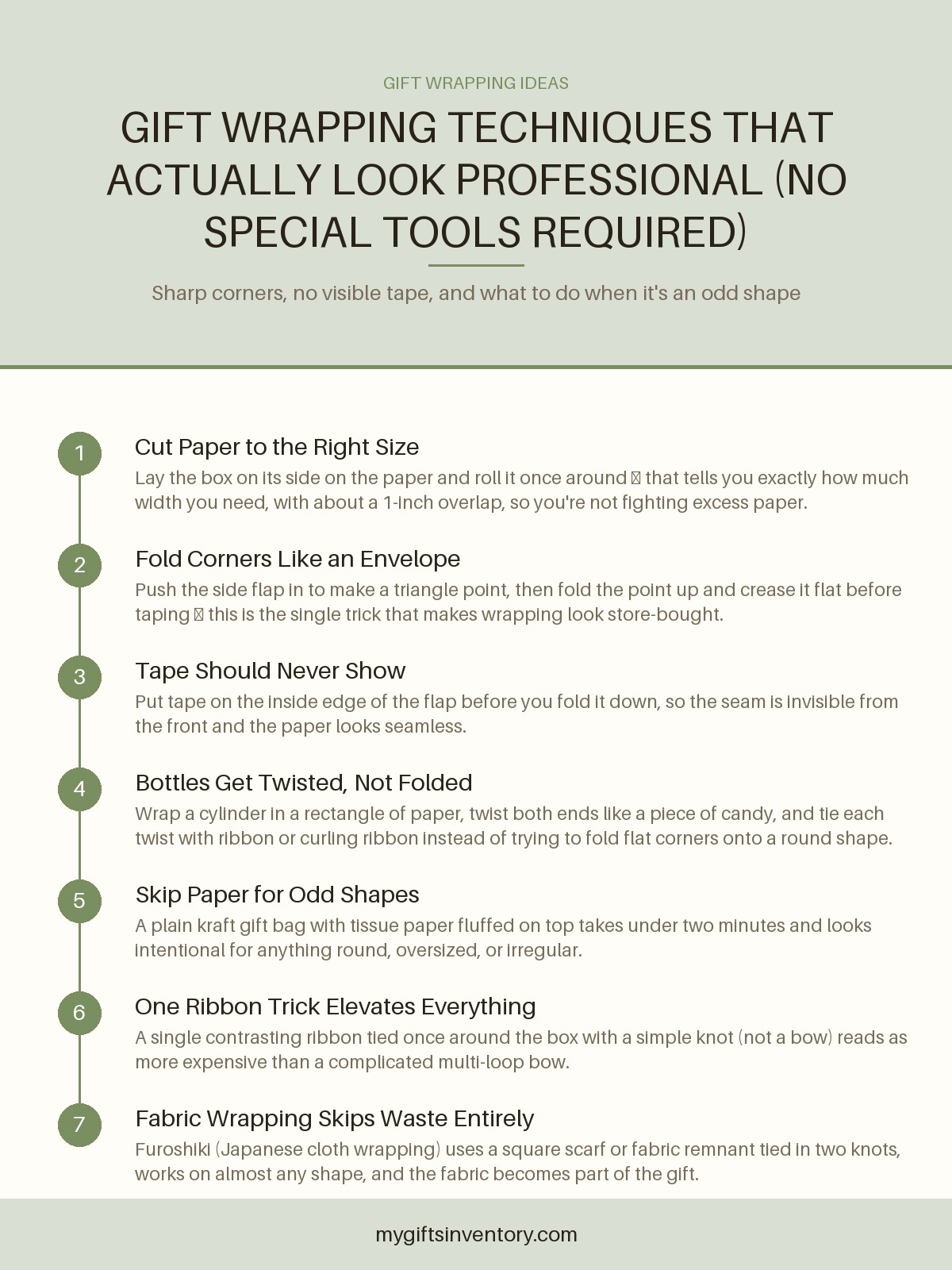
Most wrapping disasters start before the tape ever comes out. People eyeball a piece of paper, cut it, and then discover halfway through that there's either three extra inches flapping around or not quite enough to close the seam. The fix is almost embarrassingly simple: lay the box on its side on the paper and roll it once, all the way around, so the paper wraps the box completely with about an inch of overlap where it meets itself. That overlap is your seam allowance. Then check the ends, you want enough paper on each side to fold in past the middle of the box, roughly half the box's height plus an inch or two for the fold.
Cutting on a hard, flat surface with a straight edge (a yardstick, a large book, even a door frame) gives you a cleaner line than scissors alone ever will. A crooked cut is the single most common reason wrapped gifts look sloppy, and it's the easiest thing to fix.
The Classic Box Wrap, Step by Step
This is the wrap most of us learned wrong as kids, which is why it never quite looks right as adults. Here's the version that actually produces sharp corners:
Wrapping the Body
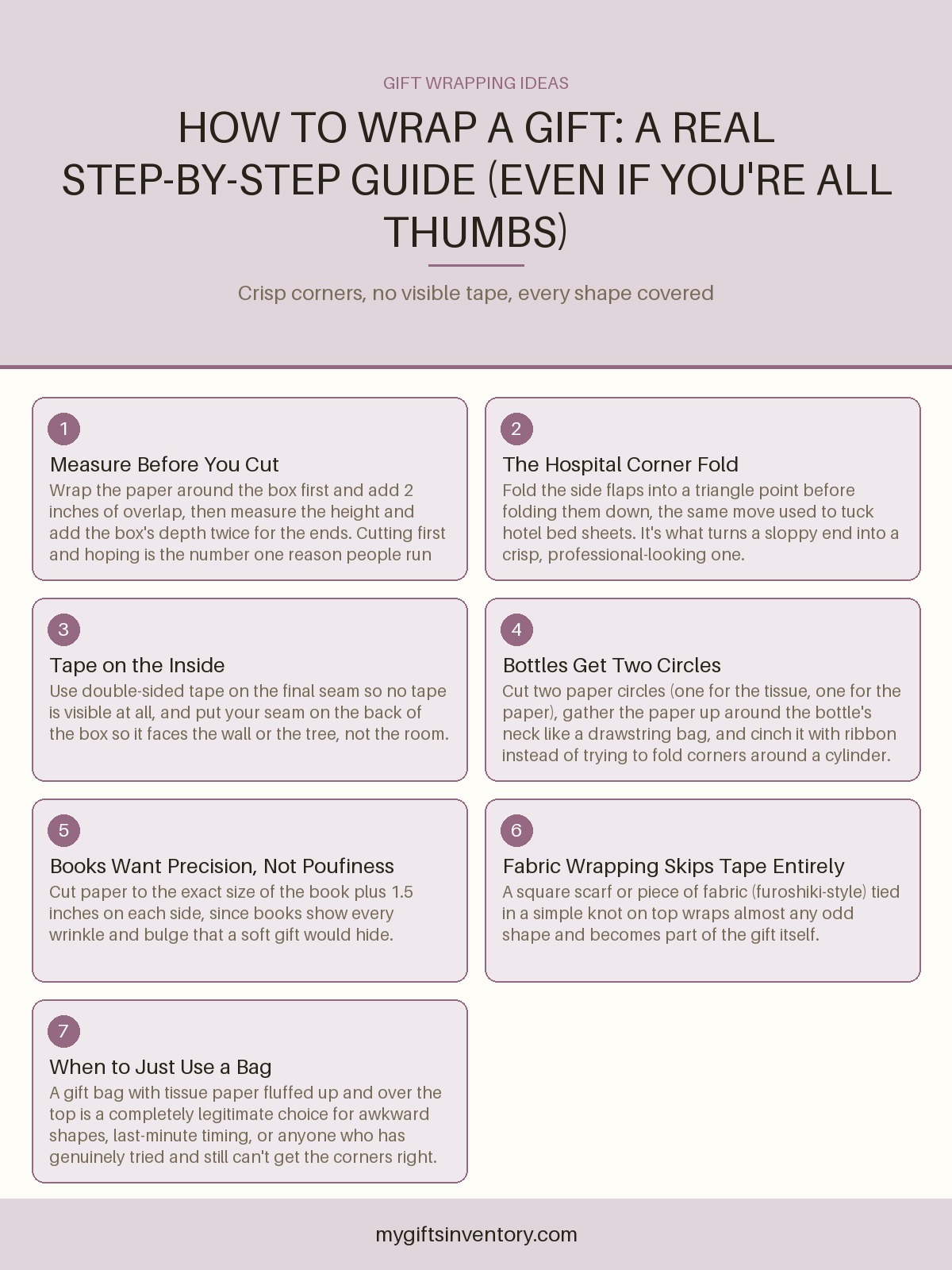
Center the box on the paper, bring one long edge up and over the top, and tape it down. Bring the second long edge over so it overlaps the first by about half an inch, and tape that seam closed on the inside edge where it won't show. You now have a tube of paper with two open ends.
The Corner Fold That Changes Everything
At each open end, push the top and bottom flaps down first, then fold in the two side flaps to form clean triangle points. Take the remaining bottom flap, fold it up along the crease, and press it flat against the box before taping the underside. That triangle-to-envelope motion is the single technique that separates a wrap that looks professional from one that looks like a wad of paper got taped to a box. Practice it once on a spare box before you do the real gift.
Hiding the Tape
Tape should almost never be visible on the front of a finished gift. Fold the flap down first, then slide a small piece of tape under the edge before pressing it flat, rather than taping on top where the shine and wrinkles show. If you're using patterned paper, this trick alone makes a huge visual difference.
If you're wrapping something for a colleague or client rather than a friend, this same clean, low-fuss approach tends to read better than anything elaborate. A single wrapped box with one ribbon looks far more appropriate for the office than a bow-covered gift bag, which is worth keeping in mind alongside our corporate gift ideas under $50 if you're picking something for that context in the first place.
Wrapping Things That Aren't Boxes
Almost nobody actually gives box-shaped gifts anymore, which is exactly why most people struggle. Here's what works for the shapes that come up constantly.
Bottles
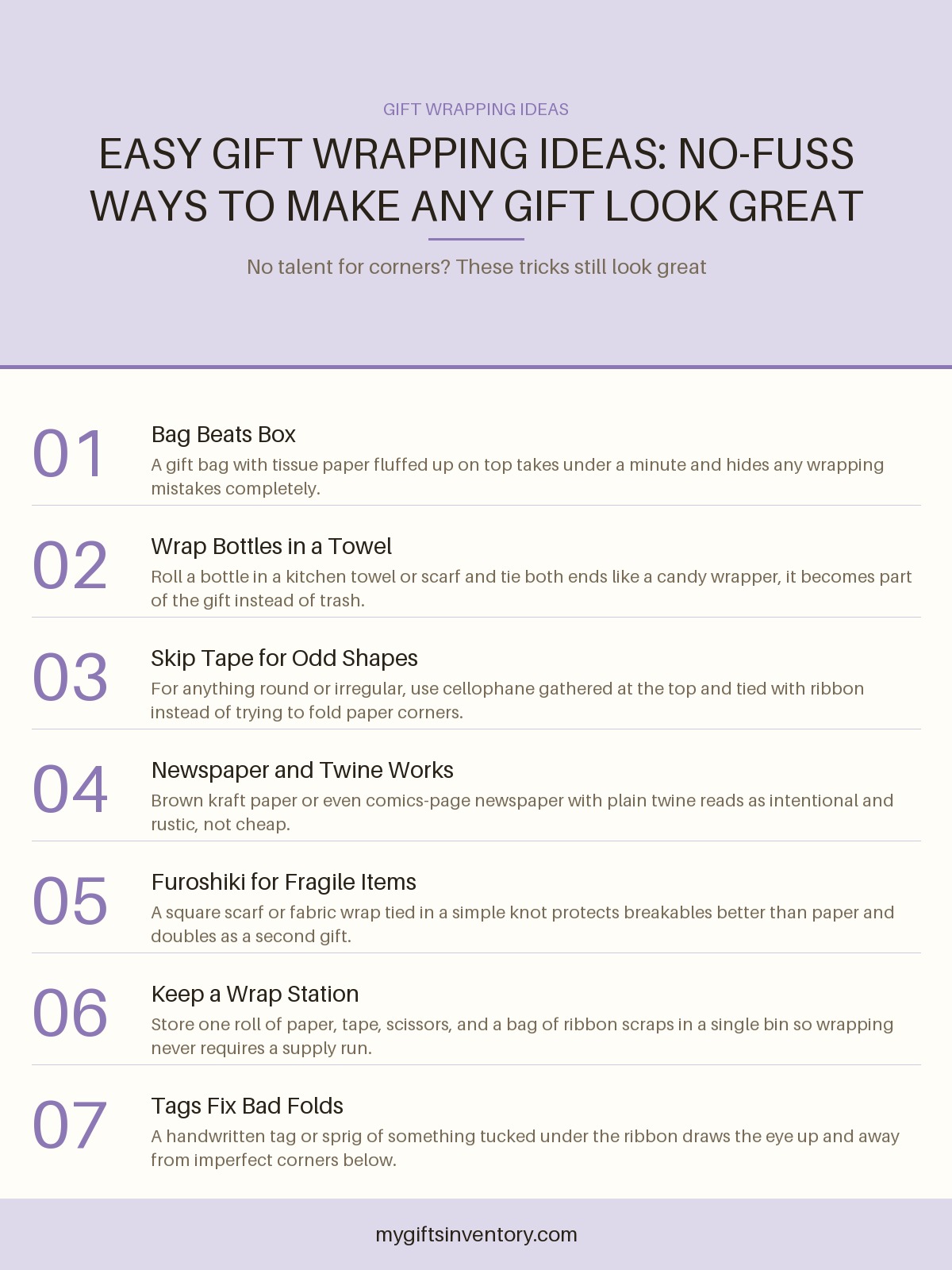
Wine, olive oil, a nice bottle of something for a host gift, these all wrap the same way. Cut a rectangle of paper roughly three times the bottle's circumference in width and tall enough to cover it with a few inches to spare on top. Wrap the paper around the bottle like a cylinder, tape the seam, then gather and twist each end like a piece of candy. Tie ribbon or curling ribbon around each twist. This takes about ninety seconds and looks intentional every time, unlike trying to force flat box-corner folds onto a round object.
Books and Anything Flat
Flat items are actually the easiest shape to wrap well, which is good news if you're giving a journal, a book, or a flat gift card holder. Center the item, fold the paper over like a letter, and use the corner-fold technique from the box section on both ends. Because there's no depth to the object, the corners fold almost perfectly flat on their own. This is exactly the kind of gift where nice, simple wrapping does a lot of work, so if you're shopping for something like this, our gifts for writers who love journals guide has options that wrap beautifully flat.
Mugs, Odd Ceramics, and Anything Round
Skip paper entirely for round, bulky, or irregular items. Tissue paper and a bag beat a box every time here. Line a bag with a sheet of tissue, nestle the item in, and fluff a second sheet of tissue on top so it peeks out over the edge. If you're wrapping something like a mug from our coffee lover gift guide, this is genuinely faster and looks better than trying to force a curved surface into folded paper.
Gift Cards
A gift card in its plain store envelope reads as an afterthought even when it isn't one. A small gift box (the kind meant for jewelry) with a bit of tissue makes a card feel like an actual present rather than something grabbed on the way out the door. If you're giving a card from somewhere like Walgreens or CVS, picking these up at the same time you buy the card means you're not making a second stop just for wrapping supplies.
Furoshiki: Wrapping With Cloth Instead of Paper
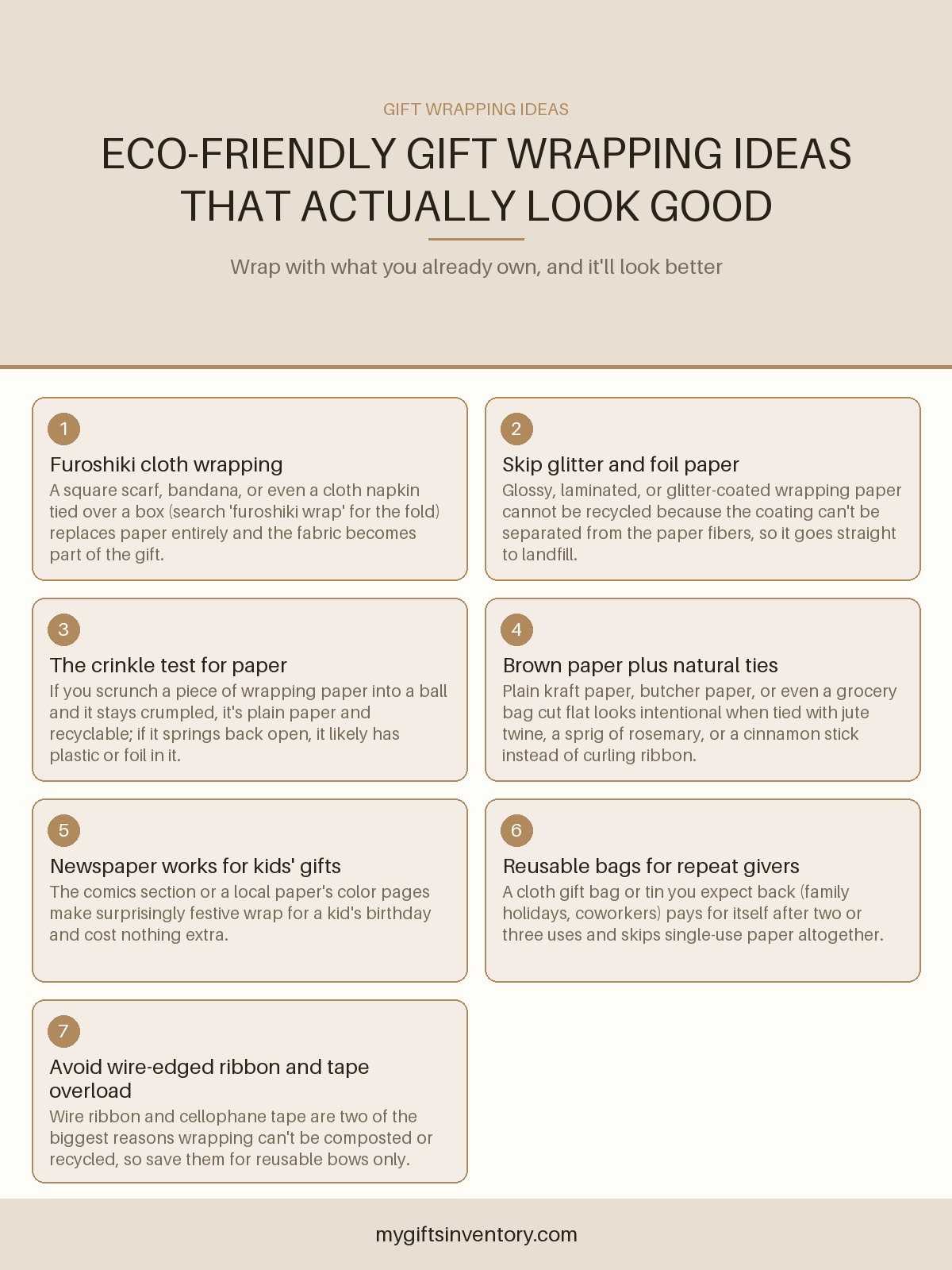
Furoshiki is the Japanese technique of wrapping gifts in a square of fabric instead of paper, and it solves a lot of problems at once. There's no cutting to get wrong, no seams to hide, and the fabric itself becomes part of the gift instead of something that gets torn off and thrown away. The basic method: lay the fabric in a diamond orientation, place the gift in the center, bring two opposite corners up and tie them in a simple knot on top, then do the same with the remaining two corners, tying them over or through the first knot. A scarf, a bandana, or even a remnant of fabric from a craft store works. It's especially good for bottles, boxes with awkward proportions, and anyone who's going to appreciate that the "wrapping paper" doubles as a second small gift.
Finishing Touches That Do the Most Work
A few small additions matter more than people expect. A single ribbon tied once around the box, finished in a simple knot rather than a complicated multi-loop bow, tends to look more expensive and more deliberate than an elaborate one. Curling ribbon run along the blade of a pair of scissors adds texture without much effort. A handwritten tag beats a printed one nearly always, even if it's just the person's name.
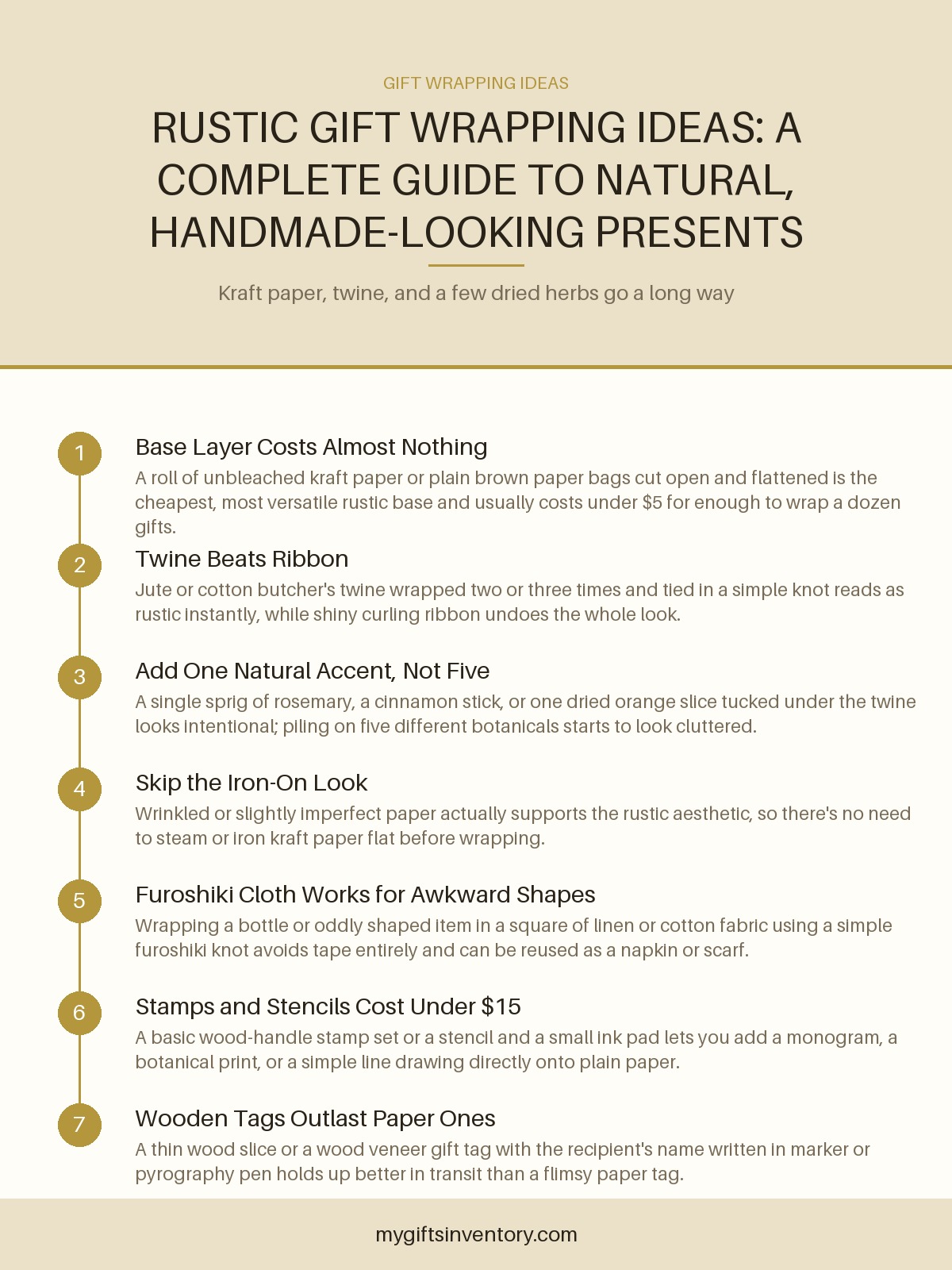
Layering textures also elevates a wrap without much extra cost: plain kraft paper with a sprig of greenery or a dried orange slice tucked under the ribbon looks considered and costs almost nothing. If the gift itself is meant to feel like a bigger moment, something like the pieces in our gifts under $1000 roundup, it's worth spending the extra few minutes on details like this so the presentation matches the gift inside.
When to Skip Wrapping Altogether
Not everything needs to be wrapped, and forcing it can actually look worse than skipping it. Gift cards, tickets, and experience gifts are often better presented in a card with a short handwritten note than fought into paper they weren't shaped for. Oversized or unusually shaped items (a plant, a framed piece, home decor) frequently look better presented in a simple gift bag with tissue than wrestled into paper at all. There's no rule that says every gift has to be a wrapped box. Choosing the right presentation for the actual object is part of thoughtful gift-giving, which we get into more broadly in our guide to choosing the perfect gift.
Wrapping on a Budget, Without It Looking Cheap
Good wrapping doesn't require expensive paper. Brown kraft paper (the kind sold for shipping) costs a few dollars for a huge roll and looks intentionally minimalist rather than cheap, especially with a colorful ribbon or a stamped design. Newspaper or comic pages work for casual gifts to kids or close friends. Reusing gift bags is completely normal and nobody notices or minds. The techniques above (sharp corners, hidden tape, one simple ribbon) matter far more to how finished something looks than how much the paper itself cost.
Gift Ideas to Go With This



Want more ideas? Browse our full guide: 34 Stocking Stuffers & Small Holiday Gifts Under $25 (2026): Thoughtful Picks That Don't Feel Like Filler
Frequently Asked Questions
What's the best way to wrap a gift without a box?
Use a gift bag lined with tissue paper, or wrap it directly using the "candy twist" method (gather the paper at each end and tie with ribbon) if it's a cylindrical or irregular shape. Both take under two minutes and avoid the frustration of trying to fold flat paper around something round.
How much wrapping paper do I actually need for a box?
Lay the box on its side on the paper and roll it once around completely to see the exact width you need, adding about an inch for the overlap seam. For the ends, you need paper extending past the box by roughly half its height plus a couple of inches to fold and tuck.
How do I stop tape from showing on wrapped gifts?
Fold the paper flap into position first, then slip a small piece of tape underneath the edge before pressing it flat, rather than taping on top of the folded paper. This keeps the tape hidden along the seam instead of visible and shiny on the front.
Is it okay to reuse gift bags?
Yes, reusing gift bags is completely normal and widely accepted, especially for casual occasions among friends or family. Just check that there's no name tag or card still tucked inside from the last time it was used.
What is furoshiki wrapping and is it hard to learn?
Furoshiki is the Japanese technique of wrapping gifts in a square of fabric instead of paper, tied with two simple knots. It's genuinely easier than paper wrapping once you've done it once or twice, and it works on nearly any shape since fabric flexes where paper creases and tears.
Looking for an Actual Gift Instead?
Gift Sets We Love Right Now
Every item picked, priced and linked, ready to buy.
More Gift Advice