Hampers vs. Gift Baskets: What's the Difference and How to Choose One Under $50
They look the same in photos, but hampers and gift baskets follow different rules for wrapping, structure, and cost. Here's how to tell them apart and build a good one for under $50.
As an Amazon Associate, My Gifts Inventory earns from qualifying purchases. We only recommend products we'd genuinely consider buying ourselves.
You're standing in a store or staring at a search results page, and two things are called the same gift by different people. Someone says "I'll make a hamper," someone else says "gift basket," and the prices online swing from $19 to $180 for what looks like the same pile of snacks. We get why this is confusing. The words get used interchangeably in casual conversation, but they come from different traditions, they're presented differently, and that difference actually changes how you shop and how much you should spend. Here's the short version before we get into the details: hampers are traditionally lidded and food-focused, baskets are open and themed, and at $50 you're building both the same way, by putting the money into the contents instead of the container.
The real difference between a hamper and a gift basket
Historically, a hamper was a large lidded basket or box used to carry food, often from a country house kitchen or a market. The gift version kept the lid, because the point was that the contents were a surprise and the container was reusable for storage. Think woven wicker with a hinged lid, or more modern versions in wooden crates, canvas totes, or even sturdy cardboard boxes with a ribbon. The contents were almost always consumable: preserves, cheese, wine, biscuits, tea.
A gift basket is a merchandising idea, not a household object. It's an open, arranged display where the items are the star and the container is mostly a stage. You can see everything at once, which is exactly why retailers love them. Contents can be anything themed together: bath products, baby items, coffee gear, pet supplies, gardening tools.
So the practical differences come down to four things:
Structure and closure
Hampers have lids or closure (a tote, a crate with a cover, a box tied shut). Baskets are open at the top. This matters for wrapping and for shipping.
Presentation style
Hampers are more uniform and less fussy. Baskets usually get arranged with the tallest item at the back, filler in the gaps, and a cellophane sleeve. If you want something that photographs like a shop display, that's a basket.
Contents
Hampers lean edible and drinkable. Baskets lean thematic but can absolutely be food too. There's no rule, just convention.
Connotation
"Hamper" reads a little old-fashioned and generous, the word your grandmother used. "Gift basket" reads neutral and commercial, the word on the price tag. If you want a gift to feel more personal, calling it a hamper helps. We know that's silly, but language does work like that.
One more thing worth naming: at the low end of the market, "hamper" is sometimes used purely as a marketing word for a cardboard box of snacks with a printed sleeve. If you're buying a ready-made one online, check what the container actually is before you assume wicker. Photos are generous.
What actually fits in a $50 budget
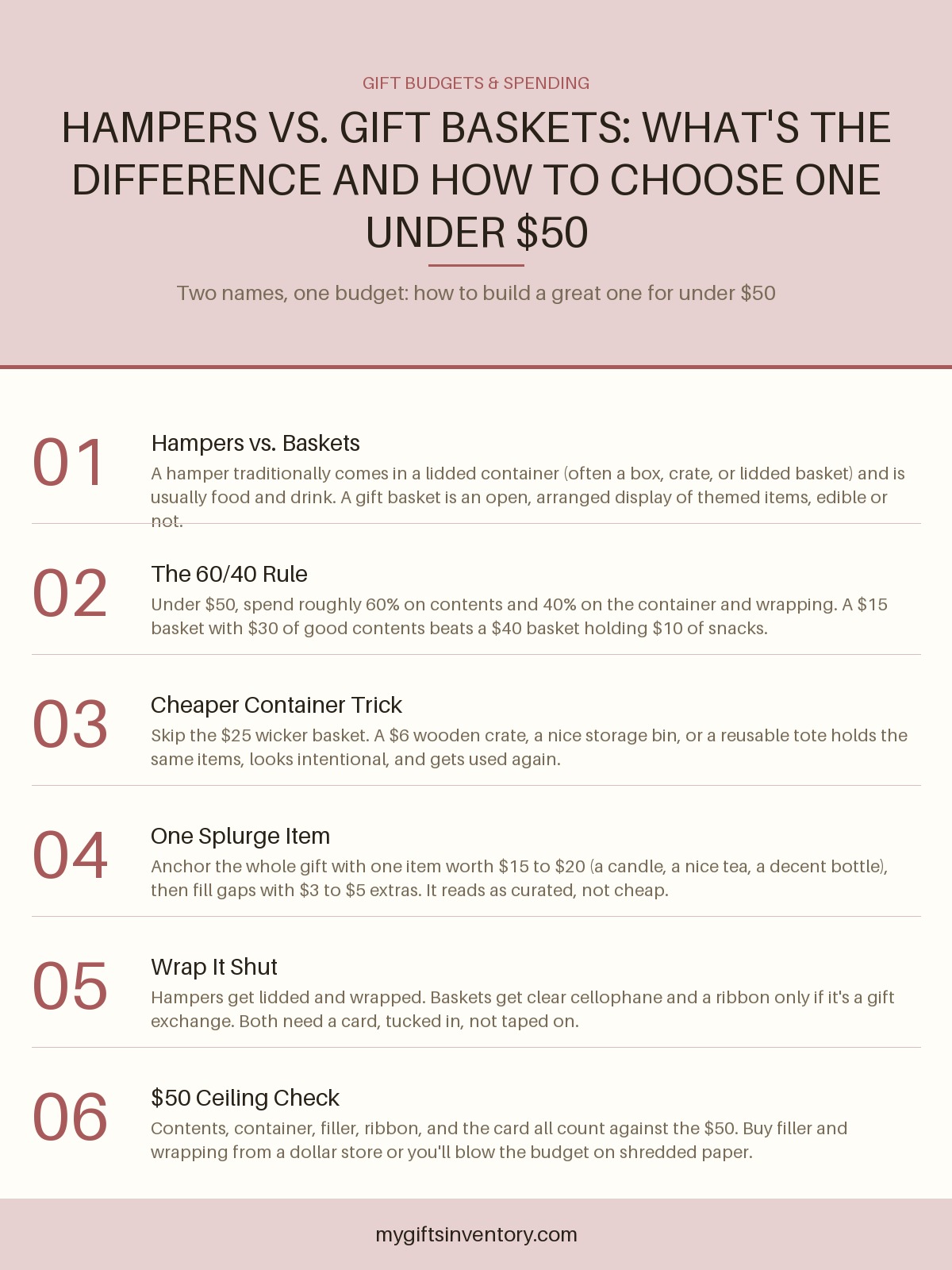
Fifty dollars is a genuinely comfortable budget for a hamper or basket, but only if you're honest about how the money divides up. Our rule of thumb: about 60% on contents, 40% on the container, filler, and wrapping. That's roughly $30 of real items and $20 of everything else.
That $20 disappears faster than people expect. A decent wicker basket runs $12 to $25 on its own. Shredded paper filler is $4 to $8. Ribbon and cellophane another $5. A card is $3 to $6. If you buy all of that at full price, you've spent most of your budget on packaging and you're left filling it with a bag of pretzels.
Ways to claw money back for the contents
Use a container that isn't a basket. A wooden crate from a craft store ($5 to $8), a nice storage bin the recipient will reuse, a sturdy tote bag, or a plain kraft gift box all work and often look more considered than a cheap wicker basket. Filler can be swapped for tissue paper, a folded tea towel, or nothing at all if the items fill the space. Ribbon is optional. A handwritten note beats a $6 card.
Do that math and you can get $30 to $38 of actual contents into a $50 gift, which is what makes it feel generous. If you're set on the classic assembled basket look, our full 20 Best Gift Baskets Under $50 (2026) guide covers ready-made versions and what each one actually costs once you include shipping.
How to choose: match the type to the person and the occasion
The hamper-versus-basket decision mostly comes down to what you're wrapping and who's opening it. A few scenarios we see again and again:
For a coworker or a gift exchange
Go basket, and go small and specific. An open basket of coffee, tea, or desk snacks reads as friendly without being intimate. Keep the total around $25 to $35 and skip anything that requires knowing their size or taste too closely. We have a whole set of gifts for coworkers between $25 and $50 if you want to build the theme around one strong item instead of guessing.
For a new home, new baby, or get-well visit
This is hamper territory. Lid it, keep it practical, and make it food-based: soup sachets, good crackers, tea, a decent olive oil. A lidded crate the recipient can keep using for storage is a genuinely thoughtful container.
For a hobbyist
Themed baskets work best because the items tell a story together. A tea lover's hamper with a sampler box, a small tin, and a good mug; a gardening crate with seed packets, gloves, and twine. If you want a shopping list rather than a blank page, our guides are organized this way: see the best tea lover gifts, the best gardening gifts, or the best baking gifts depending on the person in front of you. Pick one hero item in the $15 to $25 range, then fill the gaps with $3 to $5 extras.
For a romantic partner
Under $50, hamper-style wins because lidded feels more deliberate. A crate with a candle, a chocolate bar, and one small personal item lands better than a cellophane-wrapped basket that looks like it came from a hotel gift shop.
When you truly don't know their taste
Be honest and go with a gift card tucked into a small basket with something edible. It's not a cop-out; it's considerate. If you're buying for someone who's picky about food or drink, a coffee or bookstore card plus a couple of good cookies reads as thoughtful rather than lazy. Our guide to gift cards at World Market is a useful starting point because those cards open up a store full of exactly the kind of food and home items that fill a hamper nicely.
Building one yourself: an order of operations
Lay everything out on the table before you assemble anything. Put the tallest, heaviest items at the back or center, the light ones around them, and filler in the gaps. Lift the finished thing and shake it gently. If items rattle around, pack more; if the sides bulge, take something out. Then wrap: hampers get lidded and tied, baskets get a clear sleeve and a bow, and either way the card goes inside, not taped to the outside where it gets torn.
One last budget trap: shipping. A hamper is heavy, and heavy parcels ship expensively. If you're mailing it, build with lightweight foods and a light container, or accept $12 to $18 in postage and cut the contents budget by that much.
Gift Ideas to Go With This


Want more ideas? Browse our full guide: 20 Best Gifts Under $100 (2026): Thoughtful Picks They'll Actually Use
Frequently Asked Questions
Is a hamper just a gift basket with a lid?
Mostly, yes. The working definition is that a hamper is a lidded or closed container, traditionally food-focused, while a gift basket is open and arranged for display. The line is blurry in retail marketing, but if a seller calls it a hamper, expect a lid and mostly edible contents.
How much should I spend on a gift basket for a coworker?
Around $25 to $35 is the sweet spot for coworkers and gift exchanges. Above $40 it starts to feel like an obligation, and below $15 it looks like an afterthought. Keep the theme safe and generic: coffee, tea, snacks, desk items.
How can I make a cheap hamper look expensive?
Spend your money on one hero item, use a real container instead of a flimsy basket, and skip the plastic filler in favor of tissue paper or a folded tea towel. Consistency of theme matters more than quantity. Ten random things look cheap; four good things that belong together look curated.
Should I wrap a hamper?
Lidded hampers usually just get a ribbon and a tag, no wrapping paper, since the container is the presentation. Open baskets benefit from a clear cellophane sleeve and a bow if it's going to a party or exchange. Either way, put the card inside the container rather than taping it to the outside.
Is it cheaper to build a gift basket or buy one?
Building one is usually cheaper at the same quality level because you're not paying for assembly or a branded box, but only if you avoid full-price baskets and filler. If you're short on time, a ready-made basket under $50 is fine; just check whether shipping is included, because that's where the budget quietly blows past $50.
Looking for an Actual Gift Instead?
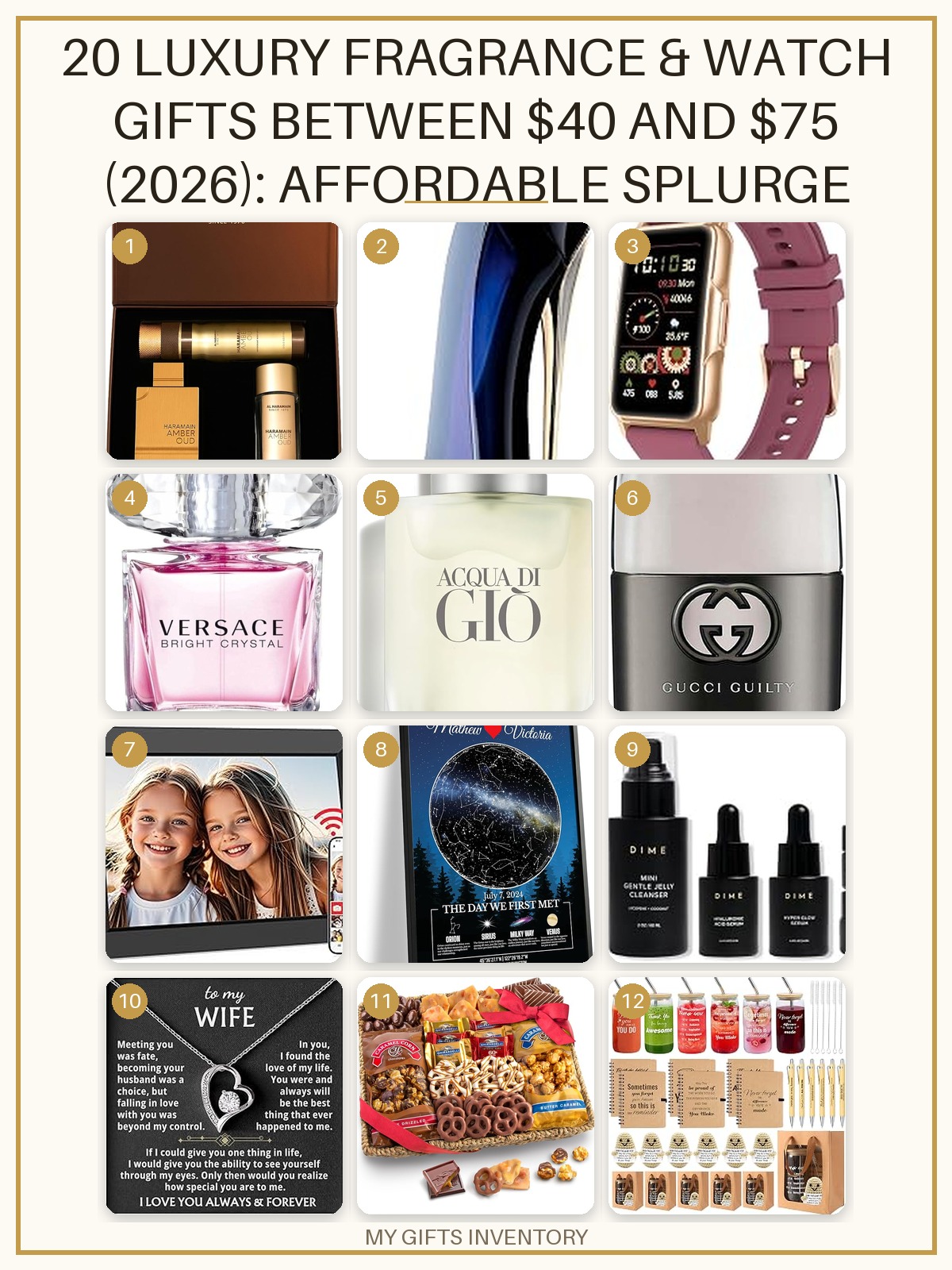
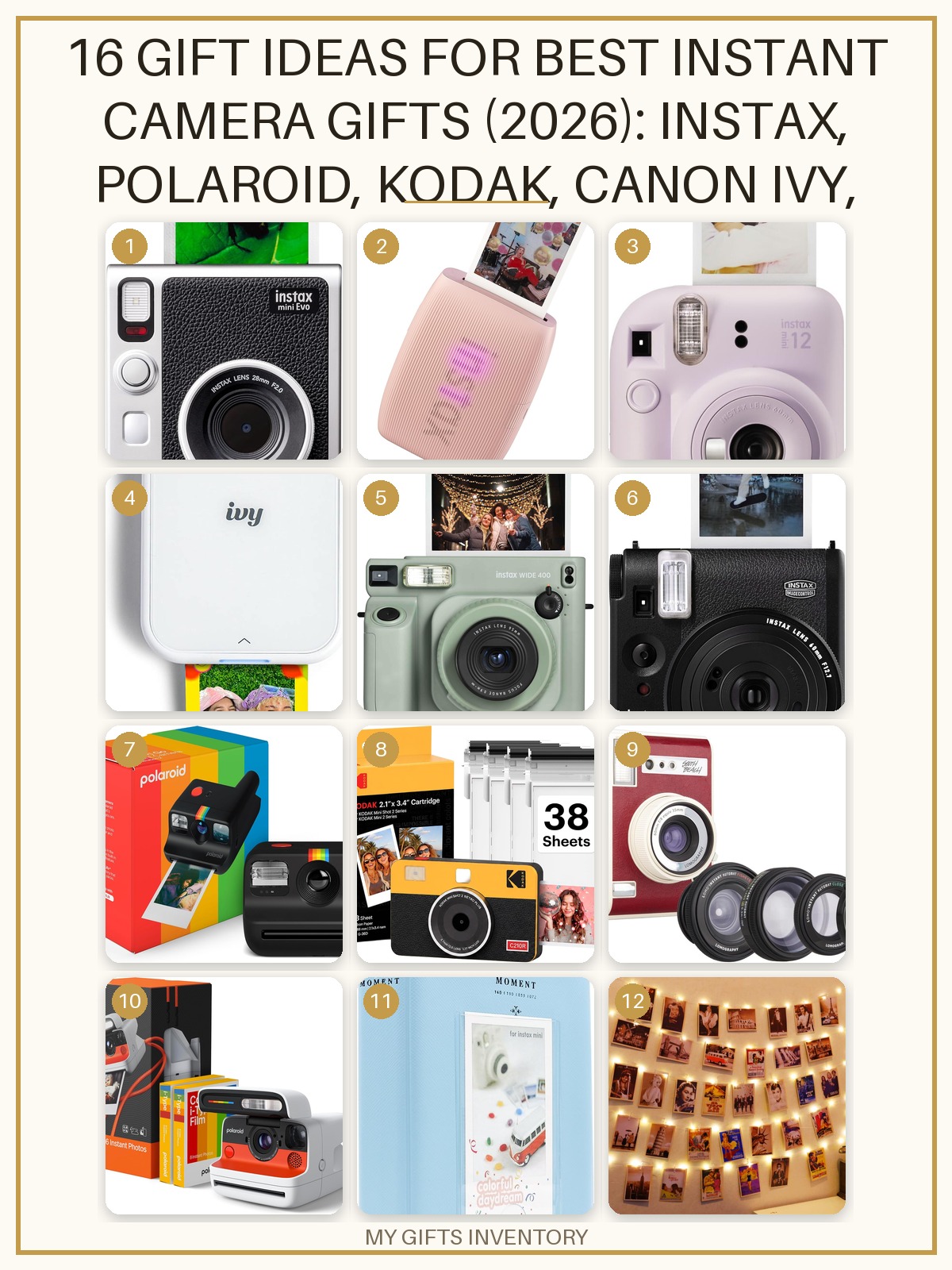
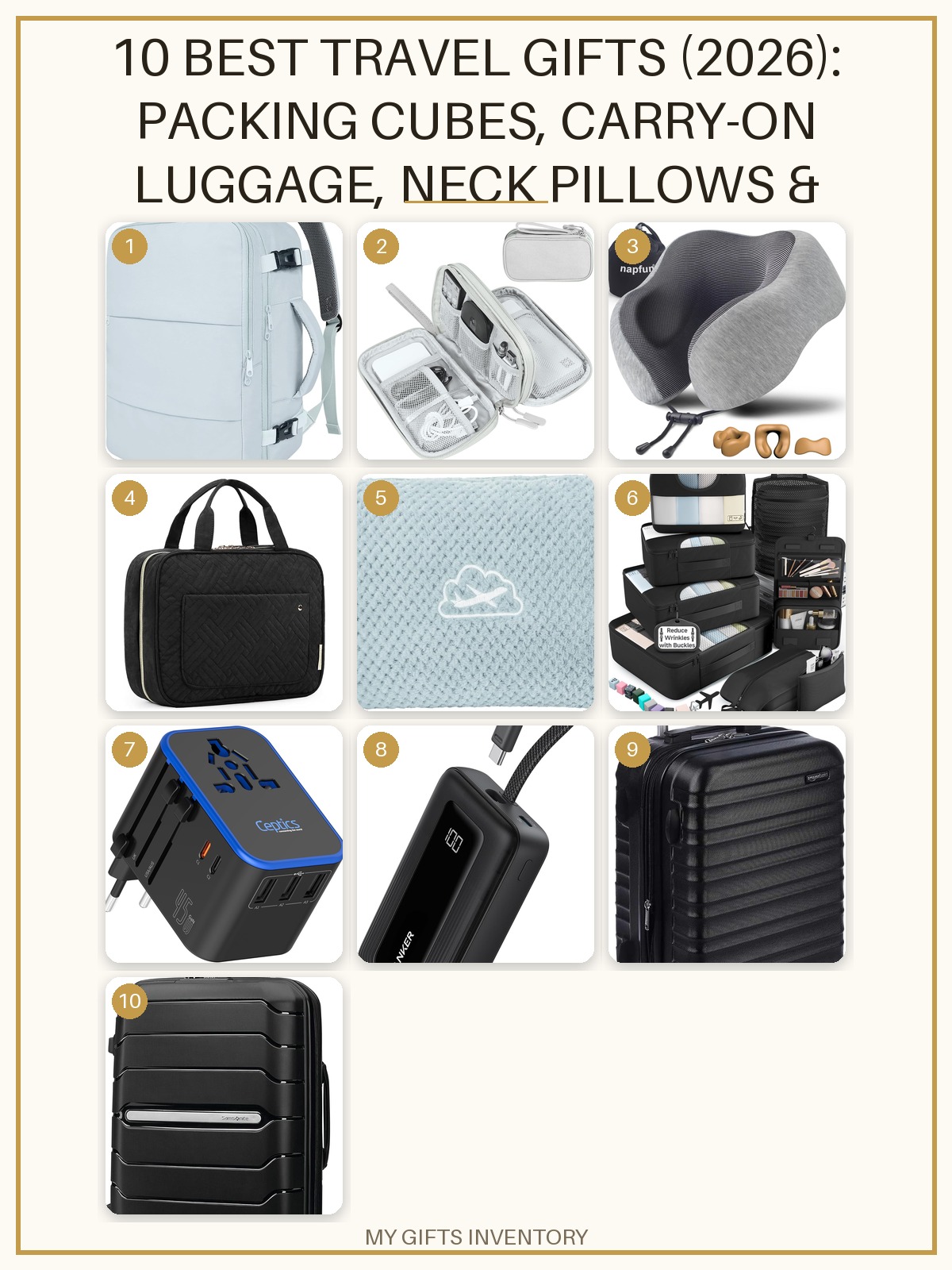
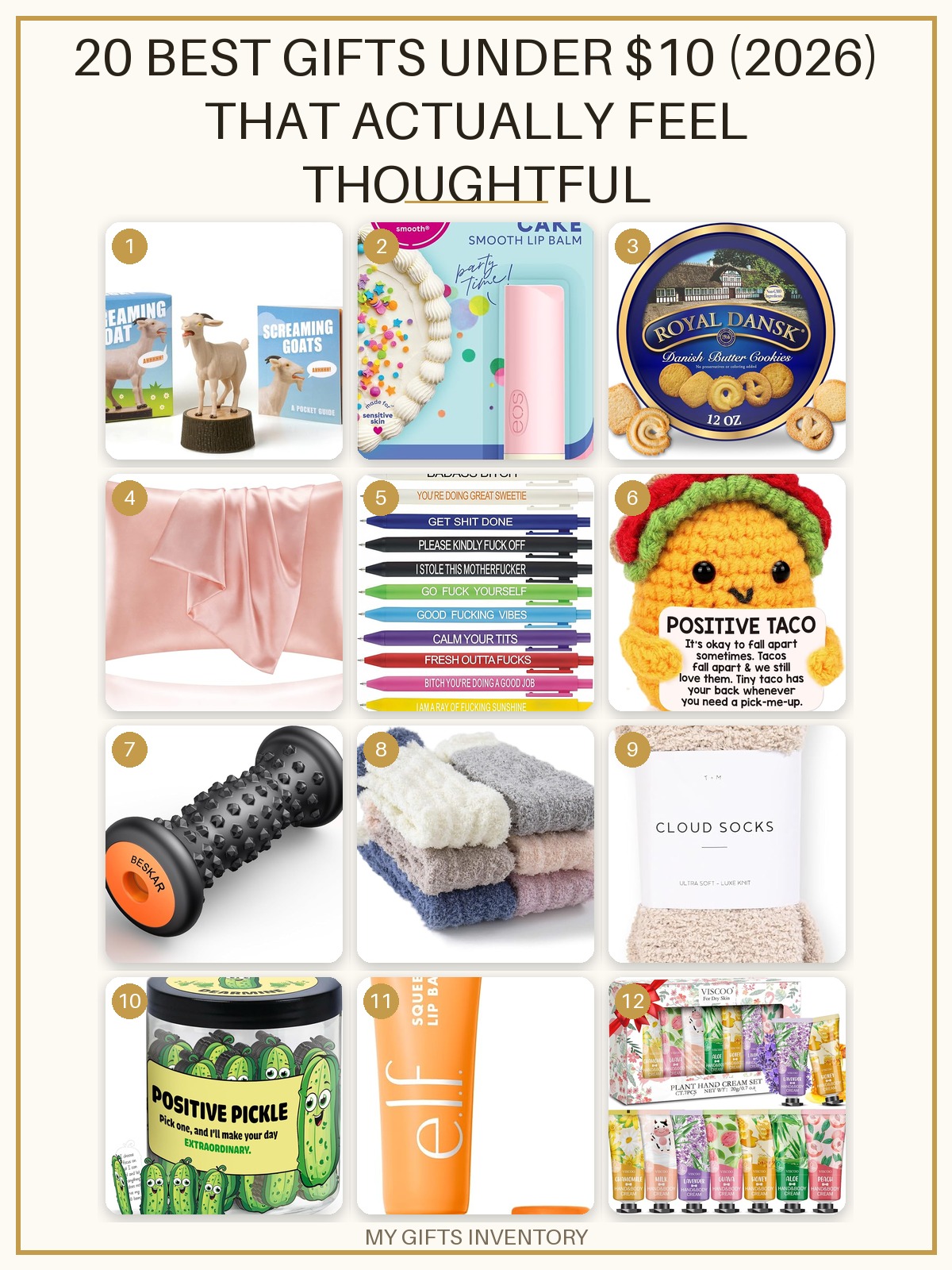
Shop Hand-Picked Gift Sets
Every item picked, priced and linked, ready to buy.
More Gift Advice