How to Wrap Gifts on a Budget (That Still Look Thoughtful)
You do not need fancy paper or a craft closet full of ribbon to make a gift feel special. Here is how we stretch a few dollars into wrapping that looks intentional every time.

As an Amazon Associate, My Gifts Inventory earns from qualifying purchases. We only recommend products we'd genuinely consider buying ourselves.
We have all stood in the wrapping aisle in December staring at $8 paper and $6 bows while the actual gift cost less than both. The good news is that thoughtful wrapping has almost nothing to do with how much you spend on the outer layer. A clean, intentional package under five dollars total feels warmer than glossy paper that looks mass-produced. Here is exactly how we keep wrapping costs low without the finished gift looking cheap or rushed.
Start With What the Gift Itself Costs
Budget wrapping works best when the present and the package stay in the same price neighborhood. A $12 item wrapped like a luxury unboxing can feel mismatched. A $40 item stuffed in a wrinkled grocery bag can feel careless. We aim for wrapping materials that cost 10 percent or less of the gift’s price, or under $5 absolute when the gift is already inexpensive.
That means if you are choosing from our roundups of highly rated gifts under $20 or thoughtful picks under $30, you can keep the entire wrapping kit under three dollars and still look put-together. The same logic applies to family Christmas hauls or teacher gifts. The wrapping should support the gift, not outshine or undercut it.
The Cheapest Materials That Still Look Good
You do not need a craft store run. Most of what we use comes from the dollar store, the recycling bin, or the kitchen drawer.
Paper and base layers
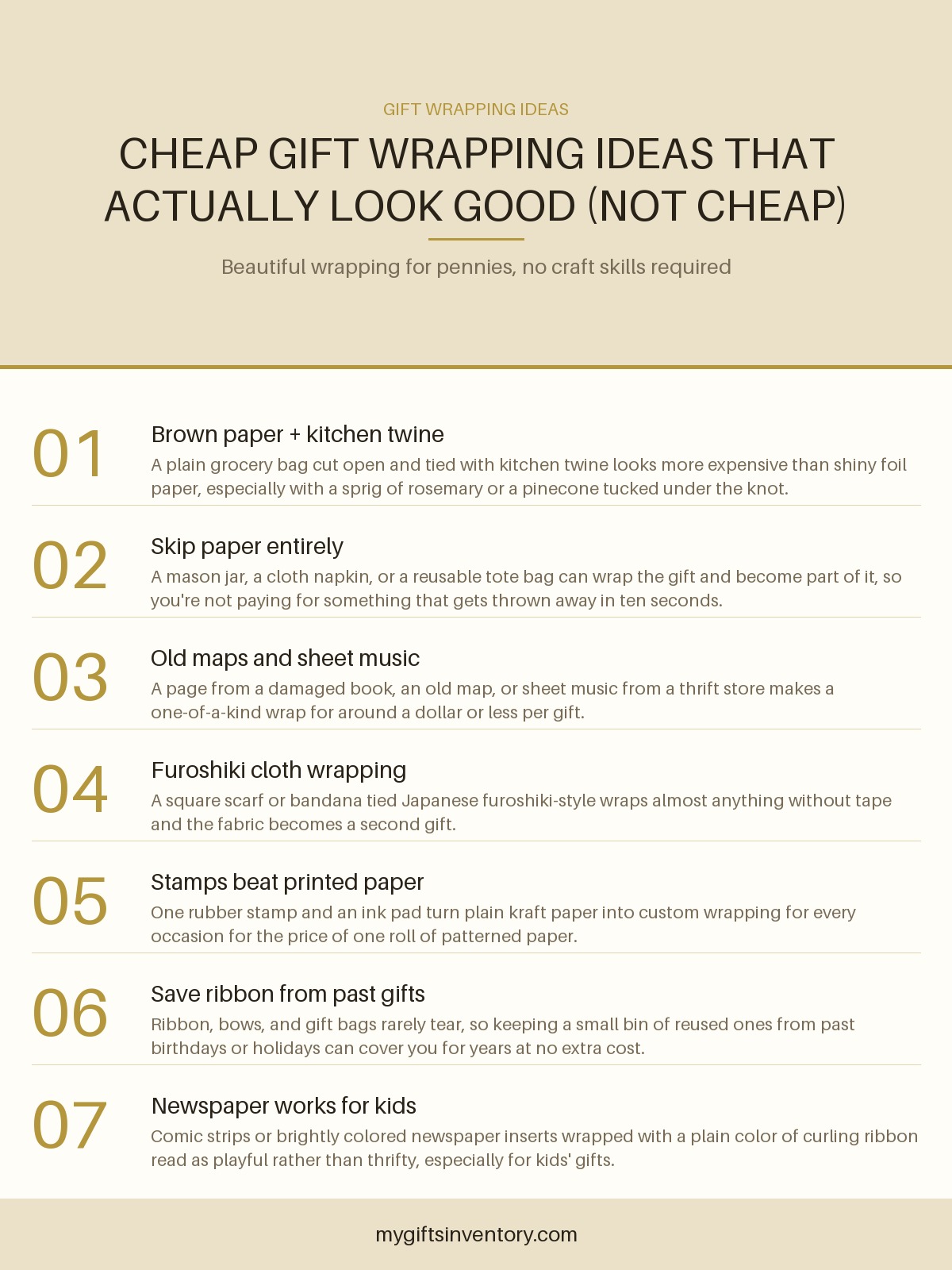
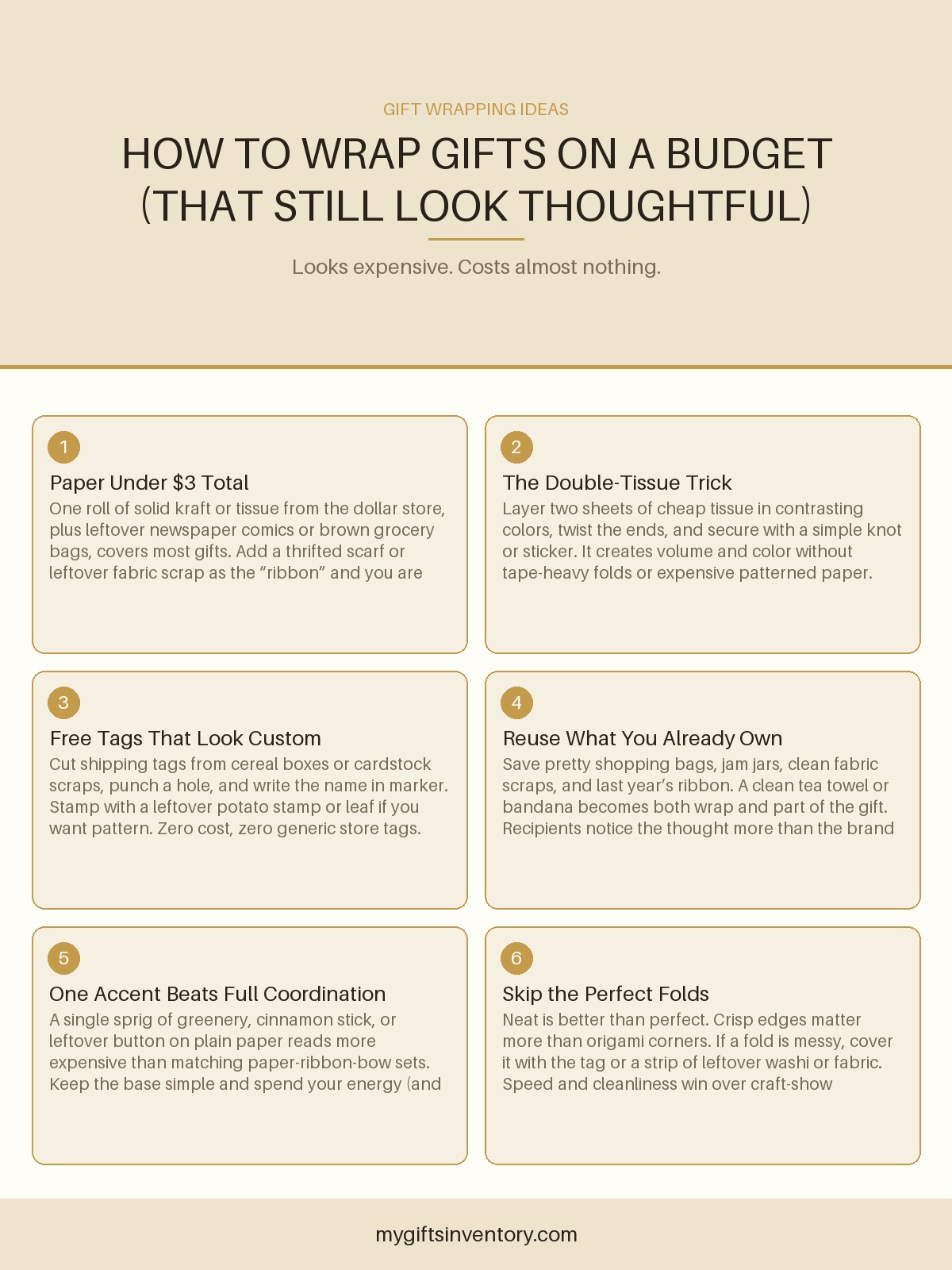
Solid kraft paper or brown grocery bags remain the workhorses. A single large roll of kraft often costs $2–4 and wraps a dozen gifts. Grocery bags are free once you cut them open and iron them flat on low heat if they are wrinkled. Newspaper comics or black-and-white text pages give a graphic, vintage look that works especially well for birthdays and casual holidays. Tissue paper in two colors (usually $1 per pack) creates volume with almost no skill required.
Avoid the ultra-thin dollar-store foil papers that tear the second you fold them. They look shiny in the package but frustrate you at the table and photograph poorly. Matte or lightly textured solids hide imperfections better.
Ties, ribbons, and closures
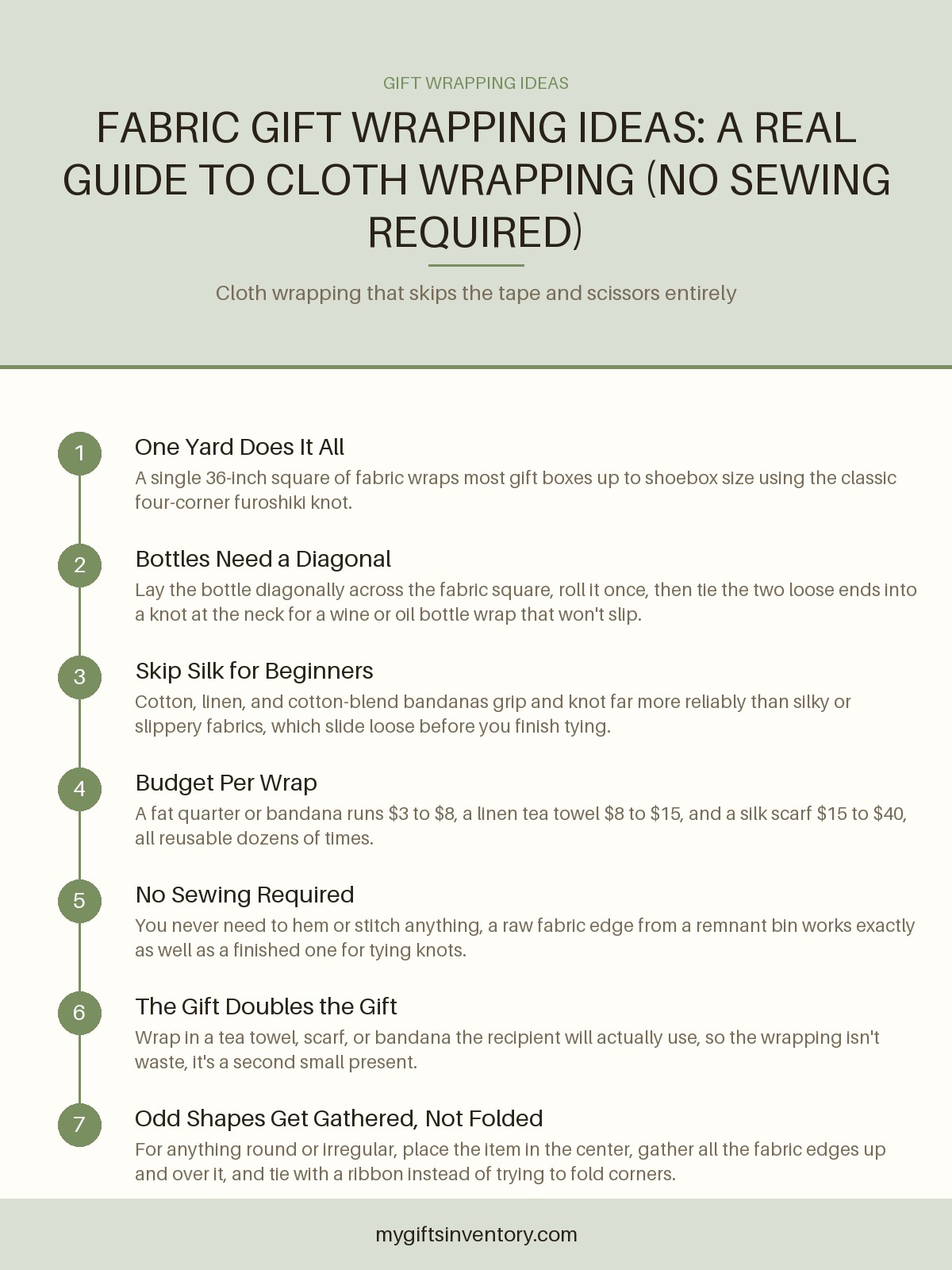
Skip the pre-made bows. Twine, baker’s string, or leftover yarn costs pennies per gift and looks intentional. Fabric scraps, clean bandanas, tea towels, or thrifted scarves double as both wrap and usable gift. We keep a small box of last year’s ribbon ends and cut them into 18-inch lengths. A simple square knot or double loop is cleaner than a floppy store bow that arrives crushed.
Washi tape or leftover masking tape in a solid color can finish edges without bulk. If you already own stickers or seals from past holidays, use them. New decorative tape is rarely necessary.
Tags and finishing details
Store-bought tags add up fast. Cut rectangles or shipping-tag shapes from cereal boxes, old greeting cards, or scrap cardstock. Punch a hole with a hole punch or the tip of scissors. Write the name in permanent marker. For a tiny bit of pattern, press a cut potato or celery end into leftover paint or ink and stamp once. A sprig of rosemary, a cinnamon stick, a pine needle, or a single button glued or tied on top reads as deliberate rather than expensive.
Techniques That Stretch Cheap Supplies
Method matters more than material cost. These approaches turn plain paper into something that feels considered.
The double-tissue wrap
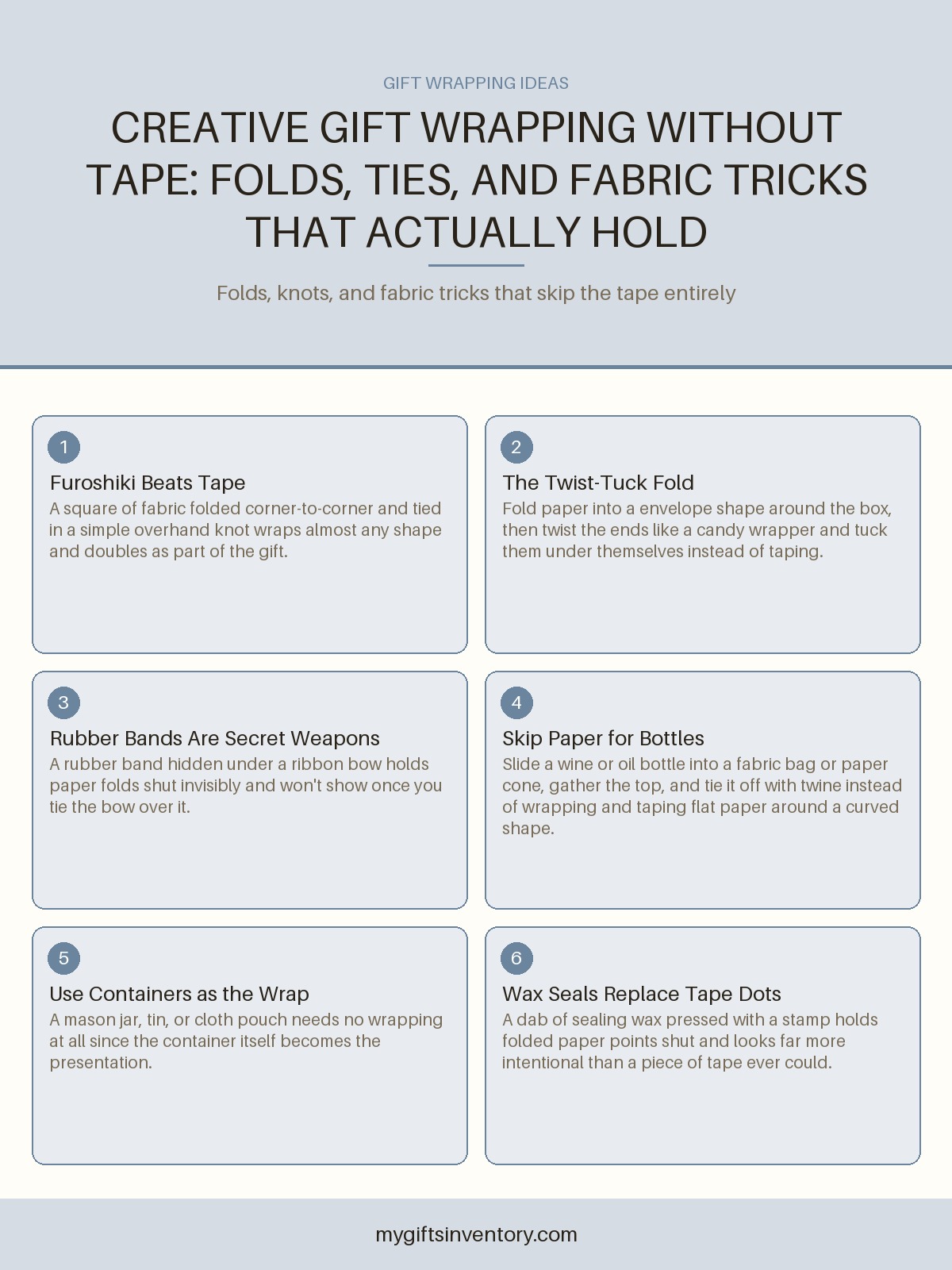
Lay two sheets of tissue in contrasting or complementary colors. Place the gift in the center, bring the corners up, and twist or gather the ends. Secure with twine, a rubber band covered by ribbon, or a sticker. The layers create color and fluff without needing perfect rectangular folds. This works especially well for soft items, bottles, or odd shapes. Total cost per gift is often under a dollar.
Furoshiki-style fabric wrap
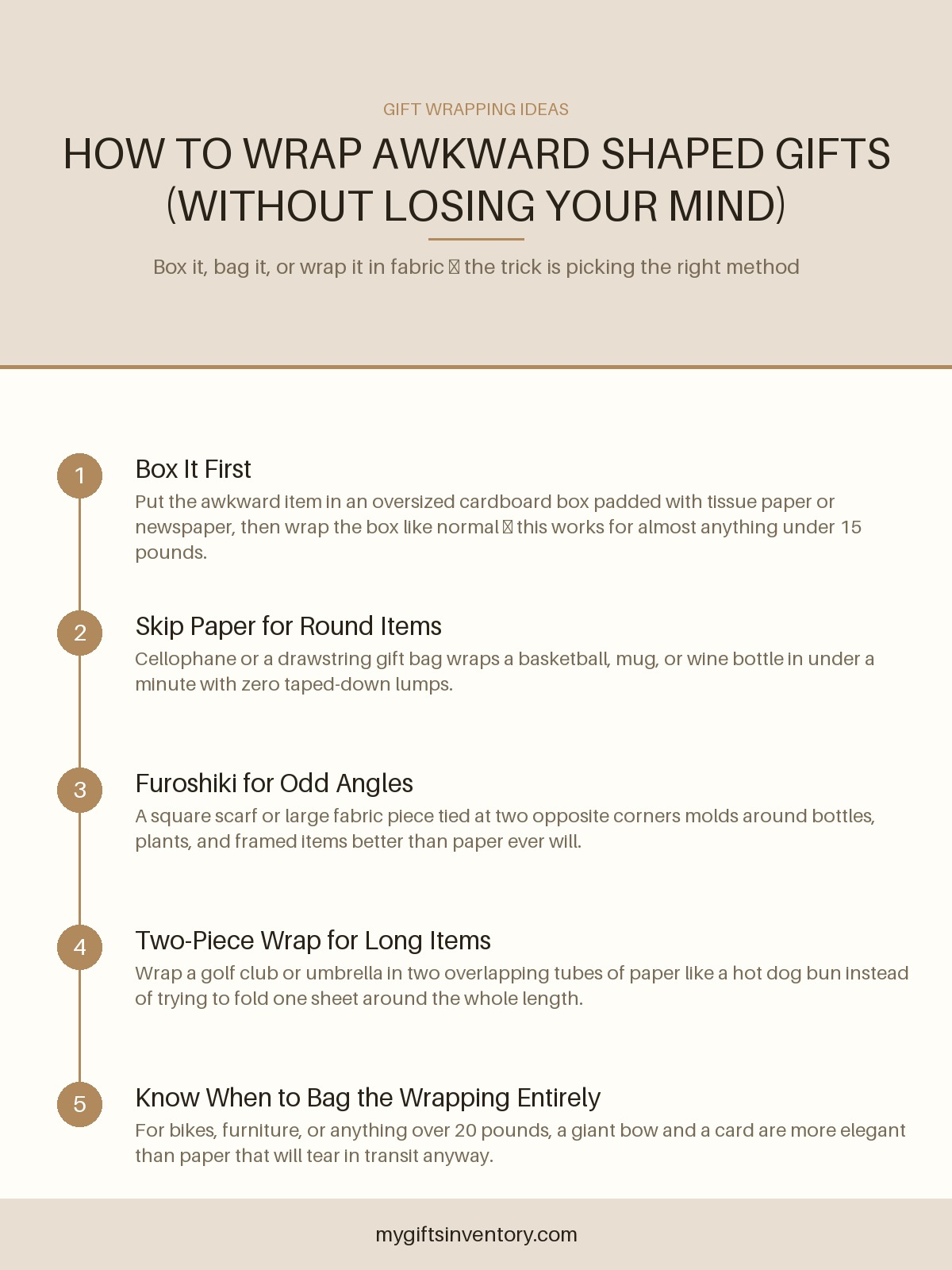
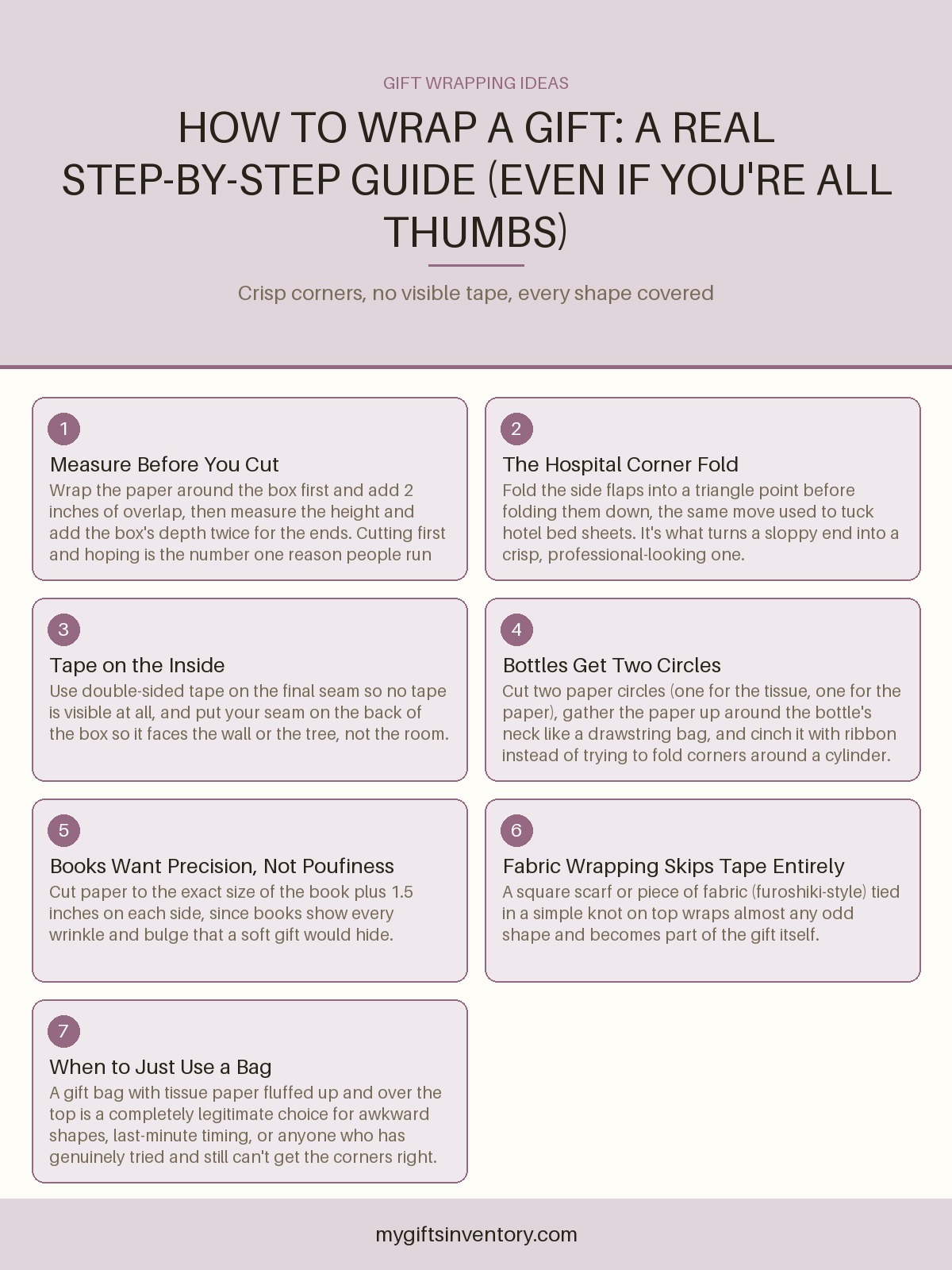
A square of fabric (tea towel, bandana, scrap from an old shirt, or thrift-store napkin) becomes the entire wrap. Place the gift diagonally, bring opposite corners together, and tie. No tape needed. The recipient keeps a usable textile. We do this often for kitchen items, books, or bottles. It looks polished and eliminates paper waste in one step.
Bag-in-a-bag or box upgrade
A plain paper gift bag from the dollar store or a saved shopping bag gets a second life when you add tissue that peeks out the top and a handwritten tag. For small items, clean jam jars, oatmeal canisters, or shoe boxes covered in kraft paper work as reusable containers. Line them with tissue, add the gift, and tie the lid or top with string. Recipients often keep the container.
The “one accent” rule
Plain paper plus one strong detail beats coordinated paper-ribbon-bow sets every time on a budget. Choose either a nice tie, a natural sprig, a good tag, or a strip of contrasting fabric. Trying to match three elements with cheap materials usually looks busier and cheaper. Restraint reads as confidence.
Reusing and Upcycling Without Looking Stingy
Saving materials is not cheapskate behavior when the result looks intentional. We keep a shallow bin of:
- Pretty shopping bags with handles intact
- Ribbon and twine scraps longer than 12 inches
- Tissue that is still crisp
- Fabric squares and clean tea towels
- Interesting boxes and tins
- Last year’s unbroken ornaments or dried citrus slices for decoration
Iron fabric and paper on low if needed. Wipe jars and tins. The goal is clean and cared-for, not brand-new packaging. When someone opens a gift wrapped in a tea towel they can use the next morning, the reuse becomes part of the present rather than a shortcut.
This approach pairs especially well with smaller, practical gifts. A set of useful stocking stuffers under $20 feels more substantial when each one sits in its own simple, neat package instead of a shared plastic bag.
Occasion-by-Occasion Budget Notes
Birthday and everyday gifts
Comics pages, kraft with a bright twine, or a fabric wrap all work. Keep it light and personal. A short handwritten note on the tag does more than patterned paper.
Holiday and family exchanges
When you are wrapping for multiple people, buy one solid paper and one accent material in bulk. Consistency across the pile looks organized. For family gifts that stay under $50, matching simple wraps make the whole stack feel cohesive without extra cost. Natural elements (pine, cinnamon, dried orange) are free or nearly free in season and photograph beautifully.
Weddings and more formal gifts
Lean on clean kraft or white tissue, good twine or a fabric ribbon, and a neat tag. Avoid cartoonish or overly festive paper. A single dried flower or sprig keeps it elevated. Budget wedding gifts benefit from this restraint because the presentation signals care even when the item itself is modest.
Teacher, coworker, and host gifts
Speed and neatness win. Pre-cut paper sheets, tissue-and-twist, or a reusable bag with tissue are fastest. A nice tag with the recipient’s name spelled correctly matters more than elaborate folds. These gifts often travel in a car or bag, so secure wrapping that does not unravel is more important than perfection.
Common Mistakes That Make Cheap Wrapping Look Cheap
Too much tape. Visible, wrinkled layers of clear tape shout “I fought with this.” Use the minimum needed and hide ends under folds or the ribbon.
Dirty or heavily creased paper. A quick iron or smooth flat under a book fixes most grocery-bag or tissue issues. Smudges and crumbs do not.
Over-decorating with low-quality bits. Three plastic bows and a glitter tag on thin paper looks frantic. One clean detail looks considered.
Ignoring the shape. Oddly shaped gifts need tissue gathers, fabric, or a box. Forcing rectangular paper onto a sphere or bottle creates tears and frustration. Match the method to the object.
Forgetting the card or note. Even a three-word tag (“For Sam — enjoy!”) personalizes the package. Blank wrapping with no name feels anonymous.
A Simple Budget Kit You Can Assemble Once
We keep a small “wrap drawer” so we never scramble:
- One roll kraft or solid paper
- Two packs of tissue in different colors
- Ball of twine or yarn
- Scissors and a glue stick
- Hole punch and scrap cardstock for tags
- A few fabric scraps or tea towels
- Optional: washi or masking tape, leftover ribbon
Total startup cost is usually $8–12 and lasts through multiple birthdays and one full holiday season for a small household. Refill only what you use up. Everything else comes from around the house.
When the gift itself is already a strong budget pick, this kit is all you need. The same drawer handles teacher gifts, host presents, and the smaller items in a larger family exchange without another store run.
When to Skip Wrapping Altogether
Some gifts do better without traditional paper. A plant in a simple nursery pot with a bow around the container. A bottle of wine with a handwritten tag hung on the neck. A gift card presented in a small reusable pouch or with a note. Experience gifts or digital gifts need only a card. Forcing paper onto something that does not need it wastes time and money.
Gift cards in particular often look better in a small envelope or fabric pouch with a real note than inside layers of paper. If you are giving one, the presentation can stay minimal and still feel warm.
Putting It All Together on a Real Timeline
Two days before you need the gifts: gather what you already own, iron fabric or bags if needed, cut a stack of tags, and portion ribbon lengths. Night before or morning of: wrap in batches by size. Do all the tissue twists first, then all the rectangular folds, then add tags and accents. Working in stages is faster and neater than finishing one gift completely before starting the next.
If you are wrapping many small items, assemble them assembly-line style. One person folds, one ties, one tags. Even alone, batching saves decision fatigue.
The finished standard we aim for is simple: clean edges, secure closure, readable name, one thoughtful detail. That standard costs very little and reads as care every single time.
Frequently Asked Questions
How much should I budget for wrapping per gift?
Aim for $1–3 in materials for most everyday and holiday gifts, or roughly 10 percent of the gift’s cost when the present is already inexpensive. A single roll of kraft and a ball of twine can cover a dozen gifts for well under $10 total. Fancy coordinated sets are optional, not required.
What is the cheapest way to wrap a gift so it still looks nice?
Use brown kraft paper or a cut-open grocery bag, tie with twine or yarn, and add a handmade tag from scrap cardstock. One natural accent like a cinnamon stick or sprig of greenery elevates it instantly. The whole package often costs under a dollar and looks intentional rather than sparse.
Is it okay to reuse wrapping paper and bags?
Yes, as long as the paper or bag is clean, unripped, and neatly prepared. Iron wrinkles out of fabric or paper on low heat, and make sure any previous tape or names are removed or covered. Recipients respond to care and neatness more than to whether the materials are brand new.
How do I wrap an oddly shaped gift on a budget?
Skip rectangular paper folds. Use the double-tissue gather method, a fabric furoshiki wrap, or place the item in a plain box or jar first and wrap the container. Tissue and fabric forgive irregular shapes far better than stiff patterned paper and require almost no extra supplies.
Does cheap wrapping make a small gift look worse?
Poorly done cheap wrapping can, but clean and simple wrapping actually helps a small gift feel more deliberate. Neat kraft or tissue with a real tag and one accent often makes an inexpensive item feel more considered than glossy paper that is fighting the size of the present. Match the energy of the wrap to the gift and keep both tidy.