Professional Gift Card Messages: What to Write for Coworkers, Bosses, and Clients
Real example wording for every workplace gift card scenario, from the retiring colleague to the boss you barely know, without sounding stiff or oversharing.
As an Amazon Associate, My Gifts Inventory earns from qualifying purchases. We only recommend products we'd genuinely consider buying ourselves.
You're staring at a blank gift card sleeve at your desk, pen in hand, and the cursor in your brain is just blinking. Writing something personal for a friend is easy. Writing something for a coworker, a boss, or a client without sounding stiff, overly familiar, or like a corporate form letter is a different skill entirely, and most of us never actually learned it.
The good news is that professional gift card messages follow a much narrower set of rules than personal ones, which actually makes them easier once you know the pattern. You're not trying to be the most creative person in the office. You're trying to be warm, brief, and appropriate to exactly how well you know this person.
Why professional messages feel harder than personal ones
With a close friend or family member, you know the shorthand. You know what will make them laugh, what memory to reference, how much sentiment they can handle before it gets weird. At work, you're often writing for an audience of one but with the awareness that HR, a spouse, or the person's whole team might glance at it too. That tension is exactly why "Happy Birthday, hope it's great!" feels too thin but a paragraph about how much someone means to you feels like overstepping.
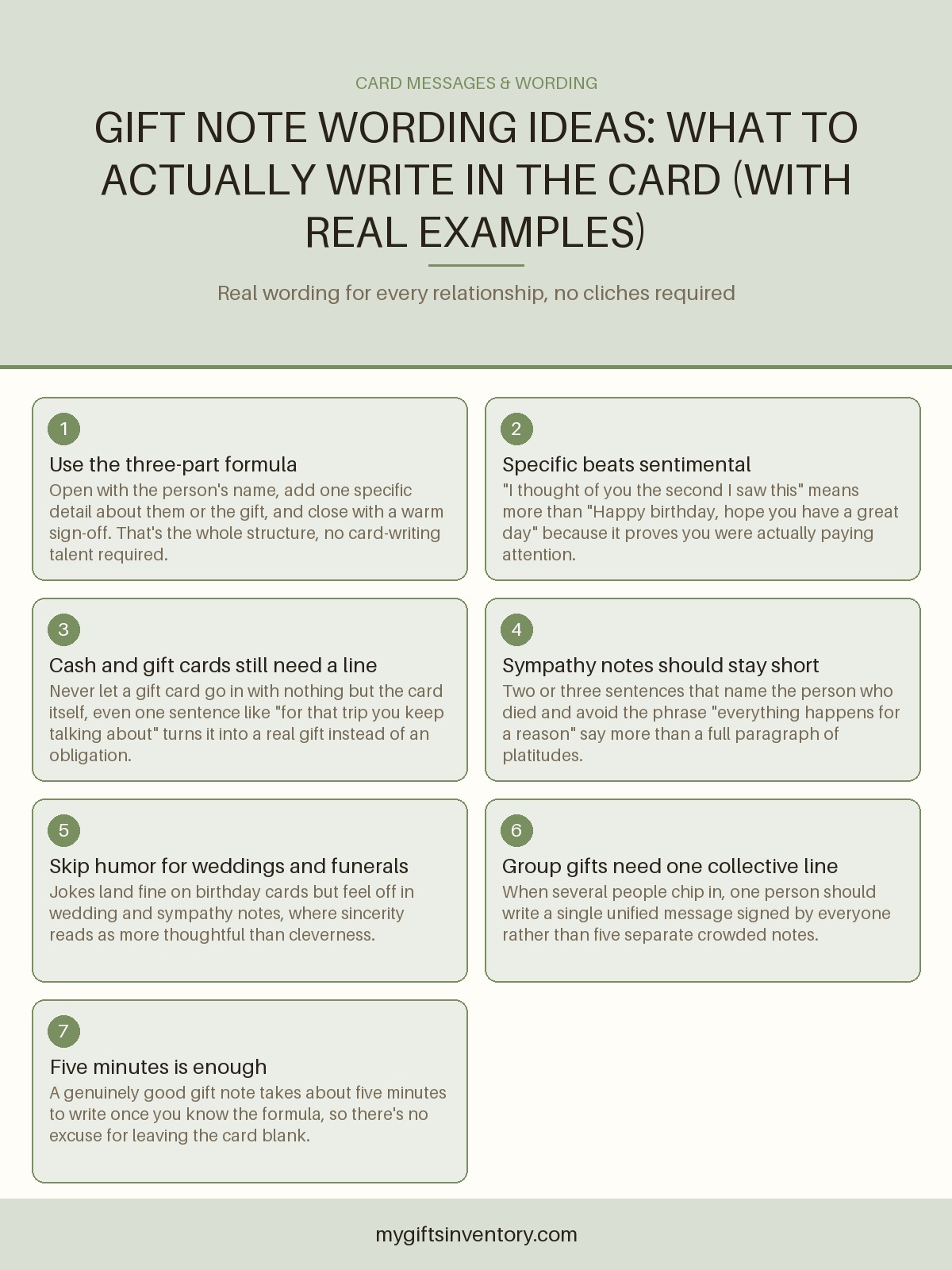
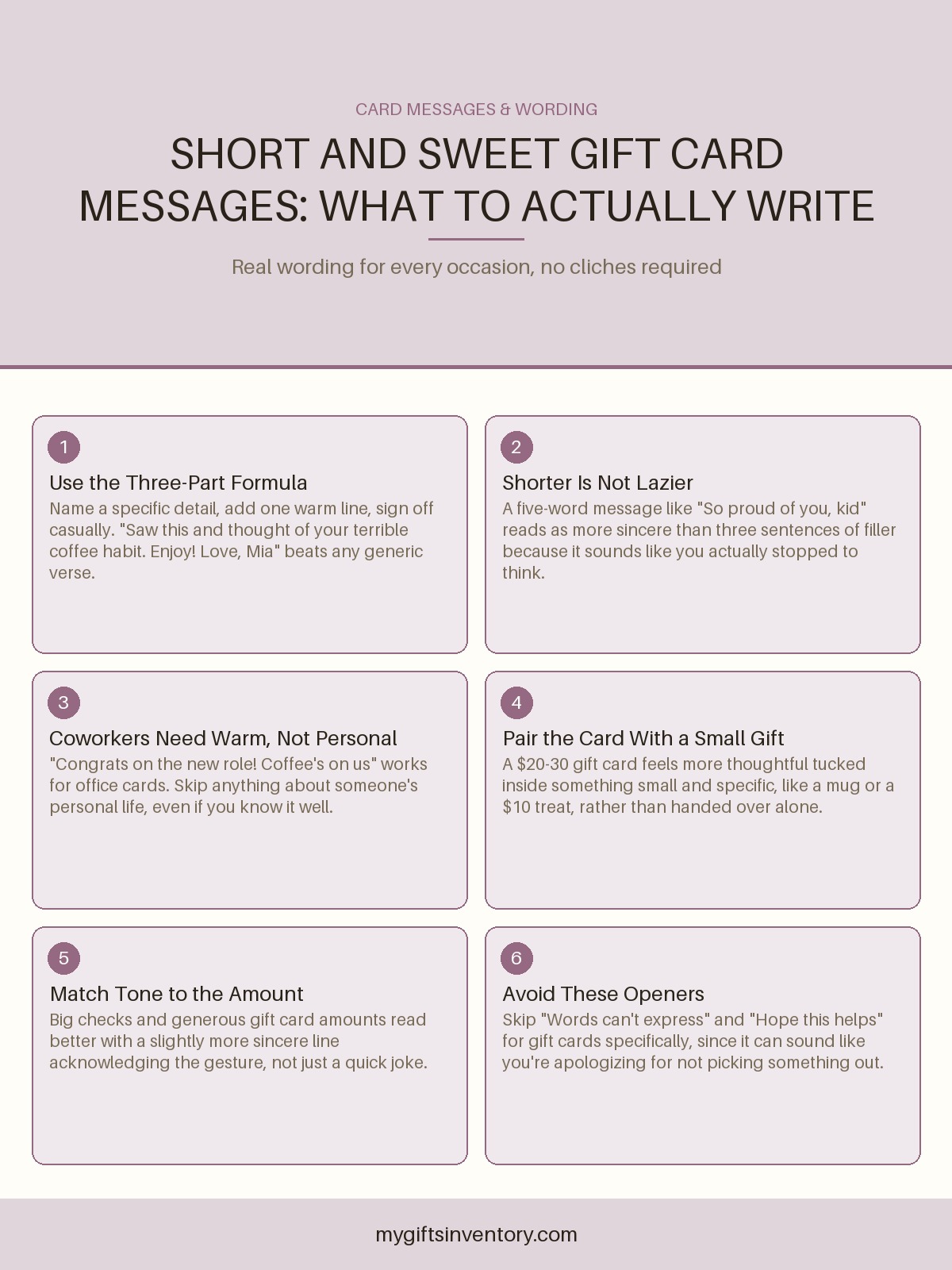
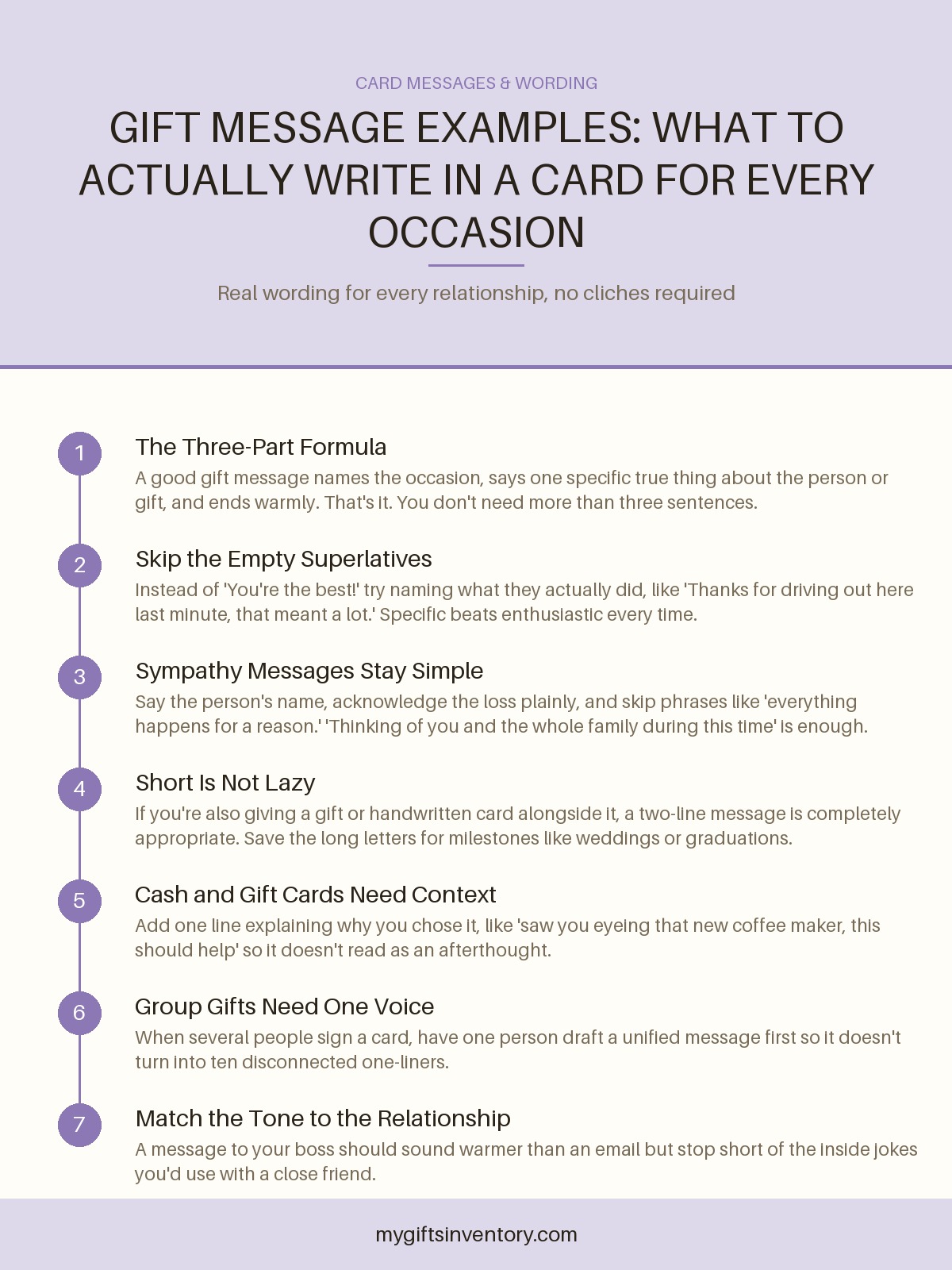
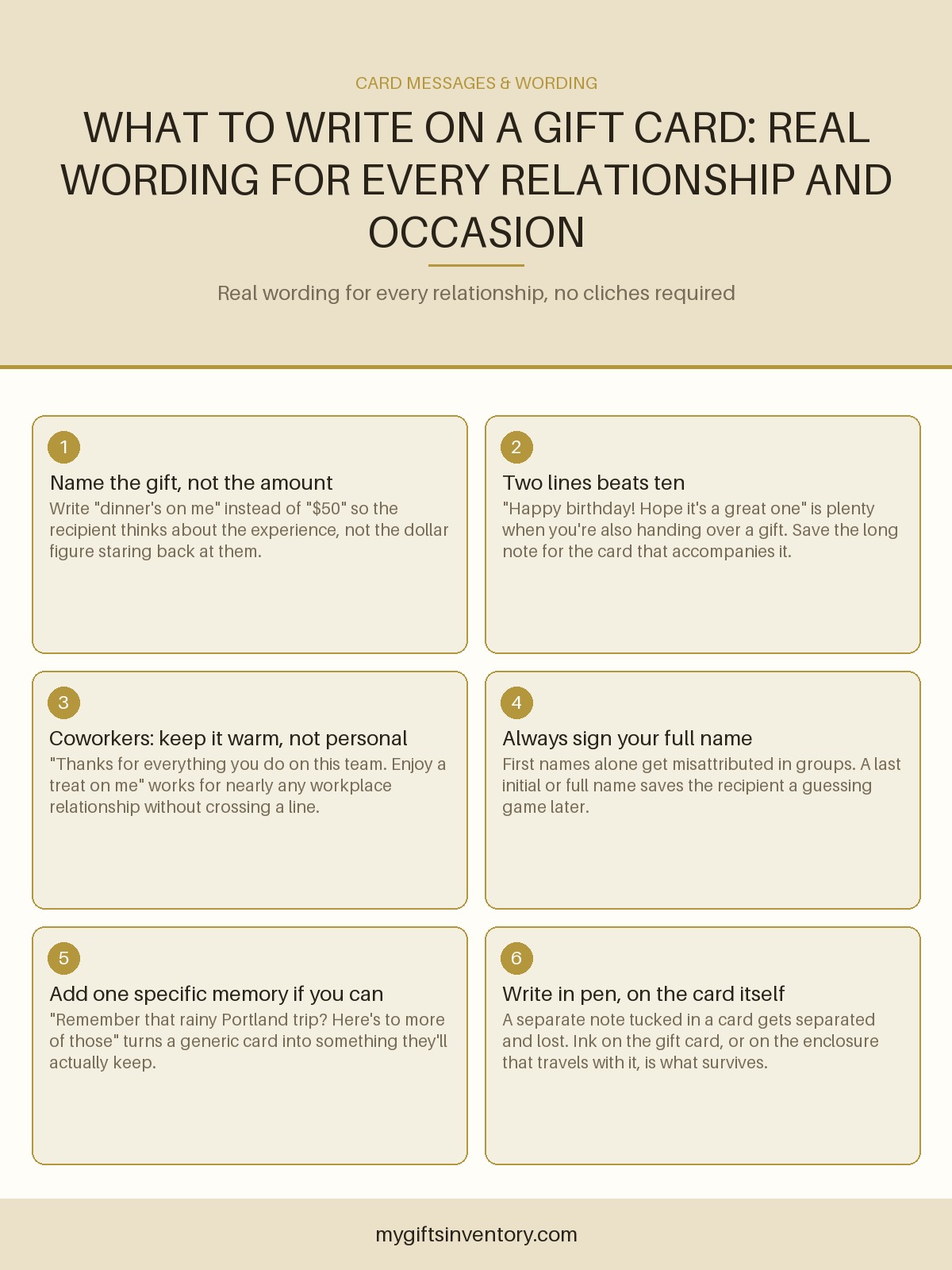
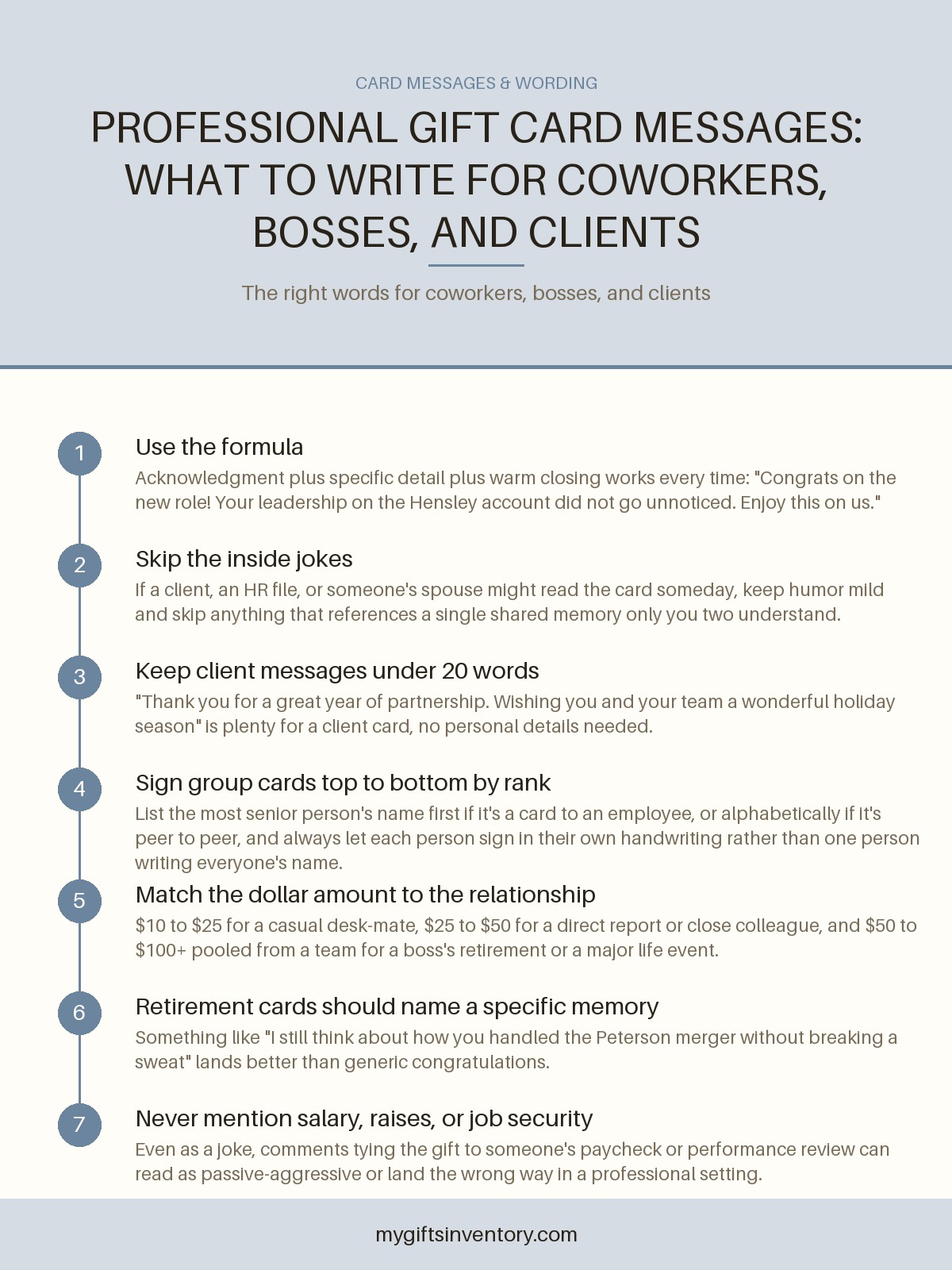
The fix is a formula, not a personality transplant. Professional messages work best when they do three things in order: acknowledge the occasion, add one specific and true detail, and close warmly. Skip any of the three and the message falls flat or feels hollow.
The formula that works in almost every scenario
Here's the actual structure, broken down:
- Open with the occasion. "Congratulations on five years with the team" or "Happy retirement" or "Wishing you a smooth transition into your new role."
- Add one specific, true detail. This is the part people skip, and it's the part that makes a message feel real instead of copied off a template. Reference an actual project, a quality you've noticed, or something concrete, not a vague compliment.
- Close with warmth appropriate to the relationship. "Enjoy this on us," "We'll miss you," or "Wishing you all the best" all work depending on the tone.
Put together: "Congratulations on the promotion! Your work on the Thornbury launch this spring is a big reason it went so well. Enjoy this treat on us." That's it. Fourteen seconds to write, and it doesn't sound like a template because the middle line is specific to an actual person.
Messages by relationship and occasion
For a coworker or peer
Keep it light and a little more casual than you would for a boss. Something like: "Happy birthday! Thanks for always being the one who remembers to bring snacks to the 8am meetings. Hope you treat yourself with this." Or for a coworker leaving the company: "Going to miss having you two desks down. Good luck at the new place, you're going to crush it."
For a boss or manager
This is where people freeze up the most, usually because they're worried about sounding either too formal or too familiar. Aim for genuine and brief: "Thank you for being such a supportive manager this year. I've learned a lot from how you handle pressure. Hope you enjoy this." If you don't know your boss well, professional gratitude without personal detail is completely fine: "Thank you for your leadership this year. Wishing you a great holiday season."
For a retiring colleague
Retirement cards get to be a little more sentimental than a birthday card, since it's genuinely the end of an era. Naming a specific memory goes a long way: "I still think about how calmly you handled the systems outage back in 2023 while the rest of us panicked. Enjoy every bit of retired life, you've earned it." If your budget allows, a group of coworkers pooling into one gift card for a retirement is common practice and lets the amount feel more meaningful than any single desk-mate could manage alone. For ideas on what to pair with the card itself, our guide to corporate gift ideas under $50 has options that read as thoughtful without feeling like an obligation purchase.
For a client
Client messages should be the shortest and most restrained of the bunch. No inside references, no humor that could be misread, nothing that assumes a personal relationship you may not actually have. "Thank you for a great year of partnership. Wishing you and your team a wonderful holiday season" covers it in two sentences. If it's a longtime client you know well, you can add one line of specific gratitude: "We've genuinely valued working with you on the rebrand this year."
From a manager to an employee
This carries a little more weight because of the power dynamic, so specificity matters even more. Vague praise from a boss can feel like it's checking a box. "Your work on the Q2 rollout made a real difference for the whole team, and I wanted you to know it didn't go unnoticed" reads as sincere. Avoid anything that references performance reviews, raises, or job security, even jokingly. Those comments can land in a way you didn't intend, especially in a written note that might get reread later.
For a new job, promotion, or work anniversary
"Congratulations on the new role, you've earned every bit of it" is a fine opener, but the detail line is what elevates it. Reference something specific about why the person got the promotion, or a quality that made it feel inevitable to those around them.
Sympathy or difficult moments at work
Gift cards paired with sympathy are trickier territory, and the message should be simple and sincere without trying too hard. "Thinking of you during this time. We're here if you need anything" is enough. Don't try to be clever or add humor here, and don't over-explain the gift itself.
What to leave out
A few things that consistently misfire in professional messages, no matter how well-intentioned:
- Money talk. Never joke about salary, raises, or "hope this makes up for the pay" even in a lighthearted tone. It reads worse in writing than it would out loud.
- Inside jokes only two people understand. If a card might be read by others on the team, keep references broad enough that everyone can appreciate them.
- Over-explaining the gift card itself. You don't need to justify the amount or apologize for it being "just" a gift card. State the occasion, add your detail, and stop.
- Excessive exclamation points. One is warm. Four in a row reads as trying too hard.
- Personal details that aren't yours to share. Save health updates, family news, or anything sensitive for a private conversation, not a card that might get passed around.
Budget guidance for workplace gift cards
Professional gift-giving budgets tend to scale with hierarchy and how pooled the gift is:
- Desk-mate or casual coworker birthday: $10 to $25
- Direct report or close colleague: $25 to $50
- Boss, from an individual: $20 to $40, since larger gifts to a superior can feel like they're currying favor
- Team-pooled gift for a boss or retiring colleague: $50 to $150 total, split evenly or by whatever each person is comfortable contributing
- Client gifts: Vary widely by industry, but many companies cap client gifts around $25 to $75 per person for tax and compliance reasons, so it's worth checking your company's policy before you buy
If you're the one organizing a group gift, universal-use cards tend to be the safest choice since you don't have to guess someone's exact taste. A Visa gift card or an Amazon gift card both work well for this because almost anyone can find something they actually want, and the recipient can check the remaining balance easily if they don't spend it all at once.
Signing etiquette for group and office cards
When a card gets passed around an office, the order and format of signatures matters more than people realize. A few conventions to follow:
- For a card going up the chain to a boss or executive, list signatures roughly by seniority or department, with the closest direct reports signing first.
- For a peer-to-peer group card, alphabetical order avoids any perception of ranking.
- Let each person write their own line rather than having one person sign everyone's name. It takes longer, but a card with fifteen identical handwriting styles undercuts the whole gesture.
- If the card is large enough that not everyone can write a full sentence, first names with a short phrase like "Congrats!" or "We'll miss you!" is completely acceptable.
If you want a broader refresher on gift etiquette outside the office too, like how much to spend relative to a relationship or what to do when a gift feels mismatched, our guide on choosing the perfect gift covers the fundamentals that apply well beyond the workplace.
Pairing the card with something small
A gift card on its own can feel a little bare for occasions like a retirement or a milestone anniversary, even with a great message attached. Adding one small physical item alongside it, something in the $10 to $20 range, signals extra thought without turning into a second, separate gift decision. A coworker who's always the one making the coffee run might appreciate something from our roundup of gifts for coffee lovers tucked in alongside their card. The goal isn't to outshine the gift card, just to soften the "here's an envelope" feeling that pure cash-equivalents can sometimes have.
Gift Ideas to Go With This


Want more ideas? Browse our full guide: 18 Keepsake Gifts Worth Holding Onto (2026): Personalized Picks They'll Treasure Forever
Frequently Asked Questions
What do you write in a gift card for a boss?
Keep it brief, sincere, and free of overly personal detail unless you know your boss well. Something like "Thank you for your leadership this year, it hasn't gone unnoticed. Wishing you a great holiday season" hits the right tone for most professional relationships.
How much should I spend on a coworker's gift card?
For a casual coworker, $10 to $25 is standard, while $25 to $50 fits a closer colleague or direct report. Group gifts for retirements or major milestones often pool to $50 to $150 total split among several coworkers.
Is it okay to give a gift card instead of a physical gift at work?
Yes, gift cards are one of the most common and appropriate workplace gifts because they avoid guessing at personal taste and work well for group contributions. Pairing the card with a short, specific written message is what makes it feel personal rather than generic.
What should you avoid writing in a professional card?
Avoid any reference to salary, raises, or job performance reviews, even as a joke, since these can land poorly in writing. Also skip inside jokes that others reading the card wouldn't understand, and keep client messages especially restrained and brief.
Should everyone sign a group office gift card?
Ideally yes, since a card with everyone's own handwriting feels far more genuine than one person signing for the whole group. If the group is large, short phrases like "Congrats!" with a first name are perfectly fine instead of full sentences from each person.
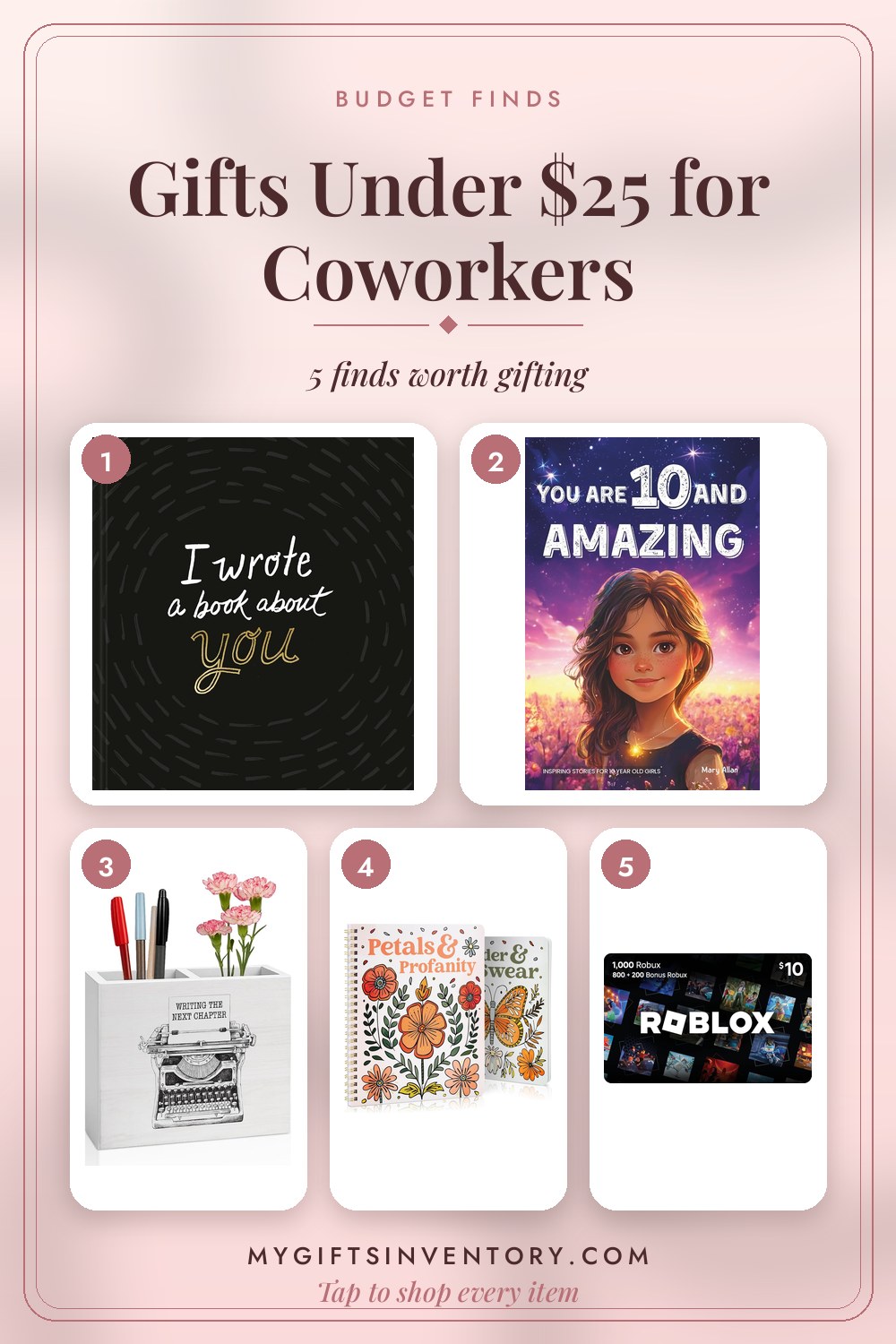
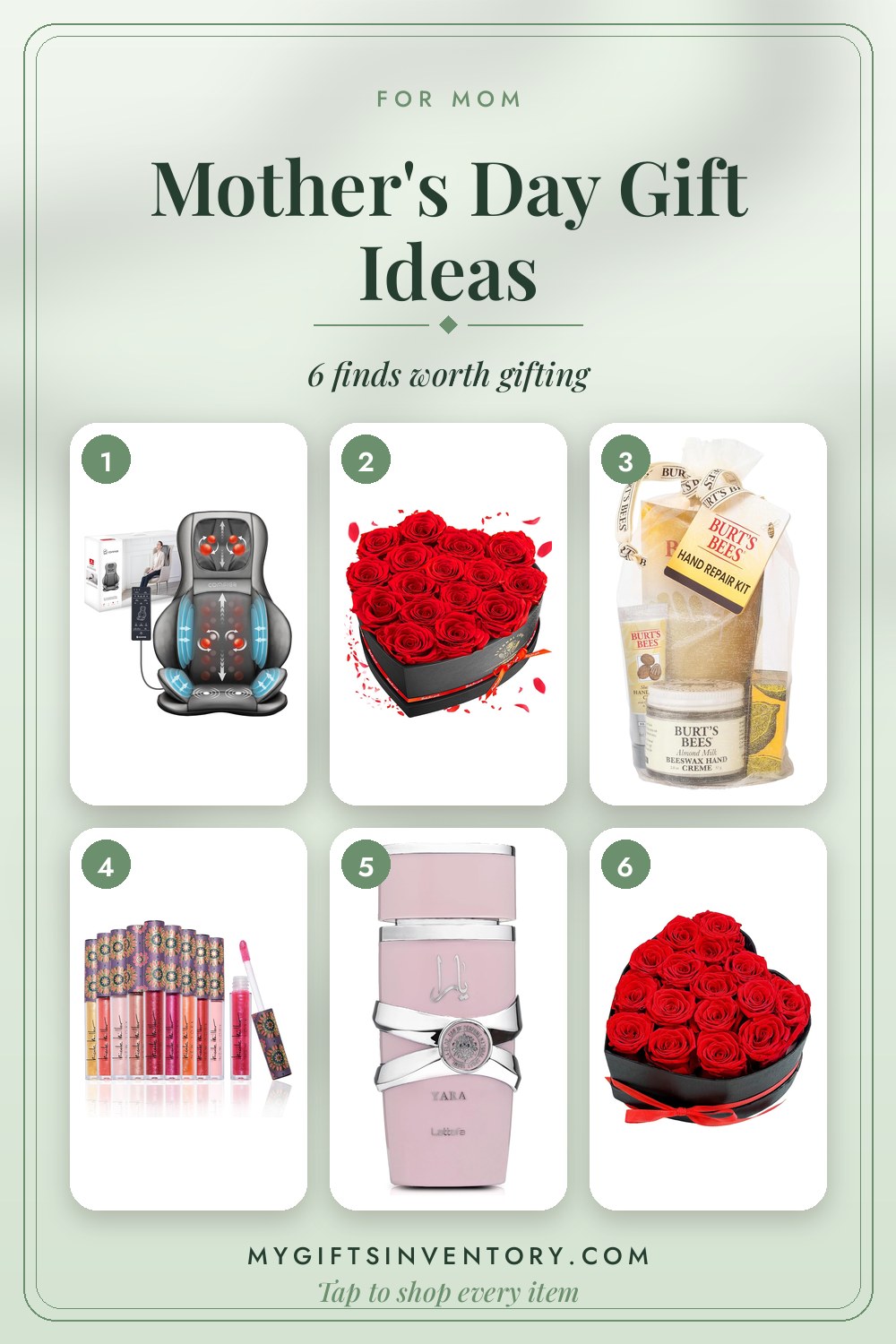
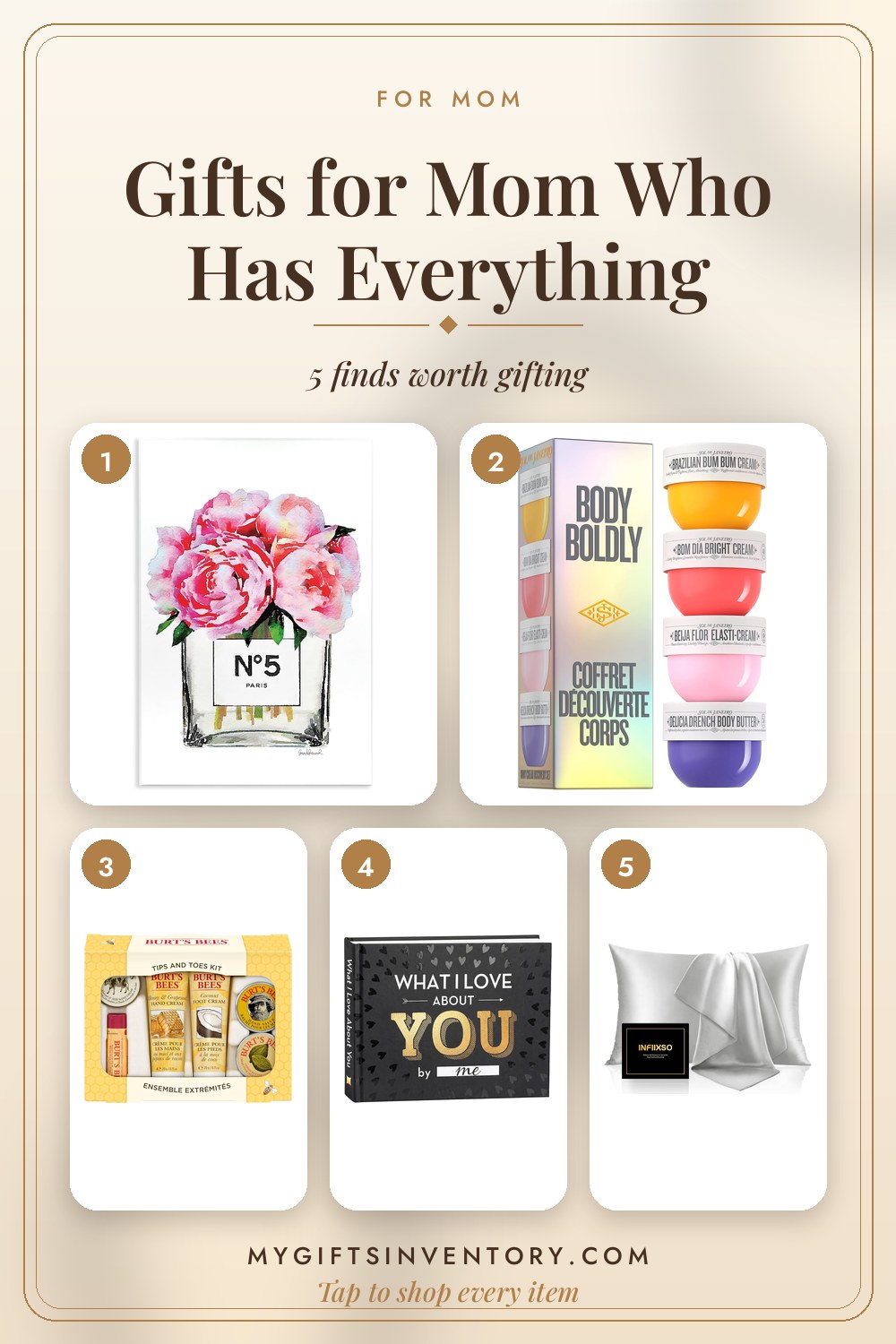
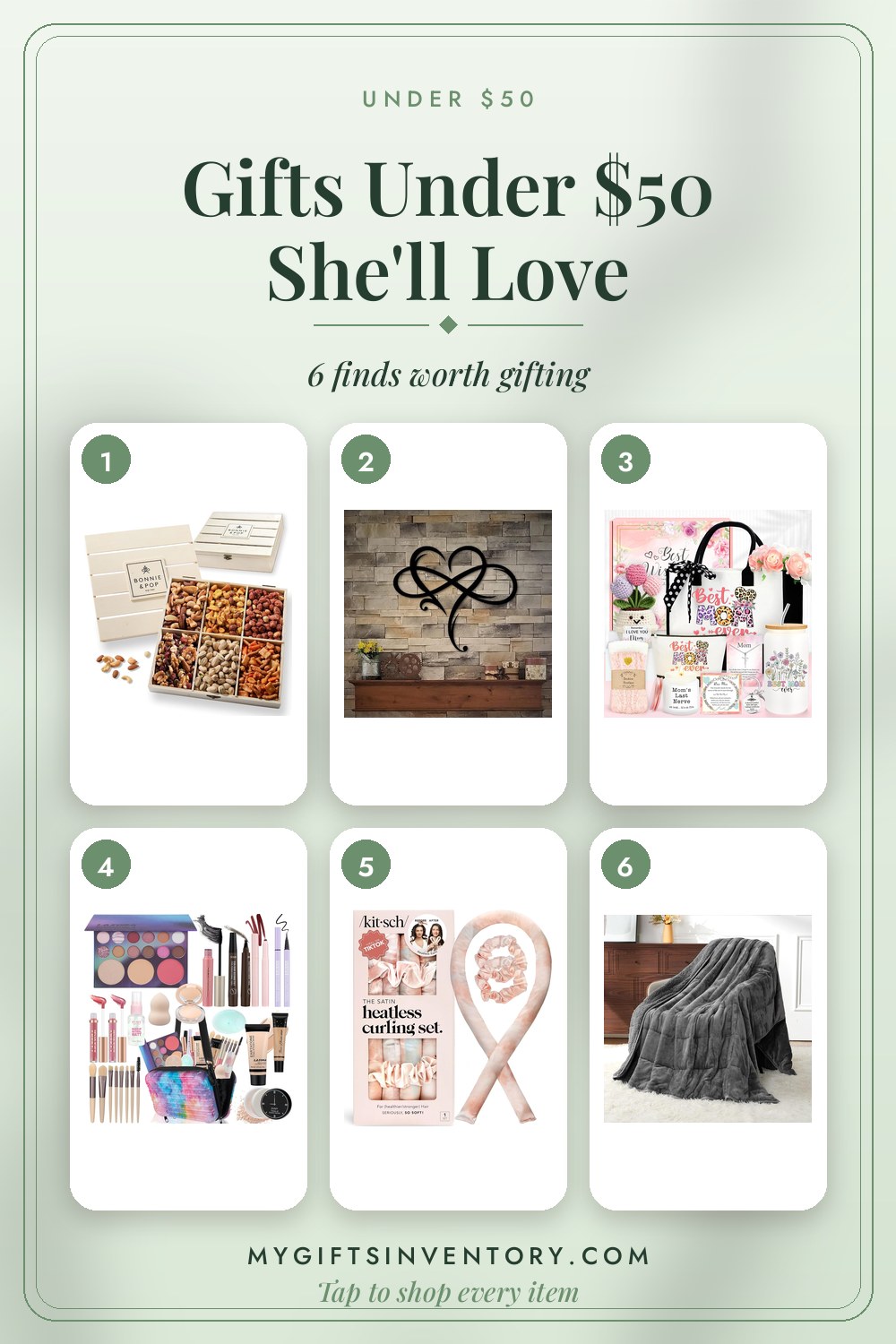
Looking for an Actual Gift Instead?




Gift Sets We Love Right Now
Every item picked, priced and linked, ready to buy.
More Gift Advice