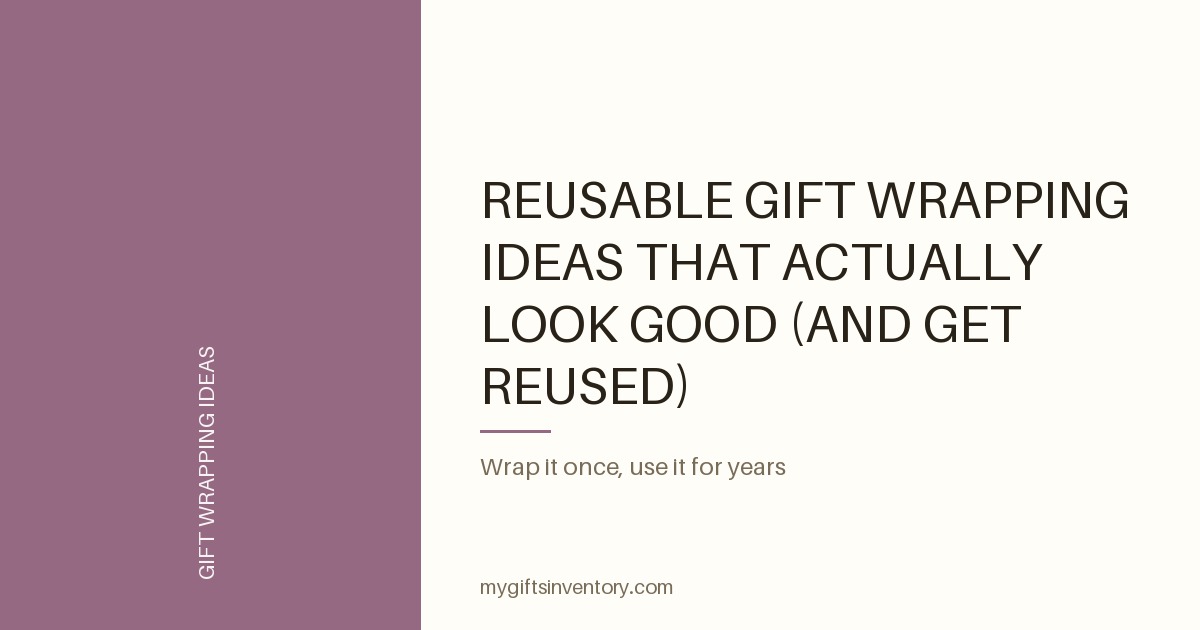
Reusable Gift Wrapping Ideas That Actually Look Good (and Get Reused)
Fabric wraps, tins, jars, and cloth bags that make gifts look thoughtful and skip the trash bag of crumpled paper on December 26. Here is what works, what it costs, and how to do it without looking like you forgot to buy paper.
As an Amazon Associate, My Gifts Inventory earns from qualifying purchases. We only recommend products we'd genuinely consider buying ourselves.
You have probably stood in the wrapping paper aisle in mid-December, done the math, and felt a small pang: $8 for a roll of paper that gets torn open in four seconds and stuffed into a trash bag. That is the real reason people search for reusable gift wrapping. Not because they want a craft project, but because the annual paper habit feels wasteful, and because a gift wrapped in something durable reads as more thoughtful than one swaddled in shiny paper that ends up in the recycling bin by 9 a.m.
The good news is that reusable wrapping is faster than paper once you learn two or three techniques, costs less than you think after the first year, and actually looks better. Here is the honest version, including what does not work.
Fabric wrapping (furoshiki) is the one that earns its reputation
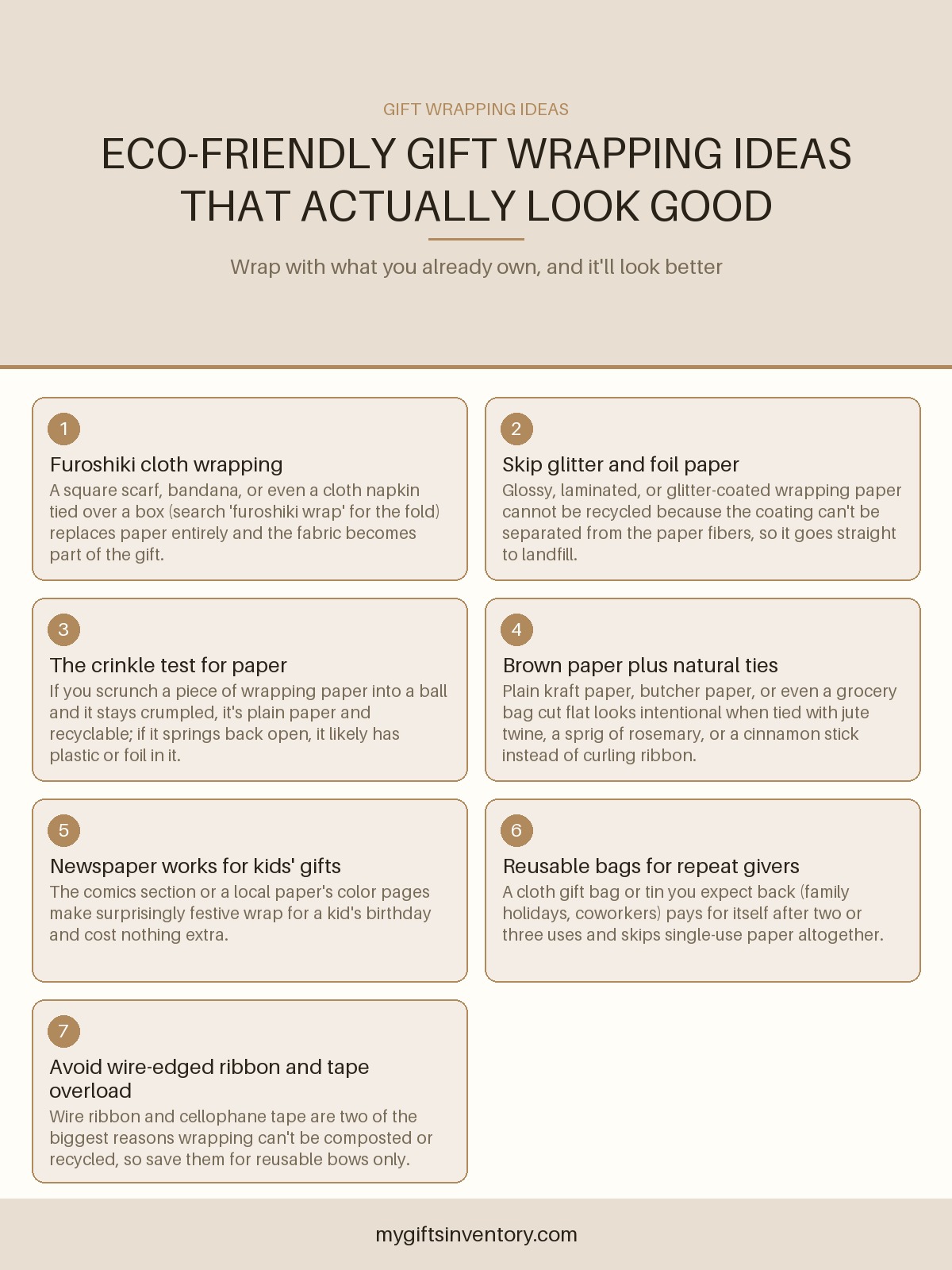
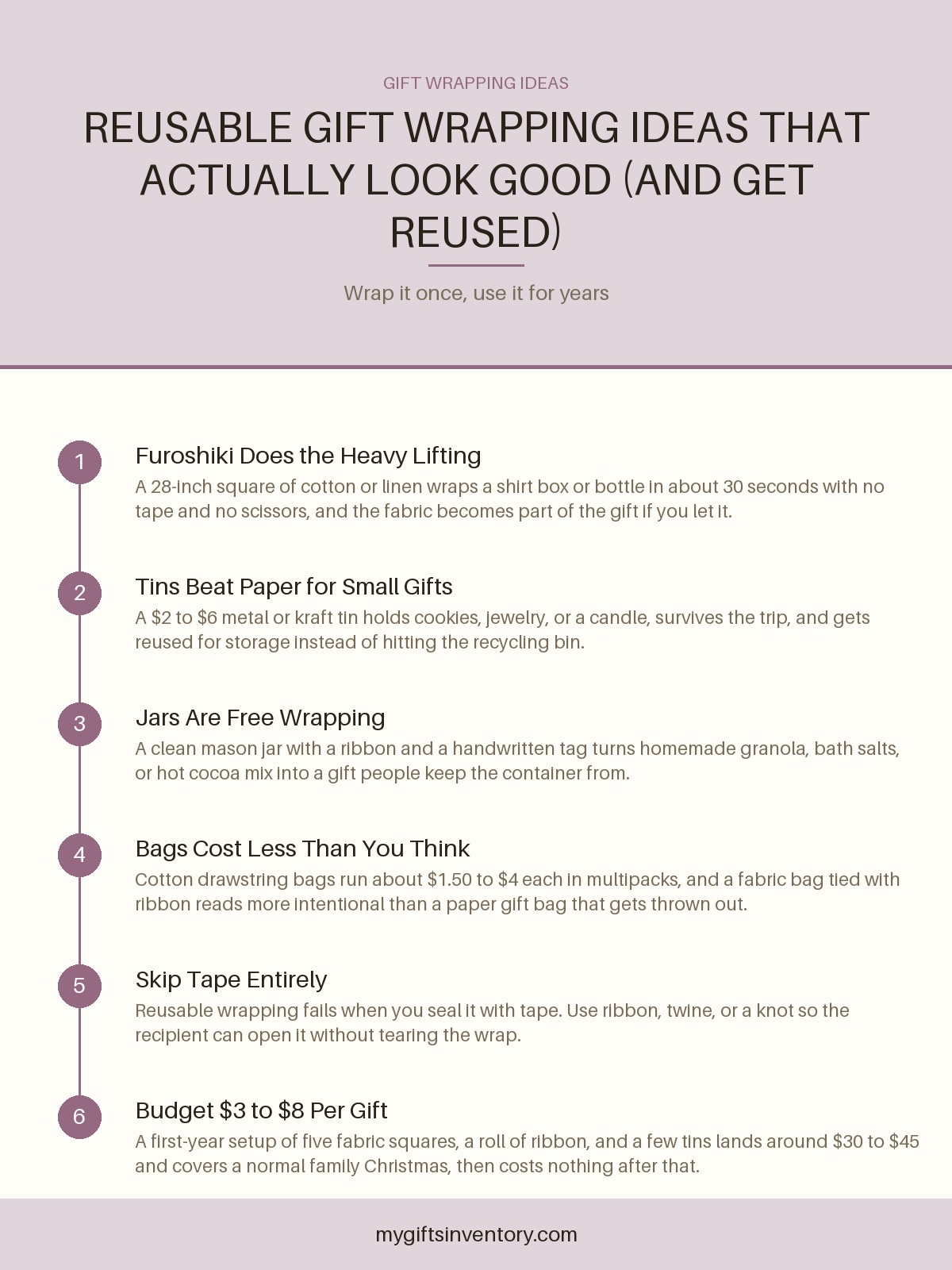
Furoshiki is the Japanese tradition of wrapping gifts in cloth, and it is the single best reusable wrapping method for most people. A square of cotton, linen, or even a nice tea towel becomes the wrapping, the ribbon, and sometimes a second gift. No tape, no scissors, no curling ribbon.
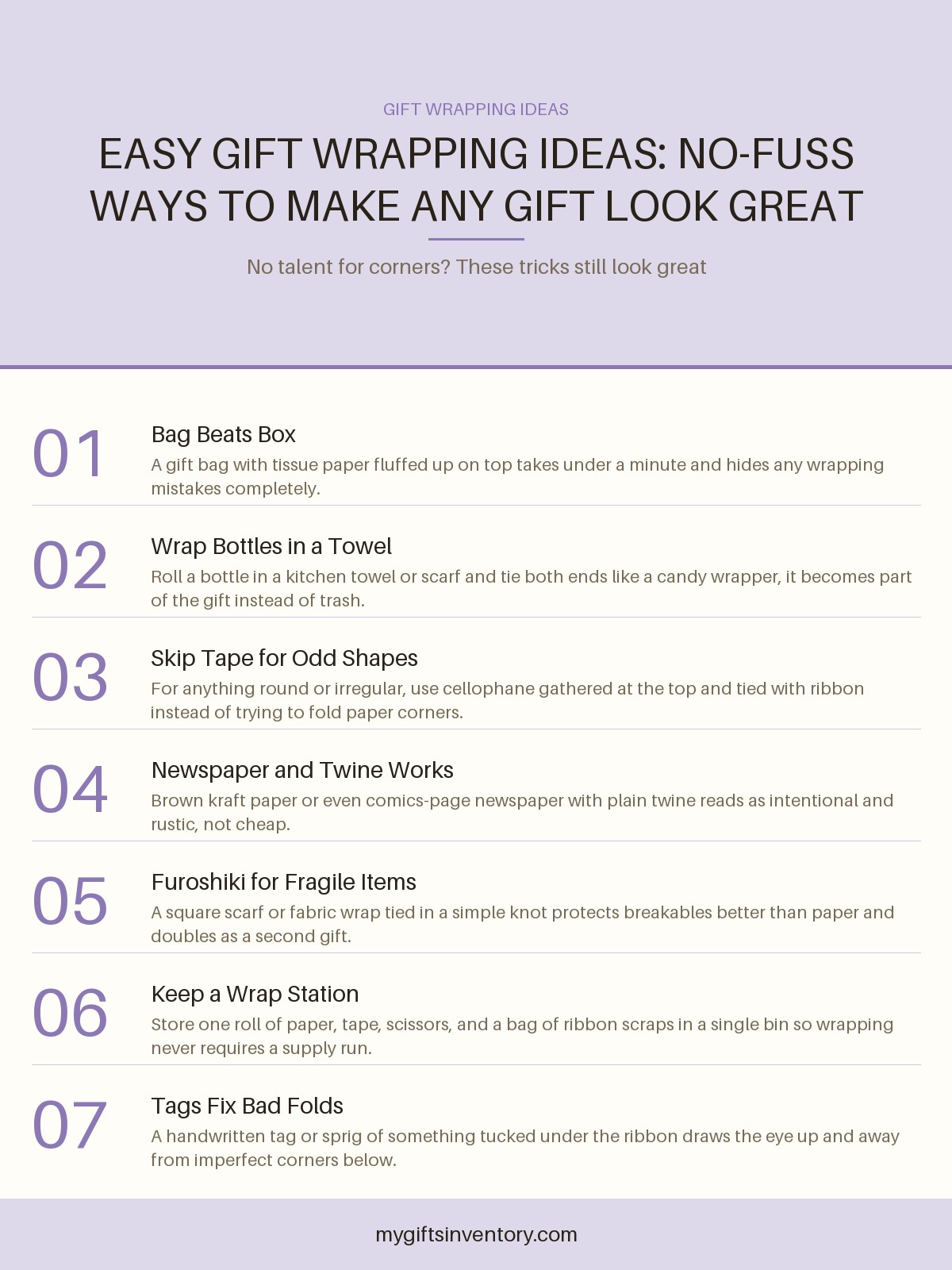
The mechanics are simple. Lay a 27 to 35 inch square flat and diamond-oriented, set the gift in the center, pull two opposite corners over the top and tie them once, then bring the remaining two corners around and tie them into the same knot. For a bottle, roll it in the cloth and twist the ends like a candy wrapper. For a shirt box, use the "two-knot" method and the fabric stays flat and crisp. You can learn either method in about a minute of watching and two minutes of practicing on a cereal box.
What fabric to buy and what to spend
Skip the thin, slippery polyester squares sold as "furoshiki cloth" at gift shops. They slide off the gift and feel cheap in the hand. Instead, buy cotton or linen squares in the $4 to $12 range, or cut your own from fabric store remnants at $3 to $6 a yard. A 35-inch square cuts from one yard of 44-inch-wide fabric, so a single $8 yard makes one large wrap. Thrift store scarves, tea towels, and bandanas work just as well and often cost $1 to $3 each.
If you are wrapping a gift for someone who loves a specific hobby, the fabric itself can be part of the present. A coffee lover gets their beans wrapped in a linen towel; a yoga devotee gets a mat strap or block wrapped in a cotton square they can use as a mat cover. If you are hunting for the gift itself rather than the wrap, our yoga gifts guide has picks that pair well with a fabric wrap, and the same idea works for almost any hobby.
Tins, jars, and boxes that become part of the gift
For small, awkward, or fragile items, a container beats fabric. A metal tin, a glass jar, or a sturdy kraft box with a lid does three jobs: it protects the gift, it looks intentional, and it gets kept. This is where reusable wrapping pays for itself fastest, because people genuinely reuse tins and jars for storage.
Tins: $2 to $8 each
A plain metal tin in a 6-inch round or a 7-by-5-inch rectangle runs about $2 to $6 online and a little more at craft stores. Fill it with cookies, a candle, jewelry, a small bottle of whiskey, or a set of hair ties, tie a ribbon around it, and you are done. No paper, no tape, no fuss. The tin survives the gift exchange and lives on as a cookie tin or a desk organizer.
This is especially good for food gifts. Cookies, fudge, or a small bottle of something nice nestles into a tin with a little tissue paper and looks far more expensive than it is. We have found the same principle works for barware: a good bottle wrapped in cloth inside a reusable box beats a paper-wrapped bottle every time. Our whiskey lover gifts guide is a good place to find a bottle or glass set that fits a tin.
Jars: essentially free
A clean mason jar is reusable wrapping you already own. Fill it with homemade granola, bath salts, hot cocoa mix, or cookie dough, screw the lid on, and tie a ribbon around the neck with a handwritten tag. It costs nothing, it looks charming, and the jar gets reused for leftovers or pantry storage. The one rule: make sure the jar is actually clean and dry, and that the lid seals. A jar that smells like last month's pickles ruins the gift.
Kraft boxes and wooden crates: $3 to $10
A plain kraft box with a lid, a small wooden crate, or a paper-mache box can be reused, repainted, or repurposed. They are heavier than paper, so they are best for gifts that stay in one place, like a hostess gift or a present that gets opened at home rather than carried on a plane.
Cloth bags: the low-effort, high-return option
Cotton drawstring bags are the fastest reusable wrap there is. Drop the gift in, pull the drawstring, tie a ribbon around the top, and you are done in ten seconds. They come in multipacks for roughly $1.50 to $4 per bag, they fold flat for storage, and they read as more thoughtful than a paper gift bag.
Buy a set in three or four sizes. Small bags handle jewelry, gift cards, and stocking stuffers; medium bags handle books, candles, and small electronics; large bags handle clothing and soft goods. A fabric bag tied with a length of ribbon is the easiest upgrade from paper gift bags and the one most people adopt first because it requires zero learning curve.
One note: drawstring bags are easy for recipients to accidentally throw away with the wrapping. Write "please reuse" on the tag, or use a bag with a distinct color or pattern so it is obviously worth keeping.
What to spend in year one (and year two)
The first year costs money. A reasonable starter kit for a family that wraps about 15 gifts looks like this:
- Five cotton or linen squares in mixed sizes: $25 to $40
- One roll of ribbon or a spool of twine: $5 to $10
- Five metal tins in a couple of sizes: $15 to $25
- A multipack of drawstring bags (10 bags): $15 to $25
That is roughly $60 to $100 for a starter set that covers most of a normal holiday, and after that your annual wrapping budget is close to zero. Compare that to the $30 to $60 most households spend on paper, tape, ribbon, tags, and bags every December, and the reusable setup pays for itself in about two years, before counting the tins and bags you get back from recipients.
If you want to go cheaper, start with jars and thrifted fabric only. A first year spent entirely on thrift store scarves and reused jars costs under $20 and looks better than paper.
Reusable wrapping etiquette: is it tacky to reuse a gift bag?
No, and this is one of the more persistent gift myths. Reusing a gift bag, tin, or fabric wrap is normal and increasingly expected. The only real faux pas is giving someone a bag with another person's name still on the tag, or a bag that is visibly crumpled, stained, or torn. A clean, intact bag or tin is fine to pass along, and many families make a game of it, with the same tin circulating for a decade.
Two etiquette rules worth keeping:
- Do not reuse a wrap that carries a personal message. A bag with "Happy 30th, Sarah" written on it should not go to someone else.
- Tell the recipient you want the wrap back, or don't. If it was expensive fabric, it is fine to say "I'd love the cloth back if you don't have a use for it." If you gave a $2 tin, let it go. Asking for the return of something cheap reads oddly.
If you are wrapping a gift for a workplace exchange where the etiquette is more formal, reusable wrapping still works, but keep it simple: a clean drawstring bag and a handwritten tag beat an elaborately folded fabric wrap that looks like homework. If you are putting together a gift exchange on a budget, our white elephant and gift exchange ideas under $30 guide pairs well with a simple cloth bag and a tag.
Common reusable wrapping mistakes
Sealing fabric with tape
The whole point is that the wrap stays intact. If you tape a fabric square shut, the recipient has to cut it open and the fabric is ruined. Use knots and ribbon only. The same goes for cloth bags: tie the drawstring, do not tape the opening.
Buying the wrong size fabric
Too-small fabric does not wrap a box no matter how clever you are. A 20-inch square handles a paperback or a small box. A 28-inch square handles a shirt box or a candle. A 35-inch square handles a bottle, a large box, or a bulky soft item. Buy one of each size before you buy five of the same.
Forgetting the tag
Once you skip paper and tape, you also skip the built-in place to write the recipient's name. Use a small kraft tag tied to the ribbon, or a sticker on the tin lid. A gift with no tag in a pile of wrapped presents is a small disaster on Christmas morning.
Storing it badly
Fabric squares, ribbon, and bags all need a home or they will end up wadded in a drawer and forgotten. A single shoebox or a clear storage bin labeled "wrapping" keeps them usable. Fold fabric flat, wrap ribbon around a piece of cardboard, and store bags nested. The people who stick with reusable wrapping are the ones who can find their supplies in December.
Matching the wrap to the gift
Reusable wrapping works best when the wrap suits the gift. A few pairings that reliably work:
- Books and small electronics: drawstring bag, or a kraft box with a linen square tied around it.
- Candles and glassware: a tin with tissue paper, or a fabric wrap with the corners tied at the top.
- Food gifts: a mason jar for powders and mixes, a tin for cookies and fudge, a cloth bag for a loaf of bread.
- Clothing: a fabric wrap or a large drawstring bag, which is forgiving of odd shapes.
- Gift cards: a small tin or a tiny drawstring bag, which honestly makes a gift card feel like more than an envelope. If you want to pair a card with a small physical gift, our stocking stuffers for her guide has small items that fit a tin nicely.
If you are wrapping a gift card and want to gently nudge the recipient toward checking the balance before they spend it, we have a guide for that too, including how to check a Trader Joe's gift card balance as one example of the process.
Gift Ideas to Go With This


Want more ideas? Browse our full guide: 34 Stocking Stuffers & Small Holiday Gifts Under $25 (2026): Thoughtful Picks That Don't Feel Like Filler
Frequently Asked Questions
Is it cheaper to use reusable gift wrapping than paper?
Not in year one, but yes after that. A starter set of fabric squares, tins, bags, and ribbon costs roughly $60 to $100 and covers about 15 gifts, while paper, tape, ribbon, and tags run most households $30 to $60 every December. By year two the reusable setup costs nothing, and you are saving money every holiday after that.
How do you wrap a gift in fabric without tape?
Lay a square of fabric flat in a diamond shape, put the gift in the center, pull two opposite corners over the top and tie them in a single knot, then bring the remaining two corners around and tie them into the same knot. The wrap holds itself and can be untied and reused. For bottles, roll the fabric around the bottle and twist the ends like a candy wrapper.
Is it rude to ask for the wrapping back?
It is fine for genuinely reusable or expensive wrap, and odd for cheap items. Asking for a linen wrap, a nice tin, or a fabric bag back is reasonable if you say it lightly. Asking for a $2 paper gift bag back is not worth the awkwardness, so let it go.
What is the best reusable wrap for awkward shapes?
Cloth bags and fabric wraps handle awkward shapes better than boxes. A drawstring bag swallows almost anything, and a 35-inch fabric square can wrap a bottle, a large plush, or an oddly shaped kitchen item. Skip rigid tins and boxes for anything that is not roughly rectangular.
Can I reuse gift bags I received?
Yes, as long as the bag is clean and intact and does not have someone else's name or a personal message on it. Reusing gift bags is normal and most people do it. The only rule is to remove old tags and make sure the bag still looks presentable.
Looking for an Actual Gift Instead?
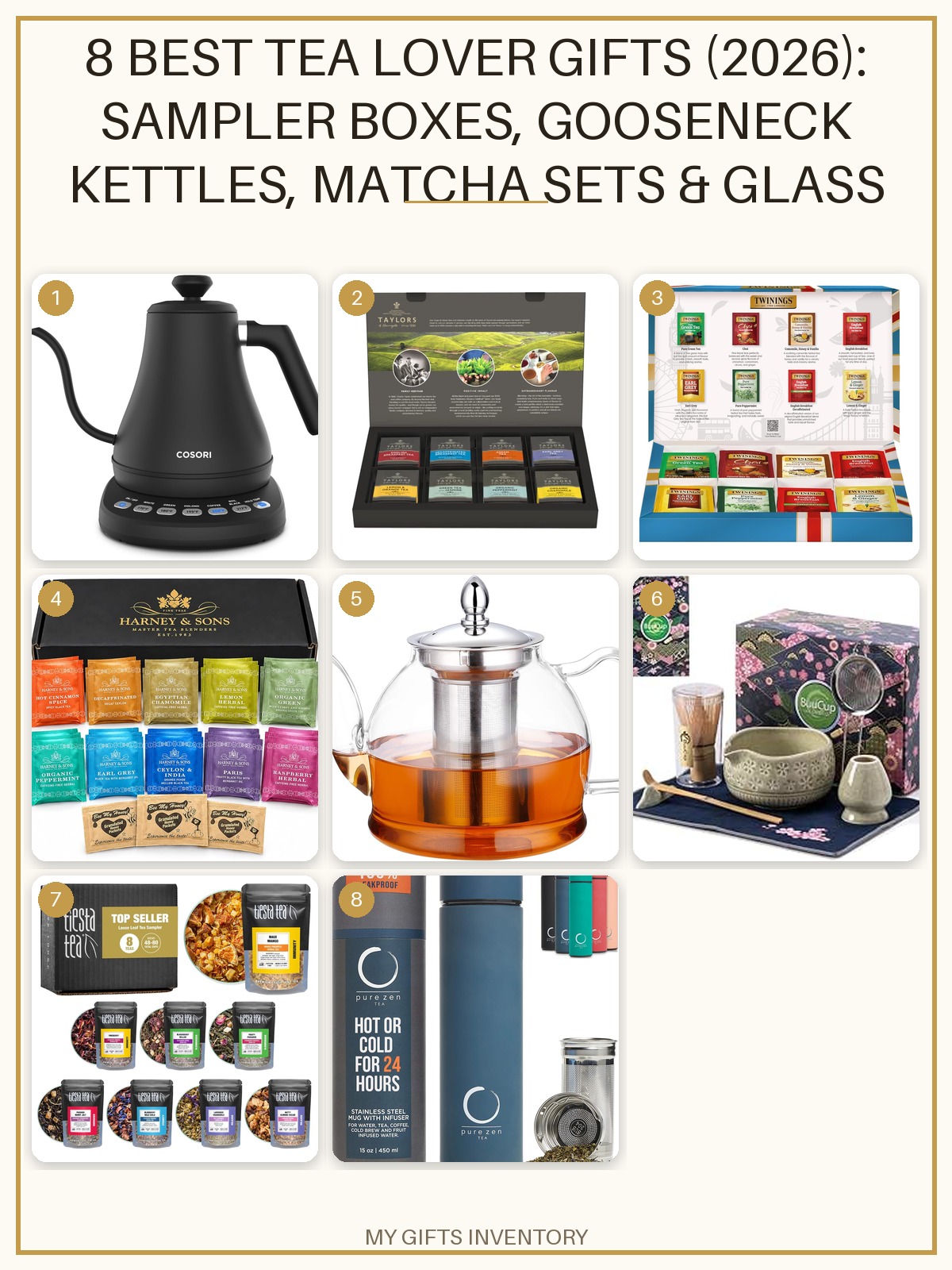
Gift Sets We Love Right Now
Every item picked, priced and linked, ready to buy.
More Gift Advice