What to Write in a Gift Thank-You Note (Examples for Every Situation)
We share reliable thank-you note wording you can copy and personalize, plus timing, tone, and what to do when you forgot.

As an Amazon Associate, My Gifts Inventory earns from qualifying purchases. We only recommend products we'd genuinely consider buying ourselves.
You’re searching gift thank you note wording right now because the card pile always feels bigger than the time you have. Maybe you opened the gift and froze. Maybe you forgot and the date is creeping up. Or maybe you just want your message to feel warm and specific, not like a template.
We get it. A good thank-you note does three jobs: it acknowledges the gift, it shows gratitude without overdoing it, and it gives the giver a clear little “moment” they’ll recognize. Below, we’ll give you ready-to-use wording for common situations, plus a simple structure so you can write something that sounds like you.
What makes gift thank-you note wording feel genuine
Most people don’t need fancy language. They need specifics. When you include a detail, your message stops sounding polite and starts sounding personal.
Use this 3-sentence structure
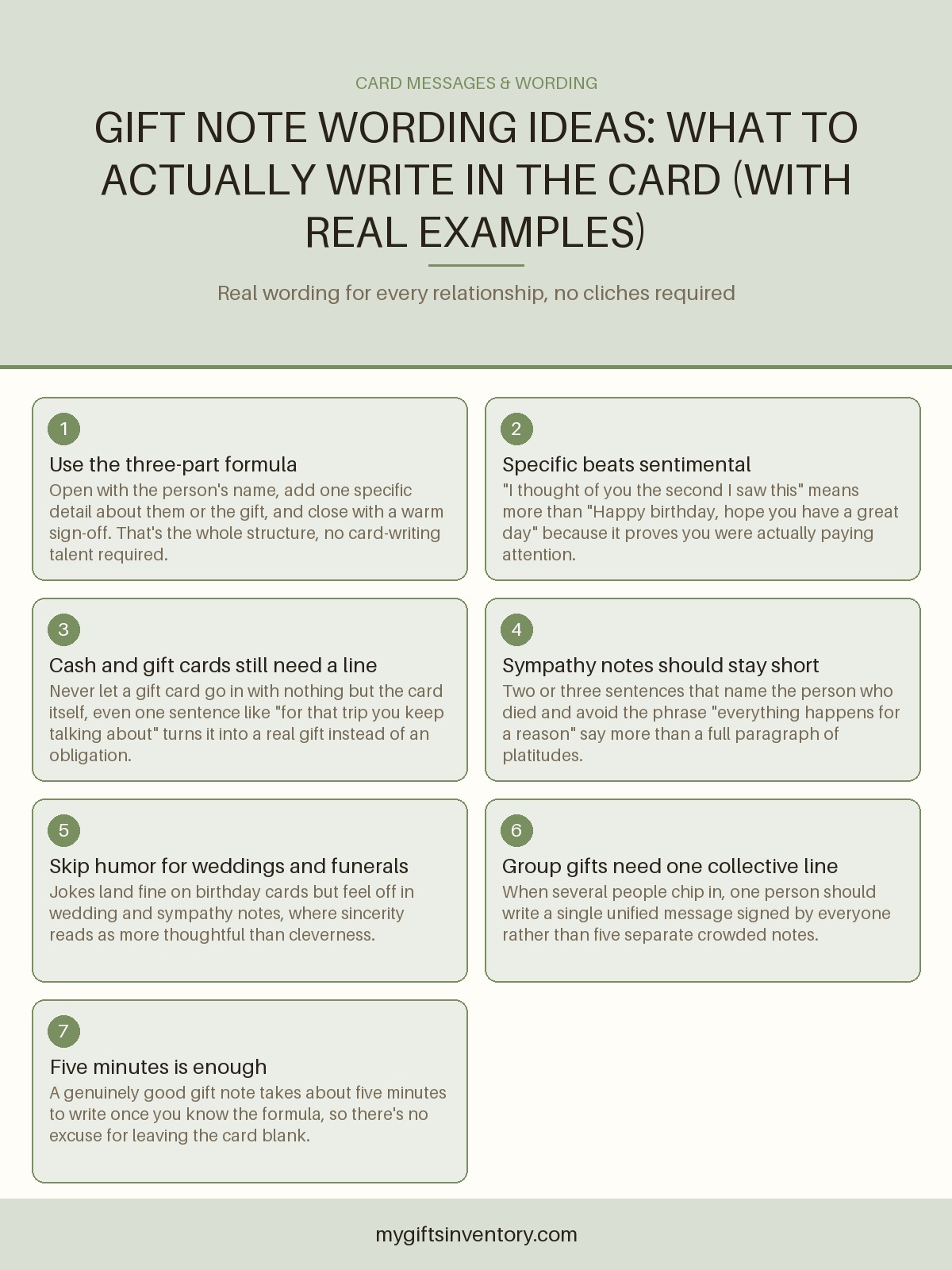
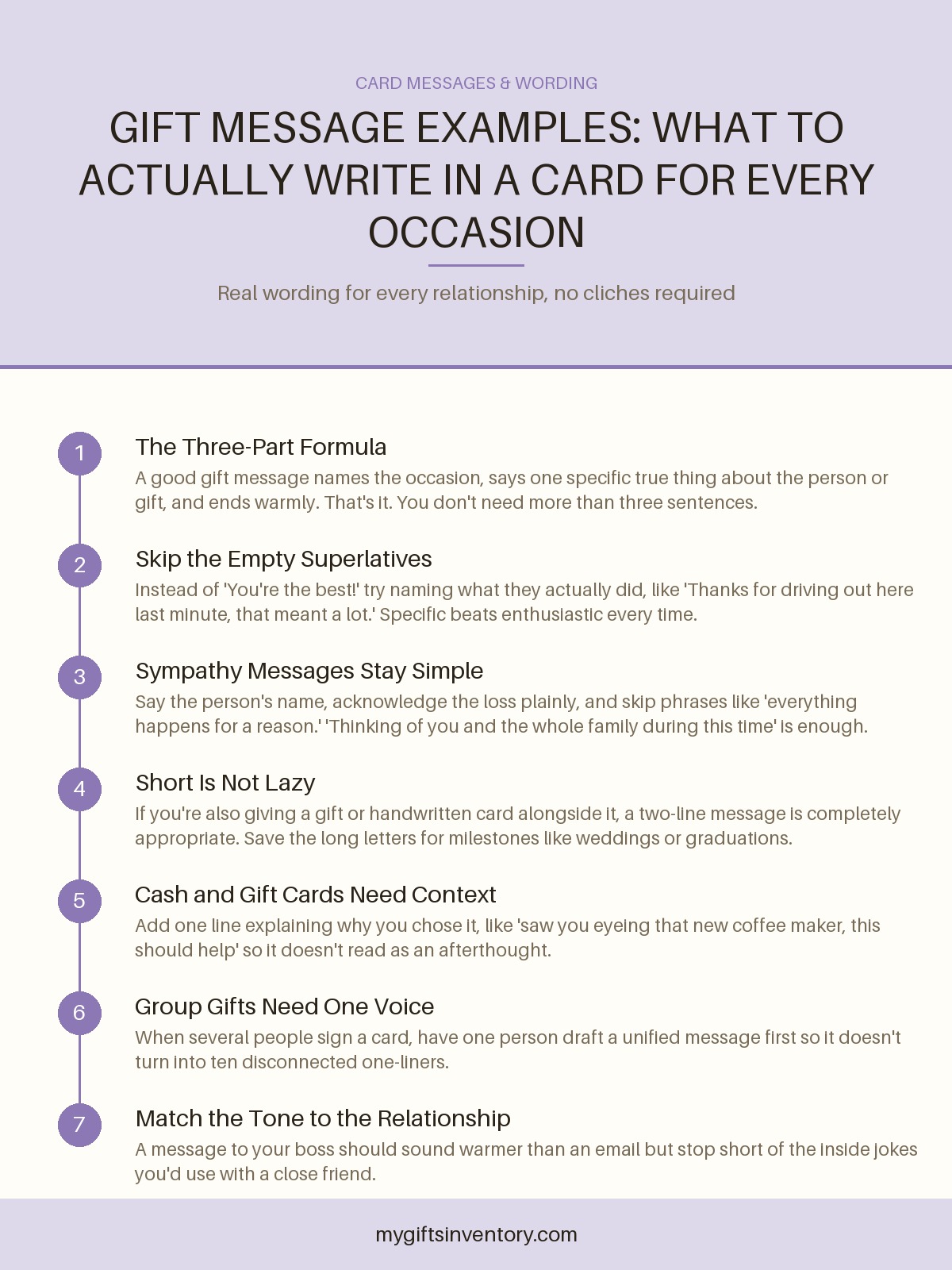
We recommend keeping most notes to two to four sentences. You can follow this pattern:
- Thank them (one direct sentence)
- Name the gift (and one specific detail about how you’ll use it)
- Say what it meant (a warm line about their thoughtfulness)
Example of the structure in plain language:
“Thank you so much for the thoughtful gift. I’m really excited to use it for my next family dinner, and it’s perfect for our kitchen. Your kindness meant a lot.”
Avoid common wording that feels generic
- “Thank you for your generosity.” (It’s fine, but it’s not memorable.)
- “I love it.” (Better when you add what you’ll do with it.)
- “Thank you for thinking of me.” (Good, but pair it with a gift detail.)
Timing: when to send a thank-you note (and what to do if you’re late)
The fastest way to reduce stress is to match your timing to the situation. Here are workable targets we use in real life.
Gifts given in person
- Ideal: within 24 to 48 hours if you can.
- Still good: within 3 to 7 days.
Gifts received by mail or ordered for an occasion
- Aim: within 7 days of receiving the gift.
- Acceptable: within two weeks, especially if you were traveling or busy.
If you missed the window
If you are late, you do not need a long explanation. A simple apology line is enough, then you move to the gift details.
“I’m sorry this is coming late. Thank you so much for the gift, and I truly appreciate your thoughtfulness.”
When a digital message is okay
If you’re dealing with a last-minute schedule, or the person is traveling, a quick text can be a “thank you first,” especially for small gifts. Then follow with a note if you have time. For weddings, major holidays, or extended family gifts, we strongly recommend a card when possible.
Best gift thank-you note wording for everyday occasions
Below are message templates that sound natural. Each one includes a place for the gift detail so you can personalize in less than two minutes.
Birthday gift thank-you note wording
Short and sweet (card-ready):
“Thank you so much for the birthday gift. I’m really looking forward to using it, and it was such a thoughtful surprise. I appreciate you thinking of me.”
A little more personal:
“Thank you for celebrating my birthday with such a thoughtful gift. I’m excited about how I’ll use it, and I keep smiling when I think about you choosing something just right. Thank you again for making the day feel special.”
Holiday gift thank-you note wording
For a holiday card:
“Thank you for the wonderful holiday gift. I’ve already started putting it to use, and it reminded me how thoughtful you are. I hope your holiday was just as warm and joyful as mine.”
If you’re sending after the holidays:
“Thank you for the gift you sent around the holidays. I’m sorry it’s taken me a little while to write back, but I wanted you to know how much I appreciate it. It’s perfect for what I’ve been planning to do next.”
Thank-you wording for “just because” gifts
Warm and simple:
“Thank you for the thoughtful gift. It was such a sweet surprise, and I truly appreciate you thinking of me. I’m looking forward to enjoying it.”
Thank-you note wording for kids’ gifts
For grandparents, relatives, family friends:
“Thank you so much for the gift. [Child’s name] was so happy when we opened it, and they’ve been playing with it nonstop. Thank you for helping make birthdays feel magical.”
If you want to name the reaction:
“Thank you for the gift. [Child’s name] couldn’t stop talking about it, and you made their day. We’re really grateful.”
Thank-you note wording for big milestones (weddings, showers, house gifts)
Big occasions ask for a little more specificity. People remember who said what, especially when the event was emotional or expensive.
Wedding gift thank-you wording
Couple note (great for two names on one card):
“Thank you so much for your wedding gift. We’re really grateful for your support as we start this next chapter. We’re excited to put it to use as we build our home together.”
If you know exactly what they’ll do with it:
“Thank you for the thoughtful wedding gift. We’re planning to use it on our next date night at home, and it will be one of those everyday reminders of your kindness. We’re so grateful you shared in our celebration.”
Baby shower or new baby gift thank-you wording
Classic and warm:
“Thank you for the wonderful shower gift. We’re so grateful for your thoughtfulness, and we’ve already started using it for [baby’s name]. Thank you for helping make this season feel even more special.”
If the gift is practical:
“Thank you for such a helpful gift. It’s exactly what we needed, and it’s already made our days easier. We appreciate your kindness so much.”
Housewarming or moving gift thank-you wording
Cozy tone:
“Thank you for the housewarming gift. We love it, and it feels like the right touch for our new place. We’re grateful you helped us get settled.”
Specific and appreciative:
“Thank you for the moving gift. We’re really excited to use it in our new home, and we appreciate your thoughtfulness during such a busy time.”
If you’re also planning the house side of gifting, we often see people pair their thank-you cards with a little “gift wrap follow-up” or practical note about how they’re setting things up. You can keep it simple, like: “We loved the wrapping, and we’re loving the new setup.”
Thank-you note wording when the gift is a gift card
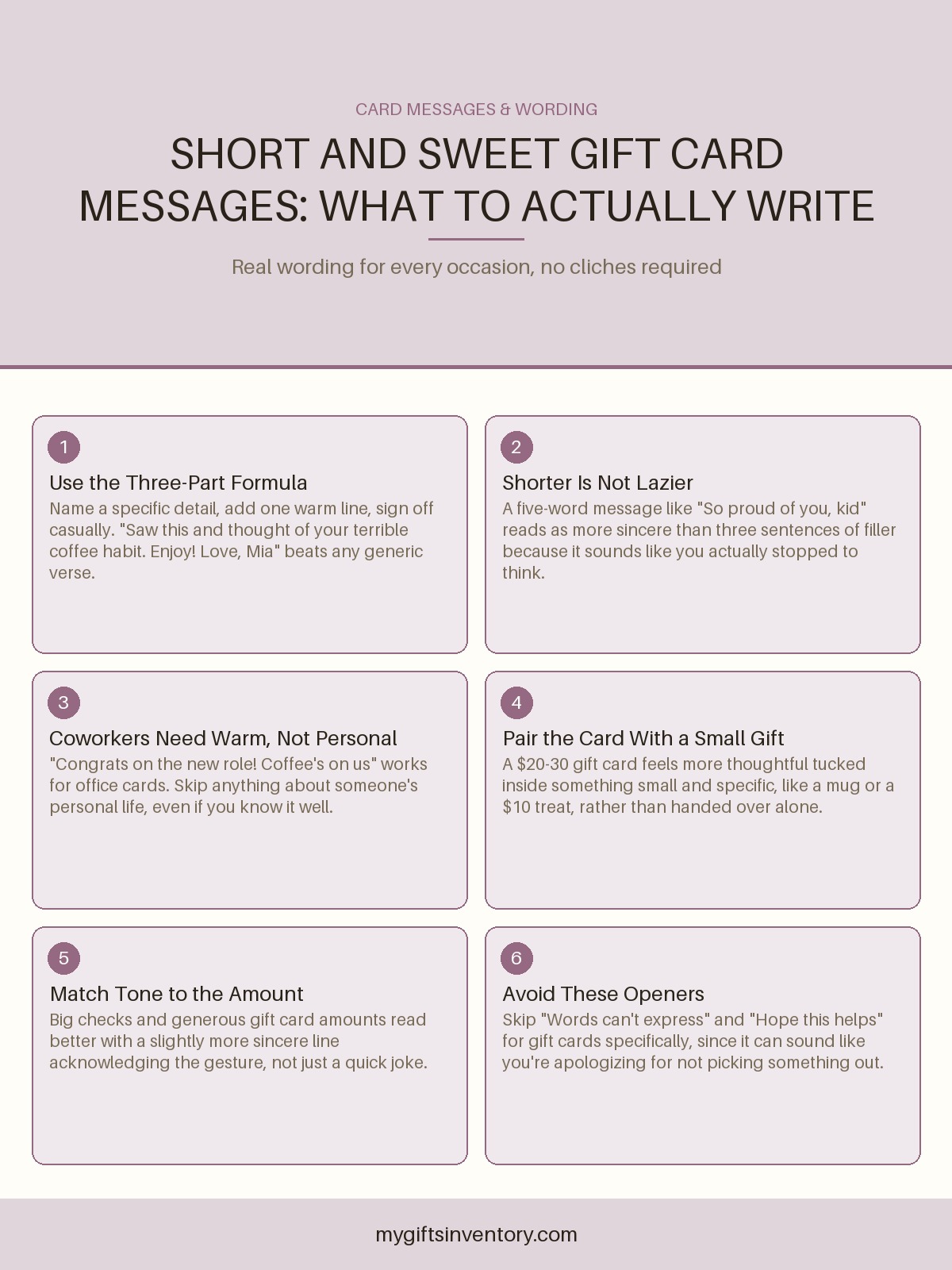
Gift cards can feel awkward to thank, but they are often a relief for the giver and the recipient. The key is to thank them for the generosity and to add what you plan to do with it.
General gift card thank-you note wording
Short and perfect:
“Thank you so much for the gift card. It was so thoughtful of you, and I’m planning to use it for [what you’ll use it for]. I really appreciate it.”
If the gift card is for a specific store
Store-brand specifics help the message feel real. For example, if the card came from a major retailer, you can mention the category you’ll buy.
Example:
“Thank you for the Target gift card. I’m planning to use it on a few home essentials we’ve been putting off, and it means a lot that you chose something so practical. Thanks again for your kindness.”
If you’re trying to make sure you can actually check and use the balance, we keep notes like “where to check” in our retailer guides, such as Gift Cards at Target: The Complete List of Brands, Fees & Where to Buy (2026) and Gift Cards at Walmart: The Complete List of Brands, Fees & Where to Buy (2026). It’s not required to write those details in the card. It just helps you feel settled once you get the card.
When you don’t know what you’ll buy yet
That’s okay. Keep it honest without dragging it out.
“Thank you for the gift card. I’m not sure exactly what I’ll pick yet, but I already know it will come in handy, and I’m really grateful for your thoughtfulness.”
Thank-you note wording for “weird timing” situations
Some gifts arrive when you’re traveling, grieving, or juggling a schedule. Your card can still be good without being perfect.
Thank-you note when you received the gift late
Clean and forgiving:
“Thank you for the gift. I’m sorry I’m just now writing back. I appreciate your thoughtfulness, and I’m really looking forward to using it.”
Thank-you note when you’re sick or unavailable
Gentle and simple:
“Thank you for the gift. I appreciate you so much, and I’m sorry I’m just now getting to your note. I’m grateful for your kindness while I’m taking a slower pace.”
Thank-you note after a difficult period
When a gift came during a hard time, you can be very direct without oversharing.
“Thank you for your kindness and for the gift. Your support meant a lot to me, and I’m grateful you thought of me.”
How to personalize your wording fast (without overthinking)
Here’s our “two-minute personalization” trick. Choose one option in each line.
- Gift detail: “I can’t wait to use it for…” OR “I’m already using it for…”
- Real-life moment: “next time we…” OR “on my busy week…” OR “as I get back into…”
- Meaning: “It meant a lot that you…” OR “Your thoughtfulness…”
Then you plug it into one of these templates:
Template A:
“Thank you so much for the [gift]. I’m excited to [specific use]. Your thoughtfulness truly means a lot to me.”
Template B (if you want extra warmth):
“Thank you for the wonderful [gift]. It’s exactly the kind of thing I’ll enjoy, especially when [real moment]. I’m grateful you took the time to choose it.”
Gift wrap and registry notes: where they fit in thank-you wording
Some people worry they must mention wrapping or registry. You don’t have to, but it can make your card feel more intentional.
If they wrapped the gift beautifully
One line is plenty.
“Also, thank you for the lovely wrapping. The whole presentation was such a treat.”
If you used a registry
We like acknowledging both the thought and the practicality.
“Thank you so much for your gift. We really appreciate your thoughtfulness, and it’s helping us get settled as we [prepare for the next step].”
If your question is really “how do we handle gifts in general, including registries,” we also have a broad help page called Choosing the Perfect Gift: Tips and Ideas for Every Person and Occasion. It’s useful when you’re deciding what to ask for, then writing the thank-you once the item arrives.
If you changed or returned something
Usually, you do not need to mention returns. If you must, keep it neutral and focused on gratitude, not details. The giver’s job was kindness. Your job is to thank them for that.
If you’re thinking about what happens after the gift arrives, our retailer guides can also help you get oriented, like Gift Cards at Kroger: The Complete List of Brands, Fees & Fuel Points (2026). You can use that same calm approach for thank-you wording: mention the gift, mention your plan, and keep the tone steady.
Long-distance thank-you note wording
Long-distance cards can actually be easier. You can mention how much you missed them or how the gift connected you.
Example:
“Thank you for the thoughtful gift. Even though we couldn’t be together, your kindness felt close, and I truly appreciate it. I’m excited to use it, and I’m grateful you were part of my day from afar.”
Ready-to-copy thank-you note wording by relationship
These variations help your card match the person’s role in your life.
Thank you wording for friends
“Thank you so much for the gift. I love that you thought of me, and I’m excited to [specific use]. Your kindness made my day.”
Thank you wording for coworkers or bosses
“Thank you for the thoughtful gift. I appreciate you, and I’m looking forward to using it. Thanks again for being so kind.”
Thank you wording for parents
“Thank you for the gift. It’s exactly what I needed, and it made me feel so supported. I’m really grateful for you.”
Thank you wording for grandparents
“Thank you for the gift. We’re really excited to use it, and it means a lot that you always make special moments feel special. We love you and appreciate you.”
FAQ
What is the best length for a gift thank-you note?
A gift thank-you note can be just two to four sentences. As long as you thank them, name the gift, and add one specific detail about how you’ll use it, it will feel complete.
Can we use the same thank-you wording for everyone?
You can reuse the structure, but we recommend swapping in gift details and a personal line for each person. Even a single sentence that references something specific will make it feel truly tailored.
If we’re late sending thank-you notes, what should we say?
Start with a short apology, then thank them and include a gift detail. For example: “I’m sorry this is coming late. Thank you for the wonderful gift. I’m excited to use it, and I truly appreciate your thoughtfulness.”
What do we write if the gift is a gift card?
Thank them and mention what you’ll use it for, even if it’s broad. Example: “Thank you so much for the gift card. I’m planning to use it for groceries and essentials, and I really appreciate your kindness.”
Do we need to mention registry or wrapping in the thank-you note?
You don’t need to. If it was especially meaningful, one short line is enough, like “Thank you for the lovely wrapping” or “We appreciate your thoughtful gift that matched our registry.”

Looking for an Actual Gift Instead?
Shop Hand-Picked Gift Sets
Every item picked, priced and linked, ready to buy.
More Gift Advice