What to Write on a Gift Tag: Real Examples for Every Occasion
Staring at a blank gift tag with the marker capped and nothing coming to mind? Here's exactly what to write, by relationship and occasion, plus what to skip entirely.

As an Amazon Associate, My Gifts Inventory earns from qualifying purchases. We only recommend products we'd genuinely consider buying ourselves.
You've wrapped the gift, you're holding the little cardstock tag with the string already threaded through it, and your mind has gone completely blank. This happens to almost everyone, usually at 11pm the night before, because a gift tag feels like it should be easy and somehow isn't. It's small, it's public (someone besides the recipient might read it first), and it's the very last thing standing between you and being done wrapping.
The good news is that gift tags have a much lower bar to clear than cards do. Nobody expects poetry on a two-inch tag. What follows is exactly what to write, broken down by who you're giving to and what the occasion is, plus a few things worth avoiding.
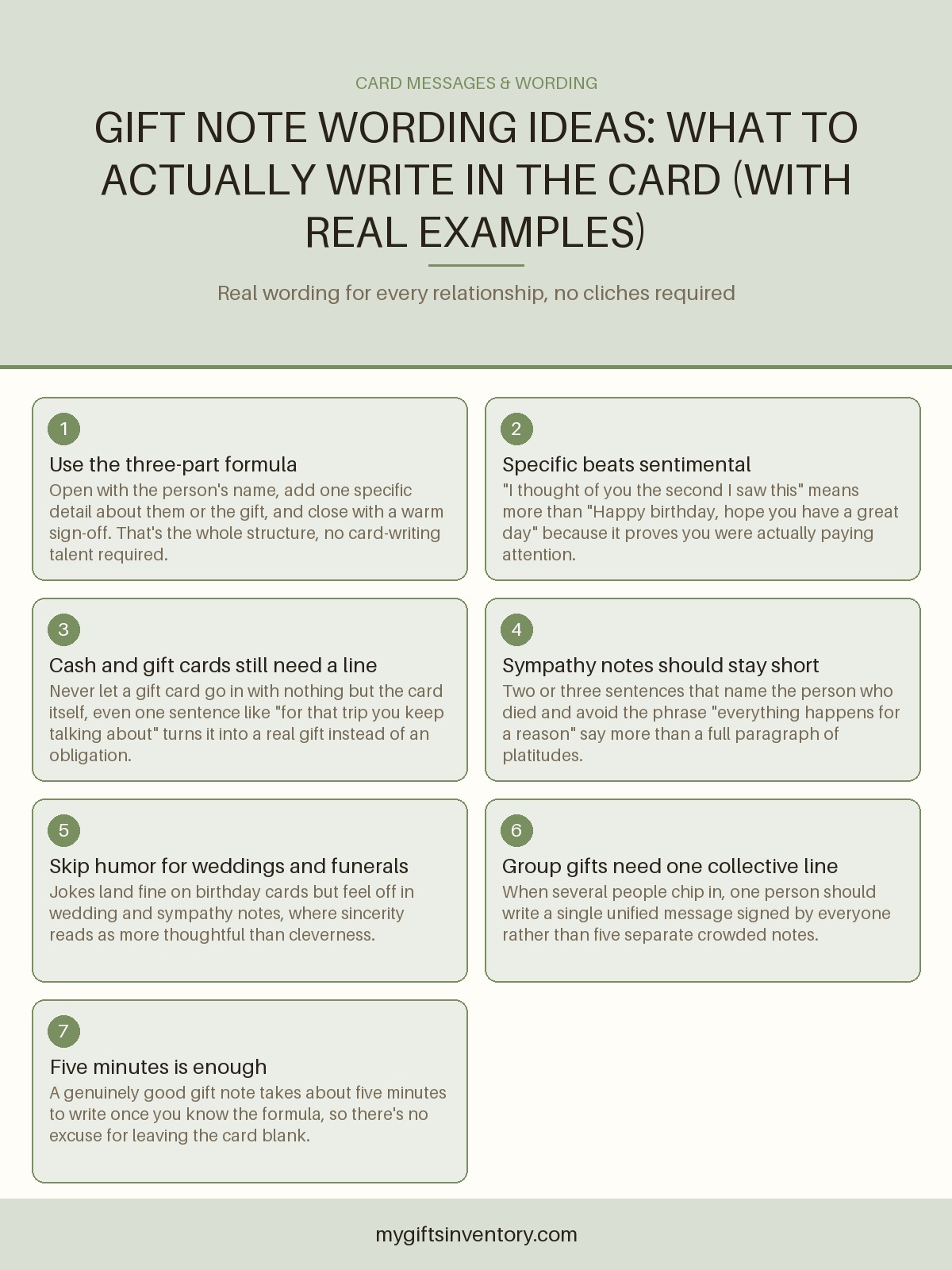
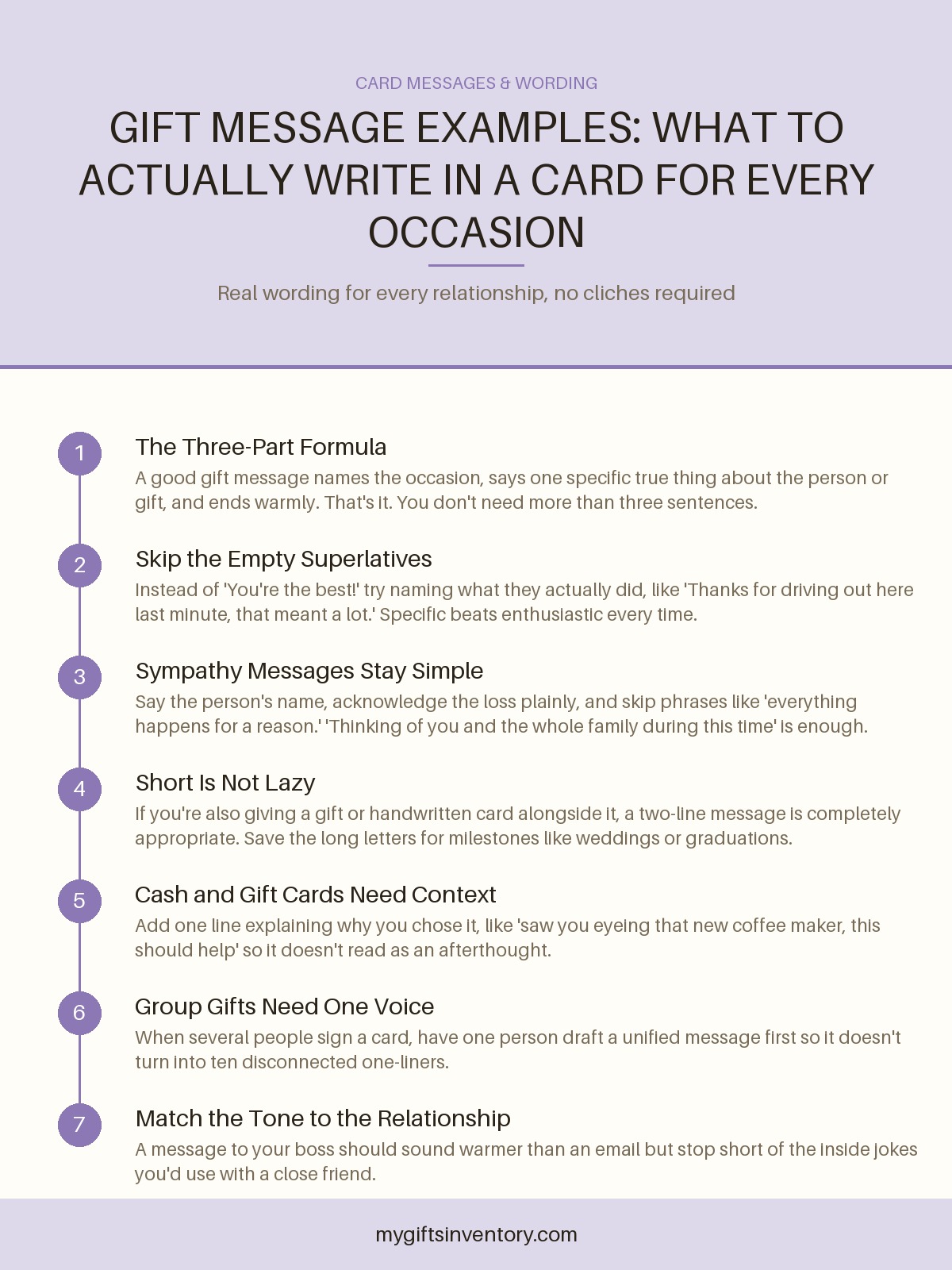
The Basic Formula That Always Works
Every gift tag really only needs three pieces: who it's for, who it's from, and one short personal touch in between. That middle piece is the only part people overthink, and it can be as simple as a single word.
- To: [Name]
- A short line: a wish, a joke, a thank-you, or just "love,"
- From: [Your name]
That's the whole structure. "To Dad, hope this makes the garage a little easier to organize. Love, Sam" hits all three. So does "To Dad, love Sam" if you're not feeling wordy. Both are fine. The gift itself is doing most of the talking anyway.
What to Write by Relationship
The relationship matters more than the occasion when you're deciding on tone. A tag for your best friend and a tag for your boss should not sound the same, even if you bought them the same candle.
Partner or Spouse
This is where you can get specific and a little sentimental without it feeling out of place, since nobody else is going to read it before your partner does. "For my favorite person, happy anniversary. I love you more every year, [Name]" or simply "To my [wife/husband], every year with you gets better. Love, [Name]" both land well. If you're marking a specific year, our guide to anniversary gifts by year has ideas that pair naturally with a tag that references the milestone directly, like "5 years down, forever to go."
Parents and Grandparents
Gratitude reads better here than jokes. "To Mom, thank you for absolutely everything, love [Name]" never misses. If your mom is genuinely hard to shop for and you're pairing the gift with something thoughtful rather than generic, our list of gifts for a mom who has everything can help you land on something worth a personal line, like "I know you have everything, but I hope you didn't have this yet."
Kids
Keep it short, warm, and easy for a young reader (or a parent reading aloud) to say out loud. "To Emma, Happy Birthday! Love, Auntie Jules" is plenty. Skip clever wordplay on tags for kids under ten; it just confuses them and someone has to explain the joke.
Friends
This is the one place inside jokes are actually welcome. "To the only person who understands my true crime podcast obsession, happy birthday" is a great gift tag precisely because it's specific to that friendship.
Coworkers, Bosses, and Clients
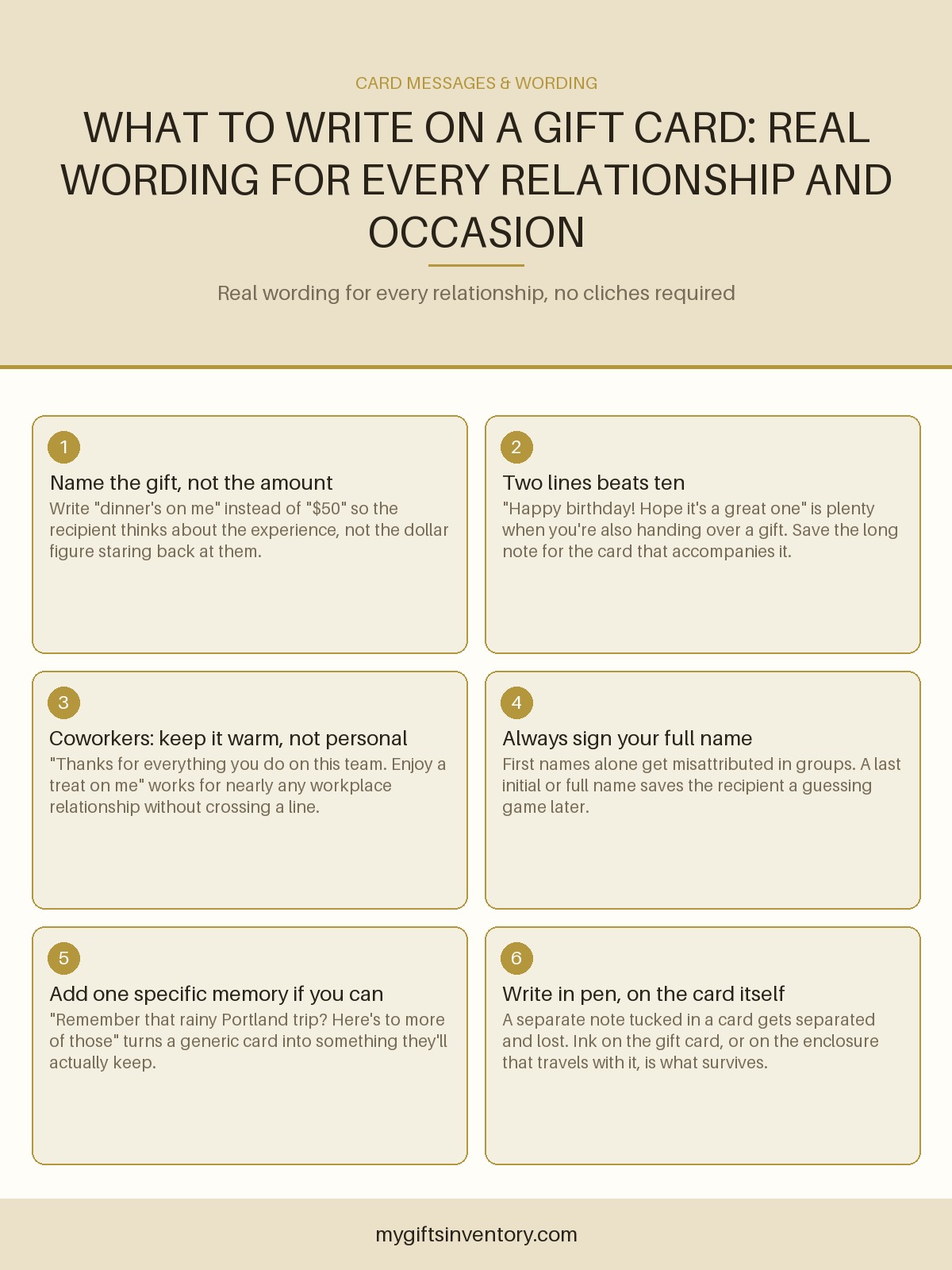
Neutral and brief is the safest choice, since office gift exchanges tend to get opened with an audience. "Happy holidays, [Name]! Wishing you a great year ahead" covers it without risk. If you're shopping for a whole team or a client list, our corporate gift ideas under $50 guide has options that pair well with a simple line like "Thank you for a great year working together."
Host or Hostess
If you're bringing a gift to a dinner party or someone's home, a tag can double as a thank-you before the visit even happens. "Thanks for having us! Enjoy" is short and correct.
What to Write by Occasion
Once you've nailed the tone for the relationship, the occasion tells you what specifically to reference.
Birthdays
"Happy Birthday, [Name]! Hope this year is your best one yet" works for nearly anyone. If the gift is genuinely tied to a hobby, name it: for a coffee-obsessed friend, something from our coffee lover gift guide pairs naturally with "For all your 6am emergencies. Happy Birthday!"
Weddings and Engagements
"Wishing you a lifetime of love and laughter, congratulations!" is a classic for good reason. If you know the couple well, add something specific: "Congrats on making it official, you two are the real deal."
Baby Showers
"Congratulations on your new arrival, can't wait to meet them" works whether the baby has arrived yet or not. For an already-named baby, use the name: "Welcome to the world, little Theo."
Graduations
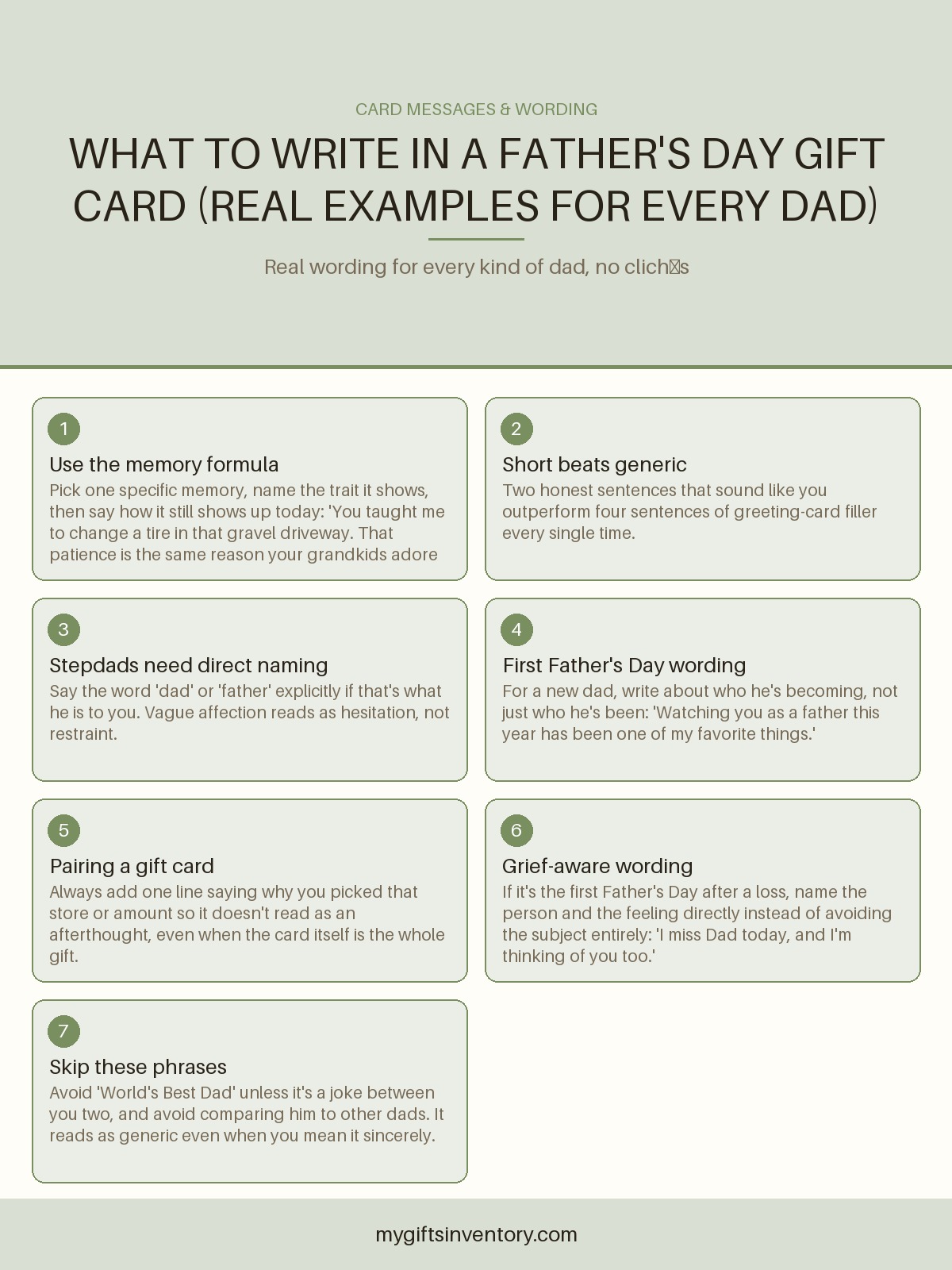
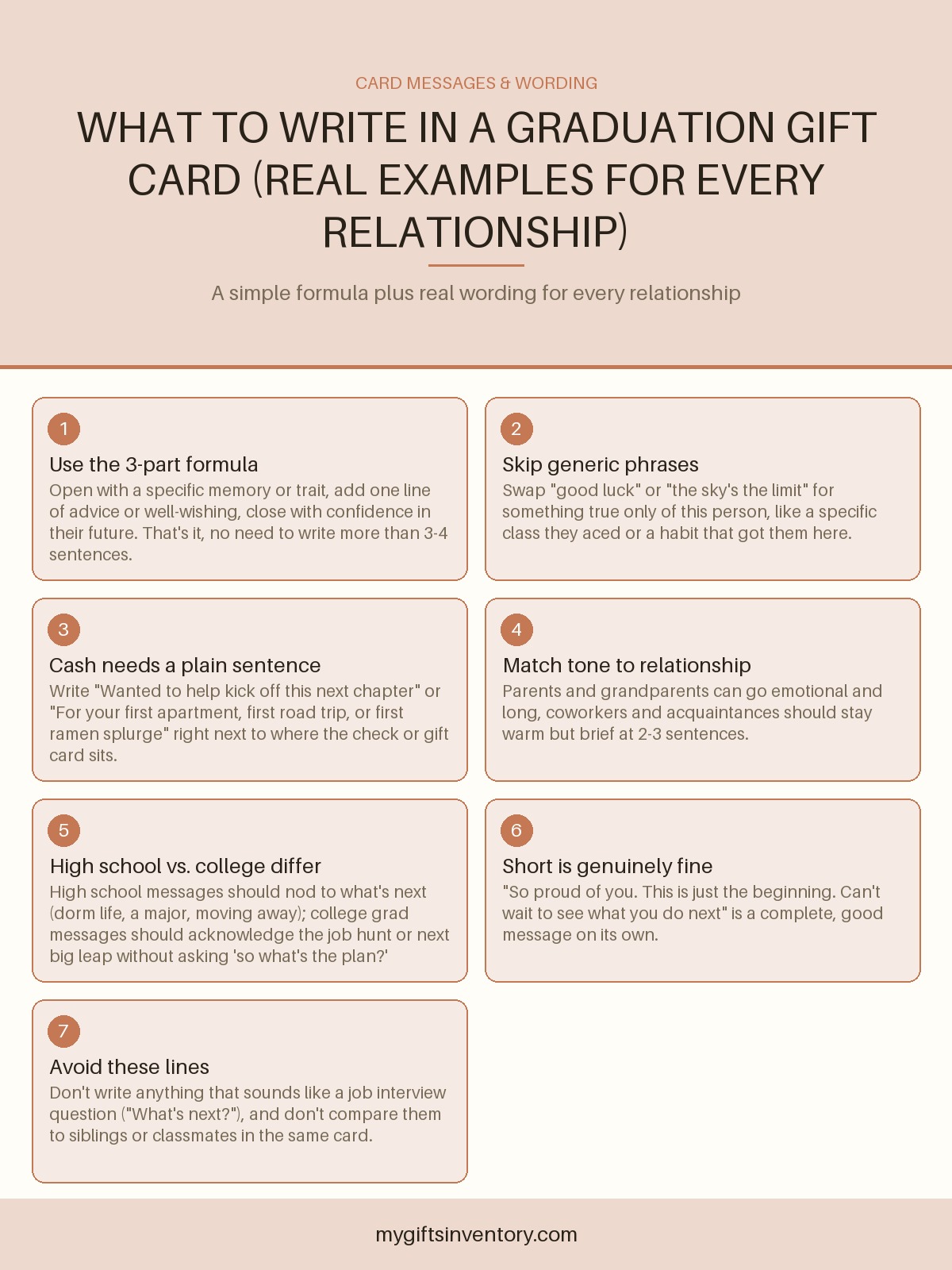
"Congrats, grad! The world is lucky to have you" or, if you knew them as a kid and now they're an adult with a diploma, something like "Watching you grow into this has been one of my favorite things."
Holidays
"Merry Christmas" or "Happy Hanukkah, [Name]" plus one line is standard, but if the household celebrates differently than you assume, "Happy Holidays, [Name]" is the safer default for coworkers, neighbors, or new acquaintances.
Short and Sweet: When You Don't Have Room (or Time)
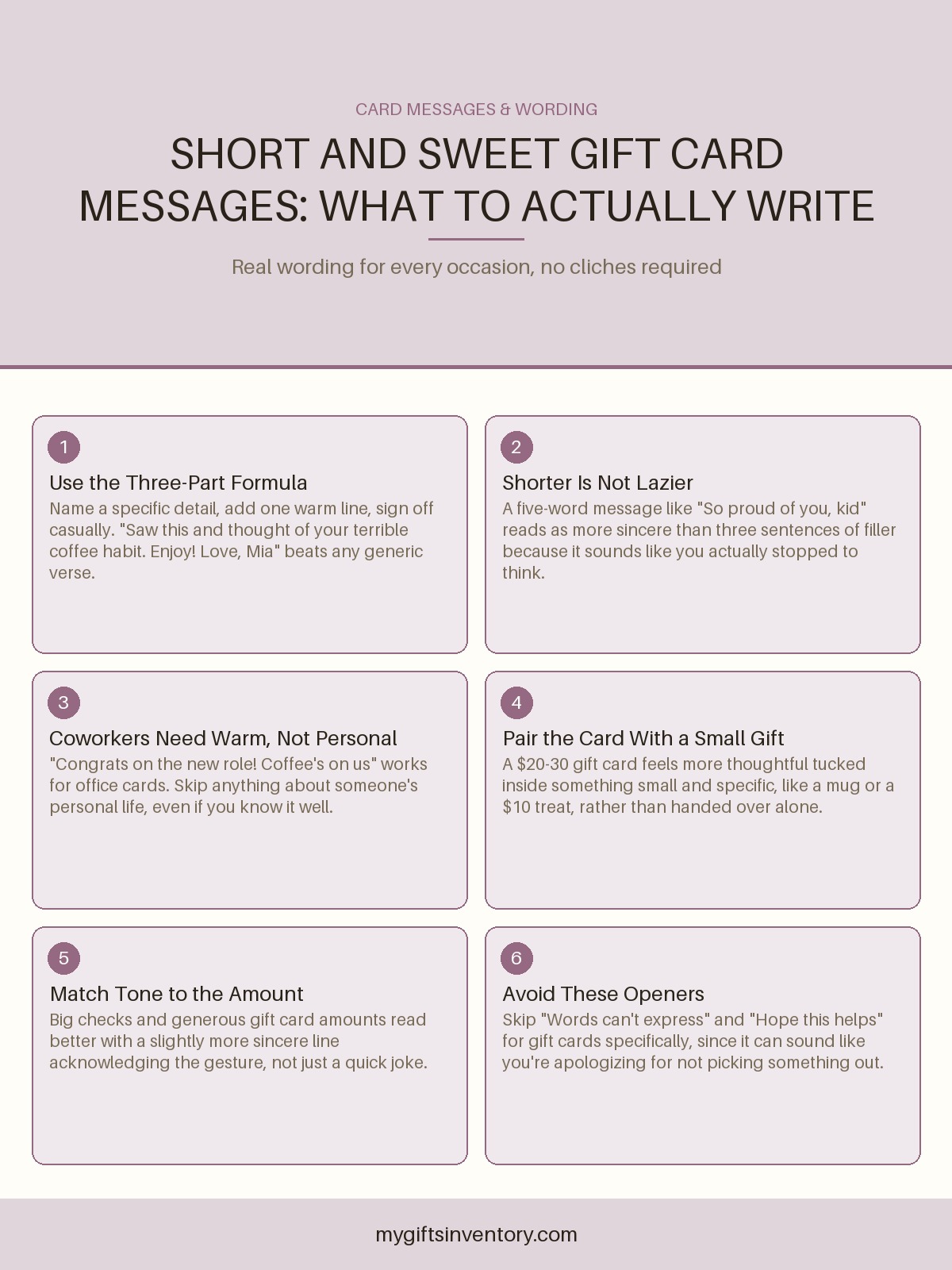
Tags are often tiny, and sometimes you're wrapping fifteen gifts at once and don't have the bandwidth for a personal line on each one. That's fine. These all work as-is:
- "To [Name], Love, [Your name]"
- "For you! Enjoy"
- "Happy Birthday! Love always, [Name]"
- "With love, [Name]"
- "Merry Christmas! Xo, [Name]"
None of these will read as lazy. A gift tag's job is identification and warmth, not depth. Save the longer, more emotional message for a card if you're including one, and let the tag stay simple.
When the Tag Is the Only Message You're Sending
Sometimes there's no card at all and the tag is genuinely the whole message, especially with a small gift, a hostess gift, or something dropped off quickly. In that case, give yourself one extra sentence of breathing room. Instead of just "Happy Birthday," try "Happy Birthday! Thinking of you today and hope it's a great one." It's still short, but it doesn't feel like an afterthought scribbled on the way out the door.
Gift Cards Need a Little Extra
A gift card tucked into an envelope with nothing but a name on it can feel a little cold, mostly because there's no wrapping or object to soften it. Add one line that either names what it's for or gives a small nudge: "For that trip you keep talking about" or "Treat yourself, you've earned it." If you want to make sure the recipient actually knows how to use or check what's loaded on the card, it can help to mention the brand directly on the tag itself, and pages like our Amazon gift card balance guide or Target gift card balance guide are worth passing along separately if the person ever needs to check what's left on it.
Group Gifts and Multiple Givers
When several people chip in on one gift, the tag needs to work for everyone involved, not just whoever grabbed the pen. Keep the message general enough that any of the contributors would agree with it, and list every name that pitched in, even if it makes the tag crowded. "Happy Retirement, [Name]! From the whole team" followed by names, or just "Love, the Smith Family" if it's simpler to sign as a unit, both avoid the awkwardness of someone feeling left off a gift they paid for.
What Not to Write on a Gift Tag
A few things reliably backfire:
- Anything about price. "Hope you like it, it was on sale!" undercuts the gift even if you meant it as a joke.
- Return or exchange history. Nobody needs to know you returned it once already or debated between two options for twenty minutes.
- Inside jokes on gifts opened in a group setting, like an office party or a big family gathering, where half the room won't get it and the recipient has to explain it out loud.
- Anything that reads as an obligation. "Guess I had to get you something" might be meant playfully but often lands wrong in writing, where tone is harder to read than in person.
Practical Tips for Writing the Tag Itself
A fine-tip permanent marker or a gel pen writes more cleanly on cardstock than a ballpoint, which can skip or smear on glossy tags. If your handwriting is genuinely hard to read, print a small label instead; nobody minds a printed tag, and it's actually more useful for the recipient if they're trying to figure out who gave them what later. Attach it with the string through a small hole rather than tape whenever possible, since tape tends to tear the tag when the recipient goes to unwrap the gift.

Gift Ideas to Go With This


Want more ideas? Browse our full guide: 18 Keepsake Gifts Worth Holding Onto (2026): Personalized Picks They'll Treasure Forever
Frequently Asked Questions
What is the simplest thing I can write on a gift tag?
"To [Name], Love, [Your name]" is a complete gift tag on its own and works for almost any occasion. You don't need a personal message on the tag if you're also including a card, since the card can carry the sentiment instead.
Should I write on the gift tag if I'm also giving a card?
Yes, but keep the tag brief since the card is where the longer message belongs. A short line like "Happy Birthday!" on the tag paired with a fuller message inside the card avoids repeating yourself twice.
What do I write on a gift tag for a coworker or boss?
Keep it neutral and professional, something like "Happy Holidays, [Name]! Wishing you a great year ahead." Avoid inside jokes or anything overly personal, since office gifts are often opened in front of other people.
Is it okay to leave a gift tag blank except for the recipient's name?
Yes, a name alone is perfectly acceptable, especially for group gifts, Secret Santa exchanges, or situations where the gift is anonymous by design. If you want to add even a small touch, "Enjoy!" or "Happy Holidays" takes only a second and adds a bit of warmth without giving anything away.
What should I avoid writing on a gift tag?
Avoid mentioning the price, whether the item was exchanged or returned, or inside jokes that only make sense to you when the gift will be opened in front of others. Anything that could sound like an obligation or a backhanded comment, even if meant as a joke, tends to read differently in writing than it would out loud.
Looking for an Actual Gift Instead?
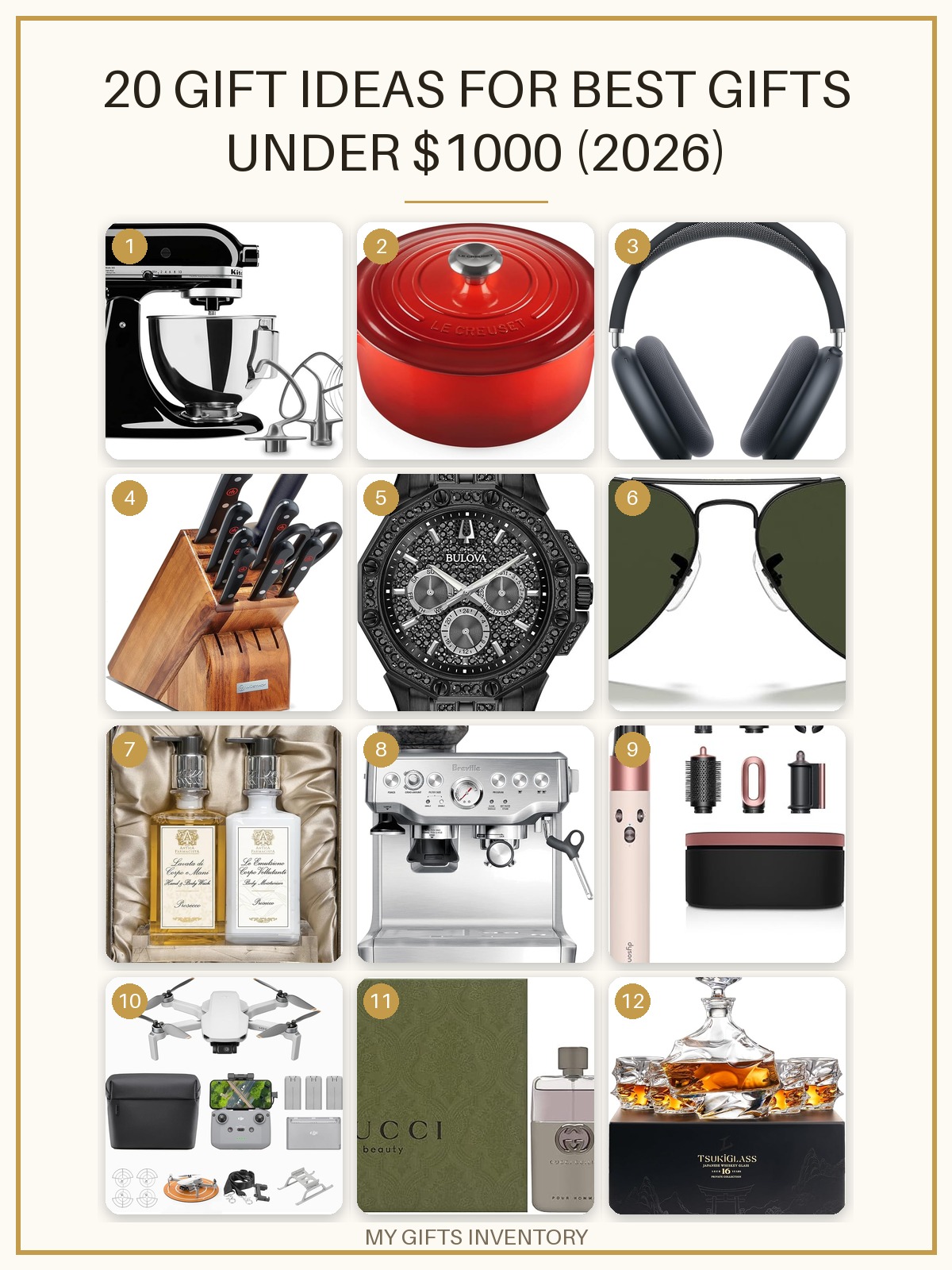
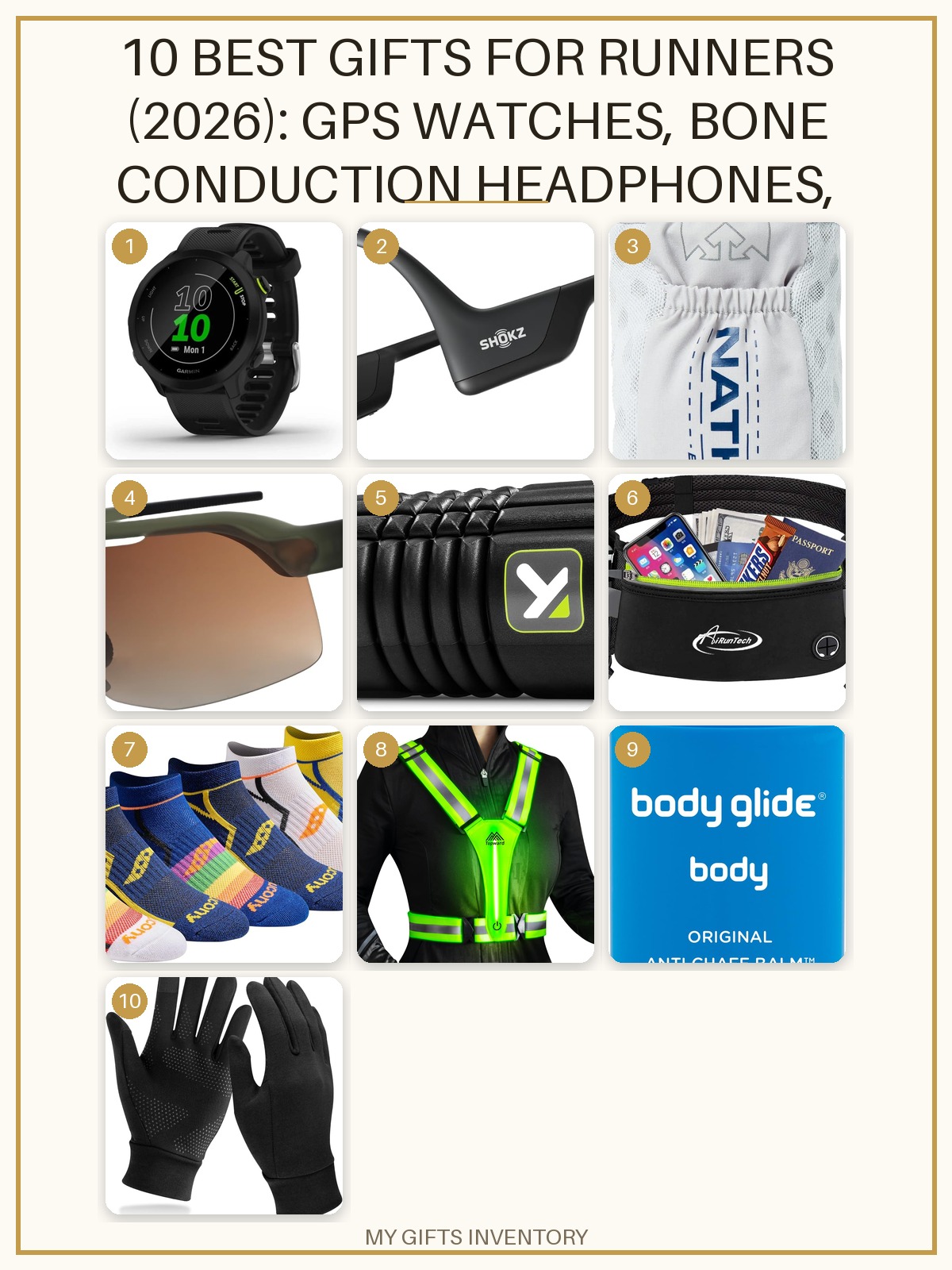
Gift Sets We Love Right Now
Every item picked, priced and linked, ready to buy.

More Gift Advice