Corporate Gift Tax Rules: What Your Business Can Deduct (and What It Can't)
The $25 rule, the $100 exception, and why the IRS treats a client lunch differently than a box of cookies. Here's what you can actually write off on corporate gifts in 2026.
As an Amazon Associate, My Gifts Inventory earns from qualifying purchases. We only recommend products we'd genuinely consider buying ourselves.
Every December, someone in finance sends the same email: "Reminder, the IRS limit on client gifts is $25." And every December, a marketing manager stares at a $60 gift box and wonders whether the whole thing is now a personal expense. The good news is the rules are less scary than the reminder email makes them sound. The less good news is that there are a few specific traps that catch people who only half-remember the rule.
Here's the plain-English version of what the IRS actually allows on corporate gifts in 2026, plus the practical stuff the tax code doesn't tell you, like what to actually give a client that stays under the limit without feeling cheap.
The $25 Rule: What It Actually Says
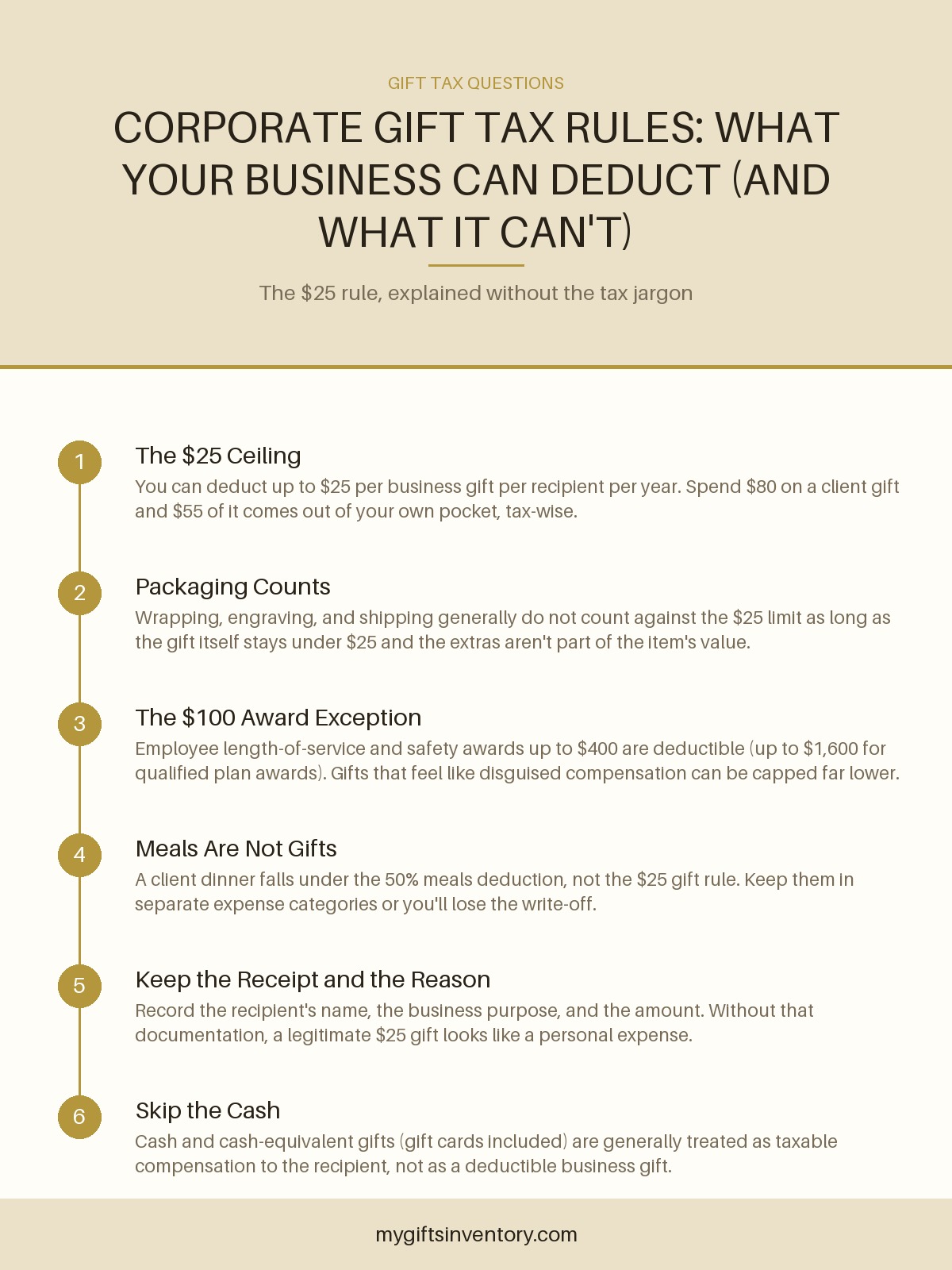
The basic rule is straightforward: a business can deduct up to $25 per recipient per year for gifts given in the course of business. That's $25 total, not $25 per occasion. If you send a $25 gift at the holidays and a $25 gift for their anniversary, you can only deduct one of them.
The part people miss is that the limit is a deduction limit, not a spending limit. You can spend $200 on a client gift if you want. You just can't deduct more than $25 of it. The rest is a normal business expense that simply isn't deductible. Plenty of companies do exactly this for their top accounts, because the relationship is worth more than the tax break.
Two other details worth knowing:
- The $25 limit applies per recipient, per year, and it's the giver's limit. If three people from your company each send the same client a gift, the IRS treats it as $75 total to that person, not three separate $25 gifts.
- "Incidental costs" like gift wrapping, engraving, packaging, and shipping generally do not count against the $25 limit, as long as they aren't so elaborate that they become part of the gift's value. A $20 item in a $4 gift box still works. A $15 item in a $40 custom engraved wooden crate starts to look like a $55 gift.
What Counts as a Gift (and What Doesn't)
This is where most of the confusion lives, because the tax code treats "gift" as a narrower category than you'd expect.
Things that are treated as gifts
A bottle of wine for a client, a holiday ham, a branded notebook with a nice pen, a box of chocolates for a vendor, a $30 plant sent after a big deal closes. These all fall under the $25 rule.
Things that are not gifts, tax-wise
Meals. A client lunch or dinner is subject to the meals deduction (generally 50% of the cost), not the $25 gift rule. If you bundle a $60 dinner into your "client gifts" spreadsheet, you're likely either losing half a deduction you could have taken or creating a documentation problem. Keep them separate.
Promotional items. A branded coffee mug or t-shirt with your logo on it is generally treated as advertising or promotional expense, not a gift, as long as it's a low-cost item distributed widely. The classic example is the $4 promotional pen, but broader promotional spending has its own deduction rules.
Employee awards. Length-of-service and safety achievement awards have a higher special limit: up to $400 per employee for awards under a qualified plan (and up to $1,600 total for length-of-service awards under such a plan). The rules get technical fast, so if you're handing out meaningful awards, worth a conversation with an accountant.
Cash and gift cards. This is the one that catches people. Cash and cash equivalents, including most gift cards, are generally treated as taxable compensation to the recipient rather than a deductible business gift. If your team's holiday "gift" is a $50 Amazon card to every client, that's a different accounting situation than a $50 box of chocolates, and it's more complicated than the gifts page usually says.
The Documentation You Actually Need
The IRS is not the issue if you can answer three questions about any gift: who received it, why you gave it, and how much it cost. That's the whole documentation requirement, but almost nobody gets it right, because gift receipts tend to disappear into a folder with a bunch of other receipts.
What a clean record looks like:
- The recipient's name and company
- The business relationship (e.g. "Q4 renewal client," "referral source")
- The date given
- The amount, with the gift, packaging, and shipping broken out if the packaging is unusual
- A receipt or invoice
If you're sending corporate gifts at any real volume, build a simple running log. It takes ten minutes in a shared spreadsheet and saves hours of archaeological receipt-hunting in April. A small business owner we know keeps a tab in the same file as her invoices, one row per gift, and it's the single change that made her accountant stop sighing.
Practical Ways to Stay Under the Limit
Twenty-five dollars goes further than most people assume, especially if you spend it on something with real craft rather than something with real branding. A few categories that work well and stay kind to the budget:
Food and drink with a story. A nice box of drinking chocolate, a small-batch olive oil, a good tin of tea, or a sampler of something that matches the recipient's known taste. These feel generous because they're specific, not because they're expensive. If you're choosing for clients around the holidays, our guide to the best hot chocolate and cocoa gifts has some genuinely nice picks in the low-to-mid-twenties, and a good box of cocoa reads far above its price tag. Similarly, if you're gifting a client who hosts, a thoughtful cheese board accessory tends to land better than a branded mug, and our charcuterie and cheese board gift guide has picks that range from affordable to splurge, so you can match the number to the relationship.
Experiential gifts small enough to qualify. A coffee shop gift card for a tenner, a $20 donation in their name, or a small streaming credit all sit comfortably under the limit. Just remember the gift-card classification issue if you're deducting it.
Something for the desk that isn't branded. A well-made pen, a small plant, a nice notebook. These are deductible gifts in the normal sense (unlike promotional items), and they don't shout "we bought these in bulk."
If you're gifting a whole team or department
The $25 limit is per recipient, so a gift to a department isn't one deduction; it's a deduction per person. If you're sending a $200 basket to twelve people on a client team, the IRS sees twelve gifts, and you can deduct the first $25 of each, or $300 total. Most people have never done this math. For larger-scale gifting, our guide to coworker gifts between $25 and $50 is built for exactly this kind of per-head budget and has some strong ideas that scale well.
The Recipient-Side Tax Issue (Don't Skip This Part)
The $25 rule is about the giver's deduction. But there's a second question clients sometimes ask: do I owe tax on this? In most cases, no. Small business gifts are generally not taxable income to the recipient if they're truly gifts. But cash, gift cards, and anything that looks like compensation can change that picture, especially if the recipient is an employee of the giver's company rather than an outside client. If you're shipping a $200 item to an employee, you may be creating a taxable fringe benefit, and it's worth checking with payroll before you click send.
For outside clients, a $25 box of chocolates is almost never a taxable event on their side. A $250 watch might be. When in doubt, ask before you give, not after.
Year-End Gifting Without the December Scramble
The most common corporate gifting failure isn't the deduction. It's the timing. Everyone tries to source 200 client gifts in the second week of December, the good options are sold out, and the shipping is a nightmare. Start in early November, decide on the budget per person first (it's easier to pick a gift for a number than to reverse-engineer a number from a gift), and set a firm order-by date two weeks before you actually need them out the door.
And if your plan involves a gift card for anyone, check the recipient's preferred store before you buy it, because the wrong brand is worse than no gift. If it's a retail or restaurant card, knowing how to check the balance is smart anyway: our guide to checking a Trader Joe's gift card balance walks through the process, and the same steps apply to most brands.
A Quick Word on the $10,000 Question
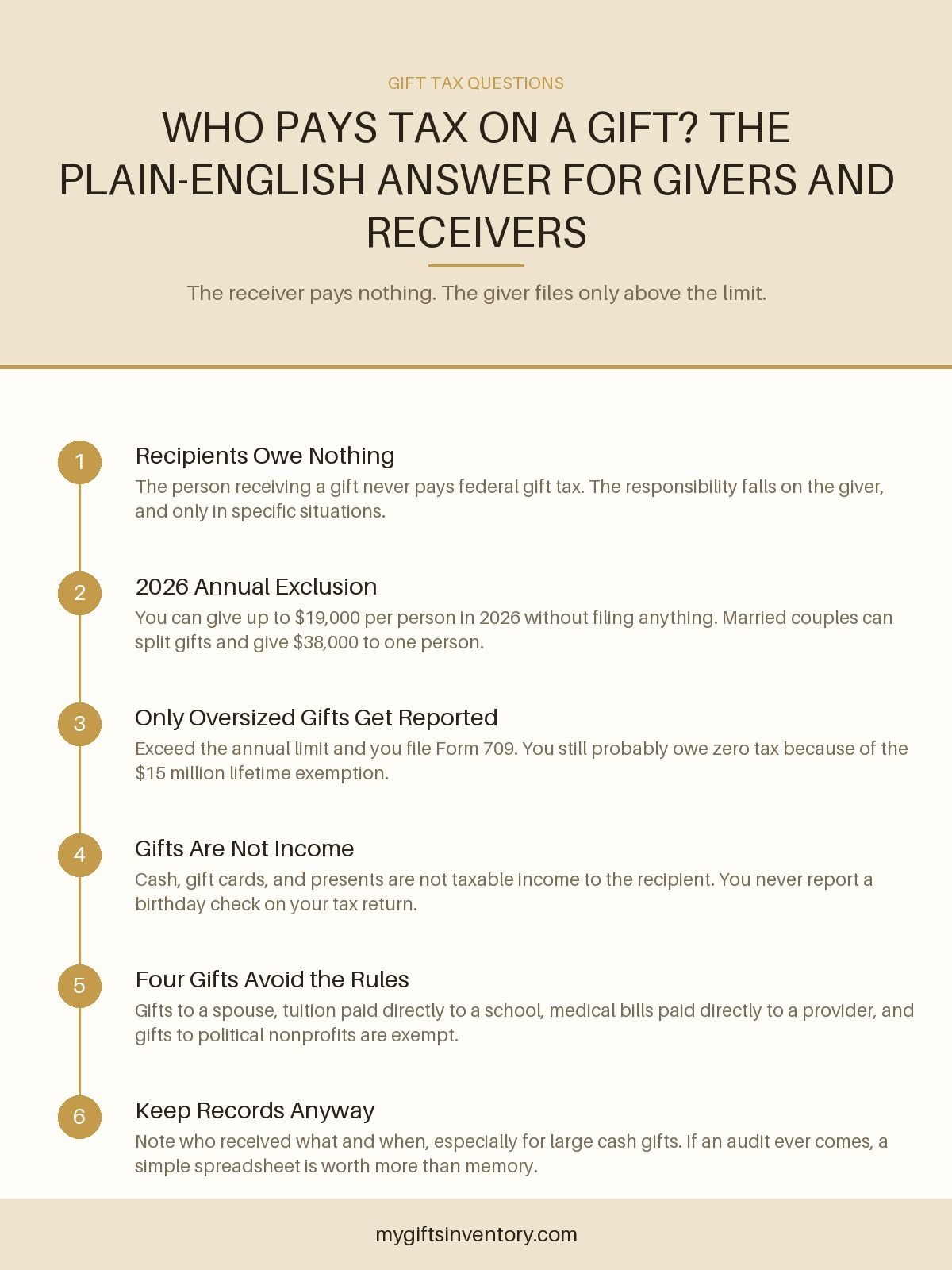
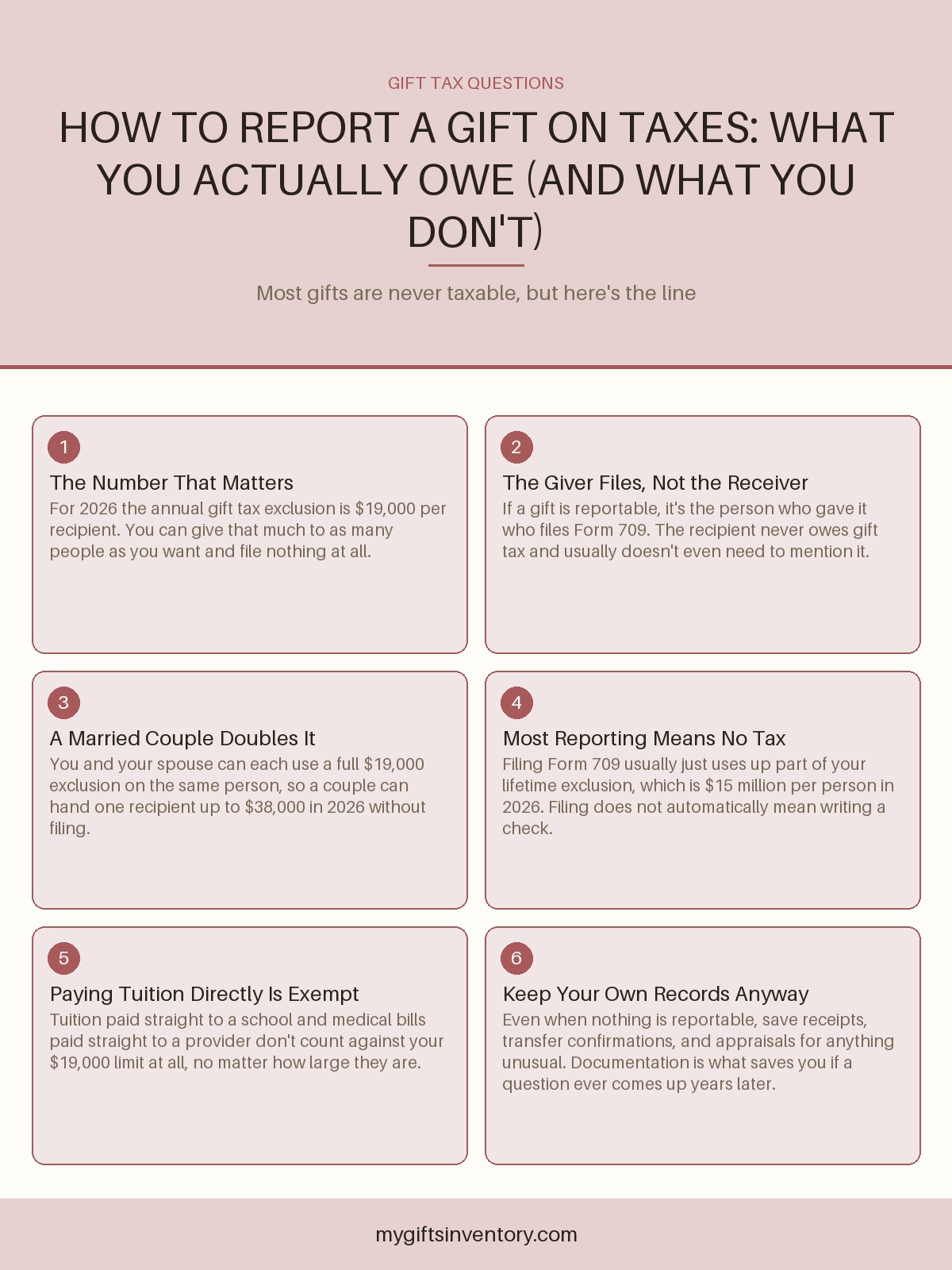
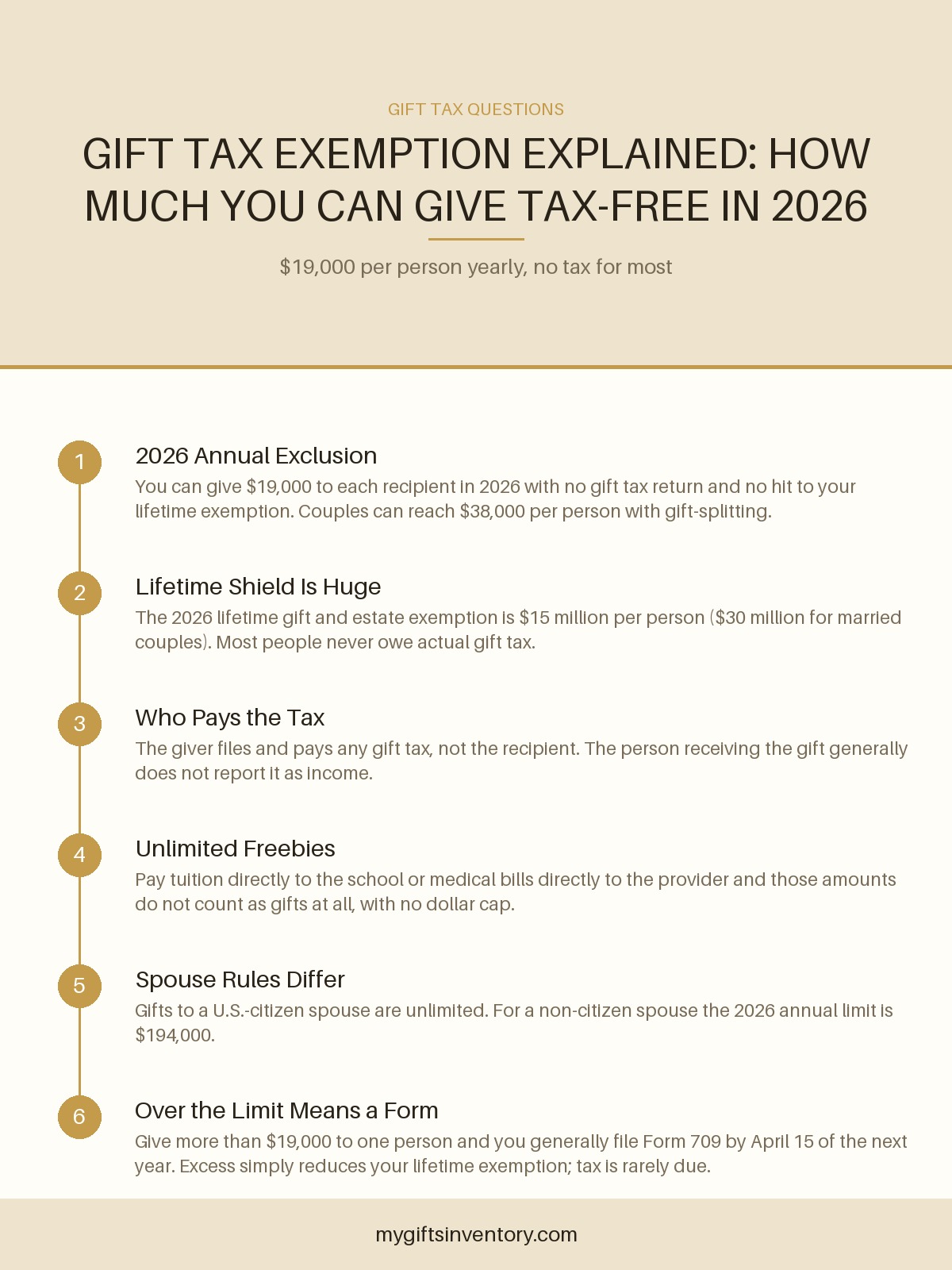
For individuals (not businesses), the IRS requires reporting gifts over $19,000 per recipient in 2026 on Form 709, but that limit is for personal gifts and does not apply to business gifts between a company and a client. If you're a solo proprietor sending a personal-relationship gift to a colleague, though, the line can blur, and that's the point where a five-minute conversation with a tax professional saves a headache later. Business gifts under $25 are not the thing that will get you audited; sloppy records are.
Gift Ideas to Go With This


Want more ideas? Browse our full guide: 21 Corporate & Employee Gift Ideas Under $50 (2026) That Won't Feel Like an Obligation
Frequently Asked Questions
How much can I deduct for a business gift in 2026?
You can deduct up to $25 per recipient per year for business gifts. The limit includes the cost of the gift itself, though packaging, engraving, and shipping usually don't count against it. Amounts over $25 are not deductible, even if they're a legitimate business expense.
Is a gift card deductible as a business gift?
Generally no. Cash and cash-equivalent items, including most gift cards, are usually treated as taxable compensation to the recipient rather than a deductible business gift. A $25 box of chocolates is deductible under the gift rule; a $25 gift card to the same person is a different, more complicated situation.
Do gift wrapping and shipping count toward the $25 limit?
Usually not. Incidental costs like wrapping, packaging, engraving, and shipping are generally excluded from the $25 limit, provided they aren't so elaborate that they effectively become part of the gift's value. Keep them reasonable and separate on the receipt.
Can I deduct a client dinner under the gift rule?
No. Client meals are subject to the meals deduction rules, not the business gift limit, and are generally 50% deductible. Keep meals in the meals category on your books and gifts in the gift category, and you'll avoid the most common deduction error.
Does the $25 limit apply per gift or per person?
Per person, per year. If you give one client three $20 gifts across the year, you can still only deduct $25 total for that recipient. The limit is also cumulative across anyone at your company giving to that same person.
Looking for an Actual Gift Instead?


Gift Sets We Love Right Now
Every item picked, priced and linked, ready to buy.


More Gift Advice