Who Pays Tax on a Gift? The Plain-English Answer for Givers and Receivers
The recipient almost never owes tax on a gift, but the giver sometimes has to file a form. Here is when the IRS actually cares, what the 2026 limits are, and the scenarios that trip people up.
As an Amazon Associate, My Gifts Inventory earns from qualifying purchases. We only recommend products we'd genuinely consider buying ourselves.
Someone hands you a check for $20,000 at your wedding, or you are about to write one to your kid for a house down payment, and a thought creeps in: does the government want a piece of this? It is one of those questions people search at 11pm with a calculator open, half expecting a bad answer. The good news is that the answer is far less scary than most people assume, and it mostly hinges on who is giving, not who is receiving.
The Short Answer: The Recipient Is Almost Never the One Who Pays
If you are the person receiving the gift, you can breathe. In the United States, the federal gift tax is paid by the giver, not the receiver. Receiving a gift is not a taxable event for you. A birthday check, a used car from your parents, a $10,000 cash gift toward a down payment, none of it goes on your income tax return.
This surprises people because it runs against the logic of income and sales tax, where money changing hands usually triggers something. Gift tax works differently. It exists as a backstop against wealthy people transferring fortunes to heirs tax-free while they are still alive, not as a way to tax ordinary generosity. If your aunt gives you $500 for graduation, the IRS does not know and does not care.
That means when the recipient genuinely needs to worry is close to never. The only real tax questions in gifting land sit with the giver, and even then, most givers never owe a dime.
When the Giver Has to File: The Annual Exclusion Explained
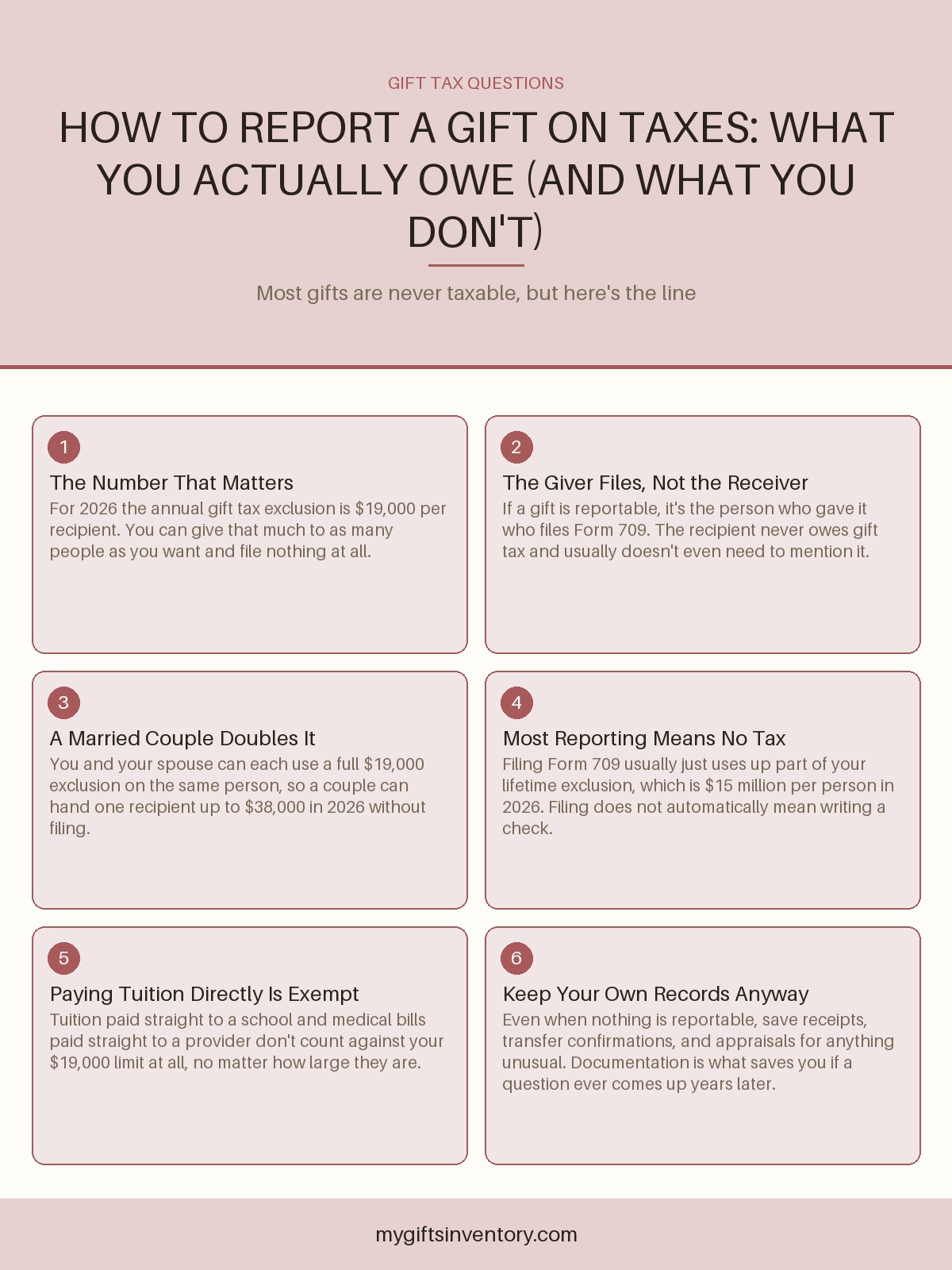
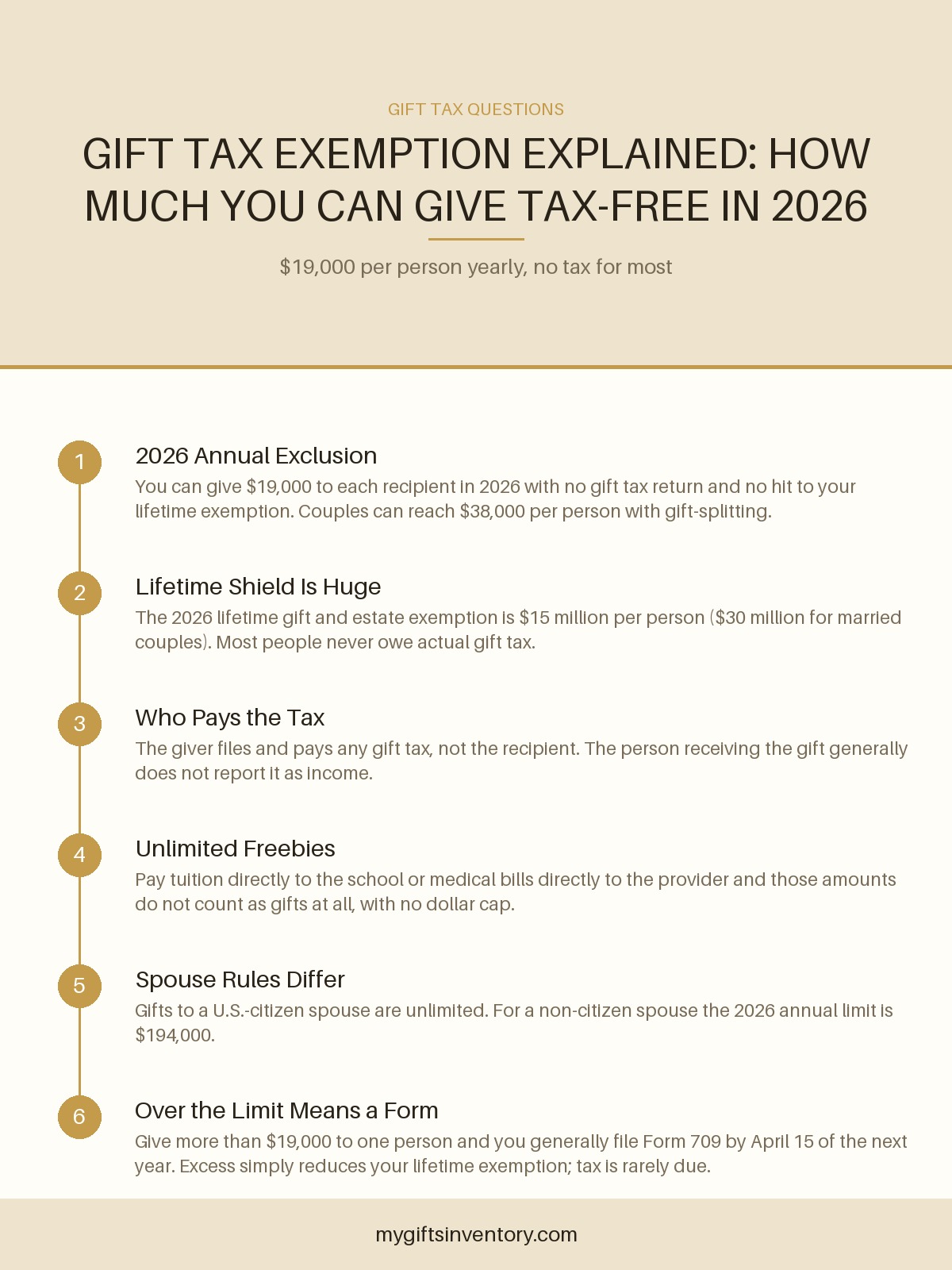
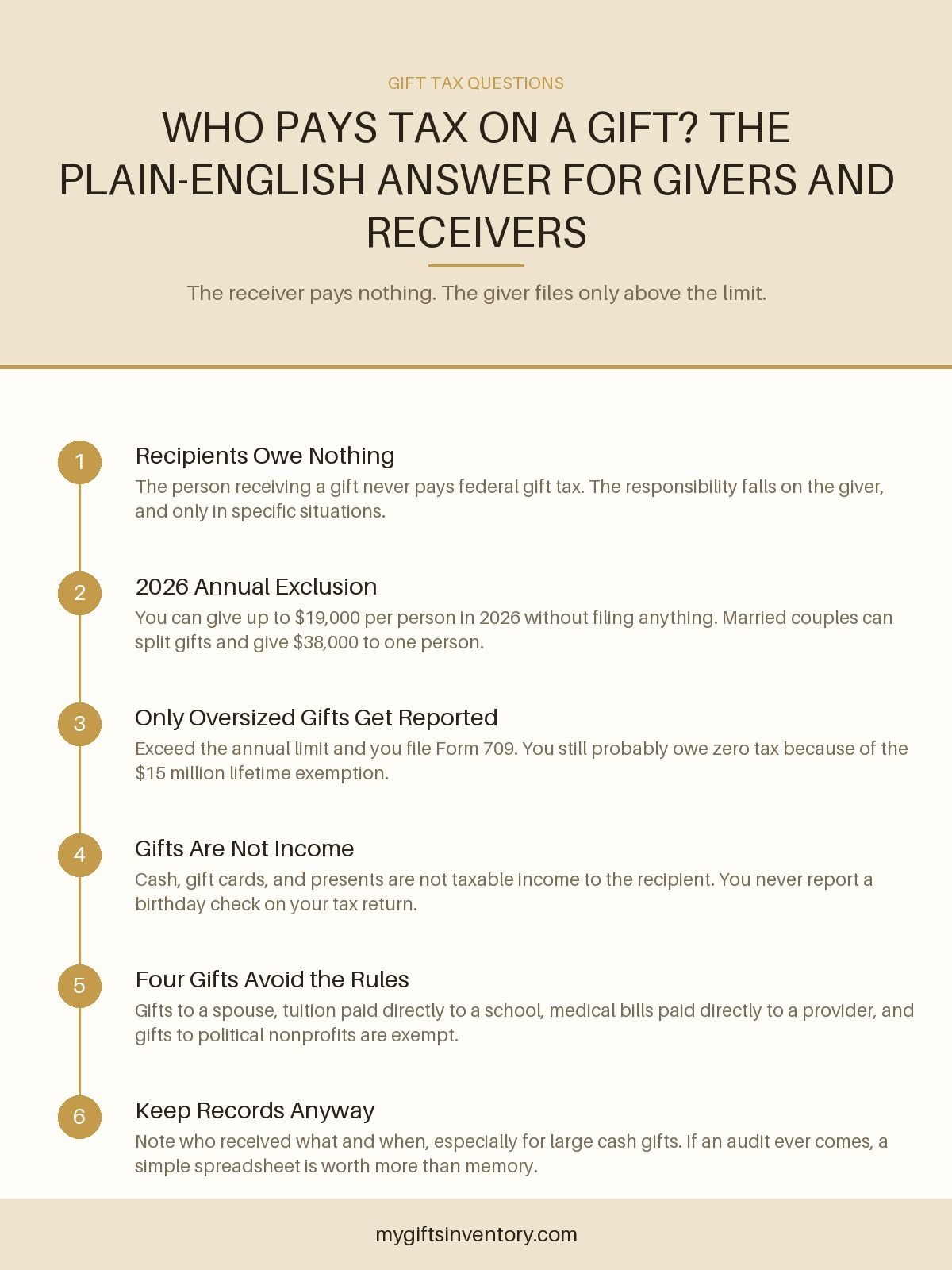
The giver enters the picture only when a gift to any one person crosses a threshold called the annual exclusion. For 2026, that limit is $19,000 per recipient. So you can give your daughter $19,000 this year, give your son $19,000, give your neighbor $19,000, and file nothing. The limit resets every January, so you can do it again next year without paperwork.
Married couples get a bonus here. If you and your spouse both give, you can combine your exclusions and hand one person up to $38,000 in a single year, still with no filing required. This "gift splitting" is one of the most useful and least known tools in family money planning, and it is why a lot of wedding gifts and house down payments arrive as two checks rather than one.
What Actually Counts as a Gift
Anything of value you transfer without receiving something roughly equal in return. Cash and checks are the obvious ones. So are gift cards, a car, stock, real estate, and forgiving a loan someone owes you. If you sell your nephew a car worth $20,000 for $8,000, the $12,000 difference is a gift. This catches people off guard more than outright cash ever does.
When You Do Exceed the Limit
Cross the $19,000 line to one person, and you need to file Form 709, the gift tax return. Here is the part that calms everyone down: filing the form does not mean you owe tax. It is a reporting step. The vast majority of people who file Form 709 owe nothing because of the lifetime exemption, which as of 2026 sits around $15 million per person. Nearly everyone can give away millions over a lifetime before a single dollar of gift tax is due.
The form exists so the IRS can track those big transfers and subtract them from that lifetime total. Annoying, sure. But it is a clerical chore, not a bill.
Four Gifts That Skip the Rules Entirely
Even above the annual limit, certain gifts are exempt from gift tax reporting entirely. These are worth knowing because they let families transfer serious money without touching the lifetime exemption:
- Gifts to a spouse. Unlimited, as long as the spouse is a US citizen.
- Tuition paid directly to a school. You can pay a grandchild's full college tuition and it does not count against your exclusion, as long as the check goes to the institution, not the student.
- Medical bills paid directly to a provider. Same logic. Pay the hospital directly and it is exempt.
- Gifts to political organizations and certain nonprofits. Donations to qualifying charities come with their own deduction rules rather than gift tax ones.
Those tuition and medical carve-outs are two of the most generous provisions in the tax code, and they are why some grandparents quietly cover four years of college without ever filing a gift tax form.
Gift Cards, Cash, and the Myth of the Taxable Present
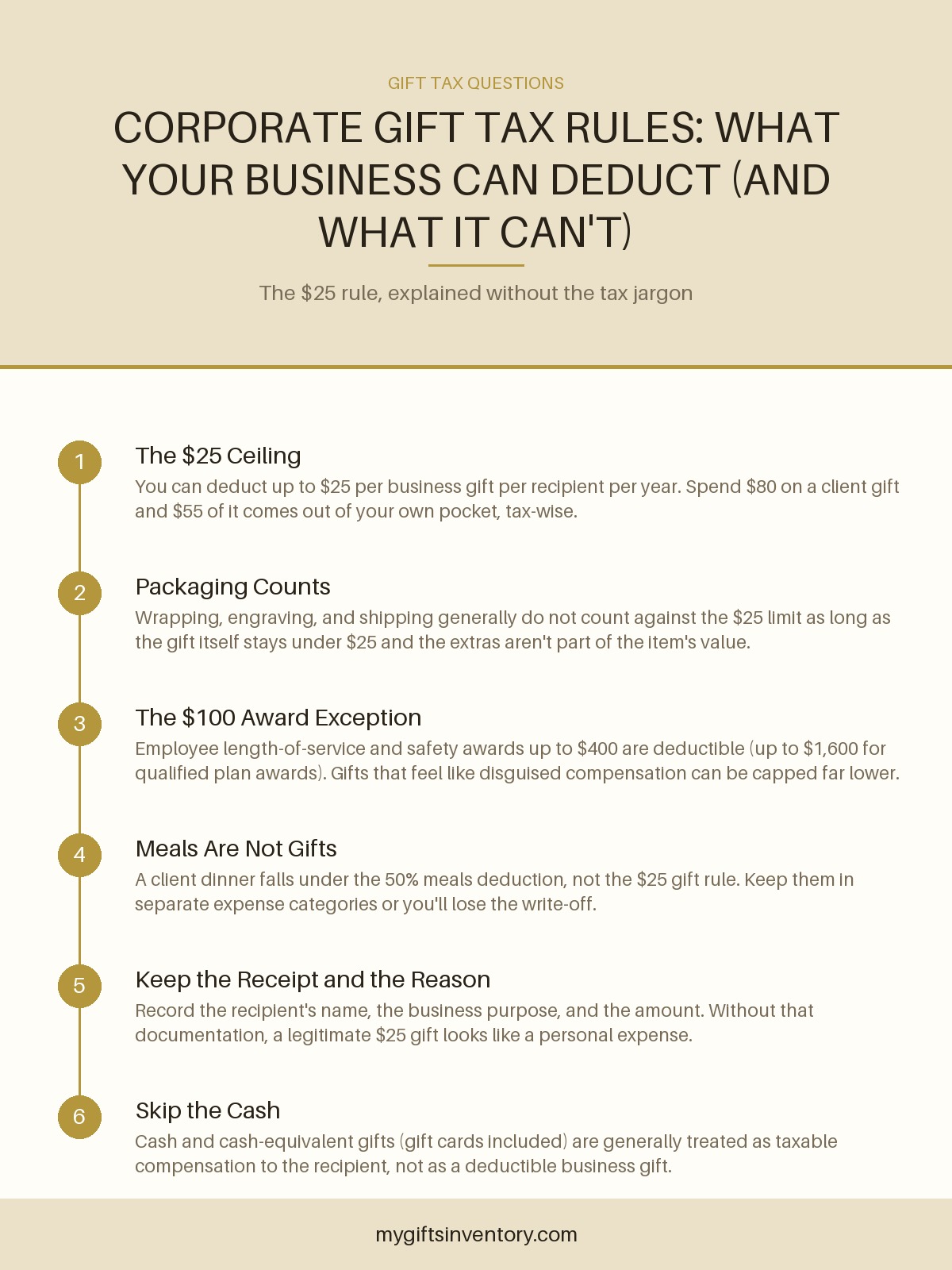
Gift cards get their own low hum of anxiety. Rest assured, a gift card is treated exactly like cash. If you give someone a $50 gift card, you have given a $50 gift. No tax to them, no filing for you. If an employer hands you a gift card as a work reward, that is different, because it is compensation and shows up in your income. The line is the relationship, not the plastic.
The practical wrinkle with gift cards is rarely tax. It is forgetting to check the balance before you spend it, or losing track of what is left after a few purchases. Our guide to checking your Netflix gift card balance walks through the same logic that applies to most retailer cards, and it is a good habit to build before a gift card quietly expires. If you are the one buying, a card to a place the person already loves beats a card to a place you hope they will love, which is why we keep a running list of specific retailer card programs like Michaels gift cards and where to buy them.
Weddings, Down Payments, and Big Family Gifts
Large family gifts are where the annual exclusion and gift splitting earn their keep, so a few scenarios are worth spelling out.
The Wedding Gift Over $19,000
Cousin money pooling is common for a big wedding gift. If a group of ten relatives each chips in $2,000 for a $20,000 gift, the gift came from ten people, so no single giver exceeded the exclusion. If one generous uncle writes the whole $20,000 check himself, he files Form 709 and almost certainly owes nothing. One person, one giver, one form. The recipient still owes nothing either way.
The House Down Payment
Parents helping a child buy a home face the same math, and gift splitting makes it manageable. A married couple can hand one child $38,000 in 2026 with zero filing. Go above that, file the form, still likely owe nothing. If you are planning a gift this large, it is worth talking to a tax professional first, mostly so no one is surprised at filing time. If the occasion itself is looming, our engagement gifts guide covers the spectrum from a simple card to the kind of keepsake that pairs with a larger financial gift.
Funding a Child's Education
If the goal is tuition, pay the school directly and skip the annual limit entirely. If the goal is a general fund the student controls, it counts against the exclusion. The distinction is entirely about who receives the check, so make it deliberately.
What the Recipient Should Do (Usually Nothing)
Receiving a gift requires no reporting, no form, no line on a tax return. A few narrow cases are worth flagging. If you are on Medicare or receive certain income-based benefits, a large gift can affect eligibility for programs with asset tests, which is a benefits question, not a tax one, and worth a call to whoever administers your coverage. If a gift is actually a disguised payment for work you did, it is income and should be reported as such, but that is not really a gift.
Otherwise, the best thing a recipient can do is keep a simple record of large gifts, mostly because the giver may need the details later at filing time. A short note in a spreadsheet with the date, the giver, and the amount is plenty.
State Rules and the One Percent of Cases
A handful of states have their own gift or inheritance taxes, and their thresholds are far lower than the federal ones. If you live in or are giving to someone in one of those states, it is worth a quick check, because the rules can differ from the federal picture. For everyone else, the federal framework is the whole story, and it is a generous one.
For the small number of people who do cross the line, the main thing to remember is that a gift tax filing is not a penalty. It is a report, and it exists in a corner of the tax code most people will never see a bill from.
Gift Ideas to Go With This


Want more ideas? Browse our full guide: 21 Corporate & Employee Gift Ideas Under $50 (2026) That Won't Feel Like an Obligation
Frequently Asked Questions
Does the person receiving a gift have to pay tax on it?
No. The recipient of a gift never pays federal gift tax, and gifts are not considered taxable income. You do not report a birthday check, a cash gift, or a present on your tax return. The obligation, when it exists at all, belongs to the giver.
How much can you give as a gift before it has to be reported in 2026?
You can give up to $19,000 per person in 2026 without filing anything. Married couples can split gifts and give up to $38,000 to a single person. Above those amounts, the giver files Form 709, though in most cases no tax is actually owed.
Do I owe tax if I receive a $20,000 cash gift from my parents?
You do not owe anything. If your parents are married and file jointly or split the gift, they can give you $38,000 in 2026 with no filing at all. If a single parent gave the full $20,000, that parent files a gift tax form, but the recipient still owes nothing.
Is a gift card considered a gift for tax purposes?
Yes. A gift card is treated the same as cash, so it counts toward the annual exclusion for the giver and is not taxable income for the recipient. Employer-issued gift cards are different, because those count as compensation and appear in your income.
Do I need to report a gift I received on my tax return?
No. Gifts are not income, so there is no line for them on a personal return. The only real exceptions involve means-tested benefits programs or a gift that is actually disguised payment for work, neither of which is a typical personal gift.
Looking for an Actual Gift Instead?




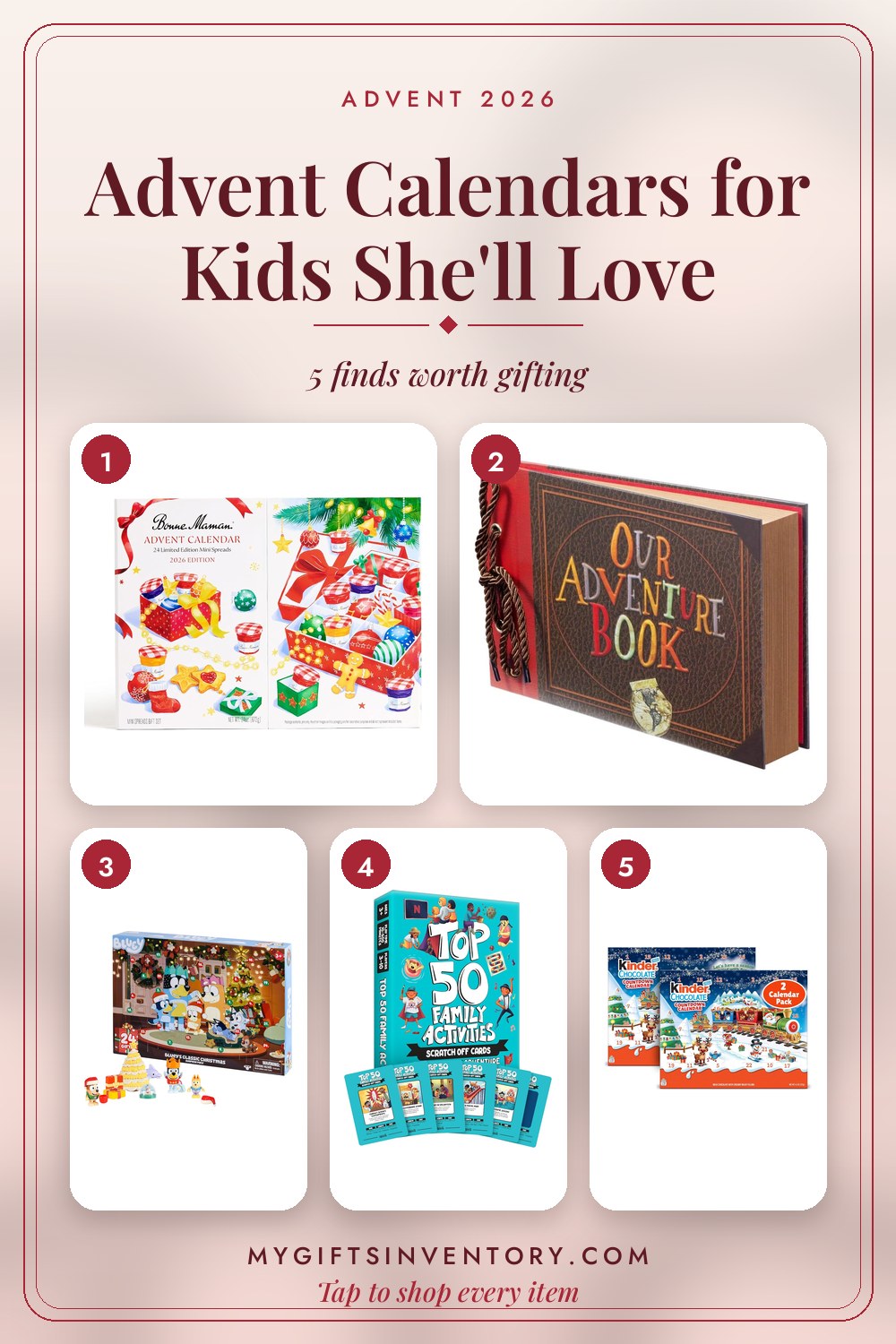
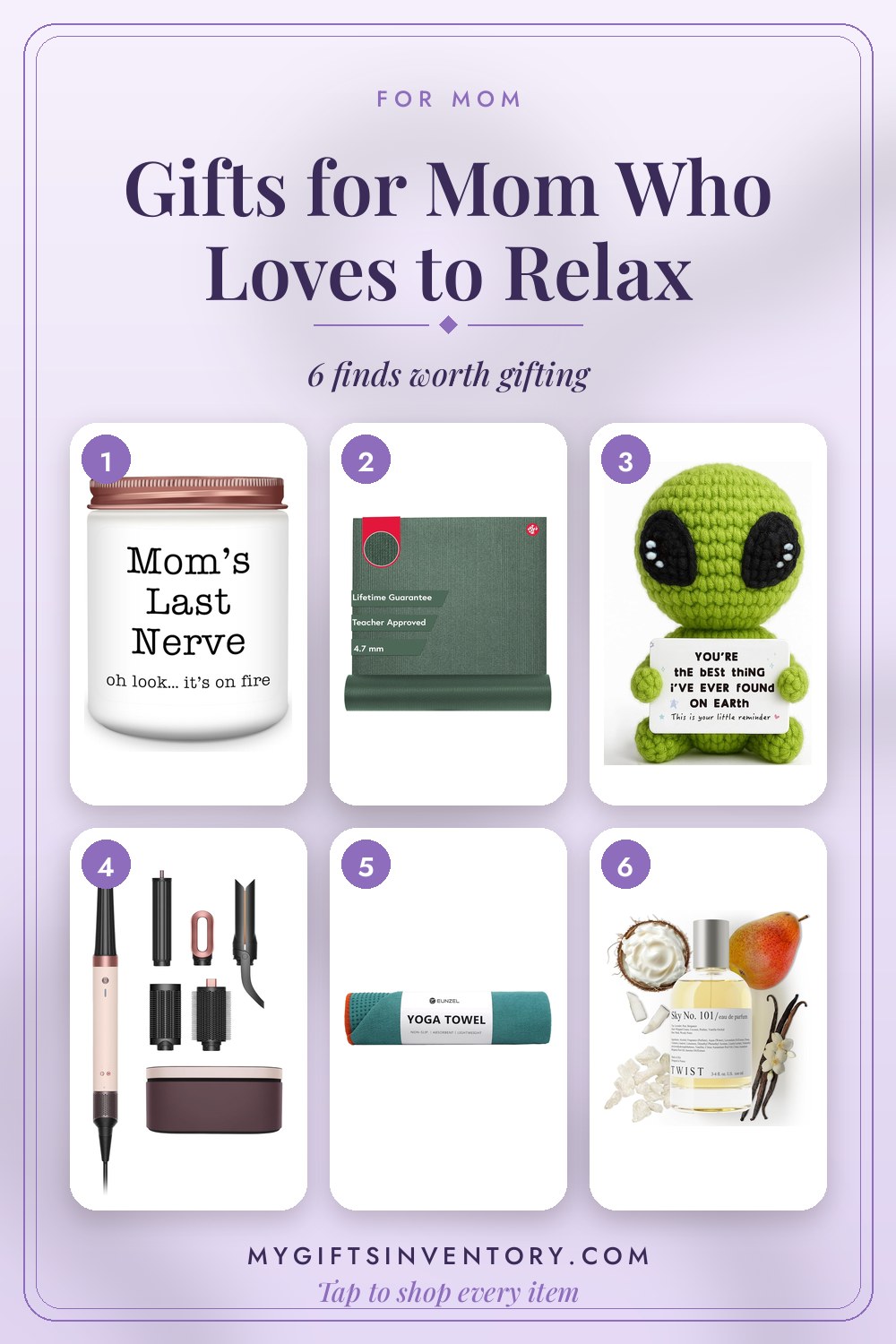
Gift Sets We Love Right Now
Every item picked, priced and linked, ready to buy.


More Gift Advice