Gift Card Message vs. Greeting Card: When You Need Both (and What to Write in Each)
A gift card isn't a cop-out, but a bare gift card with no words can feel like one. Here's when a short message on the card is enough, when you need a real greeting card to go with it, and exactly what to write in each.
As an Amazon Associate, My Gifts Inventory earns from qualifying purchases. We only recommend products we'd genuinely consider buying ourselves.
You've bought the gift card. Now you're standing there holding a small piece of plastic and a blank envelope, wondering whether you need to write something on it, buy a real card to go with it, or both. It's a surprisingly common hesitation, and the answer is more specific than "it depends": it depends on who's receiving it and what occasion brought you to the store in the first place.
The short version: a gift card message and a greeting card do different jobs. When you understand which job each one does, deciding whether you need both gets a lot easier, and so does figuring out what to actually write in each.
What each one is actually for
A gift card message is the short note written directly on the gift card carrier, the back of the card, or the insert slip. It travels with the plastic. It's small, practical, and often gets lost the moment the gift card leaves the envelope, which is exactly why it needs certain information on it.
A greeting card is the folded paper card, the one with a printed design and a handwritten note inside. It carries the sentiment, the tone, and the personal detail. It's often kept. It's also the place where you can write more than two sentences without it feeling strange.
People mix these up because they think the two things are competing. They aren't. A greeting card with no gift card message leaves you with a gift card that has no identifying information on it. A gift card message with no greeting card can feel a little bare for anything beyond a work acquaintance. When you assign each one the right job, both get easier to write.
When one is genuinely enough
Gift card message only
You can skip the separate greeting card, and just write a short note on the gift card itself, in these situations:
- A coworker or Secret Santa where a full greeting card would feel like more effort than the relationship warrants.
- A teacher gift that's already accompanied by something else, like a small token or a class group gift.
- A last-minute gift where you're handing the card over in person and a full card isn't expected.
- A gift card sent digitally where the platform prompts for a message anyway.
- Any gift card that's actually a practical gift, like a gas card, a grocery card, or a car wash card, given for a reason rather than an occasion.
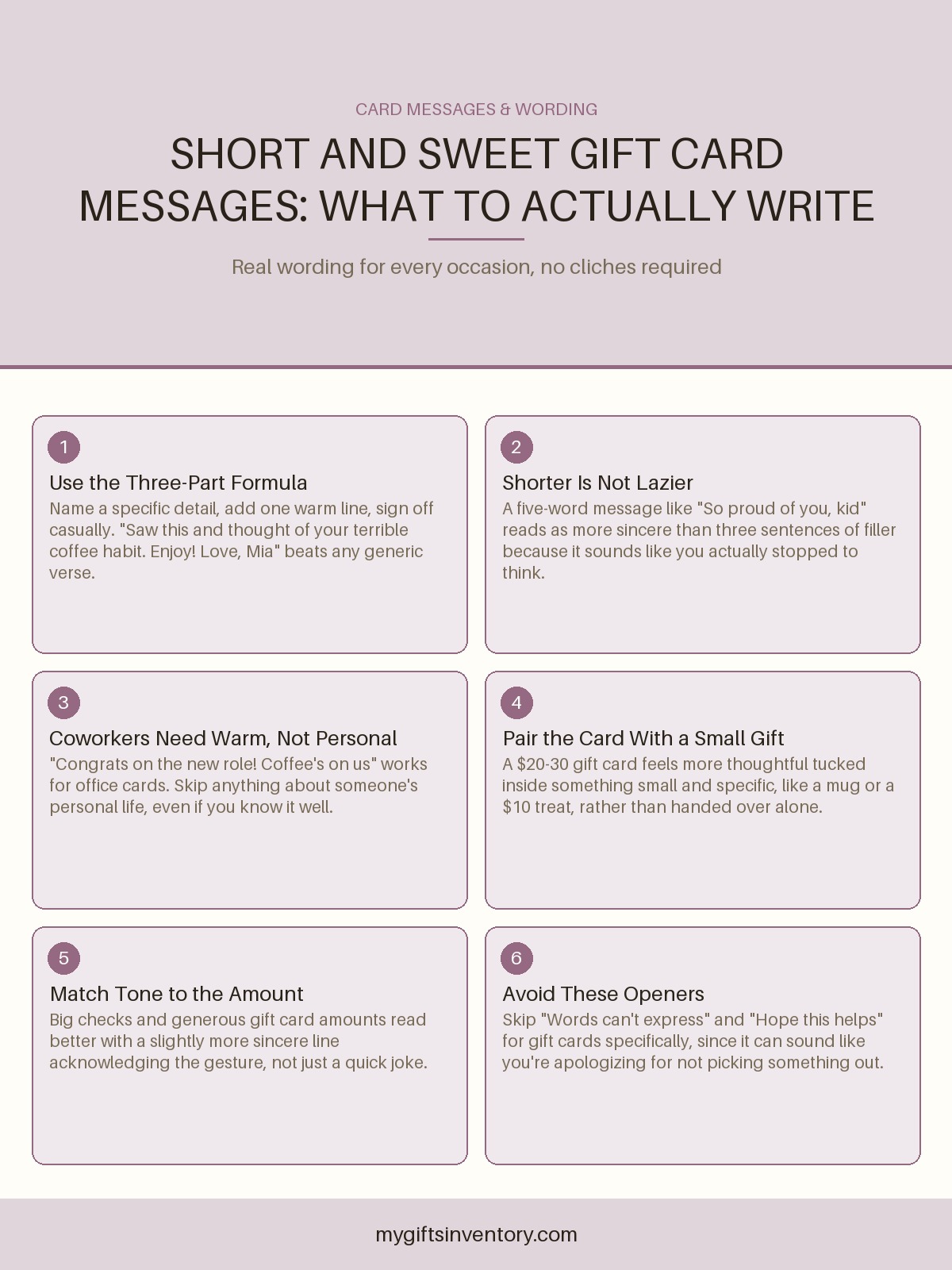
In each case, the gift card message still has to do real work: say who it's from, what it's for, and one line of warmth. Two sentences is fine. Three is plenty. If you're stuck on wording, our guide to short and sweet gift card messages walks through real examples by relationship and occasion so you're not reinventing the wheel every time.
Greeting card only
There are situations where the greeting card itself is the gift and no gift card needs to be attached at all. A sympathy card, a thank-you note, a get-well card, or a card for a milestone you're attending (graduation, retirement, new baby) doesn't need to be paired with a gift card unless you were already planning to give something. Don't force a plastic card into a situation that calls for paper.
When you really do need both
For these occasions, plan on a greeting card plus a short gift card message:
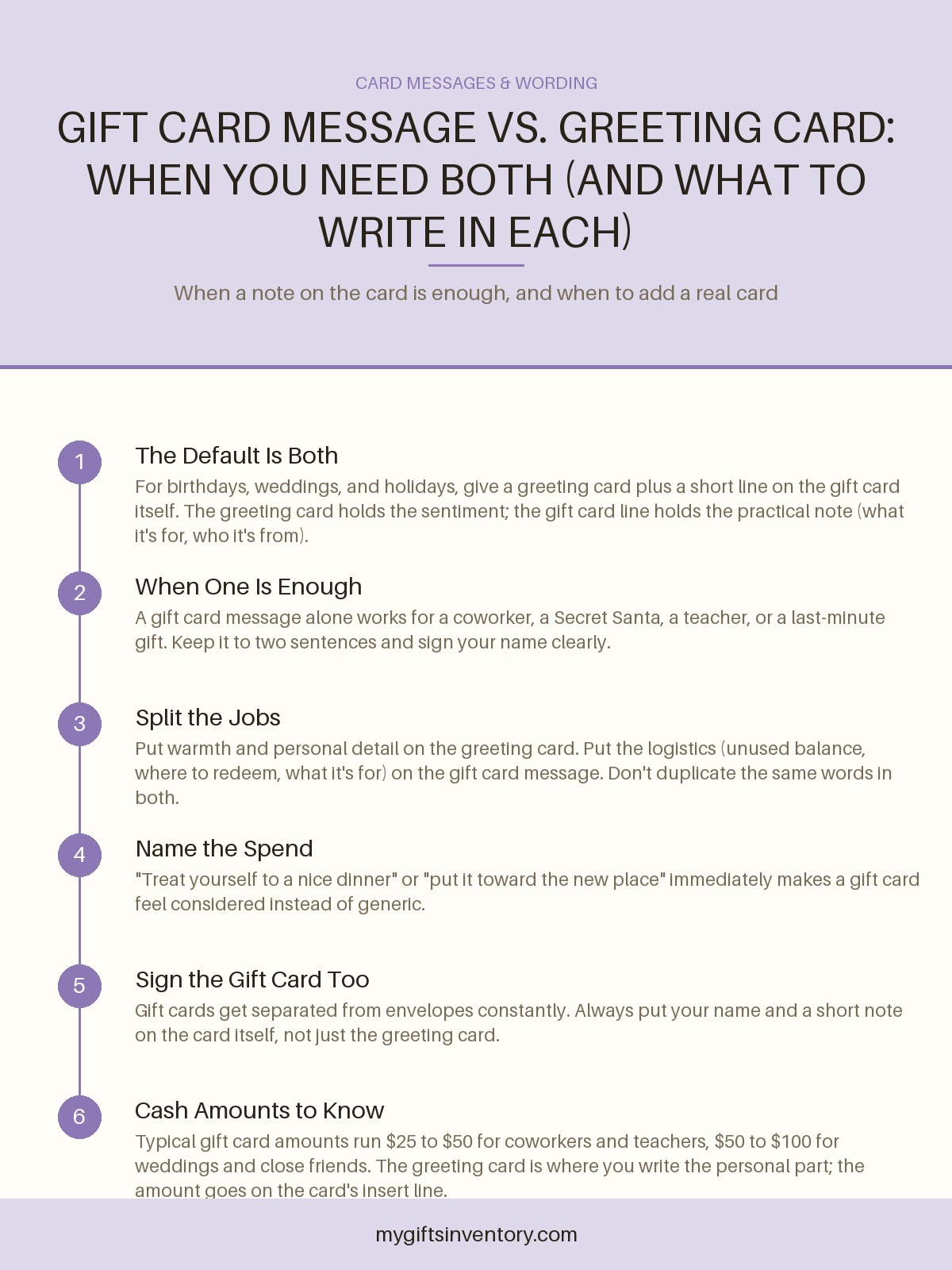
- Weddings and anniversaries. The greeting card carries the congratulations. The gift card message says what the card is intended to help with, like "for the honeymoon" or "put it toward the new place."
- Graduations. The greeting card is where you write something meaningful about the milestone. The gift card message names the purpose, like "for textbooks" or "a little something for the next chapter."
- Baby showers. The greeting card shares your excitement for them. The gift card message names what it's toward, like "for the nursery" or "a night off once the baby's here."
- Milestone birthdays like 30, 40, 50, or 21. A bare gift card feels flat for a birthday that big; a real card does the emotional work.
- Holiday gifts for close family. If you're giving a gift card under the tree or in a stocking, attach a proper card. It's the box under the tree, not just the gift card, so plan the presentation accordingly. Our roundup of holiday and Christmas gifts for her across every budget is a good place to figure out whether a gift card plus a small physical item is the better move than the gift card alone.
- Gifts for adults who "have everything." When a gift card stands in for the physical gift you couldn't choose, the greeting card does double duty: it explains the reason and it makes the swap feel intentional.
There's a nice intermediate move that works well for host and hostess gifts, teacher gifts, and neighbor gifts: pair the gift card with a small physical item, like a candle, a good hand cream, or a kitchen pick, and write a short gift card message that references both. If you're going that route for a Thanksgiving or holiday dinner, our list of Thanksgiving host and hostess gifts is full of small, pairing-friendly ideas that take a gift card from "fine" to "thoughtful."
What to write in a gift card message
The gift card message has one job: make sure the recipient knows who sent it, why, and what it's for. That's it. Keep it short. You're not writing an essay on a square of paper.
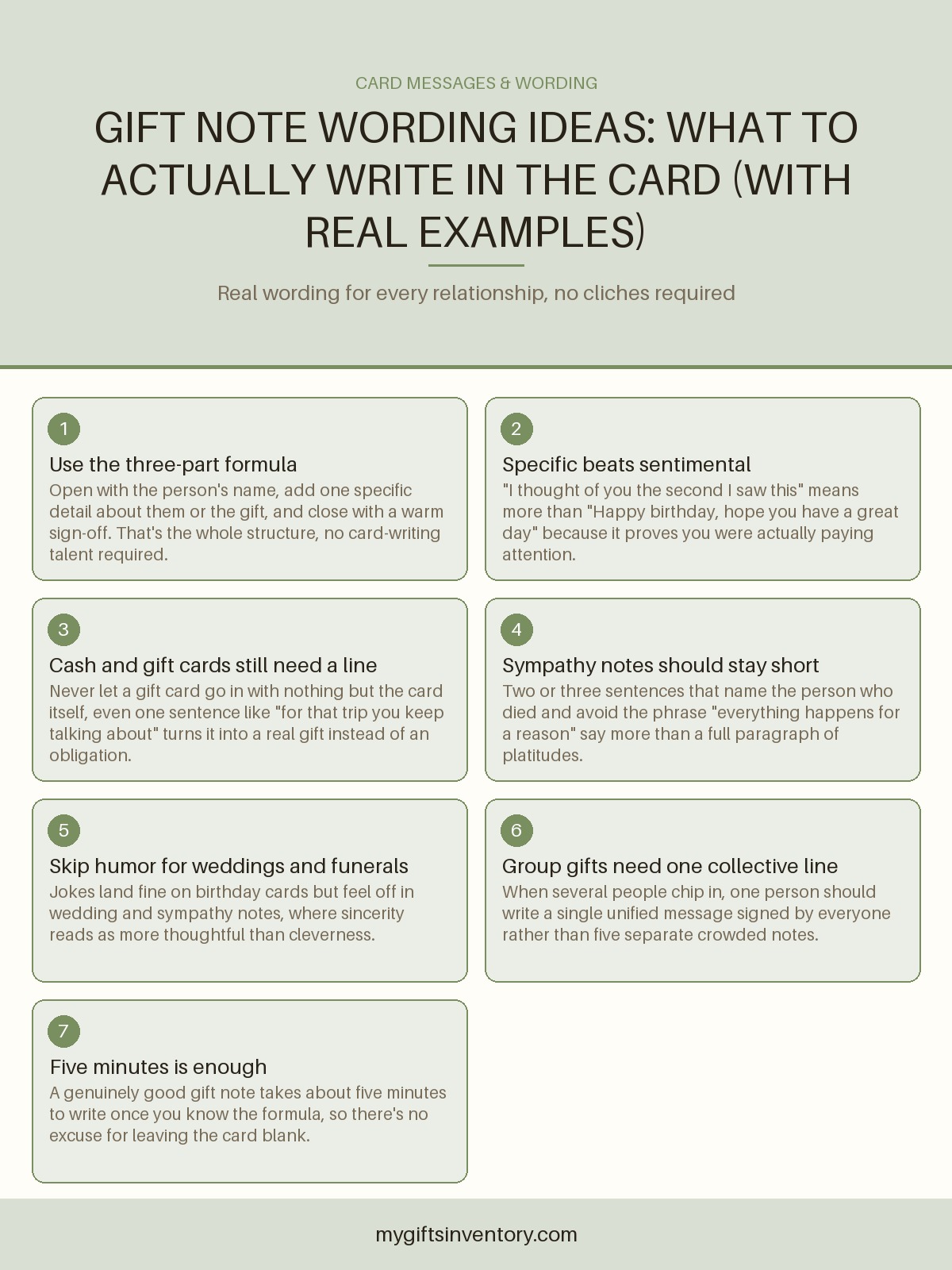
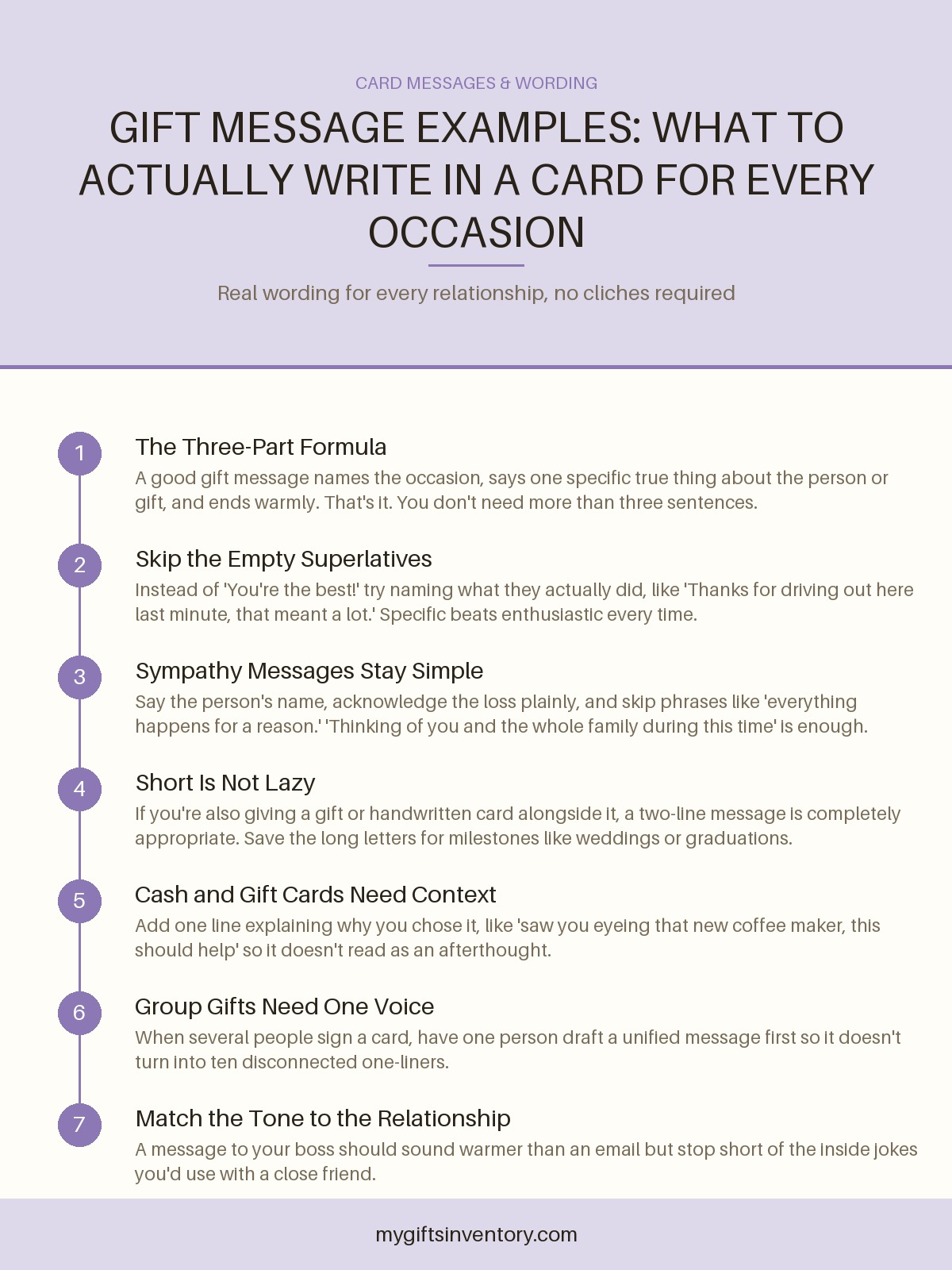
The three-part structure that always works
- Who it's from. Sign your name clearly. First and last if there's any chance of confusion.
- What the occasion is. One line naming the reason. "Happy birthday." "Congrats on the new job." "Thank you for hosting."
- What it's for. Say what you'd like them to spend it on, or why you chose that store or brand. This is the line people skip and it's the one that matters most.
That's three sentences. Here's what that looks like in practice:
- "Happy birthday, Sam! Hope this goes toward the kitchen remodel you keep talking about. From, Priya"
- "Congrats on the new place. A little something for whatever's still on your wish list. Love, the Reyes family"
- "For all the early mornings. Thank you for everything this year. From, the whole team" (great for a teacher or nurse gift card)
- "Happy anniversary, you two. Put this toward one nice dinner out. Cheers, Maria and Tom"
- "Thanks for having us. This is for the next round of hosting. See you soon, the landlord neighbor in 4B" (drop the joke if you don't actually have that relationship)
Notice that none of these are trying to be a greeting card. They're not sentimental. They're specific. That's the whole point.
What not to put on a gift card message
- Anything you'd be embarrassed for a stranger to read. Cashiers and store associates handle gift cards, and they get set on counters and dropped on the floor. Keep it light.
- Long personal stories. That belongs in the greeting card. The gift card message is not the place for a paragraph about your shared history.
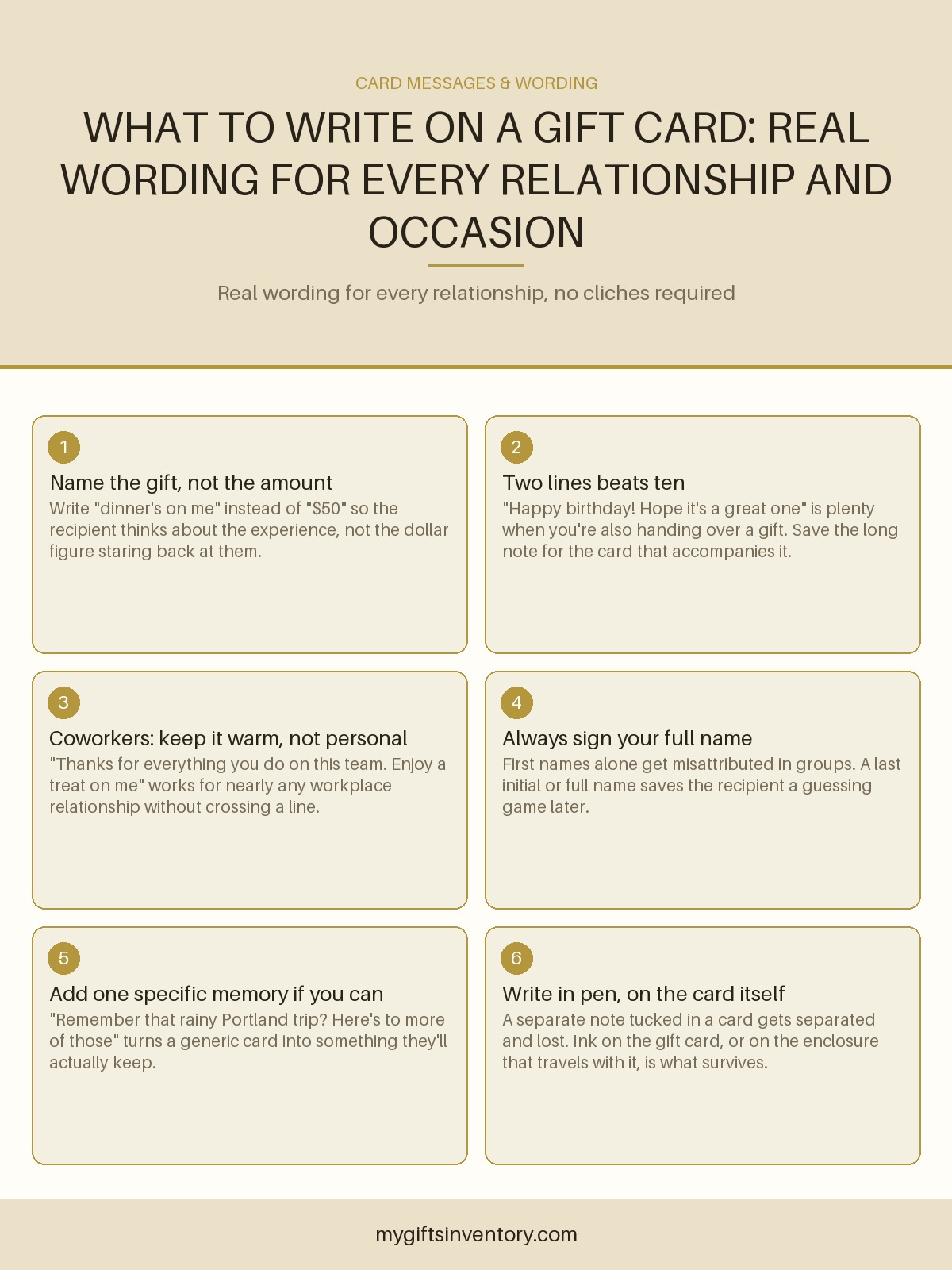
- Jokes about how much is on it. "Don't spend it all in one place" is fine once. Naming the amount, even as a joke, tends to land awkwardly.
- A blank slate. Even if you're handing it over in person and saying everything out loud, write something. The message outlives the moment.
What to write in a greeting card that goes with a gift card
The greeting card does the emotional work, which means it's the place where you can be warm, personal, and a little longer. But don't write a novel. Four to six sentences is the sweet spot. Here's a structure that works for nearly every occasion:
- Open with the occasion. One sentence acknowledging the moment.
- Say one specific, personal thing. Something true about them or about the year. Not a generic compliment.
- Explain the gift, lightly. One sentence on why you chose a gift card instead of a thing. It doesn't need defending, but a quick line like "I didn't want to guess wrong about the kitchen stuff, so this is for you to pick" goes down well.
- Close warmly. Sign off with your name and, if it's a close relationship, a warm sign-off like "love" or "so happy for you."
Example, for a wedding:
"Dear Anna and Jake, what a year this has been for the two of you. I still remember the first time you told me about the proposal over coffee and couldn't stop grinning. I didn't want to guess wrong on registry picks, so this is for whatever you need most, whether that's a new kettle or a night away. Wishing you everything. Love, Beth"
Example, for a teacher at the end of the year:
"Dear Mrs. Okafor, thank you for a year that genuinely changed how Maya feels about reading. I'll never forget her telling me at dinner that you said her essay was the best one you read all semester. That meant more to her than I can say. This gift card is just a small thank-you for all the early mornings and the extra patience. With gratitude, the Alvarez family"
Gift cards without a greeting card, in-person or shipped
If you're handing the gift card over in person, you can skip the greeting card entirely as long as the gift card message is signed and personal. The same goes for gift cards sent by email or text, where a short message in the online form does the work. Where it gets murky is shipped gift cards that arrive in a plain envelope. If the recipient opens it and there's nothing but a plastic card, it reads as an afterthought. In that case, add a real greeting card, or use a gift card service that lets you attach a note card to the order.
One habit worth building: always write the recipient's name inside the gift card carrier and your name as the sender, even if you're also writing a separate greeting card. Gift cards get separated from their envelopes constantly, and an unsigned card is the single most common reason a gift card ends up sitting unused in a drawer.
Practical notes that change what you write
A few real logistics are worth knowing before you finalize the wording, because they can affect what you say on the card.
Check the balance and the fine print before you write
Before you gift it, confirm the card is activated, that the amount loaded correctly, and that the recipient knows how to check it. Most gift cards lose nothing for the recipient, but a surprising number go unused because people don't realize there's a remaining balance or a small fee structure. If you're giving something specific like a restaurant or beauty card, it's worth noting in the message that they can check the balance online. For a few examples of how that works, our guides for checking an Olive Garden gift card balance and a Ulta Beauty gift card balance show the typical process most brands use.
Name the spend when the store is broad
A card to a huge retailer or a generic gift card network can feel impersonal because the recipient has to figure out what you meant. Naming the spend in your gift card message fixes that instantly. "This is for a good pair of boots" is more useful than "a little something for you to enjoy."
Consider pairing with a small item for close relationships
For anyone you're closer to than a coworker, a gift card plus one small thing reads warmer than either alone. It doesn't have to be expensive. If you're shopping for someone specific, our guide to personalized Christmas gifts for her has custom picks that pair well with a gift card to the store they'd buy from anyway, and it can turn a gift card envelope into a small package worth opening.
How much to put on the card, and how to mention it in the message
Typical amounts are useful to have in mind so you don't under- or over-shoot:
- Coworker or Secret Santa: $15 to $25.
- Teacher, nurse, caregiver: $25 to $50 per person (check your school or workplace group gift policy first, since many have caps).
- Nanny, babysitter, or dog walker holiday bonus: one week's pay is a common benchmark, sometimes more with a long tenure.
- Close friend birthday: $25 to $50.
- Wedding gift from a couple: $50 to $150, depending on relationship and region.
- Graduation: $25 to $100.
- Baby shower from a close friend: $50 to $75.
None of these are rules, and the right amount usually depends more on your budget than the occasion. What matters for this article is what you put in writing: don't name the amount on the card. The card speaks for itself. If you want to gesture at what it's for, do it as an intention ("for the honeymoon") rather than a number ("$100 for the honeymoon").
When a gift card really is the wrong call
A gift card is a reasonable choice for most gift situations, but there are a few where a real physical gift, or a greeting card with a heartfelt message and nothing else, works better:
- Very close family for major holidays, unless a gift card is a known family tradition. A parent, spouse, or child usually expects actual thought, and a bare gift card can land badly even when it's generous.
- Sympathy gifts. Send a real card, or send food, flowers, or nothing but a note. A gift card is not appropriate here.
- Gifts to someone in a very different price range where the card amount could feel like a mismatch either way.
- Very small children who can't really appreciate a card over a wrapped gift. Pair it with something physical if you're giving one at all.
In every other case, the gift card plus a good message (and a greeting card when the occasion calls for it) is a genuinely thoughtful gift. The card isn't a cover-up for a lazy gift; it's the part that makes the gift personal.
Gift Ideas to Go With This


Want more ideas? Browse our full guide: 18 Keepsake Gifts Worth Holding Onto (2026): Personalized Picks They'll Treasure Forever
Frequently Asked Questions
Do you write the message on the gift card or the greeting card?
Do both, but split the jobs. Write the warm, personal message on the greeting card, and write a short three-part message on the gift card itself: who it's from, what the occasion is, and what the gift is for. The gift card message is the practical note that survives when the greeting card gets tossed or filed away.
Is it rude to give a gift card without a greeting card?
Not in most casual situations, like a coworker, a Secret Santa, a teacher, or a last-minute gift, as long as you write a signed note on the gift card and hand it over personally. A greeting card is expected for weddings, graduations, baby showers, milestone birthdays, and close family holiday gifts.
What should I write on a gift card so it doesn't feel impersonal?
Name the spend. A line like "put this toward the new place" or "for the next round of hosting" immediately makes the gift card feel like it was chosen for that specific person. Add a single warm sentence and sign your name, and it's done. You can borrow wording from our guide to short and sweet gift card messages if you're drawing a blank.
Should I put the dollar amount on the gift card?
No. Don't write the amount on the card or the greeting card. The recipient can see the balance when they activate or check the card. Writing the amount, even casually, tends to feel transactional and can land awkwardly if the gift is part of a group.
What if I'm sending a digital gift card instead of a physical one?
Most digital gift card platforms include a message field at checkout, which serves the same purpose as a gift card message. Use the same three-part structure: sign your name, name the occasion, and name the spend. If you'd normally write a greeting card for that person and occasion, send a separate paper card through the mail so they have something to open and keep.
Looking for an Actual Gift Instead?
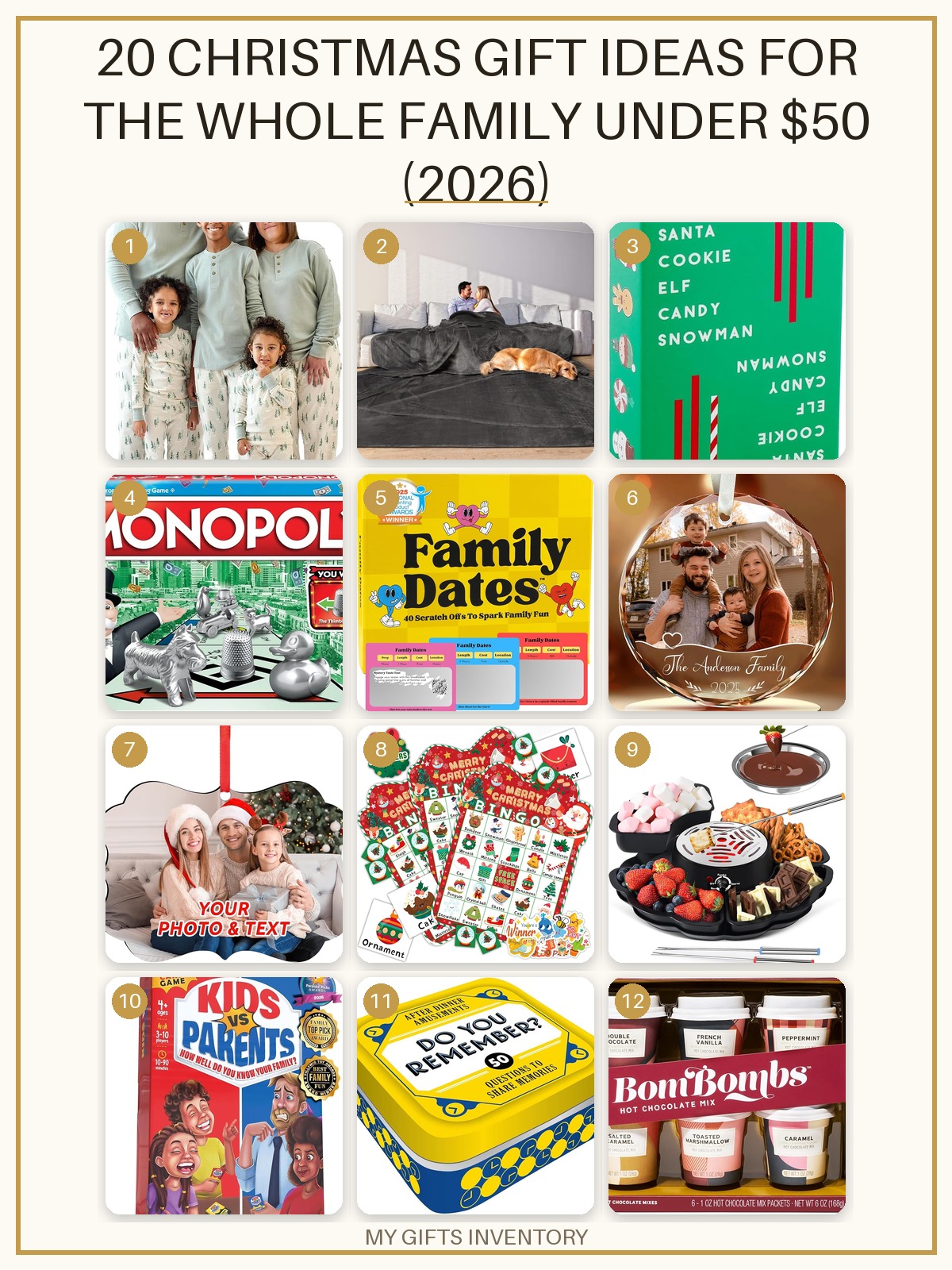
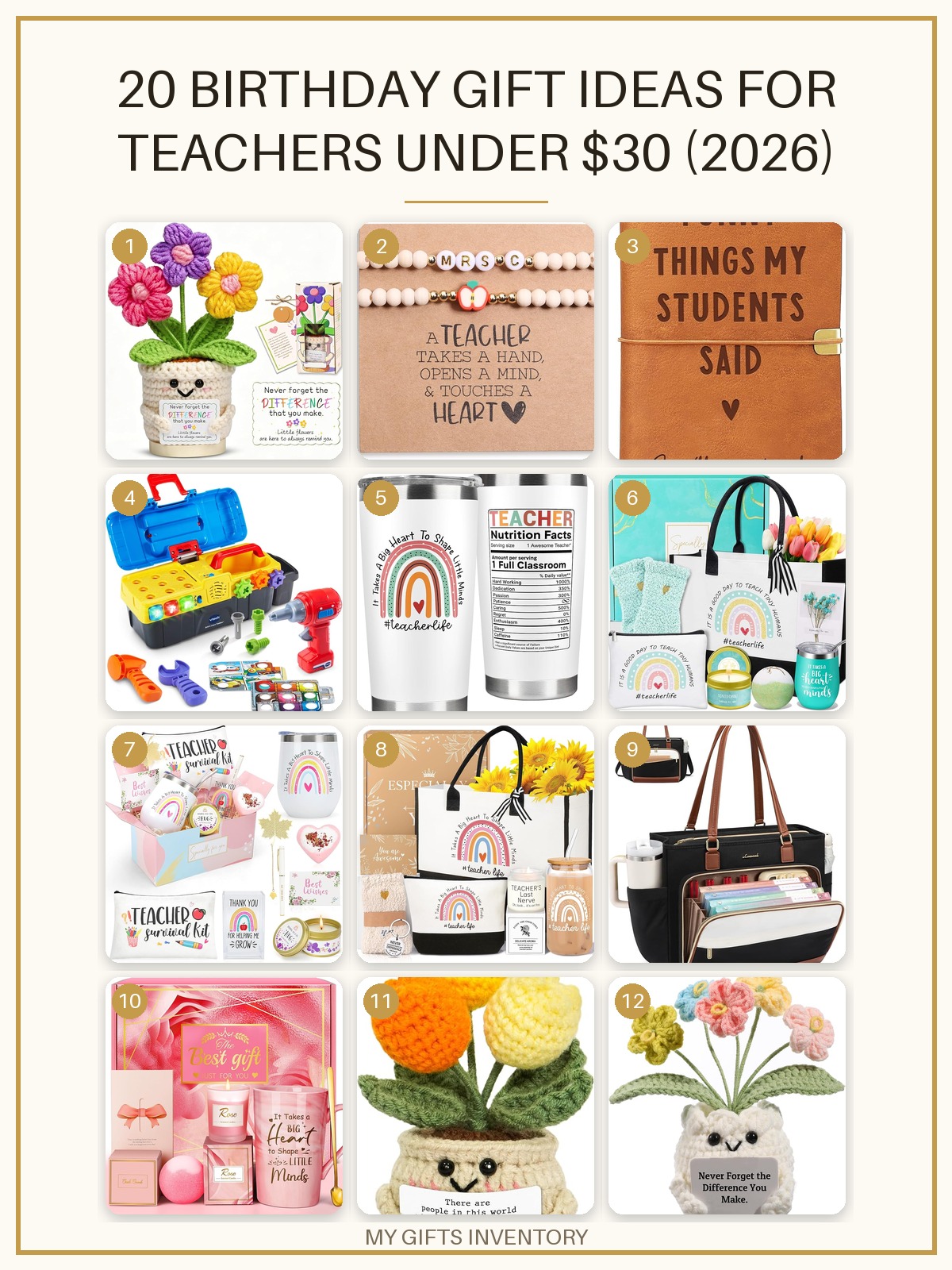
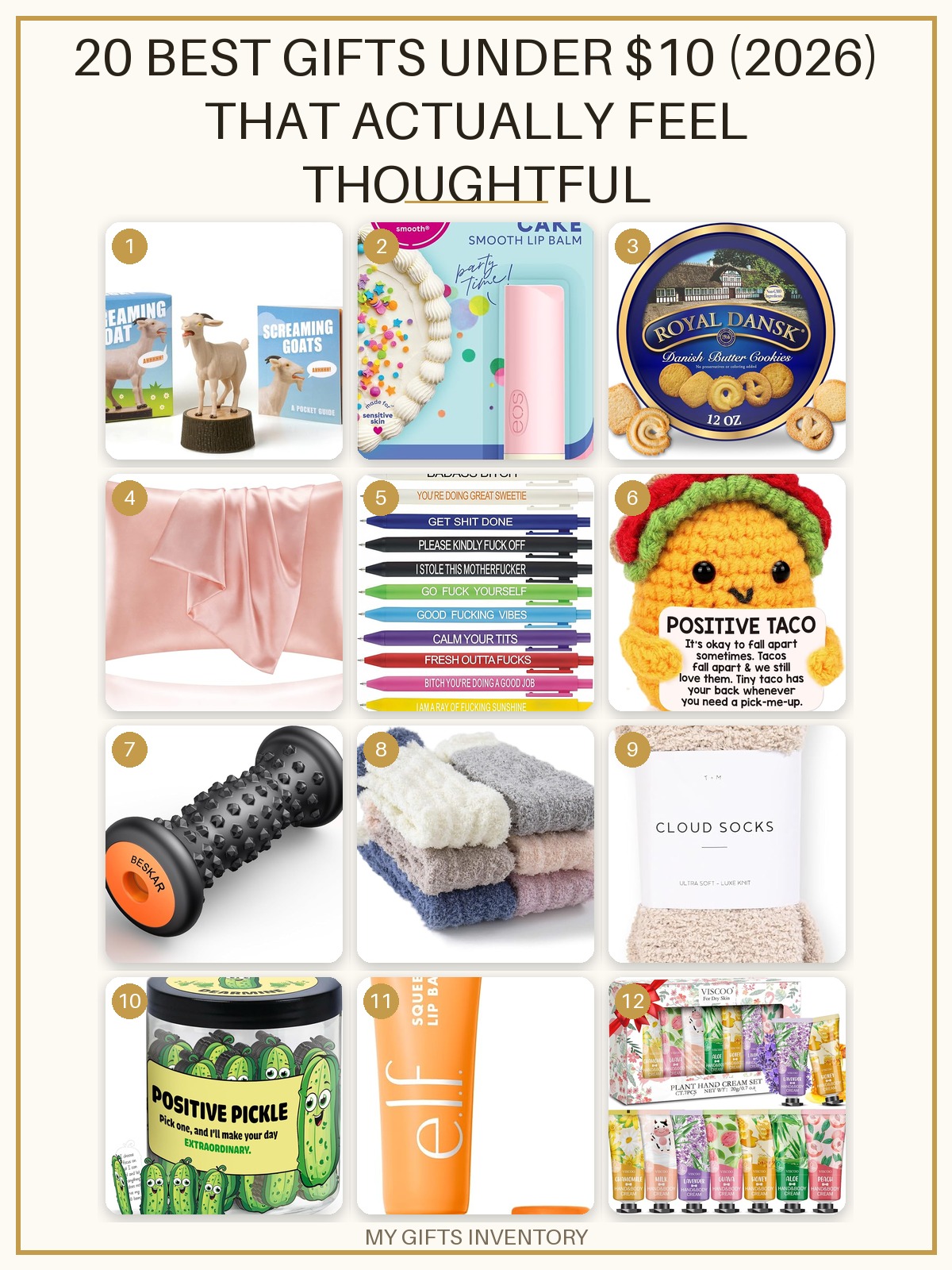
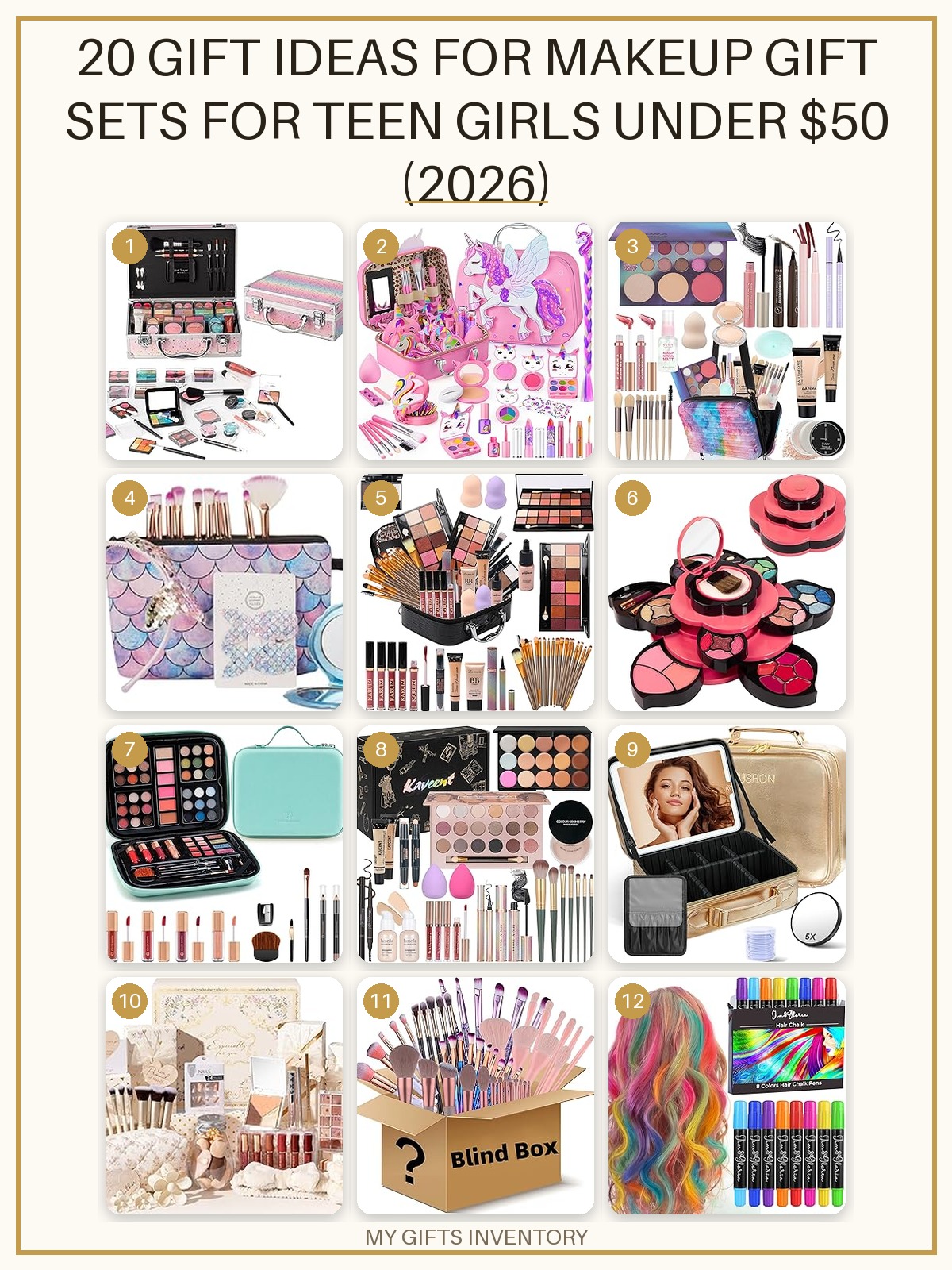
Gift Sets We Love Right Now
Every item picked, priced and linked, ready to buy.
More Gift Advice