Gift List Template: What to Write, Budget, and Track for Every Occasion
If gift season makes you forget birthdays, double-buy, or run out of time, a simple gift list template can save your sanity. Here is a practical template plus exact wording and timelines we actually use to keep gifts thoughtful and on track.

As an Amazon Associate, My Gifts Inventory earns from qualifying purchases. We only recommend products we'd genuinely consider buying ourselves.
When we search for a “gift list template,” we usually have the same problem: life keeps moving, the calendar fills up, and we end up scrambling for birthdays, thank-yous, and holidays with no plan for budgets, cards, or shipping. A good template is not about being organized for its own sake. It is about making sure every person gets something thoughtful, within a number we can actually spend, and on a date that does not require a panic run to the store.
This is the gift list system we recommend using when you want a simple way to plan gifts, track what you bought, and leave yourself room for real-life changes. We include a copy-and-paste template, suggested budget categories, exact card wording examples, and practical steps for wrapping, registries, and returns.
What a “Gift List Template” should include (so it actually helps)
If your template is just a list of names, it will not solve the problems that lead to missed occasions or last-minute spending. We design gift lists to prevent the three most common failures: forgetting, overspending, and writing a card too late (or worse, not writing one at all).
Keep it single-record simple
We recommend one row or one entry per recipient. That entry should hold everything you need so you do not have to switch between notes, emails, store receipts, and a mental backlog.
- Recipient (name + relationship)
- Occasion (birthday, holiday, thank-you, wedding, host gift)
- Event date (the day you need the gift in hand)
- Buy-by date (when you should have purchased or finalized the plan)
- Budget target (the number you aim to spend)
- Gift idea (a short description, not a whole shopping cart)
- Card wording (draft text you can reuse with minor edits)
- Delivery method (pickup, wrap-and-give, ship, digital, in-person)
- Wrapping plan (what wrap supplies you need, ribbon color, gift bag yes/no)
- Return tracking (receipt location and return deadline)
- Status (planned, purchased, wrapped, ready to deliver)
Use three budget buckets, even for small lists
We find budgets feel less stressful when they fall into a few buckets. You can set these numbers by season or by how well you know the person.
- Core gift: the main item (example targets: $25, $50, $75)
- Card + extras: card, small add-on, postage (often $5 to $15 total)
- Buffer: for tax, shipping, and last-minute upgrades (roughly 5% to 15%)
We also like to write the “spent by” number directly in the template so you see the ceiling every time you update the plan.
The copy-and-paste gift list template (with ready-to-use fields)
Pick one format: a spreadsheet, a notes app table, or a printable page. If you already use My Gifts Inventory, we suggest mirroring the same fields so it is easy to move between systems. Below is a template you can copy into a spreadsheet as columns.
Spreadsheet columns
| Recipient | Relationship | Occasion | Event date | Buy-by date | Budget target | Gift idea(s) | Card wording (draft) | Delivery | Wrapping plan | Receipt + return deadline | Status |
|---|---|---|---|---|---|---|---|---|---|---|---|
| Jordan | Friend | Birthday | 2026-10-12 | 2026-09-28 | $50 | Tea sampler + cozy mug | “Happy birthday, Jordan! I hope this year brings calm, good music, and more time for you. Thanks for always making things lighter.” | Pickup | Gift bag + tissue + ribbon | Receipt folder: photos app, return ends 2026-11-12 | Wrapped |
Status ideas that keep you moving
- Planned (idea + draft card wording done)
- Purchased (receipt tracked)
- Wrapped (ready to go)
- Delivered (done, even if you forgot a “thank you later” check-in)
How to choose buy-by dates that prevent late gifts
Most gift stress comes down to one missing step: we wait too long to confirm delivery timelines. A buy-by date turns “sometime soon” into a real checkpoint.
Simple buy-by rules we like
- In-person events (birthday party, dinner): aim to buy 5 to 7 days before the event so you can wrap calmly.
- Shipping required: buy or finalize delivery 10 to 14 days before the event when possible.
- During peak holiday shipping: plan earlier than you think you need, because carrier cutoffs and slowdowns can be uneven.
If you want to make this more concrete, add one “ship-by” reminder to your calendar that is a week earlier than your buy-by date. That gives you one chance to fix problems without losing the entire plan.
Gift list etiquette: what makes a template feel thoughtful, not mechanical
A gift list template should improve thoughtfulness, not replace it. We use the template to protect attention: you spend your energy on the card and the fit, not on remembering details.
Use the template to write better card messages
One of the best tricks is to draft the card wording early and reuse it with minor adjustments after you buy. When we write the card text before we shop, we make sure the gift matches the tone we want.
Card wording examples by situation
Choose one and keep it short. In most relationships, a card does not need a paragraph to land well.
- Birthday (close friend): “Happy birthday, Jordan! I hope this year brings more ease, more laughter, and time for the things you love. I’m really grateful for you.”
- Birthday (coworker): “Happy birthday! Wishing you a great day and a wonderful year ahead. Thanks for being such a steady part of the team.”
- Thank you (host): “Thank you again for such a wonderful evening. The meal, the conversation, and your warmth made it truly special. We loved being there.”
- Holiday (relative): “We’re thinking of you and sending our love. Thank you for all the ways you make family feel like family.”
- Graduation: “Congratulations! I’m proud of all you’ve done and excited for what’s next. Keep taking your time and moving forward with confidence.”
How long should a card message be?
For most people, 1 to 4 sentences is perfect. If you are writing in a birthday card and you also bought a “main” gift, you do not need extra explanation. If the recipient is someone you do not see often, one sentence about what you appreciate is usually enough.
Gift list budgets that do not collapse under real life
Budgets fail when we treat them like a rule instead of a target with a buffer. Our approach: set a budget target, add a buffer, and track the actual spend when you buy.
Set realistic ranges for common occasions
- Casual friend or neighbor: $20 to $50
- Close friend or birthday party guest: $40 to $100
- Host gifts: $20 to $75 (depends on whether it is a dinner, weekend, or repeated hospitality)
- Family members: $50 to $200+ depending on closeness
These are not laws. They are starting points. If you have a relationship that calls for more thought, you can spend the same amount but shift the gift toward something personal.
When gift cards fit, and how to plan them
Sometimes a gift list needs a reliable option for “I want this to be right, but I cannot decide.” A gift card can be a respectful choice when you pair it with a card message that acknowledges why you chose it.
If you are deciding between store gift cards, use your template to track the store name, how you bought it, and the exact amount. Then we recommend referencing our gift card guides when you want the full list of brands, fees, and where to buy, like our pages for Walmart gift cards and Target gift cards.
Gift wrapping and presentation: what to track in your template
Wrapping is where gifts either look “done” or look like they were assembled two minutes before the event. Your template can make wrapping easier by reminding you of supplies and timing.
Track these wrapping details
- Gift bag or wrap: for small items, bags are often less stressful
- Ribbon or tissue color: it helps consistency across a family or friend group
- Card placement: decide whether the card goes on top, inside a pocket, or tied to the handle
- Last step date: add a “wrap by” reminder 1 to 2 days before delivery
Wrapping for difficult shapes
For bottles, candles, or oddly shaped items, we like to use one “wrap strategy” per person so you do not invent new packaging every time. In your wrapping plan field, write something like “bottle sleeve + tissue + ribbon” or “small item in gift box + tissue.” That phrase might look tiny, but it saves real time later.
Registries: how to use a template without overthinking it
Registries can make shopping easier, but they still require decisions. Our gift list template helps by tracking which options are “safe picks” and which need a follow-up question.
Registry step-by-step (we recommend doing it this way)
- When you get invited, add the registry event to your gift list with the event date and the “buy-by” date.
- Pick 1 main option and 1 backup option.
- Confirm sizing or personalization constraints before you purchase.
- Write card wording that matches the milestone (wedding, baby shower, housewarming).
- Record confirmation details like order number and receipt location in your template.
Card wording that works for registry gifts
Registry gifts can feel impersonal, so we try to add a sentence that shows we are paying attention.
- “Thank you for including us. We hope this becomes something you use often, and that it makes your space feel even more like home.”
- “Congratulations again. It felt meaningful to pick something from your registry, and we cannot wait to see you enjoy it.”
Returns and exchanges: the part we wish we did sooner
Most people panic about returns because they cannot find a receipt, or they forget how much time they have. The template prevents that by capturing return info the moment you buy.
Use this return tracking line
In the template field called “Receipt + return deadline,” record:
- where the receipt is stored (email confirmation, photos folder, or the physical envelope you keep)
- the return deadline date you can calculate at purchase time
- what you plan to do if you need an exchange (gift card, different size, refund)
Why this matters for gift lists
If you buy in multiple batches, receipts get separated fast. Having a single place to record them keeps you from re-buying and then returning late, which can sometimes complicate things.
Planning your gift list across the year
A template works best when it is not only for holidays. We like to treat “gift planning” as a rotating system: you update it whenever something pops up, and you do a quick batch review on a predictable schedule.
Monthly mini-review (15 minutes)
- Check for upcoming birthdays and special events in the next 60 days
- Confirm buy-by dates for anyone you are shopping for
- Draft or update card wording for gifts that are already purchased or close to it
- Look for gaps: one unassigned recipient usually means one missed card
Batch shopping without losing the personal touch
We do batch shopping for “easy logistics” items like wrapping supplies, card stock, or small add-ons. But we keep the recipient-specific parts for later: card wording, specific gift fit, and anything personalized.
Ideas that keep budgets under control (without turning your gift list generic)
When you are filling a template, it helps to have a few “lanes” you can choose from so you are not starting from scratch each time. We do this by using budget-friendly gift themes.
If you need ideas under $50
When we are trying to stay within a practical limit, we often choose categories we know will be used. If you want a themed starting point that matches that “I need something good and not too pricey” feeling, we like using guides like 20 Kitchen Gadgets Gift Ideas Under $50 (2026) to pick a direction quickly, then we refine it for the recipient’s habits.
If you want one step above “nice” (between $50 and $150)
Sometimes a person deserves a gift that feels more substantial without being extravagant. A budget lane like 20 Gift Ideas for Splurge-Worthy Gifts Between $50 and $150 (2026) can help you choose something that reads as intentional, then you match it with card wording that makes it feel personal.

Frequently Asked Questions
What is the simplest gift list template that still works?
We recommend one entry per recipient with fields for event date, buy-by date, budget target, gift idea, card wording draft, wrapping plan, and return tracking. That structure prevents the biggest problems: forgetting, overspending, and rushing the card.
How do we set a budget target without going over?
We set a budget target number in the template and add a small buffer for tax and any shipping or convenience fees you might pay. When it is time to buy, we use the template’s “spent by” ceiling so the final price stays aligned with the plan.
Should we write the card message before or after we buy the gift?
We like to write it before we buy whenever possible, because it guides the tone of the gift. Once the wording is ready, shopping becomes easier and more cohesive, especially for birthdays, thank-yous, and milestone events.
What buy-by date should we use for gifts?
We use 5 to 7 days ahead for in-person events and 10 to 14 days ahead for gifts that must ship. If you are shopping during peak periods, we adjust earlier and build in extra time for delays.
How should we track returns in a gift list template?
Right after purchase, we record where the receipt is stored and the return deadline date in the recipient’s entry. That way, if sizing, style, or preferences are off, you have the information you need immediately.
Looking for an Actual Gift Instead?
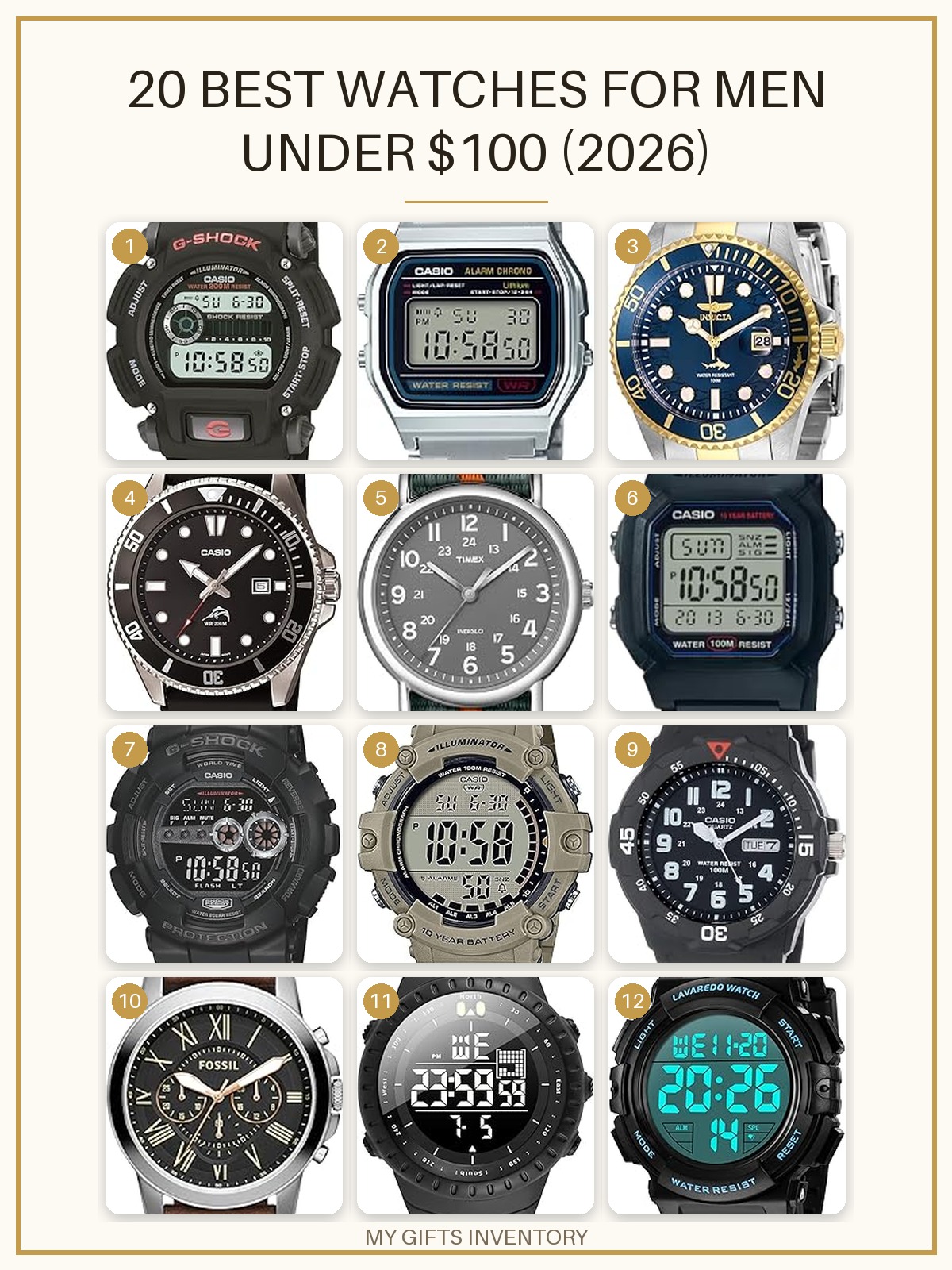
Shop Hand-Picked Gift Sets
Every item picked, priced and linked, ready to buy.
More Gift Advice