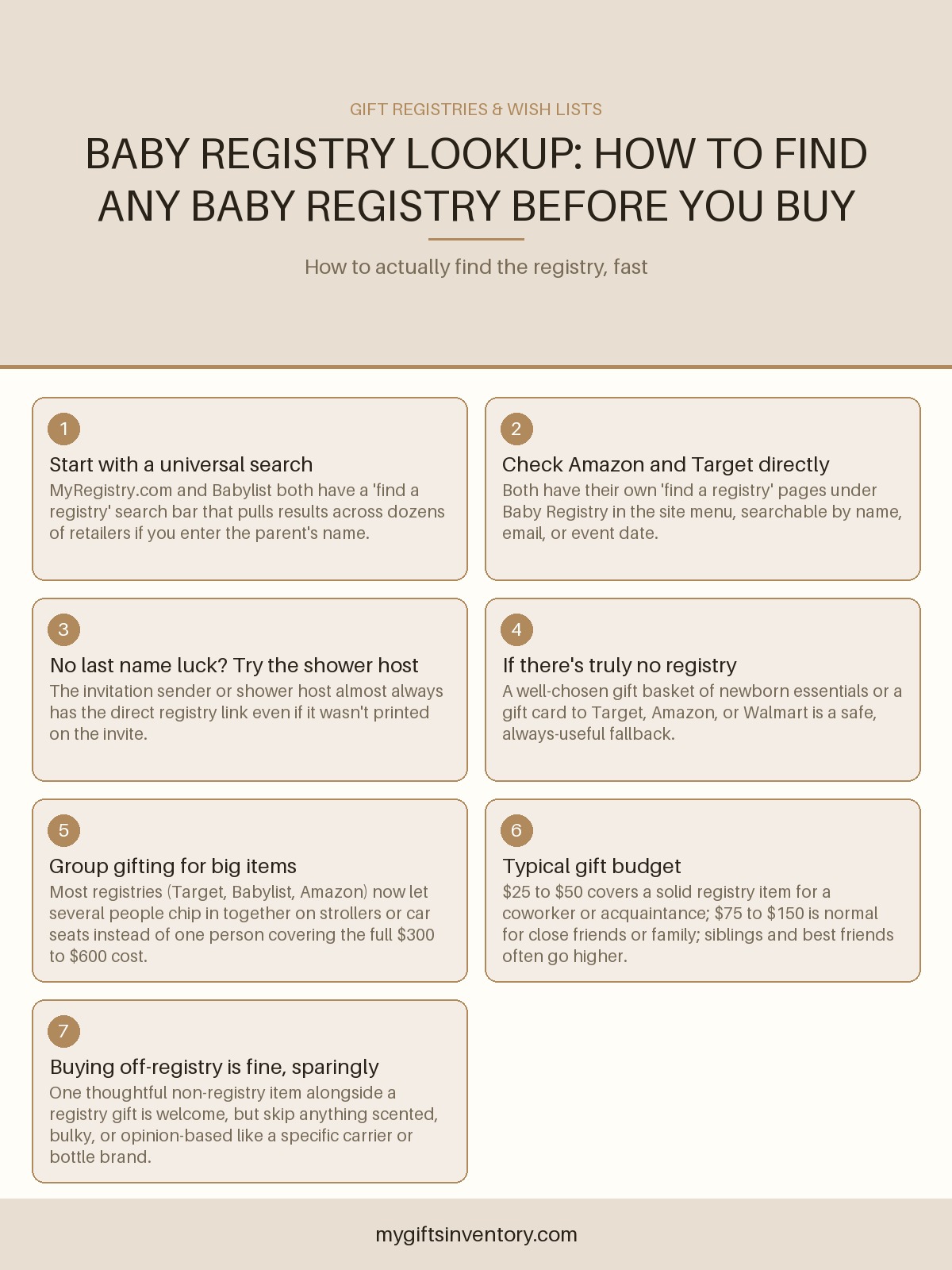
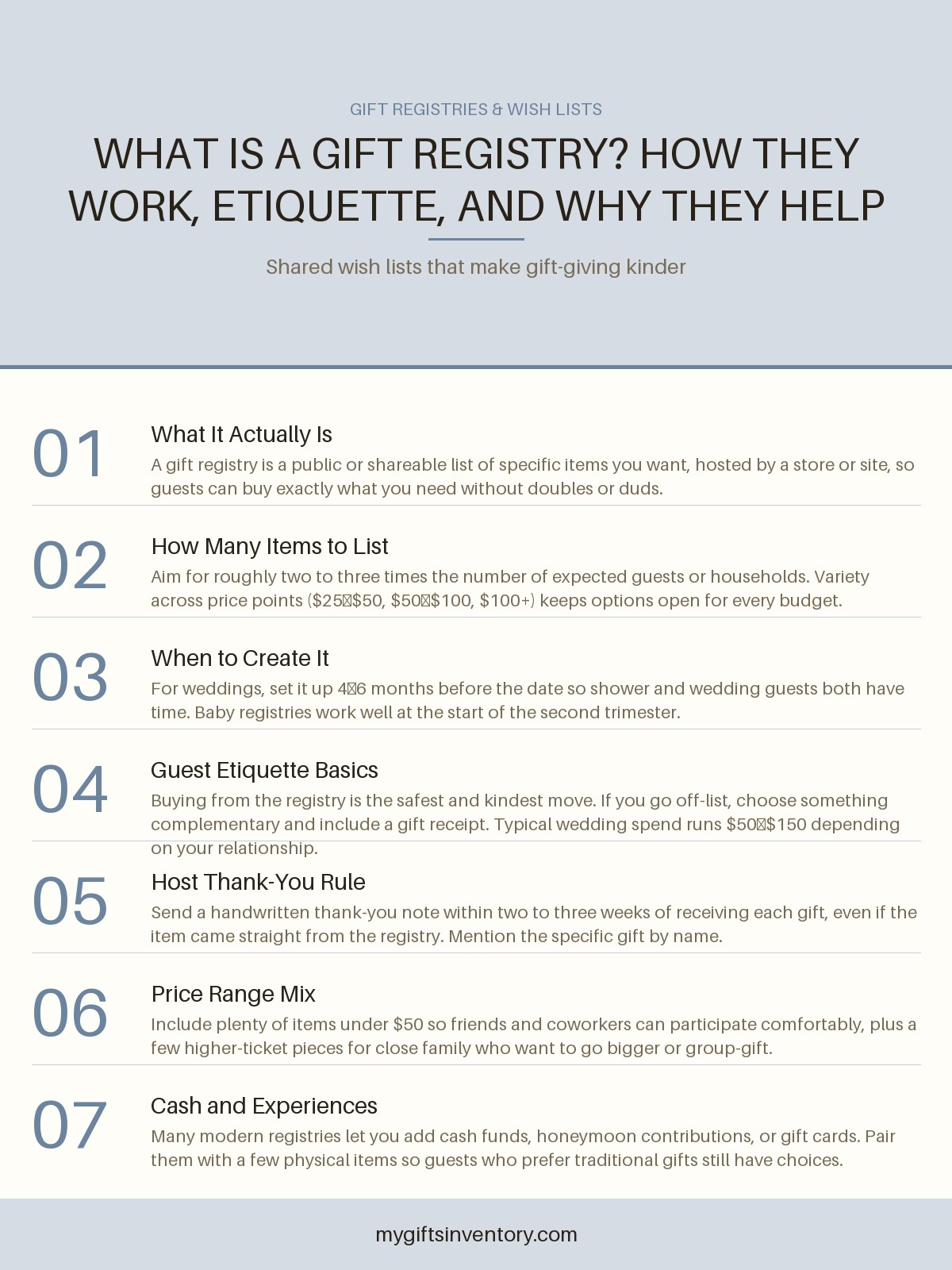
Gift registry search etiquette: what to do when you can't find the perfect item
If you are searching a registry last minute, we help you decode what to choose, how to stay on budget, and what to write in the card when you pick something different.

As an Amazon Associate, My Gifts Inventory earns from qualifying purchases. We only recommend products we'd genuinely consider buying ourselves.
“Gift registry search” is usually what we type when we want to do the right thing but we are short on time, not sure what category matters most, or the exact item is already gone. We get it. Registry pages can be long, options can be sold out, and you still want the gift to feel personal instead of picked by a spreadsheet.
In this guide, we walk through how to search a registry efficiently, how to decide what to buy when things are out of stock, and what to write in the card so your gift feels thoughtful even if it is not the exact original pick.
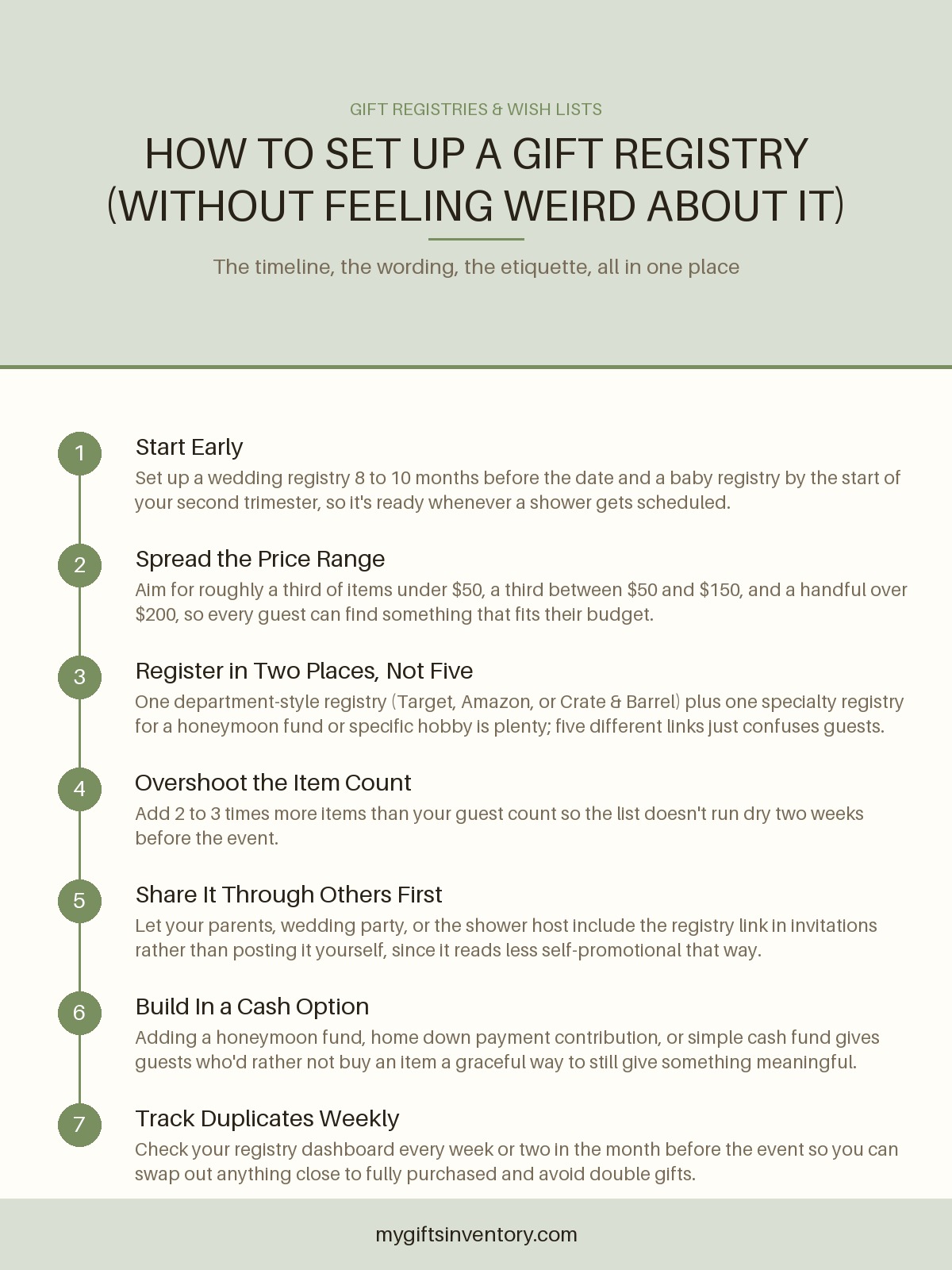
How to Search a Gift Registry Fast (Without Overthinking It)
1) Confirm you have the right registry, for the right person
Before you even start scrolling, double-check whose registry it is and which event it is tied to. Many couples and families register for multiple occasions, and it is easy to mix up a wedding registry with a baby welcome or a housewarming.
If there are multiple links, we treat it like this: use the one shared in the invite or message thread, not the first one your browser suggests. When it is unclear, we do the polite thing and ask the host. A quick “Is this the correct registry for the baby shower?” message saves everyone stress.
2) Use the page filters like you are shopping, not hunting
Most registry platforms make it easy to sort by price range, priority, or category. If you are searching late, pick one filter to narrow the list and stop. Trying to “browse everything” usually turns a 20-minute decision into an hour.
- Price filter: choose the amount you are comfortable with for this one gift.
- Category filter: decide whether you are covering a big need or a smaller “nice to have.”
- Priority filter: if the registry shows “most wanted” or “grouped by priority,” trust it.
3) Look for sizing, color, and compatibility clues first
Registries are not only wishlists. They are instructions. The biggest avoidable mistake is ignoring a compatibility note or a size chart line.
As you search, pause at the top details in the listing: size, color, model, pack size, and whether the item is part of a set. If it says “works with existing,” that is the registry telling you this is not plug-and-play. We treat those listings as “must match.”
Choosing the Right Item When “Your Pick” Is Sold Out
Rule of thumb: choose the nearest substitute in the same intent
We think about out-of-stock situations in terms of the recipient’s goal. If the registry intent is a complete set, choose the nearest alternative that still forms the set. If the intent is filling a need, pick the item that covers that need in the same category.
Here is how we decide when the exact item is unavailable:
- Same set, different item: buy another piece from the same brand or collection.
- Same need, different format: if “mixing bowl set” is gone, choose an alternative set that matches the same kitchen setup the listing implies.
- Different item, same priority: if the “most wanted” item is gone, pick another “most wanted” item in the same price tier.
When to consider a gift card instead
Sometimes the smoothest option is a gift card, especially if the registry has no close substitutes. Gift cards can also be a relief when the registry is heavily size or compatibility dependent.
If you are leaning toward a store gift card, we suggest starting with the store choices that make sense for the person’s routine. For example, if the recipient shops primarily at a major grocer, check store gift card options like Kroger gift cards or Walmart gift cards. If they are more likely to shop in home improvement, Meijer gift cards can be a practical middle ground.
We do recommend you only go this route after you have tried to find a near substitute. Gift cards feel most appreciated when you use them as “cover the gap,” not as a first impulse when you cannot be bothered to search.
Budget Planning for Registry Searches (So You Do Not Get Trapped)
Set a target, then a ceiling
When we search a registry, we often look for “the perfect thing,” which can expand the budget without us noticing. A better approach is to pick two numbers: a target and a ceiling.
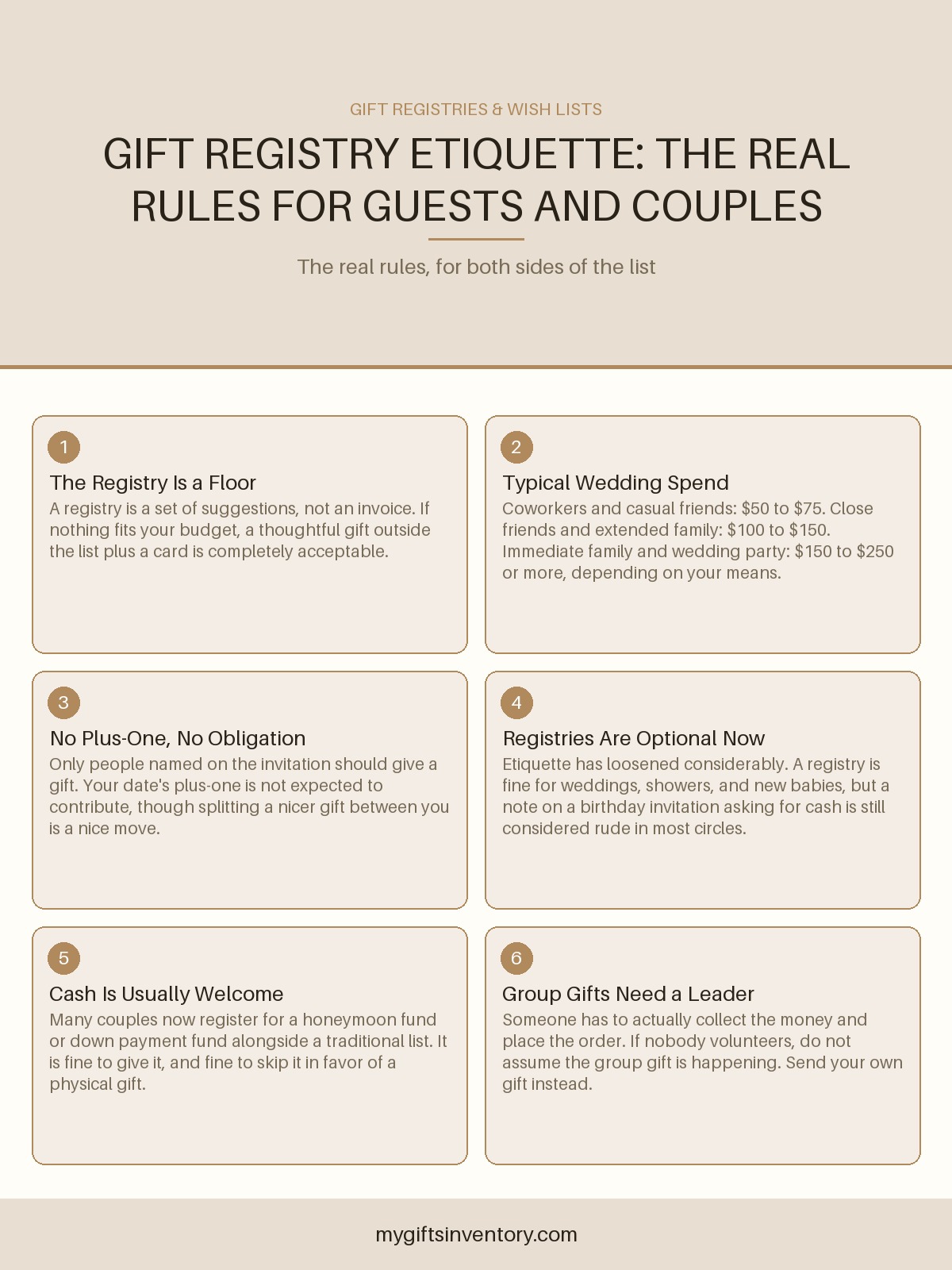
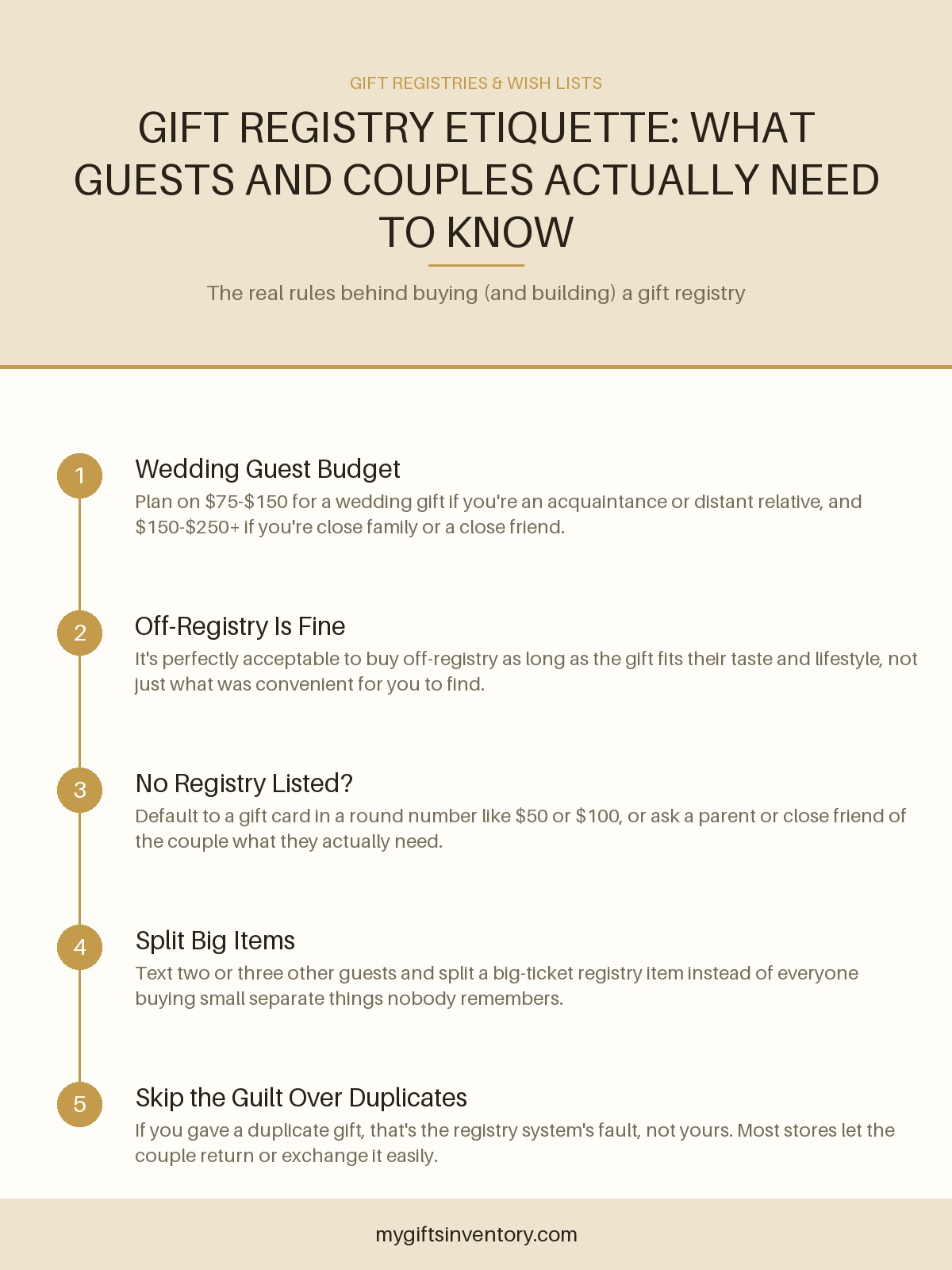
Example budgets that work well for common occasions:
- Co-worker, casual gift or small thank-you: $25 to $50
- Friend, close relationship, registry is main gift: $50 to $120
- Family event where the registry is the center of the gift: $100 to $250
- Group gift contribution: $30 to $100 per person, depending on group size and your comfort
Once you pick those, we stick to them even if the registry has tempting add-ons. If you keep expanding your range, we find the decision becomes emotional instead of practical.
Account for shipping and taxes without guessing
Registries sometimes list a price that looks clean, but your final total may include shipping or taxes depending on the item and the fulfillment method. We do a quick check before checkout: does the registry show “price as listed,” and does it show an expected total at the end?
If you are buying from a store rather than through the registry fulfillment, set your ceiling based on what you will actually pay. The goal is to avoid a surprise that forces you to rush the last step.
What to Write in the Card When You Used the Registry
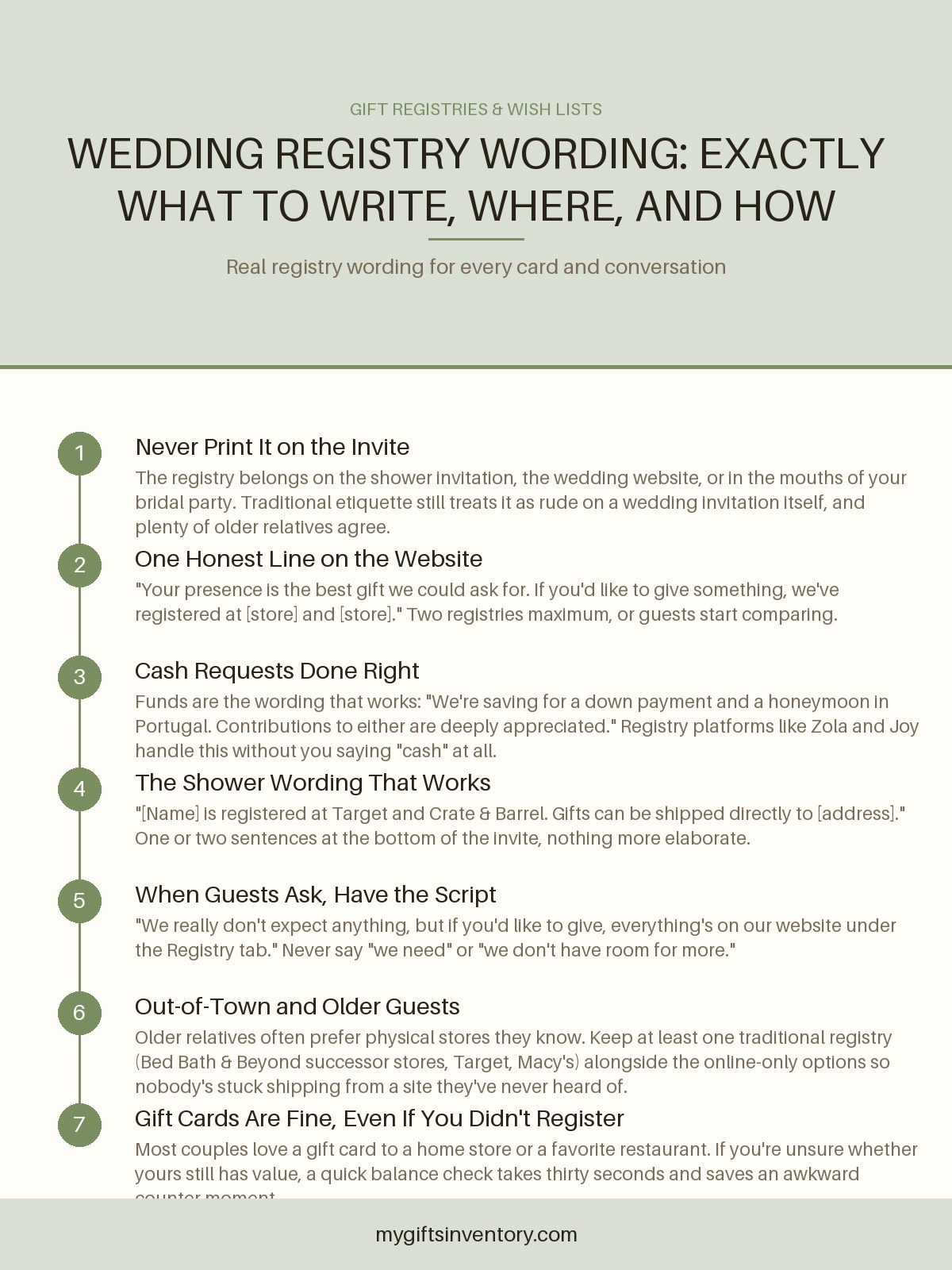
This is where the “registry search” stress can turn into guilt. We worry that if we buy from the list, it will feel impersonal. But cards can bridge that gap with two things: a personal line and a specific reference to the couple or person’s notes.
Card formula that never fails
We like a simple structure:
- Warm opening: one line
- Specific reference: one sentence tied to a detail from the registry page or their story
- Good wish: one line for the future
Ready-to-copy wording examples
Use these if you picked something from the registry that matches the person’s stated goals:
- For a couple registry: “We’re so excited for you both. We loved the way you described building a cozy home kitchen, so we picked something that will make that everyday routine easier. Wishing you a beautiful start together.”
- For a home or housewarming registry: “Congratulations on your new place. Your registry made it clear you care about comfort and practical details, so we chose this to help your home feel like yours right away. Can’t wait to see it in person.”
- For a baby shower registry: “We’re cheering you on as you get ready. We chose this because of the way it fits into your everyday flow, and we hope it makes those first days a little smoother. All our love.”
- For an out-of-stock substitute: “We tried to grab your exact choice, but it was already gone. We found the closest match we could, and we hope it still fits the way you planned to use it. Wishing you so much joy.”
If you used a gift card, still make it personal
Gift cards do not have to read like paperwork. Add one line that explains why you chose that flexibility. For example:
- “We picked a gift card so you can choose the exact thing that fits your routine, because your registry notes made it clear how important the details are to you.”
If you want ideas for making gifts feel more intentional, we also recommend browsing our general guide on choosing the perfect gift for relationship-specific wording tips you can steal for your card.
Wrapping, Delivery, and Returns: The Part People Forget
Wrapping: do the minimum that still feels special
If the registry item arrives unwrapped or you are having it shipped directly, wrapping may not be part of your plan. That is fine. Registry gifting is not “less thoughtful,” but we do recommend making up for it with presentation if you are delivering in person.
- If you are delivering by hand: wrap the item if it arrives ready. A simple wrapping job plus a card looks intentional.
- If it ships directly to them: include the card and, if allowed, a note in the message field so the recipient understands it is from you.
- If the item is a multi-part set: keep the pieces together. Do not split the set unless the listing clearly does.
Delivery timing: plan backward from the event
We recommend planning with a buffer. If you want the gift to arrive in time for a shower, party, or holiday gathering, start at least a week earlier than you think you need to.
A good planning timeline for registry orders:
- 10 to 14 days before: ideal for shipping and returns if something is wrong.
- 5 to 7 days before: still workable, but check delivery estimates carefully.
- 1 to 3 days before: expect fewer choices and be ready to consider a store gift card or a card with a flexible message.
Returns and receipts: what you should and should not do
We see two common “good intentions” that backfire:
- Opening the packaging: only do this if the listing or recipient explicitly requests it.
- Assuming returns are easy: registry items are often returnable, but rules vary by platform and item type.
Keep any packing slip. If your gift came with a receipt or an order confirmation included in the box, leave it inside. The recipient will appreciate having options.
Registry Search Etiquette for Special Situations
Group gifts: coordinate without taking over
If multiple people are buying from a registry, it is easy to accidentally buy the same thing. If the invite mentions group coordination, use that thread. If you are not sure, message the organizer. A two-sentence check is enough.
Example message:
- “Hi! I am looking at the registry and want to make sure I am not duplicating. Is there a priority item we should grab first?”
“No duplicates” registries: follow the spirit, not just the letter
Some registries say no duplicates, but even when they do not, duplication can still feel awkward. If you suspect someone else already bought a category item, choose a different category rather than gambling.
If the registry is very broad, narrow by the recipient’s life
When a registry has hundreds of items, we avoid the temptation to buy something “random” just to get it done. Instead, we pick a category that matches how they live. That might mean:
- Kitchen and cooking basics for someone who hosts
- Bathroom upgrades for someone who does self-care routines
- Comfort items for someone who has been talking about remodeling or moving
If you want a few “category thinking” ideas that pair well with registry browsing, you can also use our curated gift ideas as a way to match your budget to practical categories, like gourmet treats, wine, and coffee gifts under $50 when the registry is lighter on consumables.
When You Have No Time: Last-Minute Registry Search Options
Choose an item that is easy to use right away
If you are searching close to the event date, avoid listings that require shipping between vendors or anything that might be difficult to set up. We look for items described as ready-to-use or “everyday” rather than long-install projects.
If the registry is still available but delivery is risky, switch strategy
Switch from “specific item” to “flexible option.” That might mean:
- Choosing a lower-cost registry item that is more likely to arrive quickly.
- Buying a flexible store gift card if you cannot guarantee arrival time.
If you decide on a gift card, we like to pair it with one personal sentence in the card and a clear, warm wish. For many people, that combination feels more caring than a rushed alternative.

Frequently Asked Questions
How do I find the right registry if there are multiple links?
Start with the registry linked in the invite, follow-up email, or message from the host, not the first suggestion that shows up in search results. If you are unsure, ask the host for confirmation, because buying from the wrong registry is the kind of mistake that is hard to fix.
What should I do if the registry item I want is sold out?
Choose the nearest substitute that matches the same intent, like the closest item from the same set or another “most wanted” option in the same category. If there is genuinely no close match, a gift card can be a thoughtful fallback as long as you still write a personal card note.
Is it okay to buy something different from the registry?
Yes, it is usually okay if the registry is more of a guide than a strict requirement. If the invite says “please choose from our registry,” try to buy from the registry first, then only deviate when you find a clear close substitute or a flexible option like a store gift card.
Do I need to wrap registry gifts?
If you are delivering the gift yourself, wrapping makes it feel special, even if it is simple paper and ribbon. If it ships directly to the recipient, focus on the card and any message field options, since the gift itself may arrive without packaging.
Should I include a receipt or keep anything for returns?
Keep the packing slip or any receipt information included in the box, and do not open packaging unless you are instructed to do so. If returns are possible, the recipient will have a better chance of getting help if paperwork is kept with the gift.
Looking for an Actual Gift Instead?
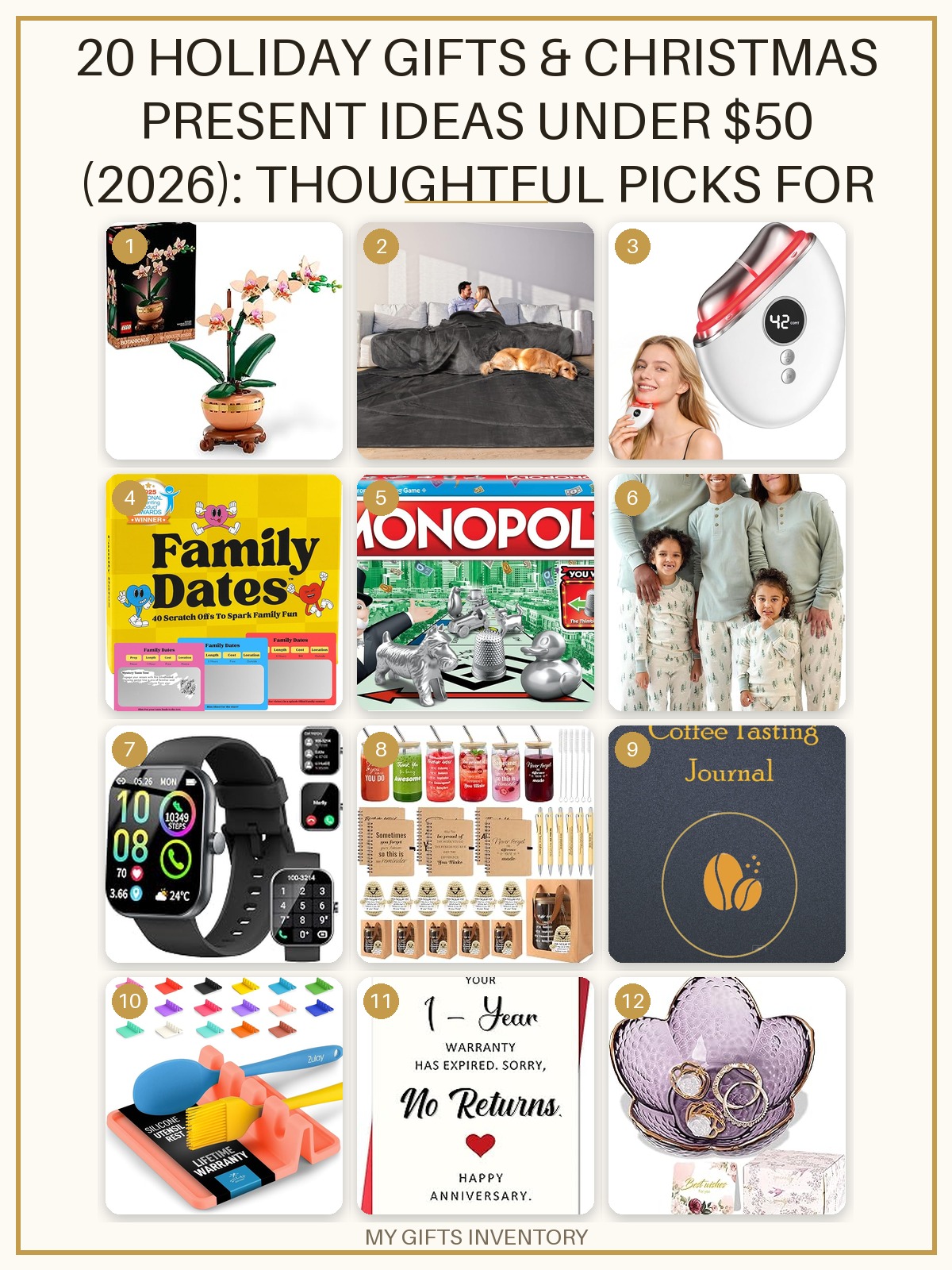
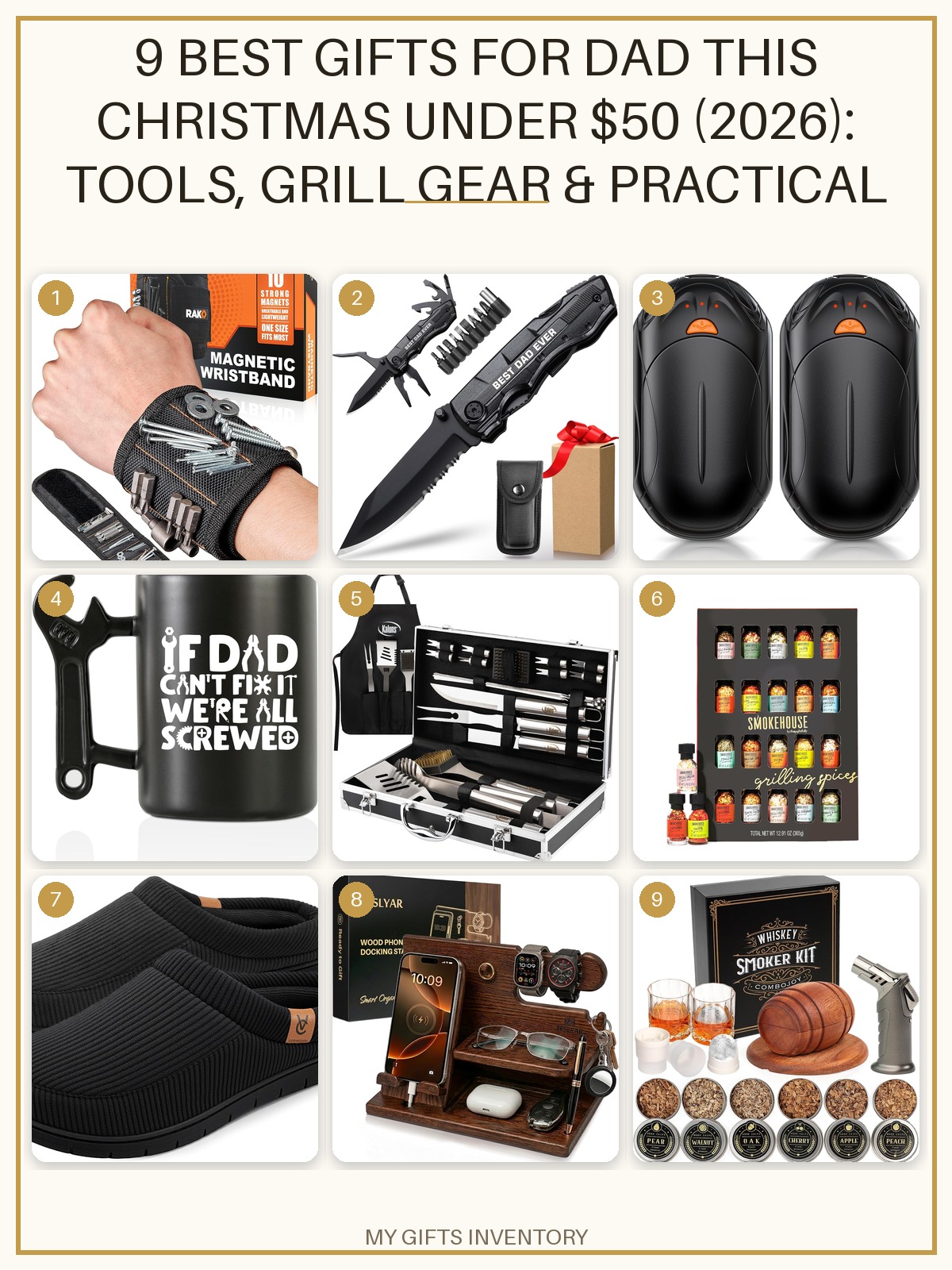
Gift Sets We Love Right Now
Every item picked, priced and linked, ready to buy.
More Gift Advice