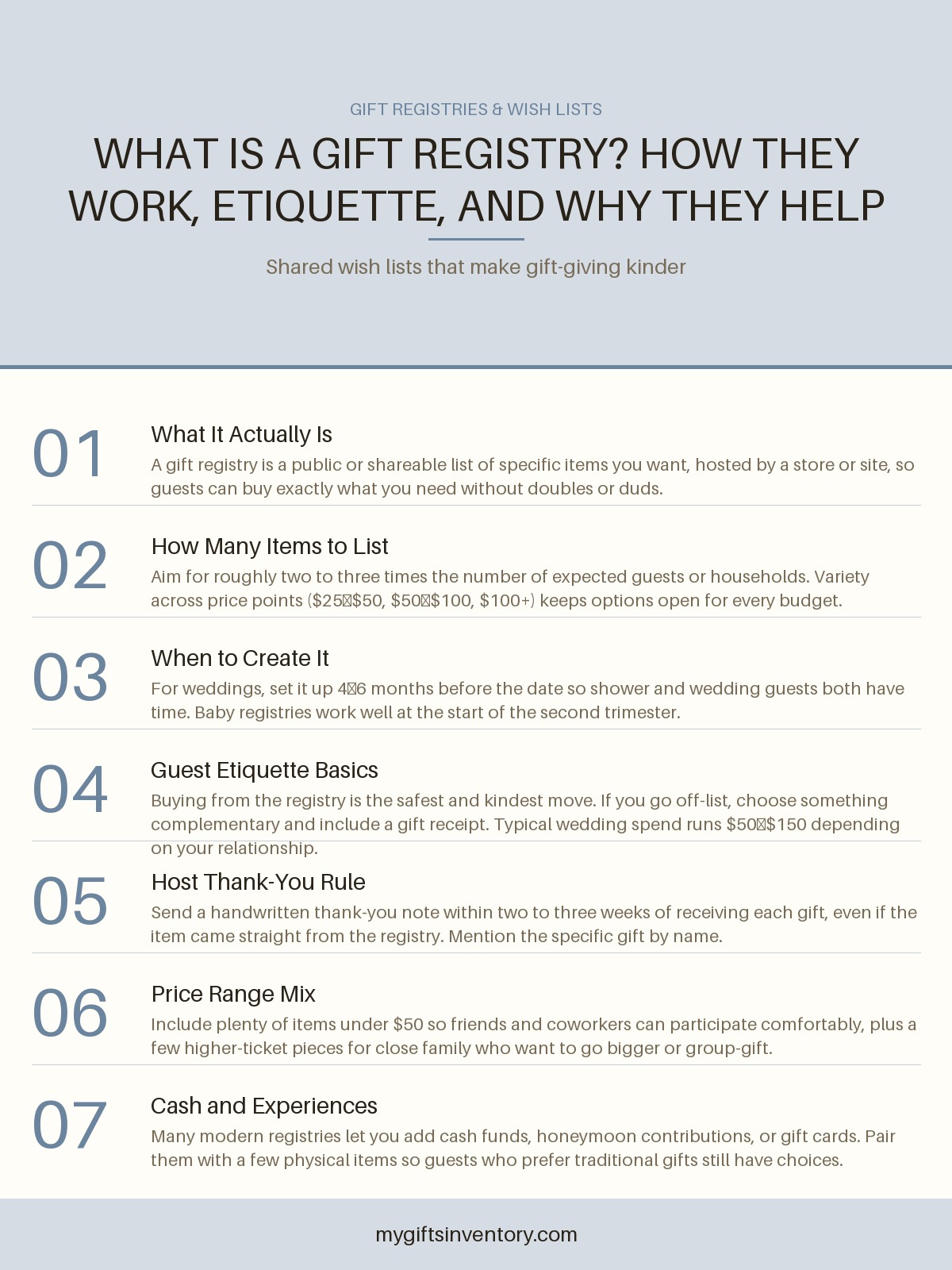
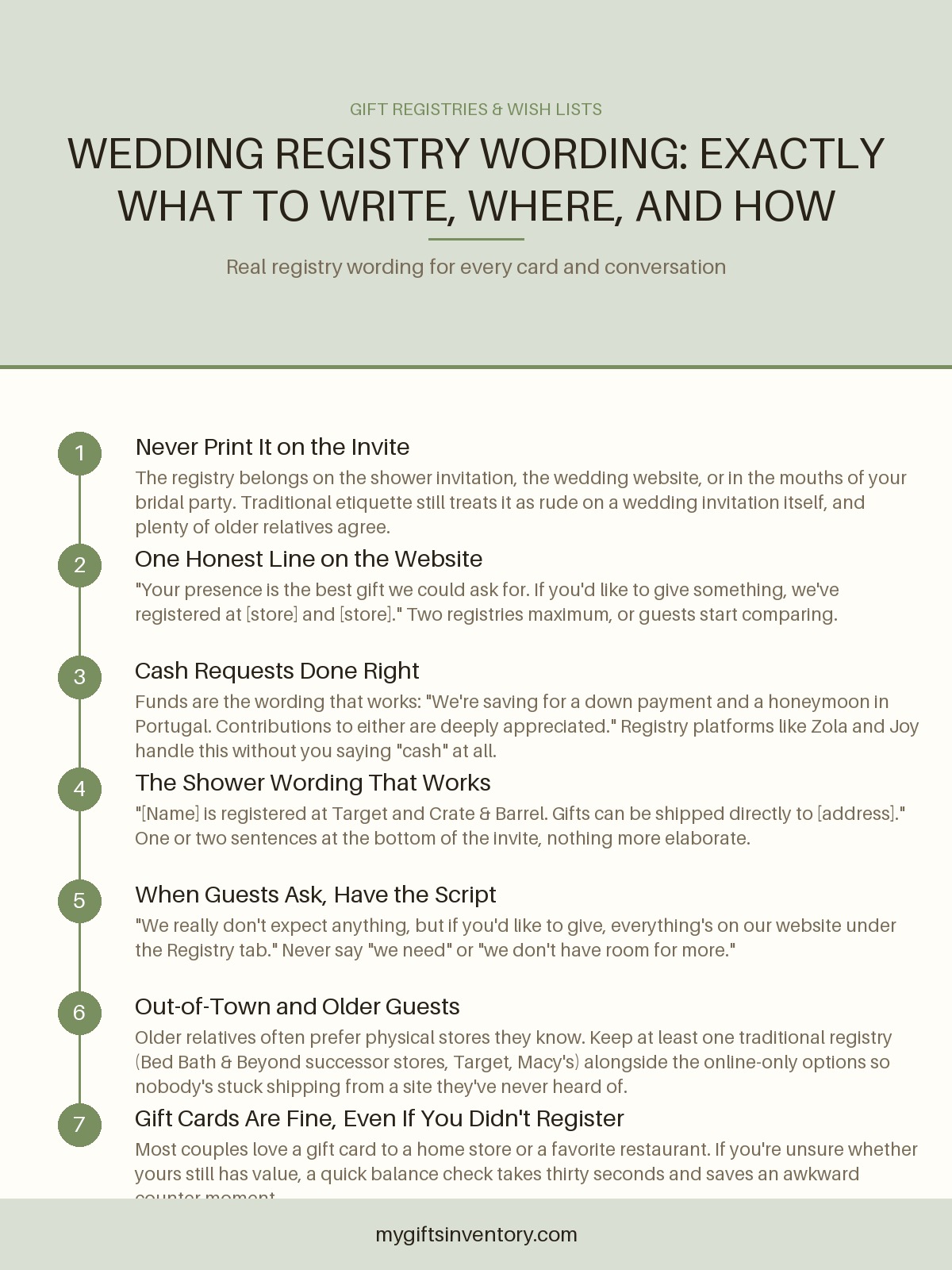
Wedding Registry Wording: Exactly What to Write, Where, and How
Registry wording trips up more couples and guests than any other part of wedding planning. Here's the phrasing that works for invitations, shower cards, websites, and the awkward moments in between.
As an Amazon Associate, My Gifts Inventory earns from qualifying purchases. We only recommend products we'd genuinely consider buying ourselves.
You're staring at a blank line on your wedding website or shower invitation, and every version of the registry sentence sounds either pushy, cold, or weirdly apologetic. We get it. Registry wording is the part of wedding planning nobody warns you about, and it comes with a surprising amount of etiquette luggage attached. This is the wording that actually works, organized by where it goes and who's reading it.
The One Rule That Shapes Everything Else
Wedding registry wording runs on a single principle: the request should feel like it's coming from someone other than the couple, and it should never assume a gift is coming at all. That's why bridal magazines have been telling couples the same thing for decades, and why every registry platform still builds their template copy around it. Once you accept that principle, every awkward decision downstream gets easier.
In practice that means:
- Registry information does not go on the wedding invitation itself in traditional etiquette. This still matters to a significant chunk of older guests, even if your friends won't care.
- It does go on the bridal shower invitation (the shower exists to give gifts, so it's expected there).
- It does go on the wedding website, usually under a tab called "Registry."
- It gets shared verbally by your parents, bridal party, and anyone fielding the "where are they registered?" question.
Modern couples often relax the invitation rule. If you do, aim for a small line at the very bottom, not a paragraph. Something like "For registry details, please visit [website]" reads as informative. "We're registered at Target and Amazon!" with exclamation points on the invitation reads as a demand.
Wording for the Wedding Website
This is the easiest place to get it right because nobody reads the whole page. A short, warm, well-placed sentence beats a five-paragraph explanation every time. Some versions we've seen land well:
Short and standard
"Your presence is the best gift we could ask for. If you'd like to give something, we've registered at [Store] and [Store]."
When you'd genuinely prefer cash
You cannot write "cash only" without offending people, but you can word a fund so it reads as intentional. Most registry platforms (Zola, Joy, WithJoy) build cash funds into the registry itself, so guests get a click-to-contribute button and never have to figure out how to give money to a newlywed couple.
"We're saving for a down payment and a honeymoon in Portugal. Contributions to either are deeply appreciated."
When you want nothing at all
Some couples genuinely want gifts. That's completely fine, and pretending otherwise can confuse guests who want to give. But if you really don't need anything, the honest phrasing is:
"We've been lucky enough to share a home for years and have everything we need. Truly, your presence is the gift."
Skip the phrasing that says "we don't have room for gifts" or "please don't bring anything." It sounds either passive-aggressive or like a test, and it puts guests in the awkward position of showing up empty-handed when they wanted to celebrate you properly.
Wording for the Bridal Shower Invitation
Traditionally, the shower invitation is where registry info is supposed to appear. Whoever hosts (a friend, an aunt, a bridesmaid) generally writes the invitation, and the registry line goes at the bottom in small print. Two sentences maximum.
"[Name] is registered at Target and Crate & Barrel. Gifts can be shipped directly to [address]."
If there are multiple shower hosts and the couple has registered at one store plus a cash fund, this is the place to mention both. The shower guest list is smaller and typically more familiar with the couple, so brevity is fine and a slightly warmer tone is welcome.
One more consideration: shower guests and wedding guests are often the same people. If someone attends both, they aren't obligated to give twice at the same level. Guests usually know this, but if a couple is registering for big-ticket items on the wedding registry, it helps to make sure the low-and-mid-price options are well represented too. If you're shopping for a shower and the registry has been picked over, the practical move is often a gift card or a heartfelt keepsake. We have plenty of specific options in our guide to the best keepsake gifts for her if you want something sentimental that still feels steady and useful.
What to Say When a Guest Asks Where You're Registered
Your wedding website is doing the heavy lifting here, but plenty of people (especially older relatives) will still ask in person. Have a script ready and give it once, cleanly, without apologizing or oversharing:
"We really don't expect anything, but if you'd like to give, everything's on our wedding website under the Registry tab."
Things not to say: "We need," "we don't have room for," "please just give cash," or "we're not doing gifts because the wedding is expensive." Each of those opens a conversation you don't want to have and puts the person asking in the position of feeling either stingy or intrusive.
Wording for the Thank-You Note
Thank-you notes are where registry wording actually earns its keep. The card is not the place to explain your registry or thank people for "checking the box." Specificity is the entire game. Reference the actual item and one concrete way you've used it or will use it:
"Thank you so much for the air fryer. We've used it three times this week and the fries are everything we hoped for. Thank you for thinking of us."
For cash or a fund contribution, avoid what feels natural ("thank you for the generous gift") and go specific instead: "Thank you for contributing to our honeymoon fund. We're using it toward the week in Lisbon and are so grateful." It's more work per note, but guests notice, and guests talk.
Common Registry Wording Mistakes
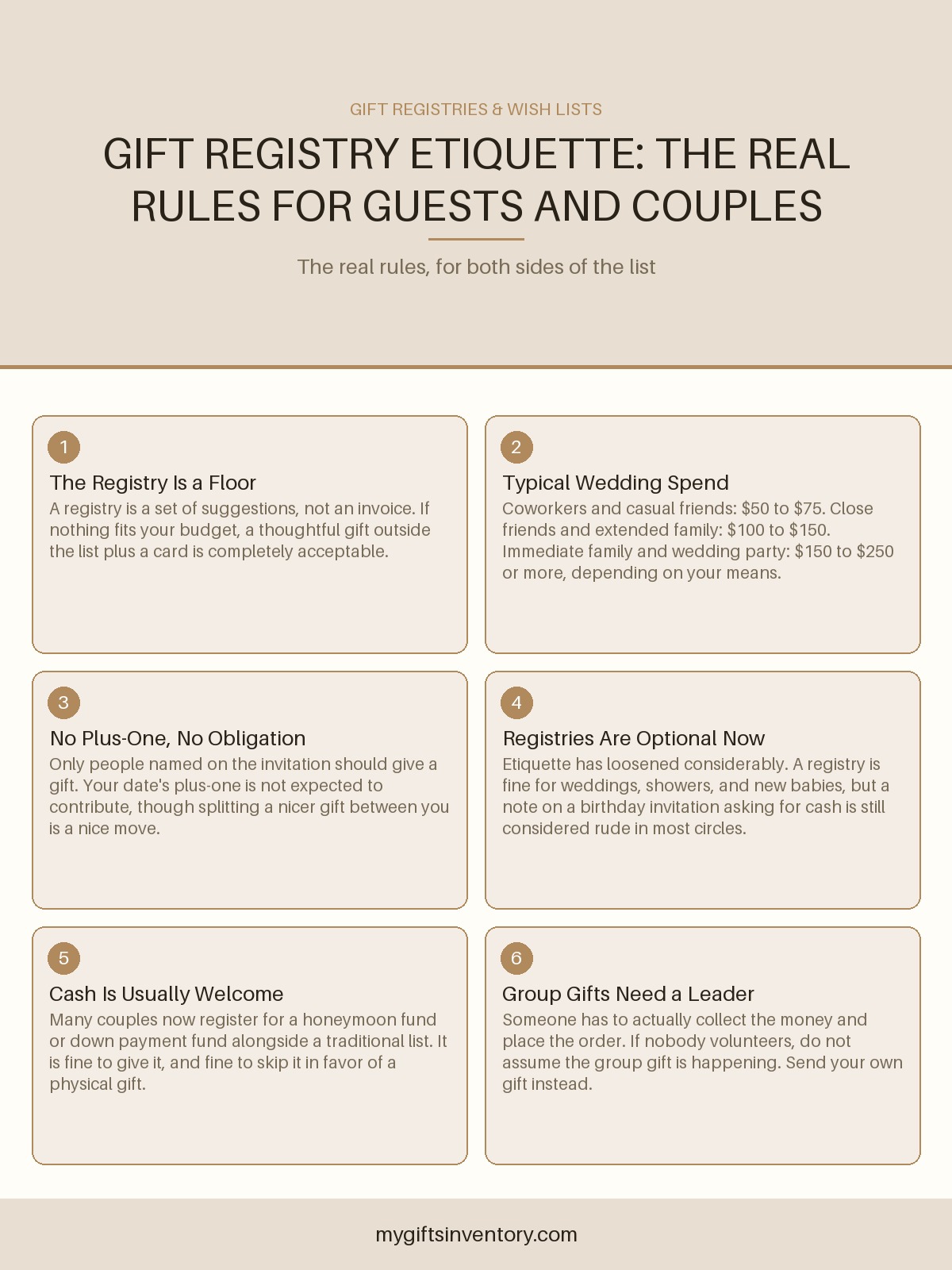
- Listing prices, or hinting at them. Never say "gifts start at $25." It signals a spend expectation even when the items are cheap.
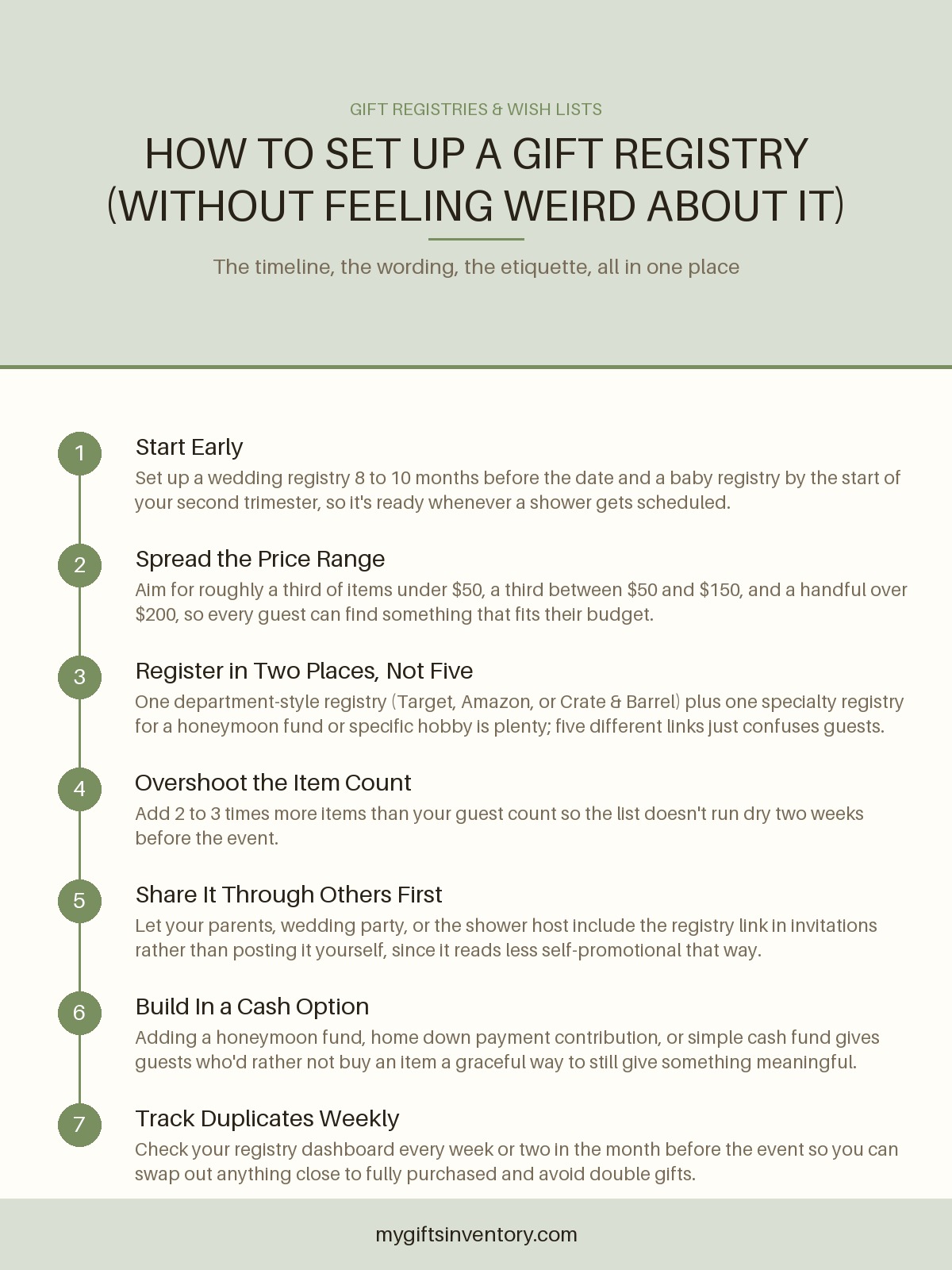
- Multiple registries that overlap heavily. Two registries is normal. Four is confusing and makes guests wonder whether one is a "backup" they don't like.
- Writing the registry on the actual wedding invitation. Etiquette still frowns on it, and even guests who don't care won't be impressed.
- "Your presence is the only gift we want" followed by a registry link. Pick a lane. It reads contradictory.
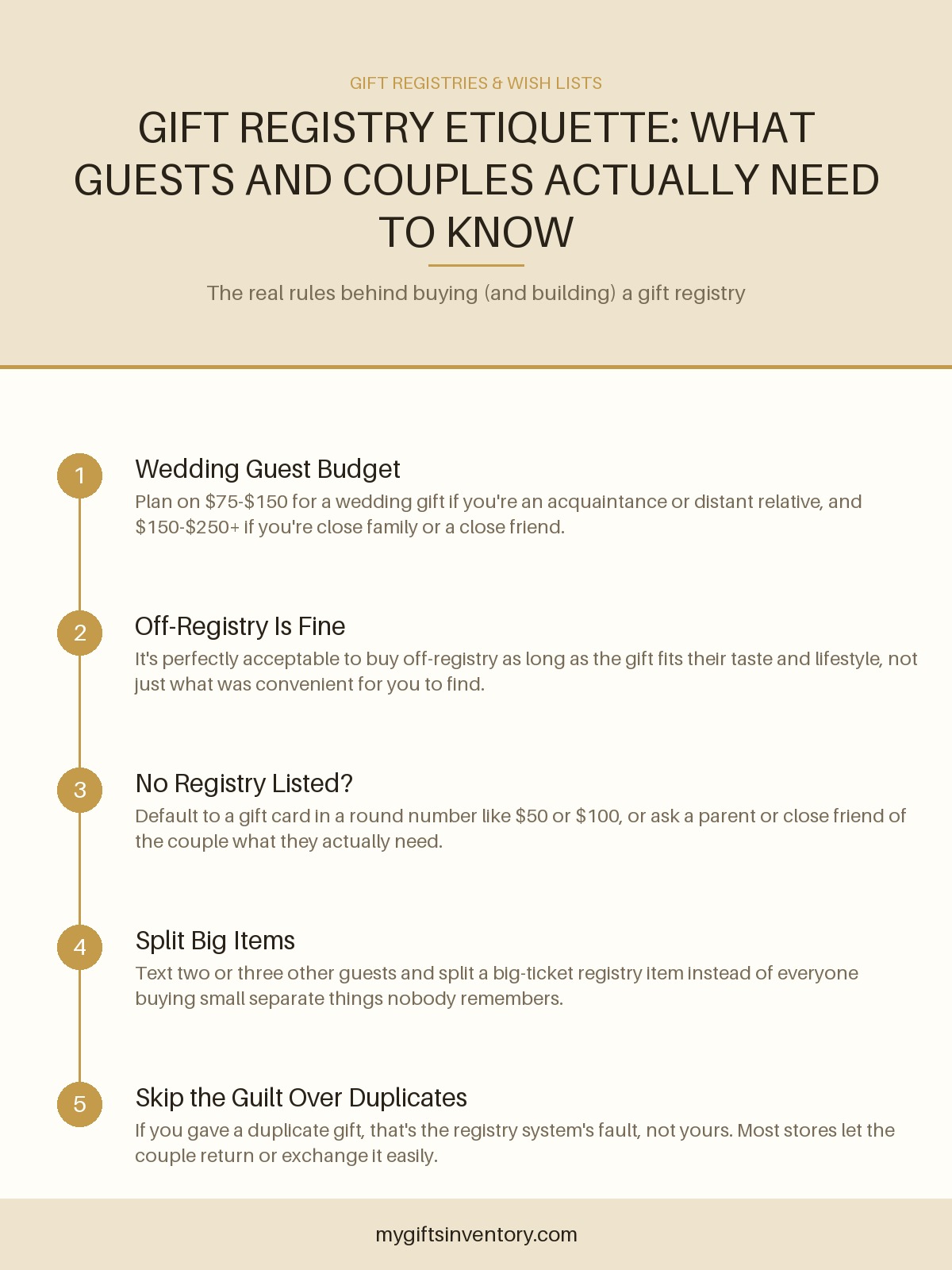
- Registering only for expensive items. A registry with nothing under $75 forces guests to either overspend or go off-registry entirely.
When Guests Go Off-Registry (Or Give Something You Can't Use)
It happens. A great-aunt gives you a heavy crystal vase you didn't register for. A coworker gives you a decorative item that clashes with everything you own. A friend gives you a gift card to a store you rarely shop at.
The first move is always gratitude in writing. The thank-you note doesn't care whether the gift fits your aesthetic; it thanks the giver for thinking of you. The second move is a quiet plan. If a gift truly can't be used, return it discreetly, regift with care, or donate it. Never mention to the giver that you did.
For gift cards specifically, guests giving wedding gifts often default to them because they're easy and universally welcome, and that's usually right. If you eventually find yourself holding a card you're not sure still has value (they do expire in some states, and occasionally the balance gets eaten by fees), a Trader Joe's gift card balance check or similar takes about thirty seconds. Knowing the balance before you try to use it at the register saves an awkward moment.
Cash Funds Without the Awkwardness
The "cash vs. gifts" question runs through every registry decision, and the wording is the whole game. The trick is to describe what the money is for, not that it's money. A fund named "Honeymoon in Japan" reads as a plan. A line that says "we prefer cash" reads as a shakedown.
If you're building a registry from scratch and need somewhere to start for the physical gifts, we've got curated picks in our list of the hottest gifts of 2026. It's especially good for couples who want a mix of practical home items and memorable extras rather than a wall of toaster options.
Registry Wording for Second Weddings and Vow Renewals
Same principle, slightly softer tone. Guests often assume they don't need to give much at a second wedding, so the wording has to be extra clear that gifts are welcome and expected. A good version:
"We're so happy to celebrate with you. Our home is already full, so we've created a fund for [something specific] and a small registry at [store]. No pressure either way."
Or, if you truly want nothing, keep it to one line on the website and leave it off the invitation entirely. People will ask. You'll have a script. Everyone survives.
Gift Ideas to Go With This



Want more ideas? Browse our full guide: 20 Housewarming Gift Ideas Under $50 (2026) New Homeowners Will Actually Use
Frequently Asked Questions
Is it rude to put the registry on the wedding invitation?
Traditional etiquette says yes, and many older guests still hold that view. The compromise most modern couples use is a single line at the bottom pointing to the wedding website, with full registry details on the site itself. If your guest list skews older or more traditional, err on the side of keeping it off the invitation and letting parents and bridal party spread the word.
How do I ask for cash without being tacky?
Request a fund, not cash. "Honeymoon in Italy," "First Home Down Payment," or "New Kitchen" are all acceptable ways to invite contributions without ever saying the word cash. Registry platforms like Zola and Joy make this seamless because guests see a contribute button and never have to hand you a check.
What's the right wording for a cash registry on the website?
"We're saving for [specific thing]. Contributions to that fund are deeply appreciated, though your presence is more than enough." Specificity matters more than length. Guests want to know the money goes somewhere real, not into a general "wishes" bucket.
Should we have more than two registries?
Two is the sweet spot. Guests understand two. More than two starts to feel like a scavenger hunt, and worse, it can look like you're trying to maximize options rather than tell people where you actually want things from. If you truly need more than two, put the two main ones prominently and mention the others as "additional options" further down.
Do I have to include a registry line on the shower invitation? What if I don't want gifts?
If you're hosting a shower and the guest of honor has a registry, yes, include it. That's a shower's whole purpose. If the couple has opted out of gifts entirely, use the shower as a chance to ask guests to bring a favorite memory, a written piece of advice, or a recipe instead. That's a deliberate, gracious alternative, not a silent one.
Looking for an Actual Gift Instead?
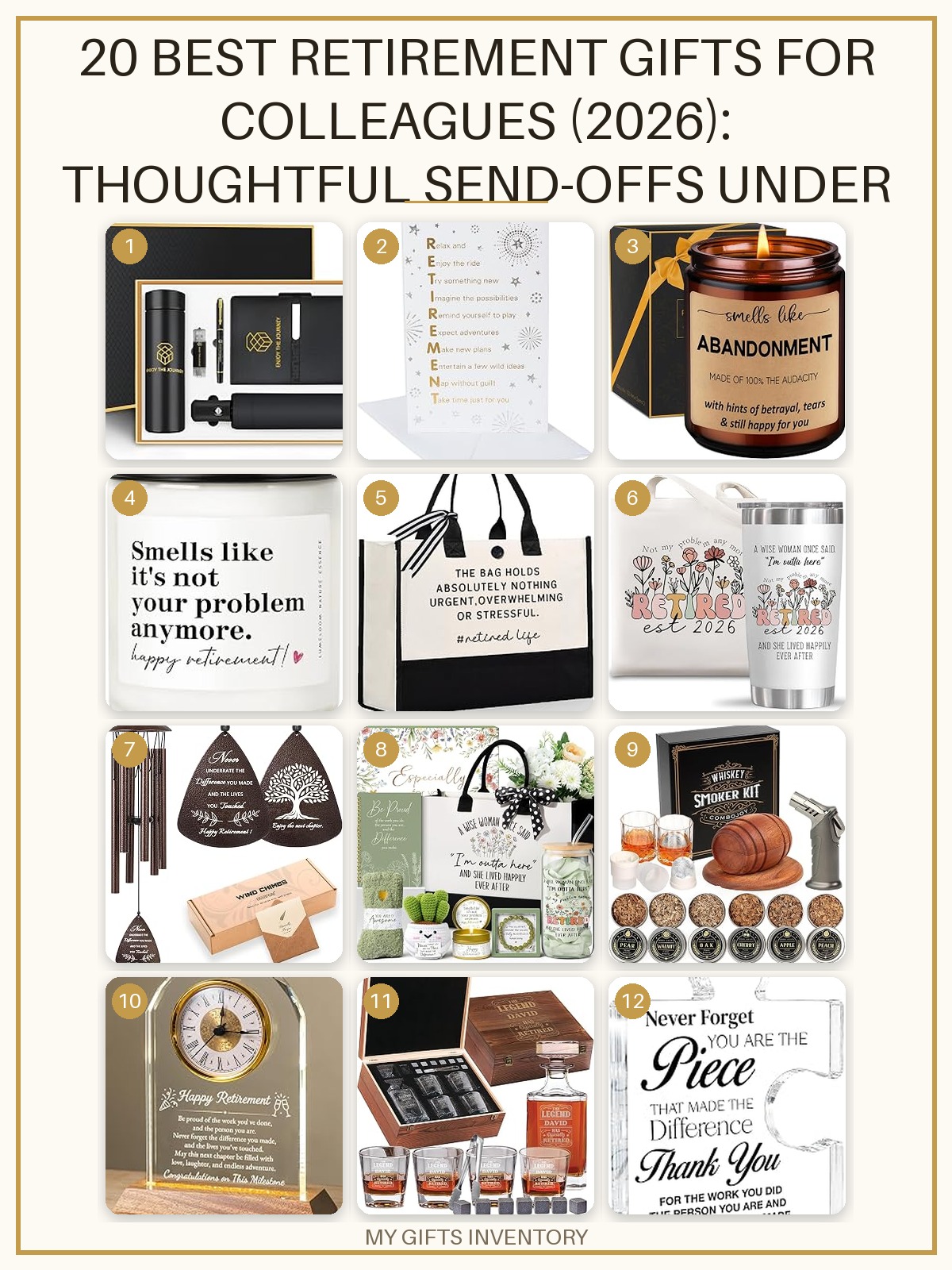
Gift Sets We Love Right Now
Every item picked, priced and linked, ready to buy.
More Gift Advice