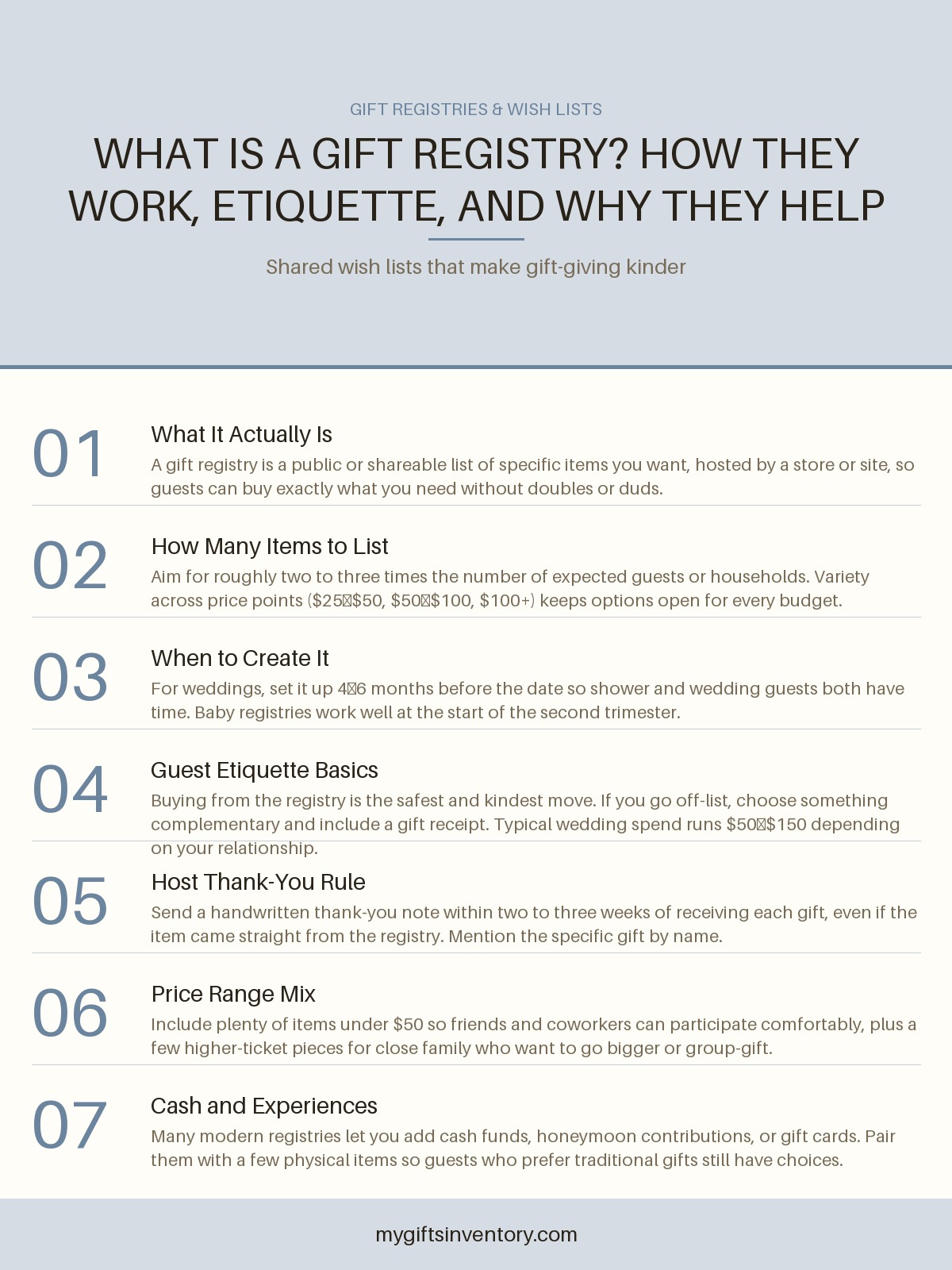
Gift Registry Etiquette: The Real Rules for Guests and Couples
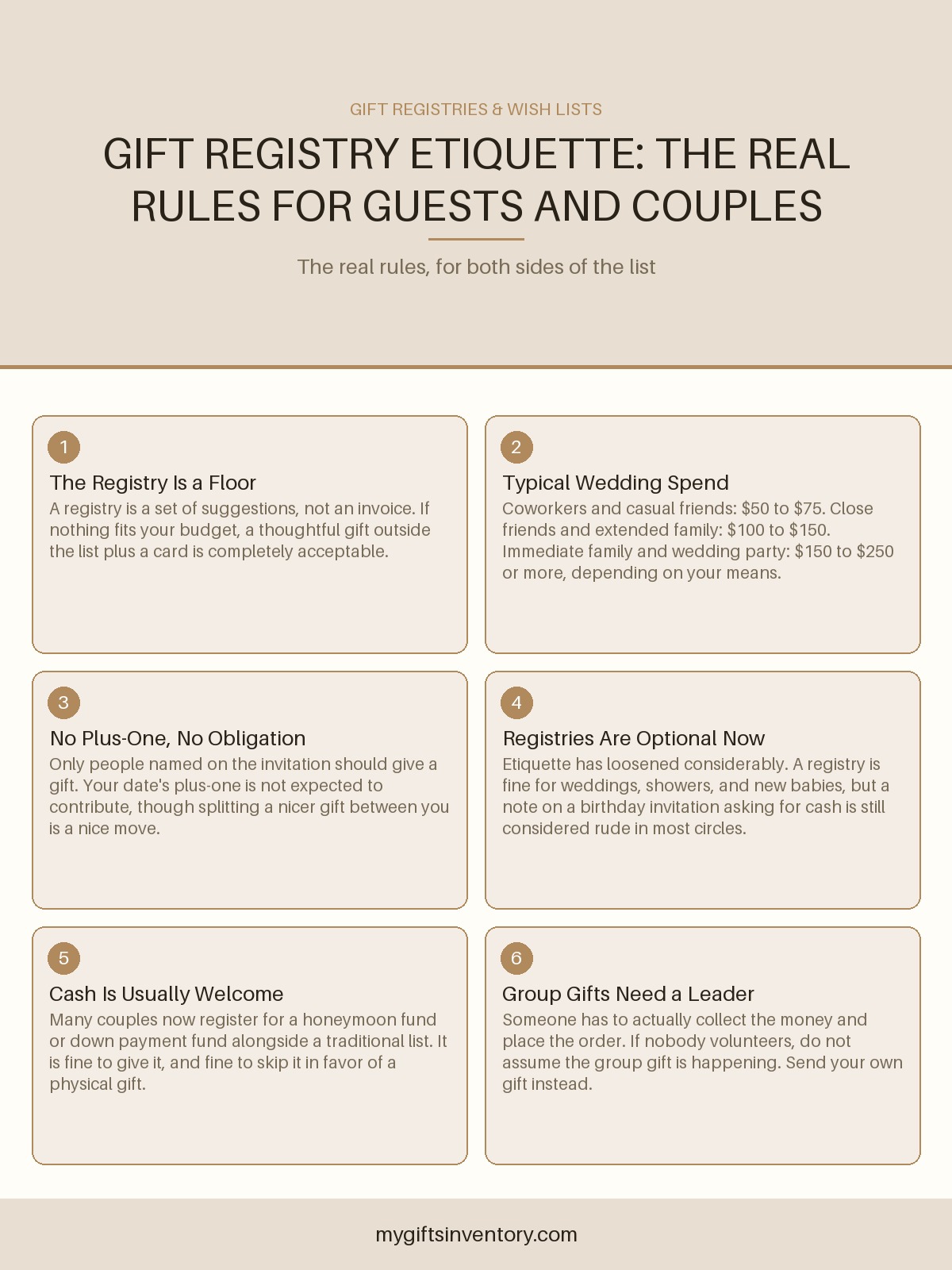
Whether you're buying off a registry or building one, here's the honest etiquette on budgets, plus-ones, group gifts, and the gifts that never made the list.

As an Amazon Associate, My Gifts Inventory earns from qualifying purchases. We only recommend products we'd genuinely consider buying ourselves.
You have a wedding or baby shower coming up and a registry link sitting in your inbox, and you're stuck on a question that feels too small to ask out loud: how much am I supposed to spend here, and do I really have to buy off the list? We hear this one constantly. The short version is that a registry is a suggestion, not a bill, and the etiquette around it is far less rigid than most people think. But there are real norms for budgets, plus-ones, group gifts, and what to do when everything has already been claimed, so let's walk through them properly.
What a Registry Actually Is (and Isn't)
A registry is a courtesy, not an obligation. Couples and expecting parents build them because people kept asking what they wanted, and because picking from a list beats guessing at whether the couple already owns a stand mixer. The registry tells you what they need. It does not tell you what you must buy, how much you must spend, or that a gift is required at all.
What a registry is not: a demand, a sign the couple is greedy, or a rule that anything off-list will be quietly resented. Most couples genuinely do not care if you go off-registry, especially if the gift is thoughtful. The list exists to make your life easier, and if it isn't doing that, you're free to set it aside.
How Much Should You Actually Spend?
This is the question almost everyone is really asking, and the honest answer is that there's no single number. The old-fashioned rule of thumb was that your gift should roughly cover the cost of your plate at the reception, which is a bizarre standard that treats a wedding as a transaction. Plenty of people still follow it, plenty don't, and nobody is checking.
What actually matters is your relationship to the couple and your own budget. A few ranges we find useful as a starting point, not a rulebook:
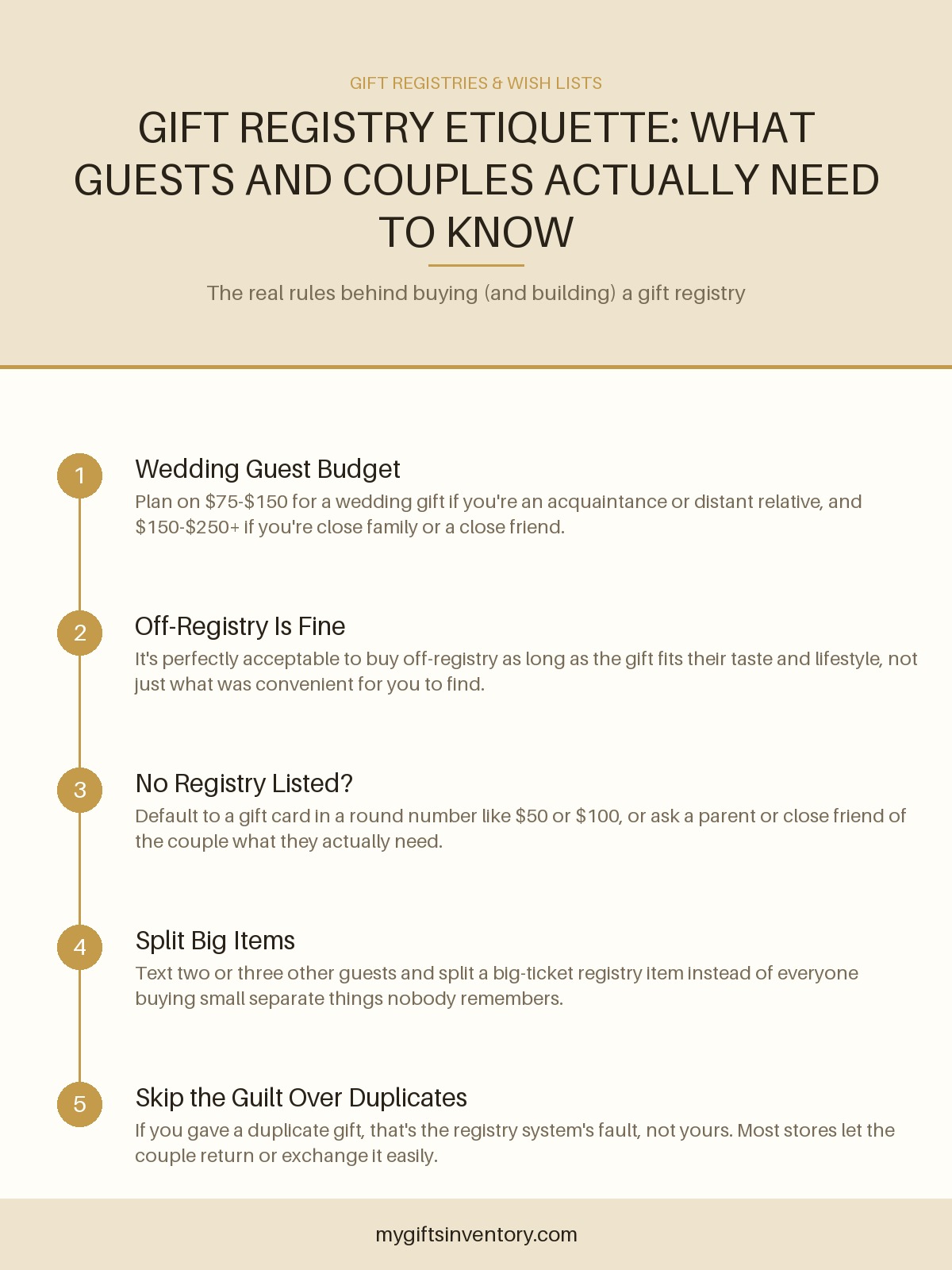
- Coworkers and casual friends: $50 to $75
- Extended family and closer friends: $100 to $150
- Close friends: $100 to $200
- Immediate family and wedding party: $150 to $250 or more, if you can swing it
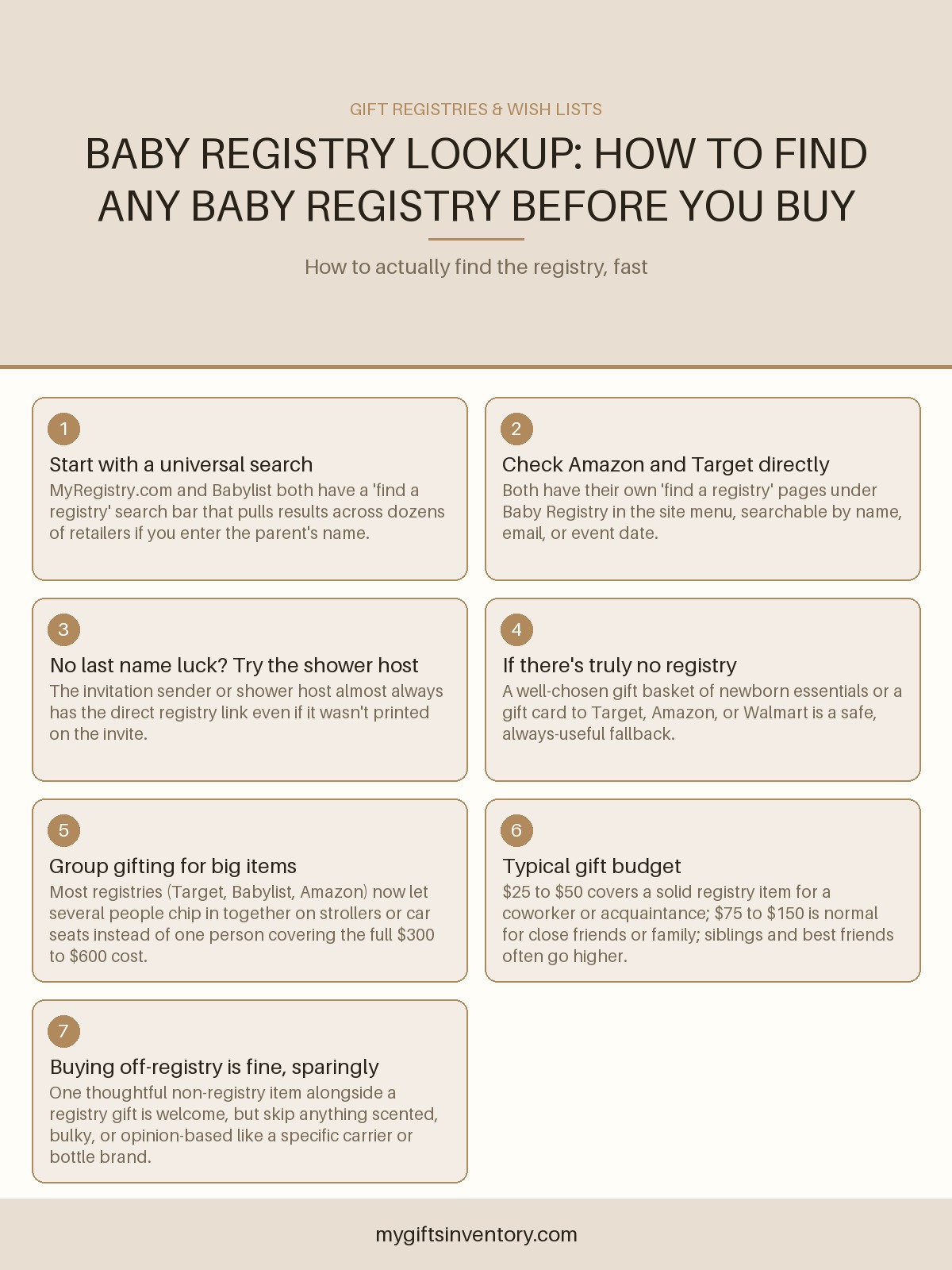
For baby showers, the norm is lower: $30 to $75 is typical for a friend or coworker, $75 to $150 for close family. For graduation, housewarming, and engagement parties, think $25 to $75 unless your relationship suggests otherwise.
If any of these numbers feel out of reach right now, that is completely fine. A $40 gift chosen with care will never be remembered as stingy, and no reasonable couple is tallying what you spent. If money is tight and you still want to give something substantial, look for registry items at the lower end or consider a group gift so a handful of people can split one nicer piece.
Do You Have to Buy Off the Registry?
No. This is the etiquette myth that causes the most stress, and we'd like to retire it. Buying off the registry is convenient for everyone, but a thoughtful gift outside the list is just as welcome, and sometimes even more meaningful. The only real rule is that if you go off-registry, you should lean toward something the couple can easily return, exchange, or regift without awkwardness, because you're more likely to miss the mark than the list is.
There are a few good reasons to go off-registry anyway:
- Everything in your price range has been claimed.
- You want to give something personal that isn't on any list, like a hand-bound recipe book or a framed favorite photo.
- The registry is full of big-ticket items that feel out of scope, and you'd rather give a smaller, better-fit gift.
If you're stuck on that last one, browse the registry for smaller items before giving up. Even a couple with a big registry usually leaves room for a $40 serving bowl or a set of dish towels, and you can always pair a small registry item with something thoughtful from your gift exchange ideas under $30 playbook if you need a little creativity on a budget.
What to Do When the Registry Is Already Picked Over
This happens all the time with popular registries and it's not a disaster. Your options, roughly in order of how much we'd recommend them:
Buy a gift card to the store the registry is from
This is the cleanest move. The couple can put it toward the pricey thing they still need, and it's genuinely useful. Many stores make this easy, and if you're ever unsure how to check a balance on a gift card you were given or bought, the process is usually quick and worth knowing. If the registry is at a home store, our guide to gift cards at Crate & Barrel covers where to buy them and what to know.
Give a cash contribution toward a specific goal
If the couple has a honeymoon fund or a down payment fund, this is often the most useful gift you can give. It's not impersonal if you frame it clearly. "Toward the honeymoon" or "for the new house" gives the money a story.
Go off-registry thoughtfully
Pick something in your budget that a new household always needs: a good set of kitchen towels, a nice olive oil, a small plant, a quality candle. Wrap it well and write a real note, and it will land fine.
Plus-Ones, Group Gifts, and Other Awkward Corners
A few situations come up constantly and deserve their own short answers.
Does my plus-one need to chip in?
No. If you were invited with a guest, your date is not expected to contribute to a joint gift unless they want to. If they do want to split something nicer with you, great, but the obligation is yours alone. Only people named on the invitation are expected to give.
How do group gifts work?
Someone has to be the organizer. If nobody has volunteered to collect money and order the gift, the group gift is probably not happening, and you should send your own. If you are that organizer, set a per-person amount, collect via a payment app with a clear deadline, order in time, and put everyone's name on the card. Don't be shy about sending a reminder; people forget.
What if I can't attend?
You don't have to send a gift just because you were invited. If you're close to the couple, a gift is still kind, but nobody expects it from someone who can't make it. If you'd like to send something small anyway, a card with a note is plenty.
Can I split a registry item with someone?
Yes, and it's one of the best uses of a group gift. Find another guest in a similar position, split the cost of a bigger item, and both sign the card. Just make sure only one person places the order so the couple doesn't receive duplicates.
How to Build a Registry Without Being the Rude One
If you're on the other side of this, building a list is a minefield of second-guessing, and some of it is legitimately tricky. A few guidelines that keep you graceful:
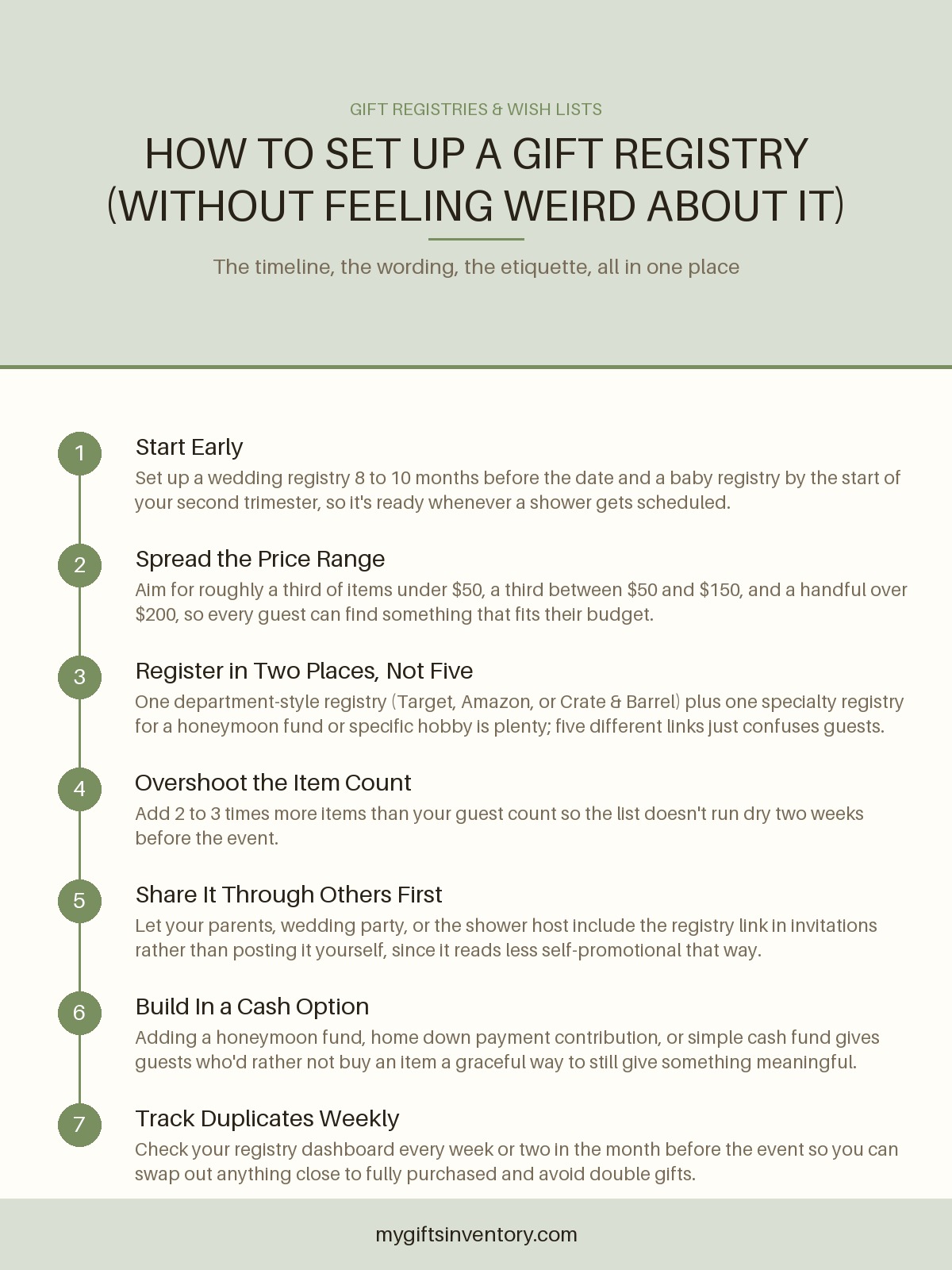
- Include a real spread of prices. The single most common complaint about registries is that there's nothing under $50. Stock the lower end generously so guests with smaller budgets have real choices.
- Keep it to one or two stores. Scattering across five registries makes shopping a chore.
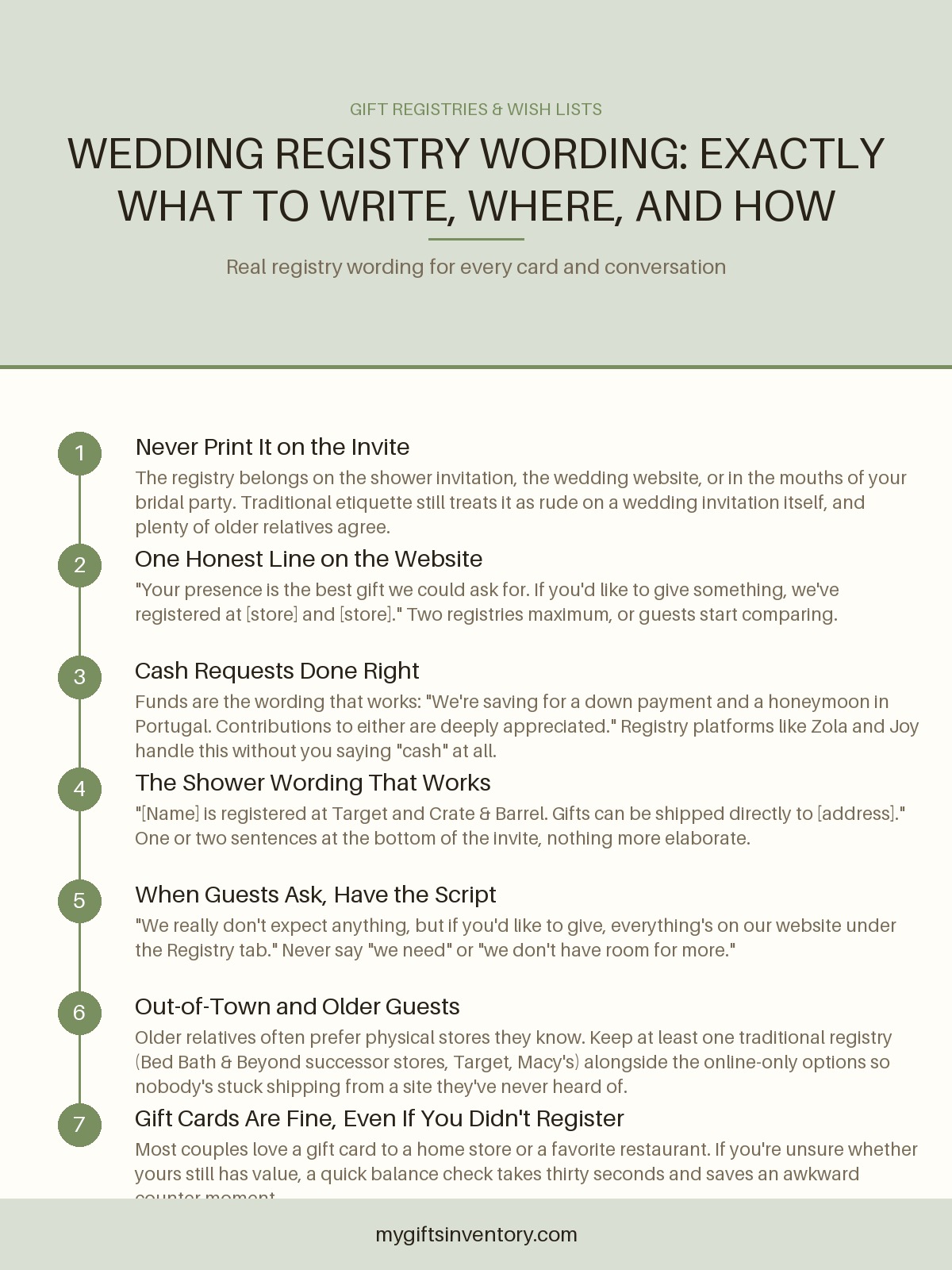
- Skip the cash-only registry. Honeymoon funds are common now and totally fine alongside a traditional list, but a registry that only asks for cash reads as tacky to a lot of guests. Give people options.
- Don't ask for upgrades only. If you already own a perfectly good blender, don't register for the $500 version and expect guests to fund the upgrade. It's fine to register for a nicer version of something you'd genuinely replace, but be reasonable.
- Register early. Ideally six to eight weeks before the shower and about two to three months before a wedding, so guests have time to shop with options.
- Let the wedding party spread the word. If a guest asks you whether them buying off-registry is okay, they're the ones to ask, and the answer should be a warm yes.
If the shower or wedding falls during the holidays, when everyone's budget is stretched, keep the lower end especially well stocked. We've written about gifts under $40 for exactly this reason; the same logic applies to a registry during the holiday crush.
Baby Shower and Wedding Registries Are Not the Same
Worth saying plainly, because guests often mix them up. Wedding registries tend to focus on the household: dishes, cookware, linens, sometimes a honeymoon fund. Baby registries tend to focus on the baby, with a big emphasis on consumables (diapers, wipes, bottles) and things that get outgrown quickly. On a baby registry, follow the couple's lead on sizes, brands, and especially whether they want hand-me-downs and off-registry hand-me-downs. Some parents are thrilled by them; others have very specific safety preferences. A quick text to a close friend or family member settles it.
One specific note: on a baby registry, it's fine and often appreciated to gift a slightly larger item that will be used for years, like a good carrier or a convertible car seat, rather than another onesie. But check the list first. If they've already registered for one, don't duplicate it.
The Card and the Wrap Still Matter
Even when the gift is on the registry, the presentation carries most of the emotional weight. Put your name on the card, not just the box, and write more than "Congrats." A sentence about how you know the couple or what you're excited for them is worth more than an upgrade to a pricier gift. If the gift is from a group, list every name. Wrap it if you can; a gift bag is fine, but a little effort reads as care. If the gift ships directly to the couple, which is common and totally acceptable now, send a card separately so there's something to open. That's the move most guests forget.
And if you're stuck for words, keep it simple and specific. "So happy for you both. This is for the kitchen you'll fill together." That's plenty.
When in Doubt, Follow the Couple's Lead
Registries vary wildly by family and region. Some cultures expect cash in an envelope; some expect a physical gift; some expect both. The most reliable etiquette in any situation is to read the invitation carefully, look at what the couple actually put on their list, and ask a member of the wedding party or a close family member if you're genuinely unsure. Nobody has ever been offended by a guest asking a polite question.
Gift Ideas to Go With This



Want more ideas? Browse our full guide: 20 Housewarming Gift Ideas Under $50 (2026) New Homeowners Will Actually Use
Frequently Asked Questions
Do you have to buy a gift if you're invited to a wedding but can't attend?
No, you are not obligated to send a gift if you decline the invitation. If you're close to the couple, sending a card or a small gift is a kind gesture, but it's never required, and no reasonable couple will hold it against you.
Is it rude to give cash at a wedding?
Not at all. Cash is common and usually welcome, especially if the couple has a honeymoon fund or a savings goal listed. If they've registered for physical gifts only, a physical gift is a safer choice, but cash is rarely turned down.
How much should I spend on a wedding gift from a registry?
A typical range is $50 to $75 for a coworker or casual friend, $100 to $150 for a close friend or extended family member, and $150 to $250 or more for immediate family or the wedding party. Spend what your budget allows; the relationship matters more than the number.
Should I bring a gift to a bridal shower if I'm also giving a wedding gift?
Yes, they're separate events. Bridal shower gifts are usually smaller than wedding gifts, often $30 to $75, and typically come from the registry. It's fine to give something modest at the shower and save the bigger gift for the wedding.
What if the registry only has expensive items left?
You're not required to buy anything off the list. A gift card to the registry store, a contribution to a honeymoon fund, or a thoughtful off-registry gift in your budget is a perfectly good choice, and the couple will be glad you came.
Looking for an Actual Gift Instead?



Gift Sets We Love Right Now
Every item picked, priced and linked, ready to buy.
More Gift Advice