How to Set Up a Gift Registry (Without Feeling Weird About It)
A practical, step-by-step guide to building a wedding, baby, or housewarming registry people actually enjoy shopping from, plus how to share it without sounding presumptuous.

As an Amazon Associate, My Gifts Inventory earns from qualifying purchases. We only recommend products we'd genuinely consider buying ourselves.
Setting up a gift registry sounds simple until you're staring at a blank list wondering how many things you're allowed to ask for, whether it's tacky to include anything over $200, and how you're supposed to tell people about it without sounding like you're handing out a shopping list. That awkwardness is normal. A registry is really just a communication tool, a way to save your guests from guessing, and once you understand a few unwritten rules, building one gets a lot less fraught.
When to Actually Start One
Timing matters more than people expect. Register too late and half your guests will have already bought something off-list. Register too early and the store might discontinue items before your event rolls around.
Weddings
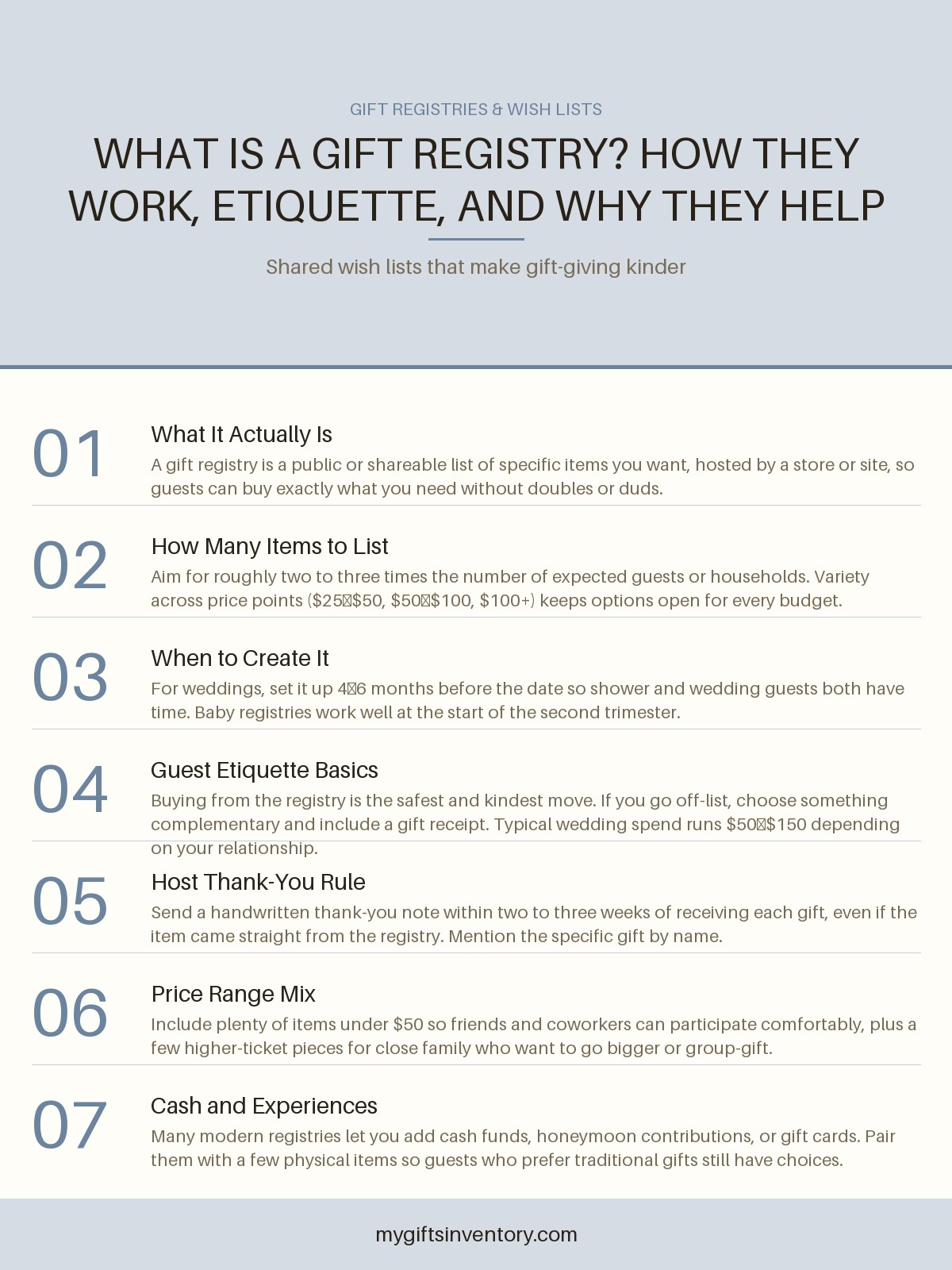
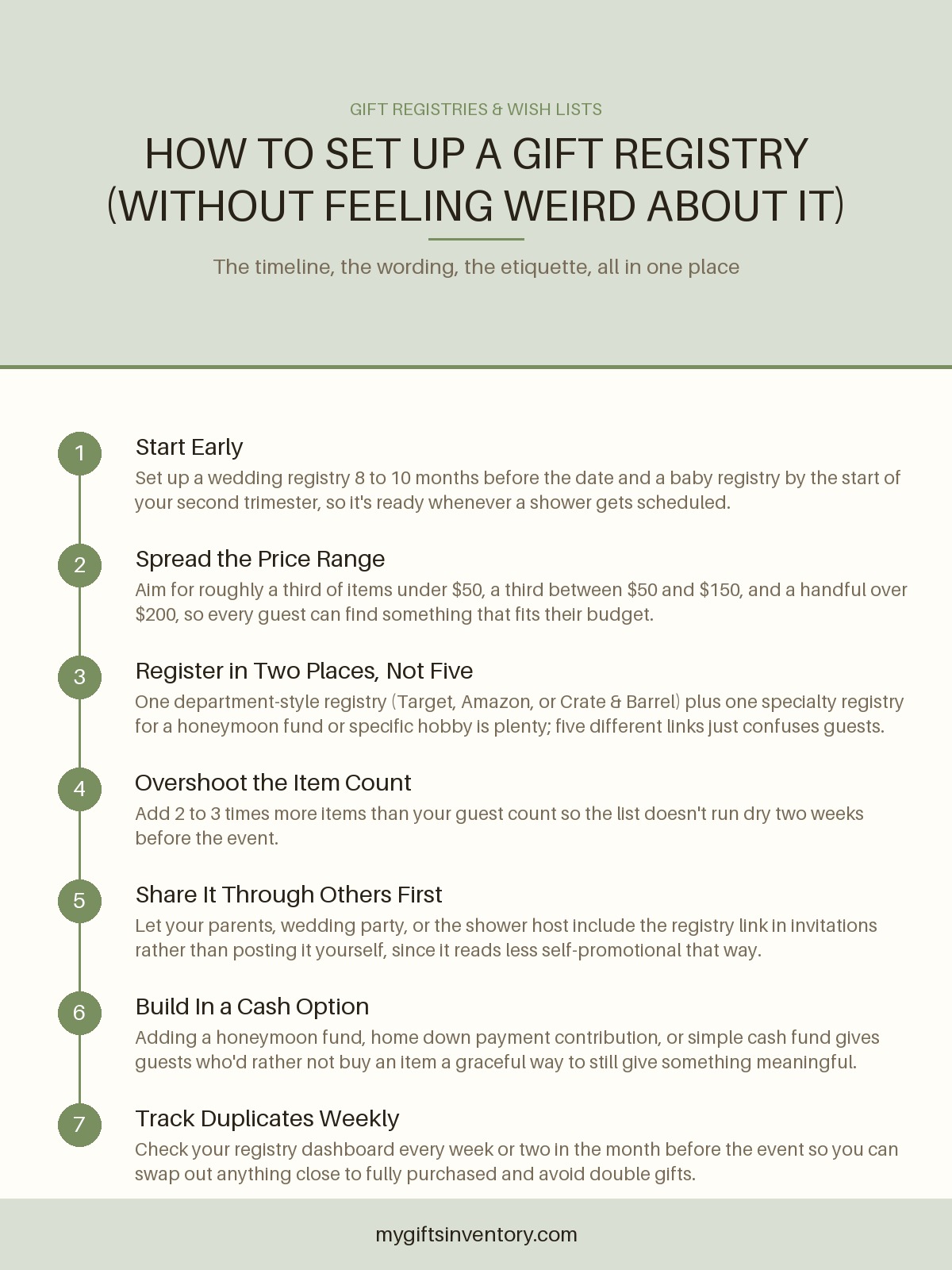
The general rule is 8 to 10 months before the wedding, right around when save-the-dates go out. That gives engagement party guests, shower guests, and wedding guests all a working link, and it spreads the buying window over several months instead of cramming it into the final few weeks.
Baby Showers
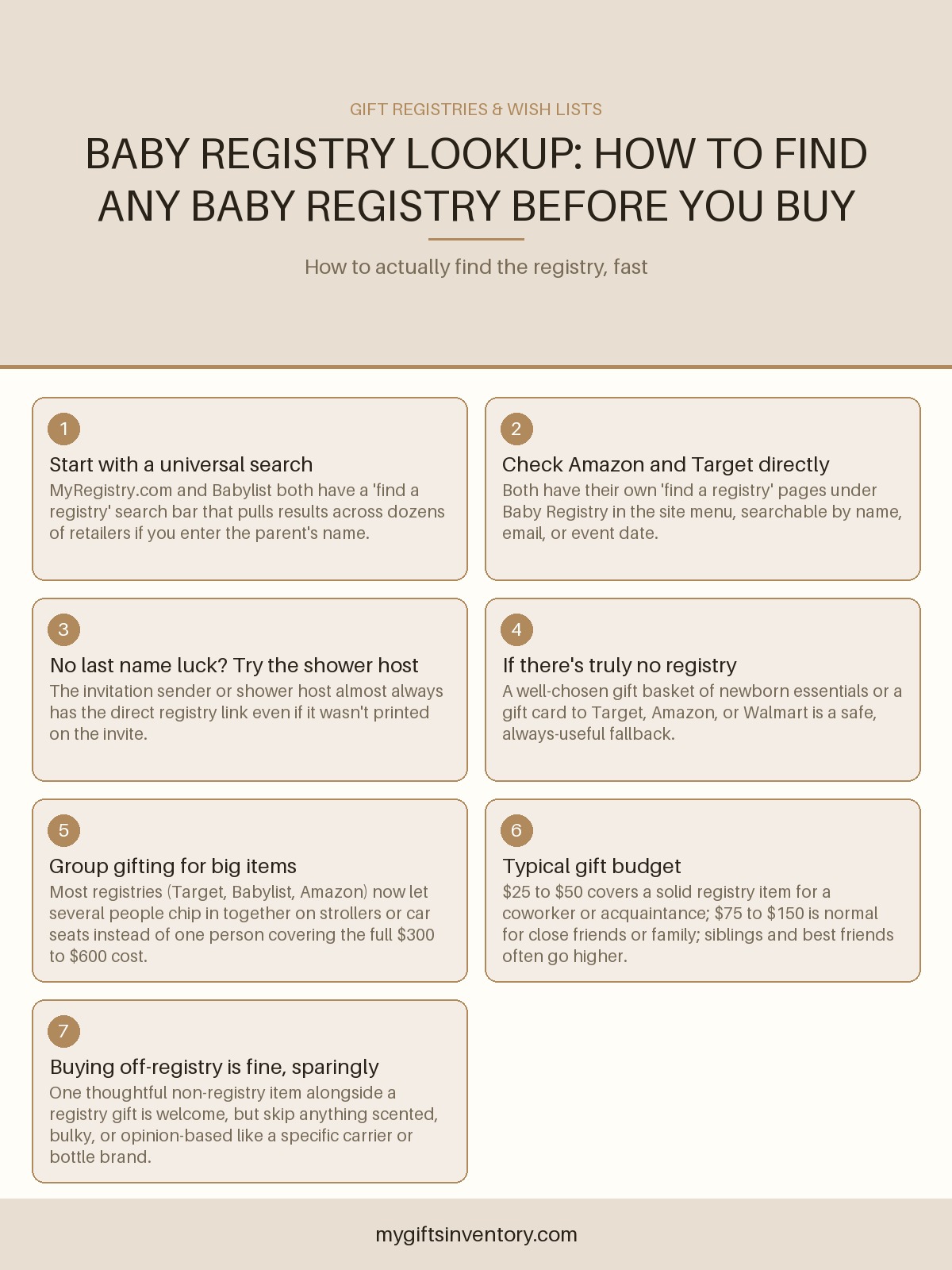
Most people set up a baby registry at the start of the second trimester, once the pregnancy feels more settled and the anatomy scan has usually happened. This also gives you time to research car seats and strollers, which tend to have longer lead times and more research involved than anything on a wedding list.
Housewarmings and Other Occasions
Registries aren't just for weddings and babies anymore. Plenty of people build a simple registry for a housewarming, a milestone birthday, or even a retirement, usually 4 to 6 weeks out is enough runway. If you're pulling together ideas for that kind of list, browsing something like home decor gifts under $50 is a fast way to fill in the lower-price tier without overthinking it.
Choosing Where to Register
The biggest mistake we see is registering in too many places. It feels like it maximizes options, but in practice it just means guests have to click through four or five different sites before finding something in their budget, and plenty will give up and just send a check instead.
A workable setup is one broad, department-style registry (Target, Amazon, Crate & Barrel, or a universal registry tool that pulls items from multiple retailers into one list) plus, if it applies, one specialty registry for something like a honeymoon fund or a specific hobby-related store. Two links, maybe three at the absolute most. If your registry lives on Target or Amazon, it's also worth knowing how gift card balances work on those platforms in case a guest opts for a card instead of an item off the list, both Target and Amazon gift cards are easy for recipients to check and use toward whatever's left on the registry later.
How Many Items to Add (and at What Price Points)
A common formula is to add 2 to 3 times as many items as you have guests. If you're expecting 100 wedding guests, aim for 200 to 300 items on the list. That sounds like a lot, but registries include everything from a $12 spatula to a $600 mattress, and you want enough spread that the list doesn't run dry three weeks before the event, leaving latecomers with nothing left to choose.
Spreading the Price Range
The etiquette here is less about a strict rule and more about fairness to your guest list. A reasonable split looks like:
- Under $50: about a third of the list. Kitchen basics, linens, small decor pieces. This price range is exactly where guides like gift baskets under $50 are useful for inspiration if you're stuck on filler items.
- $50 to $150: the biggest chunk, roughly 40 percent. This is where most individual guests land, especially coworkers or extended family who want to give something nicer without going overboard.
- $150 and up: a smaller set, maybe 15 to 20 percent, meant for group gifts. Parents, siblings, or a handful of guests chipping in together on a big-ticket item like furniture or a espresso machine. If you want a sense of what belongs in this tier, gifts under $1000 gives a feel for what a group-gift splurge item typically looks like.
Skip anything wildly out of range on both ends. A $15,000 registry item will sit there untouched and awkward, and a registry that's entirely $10 and $15 items reads as though you didn't put any thought into it.
Building the List Without Overthinking It
Start broad, then narrow. Walk through your home (or your future home, if you're not living together yet) room by room and note what's genuinely missing or worn out, rather than just adding things because they look nice online. Registries built from an actual needs list age better than ones built from browsing, because you'll actually use everything a year later.
It helps to add a mix of practical and a few "fun" items too. Not everything has to be a toaster. A nice cocktail set, a game night bundle, or something tied to a shared hobby gives guests who know you well something more personal to choose, rather than forcing everyone toward the most utilitarian items on the list. For general inspiration on balancing practical versus personal, this guide on choosing the perfect gift is a good starting point even outside the registry context.
Sharing It Without Sounding Presumptuous
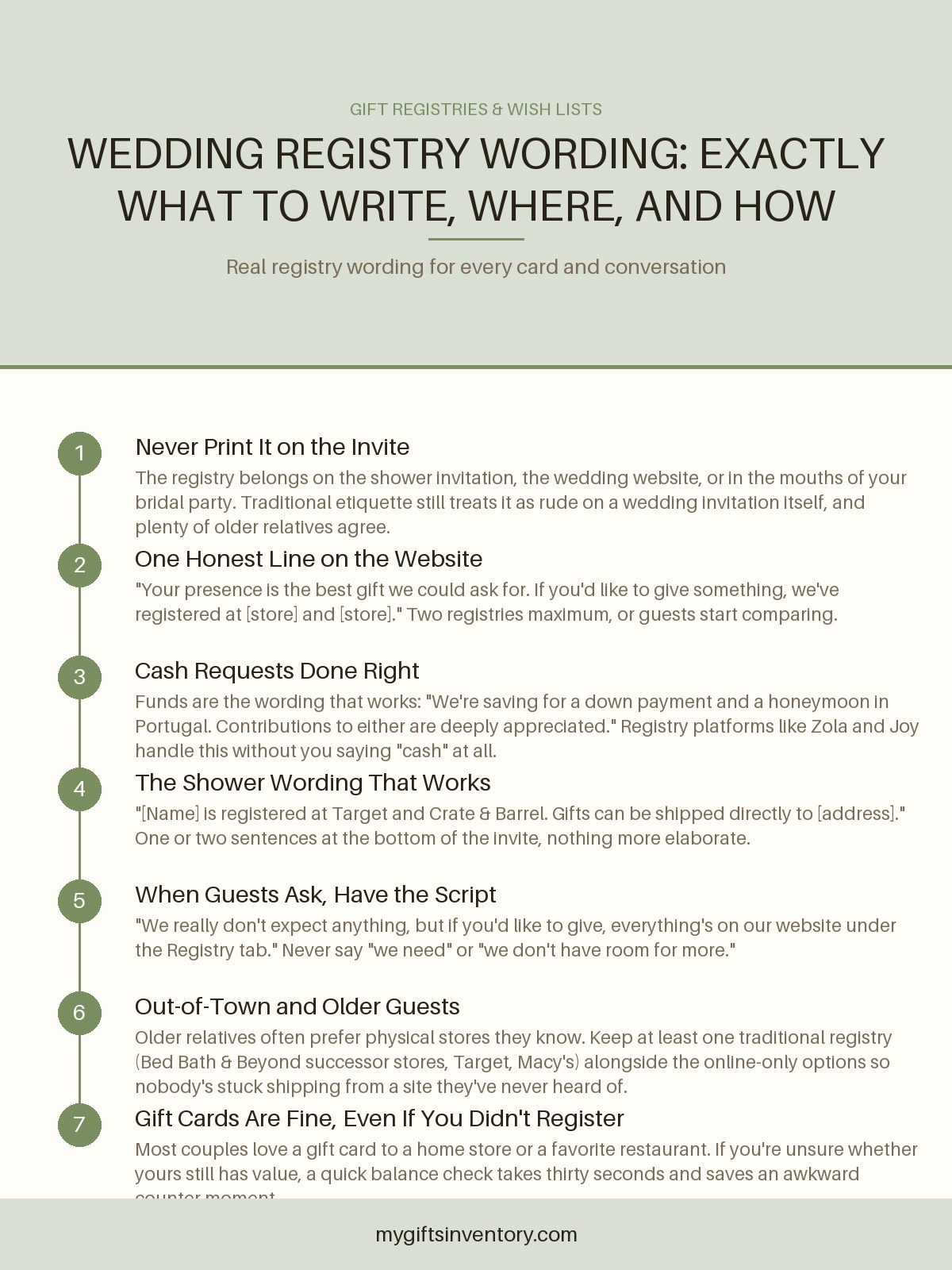
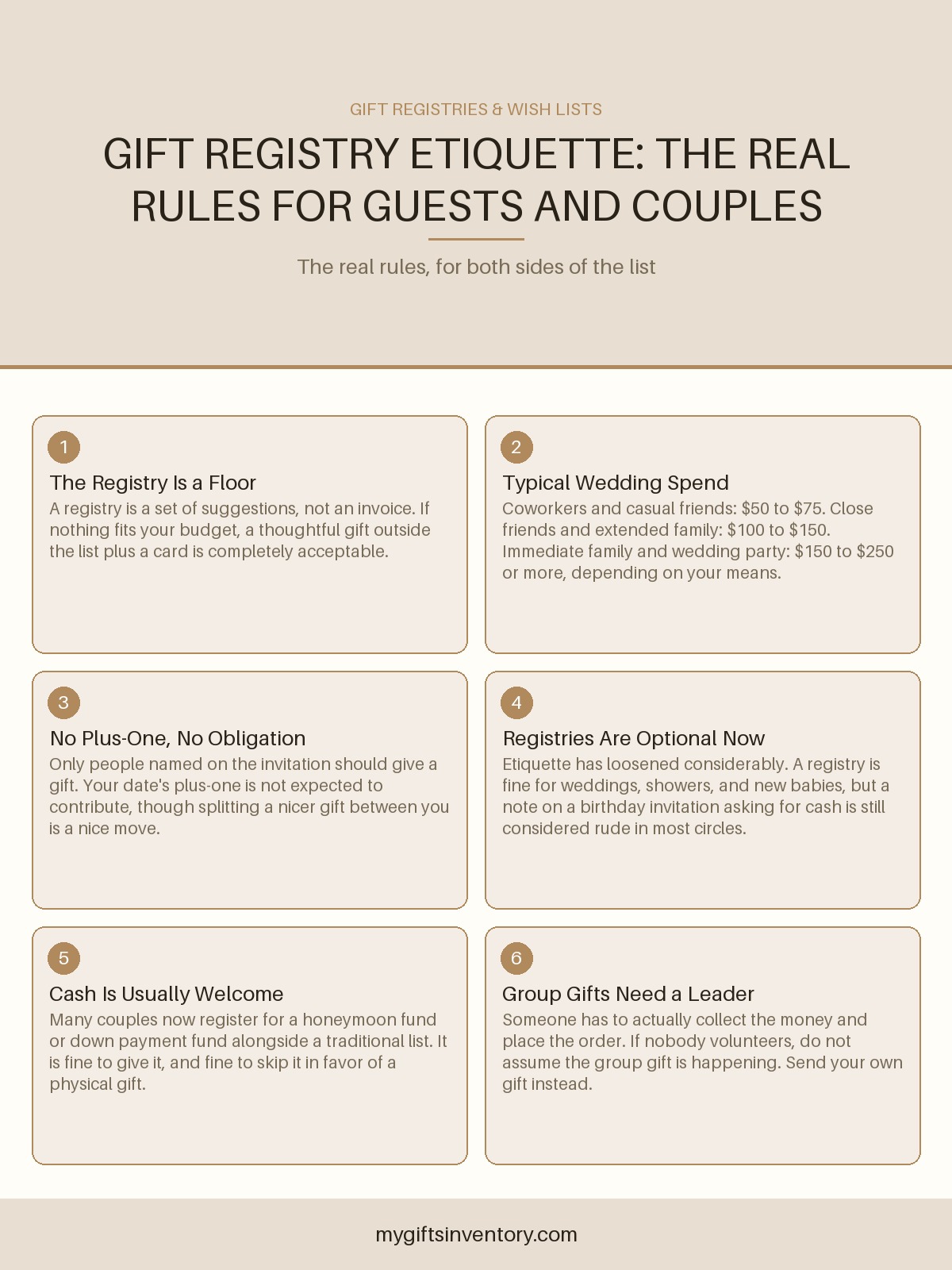
This is the part that trips people up most. Registry information should never appear on the actual invitation. That's considered a hard rule in most etiquette circles, since printing it there implies the invitation itself is a request for gifts.
Instead, the registry link belongs on:
- Your wedding or shower website, if you have one
- A separate insert card, for showers specifically (this one is more accepted since showers are explicitly gift-focused events)
- Word of mouth through your parents, the host, or your wedding party, when people ask directly
If someone texts asking where you're registered, answer plainly and warmly: "We're on Target and also have a small honeymoon fund on Zola, thank you for asking!" There's no need to hedge or apologize for having a registry. Guests genuinely want the information, it removes their guesswork too.
What to Do About Cash and Alternatives
Not every guest wants to buy a physical item, and that's fine to plan for. A cash fund, whether for a honeymoon, a house down payment, or just general savings, is now widely accepted as a registry line item. Frame it plainly rather than cutely: "Honeymoon Fund" reads better than something overly whimsical.
Some guests will default to a gift card regardless of what's on the list, which is a perfectly acceptable substitute. If you want to make that easy on your end, note in your registry or website that gift cards to a couple of major retailers are also welcome, so nobody feels like they're going off-script by choosing that route.
Managing Duplicates and Keeping the List Current
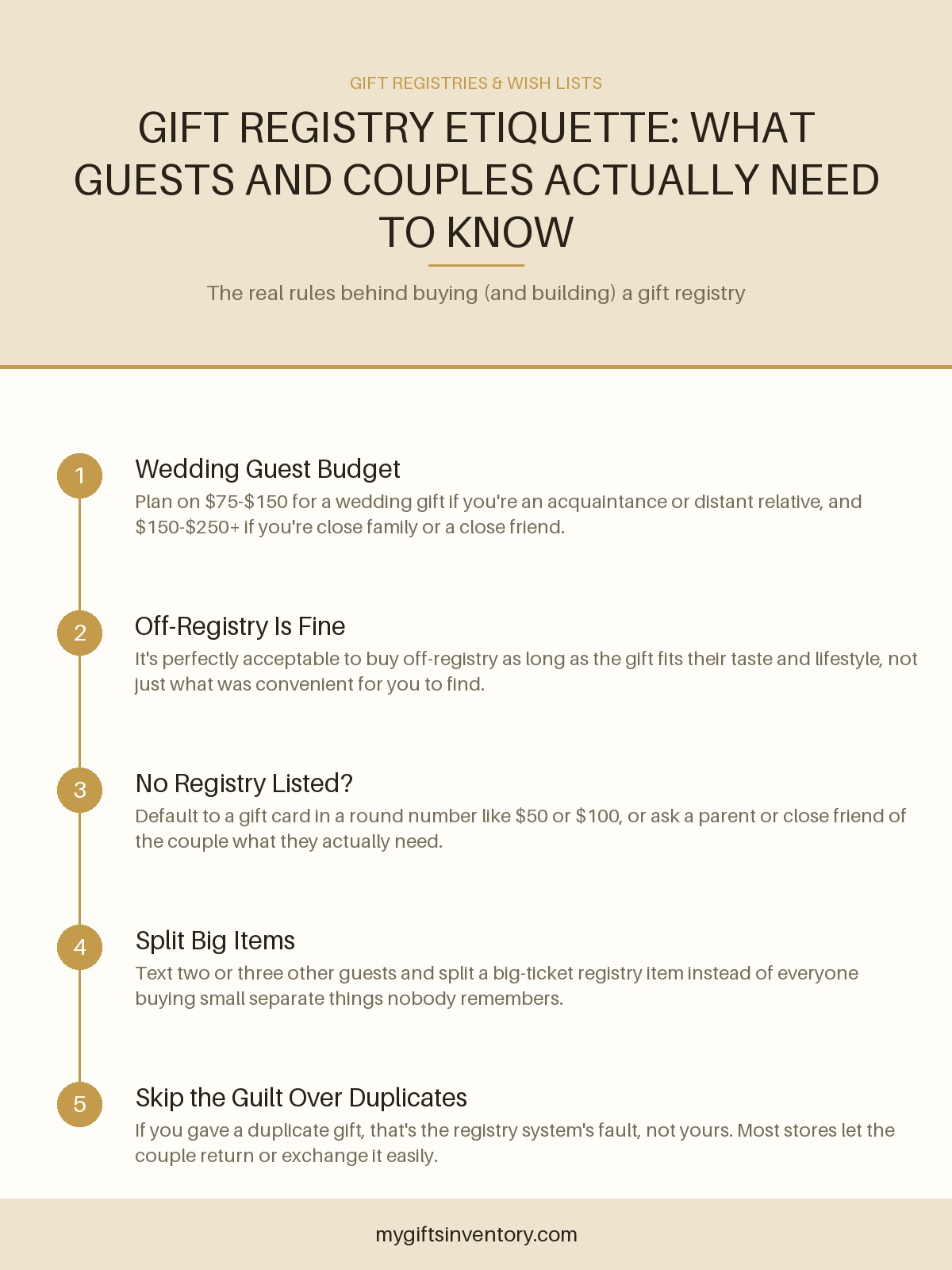
Once the registry is live, check it every week or two, especially in the month leading up to the event. Most platforms mark items as purchased in real time, but manual entries or off-registry gifts can slip through and create duplicates. If you notice an item is close to fully funded through partial group gifting, that's a good moment to add a replacement item at a similar price point so the list stays full.
After the event, thank-you notes should go out within 2 to 3 months for weddings, and ideally within a few weeks for baby showers since people tend to expect a quicker turnaround there. Mention the specific gift by name in each note. It takes an extra sentence but it's the difference between a note that feels personal and one that feels copy-pasted.
Gift Ideas to Go With This


Want more ideas? Browse our full guide: 20 Housewarming Gift Ideas Under $50 (2026) New Homeowners Will Actually Use
Frequently Asked Questions
How early should I set up a wedding registry?
Set it up 8 to 10 months before the wedding, ideally around the same time you send save-the-dates. This gives engagement party and shower guests a working list well before the wedding itself and spreads purchases out over months rather than compressing them into the final weeks.
Is it rude to put the registry link on the wedding invitation?
Yes, most etiquette guidance still treats this as a firm no. Keep the registry information on your wedding website, a separate shower insert, or shared by word of mouth through parents or your wedding party instead.
How many stores should I register at?
Two is the sweet spot for most people, one broad department-style registry plus one specialty registry if needed, like a honeymoon fund. Registering at four or five different retailers tends to overwhelm guests and leads to more people giving up and sending a check instead.
Should I include expensive items on my registry?
A small number of higher-priced items, maybe 15 to 20 percent of the list, works well as group-gift options for parents or several guests chipping in together. Just avoid anything so expensive it reads as an unrealistic ask for a single guest.
What if I get duplicate gifts anyway?
Check your registry every week or two before the event so you can catch items close to being fully purchased and swap in something new. If duplicates still happen, most stores allow registry returns or exchanges without a receipt since the purchase is tied to your registry account.
Looking for an Actual Gift Instead?
Gift Sets We Love Right Now
Every item picked, priced and linked, ready to buy.
More Gift Advice