How Much Should a Gift Cost? A Real Answer for Every Relationship and Occasion
There's no single dollar figure that works for every gift, but there are real guardrails based on relationship, occasion, and your own budget that take the guesswork out of it.
As an Amazon Associate, My Gifts Inventory earns from qualifying purchases. We only recommend products we'd genuinely consider buying ourselves.
You're standing in a store, or scrolling a checkout page at midnight, doing that mental math everyone does: is this too much? Is this not enough? Will it look like I don't care, or like I'm trying too hard? The anxiety around gift spending almost never comes from not knowing what to buy. It comes from not knowing what number is "normal," and nobody wants to be the person who got it noticeably wrong in either direction.
Here's the honest truth: there's no universal price tag stamped on friendship, family, or gratitude. But there are real, workable guidelines that most people quietly follow, and knowing them takes the guesswork out of it. That's what this comes down to.
There's No Universal Number, But There Are Real Guardrails
The amount you spend on a gift should scale with three things: how close you are to the person, what the occasion actually calls for, and what you can genuinely afford without resentment or financial strain. A gift that stretches you thin doesn't communicate more love, it just communicates stress, and people usually pick up on that even when they can't name it.
A useful mental shortcut we come back to again and again: spend enough that the gift feels intentional, not enough that you're calculating whether you can make rent. If you need a broader framework for matching a gift to a person rather than just a price point, our guide on choosing the perfect gift for every person and occasion is a good place to start before you even open your wallet.
Budget by Relationship
Immediate Family (Parents, Siblings, Spouse)
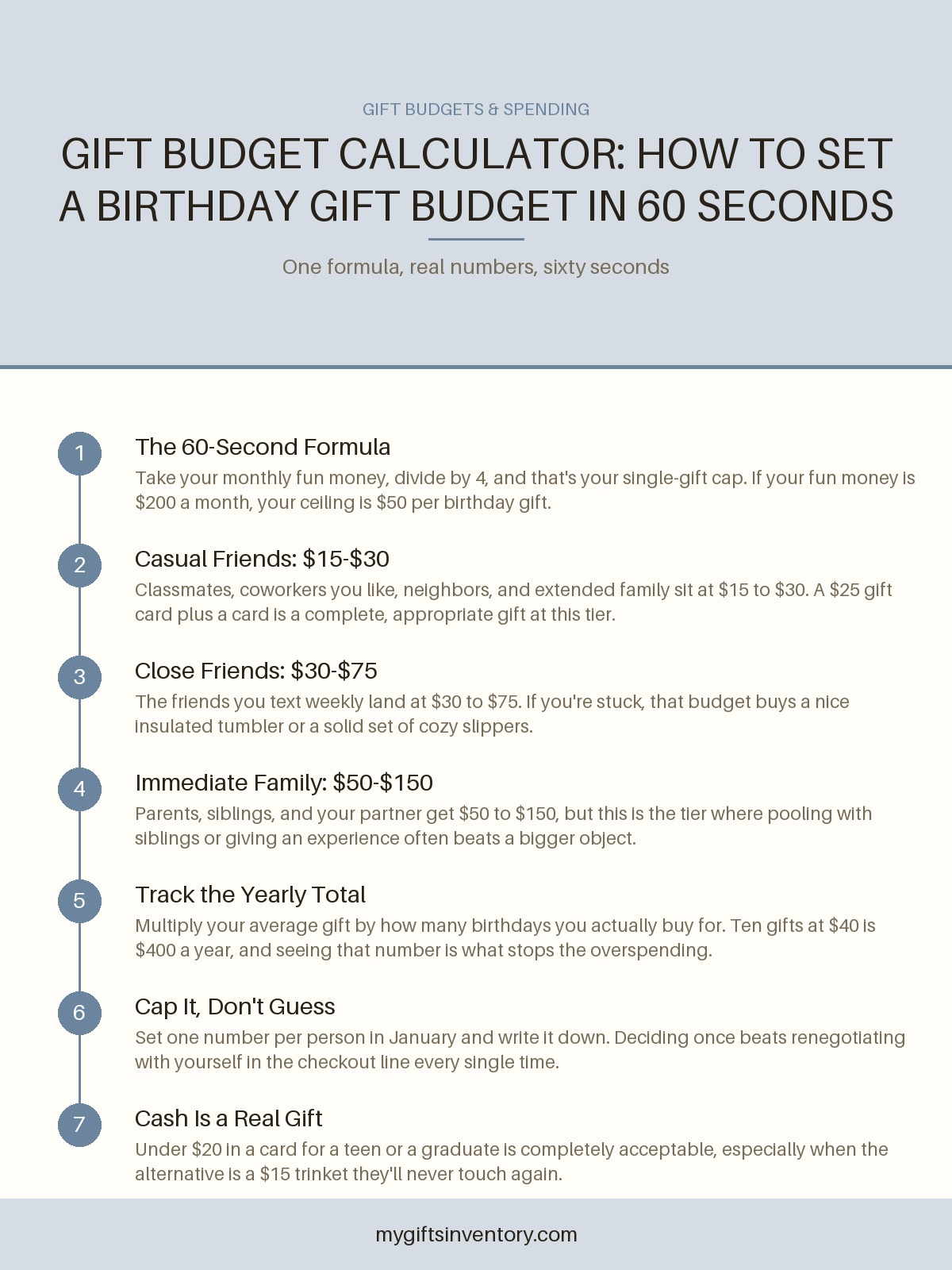
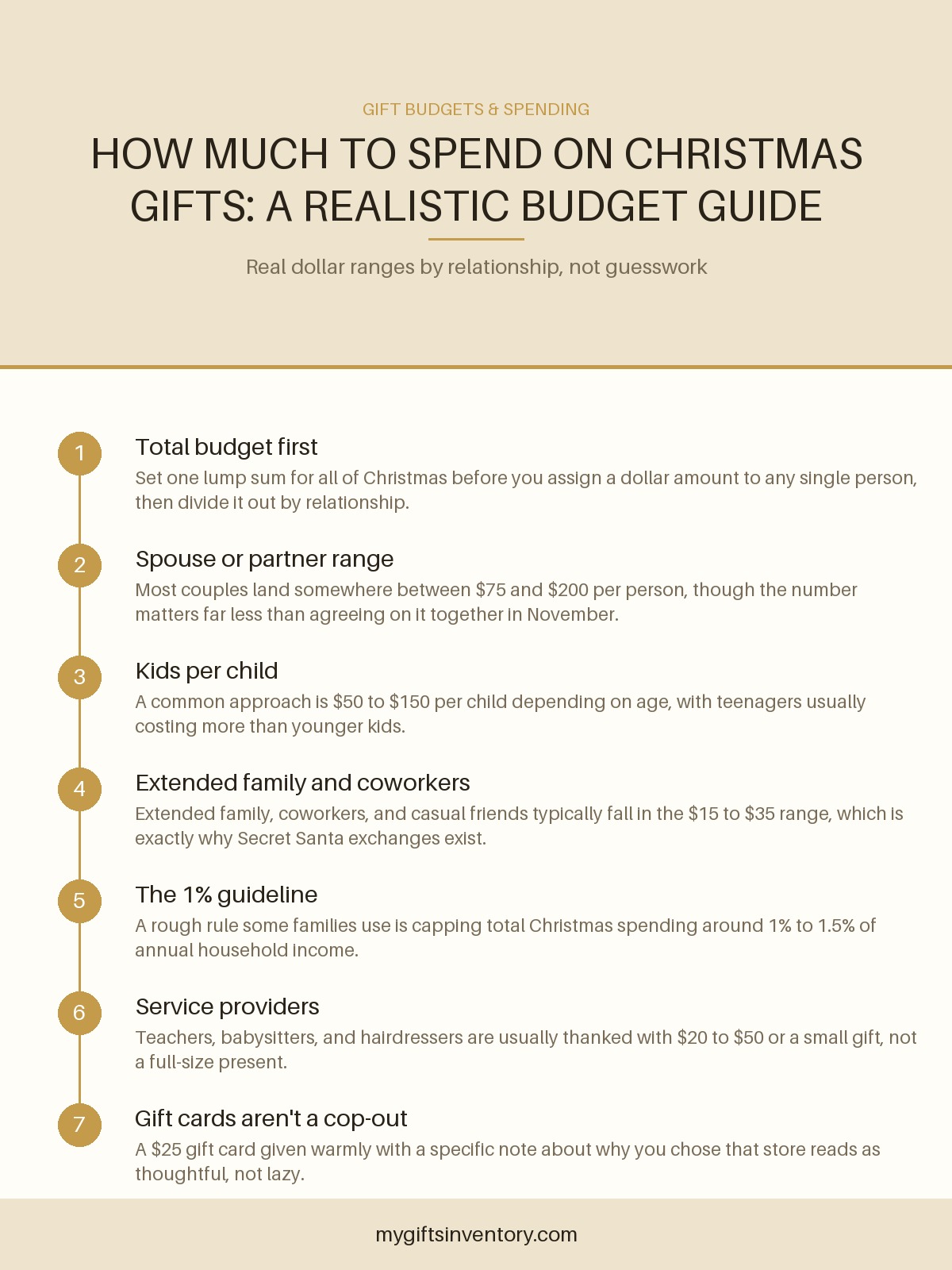
For parents and siblings, $50 to $150 is a common range, though this stretches considerably for milestone birthdays or when finances allow more. Spouses and partners in an established relationship often land in the $75 to $200 range for birthdays and anniversaries, with holidays sometimes higher depending on family tradition. None of these numbers are rules. They're just where most households actually land when you ask around.
Close Friends
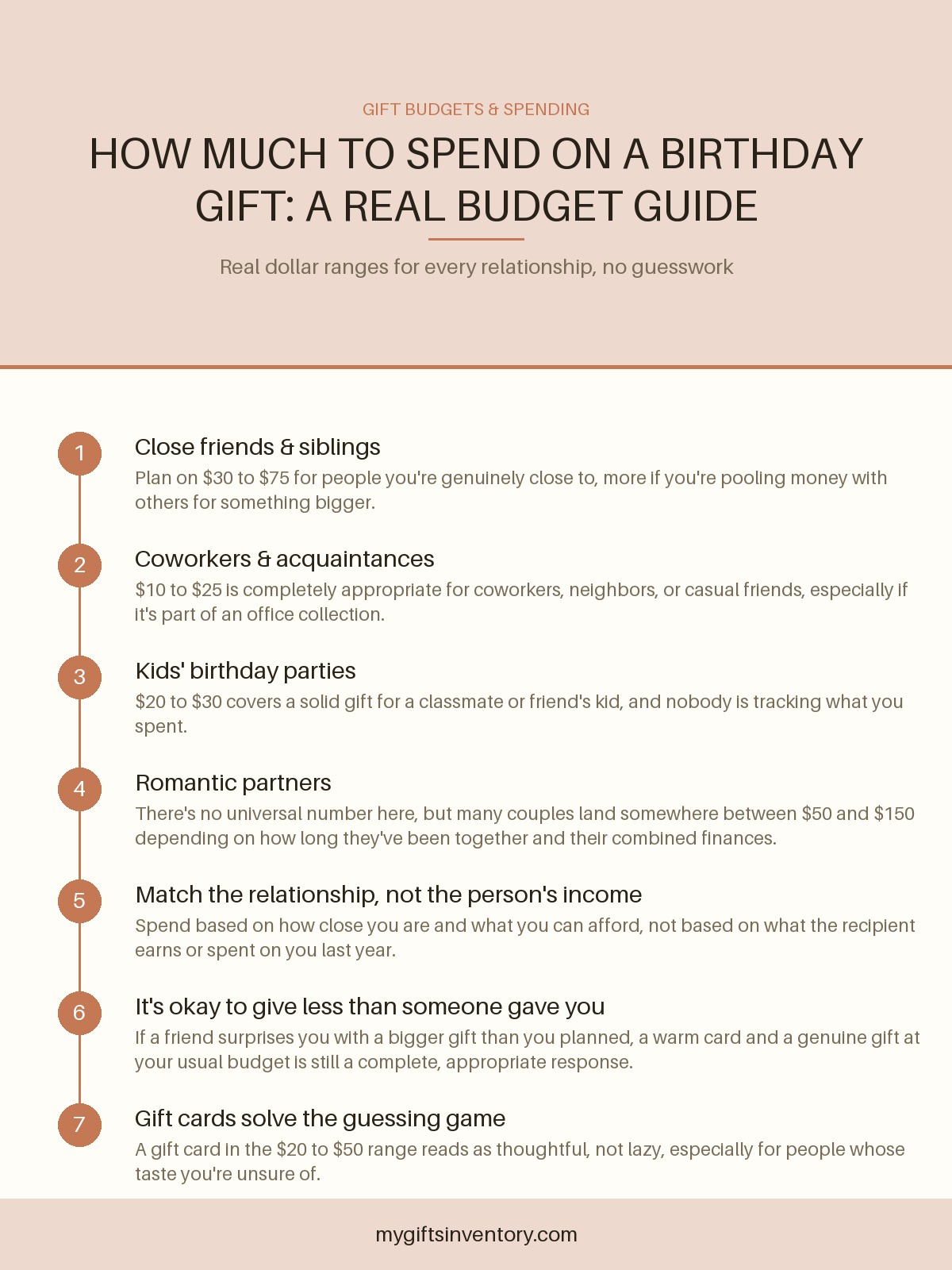
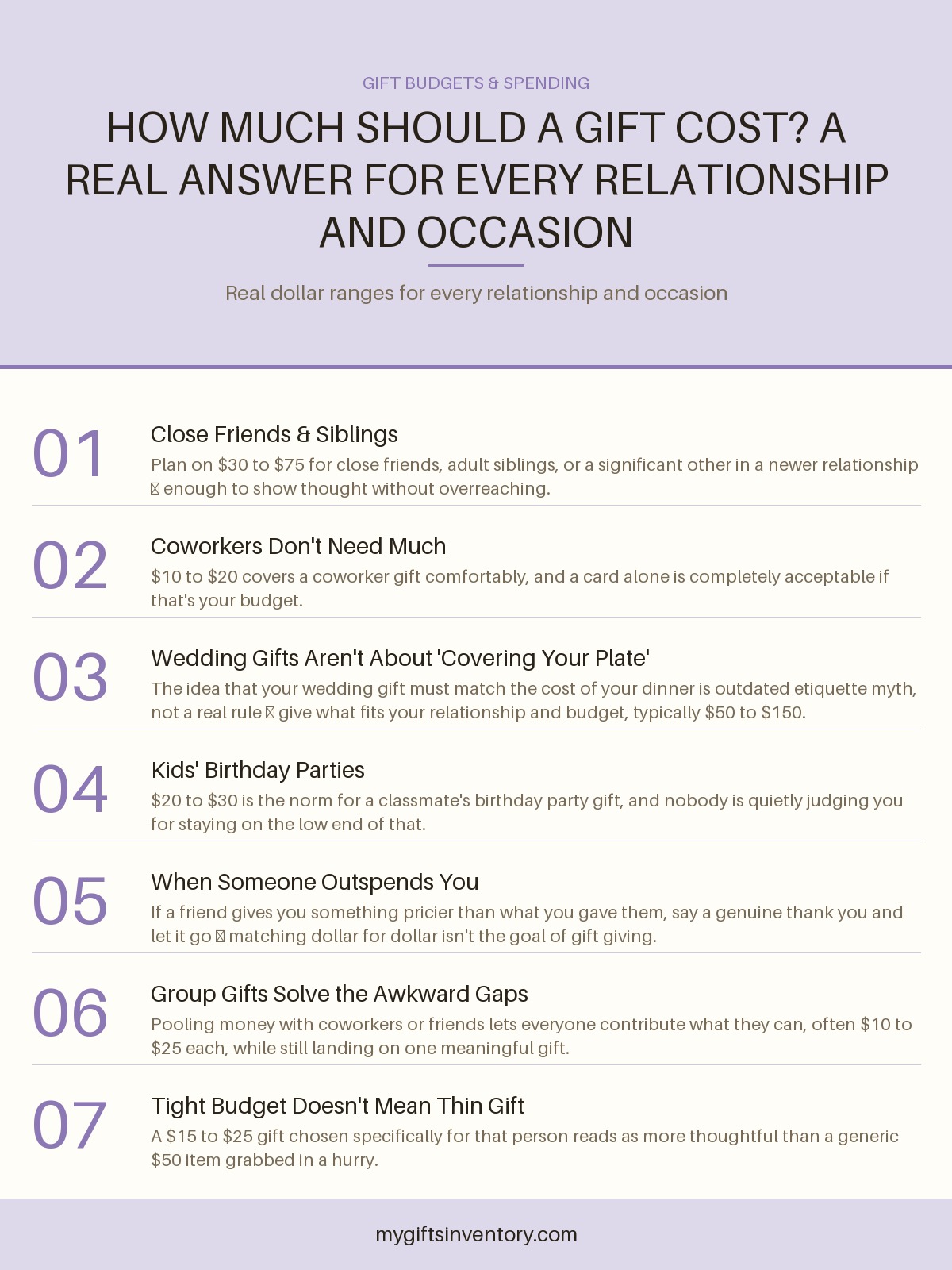
$30 to $75 is the sweet spot for a close friend's birthday or a friend-group holiday gift. This is the range where a gift feels personal without feeling like a financial event. If your friend group does an annual swap, this is also a natural range to suggest if nobody has set expectations yet.
Casual Friends and Acquaintances
For people you like but don't see constantly, $15 to $35 keeps things proportional. A nice candle, a coffee gift card, or something small and specific to their interests does the job without anyone questioning why you spent so much on someone you see twice a year.
Coworkers and Bosses
Office gifting has its own quiet etiquette. $10 to $20 is standard for a coworker exchange, and many workplaces intentionally cap it there to keep things fair across different salary levels. Giving a boss a gift at all is optional in most workplaces, and if you do, keep it modest and professional, somewhere in the $15 to $30 range, never anything that could read as currying favor.
Kids and Their Friends
For a child's classmate's birthday party, $20 to $30 covers it comfortably. For nieces, nephews, or grandchildren, families often go higher, $30 to $75, especially around milestone ages. If you're shopping for a specific age group and want ideas that don't feel like filler, we've put together options for 10 year olds under $30 that stay in that exact sweet spot.
Budget by Occasion
Birthdays
Birthday spending scales with closeness more than anything else. A milestone birthday, turning 30, 40, 50, tends to warrant spending 20 to 30 percent more than you would for a routine birthday for the same person.
Weddings
This is the one people stress about most, largely because of a persistent myth we'll address directly below. For now, know that $50 to $150 covers most wedding gifts comfortably, adjusted up for very close family or down if you're attending as a plus-one or distant relative.
Anniversaries
Anniversary gifts, whether you're giving one to a couple or planning one for your own relationship, tend to scale with the number of years being celebrated. A first anniversary gift looks different from a 25th. If you want a year-by-year framework instead of guessing, our breakdown of anniversary gift ideas by year under $100 maps out sensible spending alongside the ideas themselves.
Baby Showers and Housewarmings
$30 to $60 is typical for both, though registry items can push this higher if you're splitting a big-ticket item with another guest. Nobody expects a housewarming gift to rival a wedding gift, so resist the urge to overcorrect.
Graduations
$25 to $75 depending on your relationship to the graduate, with cash or a gift card being especially welcome here since most graduates are entering a phase where flexible spending matters more than another sentimental object.
Corporate and Client Gifts
Business gifting runs on different logic entirely. Company policy, tax deductibility limits, and the nature of the relationship all matter more than personal sentiment. Many companies cap client gifts around $25 to $50 per person specifically to stay within IRS deduction guidelines for business gifts, which have long been limited to $25 per recipient per year for tax purposes, so check with your finance team before assuming a bigger gift is always better. For ideas that read as generous without feeling like a bribe, our list of corporate gift ideas under $50 that won't feel like an obligation is built around exactly this range.
The Wedding Gift Myth Everyone's Heard
You've probably heard some version of this: your wedding gift should "cover the cost of your plate" at the reception. This idea is widespread, but it's not actual etiquette, it's an urban myth that somehow became conventional wisdom. Reputable etiquette guidance has never actually endorsed this as a rule, because a wedding invitation is not an invoice. Give what fits your relationship to the couple and your own financial situation. A gift that scales with your budget, not their catering bill, is the correct approach, and any couple who would be upset by that isn't someone whose wedding math should be your problem to solve.
When Someone Spends More (or Less) Than You Did
This happens constantly and it trips people up more than it should. If a friend gives you a gift that clearly cost more than what you gave them, the correct response is a genuine thank you, not an anxious mental note to "make it even" next time. Gift giving isn't a ledger. People have different budgets, different years, different priorities, and a good friendship absorbs that difference without keeping score. The reverse is true too: if you gave more than someone gave you, that was your choice to make, and it shouldn't come with strings attached.
Group Gifts and Chipping In
When a gift feels too expensive for one person but exactly right split several ways, pooling money solves the problem elegantly. This works especially well for coworker send-offs, milestone birthdays, or big-ticket wedding registry items. A common approach is asking everyone to contribute what they comfortably can, often $10 to $25 per person, rather than dividing a total cost evenly, since that can put pressure on people with tighter budgets. If cash collection feels awkward, a pooled gift card is often the cleanest solution, since it removes the guesswork about what to actually buy. If you go that route with a widely usable card, it helps to know how to check the balance afterward, whether that's an Amazon gift card or a general-use Visa gift card, so nobody's left guessing how much is left on it.
When You're on a Genuinely Tight Budget
A smaller budget doesn't have to mean a lesser gift. A $15 to $25 item chosen with real thought, something that reflects an inside joke, a hobby, or something they mentioned wanting months ago, almost always lands better than a generic $50 item grabbed under time pressure. This is especially true for people just starting out, like students or young professionals, where budgets are naturally tighter across the board. If you're shopping for someone setting up a new space on very little money, our list of college dorm gift ideas under $20 is a good example of how much thoughtfulness can fit into a small budget when the item is chosen well.
Weighing Money Against Meaning
The number on the receipt is not actually what people remember. What they remember is whether you paid attention. A $20 gift that shows you listened will outlast a $100 gift that shows you didn't. That's not a consolation prize for people on a budget, it's just how gift giving actually works in practice. Spend what you can genuinely afford, choose thoughtfully within that number, and let the price tag be the least interesting part of the gift.
Gift Ideas to Go With This



Want more ideas? Browse our full guide: 20 Best Gifts Under $100 (2026): Thoughtful Picks They'll Actually Use
Frequently Asked Questions
Is there a rule for how much to spend on a wedding gift?
There's no fixed rule, despite the popular myth that you should cover the cost of your dinner plate. Most guests spend between $50 and $150 depending on their closeness to the couple and their own budget, and that's considered completely appropriate.
How much should I spend on a coworker's birthday or holiday gift?
$10 to $20 is the standard range for coworker gifts, and many offices intentionally set a low cap to keep things fair across different income levels. A thoughtful card alone is also a perfectly acceptable option if that's what your budget allows.
What if my gift is much cheaper than what someone gave me?
Say thank you and don't overthink it. Gift giving isn't meant to be a dollar-for-dollar exchange, and people's budgets, priorities, and years vary, so a mismatch in spending doesn't reflect on how much anyone cares.
Should I spend more on family than friends?
Generally yes, immediate family gifts tend to run $50 to $150 while close friend gifts sit closer to $30 to $75, though this varies a lot by family tradition and individual relationships. The bigger factor is usually closeness and occasion rather than the family label itself.
Is it rude to give a gift card instead of a wrapped present?
No, a gift card is a completely acceptable and often appreciated gift, especially for teenagers, coworkers, or anyone whose exact preferences you're unsure of. It removes the guesswork for the giver and lets the recipient choose exactly what they want.
Looking for an Actual Gift Instead?



Gift Sets We Love Right Now
Every item picked, priced and linked, ready to buy.

More Gift Advice