How to Build a Gift Budget Planner That Actually Works
Stop guessing and overspending. Here's a simple system for setting realistic gift budgets by person and occasion, tracking what you spend, and still giving gifts people love.

As an Amazon Associate, My Gifts Inventory earns from qualifying purchases. We only recommend products we'd genuinely consider buying ourselves.
We've all had that mid-December moment when the tally hits and the number feels way higher than we meant it to be. A gift budget planner is simply the system that stops the spiral: one clear total, realistic amounts per person, and a running log so you know exactly where you stand before the cart total surprises you.
This is not about being cheap. It is about deciding what you can comfortably give, then making every dollar feel intentional. Below is the practical way we build and use one so the season (or any stretch of birthdays and celebrations) stays joyful instead of stressful.
Why a Gift Budget Planner Beats Guessing
Without a plan, spending expands to fill whatever is available on the credit card. One "just this once" upgrade for a sibling turns into three, then the office Secret Santa appears, then a last-minute teacher gift, and suddenly the number you vaguely had in mind is gone.
A planner does three things well. First, it forces an honest conversation with yourself (or your partner) about the real ceiling. Second, it assigns money to people before emotion or sales pressure takes over. Third, it gives you a place to record what you actually spent so the next year starts smarter.
We treat it like any other household budget line: rent, groceries, gifts. When gifts have a fixed pot, the rest of the month stays calmer.
Step 1: Set Your Overall Gift Ceiling
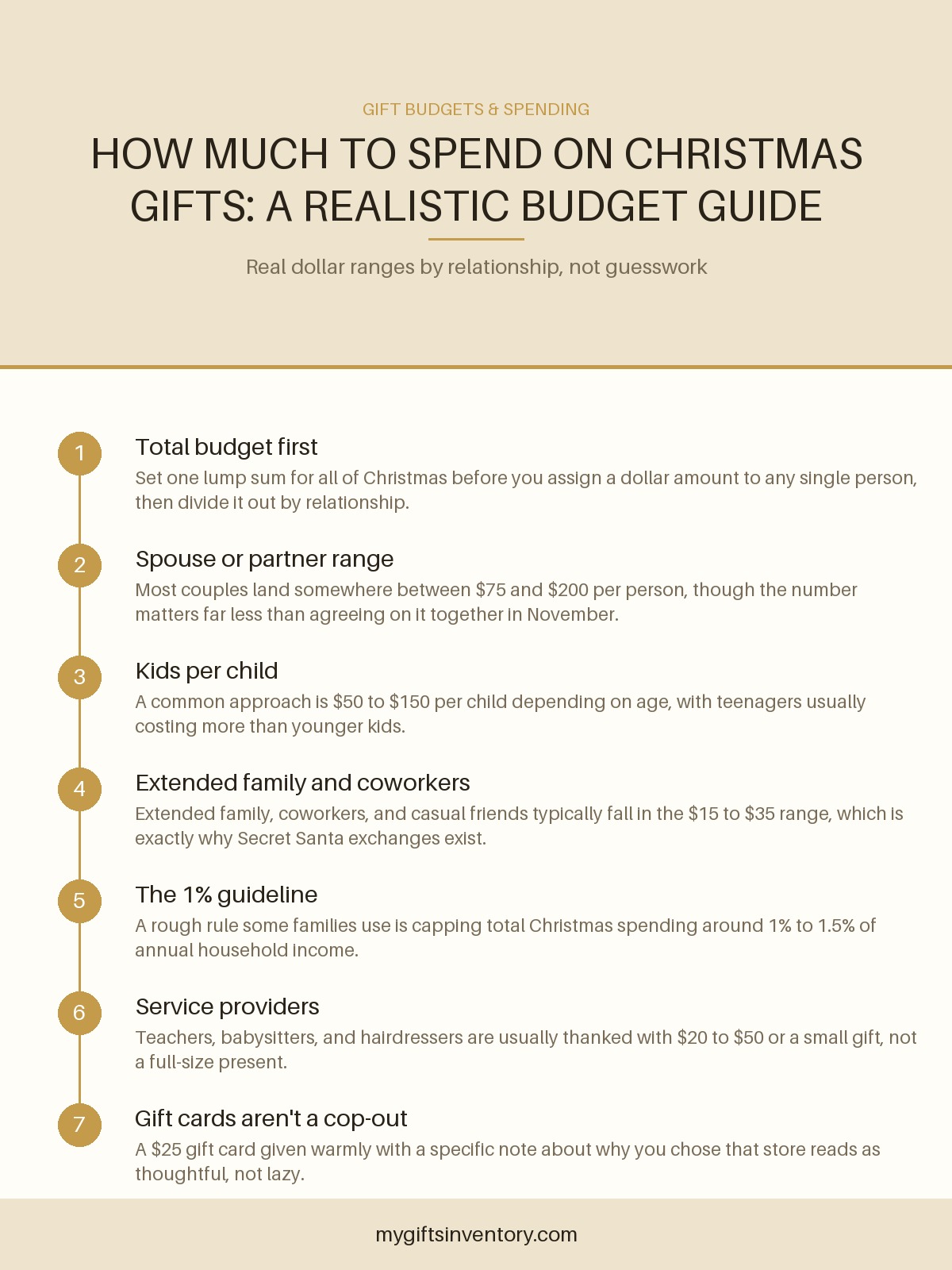
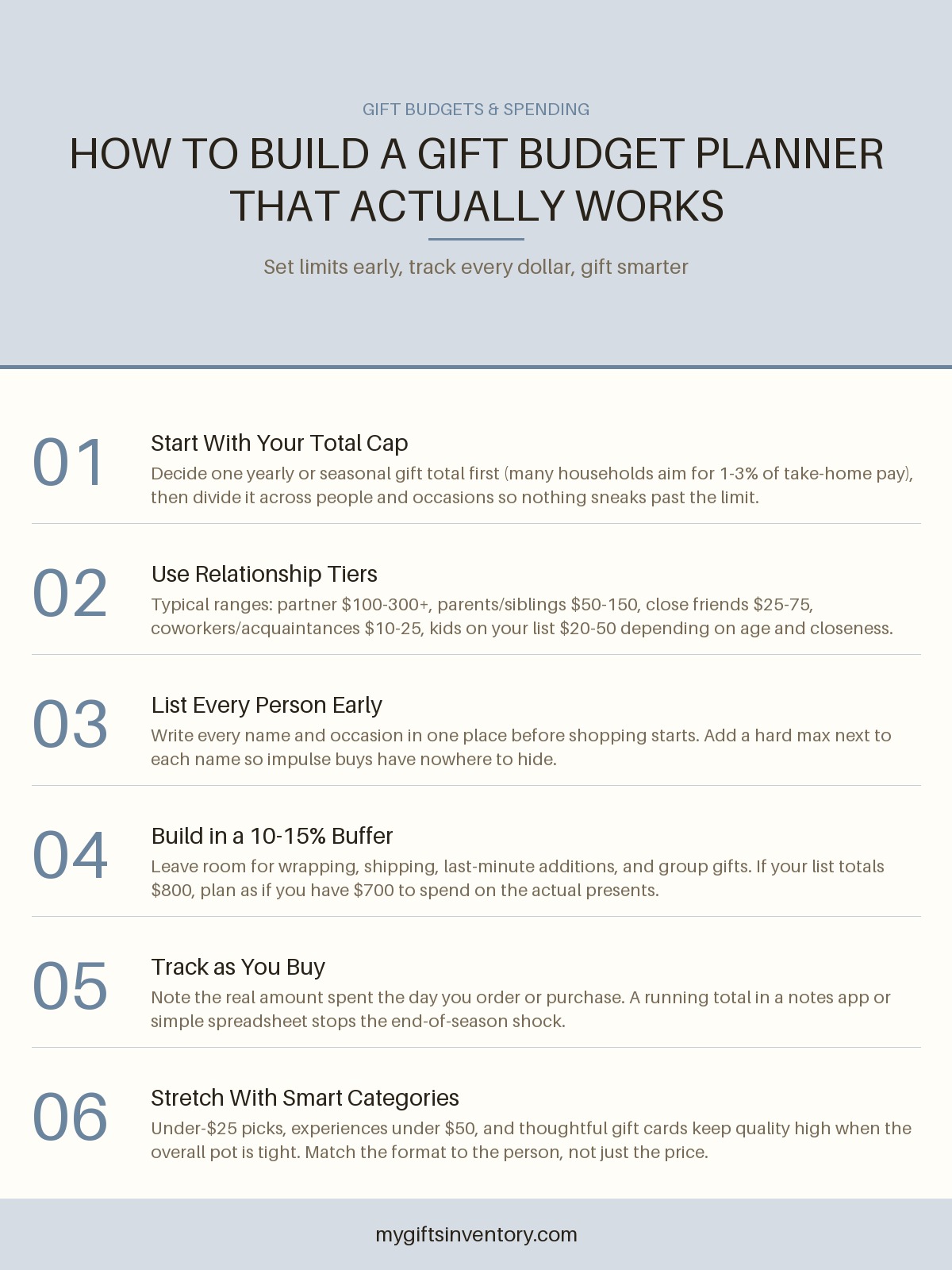
Begin with the big number, not the individual gifts. Look at take-home pay, other seasonal costs (travel, parties, end-of-year bills), and how much debt or savings goals you are protecting. Many people land somewhere between 1% and 3% of annual take-home for the full year of gifting, with a heavier concentration in November and December. Others simply pick a round seasonal number they can pay off in full when the statement arrives.
Write that total down. Everything else flows from it. If the number feels tight, that is useful information. It tells you to lean harder on thoughtful lower-cost ideas rather than trying to match last year's splurge level.
Include non-holiday gifting if you want a true annual planner: birthdays, teacher appreciation, hostess gifts, baby showers, weddings. A separate "holiday only" pot works too if that is the season that usually derails you.
Step 2: List Every Person and Occasion
Open a notes app, spreadsheet, or paper notebook and dump every name that might receive something. Include:
- Immediate family and partner
- Extended family you actually exchange with
- Close friends
- Kids (yours and others you buy for)
- Coworkers, bosses, or office draws
- Teachers, coaches, caregivers
- Hosts, neighbors, service people you tip or thank with a small gift
- Any group gifts you contribute to
Add the occasion and approximate date next to each. Seeing the full list in one place is usually the first reality check. Cross off anyone you can greet with a sincere card or message only. Not every name needs a physical present.
Step 3: Assign Realistic Amounts by Relationship
Now divide the total pot. These ranges are starting points we see work for a lot of households. Adjust up or down for your cost of living, culture, and how close you actually are.
Partner or spouse
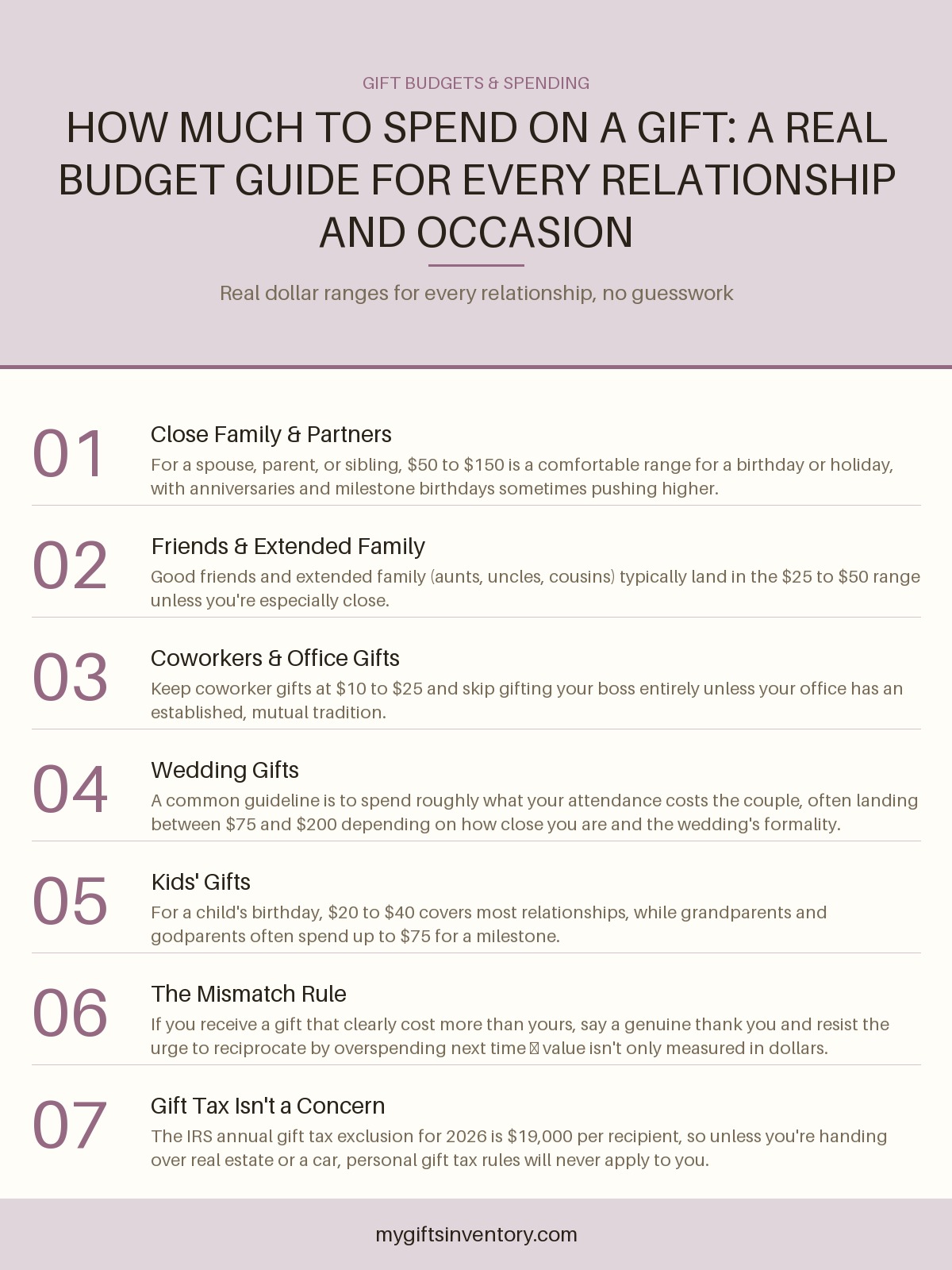
Often the largest single line: $100–300+ for a main gift, sometimes split between one nicer item and a smaller everyday one. Experiences and keepsakes can sit in the same band.
Parents and siblings
$50–150 each is common. If you have several siblings, the per-person number usually drops so the family total stays sane. Some families set a household cap and draw names.
Children (your own)
Highly personal. Many parents set a total "from Santa plus parents" number and stick to it so kids do not equate love with volume. Grandparents and others often add more, which is fine if you communicate expectations.
Close friends
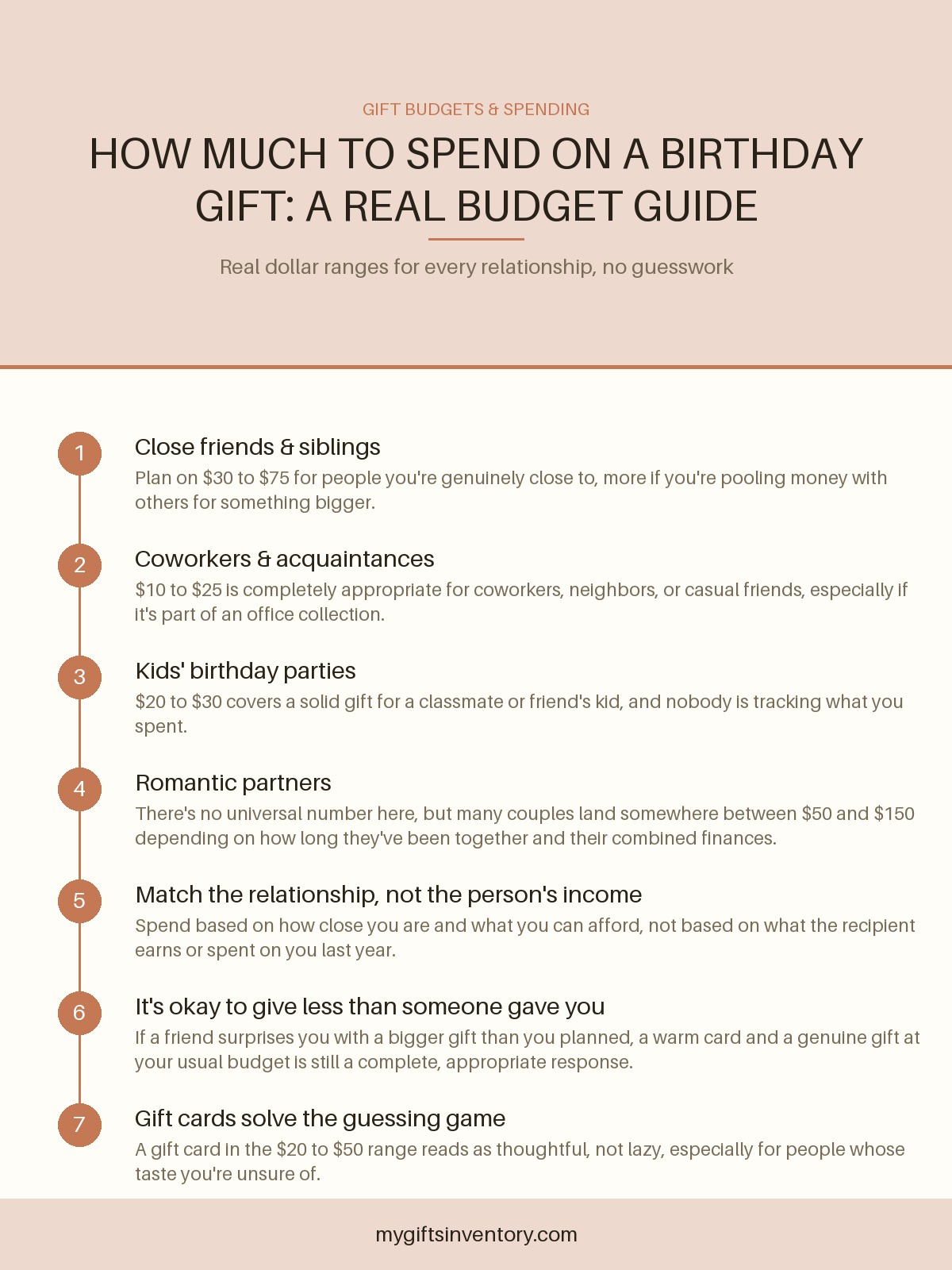
$25–75. A really good $30 gift beats a forgettable $80 one. This is where lists of strong lower-cost ideas earn their keep.
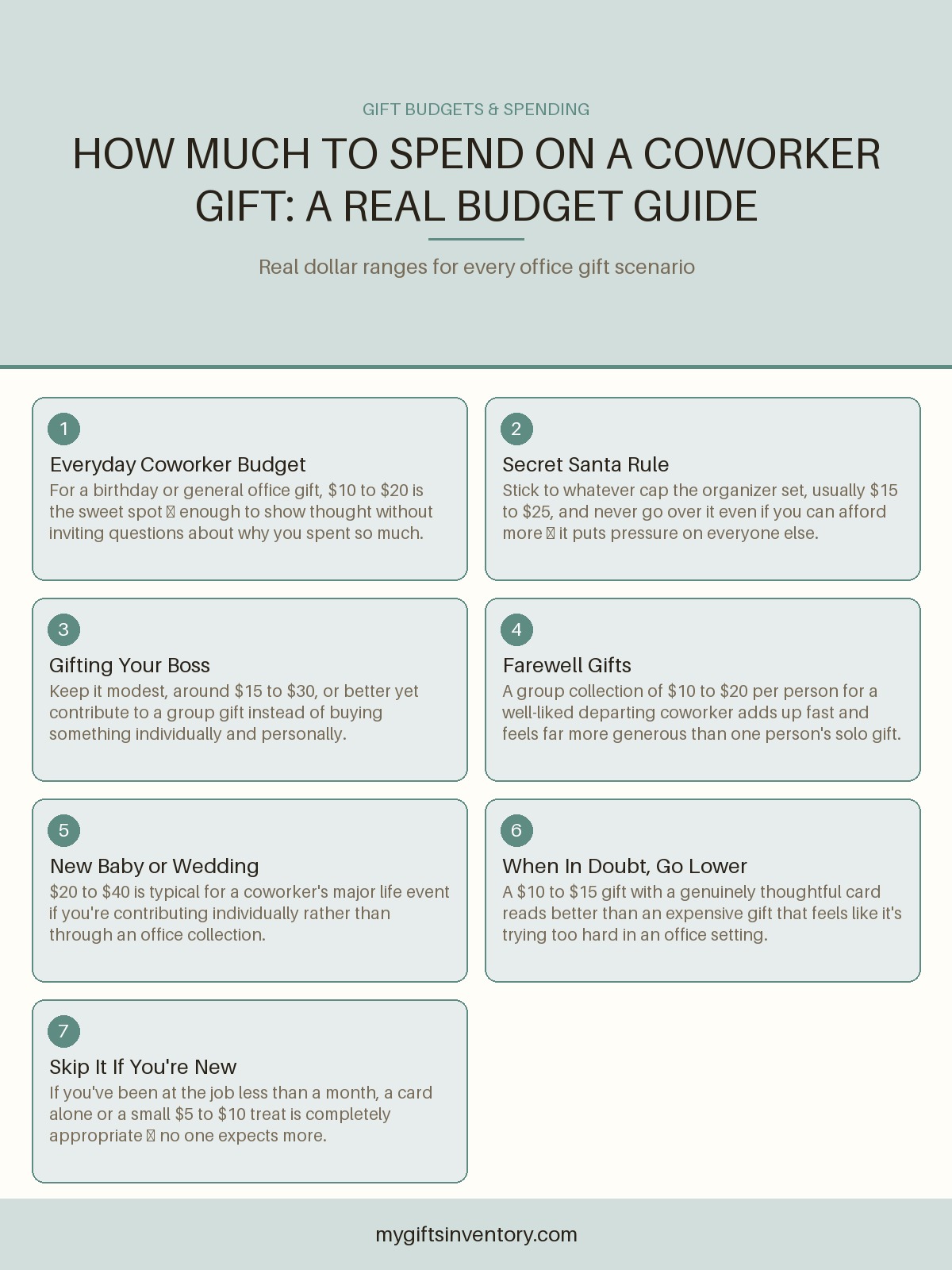
Coworkers, acquaintances, distant relatives
$10–25. Small and useful wins. For office settings we often point people toward our roundup of thoughtful coworker gifts under $25 so the gesture feels considered without blowing the budget.
Kids on your list (nieces, nephews, friends' children)
$15–40 depending on age and how many you buy for. Younger kids are often happy with one well-chosen thing.
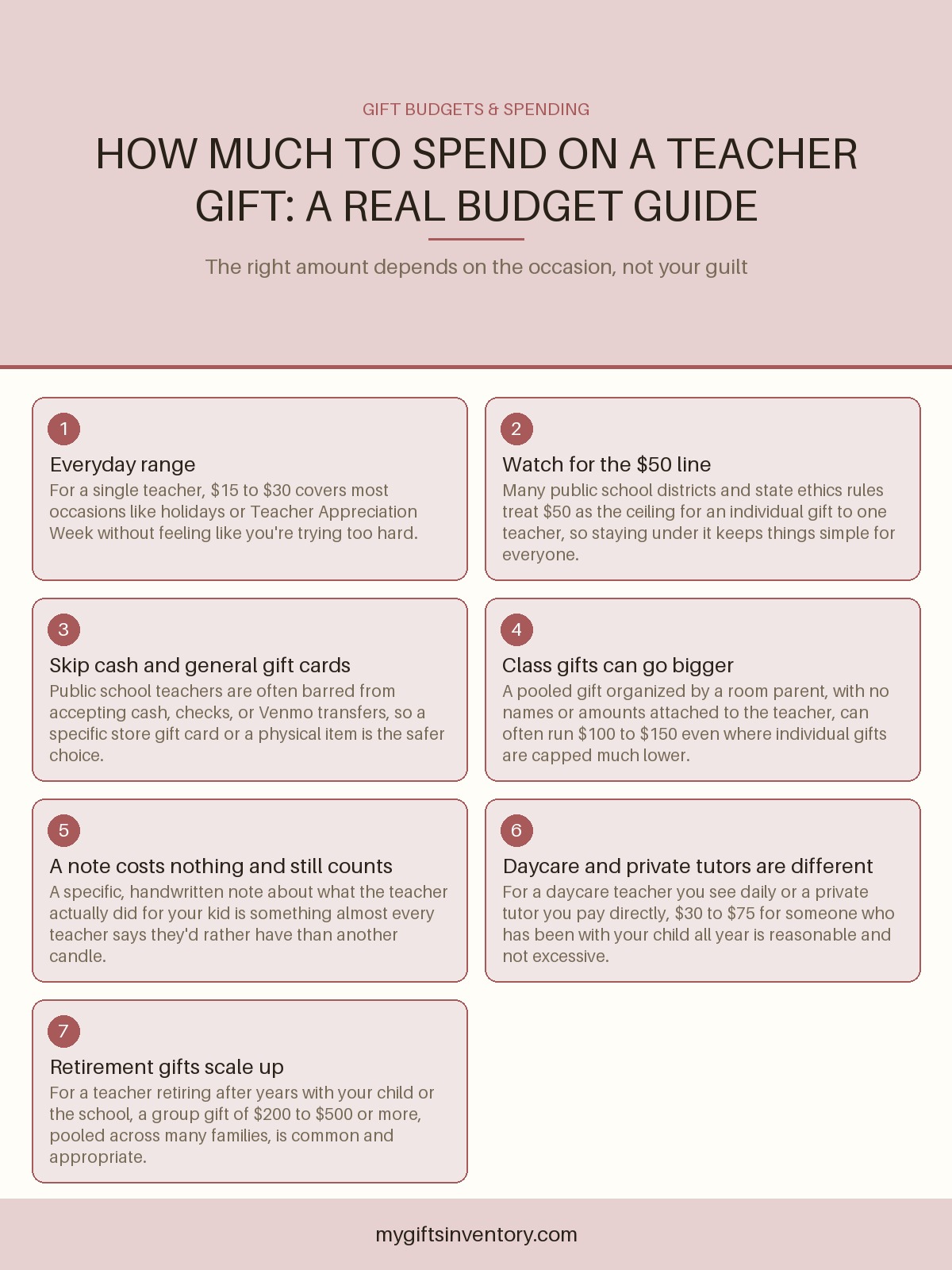
Teachers, coaches, helpers
$10–30, or a shared group gift that lands higher while keeping your personal outlay low. Cards with a specific thank-you still matter more than the price tag.
Add a miscellaneous line for the unexpected: the neighbor who drops off cookies, the last-minute party host, the charity white-elephant. Ten to fifteen percent of your total as buffer keeps these from wrecking the plan.
Step 4: Build the Actual Planner (Simple Tools That Work)
You do not need fancy software. Pick one home for the plan and live in it.
Spreadsheet: Columns for Name, Occasion, Date Needed, Budget Max, Idea, Amount Spent, Purchased (Y/N), Notes. Sort by date so shipping and shopping deadlines stay visible. Running sum at the bottom.
Notes app: One note per season with the same fields in plain text. Fast on your phone while you are standing in a store.
Paper: A dedicated notebook page or printed table. Some of us still like checking boxes with a pen.
Update the "Amount Spent" the same day you buy or order. Include tax and shipping. That single habit is what turns a hopeful list into a real budget.
If you share finances, make the planner visible to both people. Agree on the totals once, then either split the shopping or assign categories (you handle family, I handle friends) so no one double-buys.
Step 5: Match Ideas to the Number on the Page
A budget only works if the gifts you choose can live inside it. When the max for someone is $25, go looking in that lane instead of falling for a $60 item and "making it work."
For tight lines across the whole list, start with proven budget-friendly collections. Our guide to budget gifts under $25 that still feel like more is built exactly for this problem: small price, real thought. The same goes for broader under-$50 shopping when you have a few more dollars to play with; see budget-friendly gift ideas under $50 for options that stretch further without looking like compromise.
When someone on the list is a couple, a shared experience or keepsake often delivers more meaning per dollar than two separate objects. For higher-but-still-controlled spending, thoughtful gifts under $100 gives a clear shopping lane so the partner or parent line does not quietly balloon.
Gift cards belong in the planner too when you know the person's tastes or when time is short. Decide the denomination in advance and treat it like any other line item. If you go that route, make sure the recipient can actually check and use the balance later without friction.
How to Handle the Tricky Budget Situations
When your family spends more than you can
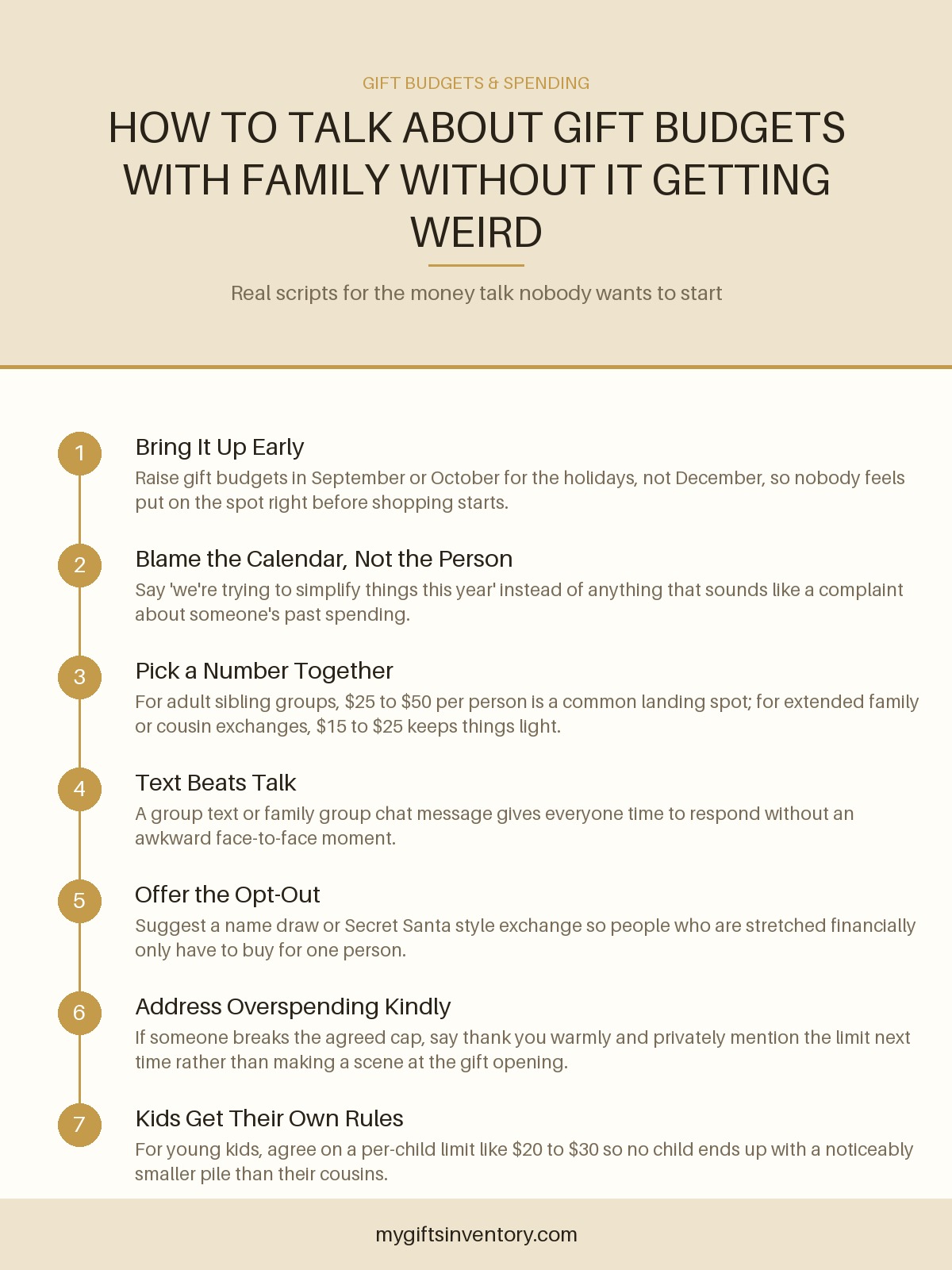
Say something early and kind: "We're keeping gifts simpler this year, in the $X range." Most people are relieved. Offer to draw names, set a group cap, or switch to experiences or charity donations in someone's name. Do it before anyone has shopped.
Group gifts and office draws
Put your contribution amount in the planner the day you agree to it. Office Secret Santas with a $20–25 limit are common for a reason. Stick to the stated number; going way over can make others uncomfortable.
Kids' wish lists that could fund a car
You are allowed to edit. Choose a few items inside your number, add one or two smaller stocking-level surprises, and let grandparents or others know the lane you are in if they ask for ideas. Quality of attention beats quantity of boxes.
Partners with different money styles
Agree on the joint total first. Then each person can have a small personal discretionary amount for the other's gift if that reduces friction. The planner holds the shared number so neither of you is guessing.
When income dropped this year
Shrink the list or the per-person caps openly. Handmade, baked, photo-based, or time-based gifts (a planned outing, help with a project) cost little and often mean more. A short sincere note explaining that you wanted to give something meaningful inside a tighter season is never out of place among people who love you.
Tracking, Adjusting, and Ending the Season Clean
Midway through your shopping window, open the planner and compare spent versus remaining. If you are already at 80% with half the list left, pause and reassign. Move leftover buffer to the people still unpaid, or swap a planned nicer gift for something solid at a lower price.
After the main gifting rush, spend ten minutes on a quick postmortem. What went over? Who was surprisingly easy? Which purchases felt worth it? Note it at the bottom of the same document so next November you start with data instead of optimism.
Keep receipts and know return windows, but try not to build a plan that requires returning half of what you bought. Better to choose once inside the number.
Stretching the Budget Without Looking Like You Did
A few patterns consistently help:
- Buy fewer, better things instead of many mediocre ones.
- Shop your own home first for frames, books, or supplies you can personalize.
- Use free-shipping thresholds and stack modest sales, but only on items already in the planner.
- Lean on consumables people finish and remember (good coffee, nice soap, specialty food) when you want a complete-feeling gift at a lower price.
- Give an experience at a controlled cost: a planned picnic, museum membership, or class often lands in the $25–50 range and creates a story.
- Batch craft or bake if that is your skill set, and count supplies plus time honestly so it does not become a hidden money drain.
The goal is that the recipient feels seen. Price is only one ingredient.
A Sample Mini Planner You Can Copy
Imagine a household with a $900 holiday gift ceiling (buffer already included):
- Partner: $200
- Two parents: $75 each = $150
- Two siblings: $50 each = $100
- Own two kids: $150 total
- Three close friends: $40 each = $120
- Two coworkers + boss draw: $20 each = $60
- Two teachers: $25 each = $50
- Niece and nephew: $30 each = $60
- Host/neighbor miscellaneous: $40
That lands near $900. Every idea then has to fit its slot. When something perfect appears $15 over, you either find the money by trimming another line or you pass and keep looking. That is the whole system in action.
Start the list earlier than you think you need to. The planner works best when it is a quiet reference you open while shopping, not a panicked reconstruction on December 20. Once the names and numbers exist, the rest of gifting gets lighter: you know what you can do, you do it well, and you stop when the pot is empty.
Frequently Asked Questions
How much should I budget for gifts each year?
A practical starting range for many households is 1–3% of take-home pay for all gifting across the year, with a large share landing in the holiday season. Pick a fixed dollar total you can pay in full, write it down first, then divide it across people so the number stays real.
What is a reasonable amount to spend on coworkers?
Most office gifts and Secret Santa draws work well at $10–25. Match or stay near any stated limit, choose something useful or consumable, and add a short specific note. Going significantly over can create awkwardness more than delight.
How do I stick to a gift budget when I see something perfect that costs more?
Check the planner first. Either free up money by reducing another line, wait for a sale that brings it inside the cap, or keep looking for an equally good option at the right price. The "perfect" item rarely stays perfect if it creates January stress.
Should gift cards count the same as physical gifts in my planner?
Yes. Enter the exact denomination and any purchase fees as the amount spent. Decide the number in advance the same way you would for a sweater or gadget so the card does not become an untracked loophole.
When should I start my holiday gift budget planner?
September or early October is ideal for most people. You get time to list everyone, agree on totals with a partner, watch for sales, and avoid rush shipping. Even a solid plan started in November still beats no plan at all.
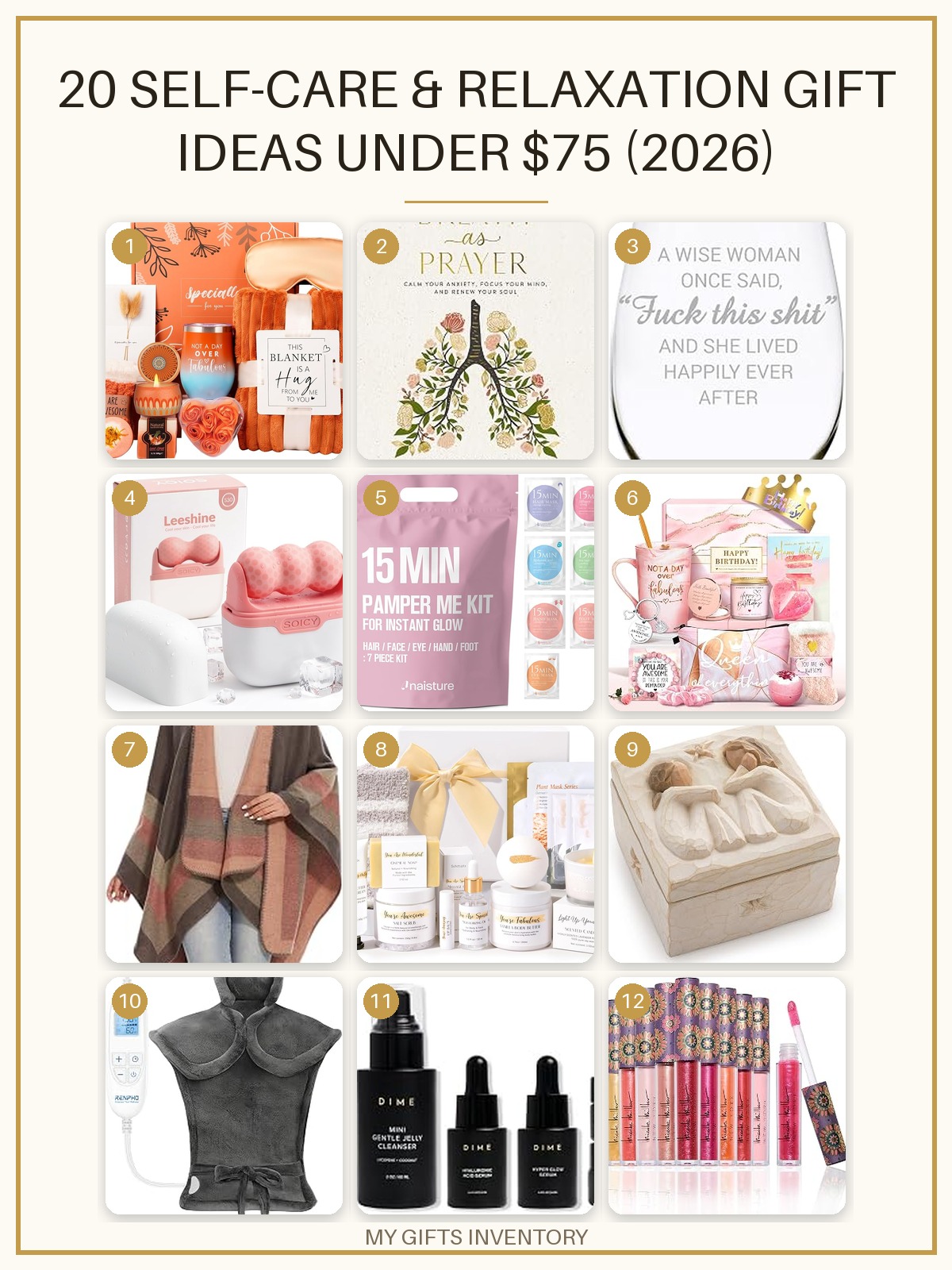
Looking for an Actual Gift Instead?
More Gift Advice