How to handle gift expectations on a budget (etiquette, cards, and returns)
We break down what to do when you cannot match someone’s gift expectations, from setting a spending boundary to writing card wording that lands well.

As an Amazon Associate, My Gifts Inventory earns from qualifying purchases. We only recommend products we'd genuinely consider buying ourselves.
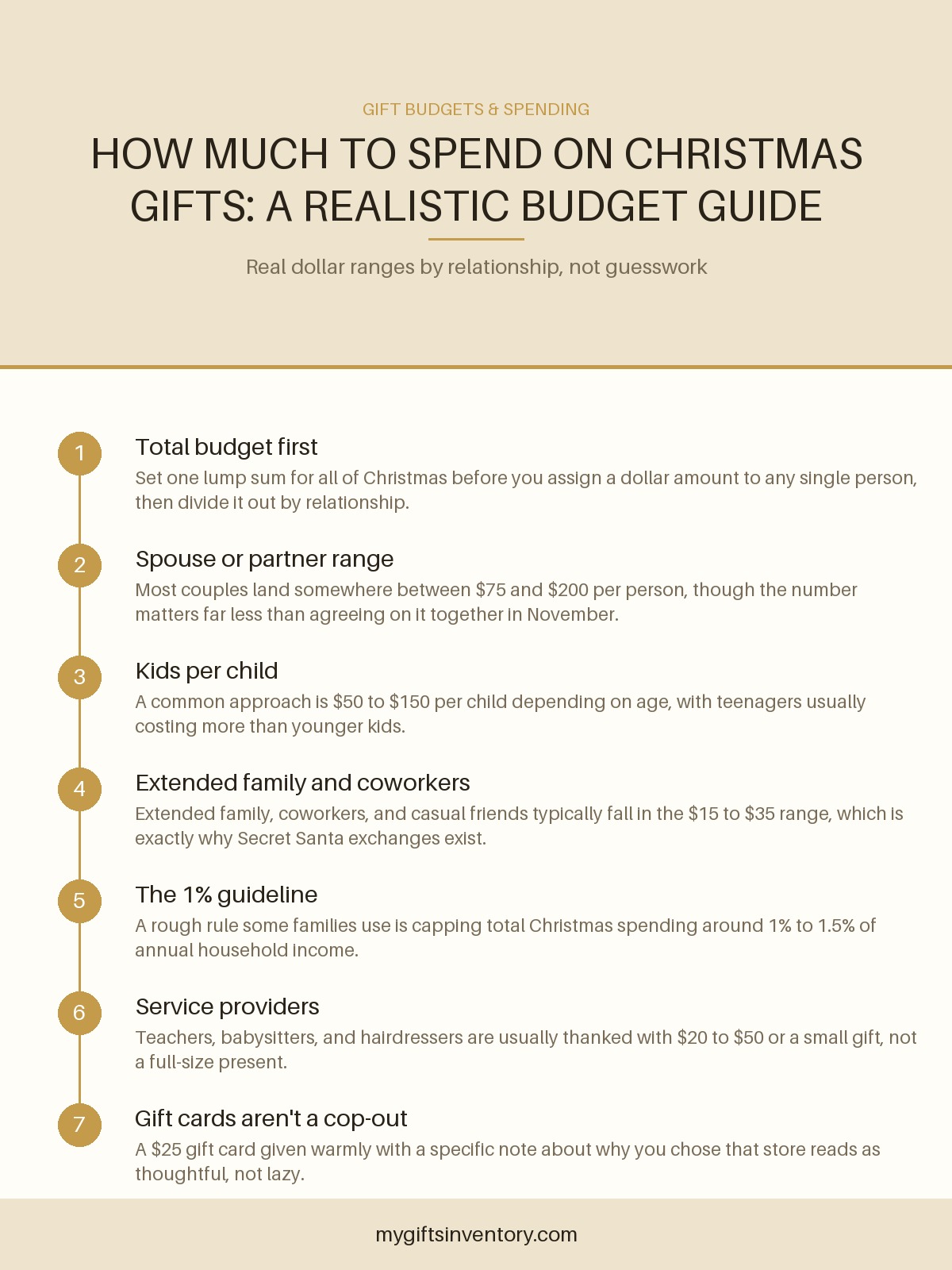
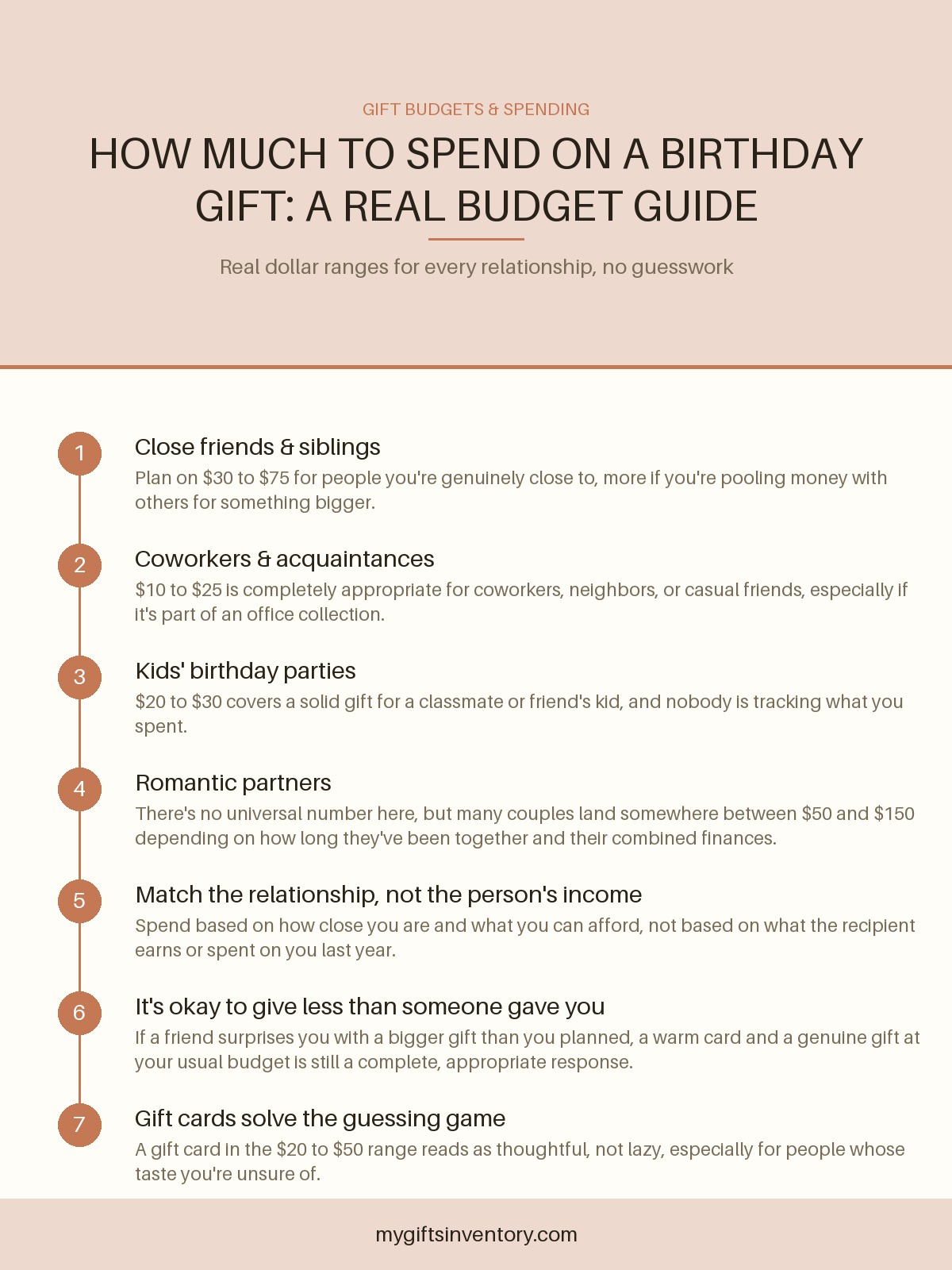
We get why you’re searching this right now. You might be staring at a “suggested” budget online, a pile of last year’s more expensive gifts, or a family chat that makes it feel like the number on the tag is the real relationship test. The good news: you can handle gift expectations on a budget without turning it into a confrontation, and without anyone leaving the moment feeling stingy or disappointed.
In this guide, we’ll walk through what to do before you buy, what to say in a card, and how to handle returns and registries when you are spending less than expected. We’ll also share budget-friendly gift-angle ideas you can use right away, like the kind of practical picks you’ll find in “20 Kitchen Gadgets Gift Ideas Under $50 (2026): Gifts They'll Actually Use” and self-care sets in “20 Gift Ideas for Self-Care & Spa Gift Sets Under $50 (2026)”.
Start with the expectation math: what are they actually asking for?
Gift expectations usually come from one of three places. If you can name which one you are dealing with, you can choose the right strategy instead of guessing.
1) They want a matching price, not a matching feeling
This is the “we all spend $X” situation, or the silent comparison based on past years. If that’s the case, your best move is to set a boundary early and keep your delivery warm. The goal is not to argue about what gifts “should” be. The goal is to prevent the expectation from landing as a personal judgment.
2) They want reassurance that you noticed them
This is the more common case in close relationships. People are often less attached to the price than to the evidence you paid attention. When we can’t spend much, we compensate with clarity and care: a card that says what we admired, a gift that fits their routine, and a plan for how you’ll hand it to them.
3) They want control through a registry or a “choice” mechanism
Registries, wishlists, and gift cards are not only about convenience. They’re about removing the risk of a miss. If you are on a budget, you can still use that structure, just without stretching yourself thin.
How to set your budget without starting a fight
We try to treat this like logistics, not like a confession. If you tell someone too late, you’re not just budgeting, you’re also creating uncertainty. If you tell them too loudly, you risk turning “small gift” into “I’m being cheap.” The sweet spot is simple and calm.
Use a short message that doesn’t invite debate
Pick one of these depending on your relationship:
- Group chat (neutral): “Hey all, this year my budget is tighter, so I’m keeping gifts small. Still excited to celebrate together.”
- One-on-one (warm): “I’ve been watching my spending this season, so I’m doing smaller gifts, but I’m putting real thought into yours.”
- When someone insists on a specific number: “I get why you’d like everyone to match. I can’t do that amount this year, but I’d still love to celebrate you.”
Time it: say it before you buy, not after
If you can, share your boundary before the first “What did you get?” question hits. As a general planning rhythm, we aim to have our decision locked in at least 7 to 10 days before the day of giving. That gives us time to adjust if the recipient’s reaction or the store policies don’t work out.
Choose the right “budget lane” for the gift, not just the price
A budget gift lands better when it fits the recipient’s life. We think of budget gifting in lanes: practical, sensory, experiential, or tailored. You can get creative without getting expensive.
Practical lane (the “they’ll use it” strategy)
If you’re worried about disappointment, this lane reduces the odds of a return or a smile-only response. Look for gifts that support something they already do: cooking, organizing, a daily routine, or a hobby. For example, browsing “20 Kitchen Gadgets Gift Ideas Under $50 (2026): Gifts They'll Actually Use” is a good way to find items that feel like upgrades rather than random clutter.
Sensory lane (comfort and “now I’m happy”)
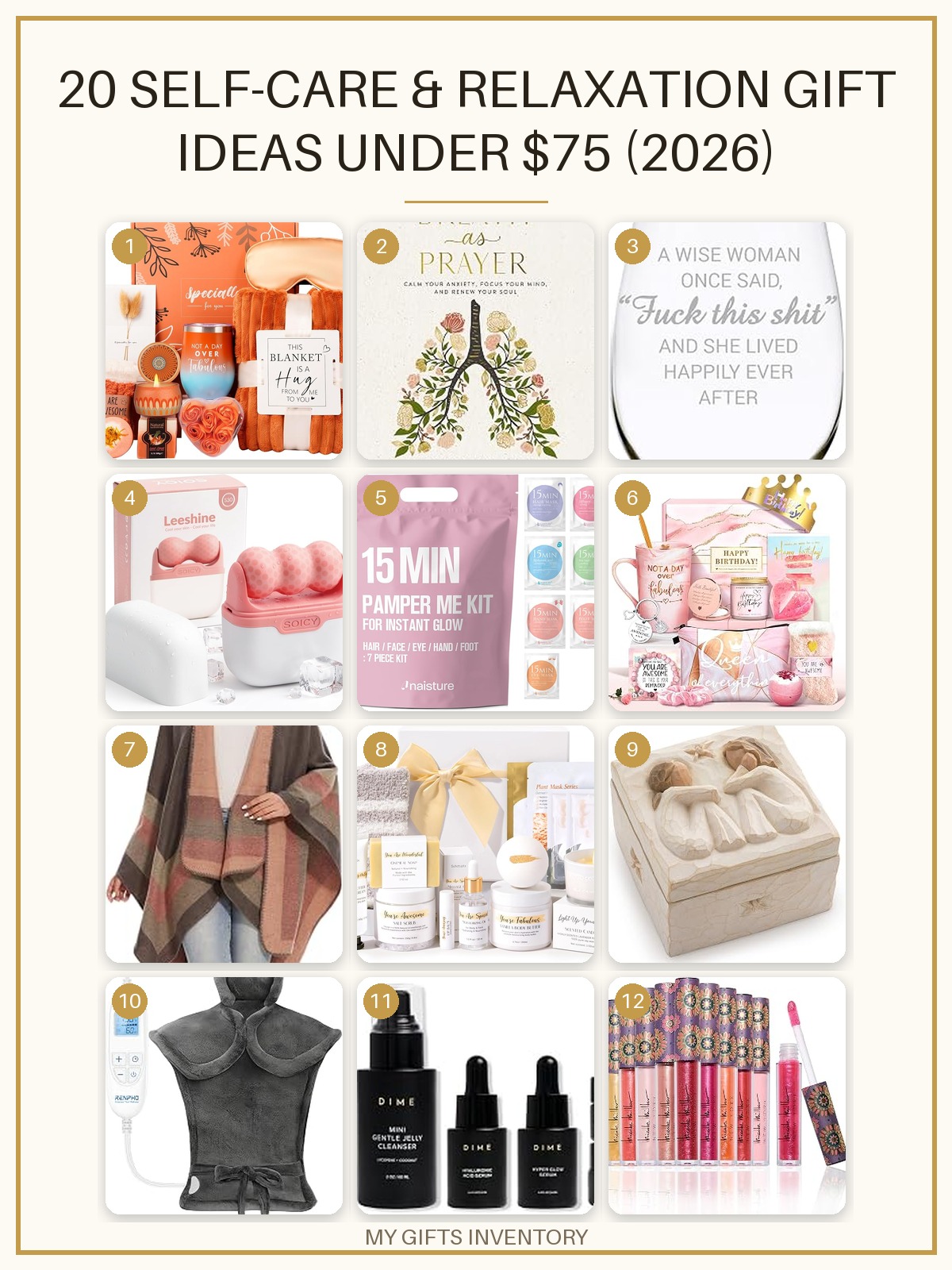
Self-care and comfort gifts often outperform generic knickknacks because they offer an immediate payoff. If the person you’re gifting is stressed, tired, or always “on,” consider self-care sets and spa-style options. This is where “20 Gift Ideas for Self-Care & Spa Gift Sets Under $50 (2026)” can guide you toward the kind of present that feels pampering even at a smaller price point.
Tailored lane (you picked this because it fits them)
Tailoring is the cheapest upgrade to a gift. Even if the product is simple, the note can make it personal. We like to pick one specific detail to reference in the card, such as:
- “I remembered you mentioned loving slow mornings.”
- “Since you’re always cooking for other people, I picked something that makes hosting easier.”
- “You always light up when you talk about your routines, so I chose a little ‘reset’ for you.”
Experiential lane (a moment beats a thing)
Experiences can be done on a budget, too. Think: a coffee and walk, a movie night at home with special snacks, a “cook together” evening, or a local event ticket if it fits your budget. If you’re worried the gift will look too small, pairing it with a card that explains what you’re excited to share helps a lot.
Gift card etiquette when you are on a budget
Gift cards get a bad reputation because some people use them as a last-second cop-out. When we use them deliberately, they can be one of the most considerate budget solutions because they respect the recipient’s choices.
What we recommend writing inside a gift-card card
Instead of “Enjoy,” we use wording that proves we paid attention. Try one of these:
- “I know you’ve been eyeing this, so I’m sending you the choice. Hope it makes your week feel easier.”
- “This is for the thing you keep talking about. I hope it brings you that little spark.”
- “No pressure, but if this helps you get something you want or need, I’m glad it’s there.”
Where to buy can reduce the headache
Sometimes the “budget problem” is actually convenience. If you already know which store they use, it makes the gift card feel more practical. If the recipient shops at a particular chain, it can help to choose gift cards that match that habit, such as the guidance in “Gift Cards at Walmart: The Complete List of Brands, Fees & Where to Buy (2026)”, “Gift Cards at Target: The Complete List of Brands, Fees & Where to Buy (2026)”, or “Gift Cards at Kroger: The Complete List of Brands, Fees & Fuel Points (2026)”.
What to write in the card when you spent less than expected
This is where most people worry. They fear the recipient will read the price into the relationship. The trick is to write something that focuses on celebration and specificity, not on your budget.
A simple rule: don’t apologize for the amount
We avoid lines like “I know it’s not much” or “Sorry I couldn’t do more.” Those phrases hand the recipient a heavy emotional job: they have to reassure you. Instead, give them their own role, which is to feel appreciated.
Card wording templates that work in real life
Pick the one that matches your situation:
- Birthday, light and warm: “Happy birthday. I’m really glad it’s your day, and I hope this makes you smile when you open it.”
- Partner or close friend (specific): “I love how you show up for people. I picked this because it made me think of you and what you’d actually use.”
- Family member, keep it simple: “So happy we get to celebrate you. I hope you enjoy this, and I can’t wait to spend time together.”
- When expectations are high (calm confidence): “I wanted to celebrate you in a way that fits my budget this year. I’m still putting real thought into it, and I hope you feel how much I care.”
- Gift card: “I know you’ll choose something you really want. I hope it feels like a treat from me.”
If you need to address the budget directly, say it like logistics
If you already told them your budget was tighter, you can keep the card aligned:
Example: “I’m doing smaller gifts this year because I’m watching my spending, but I wanted you to feel celebrated.”
That framing helps because it doesn’t accuse them of caring about the price. It just explains the plan.
Wrapping and presentation: how to make “small” look intentional
We’ve seen it over and over: presentation can make a modest gift feel like a moment, not an afterthought.
Do the basics well
- Use paper that looks cohesive, not random scraps. Even plain wrapping in a consistent color palette helps.
- Add one “structure” element: a ribbon, a gift tag, or a small card insert.
- If you’re using a gift bag, don’t underfill it. Choose a bag size that fits the item so it doesn’t look like it got dropped in at the last second.
Use a “reveal” trick that costs nothing
Instead of handing the gift immediately, we sometimes do a quick moment:
- Place the main item inside a second box or bag.
- Write a short note that hints at the gift: “Something small that will make your next week easier.”
- Pair it with a planned activity, like “After you open it, we’re doing dessert tonight.”
Registries and “what if they want more?”
Registries are supposed to reduce stress. But when budgets are tight, people worry it will feel like they are “cheating.” Our approach is to treat registries as a menu, not a minimum spend.
If there’s a registry, choose the lowest “complete” option
We try to select something that feels whole on its own, not a partial accessory that only works in a bundle. If the registry has price tiers, we pick within our lane, then match it with a thoughtful card.
If there is no registry, ask a low-pressure question
A short text can solve expectation issues without drama:
- “Do you have anything you’d love right now that’s in the $X range? I’m keeping gifts smaller this year.”
Even one or two suggested options changes everything. It also helps you avoid the common budget mistake of buying something “safe” that turns out not to be their taste.
When someone insists on a higher spend: keep the boundary consistent
If they push back or act offended, we return to the earlier expectation math. They might not be asking for money, but they are showing they value a certain kind of gesture. You can acknowledge the meaning without increasing your own spending: “I hear that this matters to you. I still want to celebrate you, and this is what I can do this year.”
Returns, exchanges, and gift receipts: the part people skip
When we spend less, we’re often more likely to worry we picked wrong. So it helps to plan how you’ll handle uncertainty before the gift is given.
Keep receipts and know your store policy
We treat this like basic preparedness. If you’re gifting something you’re not 100% sure about, keep the receipt and confirm the store allows returns or exchanges for gift purchases. If you’re using a gift card, many stores also make choice easier, which reduces the risk of disappointment.
Do we put return information in the card?
We only do it if it feels normal in your relationship. A gentle line can reduce awkwardness:
- “If it’s not quite right, I’m happy to help with an exchange.”
- “No worries at all. If it doesn’t end up being the one you want, we can swap it.”
We avoid making the return option feel like a warning. It should sound like support, not a pre-emptive apology.
Long-game planning: how to make next year easier
Budget gifting is not only about one holiday or one birthday. We can make it easier for ourselves by planning earlier and setting systems.
Build a small “gift fund” even if it’s modest
We like a simple method: set aside a consistent amount each week once we know we are entering a gift season. Even a small amount turns last-minute shopping panic into regular planning.
Create a “fit list” throughout the year
When we hear someone say they like something, we jot it down. Not a huge list, just 3 to 10 notes per year. Budget stress drops because we are no longer guessing in December.
Use gift guides as planning tools, not shopping stress
Gift guides can help you find the budget lane you want. If you’re aiming for practical and under-$50 options, that kitchen gadgets list is a good starting point. If you want a comfort lane, browse self-care ideas in this under-$50 self-care guide.
When the expectation tension still shows up
Even when we plan, sometimes someone reacts badly or comments on spending. Here’s how we handle that without escalating.
Don’t argue about value in the moment
If they say something like, “Wow, you spent less than last time,” we respond with calm, not defensiveness:
“I’m keeping my spending tighter this year, but I really wanted you to feel celebrated.”
If they make it personal, redirect to the relationship
We bring the focus back to celebrating them, not debating the number. You can add a warm invitation: “Let’s hang out this week. I want to spend time with you more than anything.”
Protect the moment for both of you
If you think the conversation will spiral, you can change the subject without being cold. Try: “I’m glad you’re here. Can you tell me what you’ve been enjoying lately?”

Frequently Asked Questions
Should we apologize in the card if we spent less?
No, we usually skip the apology. An apology forces the recipient to reassure you, and it can make the gift feel like a problem instead of a celebration. Replace it with celebration plus specificity, like “Happy birthday. I picked this because it made me think of you.”
What should we say if someone expects us to match their spending?
We set a boundary early and keep it factual. A sentence like, “My budget is tighter this year, so I’m keeping gifts small, but I still want to celebrate you,” is clear without sounding resentful.
Is a gift card acceptable when we are on a budget?
Yes, a gift card can be thoughtful, especially when you include context in the card. We like wording that shows you know what they want, such as “I’m sending you the choice for the thing you’ve been talking about.”
How do we handle returns when giving a budget gift?
We plan for it before gifting. Keep the receipt when possible, and if your relationship supports it, you can include a supportive line like “If it’s not quite right, we can exchange it.”
What’s the best way to avoid awkwardness with wrapping?
We focus on neatness and presentation, not size. A cohesive wrap, a clear tag, and a “reveal” moment that makes the gift feel like an event can make even a small item land well.
Looking for an Actual Gift Instead?
Shop Hand-Picked Gift Sets
Every item picked, priced and linked, ready to buy.
More Gift Advice