How to Use a Let's Eat Gift Card at Restaurants: Ordering, Tips, and What to Know Before You Pay
A practical walkthrough of using a Let's Eat gift card at restaurants, from checking your balance before you order to handling tips, splits, and leftovers.
As an Amazon Associate, My Gifts Inventory earns from qualifying purchases. We only recommend products we'd genuinely consider buying ourselves.
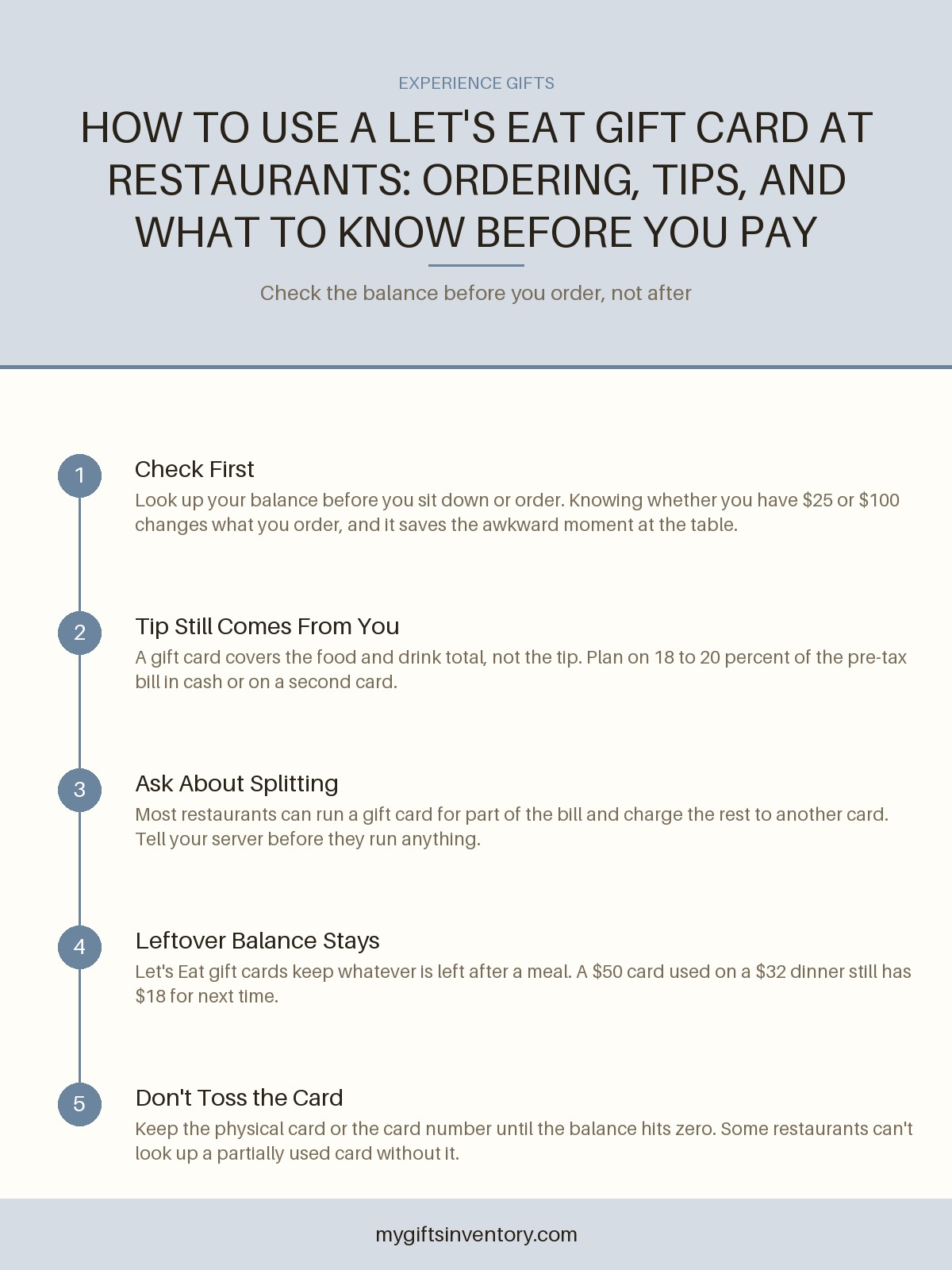
You're sitting in a booth, the menu is open, and there's a Let's Eat gift card in your wallet. The question running through your head is probably not "how do gift cards work" but something more specific: how much is on this thing, can I use it for the tip, and what happens if dinner costs more than the card covers. We've all been there. Here's how to actually use one without an awkward moment at the table.
First, Find Out What's Actually on the Card
This is the step people skip, and it's the one that causes the most trouble. A Let's Eat gift card can sit in a drawer for a year, get partially used at a lunch you forgot about, or come from a third-party seller with a balance that isn't what the packaging suggested. Walking into a restaurant and assuming you have $50 when you have $11 is a bad way to find out.
If you're not sure how to look yours up, our step-by-step walkthrough at Let's Eat Gift Card Balance: How to Check It covers the phone number, the website lookup, and what to do if the card number has worn off the back. Do that check before you leave the house, not in the parking lot.
Two things worth knowing about the number you find:
- A partial balance is completely normal and stays on the card indefinitely. Using $32 of a $50 card doesn't forfeit the remaining $18.
- If the balance comes back as zero and you're certain the card was never used, that's a customer service call, not a restaurant problem. Restaurants can't reload or reissue a gift card.
What a Let's Eat Gift Card Usually Covers
Let's Eat is a multi-restaurant gift card, which means it works at a network of participating locations rather than a single chain. That's the appeal, but it's also the catch: it isn't universal. A restaurant has to be in the program.
Before you pick a place for a gift-card-funded dinner, confirm the restaurant is participating. The card's website or the back of the card will have a location look-up, and a quick call to the restaurant works too. "Do you take Let's Eat gift cards?" is a ten-second question that saves you from discovering the answer while holding the check.
What's typically included
- Food and non-alcoholic beverages
- Alcohol, at most participating locations (some restrict this, so ask)
- Tax on the meal
What usually isn't
- The tip. This is the big one. See below.
- Gift shop items, merchandise, or retail purchases at the same venue
- Separate gratuity lines that some restaurants add automatically for large parties
The Tip Question, Answered Directly
Here's the thing nobody tells you clearly: a restaurant gift card pays for the meal, not the service. Your server's tip is still your responsibility, and it comes out of your pocket, not the card.
The practical math, using a $60 dinner for two as an example:
- Food and drinks: $60
- Tax at 8 percent: about $4.80
- Tip at 20 percent of the pre-tax amount: $12
- Card covers: $64.80
- You hand over separately: $12 in cash or on a personal card
Some restaurants will let you add a tip to the card charge, which is convenient, but it eats into your balance and it's not universal. Ask your server. If they can't, cash is the cleanest option, and it's worth carrying a $10 and a $20 in your wallet specifically for this.
One etiquette note: don't stiff the server because "the card should cover it." That's not how it works, and it's the single most common way people misuse restaurant gift cards without realizing it.
Ordering Strategy When You Know Your Balance
Once you know your number, you can order with it in mind. That sounds obvious, but the difference between a $25 card and a $100 card is the difference between "split an appetizer" and "order whatever you want, including dessert."
If the balance is under $30
Think of it as covering your own entree and drink, and plan to pay the rest. This is a great card to use on a solo lunch or a casual weeknight dinner where you're not trying to treat anyone.
If the balance is $50 to $100
This is the sweet spot for dinner for two at a mid-range restaurant. You can order normally, get an appetizer, and still have room. You'll likely still be covering the tip out of pocket, and possibly a small remainder depending on the restaurant.
If the balance is over $100
You can treat someone, cover a nicer dinner, or stretch it across several visits. If you're gifting a card at this level, it's worth pairing it with something small and physical so there's actually something to unwrap.
If you're on the giving side of this and trying to figure out what to hand over with the card, our roundup of engagement gifts for couples includes plenty of budget-friendly cards-and-keepsakes combinations that work the same way for a restaurant gift card paired with a small token.
And if the person you're gifting is a parent of young kids, a restaurant gift card lands differently when it comes with a promise of babysitting. The baby and first birthday gift ideas under $30 guide is a good place to find small, useful add-ons that pair well with a dinner-out card.
Using It When You're Dining With Other People
This is where it gets socially complicated, and where a little advance planning saves the evening.
When you're splitting the bill
Most restaurants can apply a gift card to part of the bill and charge the remainder to another card or to cash. Tell your server up front: "We're splitting this, and I'd like $40 of it on this gift card." Don't wait until they've run the whole check and handed it back. Reopening a closed check is a hassle for everyone.
When you're treating
If you invited someone and you're using the gift card to cover it, don't announce the mechanics at the table. Hand the card to the server quietly, or better, excuse yourself and settle up at the register. "I'm using a gift card" is a detail nobody at the table needs.
When someone else is treating and you want to contribute
This is a genuinely awkward scenario with no perfect answer. The cleanest move is to offer at the end: "Can I put part of this on a card I have?" If they decline, let it go and pick up the next meal. Nobody wants a gift card negotiation over dessert.
What Happens If the Card Runs Short
This is the moment the article is really about, so let's handle it properly.
The card covers what it covers. If dinner comes to $87 and the card has $62, you owe the restaurant $25 plus your tip. The balance on the card drops to zero (or to whatever small amount is left, if the restaurant runs the card for the full available amount first). There's no penalty, no fee, no problem. You just pay the difference like any other split payment.
The only real risk is if you assumed the card would cover everything and you didn't bring another payment method. Don't be that person. Bring a backup card. Every time.
If you do end up with a small leftover, say $6 or $8, you have a few options: leave it on the card for next time, ask the server to apply it to the tip, or just let it sit. There's no minimum you have to spend to use a Let's Eat card, but restaurants do vary on whether they'll run a card for a few dollars. Under $5, it's often easier to pay cash and save the card.
If the Restaurant Doesn't Take It
It happens. The location dropped out of the program, or you misread the list, or the specific franchise location opted out. Here's the order of operations:
- Ask for a manager, not the server. Servers often don't know the gift card program details.
- If the manager confirms it's not accepted, pay normally and keep the card.
- Check the card's location lookup afterward to find participating restaurants nearby. There usually are some.
- If it turns out no location near you participates anymore, contact the card issuer about your options.
Buying One as a Gift: A Few Quick Notes
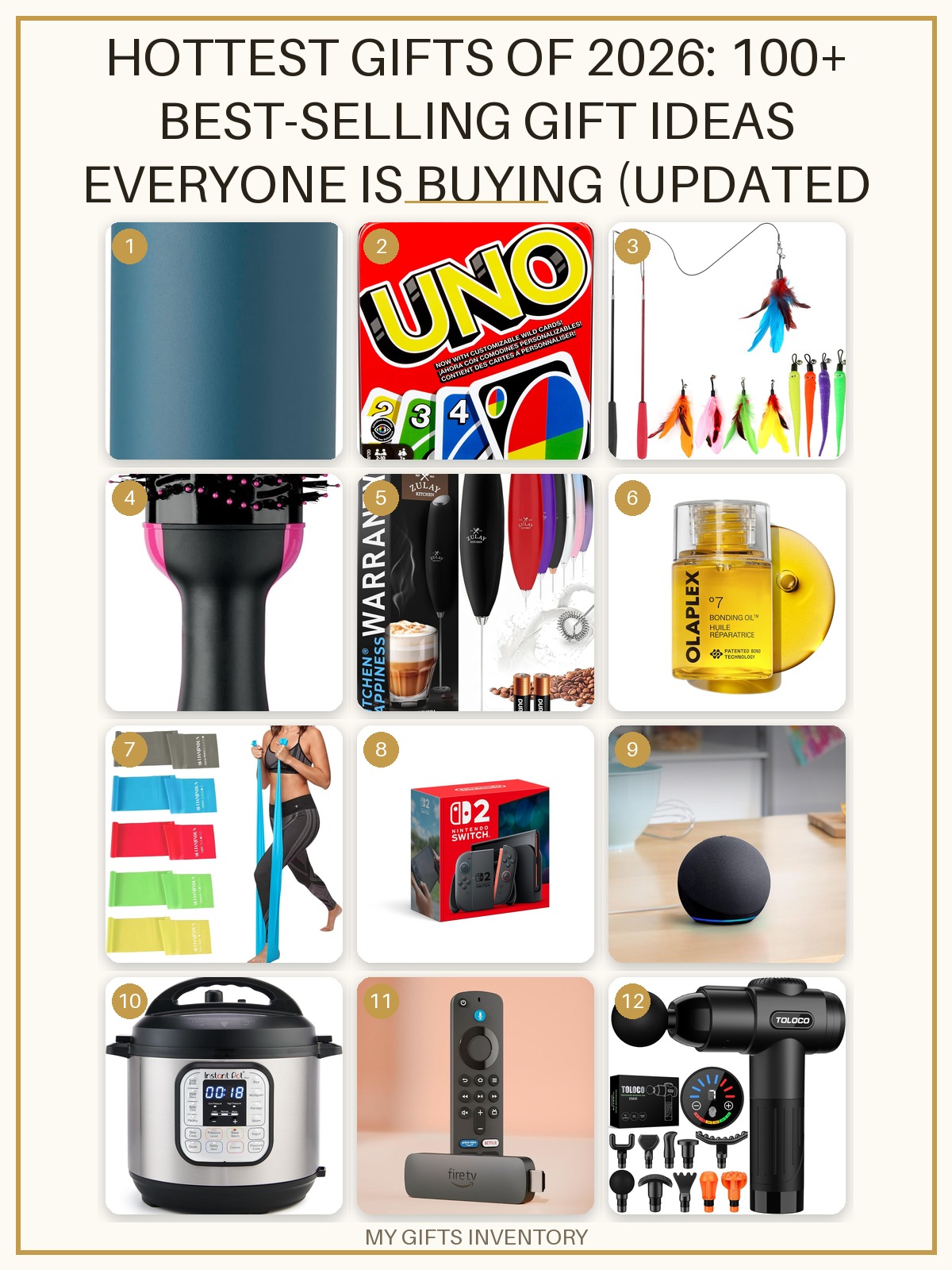
Restaurant gift cards are one of the most reliably well-received gifts there is, mostly because they don't require the recipient to have a hobby, a size, or a shelf. If you're shopping for a food-loving friend or a couple who never gets out, our hottest gifts of 2026 roundup is a good browse for pairing a restaurant card with something small and unwrappable-adjacent.
If you'd rather go with a single restaurant the recipient already loves, a chain-specific card is often the smarter buy. An Outback Steakhouse physical gift card at $50, for instance, is instantly usable and doesn't require the recipient to check a participating-locations list. Multi-restaurant cards are more flexible; single-brand cards are more frictionless. Pick based on whether the person you're gifting is a planner or a "just tell me where to go" type.
For a gift that pairs a dinner out with something to open at the table, a small keepsake like this iJuqi small keepsake gift for mom works well alongside a restaurant card for a Mother's Day or birthday combo. And if you're building a full dinner-and-a-movie style gift, a Happy Anniversary cookies gift basket is an easy add-on that gives the recipient something to actually unwrap.
Gift Ideas to Go With This


Frequently Asked Questions
Can I use a Let's Eat gift card to pay for the tip?
Sometimes, but don't count on it. Some participating restaurants will let you add gratuity to the card charge, others won't. The safe assumption is that the tip comes from you separately, either in cash or on a personal card. Plan on 18 to 20 percent of the pre-tax bill.
What happens if my meal costs more than the gift card balance?
You pay the difference. The restaurant applies the card for whatever balance is available and charges the remainder to another payment method. There's no fee or penalty, you just need to have a backup card or cash with you.
Does the leftover balance stay on the card?
Yes. Let's Eat gift cards are not use-it-or-lose-it for the balance. Whatever remains after a meal stays on the card for next time. The only thing that expires is the card itself in some jurisdictions, so keep an eye on any expiration date printed on it.
How do I know if a specific restaurant accepts Let's Eat gift cards?
Check the participating locations list on the card issuer's website, or just call the restaurant and ask. It takes ten seconds and it's the only way to be certain, since individual franchise locations sometimes opt out even when the chain participates.
Can I split the bill and use the gift card for only part of it?
Yes, at most restaurants. Tell your server before they run the check so they can set up the split properly. Asking after the check is closed means they have to reopen it, which some point-of-sale systems make difficult.
Looking for an Actual Gift Instead?
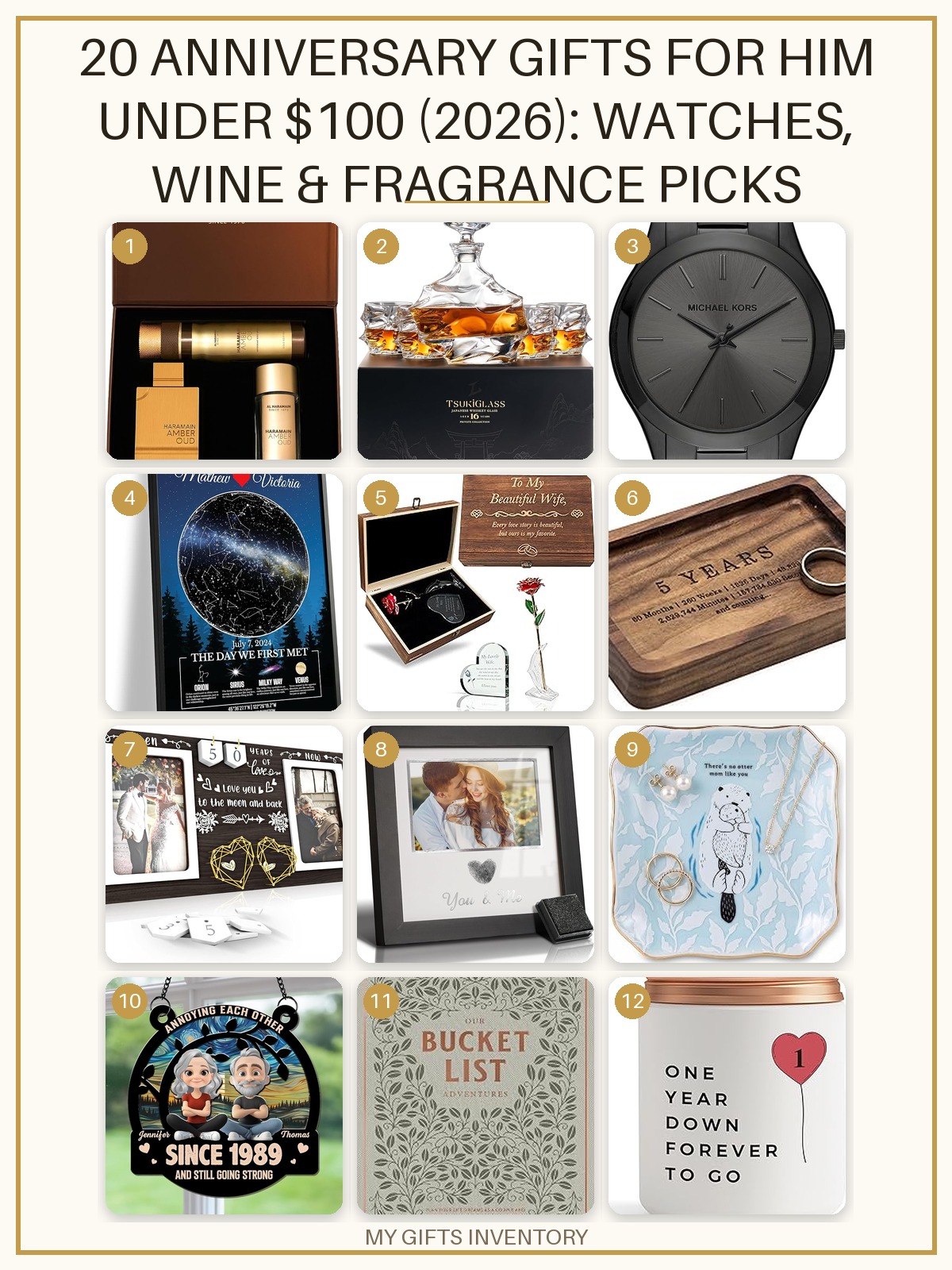
Gift Sets We Love Right Now
Every item picked, priced and linked, ready to buy.
More Gift Advice