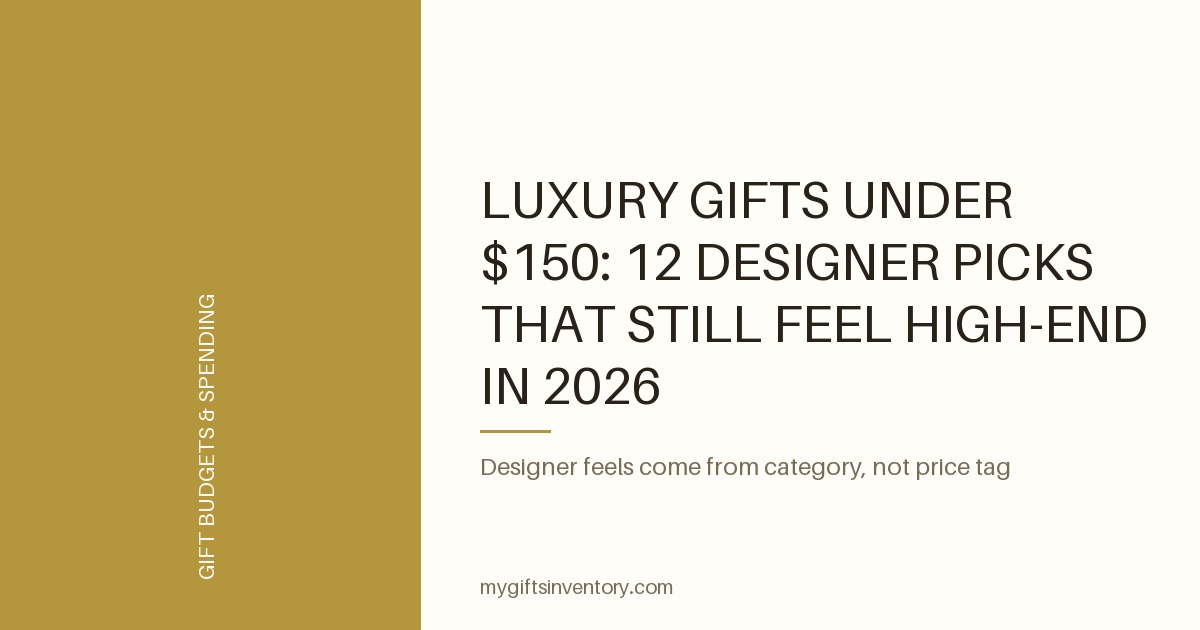
Luxury Gifts Under $150: 12 Designer Picks That Still Feel High-End in 2026
A $150 ceiling doesn't have to mean a $150 feel. Here's how to find designer and luxury-adjacent gifts that read expensive, plus where the money actually goes in this price band.
As an Amazon Associate, My Gifts Inventory earns from qualifying purchases. We only recommend products we'd genuinely consider buying ourselves.
You want to give something that feels like a real gift, not a placeholder. The problem is that "designer" and "under $150" don't naturally sit in the same sentence, and every gift guide that claims otherwise seems to be recommending a branded keychain and calling it luxury. So let's talk honestly about what this price band can actually do, where the line between "nice" and "high-end" really falls, and which categories consistently deliver the expensive feeling without the expensive receipt.
What "Luxury Under $150" Actually Means in 2026
Let's set expectations first, because this is where most gift guides mislead people. A $150 budget does not buy you a luxury handbag, a fine watch, or a designer coat. What it buys you is entry access: the smallest, most accessible item a genuinely prestigious brand makes, or the top of the range from a mid-tier brand that has earned a reputation for quality.
That distinction matters because the two paths feel different in the hand. A $120 leather card holder from a heritage house reads as luxury because of the name embossed on it. A $120 pour-over coffee kit from a serious specialty roaster reads as luxury because of the craft and the thought behind it. Both work. What doesn't work is a $140 gadget from a brand nobody recognizes, because then the recipient is just doing math on a box.
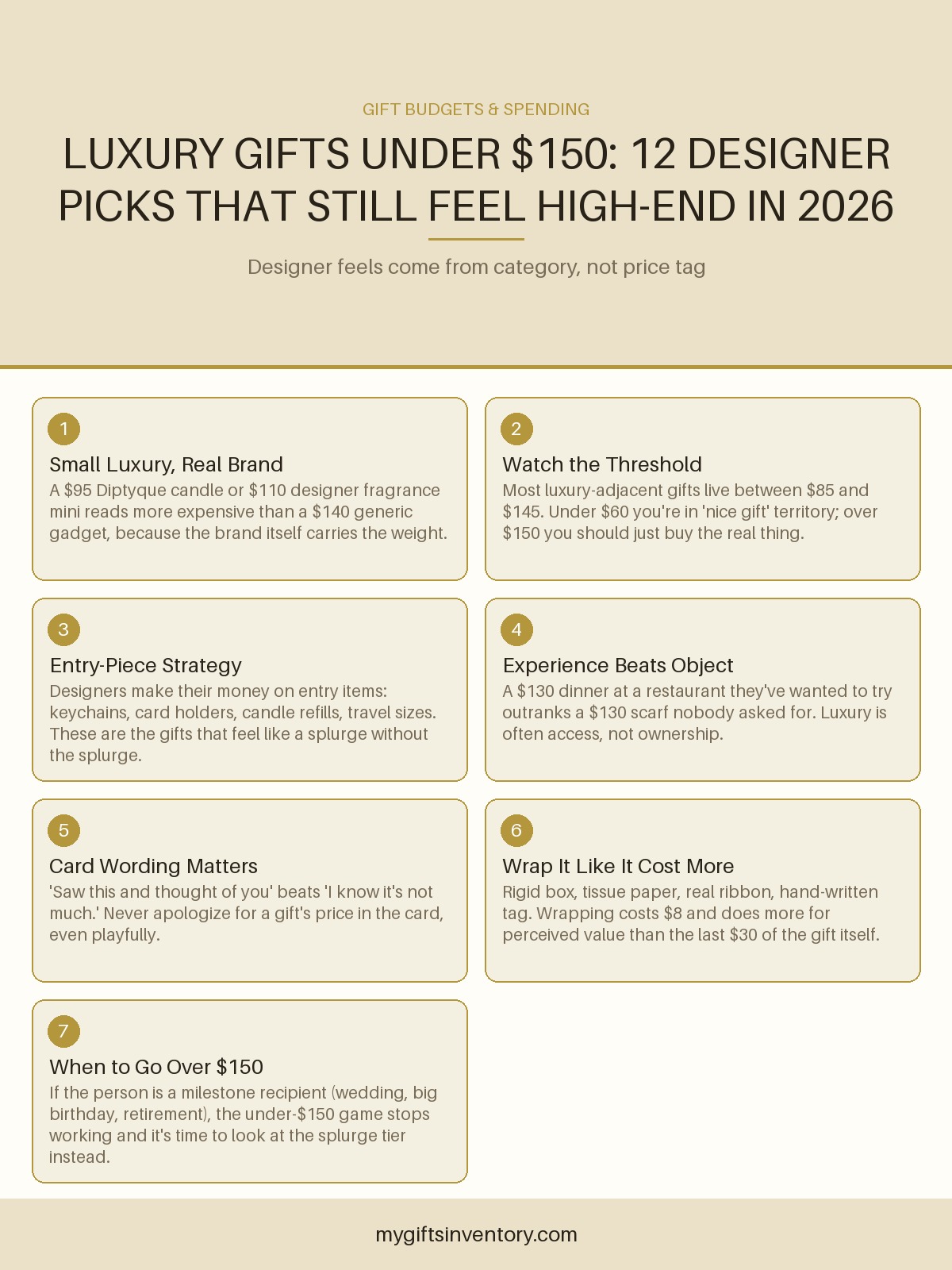
In 2026, the sweet spot for this category sits roughly between $85 and $145. Under $60, you're in "nice gift" territory and should shop accordingly. Over $150, you're quietly in a different category altogether and should own it. If your recipient is a milestone gift (a wedding, a 40th, a retirement), there's a real case for spending above this range on one anchor piece rather than three smaller things, and our guide to 15 Luxury Gifts Worth the Splurge: Best Picks Over $150 (2026) is where we'd point you once the budget loosens.
The 12 Categories That Consistently Deliver at This Price
Rather than a random list, think in terms of categories. These are the twelve that keep working, year after year, because they share one trait: the brand carries the prestige, not the size of the object.
1. Designer Fragrance (Full Size)
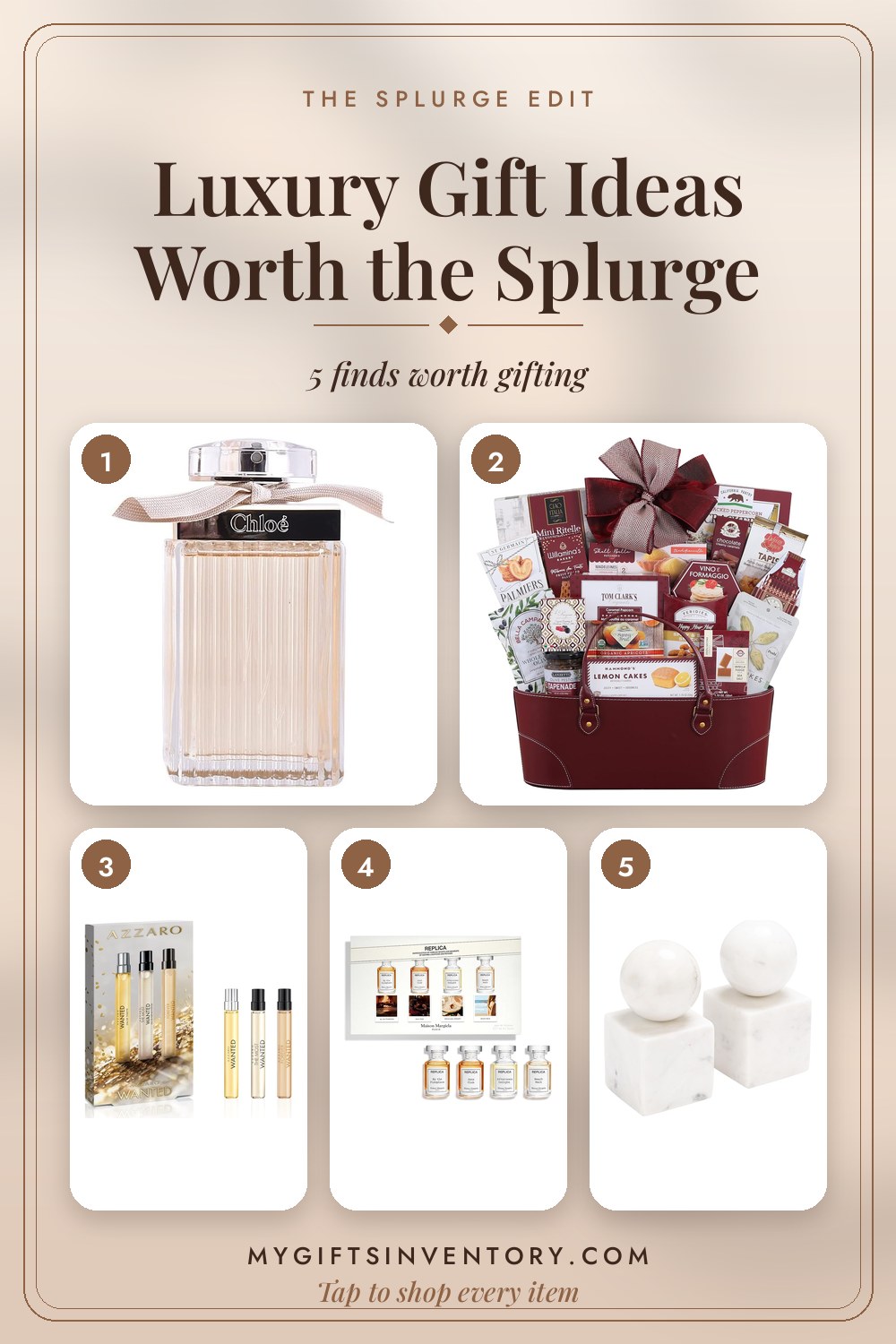
A full 3 oz bottle of a designer eau de parfum is one of the last true luxury purchases available under $150. Yves Saint Laurent Black Opium sits around $110 for 3 oz and never reads as a compromise. Jimmy Choo's I Want Choo is right around $84 and feels like a proper gift, not a stocking stuffer.
Fragrance is also the category with the best gift logistics. There are no sizes, no fit issues, no colors to get wrong. If you know the scent they already wear, buy the larger bottle of that same scent and you'll never miss. If you don't know their scent, buy a discovery set from the same house rather than guessing at a full bottle.
2. Watches at the Entry Luxury Line
The watch category has an odd reputation as a "big money" gift, but the entry tier is where the under-$150 game plays best. A Casio MDV106 diver with 200m water resistance runs about $66 and has been quietly respected by watch people for years. An Invicta Pro Diver at $65 does a decent Seiko-style automatic impression, and a Casio G-Shock at $58 to $71 is the kind of gift that gets worn for a decade without complaint.
The trick with watches is to lean into the tool-watch or dive-watch aesthetic at this price, not the dress-watch aesthetic. Dress watches telegraph their price to anyone who knows watches. Tool watches don't, because they're supposed to look utilitarian.
3. Small Leather Goods from Real Houses
Card holders, key pouches, luggage tags, and passport covers are how heritage leather houses actually make their money. A $120 card holder from a brand with a 100-year history is a real piece of that brand, and it costs less than a single dinner out at a nice restaurant. The recipient uses it daily, which means the logo does its work every morning.
4. Home Fragrance and Candles
A single Diptyque candle is roughly the price of a nice dinner and it reads as a splurge in a way that a $40 candle absolutely does not. If your recipient burns candles, this is one of the highest-value moves in the entire category. If they don't, don't force it. Candle warmers have quietly become a strong alternative for people who want the scent without an open flame, and our picks in 10 Best Candle Warmer Lamp Gifts (2026): Flameless Wax Melters, Dimmable & Smart Picks cover the whole range from dimmable basics to smart versions that pair with an app.
5. Coffee and Espresso Gear
Coffee is the category where "designer" and "under $150" genuinely overlap on function, not just brand. A serious pour-over setup, a quality burr grinder, or an entry-level espresso machine all sit in this band and all read as thoughtful. If your recipient is already into coffee, upgrading any single tool in their kit does more than buying them a whole new kit. Our guide to 6 Best Coffee Maker & Espresso Machine Gifts (2026): Breville, Nespresso, Keurig, Ninja & Ember Mug is the right place to start if you're shopping blind.
6. Audio: Headphones and Speakers
Bluetooth speakers and headphones are the rare tech category where brand reputation and actual performance correlate tightly under $150. A JBL or Soundcore speaker at $100 does not feel cheap. A pair of entry ANC headphones from a serious audio brand does not feel cheap. The trick is to buy within the brand's strongest product line rather than their cheapest one. If you're unsure where the value sits, our roundups of 8 Best Bluetooth Speaker Gifts (2026): JBL, Bose, Marshall, Soundcore & Budget Picks and headphone picks both break down which tiers are worth the money.
7. Skincare and Body Care Sets
Designer body care brands have mastered the entry-level luxury gift. A Sol de Janeiro body cream set or a smaller Diptyque body product hits exactly the right note at this price, and it feels indulgent without becoming someone's problem. This is one of the strongest categories for a recipient you like but don't know deeply, because there's almost no wrong answer.
8. Sleep and Bedding Upgrades
A silk pillowcase is the single most underrated $80 gift in existence. It feels high-end, it's genuinely good for hair and skin, and it's a category most people never buy for themselves. Pair it with a heatless curl set and you've got a spa-night gift that costs less than a massage.
9. Insulated Drinkware from Premium Brands
The Stanley-versus-YETI-versus-Owala battle has been won by consumers, not brands, and that means you can now buy any of them at this price and know you're giving something they'll actually use. The upgrade moment is buying a limited colorway or a larger size than they'd buy themselves. That said, this category has a hard ceiling. Nobody is fooled into thinking a $65 tumbler is luxury.
10. Books, Games, and Hobby Gear
A boxed set of a beloved author's collected works, a serious strategy board game, or a piece of hobby gear that upgrades an existing passion all sit comfortably in this band and have an outsized emotional return. The trick is to buy up within a category they already love, not sideways into a category you think they'd enjoy.
11. Tech Accessories from Apple-Adjacent Brands
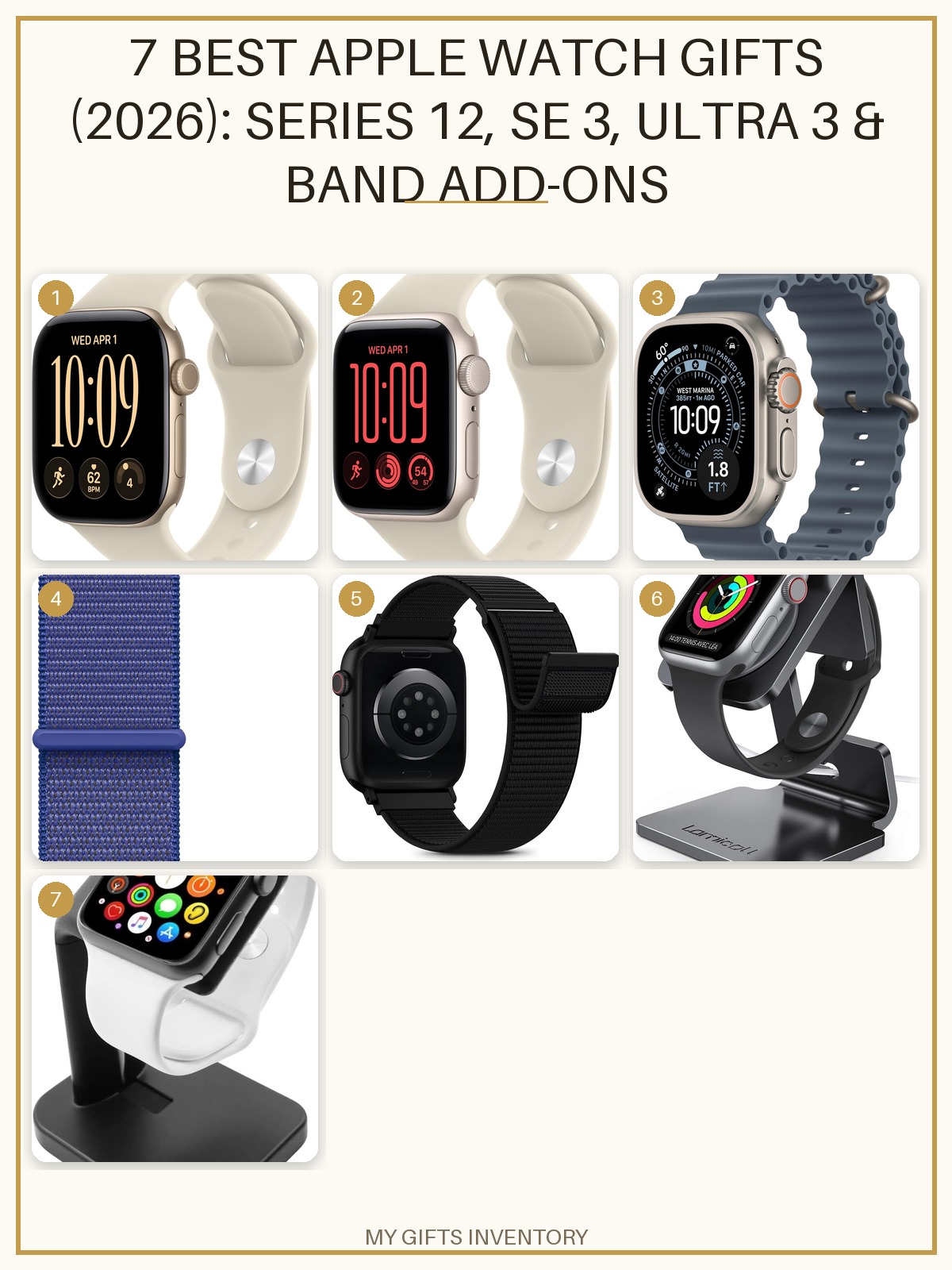
AirPods cases, Apple Watch bands, Kindle covers, and Nintendo Switch accessories are all gifts that get used daily and feel like a real upgrade when bought from a premium maker. The budget math here is generous: you can buy two or three things instead of one and still come in under budget, which reads as thoughtful rather than cheap.
12. Experience and Consumable Gifts
Dinner at a restaurant they've been wanting to try. A wine tasting. A spa day. A cooking class. At this budget, experiences are the quiet cheat code because the recipient remembers them and nobody ever looks at the receipt. If the person is difficult to shop for, this is the move.
What to Write in the Card When It's a Smaller Luxury Gift
Here's the awkward part: when you're giving a $120 gift to someone who might give you a $300 one, the card carries more weight than usual. The wrong card message makes the gift feel smaller than it is. The right one makes it feel bigger.
The single biggest mistake is apologizing for the price, even playfully. Never write "I know it's not much" or "it's just a little something." Those sentences tell the recipient to focus on the dollar amount, which is the exact opposite of what you want.
Instead, put the emphasis on the relationship or observation that led to the gift. Specific, warm, and confident:
- "Saw this and thought of your morning routine. Enjoy."
- "For the coffee you actually look forward to. Happy birthday."
- "You've been wanting to try this place for months. Go, enjoy, don't check the receipt."
- "This reminded me of the trip we never actually took. Here's to finally planning it."
- "A little upgrade for someone who deserves one."
Notice none of these mention price, brand, or effort. The gift speaks for itself, and the card tells the person why it's for them specifically. That combination is what makes an under-$150 gift read as luxury, regardless of what it cost.
Packaging: The Cheap Trick That Actually Works
Perceived value is about 30 percent the object and 70 percent the presentation when you're giving under $150. A $120 gift in a plastic bag feels like a $60 gift. A $60 gift in a rigid box with tissue and a ribbon feels like $150.
What to actually do:
- Rigid box, always. A magnetic-close gift box costs $6 to $10 at a stationery store and changes everything.
- Tissue paper in two colors. Layered tissue makes the inside of the box look intentional. Crumpled tissue almost always looks like an afterthought.
- Real ribbon, not a sticker bow. Satin or grosgrain, tied by hand, unspooled. You can tie a bow in 30 seconds and it reads as effort.
- Hand-written tag, not a post-it. Buy blank kraft tags at any craft store in packs of 20. Write with a fine-point pen, not a ballpoint.
- A dab of the brand's signature scent. If you're giving a perfume bottle, spray a tiny amount on the tissue paper. The unboxing starts before they see the gift.
Add a small "extra" inside the box if you want the trick to really land. A tiny chocolate, a tea bag, a sample or two, a handwritten note folded in the tissue. The recipient opens the box and finds more than they expected, which is the entire feeling luxury packaging is designed to produce.
When Under $150 Stops Being Enough
One hard truth worth naming: this category works beautifully for birthdays, thank-yous, hostess gifts, teachers, coworkers, and general holiday giving. It does not work for weddings, milestone anniversaries, big graduations, retirement, or first-time-parents gifts. In those moments, the under-$150 constraint reads as a decision you made rather than a limit you hit, and the gift can land oddly.
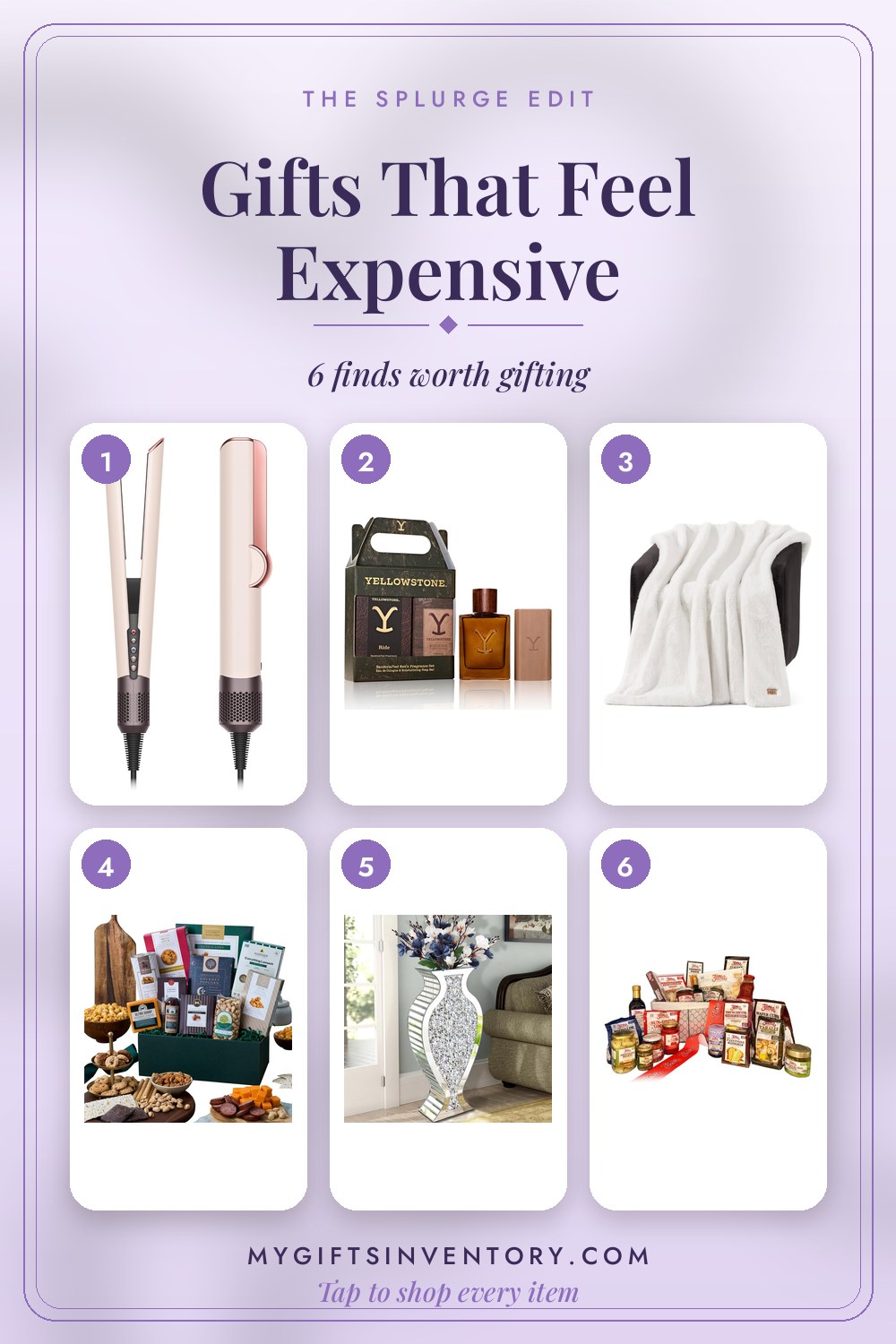
If you're in that situation, either pool money with others, buy the splurge-tier gift and stop worrying about the ceiling, or reframe entirely and give a genuinely thoughtful experience rather than an object. A $200 dinner out is currently worth more emotionally than a $140 card holder, in almost every circumstance, and the difference is one you stop noticing as soon as you commit.
We keep a separate list for that exact scenario. If you find yourself needing to spend above $150 but don't want to spend $500, that's the guide you want.
FAQ: Luxury Gifts Under $150
Gift Ideas to Go With This


Want more ideas? Browse our full guide: 20 Best Gifts Under $100 (2026): Thoughtful Picks They'll Actually Use
Frequently Asked Questions
What's the most convincing "luxury" gift you can give under $150?
A full-size designer fragrance, a small leather good from a heritage house, or a single Diptyque candle. All three carry real brand weight, all three sit between $85 and $130, and none of them require the recipient to feel the price tag was trimmed. Fragrance is the safest of the three because there are no sizes, fits, or colors to get wrong.
Is $150 enough to buy an actually designer gift in 2026?
For accessories, fragrance, candles, small leather goods, and entry-level watches, yes. For handbags, fine jewelry, outerwear, and dress watches, no. The honest framing is that $150 buys you entry access to a designer brand, not a signature piece. That distinction is what separates gifts that feel high-end from gifts that feel like a compromise.
Should I buy two $75 gifts or one $150 gift?
One, almost always. A single $150 gift reads as considered. Two $75 gifts read as an attempt to hit a number, and they usually don't work as well together as either one would work alone. The exception is if the two items are designed to be used together, like a coffee setup plus a bag of beans, in which case the pairing feels intentional rather than padded.
How do I know if a $120 gift will feel cheap to the recipient?
Two signals: whether the brand is recognized, and whether the category is one where the recipient has standards. A $120 gift in a category they don't care about will feel like $120 regardless of quality. A $120 gift in a category they're genuinely into will feel like much more than $120, because it lands against their actual interests. When in doubt, spend the $120 in a category they already care about rather than a category you think they'd like.
Can I give a gift card that feels luxurious under $150?
Yes, if the brand is right. A $100 gift card to a luxury retailer feels different from a $100 gift card to a chain restaurant, and the perception isn't really about the amount. The best move is to give a gift card to a brand they wouldn't normally splurge on themselves, which turns the card into permission to buy something they've been eyeing. If you're wondering whether an existing card still has a balance before you gift it, our guides to checking balances at places like Harvey Nichols and Victoria's Secret / PINK walk through the process step by step.
Looking for an Actual Gift Instead?

Shop Hand-Picked Gift Sets
Every item picked, priced and linked, ready to buy.
More Gift Advice