What to Write in a Gift Card: Messages That Feel Personal
Blank card panic is real. Here are specific wording examples and simple rules for birthdays, thank-yous, holidays, coworkers, and family so your note lands warm instead of awkward.
As an Amazon Associate, My Gifts Inventory earns from qualifying purchases. We only recommend products we'd genuinely consider buying ourselves.
We’ve all been there: gift picked, wrapping done, and then the blank card stares back. The pressure to write something meaningful (but not weird, not too long, not too generic) can freeze the pen. This guide gives you real wording you can use or tweak, plus simple rules so the note feels like you instead of a template.
A good card message does one job well. It tells the person why this moment or this gift matters, in a voice that matches your actual relationship. Everything else is optional.
The simple rules that make any message land
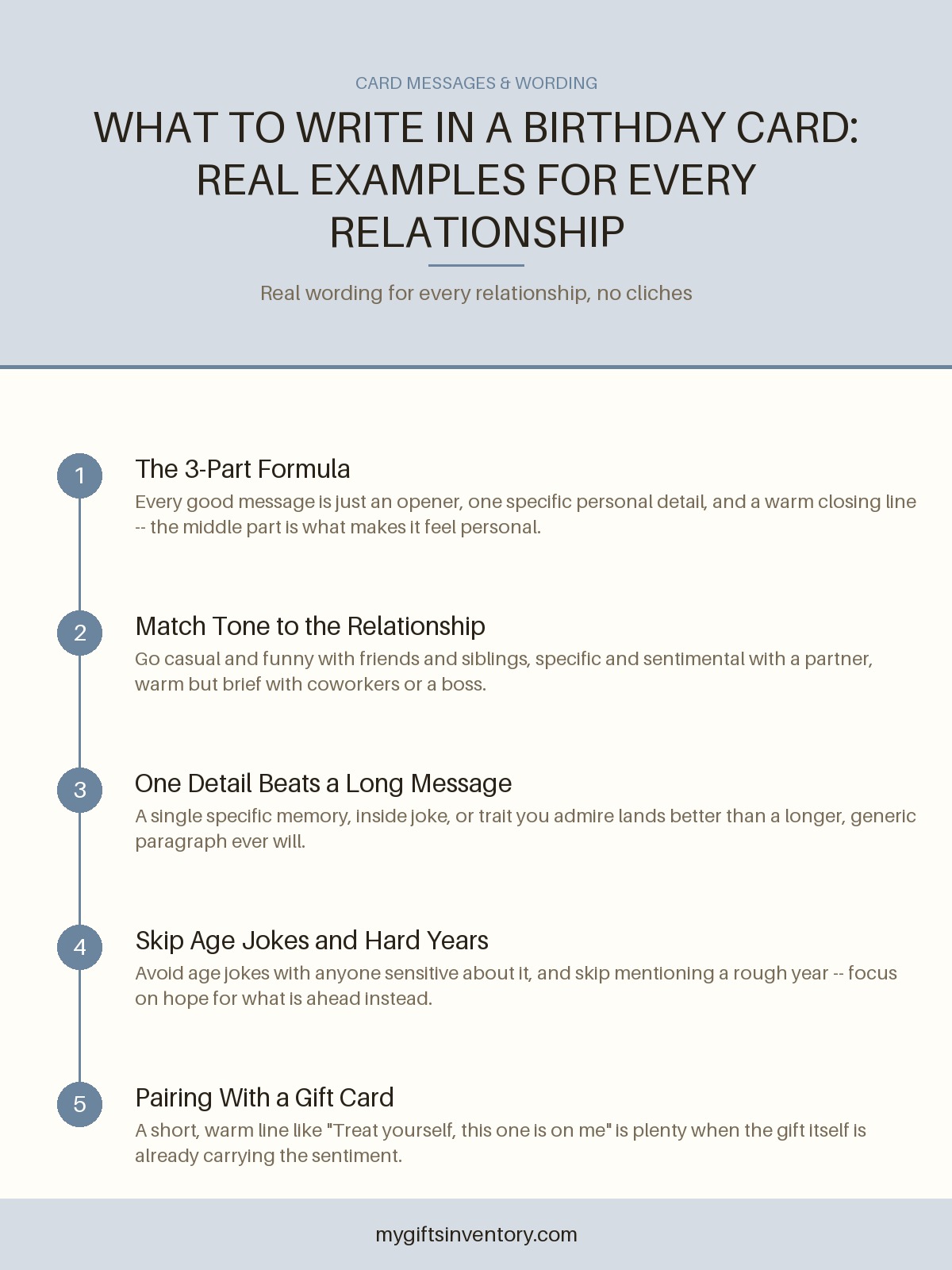
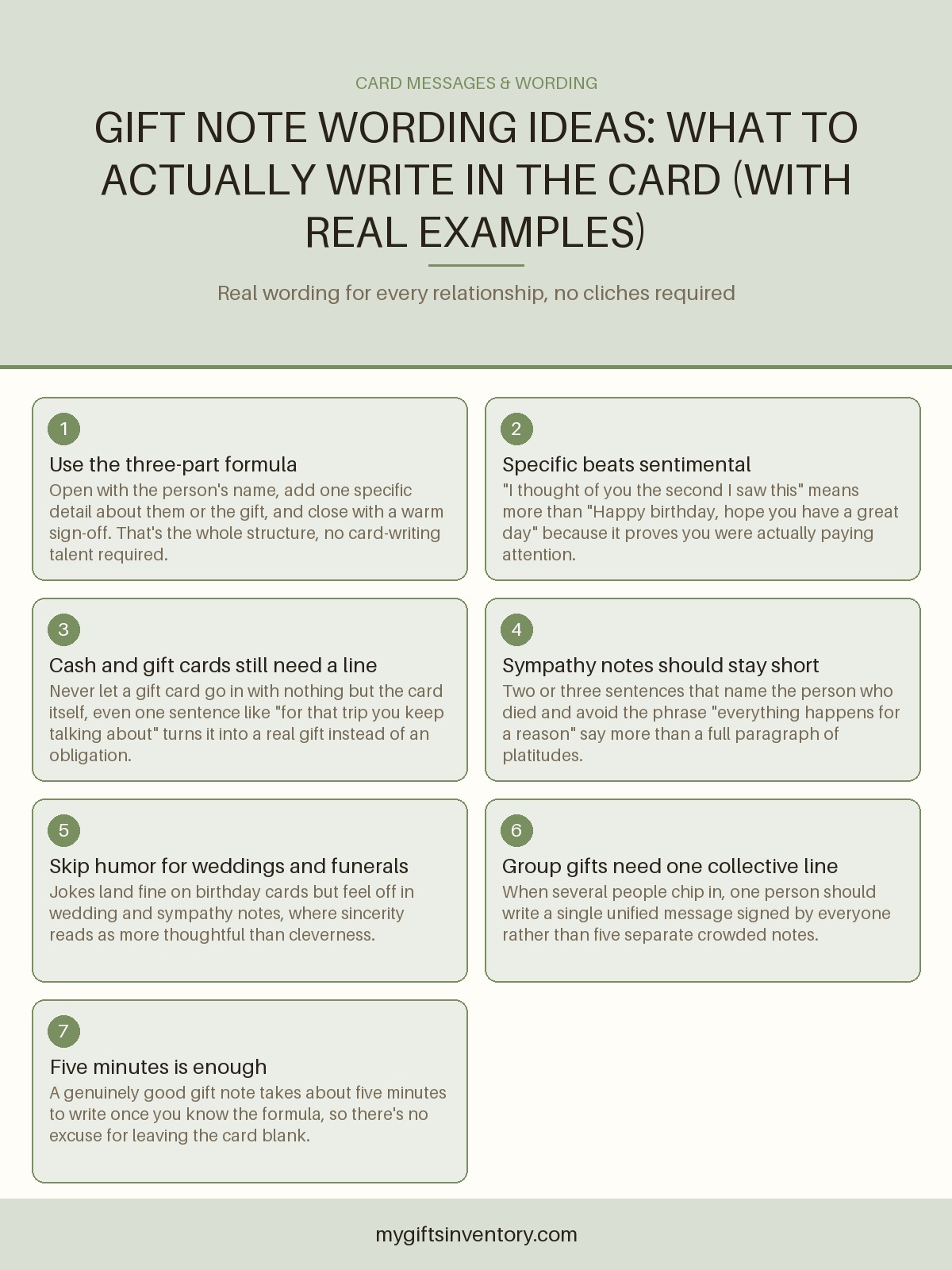
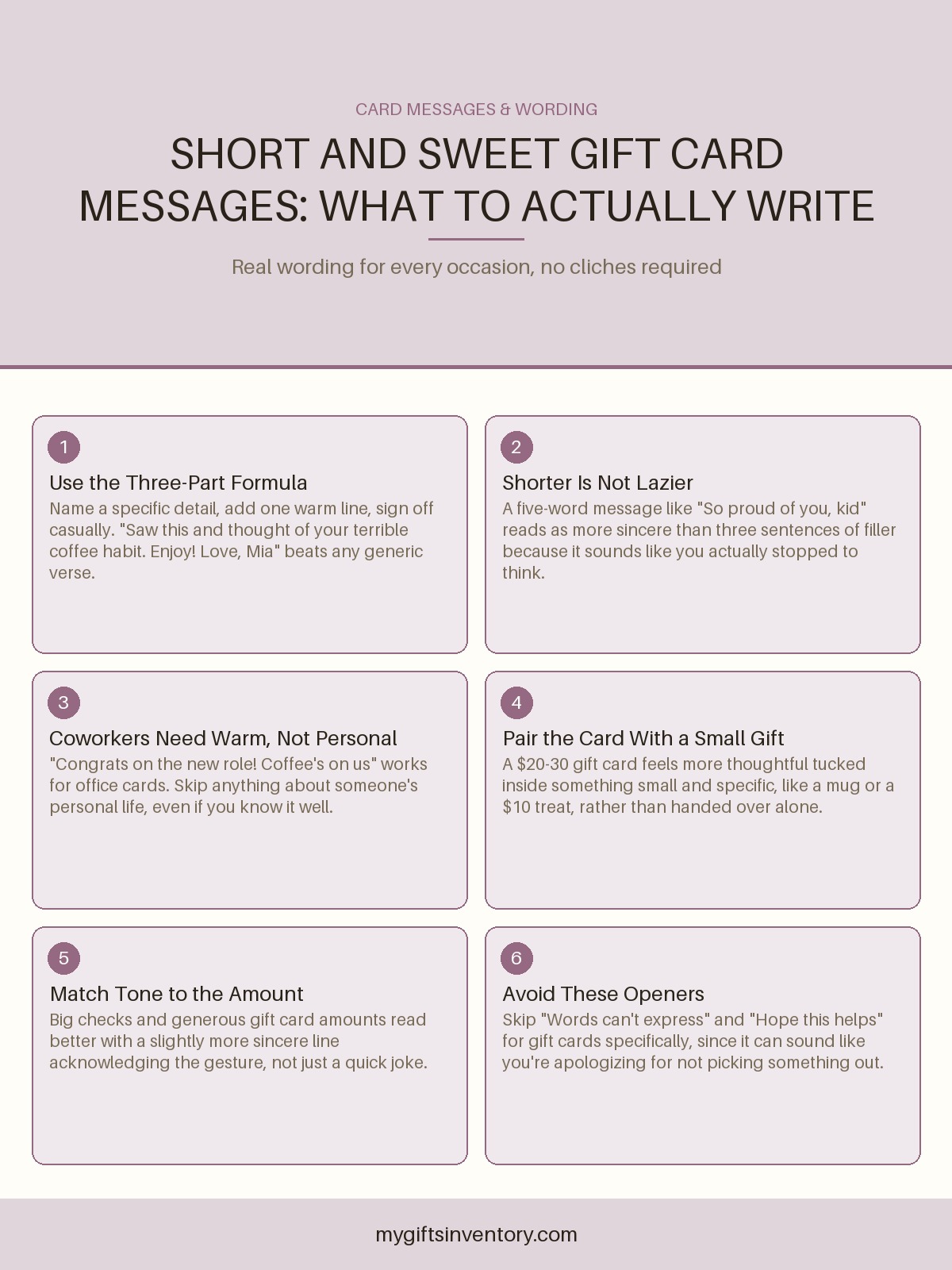
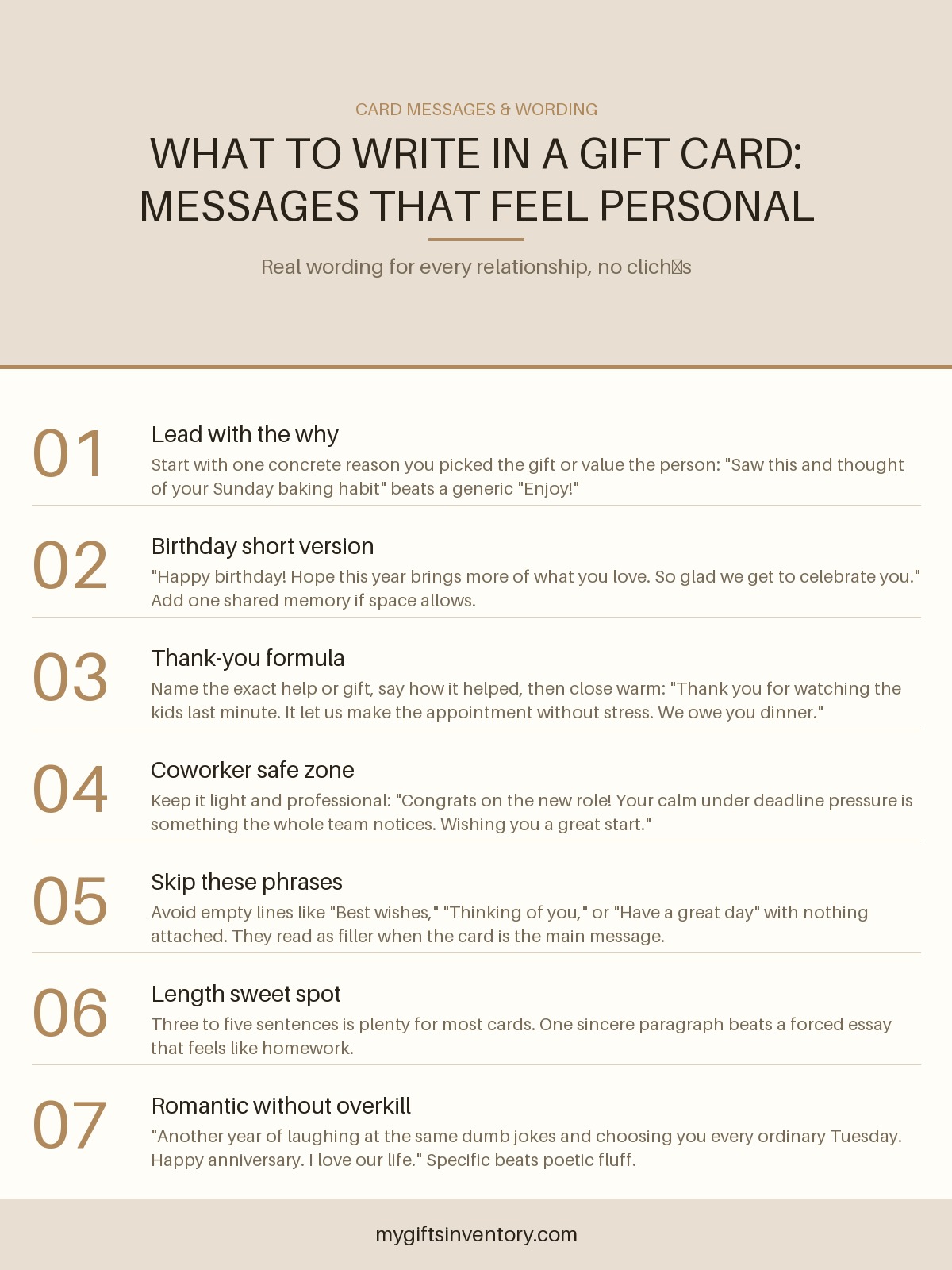
We keep a short mental checklist before writing. First, name the occasion or the specific reason you’re giving something. Second, add one concrete detail that only the two of you would recognize (a shared joke, a habit, a recent win). Third, close with a warm but proportionate wish. That structure works for almost every relationship.
Length matters less than specificity. Three honest sentences beat a paragraph of filler. If the gift itself already carries meaning, the card can stay light. If the card is doing heavier emotional work (sympathy, big thank-you, milestone), give it a little more room.
Handwriting still wins when you can manage it. A slightly messy note in your normal hand feels more personal than perfect printed script. If your handwriting is truly illegible, print neatly or use a clean card with space to sign by hand. Either way, sign with the name they actually call you.
When you’re also choosing the gift itself, matching the tone of the note to the present helps everything feel intentional. For broader ideas on picking something that fits the person, our guide to choosing the perfect gift walks through practical questions that make both the present and the card easier.
Birthday messages that don’t sound recycled
Birthdays are the most common card panic. People default to “Happy birthday, hope it’s a great one!” which is fine but forgettable. Add one detail and it suddenly feels written for them.
For a close friend
“Happy birthday! Still laughing about that road trip playlist disaster. Here’s to another year of bad decisions and excellent company. Love you.”
Or shorter: “Happy birthday to my favorite partner in crime. May your cake be extra and your responsibilities light.”
For a sibling or cousin
“Happy birthday. Proud of the person you’ve become (even if I still remember the phase with the questionable hair). Glad we’re family.”
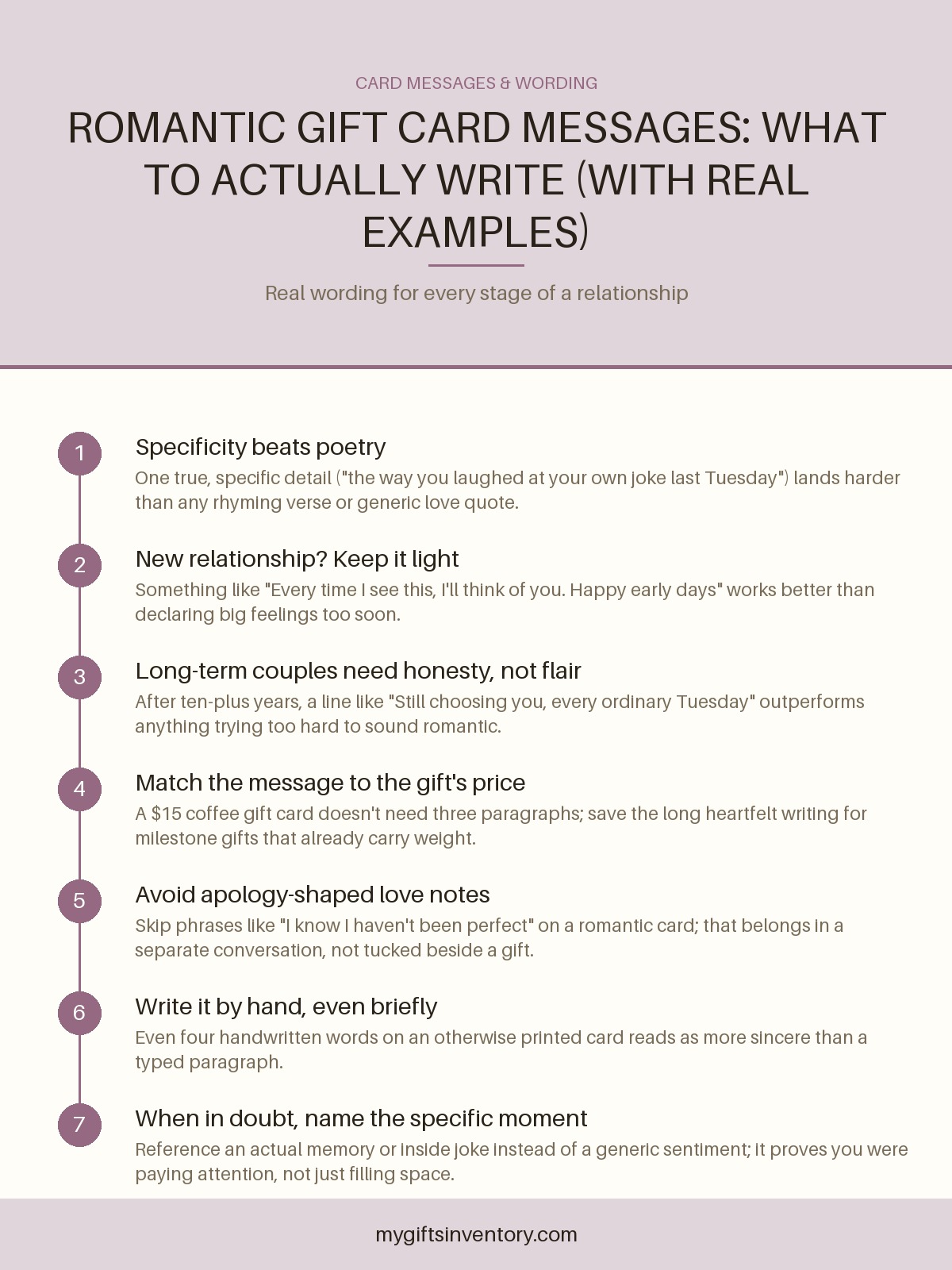
For a partner
“Happy birthday. Another trip around the sun with you is my favorite kind of ordinary magic. I love the life we’re building. Let’s make this year a good one.”
If you’re pairing it with something thoughtful under $50, our roundup of birthday gifts for girlfriend has ideas that match a warm note without needing a huge budget.
For a child or teen
“Happy birthday! You’re growing into someone really interesting to be around. Hope this year is full of the things that light you up. So proud of you.”
Keep it age-appropriate and free of pressure about grades or future plans unless they specifically want that kind of encouragement.
For an acquaintance or distant relative
“Happy birthday! Wishing you a day that feels like a real break and a year ahead that treats you kindly.”
The pattern is the same: occasion + one true observation + simple wish.
Thank-you notes that actually feel grateful
Generic thank-yous are easy to spot. The fix is naming the exact thing and the effect it had.
Formula we use: “Thank you for [specific action or gift]. It [concrete result]. [Optional offer or warm close].”
Examples:
- “Thank you for the beautiful throw blanket. It’s already living on the couch and making winter mornings better. You always pick things that feel like home.”
- “Thank you for jumping in on the move last Saturday. Having extra hands turned a nightmare day into something manageable. Dinner is on us soon.”
- “Thank you for the generous gift card. It’s going straight toward the new boots I’ve been eyeing. You made a practical wish feel special.”
If someone gave you a store gift card and you want to acknowledge it without sounding transactional, mention one thing you might use it for. That small projection makes the thanks feel lived-in.
Holiday and Christmas card messages
Holiday cards can lean warm and brief. Most people open dozens, so clarity and sincerity beat length.
Family version: “Merry Christmas from our house to yours. Grateful for the chaos, the food, and the people who make it feel like home. Love you all.”
Friend version: “Happy holidays! May your days off actually feel like rest and your to-do list stay short. So glad we get another year of this friendship.”
If you’re including a small present or a gift card, one extra line ties it in: “Included a little something for cozy nights in. Use it whenever you need a pause.”
For people who don’t celebrate Christmas, “Happy holidays” or “Season’s greetings” with a personal note still works. Focus on the relationship rather than the specific holiday if you’re unsure.
Wedding, engagement, and anniversary notes
These carry more weight, so a little more thought helps.
Engagement: “Congratulations! Watching you two find each other has been one of the best storylines. Wishing you a long engagement full of fun planning and a marriage that feels like the easiest yes.”
Wedding: “Congratulations on your wedding day. May your home be full of laughter, good food, and the kind of partnership that makes ordinary Tuesdays better. So happy for you both.”
Anniversary (early years): “Happy anniversary. Another year of choosing each other. I love the way you two laugh at the same things. Here’s to many more.”
Milestone anniversary: “Fifty years is no small thing. The way you still look out for each other is something the rest of us notice and admire. Congratulations.”
If you’re shopping for an anniversary present to go with the card, the year-by-year ideas in our anniversary gift ideas by year list can help the whole package feel considered without overspending.
Messages for parents, moms, and family who “have everything”
Parents often say they don’t need anything, which makes the card do more work.
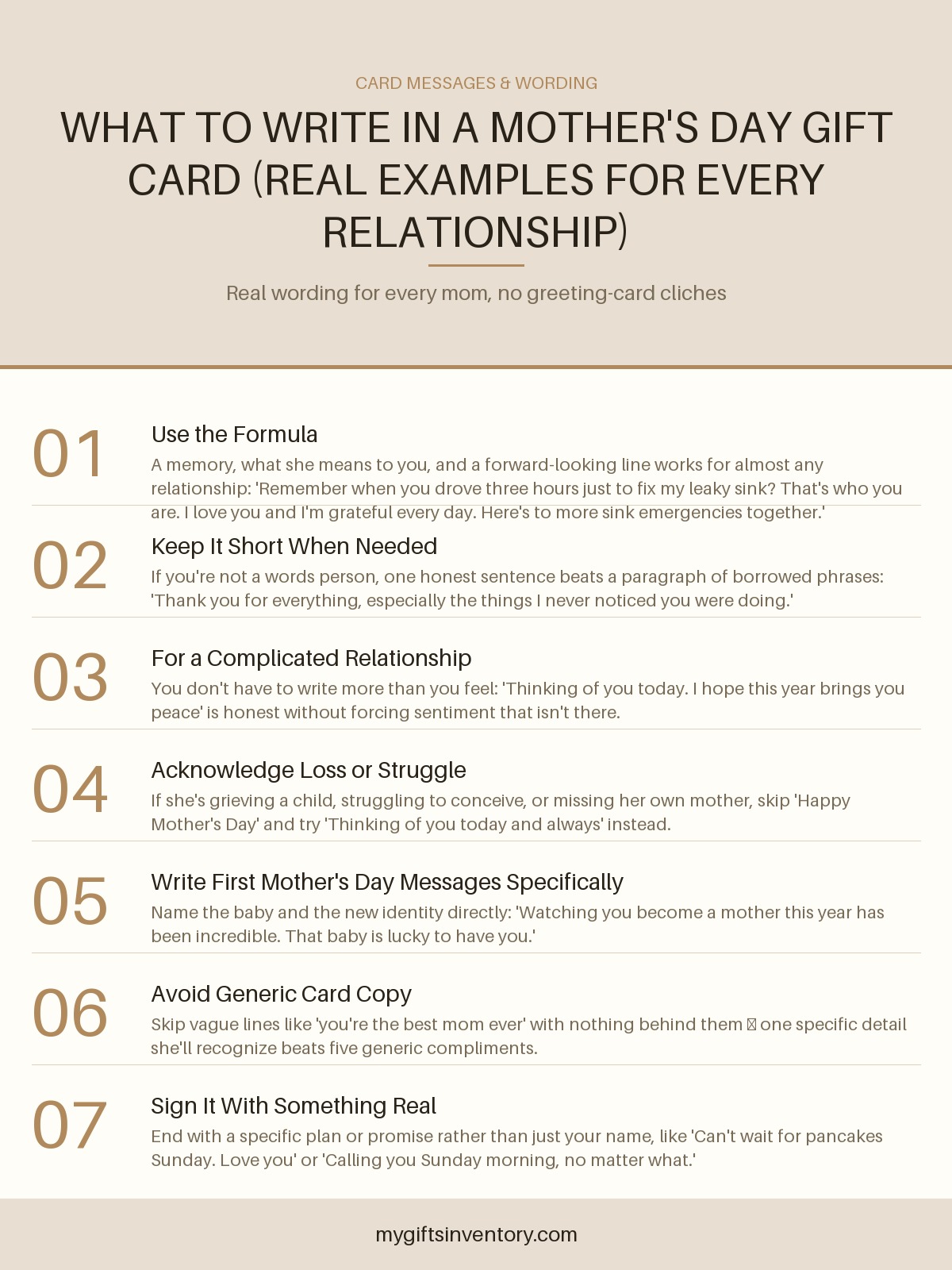
For Mom: “Happy Mother’s Day / birthday. Thank you for the thousand small things you did that I only understood later. I feel lucky every time I catch myself sounding like you. Love you.”
For Dad: “Happy birthday. Grateful for the quiet ways you showed up and the terrible jokes that somehow still land. Hope this year gives you more time for the things you actually enjoy.”
For a parent who truly has the household stocked: focus the message on time, memories, or a shared future plan rather than the object. “This is for the coffee dates we keep meaning to schedule. I’m claiming the first one.”
When the gift itself needs to feel special for a mom who is hard to buy for, we like looking through options like the ones in gifts for mom who has everything and then writing the card around why that particular thing made us think of her.
Coworker, boss, and professional card wording
Workplace cards should stay warm but bounded. Avoid anything that could be read as too personal, romantic, or political.
Safe congratulations: “Congrats on the promotion / new role / work anniversary. Your steady approach under pressure makes the whole team better. Wishing you a great next chapter.”
Thank-you to a colleague: “Thank you for covering the meeting notes while I was out. It saved me hours of catch-up. I owe you coffee.”
Boss or mentor: “Thank you for the guidance this year. The way you give feedback that actually helps people grow is rare. Grateful to be on your team.”
Group card: Keep your individual line short so it doesn’t dominate. “So happy for you! You’re going to crush it.” is enough when twenty people are signing.
If the office does occasional small gifts and you want ideas that won’t feel obligatory or awkward, the suggestions in our corporate gift ideas under $50 stay practical and professional.
Sympathy and hard-moment cards
These are the ones people fear most. You do not need perfect words. You need presence on paper.
Simple and true works: “I was so sorry to hear about your loss. [Name] mattered, and I’m holding you in my thoughts. No need to reply. Just know you’re not alone in this.”
If you knew the person who died: “I’ll miss [specific quality or shared memory]. Whenever you’re ready for company or a meal or silence, I’m here.”
Avoid silver-lining language (“they’re in a better place,” “everything happens for a reason”) unless you know the recipient shares that framework. Also avoid “let me know if you need anything” as the only offer. A concrete next step is kinder: “I’m dropping dinner Wednesday. No need to host or reply.”
For illness or tough seasons: “Thinking of you this week. Hope today has a few soft moments in it. I’m around for a walk or a rant whenever it helps.”
What to avoid writing
Certain phrases drain the life out of a card. “Best wishes,” “Thinking of you,” and “Have a great day” are fine as closings only when something real came before them. Alone they feel like placeholders.
Skip comparing the recipient to others (“you’re the best mom ever”) unless it feels completely natural in your voice. Skip future pressure (“can’t wait for you to do X”). Skip anything that requires them to manage your emotions.
Humor is wonderful when you already share that tone. If you’re unsure, leave the joke out. A sincere short note ages better than a bit that misses.
Never write something you would be embarrassed for a third party to read. Cards get left on counters and passed around at parties.
Practical extras that make the note better
Write the message before you wrap when possible. It reduces last-minute panic and lets the ink dry.
If the card has a pre-printed line, you can still add your own paragraph below or on the blank inside panel. Crossing out a line you dislike is fine if you replace it with something better.
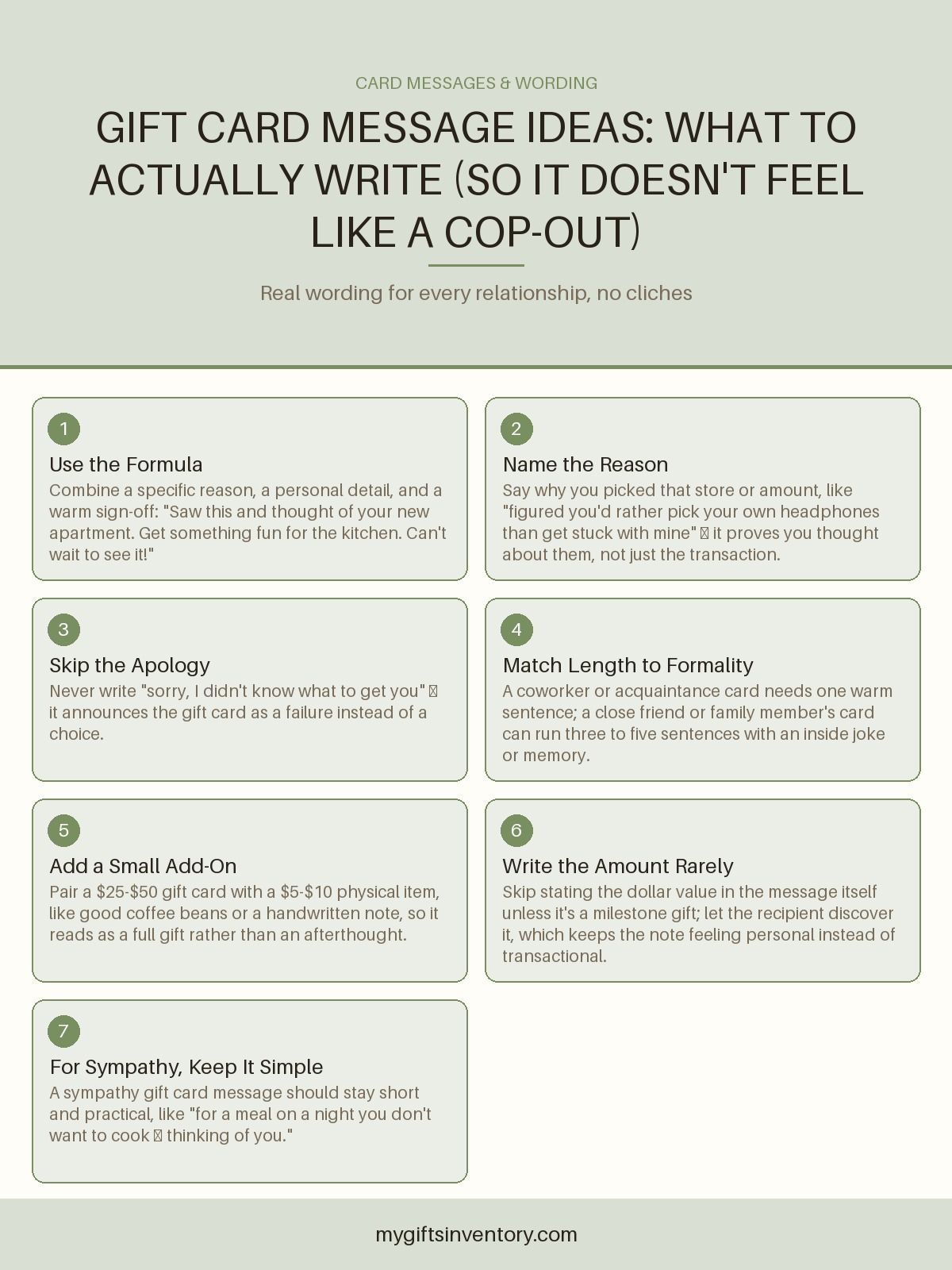
For gift cards (the plastic kind), a short note still helps: “For your next coffee run / game / dinner out. Enjoy it with zero guilt.” That tiny permission slip makes the gift feel more generous.
Date the card if it’s for a milestone. Years later people like knowing exactly when it was written.
If you’re sending the gift by mail, a quick text the day it should arrive (“package on the way, card inside”) removes anxiety for both of you.
Putting it all together
The best card messages sound like the way you actually talk to that person, just a little more deliberate. Start with the occasion, add one true detail, close with warmth that matches the relationship. That formula scales from a $5 birthday card to a major life event.
You already know this person. The blank page is just asking you to put one true sentence on it. The rest follows.
Frequently Asked Questions
How long should a gift card message be?
Three to five sentences is the sweet spot for most occasions. One sincere short paragraph feels complete without turning into a letter. Longer notes work for sympathy, major thank-yous, or milestones when you have something specific to say.
Is it okay to just write “Happy Birthday” and sign my name?
Yes if the gift is the main event and your relationship is casual. Adding even one extra true sentence (“Hope the new apartment feels like home already”) makes it feel intentional. Completely blank except a signature can read as an afterthought.
What do I write in a card when I don’t know the person well?
Stick to the occasion and a simple warm wish: “Congratulations on your wedding. Wishing you both a lifetime of good days and easy laughter.” Avoid forced personal details or humor. Short and kind is enough.
Should I mention the gift in the card?
Only if it adds meaning. “Saw this and immediately thought of your hiking obsession” ties the object to your attention. Purely descriptive lines (“Here’s a candle”) add little. For gift cards, a light suggestion of how to enjoy it works well.
What if I’m terrible at writing this kind of thing?
Use the basic structure: name the occasion, add one concrete observation, close with a simple wish. You can copy any example here and swap in your own detail. Most people remember that you showed up with something true more than they remember perfect prose.